Rush reunites. Let the hate begin.
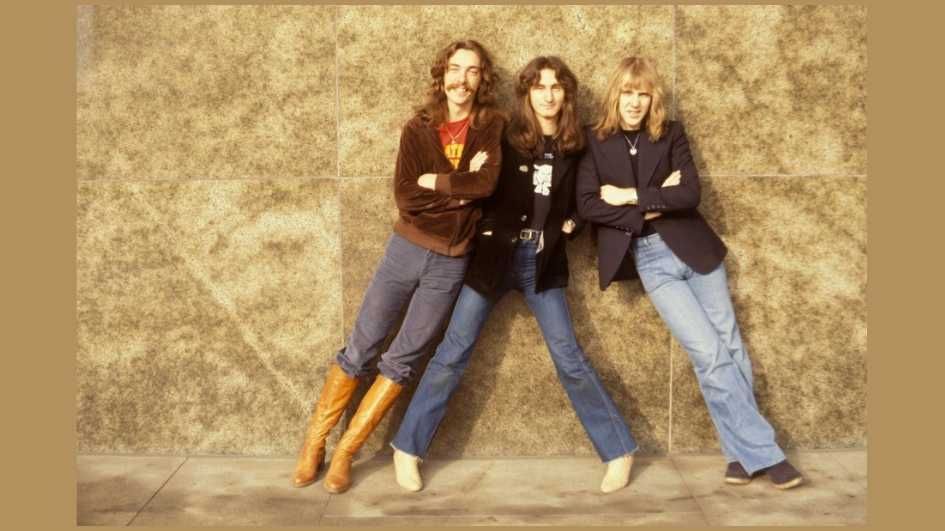


The Rush reunion announcement landed like a Neil Peart cymbal crash heard from two continents away.

For some, it was a benediction. For others, a blasphemy. In America especially, Rush has always been a band that splits the room in two. On one side: devotion bordering on reverence. On the other: a curled lip, a sigh, a muttered word like “soulless” or “show-off.”

Rush endured because they never chased cool. Cool is perishable, but craft is not.

Few great bands inspire such loyalty and such irritation at the same time. Even fewer manage it without changing who they are.

A Farewell to Kings

The power trio we know as Rush formed in 1974 in Toronto, three young men chasing something bigger than barroom rock. They were loud, fast, and committed to mastery. As the years passed, they grew tighter, more disciplined, more deliberate. While other bands burned out or sold out, Rush stayed true.

That mindset carried them for four decades. Album after album. Tour after tour. By the time they bowed out in 2015, Rush had become one of the most reliable live acts in rock history. No scandals (despite a well-documented affection for Bolivian marching powder). The farewell felt final, especially as drummer Peart’s health declined. When he died in 2020, the door seemed closed for good.

Which is why this reunion lands so satisfyingly. It doesn’t feel forced. It doesn’t feel desperate. It feels natural. Two old friends picking up guitars, laughing through familiar songs, and realizing the music still matters to millions.

To others, it matters in the way a neighbor’s power drill matters — piercing, relentless, and likely to trigger a migraine.

Working Man

Rush has never fit comfortably into the American rock myth. The band wasn't blues-rooted, booze-soaked, or born of Southern swag. Geddy Lee sang like a caffeinated banshee. Alex Lifeson mixed power with precision. And Neil Peart — the irreplaceable center — treated drums like an Olympic event.

To rock traditionalists, however, something about this just felt off. Rock, to them, was meant to feel dark and dangerous. Think Black Sabbath, Led Zeppelin, the Who, AC/DC. Part of the gig was bringing chaos — both on and off stage. Treating hotel rooms like demolition sites and sanity as optional. Consider the late, great Ozzy Osbourne: a man who built a Hall of Fame career out of conduct that would have ended most working lives in a padded room.

Rush never subscribed to that model. And for a certain kind of American critic, that alone was enough to raise suspicion.

Rock wasn’t supposed to sound so organized. It wasn’t supposed to sound like the band had talked things through. So the complaints piled up. Too clean. Too lame. “Cheesy” and “corny” became the easy shortcuts, a way to dismiss what they didn’t want to engage with.

RELATED: Exclusive: Former Toto bassist recalls 2019 breakup: It got a little 'Lord of the Flies'

NurPhoto/Getty Images

Limelight

Take “Tom Sawyer,” still my personal favorite. Purists love to pick it apart. The synth line is too bright. The lyrics are too earnest. The chorus too triumphant. It doesn’t brood.

But that’s the point. “Tom Sawyer” isn’t trying to sound dangerous. The aim isn’t menace but momentum. It captures motion, confidence, and propulsion — three qualities rock critics often mistake for shallowness. Look past the childish nitpicking, and what’s left is undeniable. A song that still fills arenas, still hits hard, still makes people feel 10 feet tall.

For some critics, Rush was the band you loved if you owned graph paper and color-coded your homework. Rush's music was for the kids who finished the test early and then checked their answers. Not rebels, not wreckers, but students of the thing itself. In rock culture, that kind of seriousness was treated like a social crime.

Subdivisions

Rush is hardly alone in this. Steely Dan took the same beating, dismissed as music for dental offices, waiting rooms, and people who alphabetize their spice racks, despite writing some of the sharpest, most venomous songs of the era. Yes was mocked as bloated and indulgent. Genesis, especially after Peter Gabriel left, got the same treatment.

America has always had a complicated relationship with genuine greatness. It celebrates brilliance, but only when it looks accidental. Genius is best received if it arrives late, drunk, and a little out of control.

You see this pattern everywhere. Adam Sandler spent decades being treated like a joke because his films made money and audiences laughed until they nearly lost bladder control. Jim Carrey wasn’t taken seriously until he stopped being funny and started looking permanently unwell. Rush refused that trade and paid the cultural price.

Headlong Flight

What the reunion clarifies — especially now, in an age of irony fatigue — is that Rush endured because they never chased cool. Cool is perishable, but craft is not. When Lee and Lifeson talk about laughing while jamming, about the music “dispelling dark clouds,” they’re describing something purists often forget. Music is allowed to be joyful. It’s allowed to be exhilarating without being mystical. It can be thrilling without pretending to be profound every second.

The dark humor is that Rush’s biggest sin may have been optimism. In an era increasingly allergic to it, they believed in improvement — musical, personal, even societal. That’s unfashionable.

Cynicism sells. Rage Against the Machine built an entire brand on permanent fury, screaming about “the system” while cashing checks from it. Nine Inch Nails turned self-loathing into an aesthetic. Nirvana mattered because they captured the feeling that nothing worked and no one was coming to fix it. Misery read as honesty. Anger read as depth. Enjoyment, by contrast, looks unserious.

But why? We’re here for a good time, not a long one. Rush understood that early.

Music doesn’t always need to diagnose the human condition. Sometimes it just needs to move, lift, and hit you square in the chest. Half a century on, they’re back. Not to win over the skeptics, who never wanted convincing anyway. But to reward the faithful and quietly remind everyone else that having a good time isn’t a crime.


Transgender woman rejected by every sorority at U. of Alabama: 'I’m sad because I wanted to be a part of a sisterhood'


A transgender woman was rejected by every sorority at the University of Alabama during student recruitment, the New York Post reported, citing social media posts from the student in question.

What are the details?

Grant Sikes earlier this week wrote on Instagram about being passed over by each of the college's nearly 20 sororities.

“Unfortunately, this chapter is closed. This recruitment journey is over for me,” Sikes wrote. “Being dropped from my last house this morning during primary recruitment at the University of Alabama doesn’t come as a surprise considering out of the almost 20 chapters ... I was dropped by every single one except 2 before day 1.”

Sikes added, "I’m hopeful of a future where everyone is welcomed for just being themselves — everywhere. If you are going through a hard time today, remember that life is too short to ponder on the things lost. Choose happiness & always look for the positive things throughout life. Move on. See the good. See the bad. Hope for the best. Brave the worst.”

Sikes received nearly 36,000 likes for the Instagram post as of Wednesday morning.

In a TikTok video, Sikes called the unanimous rejection "extremely upsetting" and added that "I’m sad because I wanted to be a part of a sisterhood and, more than that, a community.”


The TikTok video got a decidedly bigger reaction, garnering nearly 190,000 likes and more than 6,300 comments since it was posted earlier this week.

In fact, Sikes' TikTok videos documenting the recruitment journey got millions of views during Alabama Rush Week, the Post said.

The paper added that Sikes isn't the first transgender student rejected from a Greek Life organization, noting that Adam Davies was rejected by all 12 sororities at Northwestern University in 2017.

Anything else?

Commenters on Sikes' above TikTok video offered a variety of reactions:

  • 'I'M PACKING MY BAGS & HEADING TO ALABAMA," one commenter wrote. "I’m ready to riot."
  • "Can I say genuinely as a queer person [who] went through Greek life, it’s is extremely homophobic and not a safe space," another commenter wrote. "You deserve better!!!"
  • "Y’all better keep this same energy for all the other girls that got cut!" another commenter told fellow commenters. "Nothing against Grant, but there are plenty of other girls in the same spot."

'He worked until the very end': Producer Bo Snerdley on the last days of RUSH LIMBAUGH


Rush Limbaugh was the most listened-to voice on the radio in the world, but few knew him as well as his producer and sidekick, James Golden, better known as Bo Snerdley. Bo was there with Rush from the beginning to the very end and tells the incredible saga in his new book, “Rush on the Radio: A Tribute from His Sidekick for 30 Years.”

Bo joined Glenn Beck on "Glenn TV" to recall how it all started and tell the stories Rush left untold: What happened after President Trump gave him a Presidential Medal of Freedom, what his final days were like, and who the next Rush Limbaugh might be.

"We didn't know it was going to be the last few days. We didn't. I mean, Rush's bucket list was his audience. And so every, Glenn, every single day that he could be there, that he wasn't in treatment, that he wasn't suffering from the effects of treatment, he came to work. And when the mic went on, I I'm telling you, you would not even think the man was was fighting any kind of an illness, because he had the same upbeat presentation. He was just as witty as ever, was as prepared as ever. It was only afterward, Glenn, when there were days he could barely get out of the chair after doing his show," Bo told Glenn.

"We didn't know that his last show was his last show ... he worked until the very end," Bo added.

Watch the video clip below or find the full interview with Bo Snerdley here:


Want more from Glenn Beck?

To enjoy more of Glenn’s masterful storytelling, thought-provoking analysis and uncanny ability to make sense of the chaos, subscribe to BlazeTV — the largest multi-platform network of voices who love America, defend the Constitution and live the American dream.

Remembering Rush Limbaugh: The left hated him because it feared him


Today, we pay tribute to Rush Limbaugh. If not for him, none of us would be here. We also fact-check Joe Biden's recent CNN town hall. And Biden's gun control agenda? It's worse than advertised.

Cant watch? Download the podcast here.


Use promo code LWC to save $10 on one year of BlazeTV.

Want more from Steven Crowder?

To enjoy more of Steven's uncensored late-night comedy that's actually funny, join Mug Club — th

Rush Limbaugh issues plea for Americans to re-elect Trump: 'This is not the old 'Republicans versus Democrats ... It's serious, and it's scary'


Rush Limbaugh on Monday issued a passionate plea to Americans to re-elect President Donald Trump on Nov. 3.

The longtime conservative commentator announced last week that his Stage 4 lung cancer is terminal.

What are the details?

In a video filmed in the 69-year-old's home library, Limbaugh reaffirmed his support for Trump just moments before Barrett's Supreme Court confirmation.

“Hey, folks, sitting here in the library getting ready to watch the confirmation vote — Amy Coney Barrett, Supreme Court — and it just reminds me: Folks, we don't have a choice in this election," Limbaugh began. “It's got to be Donald Trump."

Limbaugh pointed out that the 2020 presidential election is especially important because the Democratic Party simply isn't what it used to be.

“We're not going to have the kind of country everybody thinks we're going to have," he predicted. "This is not the old 'Republicans versus Democrats,' where we all have the same objectives, just different philosophies on how to get there. They do not have those objectives any more. Their purpose is to erase the Constitution, start over rewriting it, eliminating the concept of 'The citizen has rights which prevail over government.'"

Limbaugh continued, pointing out that the notion is frightening at best. “It's serious, and it's scary, and we don't have a choice," he insisted. "You have to get out there and vote Trump."

Limbaugh added, "It's got to be Trump ... we've got to be America."

Your Real Anchorman live from home library. https://t.co/XMtCQohgNf
— Rush H. Limbaugh (@Rush H. Limbaugh)1603756205.0

What else?

Following his admission that his lung cancer has taken a turn for the worse, the conservative commentator pointed out that he's heavily relying on his Christian faith to endure until it's time to go home.

"I have a personal relationship with Jesus Christ," the host said during last week's broadcast. "It is of immense value, strength, confidence. And that's why I'm able to remain fully committed to the idea that what is supposed to happen will happen when it's meant to."

"There's some comfort in knowing that some things are not in our hands," Limbaugh added. "There's a lot of fear associated with that, too. But there is some comfort. It's helpful to be able to trust and to believe in a higher plan."