THESE predictions Glenn Beck made 10 years ago are playing out in real time — but it’s all about to come to a screeching halt


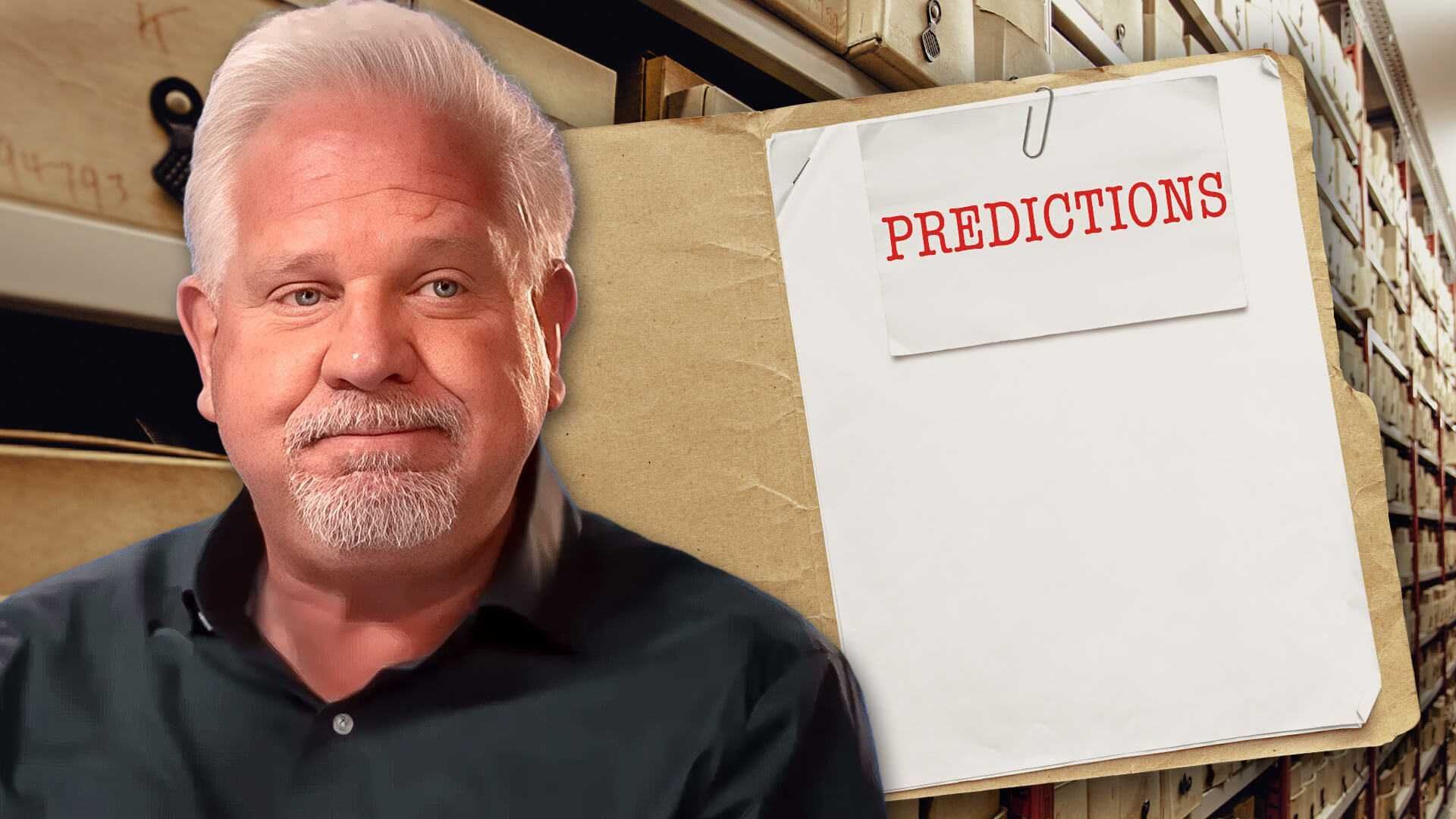
Ten years ago on his radio show, Glenn Beck gave “three possibilities” of what America’s future would look like in a decade’s time.

Possibility #1: “Slow Decay” — “Corruption would become routine. Violence will become background noise. Currency ... buys less and less year after year until you just have to adjust your expectations downward. The border will blur. Drugs will flood in. Institutions will continue to weaken, but they won't break. They just stop working the way they once did.”

Possibility #2: “Control” — “A moment will come when the system decides dissent is a real threat, when the people who warned, protested, resisted are no longer just wrong but dangerous. And the label will change from opponent to enemy.”

Possibility #3: “Wake up” — “Citizens would wake up, that grassroots movements (imperfect but loud) ... would remind the country who it was supposed to be. And people will look back and say, ‘Wow, that was the moment that it really turned around."’

“I think a little bit of all of those things happened,” says Glenn.

The first predication, he says, was spot on — “Corruption is routine? Absolutely. Violence, a background noise? Absolutely. Currency hasn't died, just buys less year after year. We have to adjust our expectations downward. The border has absolutely blurred. The drugs are flooding in (still are). The institutions haven't broken but they weakened, and things aren't working the way they used to,” he says, confirming his old hypothesis.

The second prediction about mitigating chaos via control, he argues, also came true, specifically “during the Biden administration, where the system decided dissent was a real threat, and they started to silence people.”

The third and most hopeful possibility — a nationwide grassroots movement to restore order and morality — has also partially come to fruition.

“I think all three paths happened at the same time — bits and pieces. Here's what hasn't happened: We haven't decided which one,” says Glenn.

But we have to choose, he urges, because the next ten years won’t afford us the same wiggle room.

“In ten years from now, what does the world look like? Well, it's not going to be a combination of all three,” he says bluntly.

“We’re out of runway,” Glenn warns. “You have to choose: Do we slam on the brakes with this plane right now, or do we pull on the yoke and start to fly?”

To hear more, watch the video above.

Want more from Glenn Beck?

To enjoy more of Glenn’s masterful storytelling, thought-provoking analysis, and uncanny ability to make sense of the chaos, subscribe to BlazeTV — the largest multi-platform network of voices who love America, defend the Constitution, and live the American dream.

Make your own record player: A simple project with a profound lesson


We live in a scaled-up, real-world version of the classic children’s board game “Mousetrap.” The built world is over-engineered, too interdependent, and so precarious that a slight disturbance might bring the whole thing down.

The interconnected, precarious Rube Goldberg contraption that is modern society has more than just rolling balls and baskets and levers. Our real, physical-world interdependencies include reliance on digital algorithms and computing devices that no one can intuitively understand. It’s the worst of both worlds, physical and electronic.

This is a real-world lesson in physics and mechanics that teaches universal principles that can never be altered by whim or historical vogue.

A friend’s internet service went out recently. Even though she was able to get a human staff member on the phone, that human wouldn’t talk to her to even confirm that the company recognized that she was a paying customer.

Why? Because she couldn’t log in to her email on another device and recite a “one-time code.” Remember, she was calling because she didn’t have internet access. Cell signals in rural states are often insufficient for internet use. You see the problem.

Everything is like this, but everyone is acting like this is the way things have always been. It’s not true. There is no reason to live this way. It is not a natural law. The overcomplicated world is not something that just “happened.”

This setup is a result of choices. Disconnected choices, yes. There’s no central mind that has created our society. There’s no single controlling cabal that has engineered the way we live, communicate, procure food, or any of that. There are powerful interests, legal and commercial, that influence our society more than you and I as individuals can influence it. But it’s not a conspiracy in the classic sense. It’s a result of accumulated errors. We need a reset.

Memories of the analog world

1979. My family slipped away from Tully, New York, in the dead of night by means of my grandmother’s silver Buick Electra. The Buick told you that she had a V-8 through the distinctive muffled bass rumble from twin tailpipes. She was what I call an “honest mechanical.”

We boarded the Amtrak to cross the country so my stepfather, a glassblower who specialized in making electrodes, could find a job. There was nothing left for a working-class man in Upstate New York in the 1970s.

On arrival in Los Angeles, my Uncle Lee and Aunt Sherry were waiting in a 1979 lemon-yellow Cadillac Coupe de Ville. A Cadillac. I was going to ride in a Cadillac!

The trunk mechanism on my Uncle Lee’s Cadillac was my first introduction to what I would later think of as overcomplicated or dishonest mechanicals. It did this amazing thing I had never seen before. The trunk lid raised and lowered all by itself, untouched by human hands. After my mother loaded the last suitcase into the cavernous trunk, the enormous yellow deck lid silently, slowly crept downward. When the lid reached the latch, the mechanism slowed down to a crawl to give you a “soft and silent” latch.

Today, my base-model Toyota has all those bells and whistles plus more. The “more” is the irritating part. Nothing in the car is controlled mechanically or directly. Everything is drive-by-wire. The car decides when to spin the wheels when stuck in snow, even though I could do a better job if I were allowed to control the traction. Even the heater fan and lights are programmed to slowly, softly ramp up and ramp down, as if a too-sudden onset of sound or light would strike the driver with apoplexy.

Man and machine

The legend of John Henry both horrified and fascinated me as a child. The steel-driving man of folklore tried to prove he was as good as the new-fangled steam drill at chipping out a tunnel to lay track. John Henry swung his sledgehammer until his muscle fibers broke and he died exhausted on the ground, while the steam piston kept reciprocating.

I understood that this tale from America's railroad age was really about our present. It was obvious to me even as a kid in the 80s: Machines were crowding out the men. The mechanization of work inverted our values; humans had to live up to the demands and preferences of machine logic, not the other way around.

John Henry’s last act was a way of saying, “I am a man, and I live.”

RELATED: America needs mechanics; here's where to apply

Getty Images/Heritage Images

Honest mechanicals

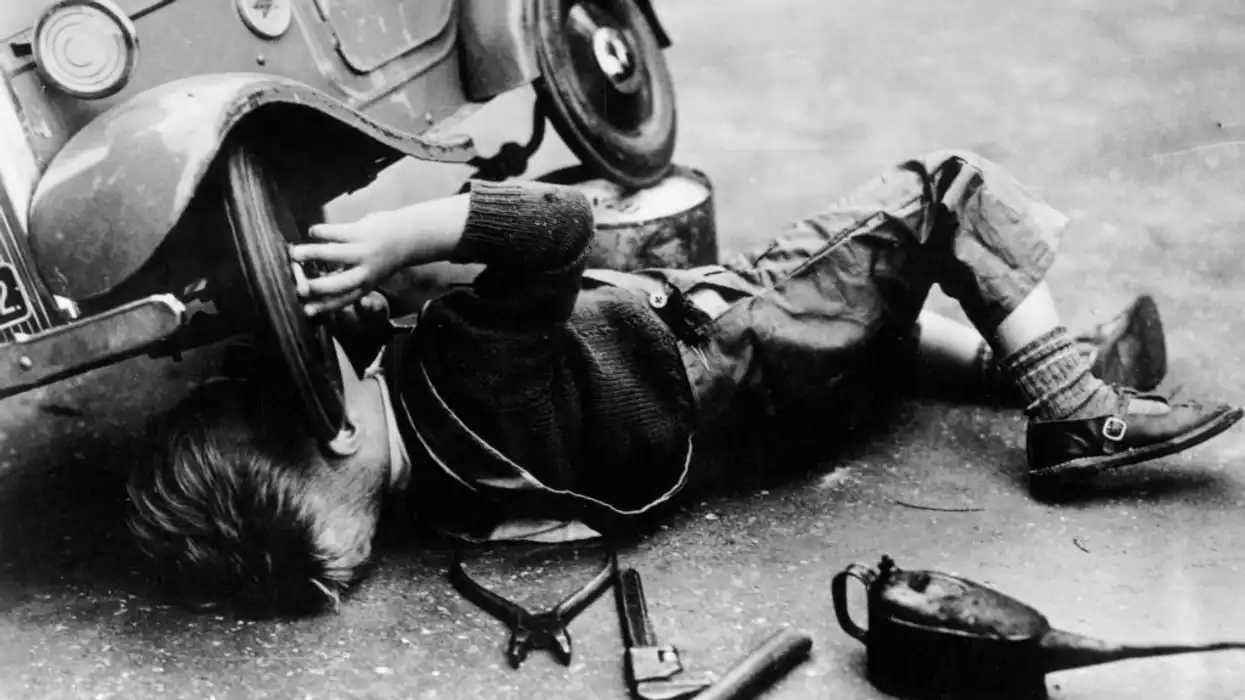
Honest mechanicals are machines that can be observed, understood, and intuited. They show their works; nothing is hidden from the hands or the eyes. Compare honest mechanicals to modern digital devices. Call those devices “black boxes” whose function cannot be observed, understood, intuited, or reverse-engineered by human senses alone.

Black boxes (computers of various sorts) are not mechanicals at all. They don’t have levers or pulleys or counterweights, or sprockets, or escapements. They have invisible states of magnetic orientation. You cannot see the works with your eyes, and the complexity of a chipset is beyond the human mind’s ability to grasp.

A piece of photographic film with a light-sensitive emulsion that forms an image is an honest mechanical. The image is readable by the human eye.

A .jpg picture file is a black box. The image cannot be read or intuited by humans without another black box we call a computer.

A steam locomotive is an honest mechanical. Observe that you can understand how the machine turns heat into steam, turns steam pressure into lateral force, and then translates lateral force into rotary motion, thus moving the train and its passengers along.

You can intuit an honest mechanical. And if you have children, especially boys, I recommend that you introduce them to honest mechanicals. Show them how steam engines work. Show them a cutaway of an internal-combustion automobile engine. Let them take apart a blender or a stand mixer to see how electric motors produce rotary motion.

Here’s an easy hands-on lesson you can and should do with your kids, starting at about age 4. It doesn’t matter that the lesson uses “obsolete” technology. That is a benefit. This is a real-world lesson in physics and mechanics that teaches universal principles that can never be altered by whim or historical vogue.

Make your own record player

Materials:

  • 1 33 and 1/3 long-playing record album — one that’s scratched that you don’t care about
  • 1 #2 pencil
  • construction paper
  • Scotch tape
  • 1 sewing needle

Instructions:

Form the construction paper into a cone and tape together. Tape the sewing needle securely to the small end of the cone. Think of an old gramophone with a needle attached to a brass horn — that’s what you’re doing.

Put the pencil inside the center hole of the record. Spin the record like a toy top, and help your kid lower the needle-in-a-cone onto the guide groove at the edge of the record.

Magically, you’ll hear the sound on the record, slightly amplified by the paper cone. Sure, it’ll be at the wrong speed, and maybe you won’t be able to parse the words. But you and your kid will immediately understand basic sound recording and reproduction. You will understand that sound can be transcribed as a wave form that can take real-world, physical form in the bumps and pits of a piece of material.

Most importantly, your child will understand that the material world actually exists and that it is analog.

This matters. It matters more than you probably know. Modern young people have grown up in a world of portable computers and phone screens that appear to show them reality, but that do nothing but arrange points of light into virtual simulations. Have you noticed that young Millennials and younger seem not only put off and frightened by simple mechanical technology — mechanical telephones, cars that use a clutch and a gear shift — but almost disgusted and embarrassed by devices from just a generation ago?

This is not merely the universal plaint of the old about the shortcomings of the young. The world today is different to an extreme degree from the world of just one or two generations ago. Young people don’t know how to get around town without GPS, they’re frightened to get driver’s licenses at 16, and few can even whip up a basic meal on a stovetop. Why would they know these things when they’ve been reared to believe that food and transportation just “happen” by sliding your fingers along an iPhone touchscreen?

Do what you can to ground yourself (first) and your kids and grandkids back inside the real, physical, material, analog world. Remember what John Henry knew: We are men and women, and we live.

Allie Beth Stuckey shares her 3 biggest takeaways from the DOJ’s latest Epstein drop


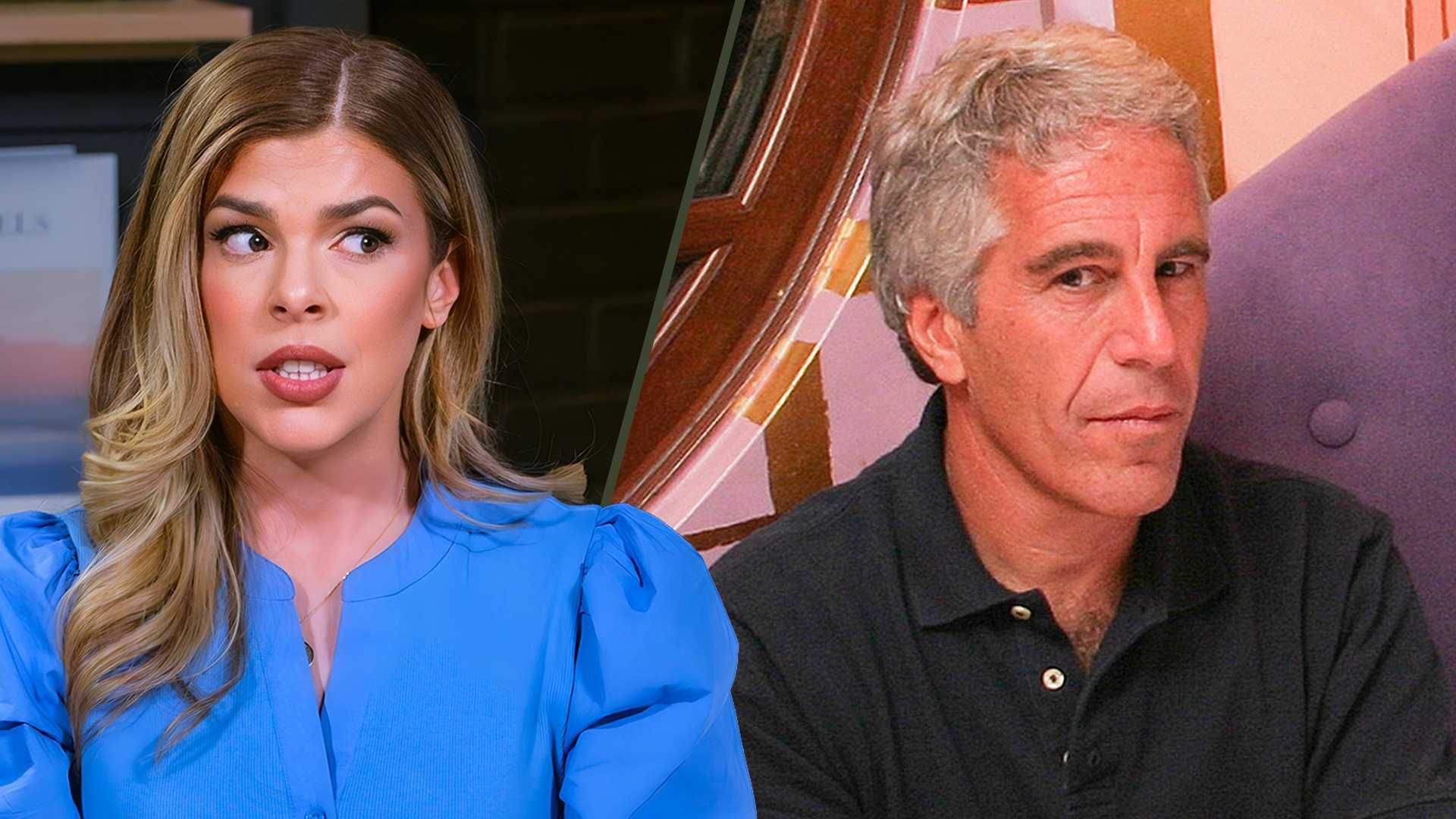
On Friday, January 30, the U.S. Department of Justice released a massive trove of over 3 million pages of documents, along with roughly 180,000 images and 2,000 videos, related to investigations into Jeffrey Epstein.

This third file dump — the largest to date — has drawn intense attention due to its massive scope and the unverified but sensational claims linked to high-profile figures, including President Trump, Elon Musk, Bill Gates, Bill Clinton, and Prince Andrew, among others.

On a recent episode of “Relatable,” BlazeTV host Allie Beth Stuckey shared her three biggest takeaways.

Allie first delivers an important preface: “Some of the files do mention prominent figures. … They have not been tied to any wrongdoing, any substantiated criminal activity in connection with this case. It is important to note that a mention of a famous individual does not necessarily mean that they were involved in Epstein's nefarious activities,” she says, noting that much of what is currently going viral is “uncorroborated tips” from anonymous sources, many of which have been deemed "not credible” by the FBI.

That said, there are still plenty of lessons we can take away from the information we were given.

Lesson #1: “Notice the nature of sin.”

“Sin makes you stupid. Lust, envy, selfish ambition — they all have a way of arresting our thinking. And Satan does his most effective work by overplaying the benefits of sin in our minds and downplaying its eventual consequences,” she says.

“These powerful people in science, medicine, business, finance, and politics all got caught up in Epstein's web, and they were enticed by this promise of connection and greater power and maybe unfettered pleasure in a lot of cases.”

“Some of them probably didn't intend to be involved in a criminal enterprise,” says Allie, “but little by little and small justification by small justification, they found themselves connected to an evil person, and, in some cases, they themselves started practicing evil things.”

Lesson #2: “Recalibrate our definition of success.”

Allie cautions against chasing wealth, power, and fame, as they can be a slippery slope into “ruin and destruction.” Sometimes when we’re denied by man — a promotion, invitation, or endorsement that would have given us a boost — there’s a good chance that it ends up being “God’s protection” over us.

She points to Jesus’ admonition in Matthew 19:24: “Again, I tell you, it is easier for a camel to go through the eye of a needle than for a rich person to enter the kingdom of God,” as well as Paul’s warning in 1 Timothy 6:9-10: “For the love of money is a root of all kinds of evils. It is through this craving that some have wandered away from the faith and pieced themselves with many pangs.”

“The seeking of wealth and power for the sake of wealth and power has a way of crowding out godly affections and replacing those affections with idolatry,” she summarizes.

“So we should thank the Lord for what he gives and what he takes away, knowing that his glory and our holiness is ultimately his goal. So we recalibrate the definition of success.”

Lesson #3: “Be grateful for a Christian civilization.”

“There are Jeffrey Epsteins throughout history across a wide variety of cultures. In fact, in many non-Western nations today, child marriage or raping underage girls is not seen as perverse. It's not seen as criminal,” says Allie. “The reason the West and the United States has a general consensus around the evil of pedophilia is because of Christianity.”

In the ancient world, she explains, children were often aborted, left outside to die, killed after birth, or forced into labor or prostitution.

“They didn't possess the physical strength that was lauded by Rome, and they didn't possess the full intellect or the logos that was lauded by Greece, so they were treated as kind of subhuman," says Allie. “And it wasn't until Christians introduced the world to the imago dei and preached this radical message of equality before our creator that slowly but surely the world changed how it saw children — not as animals but as these vulnerable people in need of extra protection.”

“The revulsion to Jeffrey Epstein and his ilk, whose actions are incredibly common throughout history, is actually evidence of the vestiges of the Christian conscience that forged the West and inspired the words that we read in the Declaration of Independence.”

To hear more, watch the full episode above.

Want more from Allie Beth Stuckey?

To enjoy more of Allie’s upbeat and in-depth coverage of culture, news, and theology from a Christian, conservative perspective, subscribe to BlazeTV — the largest multi-platform network of voices who love America, defend the Constitution, and live the American dream.

Did feminism create wokeness?


Helen Andrews recently revived discussion of what she calls the great feminization — the idea that as women come to numerically dominate institutions, those institutions begin to function differently, often badly. Her observations are important and largely correct. What follows is a friendly amendment to her thesis. I agree with much of what she sees, but I think an essential part of the story still needs to be named.

Let’s begin by laying out her argument clearly.

The psychological feminization of institutions preceded the numerical one. Men in power enabled it.

The great feminization thesis

Men and women, on average, tend to behave differently. For our purposes, the key distinction is this: Women tend to prioritize relationships and consensus-building, while men tend to prioritize rules, justice, and abstract principles.

Helen Andrews puts it this way: Women ask, "How do we make everyone feel okay?" Men ask, "What are the rules, and what is just?"

If we borrow a familiar parental analogy: Mothers want children to be happy; fathers want children to behave.

The great feminization thesis makes two claims:

  1. When women numerically dominate an institution — whether a profession, a university, or a bureaucracy — that institution will naturally drift toward more “feminine” priorities.
  2. What we now call “wokeness” is simply the institutionalization of those priorities.

From this, Andrews draws a sobering conclusion: If wokeness is driven by demographics rather than ideology, it will not simply burn itself out or be defeated by better arguments.

That observation is serious, largely correct, and incomplete.

Key takeaway #1: Wokeness is not the point — totalitarianism is the point

Anyone who thinks wokeness began in 2020 is already naïve. What we now call wokeness is simply a recycled version of an ideology that has been circulating since at least the 1930s. We have called it communism, socialism, political correctness, multiculturalism — and now wokeness. Same garbage, different label.

The label is not the point. The content is.

These ideologies all promise the impossible: the end of poverty, the end of discrimination, the end of pollution, even the end of viral disease. When people talk this way, look out. They are asking for a blank check — unlimited moral permission to acquire power in pursuit of an unattainable goal.

Doing the impossible requires enormous power. Convincing people that it is not only possible, but a moral duty, requires propaganda. These ideologies don’t work for you or for society as a whole. They work for the people who are trying to accumulate power, while endlessly moving the goalposts.

So worrying about where “wokeness” begins or ends is a distraction. Totalitarian aspiration is the point.

Key takeaway #2: The great feminization is more than numbers

The problems Helen Andrews identifies did not begin when women crossed the 50% mark in any institution. They began much earlier. Which means we cannot diagnose civilizational decline by counting heads alone.

The great feminization is not merely statistical. It is psychological and political.

Consider the case of Larry Summers, forced out as president of Harvard in 2006 after remarks about sex differences in aptitude at the extreme upper end of scientific fields. Importantly, Harvard was not majority-female at the time.

Several prominent women defended Summers. They noted that he was speaking off the record, citing substantial research, and had a long history of supporting women in academia. But those voices did not matter. What mattered were the women who expressed the greatest emotional distress — the ones who said they felt sick or faint.

Someone made a decision to elevate those reactions above truth-seeking and institutional integrity. Someone allowed the public to believe that “insensitivity” was the decisive issue. That decision mattered.

Key takeaway #3: Specific people made specific decisions

Treating wokeness or feminization as an automatic demographic process lets decision-makers off the hook. Institutions did not drift accidentally. People chose to reward grievance, punish dissent, and redefine excellence around emotional display.

Statistical generalizations obscure two crucial facts.

First, bell curves overlap. While men and women differ on average, individuals vary widely. Some women are more analytical than many men; some men more emotional than many women.

Second — and more importantly — no one’s behavior is predestined. The ability to regulate our emotions is a basic requirement of adulthood. Every functioning society expects adults to govern their reactions rather than demand that institutions reorganize themselves around tantrums.

The Yale moment

The 2015 Yale Halloween costume episode provides a clear example. A professor’s wife suggested students “be chill” about costumes. Students were outraged, with some of them having public meltdowns, demanding that Yale prioritize their emotional comfort over free inquiry.

Yale was not majority-female. Feminization alone cannot explain this behavior.

What we witnessed instead was a demand for paternal authority stripped of paternal discipline. “Make us feel safe,” the student insisted — while rejecting the professor’s insistence that other people have rights too.

When you smash the patriarchy, you don’t get freedom and justice. You get a spoiled 2-year-old running the place.

RELATED: Milo Yiannopolous dares to tell the truth about homosexuality

Phillip Faraone/Getty Images

The sexual revolution and power

The psychological feminization of institutions preceded the numerical one. Men in power enabled it.

Businesses gained access to a new labor pool. Elite men rewrote workplace rules in ways that advantaged themselves while disadvantaging male competitors lower down the ladder. Universities institutionalized grievance disciplines. Contraceptive ideology separated sex from responsibility, granting men sexual access without paternal obligation.

Women did not enact these changes alone. Men cooperated — and benefited.

Key takeaway #4: Identity politics is a power-grab

Every wave of identity politics follows the same script: Emotional display replaces argument; disruption replaces persuasion; grievance replaces evidence.

“We are oppressed. You owe us.”

This is not really a moral argument at all. It is a power-grab.

Helen Andrews has done a real service by calling attention to the deep problems that majority-female professions and institutions may present. But we have to go deeper than demographics. We have to be willing to say — calmly, firmly, and without apology — "I don’t care how offended you say you are. You still have to behave."

Men and women alike benefit from that expectation. And the future of civilization and free institutions really does depend on it.

This essay is adapted from the following video, which originally appeared on the Ruth Institute's YouTube channel.

BlazeTV host shares 3 personal experiences PROVING the Islamification of America is happening RIGHT NOW


BlazeTV host Sara Gonzales has been sounding the alarm on the Islamification of the United States — the deliberate plan to replace traditional American culture, laws, and national identity with Islamic values, cultural practices, and Sharia-influenced demands — but she fears people aren’t taking the threat seriously enough.

On this episode of “Sara Gonzales Unfiltered,” Sara shares three personal experiences that make it clear just how far the plan to Islamify America is already underway.

#1: Meta banned Sara’s anti-Sharia ad

Sara is the vice president of Texas Family Project, a conservative advocacy organization dedicated to strengthening the state of Texas by prioritizing parental rights, protecting the innocence of children, and reforming how the state government and its institutions view families.

When TFP recently tried to purchase an ad from Meta (Facebook and Instagram), it was denied.

The ad simply stated: “Sharia has no place in Texas.”

“[Sharia law] is incompatible with this country ... the Constitution ... the laws in the state of Texas,” says Sara. “That should be something very simple and noncontroversial. We're not saying ‘get out if you're brown. Get out if you're Islamic. Get out if you're Muslim.”’

Even still, Meta rejected TFP’s ad request with a message stating, “Your ad contains content that is not allowed on Meta’s advertising platforms.”

“You're not allowed now to say on Facebook, on Meta, that Sharia law has no place in this country, in the state of Texas. That's how far we're in with this whole Islam thing,” says Sara.

#2: Dallas suburbs turning into foreign enclaves

“The Texas Muslim population is approximately half a million people. By the way, these are conservative estimates ... but just know I believe it's far larger, far larger,” says Sara.

“I walk around in the DFW suburbs — Plano, Richardson, Irving, Carrollton. I don't see anyone like me,” she adds.

“I don't want that to sound like, ‘Oh, if they have a different color skin, they can't be here.’ No — it's just like they're speaking different languages; they're wearing clothing that we don't wear here in America.”

On top of these huge cultural differences, Sara’s experience with these foreign-born Texans hasn’t exactly been up to the Lone Star State’s hospitality standards.

“They have no intention of speaking to me or becoming friendly with me. That is very clear,” she says.

#3: Public school sending multi-language ‘holiday’ emails

Sara displays an email about a “holiday party” from a large public school in the DFW metroplex. As you can see in the tweet below, the message is available in multiple languages, including Farsi, Urdu, Arabic, Pashto, and Spanish.


— (@)

“They couldn't call it the ‘Christmas party’ ... [and] why do we need that many translations for a school newsletter in America?” scoffs Sara.

“How is this Texas? How is this America?”

While the examples above are personal to Sara, her list of ways Texas is rapidly changing under Islamic influence goes on and on. To hear more about the dangers Texans — and Americans at large — face as the country becomes increasingly inhabited by people whose religious doctrine commands them to kill anyone who refuses to convert, watch the full episode above.

Want more from Sara Gonzales?

To enjoy more of Sara's no-holds-barred takes on news and culture, subscribe to BlazeTV — the largest multi-platform network of voices who love America, defend the Constitution, and live the American dream.

3 reasons Renee Good’s death won’t spark a civil war


On January 8, following the death of Renee Nicole Good, who was fatally shot by an ICE officer after she struck him with her vehicle, Minnesota Governor Tim Walz (D) strongly hinted that civil war was in the cards.

“When things looked really bleak, it was Minnesota’s 1st that held that line for the nation on that July 3, 1863, and I think now we may be in that moment, that the nation’s looking to us to hold the line on democracy, to hold the line on decency, to hold the line on accountability, and more than that, to rise up as neighbors and simply say, ‘We can look out for one another,’” he said during a press conference addressing Good’s death.

His statement came just one day after Walz announced that he’d placed the Minnesota National Guard on a “warning order” amid tensions over federal immigration enforcement, protests, and Good’s shooting.

Many conservative media figures and Republicans have denounced Walz’s rhetoric as dangerous and inflammatory, arguing that he is intentionally stoking insurrection in hopes that a civil war will ignite.

But BlazeTV host John Doyle says that’s “not going to be the case.” On this episode of “The John Doyle Show,” Doyle explains why Good’s death isn’t going to be the catalyst that sparks civil war.

Reason #1: Good is white.

“You’re not exactly going to get people to come out onto the streets to more or less protest the death of a white woman — whether that is because, you know, they do not align with her racially or because they are, like, white liberals who do not view that to be as much of a tragedy,” Doyle says.

Reason #2: Normal people will continue doing normal people things.

“Not only are we going to enforce the law, normal people are just going to kind of allow us to do it, and it’s going to be really cool,” Doyle says.

“I like going on social media and seeing, like, my normie friends going about their lives, posting their Instagram stories, and I like seeing that because I know for a fact that all, like, the theater kids, all the leftists are seeing the normal conduct of people, and they’re seething about it. They’re angry because normal people just aren’t freaking waking up. And that makes me quite happy.”

Reason #3: It’s all theater.

“You had CNN running segments on this supposed uprising with experts warning of widespread civil unrest. Politicians, of course, were getting in on this, like Tim Walz alluding again to using the Minnesota National Guard to #resist deportations. He’s since cucked on this because that's all it is, right? It's intoxicating rhetoric,” laughs Doyle.

“It is trying to give the appearance of doing something when they’re going to have to completely surrender to the Trump administration and to the federal government. ... They are trying to give gibs to their activist base.”

“[Democrats] wanted it to sound like the prelude to something actually big, this like real event and this real energy that could be absorbed by some kind of political machine so that they could finally freaking stand up and resist and we could have our civil war. ... Except that is simply not going to happen because all these people do is complain and cry and bark,” Doyle says.

“They rarely bite. When they bite, it’s because they have control of the federal government,” he continues. And right now, they don’t.

To hear more of Doyle’s analysis, watch the video above.

Want more from John Doyle?

To enjoy more of the truth about America and join the fight to restore a country that has been betrayed by its own leaders, subscribe to BlazeTV — the largest multi-platform network of voices who love America, defend the Constitution, and live the American dream.

3 BlazeTV hosts give their top 2026 predictions — and they’re wild


2026 is widely predicted to be an explosive and turbulent year. AI is growing faster than we can keep track of. Global conflicts are simmering. The world economy is teetering on a debt-fueled monetary reset and possible dollar crisis.

It’s going to be a wild year.

On this episode of “Glenn TV,” Glenn Beck, Steve Deace, and Liz Wheeler give their top predictions for 2026.

Steve Deace

Prediction #1: America trades Taiwan for Venezuela’s oil

“I think that China and the U.S. are going to effectively swap Taiwan and Venezuela,” says Deace.

“With the disruption that is happening in markets and where we are in terms of a long-term paradigm shift, I think we are not just going to sit there and just let Venezuela with maybe the largest oil reserves in the world just go on the bye-bye here in our own hemisphere.”

This, in turn, he says, will spur China to “do the exact same thing to Taiwan.”

“Steve is right on the money,” says Glenn’s head writer and researcher, Jason Buttrill, who is a former U.S. Marine intelligence specialist and Department of Defense contractor.

Glenn notes that this has massive implications for chip-making, as Taiwan currently supplies the United States with over 90% of the world’s highest-performance chips that go into smartphones, modern weapons, and artificial intelligence.

Prediction #2: Global leader alleges alien contact

“I think we're going to see at least one elected official somewhere in the world next year claim to have directly communicated one-on-one with non-human intelligence,” says Steve.

Public interest in extraterrestrial life is peaking right now, he says. “The number-one-selling movie in America right now on Amazon, the biggest website in the world, is ‘Age of Disclosure”’ — a 2025 documentary claiming to expose an 80-year global government cover-up of non-human intelligent life and a secret international race to reverse-engineer extraterrestrial technology.

On top of that, world-renowned director Steven Spielberg — who has been pretty quiet since what many thought was his farewell film back in 2022 — has come out of retirement to direct a "disclosure film on UFOs" in 2026.

“The pressure on this is amping up,” says Steve.

Liz Wheeler

Prediction #1: Cabinet turnover

“I think we're going to see some significant Cabinet turnover in the Trump administration,” says Liz, noting that it is Attorney General Pam Bondi who is most likely on the chopping block.

“Listen, we voted for Trump because we want justice for all of the deep-state weaponization of the government targeted at us. And we have not seen that from the Pam Bondi Department of Justice,” says Liz.

“The Trump voter demographic has patience. We're generous. We understand that we're up against this conglomerate enemy, but I think people are starting to run out of patience.”

Prediction #2: Denaturalization and deportation of a certain member of Congress

Liz’s top prediction, she says, is that “a member of the U.S. Congress will be denaturalized and removed from Congress and deported from the United States of America.”

“I wonder who that could be,” laughs Glenn.

Liz is, of course, referring to Democrat Rep. Ilhan Omar (Minn.) — a radical leftist who prioritizes foreign interests, especially her home country of Somalia, over America.

Besides the strong speculation that Omar illegally married her own brother, there is ample evidence that Omar’s father, Nur Omar Mohamed, came to America not because he was fleeing a tyrannical regime but rather because he was “a member of that regime,” says Liz.

“He was actually a high-ranking military official [in Somalia]. He tried to hide that association so that he could claim asylum here in the United States, but he was in charge of propaganda for that communist regime,” she explains, calling it “immigration fraud.”

If that is found to be true, then “Ilhan Omar's naturalized citizenship status is itself illegitimate.”

Glenn Beck

Prediction #1: AI boom threatens US power grid

Glenn has been warning for some time that surging AI data-center energy demand will eventually strain the U.S. grid, causing rolling blackouts and brownouts.

“I think 2026 is going to be the first year that we see things like Texas having rolling brownouts for a week at a time. I think you're going to start to see the strain on the grid by the end of next year in ways that you would never have expected,” he says.

Prediction #2: Civil rights movement 2.0 sparked by AI

“I think next year is going to be a huge year historically for the beginning of a civil rights movement,” says Glenn. “I think we are going to see massive civil rights cases come to the courts next year, and they're only going to get bigger and bigger.”

He warns that these kinds of cases will be unprecedented, as courts will debate whether AI-generated content, like deepfakes for example, count as protected speech and whether censoring "harmful" AI output is a First Amendment violation.

2026 is also when AI rules and regulations will greatly impact public education, says Glenn. Whether it is heavy AI policing, which could spark a full-blown privacy revolt, or the opposite — intense AI implementation via proctoring software, keyword/voice monitoring, or facial recognition camera — a “civil rights movement” over technology in classrooms is sure to spark.

To hear more 2026 predictions, watch the episode above.

Want more from Glenn Beck?

To enjoy more of Glenn’s masterful storytelling, thought-provoking analysis, and uncanny ability to make sense of the chaos, subscribe to BlazeTV — the largest multi-platform network of voices who love America, defend the Constitution, and live the American dream.

Liberals blame Trump for Netflix canceling pro-LGBTQ military series


A series about a closeted gay soldier in the military during the "Don't ask, don't tell" era of the 1990s has been canceled by Netflix after being previously criticized by the Pentagon.

"Boots" was about a gay Louisiana teen named Cameron Cope who "finds new purpose — and unexpected brotherhood — with his motley team of fellow recruits," as described by Netflix.

'It's clear #BOOTS is getting canned so Netflix doesn't offend the big nasty b***h living in the White House.'

The series lasted only one season and had been lambasted by officials of the Trump administration in a statement to Entertainment Weekly in October.

"Under President Trump and Secretary [Pete] Hegseth, the U.S. military is getting back to restoring the warrior ethos. Our standards across the board are elite, uniform, and sex-neutral because the weight of a rucksack or a human being doesn't care if you're a man, a woman, gay, or straight," said Pentagon press secretary Kingsley Wilson.

"[The military] will not compromise our standards to satisfy an ideological agenda, unlike Netflix whose leadership consistently produces and feeds woke garbage to their audience and children," Wilson added.

Many online blamed President Donald Trump for the cancellation.

"Boots was critically and commercially successful, but because the President and his Secretary of Defense are such man baby snowflakes who are mad gay service men are more manly than they'll ever be Netflix cancelled the show so they could get the WB merger to go through," said one person on the X platform.

"It's clear #BOOTS is getting canned so Netflix doesn't offend the big nasty bitch living in the White House, which might make him get in the way of their Warner Bros purchase. We are truly living in an era of censorship and spineless bootlicking," another detractor said.

RELATED: Gavin Newsom tries to hit Trump administration on energy prices — and gets humiliated

"Netflix has cancelled their show Boots after 1 season. ... Despite a 90% on Rotten Tomatoes & making it to #2 on Netflix, they'd rather lick Trump's balls to get their merger approved," another message reads.

The series is based on the memoir titled "The Pink Marine" by Greg Cope White. The show was highly rated on Rotten Tomatoes, with 90% approval and a 7.9 rating on IMDB.

Like Blaze News? Bypass the censors, sign up for our newsletters, and get stories like this direct to your inbox. Sign up here!

Glenn Beck BURIES the 5 biggest Hitler myths circulating right now with original Nazi documents


The idea that Adolf Hitler was some misunderstood or even "good" figure while Winston Churchill was the real WWII villain was once confined to the extreme fringes and unknown to almost everyone else. Today, however, the idea has resurfaced with disturbing visibility — no longer limited to neo-Nazi forums but now defended or entertained on major podcasts, viral social-media threads, and platforms with tens of millions of listeners and viewers.

Glenn Beck, a lover of history and collector of historical artifacts, is appalled that this revisionist narrative is being taken seriously.

“I really don't get it. History, real history, is not a choose-your-own-adventure kind of thing. It's ink on paper, orders in filing cabinets, telegrams, diaries, bodies. It's what actually happened, not what we hope happened,” he says.

On this episode of “The Glenn Beck Program,” Glenn sets the record straight about Hitler, Churchill, and WWII.

Lie #1: Poland wasn’t part of Hitler’s conquest plan

“Let me just say this calmly, factually, and finally: Germany's plans for Poland were not reactive. They were premeditated,” he asserts.

The faulty idea pushed by Hitler rehabilitators that Britain conned the West into going to war by promising to defend Poland is easily debunked with an artifact Glenn has in his possession. “It’s called Fall Weiss,” he says. “It's Hitler's operational blueprint for the invasion of Poland, drafted in 1938, a year before [British Prime Minister Neville] Chamberlain said, ‘We're going to guarantee [Poland’s] safety."’

“Hitler's explicitly stated road map [targeted] Austria, Czechoslovakia, Poland, then the East,” he explains. “Britain didn't pull Germany into war. Germany was already marching toward war — global war.”

Lie #2: Hitler had no Western ambitions

The second WWII fallacy that demands debunking, he says, is the idea that Hitler had “no Western ambitions” and actually wanted peace with Britain.

“Really? Because we have the paper trail again,” Glenn retorts.

“How do you explain Operation Sea Lion — Hitler's detailed plan to invade and occupy Great Britain?” he asks. “You don't draw up amphibious landing schedules across the English Channel just in case.”

But before this plot was even fathomed, Hitler had already tried to tee himself up to dominant Britain. In May 1941, Hitler’s second in command, Rudolf Hess, secretly flew a plane to Scotland with a mission of trying to make a “peace deal” with Britain. The offer, Glenn says, was this: “Let Hitler dominate Europe, and Germany would leave Britain alone.”

He had Nazi sympathizers in high British society — including the ex-King Edward VIII, who had openly praised Hitler and was willing to be put back on the throne as a Nazi puppet if Germany invaded.

“The Nazi files recovered after the war show explicit German plans to reinstall him after an occupation,” says Glenn. “Hitler was not avoiding conflict with Britain; he was planning its subversion.”

Lie #3: Hitler was initially friendly toward America

The idea that Hitler admired America and never wanted to go to war with her is another idea that easily crumbles under the weight of basic logic.

Hitler’s ideology stands in contrast in every way possible to that of the United States.

“Hitler believed the state was supreme, that the German people existed for the Reich. In America, the Constitution is supreme, and it exists to limit the states. Rights come from the furor and the government in [Nazi] Germany; in America, rights come from God, and the government is the servant, not the master,” Glenn differentiates.

“The individual in Germany: expendable. The West is built on the sanctity of the individual. Racial hierarchy is destiny in [Nazi] Germany. The West, at its best, rejects racial supremacy. The Declaration starts with ‘all men are created equal’ — not ‘some races are destined to rule.’ Nowhere in our documents does it say the state must expand endlessly,”’ he continues.

Lie #4: The US should’ve sided with Hitler over Stalin — the greater evil

“People are arguing now that the Allies should have sided with Hitler instead of Stalin. No rational reading of history supports any of that,” says Glenn.

While “Hitler and Stalin were both monstrous,” the U.S. was forced to choose “survival.”

“The question for us was no longer, ‘Hey, which dictator is better?’ The question was, ‘Which outcome prevents Hitler from ruling all of Europe?’ Because if Hitler defeated the Soviet Union, the resources of the East — all the oil, all the grain, all the industry, all the manpower — would have made the Third Reich unstoppable,” Glenn corrects.

But even still, “We knew at the time Stalin was just as bad. We knew we were going to be in war with Stalin at some point.”

Lie #5: Winston Churchill was the real WWII villain

Nobody could see Stalin’s wickedness more than Winston Churchill, says Glenn. “He was the one saying, ‘We can't have this guy as an ally."’

Even still, it’s “not about defending Churchill, who I think is a hero; but it's about defending the record, the truth, so in our moment of confusion and upheaval and ideological extremism, we don't lose our footing on the bedrock of fact.”

“When we begin to question whether the West should have resisted Hitler, where are we going? When we entertain the idea that freedom and tyranny could have co-existed, you're not just rearranging interpretations; you're reopening a door millions died to close,” Glenn warns.

“Be very careful when someone tells you the villain wasn't really the villain. Woe unto him who makes evil good and good evil.”

To hear more of Glenn’s commentary, watch the video above.

Want more from Glenn Beck?

To enjoy more of Glenn’s masterful storytelling, thought-provoking analysis, and uncanny ability to make sense of the chaos, subscribe to BlazeTV — the largest multi-platform network of voices who love America, defend the Constitution, and live the American dream.

Glenn Beck warns of 3 potential economic outcomes that could drastically change America’s future


Is economic doom on America’s horizon?

“The end of the year economic data is beginning to come out and to say that it’s not the best might be an understatement,” says Glenn Beck. “There's some warning signs for 2026 and beyond.”

In this riveting episode of “Glenn TV,” Glenn outlines three potential economic futures for 2026.

Outcome #1: A K-shaped economy

A K-shaped economy, Glenn explains, happens when “the rich get richer,” while the middle and lower classes suffer. “They lose jobs; they're priced out of basic goods and services; and in the case of young people now just hitting the workforce, they fail to achieve the American dream and own any kind of property,” he explains.

What happens next is people, especially youth, begin to see things like socialism and even communism as salvation. This just played out in New York City with the election of Muslim Democratic Socialist Zohran Mamdani as mayor.

Once the American people at large start seeing centralized power as the answer to all our problems, “The American experiment goes away,” warns Glenn.

Outcome #2: Outcome #1 on steroids

The second possibility, says Glenn, is everything in outcome number one plus a long chain of economic disasters: unemployment skyrockets thanks to artificial intelligence; then the Fed goes on an interest-cutting spree; this leads to bailout programs and money printing; inflation soars; and finally, the U.S. dollar dies.

Outcome #3: Weather the storm, thrive in the revolution

A third potential outcome, says Glenn, is that “what we’re seeing right now [with the economy] is just temporary pain.” It’s plausible that every economic slump is something “the Trump administration has been preparing for.”

“I just got off the phone with the president yesterday, and we spoke about this,” says Glenn.

Trump’s response? “I got it.”

“He knows we're on the brink of major societal change ... but a new economic global system is now being built by him, and all of the levers are being pulled to ensure we remain resilient for the change that is coming,” says Glenn.

Change, whether we like it or not, is inevitable, he assures. “We're at the threshold of another industrial revolution,” where development will be so rapid, it will eclipse the achievements of all human history combined.

“How we navigate this new world depends on the moves that we're making right now,” he says.

To hear Glenn’s full in-depth breakdown, watch the episode above.

Want more from Glenn Beck?

To enjoy more of Glenn’s masterful storytelling, thought-provoking analysis, and uncanny ability to make sense of the chaos, subscribe to BlazeTV — the largest multi-platform network of voices who love America, defend the Constitution, and live the American dream.