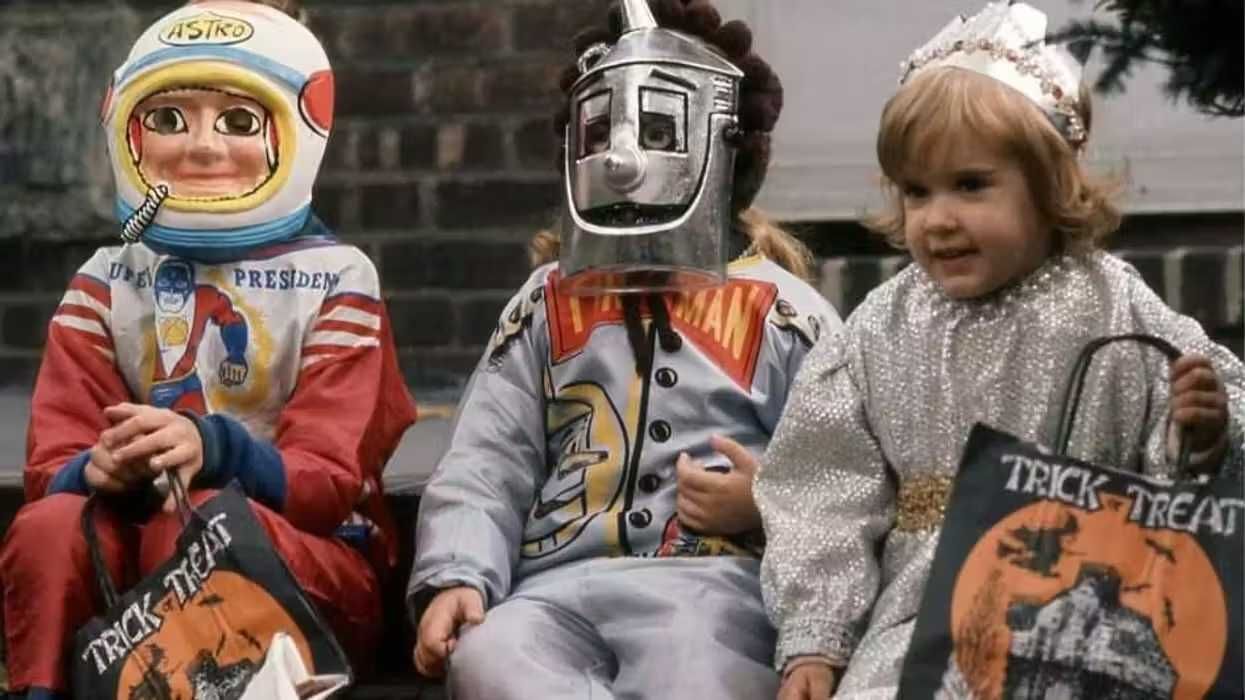
Don’t hide from Halloween. Use it to love your neighbors.



October is here again, so what the advertisers call "spooky season" is upon us. Stores are packed with Halloween candy and costumes, along with spiders and bats and skeletons (and they have been there since school started, but that’s a complaint for another day).

Last week, we talked about how too many Christians are fixating on what they perceive as the evil of Halloween — its emphasis on ghosts, witches, and death — without acknowledging that it sprang from both Christian and pagan roots and has been largely sanitized into a cultural holiday focused on costumes, candy, and neighborhood fun for children.

DON’T hit them over the head with a Bible. But don’t hide your faith either.

This has led to some (wrongly) judgmental attitudes, much of it springing from bad theology.

I ended that article with a promise that there is a better way to reclaim and redeem Halloween, because surely we Christians can do better than being the always-dark, candy-less house on the block.

Trick or tract?

Our highest calling, of course, is to love our neighbor. And Halloween brings those neighbors to our door, literally. What if we prayerfully and thoughtfully considered how we can bless those neighbors on this one day, with an eye to building relationships?

I am not talking about handing out Christian tracts instead of candy. Don't be that person.

I am talking about eagerly seeking an opportunity to connect with at least one if not more families in your neighborhood with whom you can begin to build relationships. This, in fact, is why God has you where you live (see more on this here).

Let me tell you about what one family did for Halloween. They set up a tent in the driveway, hung lights from it, and under the tent placed their BBQ grill, on which they cooked hot dogs. A table held buns and condiments, a bowl of Halloween candy, and Jell-O shots for the adults. They publicized this on the neighborhood webpage a day or two before Halloween.

To be clear, they weren't Christians seeking to love their neighbor. They were seeking to promote the father's business. But how might we promote our Father's business similarly?

Halloween hospitality

  1. If you have access to one, a tent in the driveway with lights strung on it is very welcoming on a dark night!
  2. Grilling hot dogs was a pretty good idea — another might be a big crock-pot filled with chili, with paper cups and spoons for serving.
  3. A hot drink station with cocoa, cider, tea, etc.
  4. Freshly made pumpkin bread or oatmeal cookies in little treat bags as an alternative to commercial candy.
  5. Set out lawn chairs and invite people to sit down and rest for a moment — and if they do, introduce yourselves and get to know their family.
  6. Let your kids dress up and pass out the goodies (if you also allow your kids to trick-or-treat, one of you can hold down the fort while the other takes the kids around the neighborhood).
  7. Let people know a day or two ahead that you welcome them to come by and "sit a spell," as the saying goes.

This will cost you time, effort, and money. But it is a ministry investment in the lives of precious people God has placed in your neighborhood. You can't love them if you don't make an effort to know them, and you can't know them if you never even meet them.

And they will know you after this!

You could also just set out lawn chairs toward the end of the driveway where you will be able to actually see and converse with the adults as you pass out candy. Compliment the kids' costumes. Ask the adults where they live in the neighborhood. They won't linger long without a reason to stop at your house, but at least you'll physically meet some of them. Since most parents don’t accompany their kids all the way up to the door, you at least have to get out where they are!

RELATED: Halloween isn't opening a door to demons. Christians need to stop pretending it is.
Walter Leporati/Getty Images

A few do's & don'ts

  1. DO wear a costume. Bible costumes are fun. So are a lot of others. Don't be anything that will scare children. Don't be a witch. Don't be the devil (duh).
  2. DON'T hand out Christian literature that talks about how evil Halloween is. In fact, you don't have to hand out Christian literature at all. But if you do, hand it out with full-size candy bars.
  3. DO ask their name and where they live in the neighborhood. Discreetly record a voice message to yourself or write down names and information — the idea, after all, is to use Halloween to start building a relationship. See #6 below.
  4. DON'T exclude your kids from this opportunity. Recruit them to participate as fully as possible in your family blessing the neighborhood, whatever you end up doing.
  5. DON’T be a Halloween hider. What a sad message you send to your children by turning off all the lights to avoid the neighbors. God put you in your neighborhood. Unless you live somewhere with no trick-or-treaters, get out there and redeem the opportunity.
  6. DO follow up! Sometime in November, reach out to someone you met on Halloween and invite him or her over for coffee or to watch the big game or for a casual dinner. Your goal here is to become an authentic friend. As you get to know each other, don’t be afraid to ask for help on something, either — that’s what friends do.
  7. DON’T hit them over the head with a Bible. But don’t hide your faith, either. Practice transparent honesty and pray for the opportunity to discuss deeper things. Until then, BE the deeper thing.

Halloween is an opportunity for your family to bless others and begin forging relationships to lost people in need of Jesus. I would love to hear about your family’s experience redeeming this annual event by loving your neighbor!

Editor's note: This article has been slightly expanded from Diane Schrader's 2025 article on Halloween.

Steve Deace drops 8 key lessons for conservatives after Zach Lahn’s stunning Iowa upset


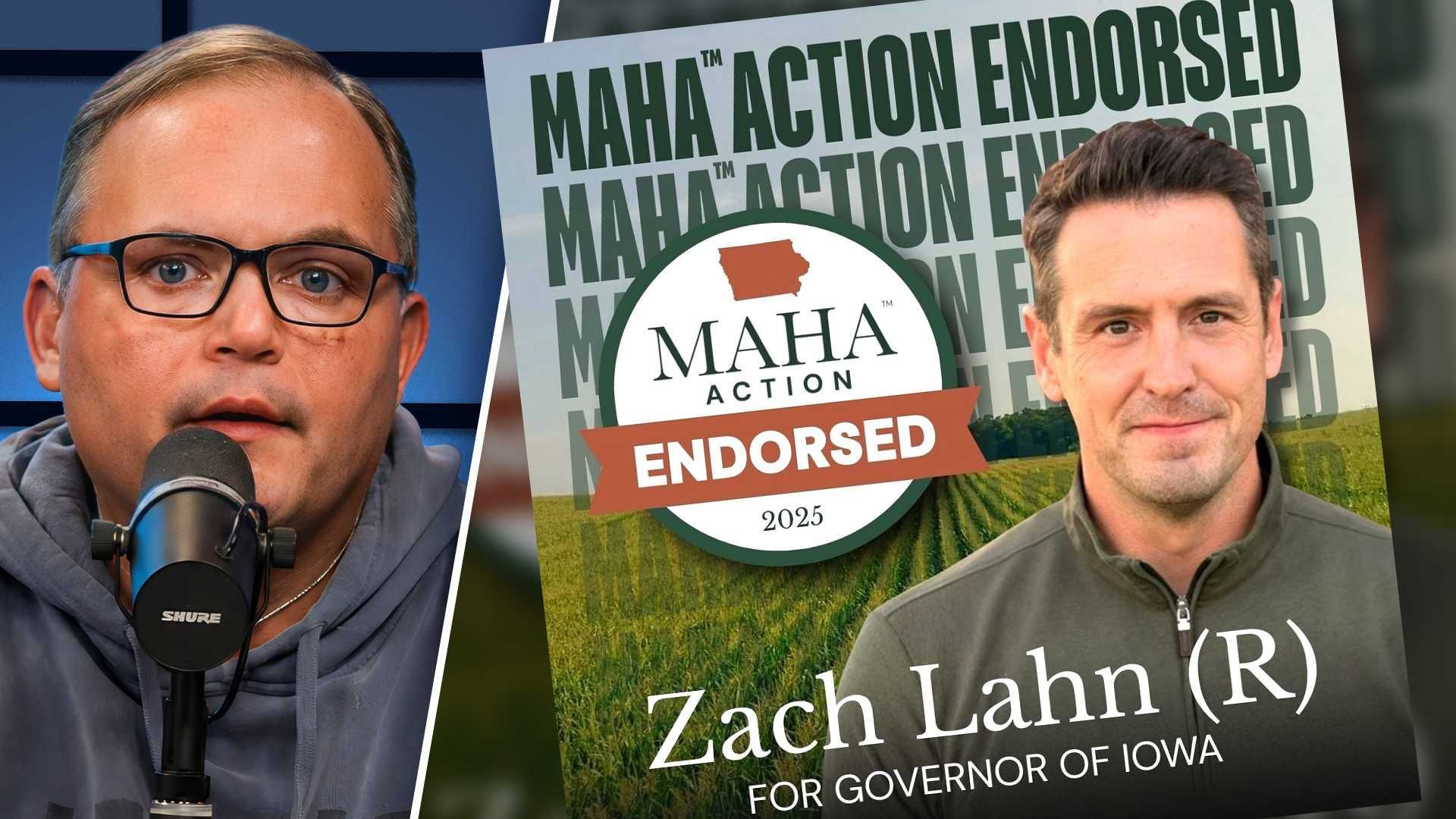
On June 2, Zach Lahn won the Iowa Republican gubernatorial primary. Campaigning as an "Iowa First" outsider focused on water quality, reducing corporate influence, and core conservative issues, the political newcomer and farmer/businessman pulled off a shocking upset, earning about 38% of the vote in a crowded five-candidate race and narrowly beating Trump-endorsed Rep. Randy Feenstra.

On this episode of the “Steve Deace Show,” Deace extracts “8 lessons” the political right can learn from Lahn’s stunning victory.

Lesson #1: Christian conservatives are changing from being profile-driven to issue-driven.

Deace explains that historically, Iowans have voted for people that look the part.

“We're flyover country, and a lot of times the rest of the country just kind of wants to look down and sneer at us. So understanding us — being from us, one of us — is a big thing,” he says, noting how Iowa’s longtime senior Senator Chuck Grassley has been running successful campaign ads showing him “driving a tractor” for his entire political career.

But Lahn’s victory proved that voting based on profile is “no longer the model.”

“We can now see it's a paradigm shift — that issues now matter more than the profile does,” says Deace, highlighting how Lahn “spoke to the issues” and defeated opponent Adam Steen who “represented the profile.”

Lesson #2: MAHA and Christian conservatives are the coalition of the future.

Lahn’s success was largely a result of his ability to appeal to Make America Healthy Again supporters. Endorsed by RFK Jr.’s MAHA Action PAC, his campaign zeroed in on Iowa's cancer crisis, water toxicity, and use of chemicals and pesticides in farming.

Deace predicts that the union of MAHA advocates and conservative Christians will be the right’s strongest weapon in future elections.

“You see this especially with our mamas and our nanas,” he says, noting how the government’s handling of COVID-19 created a deep skepticism that will surely continue to influence voting.

Lesson #3: Issues still trump everything.

Just days before the primary, Deace — who had earlier endorsed Adam Steen — released a last-minute video endorsement for Lahn, which he says was the “last spackle of frosting on the cake” that pushed him to his razor-thin victory.

But that’s not a pat on his own back. Lahn, Deace argues, was only in the position where he could be nudged to victory because he ran on “hard-right issues.”

“If I put that video out about Zach Lahn, but he hasn't been running all the issue ads they did the last few weeks, does it work? No,” he declares.

“They baked the entire cake. I helped them with the frosting.”

Lahn’s victory, he argues, is proof that “the number-one thing our people want to vote on is issues.”

Lesson #4: This wasn’t a 'loss' for President Trump, but one of his most impressive shows of force yet.

Many political observers and media outlets are interpreting Lahn’s win as a notable loss or setback for Trump, who endorsed Feenstra.

But Deace pushes back on that narrative. “Folks, this was actually one of the most impressive shows of force that Trump's ever had with an endorsement,” he counters.

Deace marvels that Trump was able to “[take] a candidate that his own base did not like, who saw his negatives go up by 20 points in the last three months” and “in less than four days with no major media in our state” made him jump “at least 10 points.”

“He got people to vote for a guy they didn't like because they like him more,” he says, calling it an “incredibly impressive feat.”

Even more impressive is that Trump was able to accomplish this despite rural Iowans suffering the most from the rise in diesel prices thanks to the U.S.' ongoing conflict with Iran. The fact that Feenstra only narrowly lost to Lahn is proof of how deep Iowa’s Trump loyalty runs.

Lesson #5: The generational divide is real, and it’s here.

“What we saw is Feenstra won the oldest of voters, and Zach Lahn won every other group,” says Deace.

“If you're 65 or older, you narrowly voted for Randy Feenstra, and if you were under 65, you narrowly voted for Zach Lahn,” he continues, noting that this same dynamic played out in the Thomas Massie-Ed Gallrein race.

Deace interprets this as proof of the “generational divide” within the Republican voter base.

Lesson #6: Reports of the demise of TPUSA continue to be greatly exaggerated.

Since the atrocious assassination of Turning Point USA founder Charlie Kirk in September 2025, several outlets have reported that the nonprofit, which is heavily credited with helping Trump get re-elected in 2024, is losing influence.

But Deace says Lahn’s victory debunks this claim.

Immediately after Trump endorsed Feenstra, TPUSA formally endorsed Lahn, which Deace speculates was not a counter-endorsement but rather coincidental timing.

Even though this was the first time TPUSA has ever gone against Trump, the organization stuck with the endorsement and went “all in,” with door-knockers and full effort the weekend leading up to the primary, proving TPUSA is still a strong, committed organization.

Deace calls it “a helmet sticker for TPUSA.”

Lesson #7: If you don’t come in with your money or already have high name ID, you probably can’t beat the establishment in a statewide election.

Deace argues that in today’s environment, it’s almost impossible for a first-time candidate like Adam Steen to win a statewide race unless he comes with wealth (like Lahn) or already has high name recognition — because campaigns are very expensive.

The other factor at play is Trump’s “king” power. His endorsement holds so much weight that major donors and organizations are scared to back anyone else, fearing that Trump might endorse an opponent and make the investment worthless.

That’s why Feenstra, who was “as dead as Star Wars” on the Thursday before the primary, almost won, says Deace. Trump’s last-second endorsement was powerful enough to boost him from hopeless to the narrow runner-up.

Lesson #8: Nominate candidates who energize and unify the base.

Deace argues that Lahn is a much stronger general election candidate than Randy Feenstra because Iowa Republicans have a huge built-in advantage: “over 200,000 more registered voters than Democrats.”

Feenstra, he says, “disappointed” and “dissed” the conservative base as a congressman, which would negatively affect voter turnout. At the same time, Democrats would do what they always do and call him “the worst, most Nazi, most homophobic, transphobic, racist that's ever racisted and transphobited.”

With Lahn, however, the base is actually excited and unified, meaning more Republicans will actually show up to vote in November.

“With Zach, we have a chance to control what we can control — mobilize, unite our base, inspire our base with messaging they want to vote for, not branding they want to vote against,” says Deace.

To hear more, watch the episode above.

Want more from Steve Deace?

To enjoy more of Steve's take on national politics, Christian worldview, and principled conservatism with a snarky twist, subscribe to BlazeTV — the largest multi-platform network of voices who love America, defend the Constitution, and live the American dream.

Sexual politics online makes for strange bedfellows


A report from the field

For reasons I’m not entirely clear on, I happen to be someone who often finds himself in wildly different social circles through Facebook groups, email lists, and IRL gatherings. And when I say “wildly different,” I mean woke media and academic types, so-called TERFs and third-wave feminists, anarchists, MAGA, new right, tradcaths, rationalists, postrats, classical liberals, and more. If you have thoughts on some fringe, I’ve probably been in its group chat or at an event in the past two years. (Except tankies — I draw the line there.)

Why it is that I somehow end up circulating in all these niches is a weird topic for another day, but the point of this piece is not to brag about my network but to report on a phenomenon I’ve observed at work in many of these groups: People are turning on each other over sex.

Honestly, I’ll just go ahead and say it: "ladypenis is not actually real" is a profoundly weird confession for a group to come together over.

This is so wild to me that it has taken me a long time to come around to admitting that every group everywhere on the political and social map seems to be crisscrossed by the same set of unstable fault lines around sex and related issues of gender, porn, prostitution, stripping, drag, and the rest of the rainbow.

I’ve seen groups on the left and the right turn on each other over the exact same handful of issues — mostly around porn and sex, especially with regard to minors.

That infamous New York Post story on the high school “porn literacy” class? I’ve found Jacobin types and Reason types on both sides of the following question: Is that class an appropriate, mature society’s response to the present ubiquity of smartphone porn, or is it an offense against man and God that should probably see some folks go to prison?

Feelings about sex are a spectrum

I wish I could give more color on the various lefty and righty versions of the Big Sex Split I’ve seen play out over and over again in the past two or three years, but I can’t because I wasn’t in those venues to report on them and those aren’t my stories to tell. But you’ve all seen this kind of thing by now, no doubt, so you know how it goes.

What I can do, however, is characterize the way I’ve seen this split play out more generally — and especially on what’s now being called “the new right.” (I guess I’m now on the new right? I know a lot of people who are in that category, myself included now, but none of us seem to know what “the new right” is.)

In my experience, which, as I said above, is quite varied, I’ve seen the reactions to what we might call “pride-coded,” sexualized practices involving kids fall along the following spectrum:

  1. It’s compulsory. To not involve your kids in this is to teach them to hate.
  2. It’s good, actually.
  3. Eh, it’s fine. Whatever. Why do you care?
  4. It’s gross, but people should be able to decide for their own kids.
  5. It’s gross, and theoretically, we’d like it to stop, but we don’t see a viable strategy for shutting it down that doesn’t also violate other principles we care about. So what can you do?
  6. It’s gross, and we will stop it ASAP by any means necessary, leaving no power or capability or method on the table out of some misguided commitment to principle. The only principle at work here is: You don’t get to do whatever the hell this is.

In my time in varied lefty and righty circles, I have absolutely seen all six of these points of view articulated and affirmed. I’ve even seen #6 crop up in extremely woke circles around straight-coded sexualized practices involving kids (child beauty pageants, purity balls, conversion therapy).

My thesis is that where you fall on the above spectrum of sex reactions is now far more important for sorting you into a tribe than any other issue in any other sphere (politics, economics, religion, etc.). People are asking if we're post-liberal, but the sex controversies have me wondering if we're not almost post-ideological. In the age of outrage, we're all the way back to drawing our primary identity lines around animal basics.

Take this quiz!

So where exactly do you fall? I’ve found that you can take any sexy or sexualized practice, event, or spectacle, run it through the above sex reaction spectrum, and which bucket you end up in will determine who your people are and which members of your own scene you’re willing to tolerate vs. which members you want to purge.

Here’s a sample list of scissors to run through the above list and see where you land:

  • Drag Queen Story Hour
  • Drag Brunch for kids
  • Kids putting dollar bills into strippers’ thongs, doing pole dancing with strippers, or some other sex-work-related activity
  • Schoolbooks that present sex work to kids as just another kind of work
  • Pride parades with kink on full display and kids present and even participating
  • Drag kids
  • Child beauty pageants
  • Evangelical purity balls
  • Gay conversion therapy
  • Porn use by teens (especially 16 and up, since 16 is where I’ve seen some lefties drawing the porn age line lately)

(I threw a few right-wing ones there just to mix it up. But you get the idea.)

For any given scene you’re in, no matter what it’s nominally centered on or what its professed norms and commitments are, you can reliably toss out one of the items in the list above and watch people turn on each other like Greek gods over a golden apple.

You know I’m telling the truth because you’ve seen it too, haven’t you?

Indeed, nowadays, whenever I find someone I really vibe with, I’m always mildly terrified I’m going to find out they’re on a part of the sex-reactions spectrum on one of these issues that I simply cannot tolerate or that I’m on a part of it they can’t tolerate. Even more terrifying for me as a parent is the thought that one or more of my kids will end up on the opposite side of some schism from me.

These splits are happening so often that I now believe there is no existing coalition, polity, scene, or tribe of any size or level of diversity that has not or will not eventually shatter into subgroups based on the spectrum.

  • Feminists have split over whether biological sex matters for women’s oppression.
  • New Atheists have split over biological sex’s reality.
  • Christians have long been divided into “affirming” and non-affirming camps on gay marriage.
  • Classical liberals are often bitterly divided over whether restrictions on internet porn are an unacceptable infringement on liberty (resulting from an '80s-style “moral panic”) or regrettably necessary to the continued functioning of civilization.
  • The evangelical right is split over whether Drag Queen Story Hour should be permitted by law on pluralist grounds or should be outlawed on “holy cow, David French, are you for real with this?!” grounds.

Whenever I find myself in a new scene, I immediately start trying to sniff out where on the spectrum different clusters of members fall, because those are the splinter groups that will form when the whole thing inevitably blows up over some sex scissor.

Strange bedfellows

One of the more bizarre effects of this shattering and fracturing is how these schisms bring former enemies together into social formations that are so surreal they have to be experienced IRL to be believed.

You can walk into some “based” or “new right” events nowadays and encounter an incredible variety of ethnicities, religions, classes, and economic ideologies, but they’re all united in the following deeply held conviction: There is absolutely no such thing as “ladypenis,” and if you’re telling kids there is, then you should definitely not be allowed to do that and you should probably also be on some kind of watch list.

Honestly, I’ll just go ahead and say it: “Ladypenis is not actually real” is a profoundly weird confession for a group to come together over. It’s pretty gonzo, right? Yet here we are … and, honestly, here I am. I fit right in.

You can feel the weirdness, too, when you’re at some gathering and you’re like, “Wow, look at this crowd … surely there has to be something that brings these folks together besides their willingness to publicly confess that ladypenis is a lie?” But right now, that’s often enough.

A ray of hope?

The beast is coming for all of us eventually. As long as the social graph is powered by advertising, it will continue to rage, and all of us will eventually run into one of two camps: “it is compulsory” or “it is illegal.” The center cannot hold, and if you think it can … well, have you seen the center lately?

If there’s a ray of hope out there, I look for it in Musk’s subscription model. I think Musk correctly apprehends a dynamic I’ve covered in detail in my newsletter: The social media advertising machine feeds on engagement, and the best way to drum up engagement is to stimulate outrage. If he can move the revenue base away from the spiritually corrosive ad model to a model where users are paying for the value they get from the network, he has a shot at turning Twitter into a net benefit for society.

Obviously, the incumbent class of successful outrage merchants hate this plan and have pilloried it since it was announced. That’s a good, crowd-sourced signal that what he’s doing might work. Because in any world where being a human scissor is a losing strategy, they’ll all fade back into well-deserved obscurity.

Reclaim the rainbow from the Alphabet Mafia


On June 16, the Los Angeles Dodgers hosted “Pride Night” — and many baseball fans were not happy about it, despite “Pride Night” being an annual tradition.

Why?

Outrage was centered around the fact that the organization invited the Sisters of Perpetual Indulgence, an anti-Catholic hate group made up of drag queens who dress up as Catholic nuns.

This original backlash led to the Dodgers uninviting the group, however, they quickly reinvited and apologized to the group after facing even more backlash from LGBTQ+ activists.

In a team statement, the Dodgers said, “We have asked the Sisters of Perpetual Indulgence to take their place on the field at our 10th annual LGBTQ+ Pride Night on June 16th.”

“We are pleased to share that they have agreed to receive the gratitude of our collective communities for the lifesaving work that they have done tirelessly for decades,” the statement continued.

The group received the Community Hero award before the Dodgers’ home game against the San Francisco Giants.

Jason Whitlock, like many other sports fans, was not pleased.

Whitlock teamed up with rapper Bryson Gray, "Fearless" contributor Shemeka Michelle, and gospel artist Jimmy Level to take matters into their own hands.

The group got to work and wrote a song called “Reclaim the Rainbow” — which rap fans, Catholics, and conservatives alike are absolutely loving.

The rap is designed to help people take the rainbow back from the Alphabet Mafia and remind America that those colors are about God's promise — not man's pride.

The track has been topping the iTunes charts since its release. By June 18, it hit #1 in Hip Hop/Rap and #6 overall — and it continues to skyrocket to the top.

As of June 19, the song made its way to #3 overall.

Bryson Gray is thrilled with the song's success, tweeting, “I told y’all… God will win.”


Want more from Jason Whitlock?

To enjoy more fearless conversations at the crossroads of culture, faith, sports, and comedy with Jason Whitlock, subscribe to BlazeTV — the largest multi-platform network of voices who love America, defend the Constitution, and live the American dream.

Kohl's faces potential 'Bud-lighting' over its LGBT agitprop targeting toddlers


Concerned parents and other conservatives, newly reminded of their capacity to hold businesses accountable, are prepared to once again wield the power of the purse. This time, the department store chain Kohl's is the business believed to be deserving of a chastening.

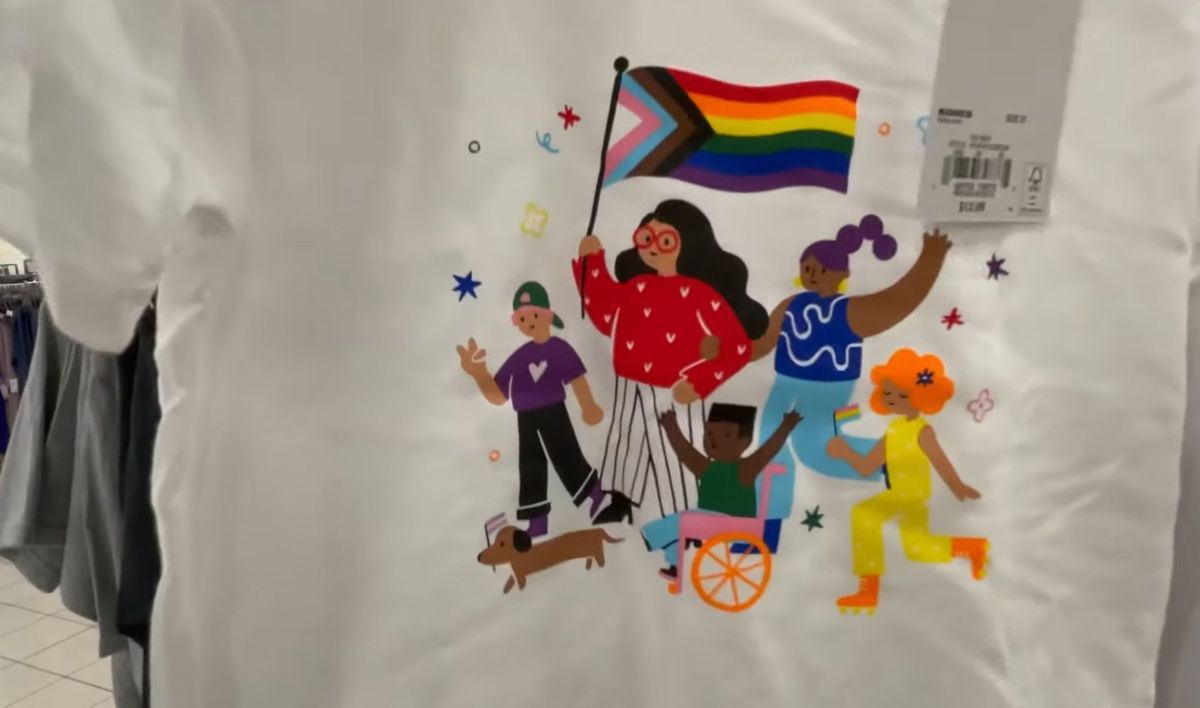
Kohl's is ostensibly in the business of selling clothing, bedding, appliances, and ephemera. Some shoppers have highlighted that the retail chain is also in the business of peddling LGBT propaganda.

The retailer, which has over 1,100 stores in 49 states, notes on its website, "We are committed to amplifying and affirming the voices of the LGBTQIA+ community, celebrating the joy that comes from living authentically and unapologetically not just this month, but all year long."

Kohl's catalogue makes clear its commitment to advancing the LGBT agenda.

Turning Point USA ambassador Alex Lorusso noted that among the company's activist apparel is a "Baby Sonoma Community Pride Bodysuit Set," fitted for newborns, 3-month-olds, and toddlers of various sizes.

"Celebrate the joy that comes from living authentically and unapologetically during Pride month and all year long," says the outfit description on Kohl's site.

\u201cIn case you need clothes for your Gay or Trans 3 month old, Kohl\u2019s has you covered\u201d
— ALX \ud83c\uddfa\ud83c\uddf8 (@ALX \ud83c\uddfa\ud83c\uddf8) 1685314649

Extra to selling LGBT activist baby bibs and kitsch, Kohl's also has a "gender-free fashion brand" and an activist underwear brand called TomboyX.

Like many other big companies, Kohl's activism appears to be driven, in part, by a desire to maintain its ESG score, which is based on its internal policies as well as on the degree to which it signals its ideological compliance in outward facing actions.

Forbes noted that Kohl's was ranked as a top 50 company last year on DiversityInc's Top Companies for LGBTQ Employees, "the standard metric in ESG reports on the internal policies of a company."

Target — which similarly faces a conservative boycott over its LGBT onesies for babies, "tuck-friendly" bathing suits," drag queen books for kids, and Satanic agitprop — happens to have been ranked #4 on that same ESG-linked list. Walmart was ranked #6.

Kohl's also has a perfect Corporate Equality Index score put out by the Human Rights Campaign, a powerful LGBT lobby group. This CEI score again reflects a company's subservience to the LGBT agenda.

According to Forbes, "A perfect CEI score requires donations to LGBTQ+ causes, refusal to donate to non-religious organizations that discriminate based on LGBTQ+ issues, and support of gender transition."

The company underscores in its 2022 ESG report that it is in the business of woke evangelization, stating, "We believe embedding DEI in everything we do requires an ongoing journey of listening, learning, and taking action."

The corporate leadership behind Kohl's is not interested in just selling swimwear and toasters, but "embracing opportunities to address racial, gender, sexual orientation, and economic disparities."

One of the company's stated goals is to commit $20 million "to diverse communities from 2022 to 2025," including members of the so-called "LGBTQIA+" community, noting it had already committed roughly $8 million of that goal last year.

While Kohl's is keen to push an agenda, conservatives appear keen to push back, proposing a Kohl's boycott or what some online are referring to as a "Bud-lighting," reported the New York Post.

TheBlaze previously reported that the conservative boycott of Bud Light over the beer's partnership with transvestite TikTok personality Dylan Mulvaney has been incredibly successful, as reflected by the $15.7 billion drop in Anheuser-Busch InBev's market value since April 1.

Target, another woke company caught participating in the left's cultural imperialism, has also been dealt a significant blow. Its market shares have slipped by roughly 12.6% — roughly $10 billion in market value — since conservatives began their boycott, reported Fox News Digital.

Twitter user End Wokeness wrote, "Looks like Kohl’s didn’t learn a thing from Bud Lite and Target."

One user responded, "We already know what to do. Kohl's bud light moment."

Conservative commentator Kyle Becker suggested that Kohl's, Target, and Bud Light are all "trash companies whose main customers are lower/middle class. All of them making the stupid marketing decision to Go Woke. All of them insulting Christians and normal working class parents. This will be a painful lesson for three brands that the majority of Americans don't really like anyway."

Morgonn McMichael of Turning Point USA wrote, "Kohls’s with the PRIDE BABY clothes… stop targeting children it’s gross. #BoycottTarget was the beginning here’s another to add to the list."

YouTuber "Twisted Luck Truth" was among those who first drew attention to Kohl's LGBT clothing for children:

Kohls joins Target in targeting kids youtu.be

Like Blaze News? Bypass the censors, sign up for our newsletters, and get stories like this direct to your inbox. Sign up here!