4 Reasons Vote-By-Mail Is Insecure, And How The SAVE Act Would Fix It
 The SAVE America Act includes several safeguards that would address many of the aforementioned vulnerabilities with mass mail-in voting.
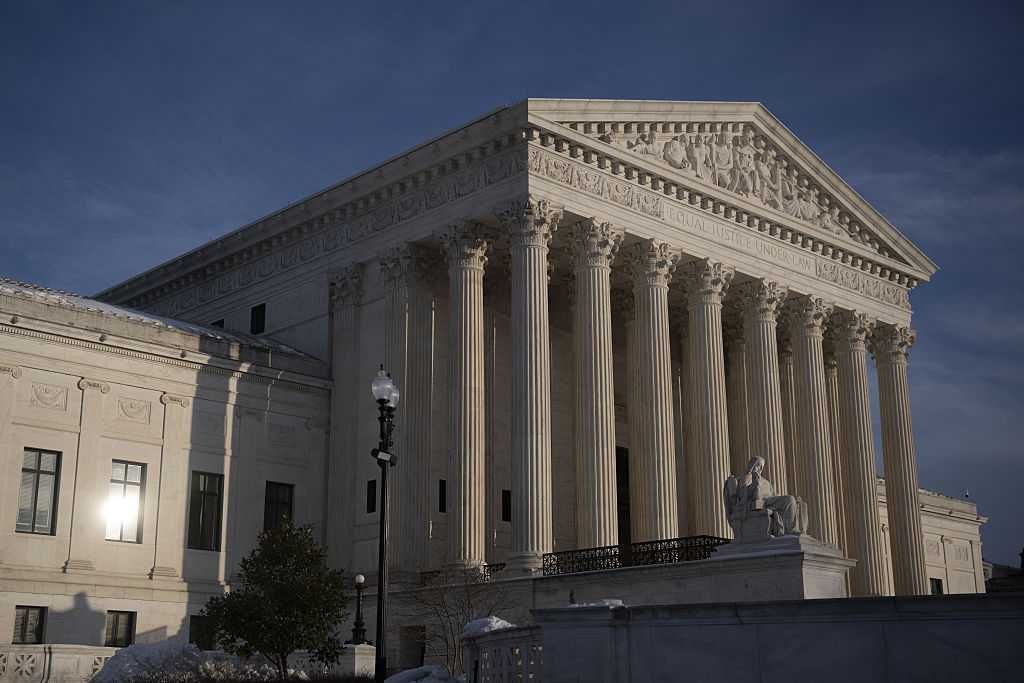
The U.S. Supreme Court is set to hear arguments on March 23 regarding whether federal Election Day law pre-empts a state law allowing election workers to count mail-in ballots received after Election Day.
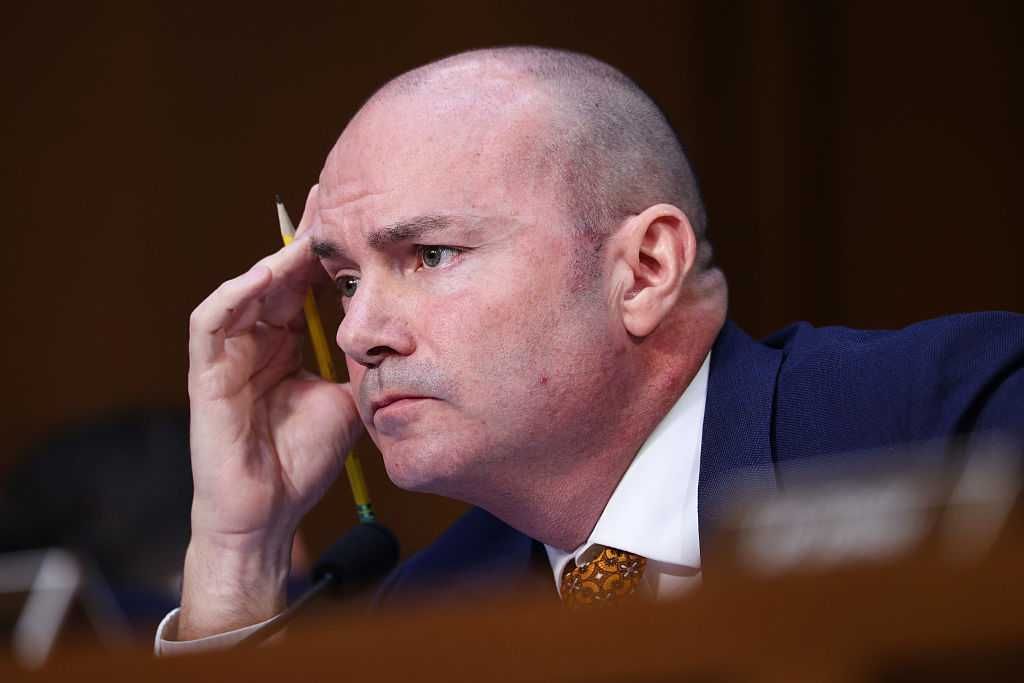
A band of conservatives including Sen. Mike Lee (R-Utah) urge the high court in an amicus brief to be filed on Thursday to consider the inevitable harms that would follow permitting states to flout the Constitution and render Election Day little more than an "abstraction," Blaze News has exclusively learned.
'Congress chose one day for federal elections, and one day only.'
The case in question, Watson v. Republican National Committee, is the result of a years-long battle over a COVID-era Mississippi law passed by the Magnolia State's Republican trifecta that permits the counting of mail-in absentee ballots postmarked by the date of the election but received up to five business days after Election Day.
The RNC and the Mississippi GOP stressed at the outset that mail-in voting is "starkly polarized by party" and "the late-arriving mail-in ballots that are counted for five additional days disproportionately break for Democrats."
While it has narrowed since 2020, the partisan divide in mail-in voting remained substantial in the 2024 election — which helps explain why so many Democrat-aligned groups have defended the practice and the Mississippi law.
The U.S. Court of Appeals for the Fifth Circuit ruled against Mississippi in October 2024, stating that its late-ballot counting statute was pre-empted by federal law. Last year, however, the state asked SCOTUS to get involved and reinstate its post-Election Day grace period.
RELATED: Lone Republican defies Trump, votes to tank the SAVE Act
Mississippi maintains that late counts are acceptable as "federal election-day statutes require only that the voters cast their ballots by election day" — that "an election requires ballot casting — not ballot receipt."
Sen. Lee, eight other GOP senators, and 15 congressional Republicans joined the American Center for Law and Justice in filing an amicus brief on Thursday in support of the legal challenge, underscoring that Mississippi's absentee ballot scheme threatens the electoral reliability and uniformity "foundational to democratic government."
Lee said in a statement to Blaze News, "Congress, exercising its constitutional authority to set the times, places, and manner of federal elections, designated one federal Election Day."
"States counting ballots received after Election Day clearly violate the certainty, finality, and trust Congress intended to establish by having nationwide elections take place on one set date," continued the senator.
The brief:
"A Constitution that so jealously rationed federal power chose, in this specific domain, to speak unequivocally: Congress would have the last word in the 'Times' of Elections for federal officers," says the brief. "Congress exercised that power here. It picked a day. One day."
The brief intimated that should the state law and the corresponding legal interpretation stand, the "very evils Congress enacted the Election Day statutes to prevent — rolling elections, strategic voting, and prolonged uncertainty" — would be likely become inevitable.
The brief suggests further that to treat Election Day as a "philosophical concept untethered to actual deadlines" would liberate states from much-needed guardrails and render them "free to continue the election well beyond the Congressional mandated election day."
"Congress chose one day for federal elections, and one day only," the brief says in closing. "The counting of late-arrived ballots [flouts] this choice by altering the pool of received votes after Election Day, in other words, by changing the results of an election that has already taken place."
Sen. Lee noted that he looks forward "to the Supreme Court recognizing that states are not permitted to conduct interminable rolling elections with late-arriving ballot surprises that invite fraud and undermine trust in American elections."
Should the high court affirm that federal law pre-empts the state law, 18 other states would likely be impacted.
Like Blaze News? Bypass the censors, sign up for our newsletters, and get stories like this direct to your inbox. Sign up here!
“I am going to lead a movement to get rid of MAIL-IN BALLOTS,” President Trump declared last week in a Truth Social post.
Later that Monday, he promised an executive order “to end mail-in ballots because they are corrupt. You know that we are the only country in the world, I believe — I may be wrong — but just about the only country in the world that uses them because of what's happened: massive fraud all over the place.”
Mail-in voting reopens the door to the fraud and vote-buying America worked so hard to eliminate a century ago.
Trump has remained consistent; even before the 2020 election, he warned: “There is a lot of dishonesty going along with mail-in voting.”
Trump doesn’t need to hedge about voting rules abroad. Poland was the only other country that considered conducting its 2020 presidential election by mail during the pandemic, but it also abandoned the attempt.
Countries don’t use the kind of mass mail-in voting now used in eight states, where all registered voters receive ballots automatically and then mail them back. That system differs from absentee ballots, which require a request and traditionally demand a reason, such as being out of town on Election Day.
The United States doesn’t just stand out for its use of mail-in ballots — it’s also distinct for its unusually broad use of absentee ballots. Of 47 European countries, 35 — including France, Italy, the Netherlands, Norway, and Sweden — ban absentee voting for citizens living in the country. Ten others — including England, Ireland, Denmark, Portugal, and Spain — allow it only if voters pick up their ballots in person and present photo ID.
Six of those restrict absentee ballots to the military or hospitalized voters, and they require verification from the military or hospital itself. The United States, by contrast, lets anyone claim he will be out of town and receive a ballot by mail.
England once followed rules similar to America’s. But in 2004, officials uncovered a massive fraud in Birmingham City Council races. Six winning Labour candidates had acquired about 40,000 fraudulent absentee votes, mainly from Muslim neighborhoods. England responded by ending the mailing of absentee ballots and requiring in-person pickup with photo ID.
France once had similarly loose rules. But in 1975, authorities exposed large-scale fraud on the island of Corsica, where dead people “voted” in the hundreds of thousands and widespread vote-buying flourished. France responded by banning absentee voting altogether.
Concerns over absentee ballots once united both Democrats and Republicans. “Absentee ballots are the largest source of potential voter fraud.” That warning doesn’t come from Trump but from the bipartisan 2005 Commission on Federal Election Reform, led by Democrat President Jimmy Carter and Republican Secretary of State James Baker III.
Voters across the spectrum still share those worries. A Rasmussen poll at the end of last year found that 59% of likely voters believe mail-in voting makes cheating easier. Majorities of black, Hispanic, and white voters agreed, along with both young and old. Only Democrats, liberals, graduate-school alumni, and those earning more than $200,000 disagreed. Earlier surveys saw similar results.
Even the New York Times once raised alarms. In 2012, the paper warned that the increased use of absentee ballots “will probably result in more uncounted votes, and it increases the potential for fraud.” But these days, that same newspaper insists voter-fraud claims for absentee ballots are “baseless” and “without evidence.”
RELATED: 'Conspiracy theorists' right again? FBI reveals MASSIVE alleged Chinese voter fraud plot
American history reinforces these concerns. Between 1888 and 1950, widespread vote-buying led states to adopt the secret ballot. Once voters could no longer prove to buyers how they had voted, the payments stopped. As one state after another started using secret ballots, turnout immediately fell by 8% to 12%, according to my research with the late Larry Kenny at the University of Florida — evidence of just how rampant the practice had been.
The Carter-Baker commission also highlighted how absentee voting enables coercion.
Citizens who vote at home, at nursing homes, at the workplace, or in church are more susceptible to pressure, overt and subtle, or to intimidation. Vote-buying schemes are far more difficult to detect when citizens vote by mail.
The problem is that both the buyer and seller have an incentive to hide the purchase.
Recent cases confirm the risks. Earlier this year, prosecutors indicted six Texans for harvesting ballots and buying votes by collecting absentee ballots. Absentee voting lets sellers prove how they voted, and ballot harvesting lets buyers ensure that the votes count — guaranteeing they get what they paid for.
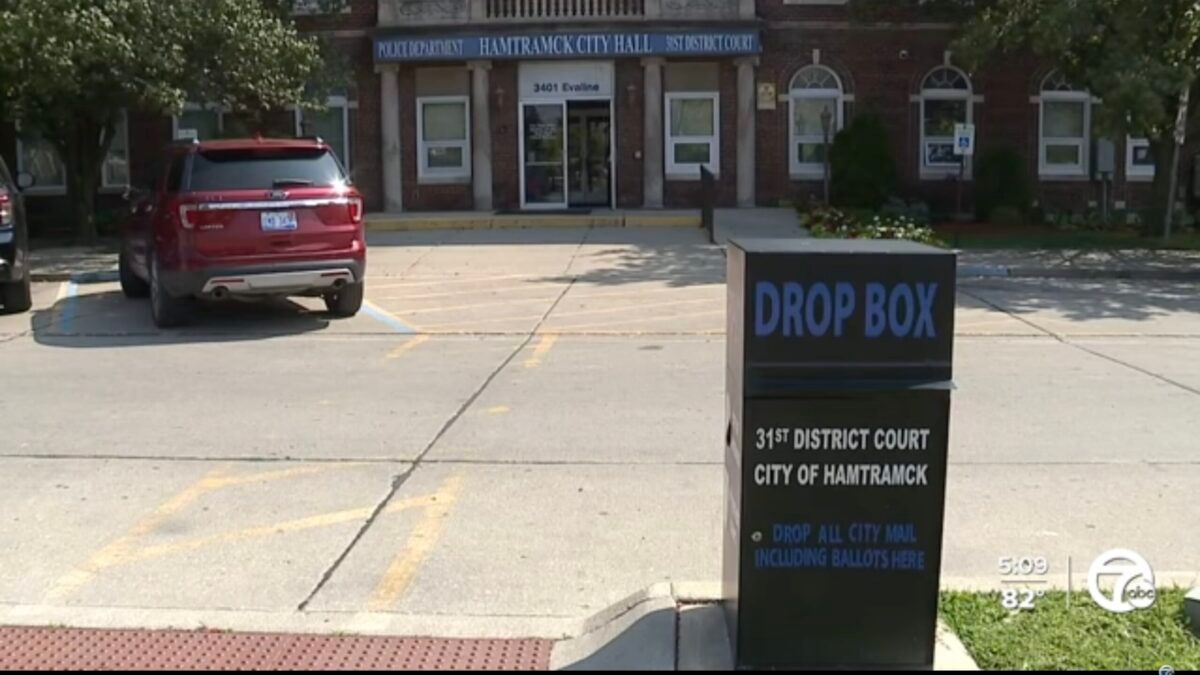
Just this month, investigators in Hamtramck, Michigan, opened a fraud case after surveillance video showed a city council candidate’s aide stuffing three stacks of ballots into a drop box. The candidate had won by only a few dozen votes.
Mail-in voting reopens the door to the fraud and vote-buying America worked so hard to eliminate a century ago. That’s why countries such as Norway and Mexico prohibit absentee ballots for citizens voting domestically. Americans deserve the same safeguard — a voting system they can trust.
Editor’s note: This article was originally published by RealClearPolitics and made available via RealClearWire.
 Meanwhile, The Washington Post runs cover for the Georgia county's 'extremely sloppy' election administration in 2020.
 The Election Oversight Group’s 250-page report points to incidents that appear to exceed election worker incompetence and 'clerical errors'.
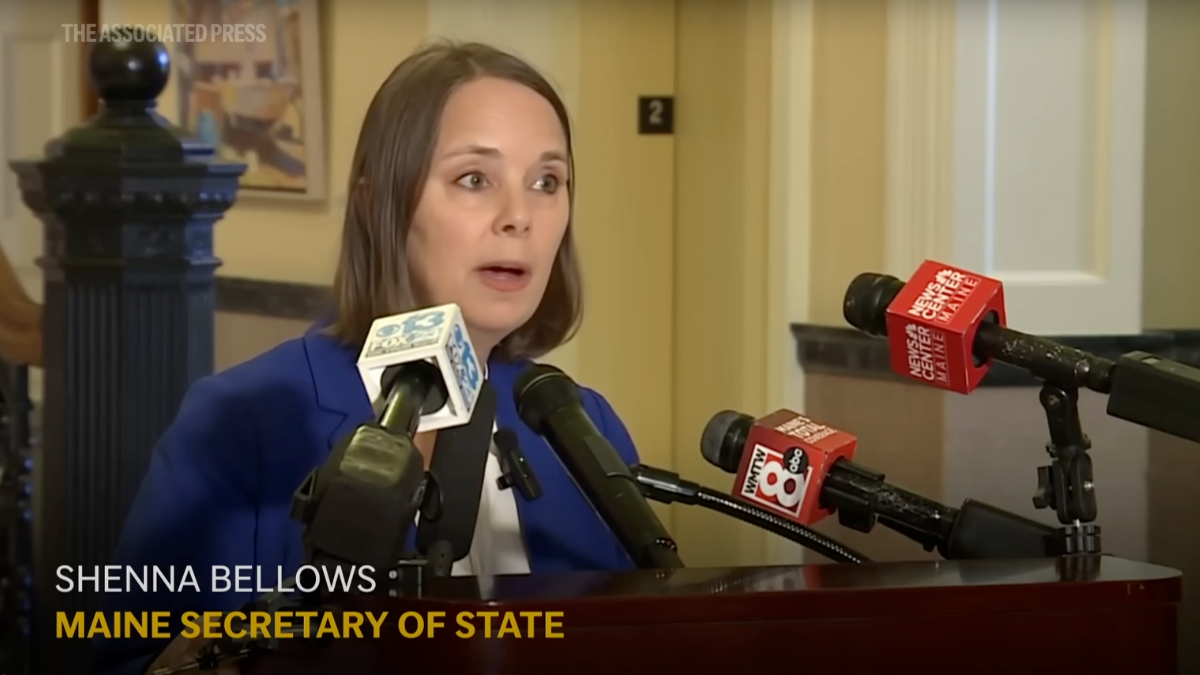 Now is the time to put an end to mystery ballot deliveries in Amazon boxes by enacting voter ID in Maine. Real democracy requires trustworthy elections, and trustworthy elections require voter ID.
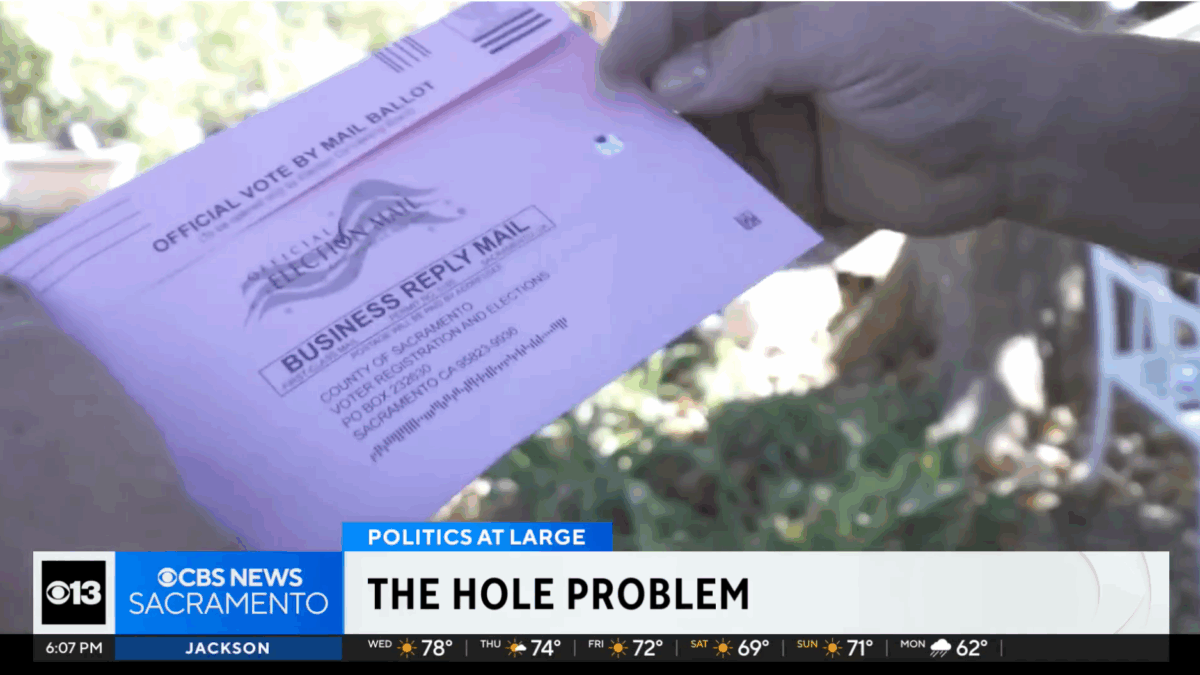 Voters have complained about problems with mail-in ballots ahead of the Golden State's referendum on Proposition 50.
 President Donald Trump announced on Monday that he would work to “get rid of MAIL-IN BALLOTS.” Democrats and their media allies reflexively attacked the president, insisting that mail-in voting is secure — as if repeating it often enough makes it true. Colorado Secretary of State Jena Griswold said on CNN that “Mail ballots are secure.” […]
 Former Madison Clerk Maribeth Witzel-Behl was derelict in her duties in a scandal involving nearly 200 uncounted ballots, a new report finds.
 Madison City Clerk Maribeth Witzel-Behl's office failed to count nearly 200 absentee ballots in November's presidential election.
 www.theblaze.com
 www.theblaze.com