Trump’s Counterterrorism Focus Shifts From Christian Parents To Antifa Thugs, Drug Cartels
 The National Counterterrorism Strategy is a refreshing reset from previous misguided activities undertaken in the name of 'counterterrorism.'
When news breaks that foreign aid programs are being paused or restructured, many Christians understandably fear the world’s most vulnerable will be left behind.
It is a fair concern. But it also raises a harder question: What if some of what we have called “help” was not helping in the way we thought?
The recent restructuring of foreign aid creates an opportunity. It allows the United States to reconsider not only how much it gives, but how it gives.
For decades, American foreign assistance has done real good in many places. But too often it has also come with expectations that placed struggling nations in an impossible position. Funding was tied to adopting policies on family life, sexuality, and bioethics that did not reflect the values of the communities receiving that aid. Governments that resisted those conditions risked losing support their people depended on.
From a Christian perspective, that should give us pause. Care for the poor is a moral calling. But care that requires communities to compromise their deepest convictions is not compassion. It is pressure, even if it is delivered in the language of progress.
Scripture calls us to love our neighbor, not to remake our neighbor in our own image.
That is why the Geneva Consensus Declaration matters. Today, 41 nations representing more than 2.5 billion people have joined this coalition, affirming that international law does not establish a universal right to abortion and that each country has the authority to determine its own laws on life and family.
These nations were not forced into agreement. Many joined because they were weary of outside institutions attempting to impose agenda-driven frameworks through funding conditions and international pressure. What they were seeking was not isolation, but partnership. They wanted to be treated not as projects to be managed, but as nations capable of shaping their own future.
This reflects a principle Christians should recognize. Human dignity includes moral agency. It includes the freedom of communities to pursue the good, before God, without coercion from more powerful actors.
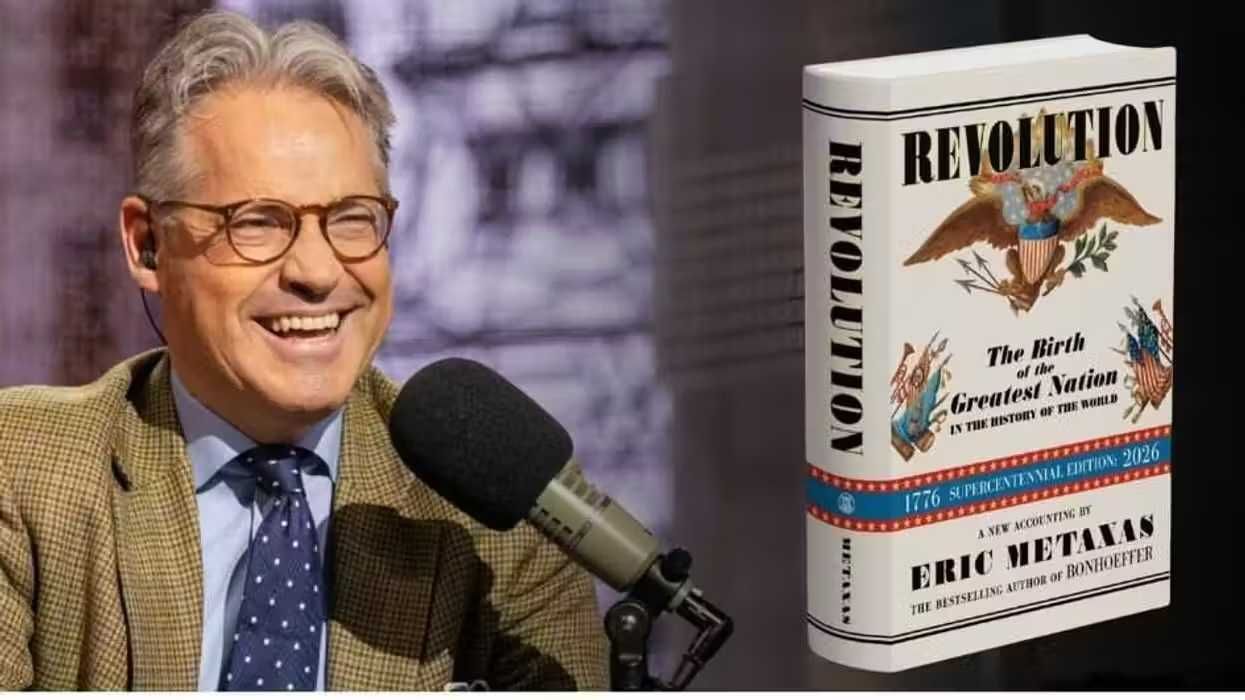
RELATED: New book from Eric Metaxas shares the American Revolution's forgotten Christian roots
There is also a practical reality the United States cannot ignore. Countries like China are expanding their influence across Africa and Latin America by offering infrastructure and investment with fewer visible conditions. America's advantage lies in offering something China cannot: genuine partnership that respects the nations it serves.
In practice, that means moving from a model of control to a model of partnership.
At the Institute for Women’s Health, we have sought to do this through what we call the Protego framework. Instead of arriving with predesigned solutions, we work alongside national leaders, faith communities, and local institutions to build programs that reflect the values and needs of each country.
In one African nation, this has meant developing a national framework for health and life-skills education with input from across society, including interfaith leaders. It is designed to reach tens of thousands of educators and health workers. The program belongs to that nation. The values behind it are its own. And when the partnership ends, the capacity to sustain it will remain.
This kind of work is slower. It requires listening, humility, and trust. But it reflects something essential to a Christian understanding of service.
We are not called simply to deliver outcomes. We are called to serve people as people, not as instruments of our own priorities.
Faithful foreign engagement takes seriously the dignity of every nation and every community. It refuses to make care for the vulnerable conditional on ideological agreement. It invests in what supports human flourishing, strong families, healthy communities, and the well-being of women and children, while ensuring that these efforts are shaped locally rather than imposed from outside.
The recent restructuring of foreign aid creates an opportunity. It allows the United States to reconsider not only how much it gives, but how it gives.
For Christians, the goal should not be to defend every existing program. It should be to ensure that our engagement reflects the character of the One we serve. We are called to help the vulnerable. But faithful service cannot be separated from humility, respect, and truth about the human person.
In a 2-1 ruling on Friday, a pair of federal appellate judges appointed by former President Joe Biden blocked the Trump administration from revoking Haiti's Temporary Protected Status designation — a special status that not only shields over 350,000 Haitian nationals from removal but enables them to continue displacing American labor.
Apparently emboldened by the D.C.-based appellate court's ruling, activists have filed a federal lawsuit in hopes of similarly blocking the Trump administration from ending Somalia's special status.
BlazeTV host Christopher Rufo and investigative reporter Ryan Thorpe highlighted in a damning Nov. 19 report various instances of alleged and confirmed fraud perpetrated by members of the Somali community in Minnesota as well as the alleged direction of stolen taxpayer funds by members of the Somali community to terrorists abroad.
'We are putting Americans first.'
Two days later, President Donald Trump announced that he was terminating the TPS designation for Somalia, stating, "Somali gangs are terrorizing the people of that great State, and BILLIONS of Dollars are missing. Send them back to where they came from. It's OVER!"
Amid multiple investigations into the pervasive fraud within the heavily welfare-dependent Somali community, the Department of Homeland Security announced in January that the crime-ridden East African nation would be stripped of its special status effective March 17.
The DHS advised Somali nationals without legal status apart from TPS to start the process of self-deporting.
Somalia was initially designated for TPS in 1991 based on a determination that there were "extraordinary and temporary conditions" in Somalia preventing its expatriates from returning. This supposedly temporary designation was repeatedly extended over the next three decades.
RELATED: Mullin inherits a mess at DHS. Here’s how he can still save Trump’s legacy.
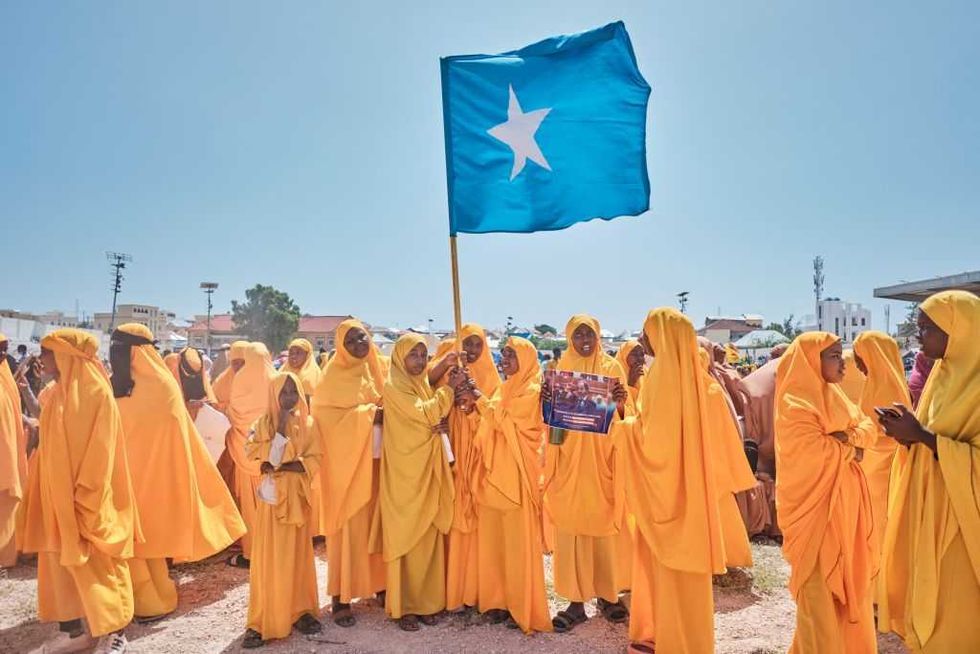
A Jan. 14 notice in the Federal Register pointed out, however, that the situation in Somalia has materially changed and that the country "today shows improved national governance and security structures and now experiences localized pockets of violence rather than nationwide, generalized conflict."
The notice stated further that "requiring Somali nationals to return to Somalia would not pose a serious threat to their personal safety as there are areas within Somalia where Somali nationals may live in safety."
DHS Secretary Kristi Noem stated, "Allowing Somali nationals to remain temporarily in the United States is contrary to our national interests. We are putting Americans first."
African Communities Together — an activist group that has challenged the Trump administration's efforts to repatriate various temporarily welcomed African migrant groups — joined the California-based Partnership for the Advancement of New Americans and four Somalis in filing a lawsuit on Monday, accusing the administration of violating the Administrative Procedure Act as well as the Fifth Amendment.
The complaint, filed in the U.S. District Court for the District of Massachusetts, downplays Somali criminality in the U.S., claims that the migrants' homeland is not as safe as the U.S. government has said, and states that the status termination was "motivated by racial, ethnic, and national-origin discrimination."
This theme — that the Trump administration and Trump's popular deportation agenda are racist — continues throughout the lawsuit and appears to be based on a presumption of racial animus on the part of the Trump administration.
The lawsuit presumes, for instance, that race was a factor when the administration left protections in place for Ukrainians but not for Somalis and Haitians. The complaint makes no mention of Ukraine's ongoing war with a nuclear power which has so far resulted in over 1.2 million casualties.
"The Trump administration has long embraced an anti-immigration agenda, which includes an objective of eliminating or severely restricting access to TPS for non-white, non-European immigrants," the complaint reads, "targeting them with racist rhetoric and attempting to use any mechanism possible to remove them from the country."
One example of supposedly "racist" commentary cited in the lawsuit was Trump's statement during a Nov. 27 press conference that "Somalians have caused a lot of trouble. They're ripping us off for a lot of money."
The lawsuit also referenced Trump's commentary during a Dec. 2 Cabinet meeting, specifically his statement, "I don't care. I don't want them in our country. Their country is no good for a reason. Their country stinks, and we don't want them in our country. I can say that about other countries too."
In addition to characterizing the administration as racist, the lawsuit complains that without the special status, former TPS beneficiaries will lose employment eligibility and benefits, which supposedly amounts to "severe" harm.
DHS did not respond to Blaze News' request for comment.
The Trump administration announced over the weekend that it intends to pursue an appeal at the U.S. Supreme Court to see through its termination of Haiti's TPS, Reuters reported.
Like Blaze News? Bypass the censors, sign up for our newsletters, and get stories like this direct to your inbox. Sign up here!
I recently ran a rather grueling race in Cape Town, a city ranked the world’s most stressful place to visit. By the end of my stay, I understood why.
Race morning brought cold Atlantic air. Table Mountain stood like a fortress. The scene was impossibly beautiful. Then the warnings began.
Julius Malema, the deranged leader of the openly Marxist Economic Freedom Fighters, has led crowds in chanting 'Kill the Boer,' the Afrikaans term for farmer.
“Stay where the crowds are after you finish,” an organizer told us.
A gray-haired runner, tying his never-before-worn Asics, gave me a knowing look, the kind that said "enjoy yourself, but stay alert." The gun fired. We surged forward. And Cape Town revealed itself in fragments.
The route hugged the ocean. Waves crashed against huge rocks. Sunlight rippled across the bay. Spectators shouted encouragement from spotless sidewalks. Cyclists zipped by in neon helmets. In Sea Point and Camps Bay, Cape Town looks effortlessly affluent: palm trees, clean promenades, and cafés filled with people sipping espressos. You could be forgiven for thinking the warnings were overstated. They weren’t. If anything, they were understated.
South Africa’s “Mother City” lives with staggering levels of violent crime. Armed robberies are frequent. Carjackings happen in broad daylight, averaging more than four an hour. Drivers slow at traffic lights but leave space ahead, ready to bolt. Doors lock automatically. Security companies advertise response times the way pizzerias advertise delivery. Sexual assault remains widespread, not just among women but also among children. In the Western Cape alone, nearly 2,000 sexual offenses against minors were recorded in a single quarter last year. The numbers are sobering; the anxiety is constant.
Security is everywhere. High walls ring homes like fortresses. Electric fencing hums overhead. Razor wire catches the light. The message needs no translation.
RELATED: 'Mass slaughter': Trump moves to help Nigerian Christians under attack
A few hours before I arrived in the so-called cultural capital, President Cyril Ramaphosa announced the deployment of soldiers to help fight criminal gangs, a clear sign that police can no longer contain the violence.
And violence is everywhere. Between April and September last year, an average of 63 people were murdered each day. In parts of the Western Cape, especially around Cape Town, gang warfare has become part of daily life. Children are caught in crossfire. Streets fall under the influence of savage syndicates. The gangs, armed with high-powered weapons and machetes, have grown bolder. Why wouldn’t they? Ramaphosa himself noted that soldiers aren’t trained for community policing. Their deployment now underscores the depth of the crisis.
In Gauteng province, illegal miners known as zama zamas run riot. Armed and operating in abandoned shafts, they have built criminal networks around illicit gold extraction. Residents describe intimidation, forced displacement, and operations typical of paramilitary units, not opportunistic gangs.
Ramaphosa has called violent crime “the most immediate threat to our democracy.” He’s right. It is. When criminal groups control territory, extract revenue, and outgun police, the problem is no longer confined to law enforcement. In truth, it becomes a contest over authority itself — an existential struggle South Africa knows all too well, a divided nation once again on edge.
These divisions didn’t appear overnight. Apartheid enforced separation with clinical precision. Its architects portrayed the system not as hatred but as “separate development,” claiming that divided populations couldn’t share power without conflict.
Whites were a small minority, and universal suffrage meant irreversible political defeat. Afrikaners carried the memory of previous conflicts, including the concentration camps in which thousands of their women and children died. They watched postcolonial upheaval unfold elsewhere in Africa and reasoned that without firm control, the country would descend into all-out anarchy.
Set aside outrage and judgment for a moment, and the logic reads as cautious, defensive realism. They believed strict separation would prevent barbarity, preserve a functioning economy, and protect a vulnerable minority from domination. In their minds, it was a matter of survival, not ideology. It’s easy to dismiss the apartheid movement as pure racism, a low-IQ explanation that fits neatly on a placard. But it overlooks the deeper dread that shaped it.
History didn’t end with apartheid’s fall. The country remains marked by mistrust, hatred, and absolute terror. Last year, President Trump suggested that white farmers were facing vicious reprisals. Violence against farmers is real and terrifying for those who live beyond the reach of towns and patrols. Farm attacks — home invasions, assaults, and killings — occur with regularity. Many farmers live far from towns or patrols, isolated and vulnerable when attackers strike.
Julius Malema, the deranged leader of the openly Marxist Economic Freedom Fighters, has led crowds in chanting “Kill the Boer,” the Afrikaans term for farmer. Thousands raise their hands like guns as they echo the refrain. Supporters describe it as a chant from the struggle era. Others, a little more grounded in reality, hear something far more dangerous. They hear language that calls for genocide. After all, what is being proposed is the elimination of people defined by a particular skin color. When I asked a white taxi driver whether such fears were exaggerated, he answered without hesitation: “No.”
South Africa is a beautiful country, arguably one of the most beautiful places on earth. Yet it can feel deeply intimidating, largely because it is. A tension hangs in the air, present even in the quietest moments. In many communities, it’s considered reckless not to keep multiple loaded firearms at home, ready to be used at any moment, day or night. Safety is discussed in near wartime terms. Even a simple trip to the store can feel like a roll of the dice, especially for white families.
Does South Africa have the capacity to weather the mounting unrest? I hope so, but I wouldn’t bet on it. A nation intimately familiar with bloodshed once again stands at a crossroads.
The U.S. African Development Foundation, a foreign aid agency that poured millions of taxpayer dollars into African initiatives over the past four decades, desperately fought the Trump administration's efforts to dismantle the agency and audit its finances.
It's now painfully obvious why there was so much resistance to transparency at the U.S. Agency for International Development-adjacent outfit.
Months after government watchdog Judicial Watch sued the USADF for records regarding its expenditures and in the wake of allegations that agency officials were abusing their positions and misusing funds, the USADF's director of financial management, Mathieu Zahui, is now admitting wrongdoing.
'The USADF Director of Financial Management's fraudulent acts betrayed the trust of the American people.'
Zahui, an official who denied DOGE access to the agency's financial records last year, has agreed to plead guilty to taking secret payments and lying to federal law enforcement officers about those payments.
"Mathieu Zahui is charged with accepting payments from a government contractor and then abusing his position by directing USADF funds to that contractor for little-to-no work," Assistant Attorney General A. Tysen Duva of the Justice Department's Criminal Division said in a statement on Friday. "Corruption by senior officials representing the United States cheats American taxpayers and rigs the system against honest work."
RELATED: 'STOP THE SCAMS!' Trump announces new office in DOJ dedicated to investigating fraud
The Justice Department indicated in court documents obtained by Blaze News that Zahui, 59, arranged for the USADF to pay vendors and contractors through a Kenya-based company owned by a government contractor Zahui has known since 1999.
"Zahui arranged for ADF to pay certain vendors and contractors through Company-1 rather than pay them directly," the DOJ noted in the filing. "Zahui then approved invoices for Company-1 and CC-1 that included mark-ups ranging from 17% to 66% on these pass-through invoices, even when Company-1 did no work justifying the mark-up."
The company belonging to Zahui's associate submitted over 20 pass-through invoices for the African Development Foundation for which Zahui had USADF shell out at least $617,625.49. His associate's company allegedly kept $134,886.34 of that sum as a mark-up for "logistical support."
Between 2019 and 2022, Zahui personally and directly received $12,000 in cash payments, the DOJ alleged.
Zahui and his associate's company unsurprisingly failed to disclose the details of their little arrangement to the Bureau of the Fiscal Service, which oversaw and authorized USADF's payment to external parties.
Adding insult to injury, Zahui told federal agents when interviewed in 2024 that he had never received any kickback from his friend's company.
The USADF financial director has, however, since agreed to plead guilty to one count of accepting gratuities from his associate's company and one count of making a false statement to a federal law enforcement officer. He faces a maximum of two years in prison for the first charge and five years in prison for the second.
Peter Marocco, former director of the Office of Foreign Assistance and USAID deputy administrator, wrote in response to the agreement, "USADF is garbage. A culture of defiant fraud, waste and abuse that must come to an end. This is only scratching the surface. Abolish it!"
"The USADF Director of Financial Management's fraudulent acts betrayed the trust of the American people," said Sean Bottary, the acting assistant inspector general at the USAID's Office of Inspector General.
The USADF was one of the agencies President Donald Trump ordered the elimination of "to the maximum extent consistent with applicable law" in February 2025.
Blaze News has reached out to USADF for comment.
Like Blaze News? Bypass the censors, sign up for our newsletters, and get stories like this direct to your inbox. Sign up here!
Democratic Minnesota Gov. Tim Walz appears keen to clutch pearls and hold President Donald Trump to a different standard than Walz did the previous president — especially after Trump called Walz "seriously retarded."
During a Cabinet meeting on Tuesday, Trump leaned into his criticism of Somalia, the rampant fraud in Minnesota's Somali community, and Somalia's top spokeswoman in Congress, Rep. Ilhan Omar (D-Minn.).
'This is on top of all the other vile comments.'
"Somalia, which is barely a country, you know, they have no, anything. They just run around killing each other. There's no structure," said the president.
Somalia is a Sunni Muslim nation on the easternmost part of Africa with a population of just over 19 million, a high rate of female genital mutilation, a GDP of $12.94 billion, and an adult literacy rate of 54%.
The country is a haven for crime and terrorism, ranking 34th out of 193 countries for criminality on the Global Organized Crime Index. With 10 being the most severe, Somalia scores 8.5 for human trafficking; 8 for human smuggling; 9.5 for extortion and protection racketeering; 9 for arms trafficking; 7 for financial crimes; and 7 for trade in counterfeit goods.
Trump appears to suspect that America imported some of Somalia's chronic problems when accepting its refugees.
Following a report detailing instances of alleged and confirmed fraud perpetrated by numerous members of the Somali community in Minnesota, Trump announced on Nov. 21 that he was terminating the Temporary Protected Status designation for Somalia.
RELATED: DHS to increase operations in Twin Cities region as Somali fraud becomes unignorable
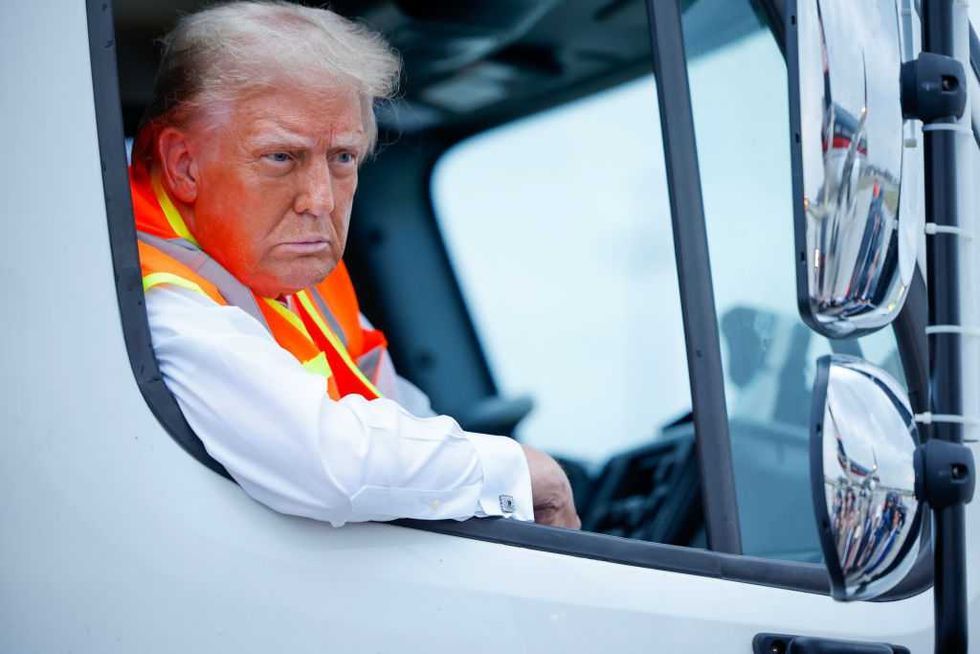
"Somalians ripped off that state for billions of dollars. Billions every year. Billions of dollars, and they contribute nothing. The welfare is like 88%. They contribute nothing," continued Trump. "I don't want them in our country; I'll be honest with you. Some might say, 'Oh, that's not politically correct.' I don't care. I don't want them in our country. Their country is no good for a reason. Their country stinks, and we don't want them in our country. I can say that about other countries too."
Trump added, "We're at a tipping point. I don't know if people mind me saying that, but I'm saying it. We could go one way or the other, and we're going to go the wrong way if we keep taking in garbage into our country."
"Ilhan Omar is garbage. She's garbage. Her friends are garbage. These aren't people that work," Trump said, leaving no room for ambiguity.
"These are people who do nothing but complain."
— (@)
Walz made a big show on Thursday of denouncing Trump's remarks and calling on others to do likewise.
"Donald Trump's calling our Somali neighbors 'garbage' and the state of Minnesota a 'hellhole' is, I'm assuming, is unprecedented for a United States president," said Walz, who has bent the truth to his benefit on numerous occasions.
The use of the term "garbage" by an American president in reference to a group of people is not unprecedented. In fact, Walz downplayed former President Joe Biden's use of the term to describe nearly half the country just last year.
When stumping for then-presidential candidate Kamala Harris in October 2024, Biden fixated on a joke made by comedian Tony Hinchcliffe about Puerto Rico during a humorous speech at a Trump rally in New York City — a rally that Walz had likened to a Nazi rally. Rather than brush off the joke, Biden apparently tried to outdo Hillary Clinton's "deplorables" smear.
"A speaker at his rally called Puerto Rico a 'floating island of garbage.' Well, let me tell you something," said Biden. "In my home state of Delaware, they’re good, decent, honorable people. The only garbage I see floating out there is his supporters."
After Biden suggested that the over 77.3 million who would ultimately vote for Trump were "garbage," Walz downplayed the remark when asked in a "CBS Mornings" interview whether that comment and others like it undercut the Democratic campaign's "closing message of unity."
"No, certainly not," said Walz. "I think that the frustration we've seen since January 6, the frustration with Donald Trump's rhetoric of division, it does fire passions."
After suggesting on Thursday that Trump's "garbage" remark was a first, Walz, a champion of racist DEI initiatives, said that "demonizing an entire group of people by their race and their ethnicity — a very group of people who contribute to the vitality, economic [sic], culture of this state is something I was hoping we'd never have to see. This is on top of all the other vile comments."
The Democratic governor said that any officials in Minnesota who would not condemn Trump's "vile attack" are "complicit in it."
— (@)
Like Blaze News? Bypass the censors, sign up for our newsletters, and get stories like this direct to your inbox. Sign up here!
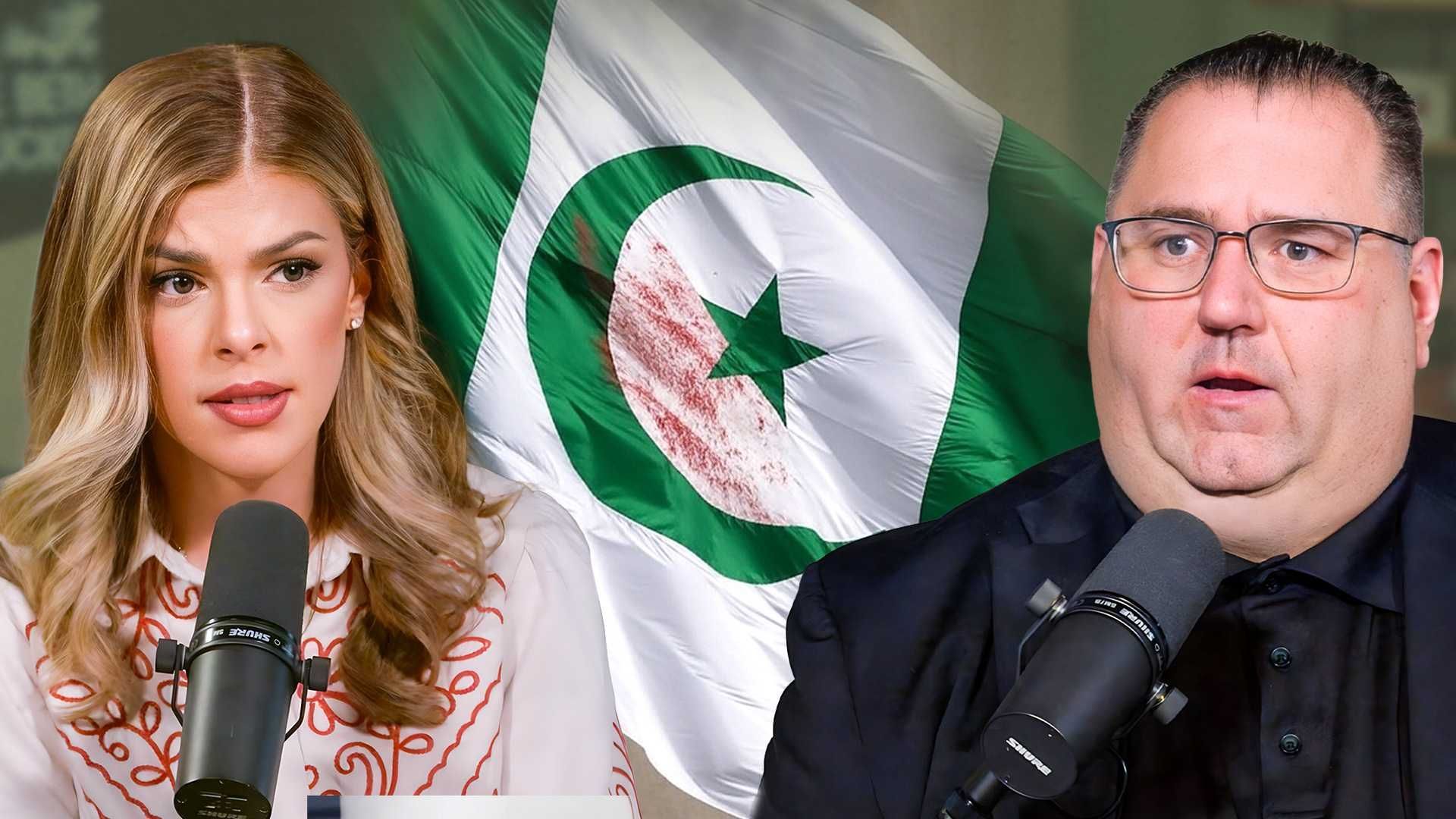
While the mainstream media consistently denies or downplays the genocide of Christians in Nigeria, Judd Saul, founder and director of Equipping the Persecuted, who consistently does mission work in the country, assures us that Christians and churches are being wiped out by militant Islamic groups while the Nigerian government turns a blind eye.
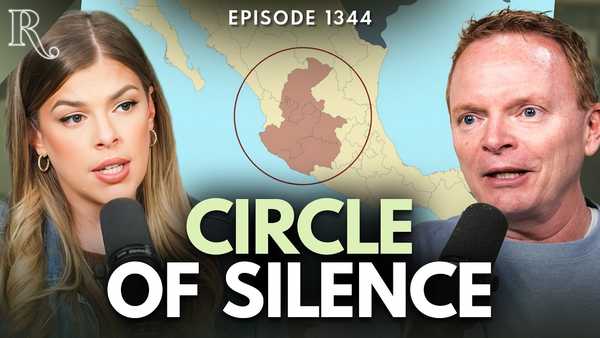
On a recent episode of “Relatable” with Allie Beth Stuckey, Saul unveiled the gut-wrenching reality of what is really happening to our Christian brothers and sisters in Nigeria.
“What's happening right now is a real-life systematic jihad against Christians perpetrated by radical Islamists from the north,” he says.
One of the Muslim groups with the most radicalized factions is the Fulani tribe, which has exploded in population in the last 30 years. This growth in tandem with the tribe’s goal to take over Nigeria has culminated in the tribe gaining political power and implementing Sharia law in many regions. However, as it expands into the nation’s southern zones, where Christianity is the dominant religion, conflict has ignited.
The Fulani, Saul says, practice the same kind of radical Islam as Isis and al-Qaeda that demands death to any who refuse to submit. This even applies to fellow Muslims who refuse to adopt their specific brand of Islam.
Some news outlets and media figures have used this fact to disprove the notion that Nigerian Christians are facing genocide. But Saul says the ratio is “five to one."
“For every Muslim killed, it's five Christians that are killed. And what you don't see in Nigeria are mosques being burned and destroyed and Muslim villages completely ransacked and taken over versus the Christian villages, where you have over 10,000 churches that have been destroyed and nearly 800 Christian communities completely wiped off the map,” he tells Allie.
Even worse, “the Nigerian government is complicit in these attacks, and they’re spending lots of money and resources to try to keep the status quo because the Fulani have infiltrated the Nigerian government; they've infiltrated the military, the entire security apparatus in Nigeria,” Saul adds.
This plays out in horrifying ways. “The people trying to defend their villages end up getting arrested by the military and put in prison, while the perpetrators, the guys actually doing the killing, get away scot-free.” And if a terrorist does happen to get arrested, he’s “let out the next day.”
The ultimate result is that Christianity is slowly but surely being replaced by Islam. The nation, once 70% Christian, is now split down the middle between Christianity and Islam, as many believers either have been killed or have converted to avoid being slaughtered.
Perhaps most disturbing, however, is who is funding this militant Muslim takeover.
“When the Arab Spring happened under Obama, and the whole destabilization of the Middle East … you saw this rise of ISIS,” says Saul. “Well, funding, weapons, everything started pouring in from the Middle East down to Northern Africa, and that is where some of the funding is coming in.”
But it’s also coming from other foreign powers, he says. China is “illegally mining all over the middle belt in Northern Nigeria.” To avoid trouble and gain mining access to “areas where Christian villages once were,” they pay these militant tribes, who then use the money to fund their violent campaign.
But the funding trail doesn’t end there. “This is how they're also financing their war is through kidnapping,” says Saul, “and currently, we estimate there's over 10,000 Christians being held in terror camps, held for ransom as we speak.”
The families of the hostages, he says, “sell everything they own” in futile hopes of seeing their relatives returned safely. “This has been a continuous funding source for the local terrorists.”
This deep-pocketed Muslim crusade against Christians and others, however, “can be stopped,” says Saul.
To hear how, watch the episode above.
To enjoy more of Allie’s upbeat and in-depth coverage of culture, news, and theology from a Christian, conservative perspective, subscribe to BlazeTV — the largest multi-platform network of voices who love America, defend the Constitution, and live the American dream.
"Christianity is facing an existential threat in Nigeria. Thousands of Christians are being killed. Radical Islamists are responsible for this mass slaughter. I am hereby making Nigeria a 'COUNTRY OF PARTICULAR CONCERN.'"
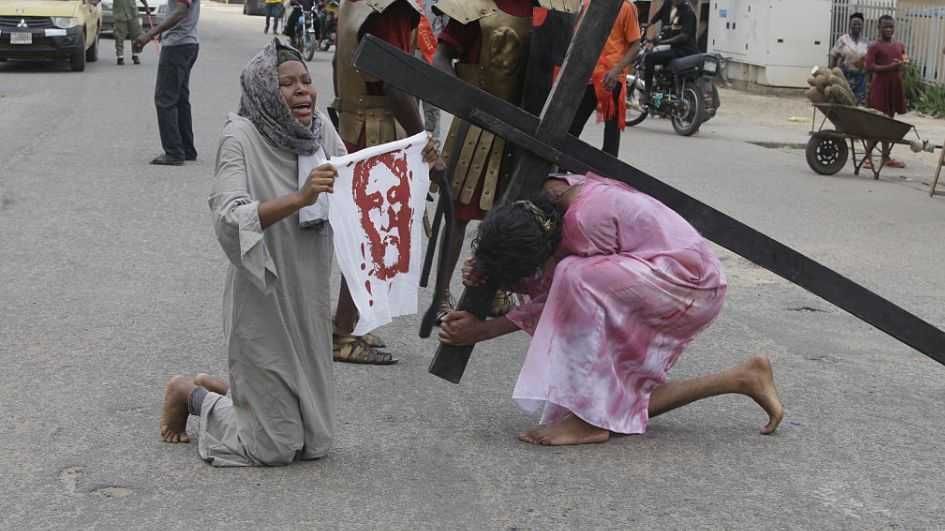
President Trump’s recent post to Trump Media-owned Truth Social focused attention on a crisis not known for being a priority of American foreign policy. But as much as the news out of Mexico and Ukraine may overshadow what’s happening in Nigeria, the situation there is no less severe. And it is indeed an “existential threat” that should especially concern Christians.
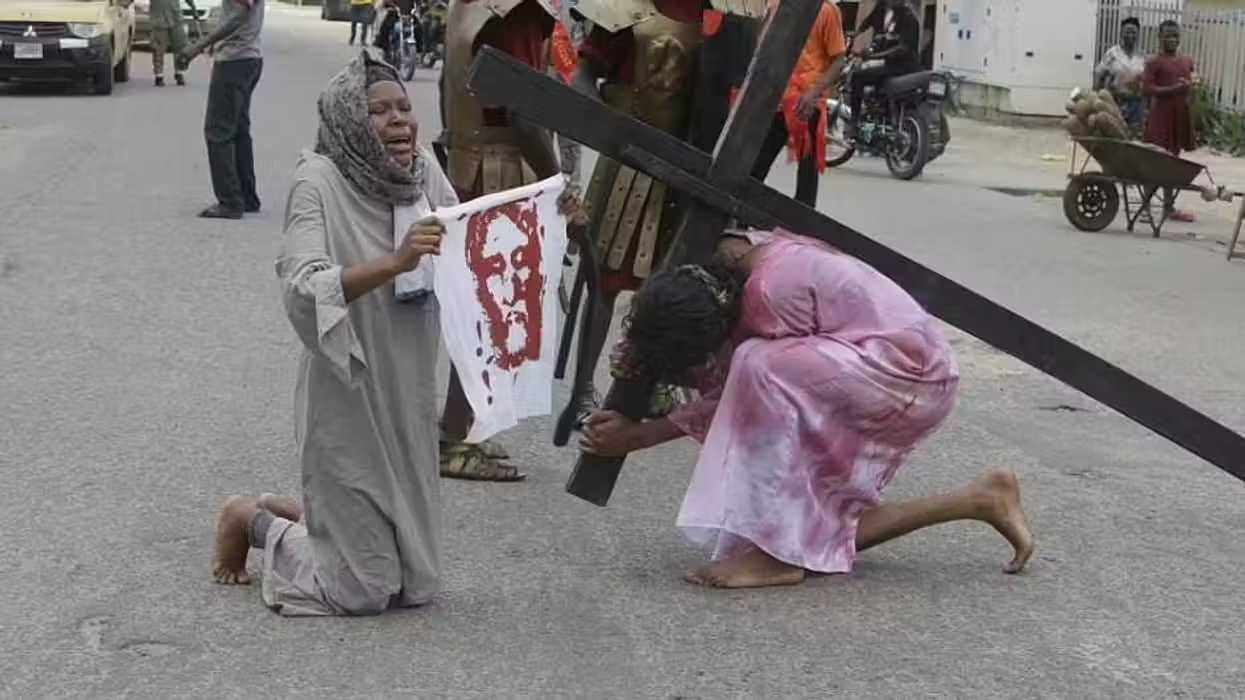
Just this past weekend, nine Christians — including a pastor — were killed by Fulani assailants in a terrorist attack.
Despite their well-observed decline in North America and Europe, the number of Christians worldwide is increasing, largely thanks to Asia and Africa. And in Africa, nowhere does the faith have a stronger presence than in Nigeria.
Africa’s most populous nation (238 million) is also its most Christian, with some 100 million believers — enough to rank Nigeria as the sixth-largest Christian population in the world. Concentrated in the country’s south, this population includes 21 million Catholics, 22 million Anglicans, 14 million Baptists, 6 million evangelicals, and 4.5 million Pentecostals, in the form of the Apostolic Church Nigeria.
Despite these numbers, Nigeria remains predominantly Muslim (53.5%), especially in the north, where Islamic terrorism is on the rise. According to a 2022 State Department report, groups like Boko Haram and ISIS-West Africa — along with religiously unaffiliated criminal gangs — have killed thousands of Muslims and Christians, with both sides accusing the government of failing to intervene.
There continued to be frequent violent incidents, particularly in the northern part of the country, affecting both Muslims and Christians, resulting in numerous deaths. Kidnappings and armed robbery by criminal gangs increased in the South as well as the North West, the South South, and the South East. The international Christian organization Open Doors stated that terrorist groups, militant herdsmen, and criminal gangs were responsible for large numbers of fatalities, and Christians were particularly vulnerable.
In response to such persecution, the State Department listed Nigeria as a “Country of Particular Concern” under the first Trump administration, in 2020; the Biden administration removed that designation in late 2021. This was despite protests from the independent U.S. Commission on International Religious Freedom, which noted widespread "violence by militant Islamists and other non-state armed actors, as well as discrimination, arbitrary detentions, and capital blasphemy sentences by state authorities."
Since then, USCIRF has continued to call for Nigeria’s Country of Particular Concern designation to be restored, warning as recently as July that “religious communities are facing ongoing, systematic, and egregious violations of their ability to practice their faith freely.”
This year alone, Nigeria has seen multiple high-profile attacks against Christians, including massacres in April and June that killed 40 and more than 100, respectively. In August, 50 Muslims were killed in an attack on a mosque. Just this past weekend, nine Christians — including a pastor — were killed by Fulani assailants in a terrorist attack.
On Saturday Trump followed up his initial statement with another post threatening to halt humanitarian aid and assistance to Nigeria until the killings stop. He also hinted at the possibility of military intervention, stating that he was prepared to enter the country “guns-a-blazing” in order to “wipe out the Islamic Terrorists who are committing these horrible atrocities.”
While aboard Air Force One on Sunday, Trump made no effort to walk back his comments, telling reporters that deploying troops to Nigeria was still very much on the table. “I envisage a lot of things. They’re killing record numbers of Christians in Nigeria ... and killing them in very large numbers. We’re not going to allow that to happen.”
Nigerian spokesman Daniel Bwala subsequently responded to Reuters with a statement following Trump’s comments, stating that U.S. assistance would be welcomed so long as the U.S. respected Nigeria’s “territorial integrity.” "I am sure by the time these two leaders meet and sit, there would be better outcomes in our joint resolve to fight terrorism." He similarly affirmed to the BBC that any anti-Jihadi efforts ought to be made jointly.
President Bola Ahmed Tinubu also challenged Trump’s statements and defended Nigeria’s record on religious freedom in a post on X.
“Religious freedom and tolerance have been a core tenet of our collective identity and shall always remain so. Nigeria opposes religious persecution and does not encourage it.”
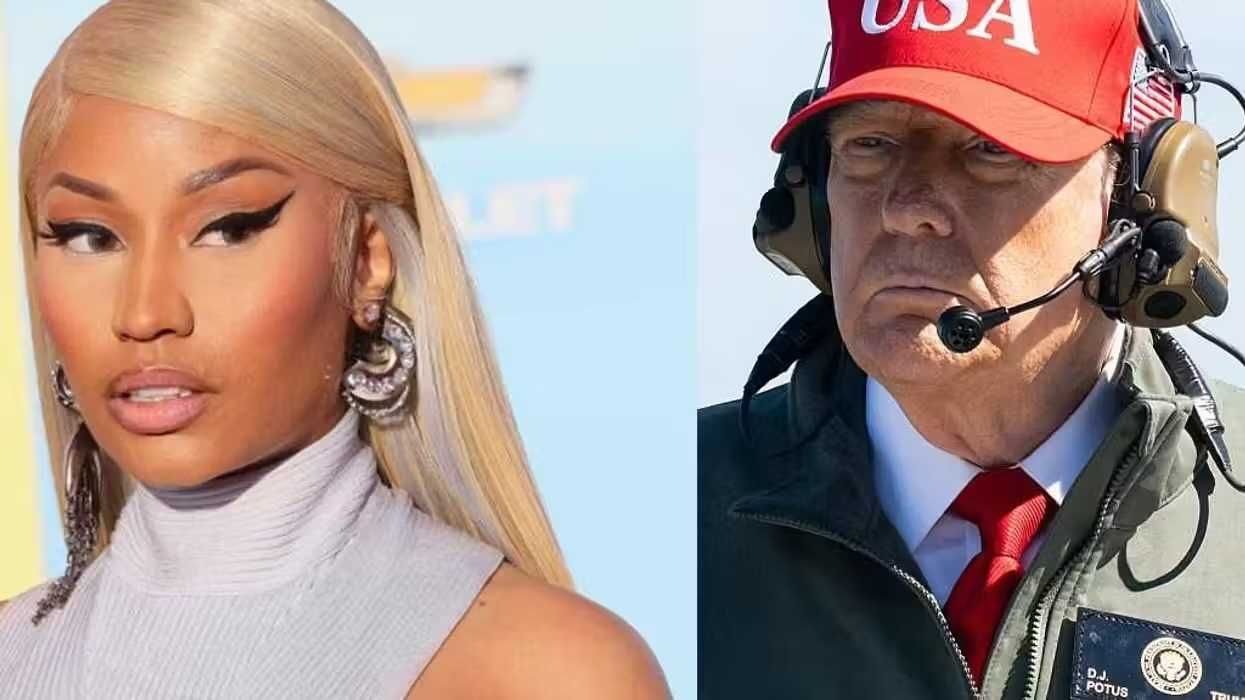
While acknowledging the realities of Nigeria’s ongoing security crisis, the mainstream media has disputed characterizations of the violence as a genocide against Christians.
Time magazine dismissed such claims as an idea “circulating in right-wing circles” and amplified by politicians like Senator Ted Cruz (R-Texas) and Rep. Riley Moore (R-W.V.). It also cited statistics from independent watchdog Armed Conflict Location and Event Data suggesting that of the 20,409 estimated civilian deaths in the past five years, just 417 deaths were Muslim and 317 deaths were Christian.
CNN called the genocide narrative an “oversimplication” that blames religion for the violence while ignoring factors such as ethnicity and resource scarcity.
The Guardian cast Trump’s remarks as an attempt to pander to “his right-wing, evangelical base,” reflecting “renewed domestic political pressure to appear tough on the marginalization or persecution of Christians abroad.”
While ACLED rejects the claim of a Christian genocide in Nigeria, arguing that most violence stems from ethnic rivalries and competition over land and resources rather than religion, it has previously acknowledged the difficulty of ruling out religious persecution. In a note on its general methodology, the group has acknowledged that "disentangling the ethnic, communal, political, and religious dimensions of specific events ... [proves] to be problematic — at times even impossible — and extremely time-consuming. As a result, religious repression and disorder ... may be underrepresented in the dataset."
Proponents of the genocide narrative say this could lead to systematic undercounting of Christian victims. In a letter to Secretary of State Marco Rubio last month, Rep. Moore countered with significantly larger figures: “More than 7,000 Christians have been killed in Nigeria in 2025 alone — an average of 35 per day — with hundreds more kidnapped, tortured, or displaced by extremist groups.”
Evangelical author, public speaker, and Christian apologist Dr. Alex McFarland agrees with Moore, noting that resistance to covering Christian persecution is the norm. Reached just prior to Trump's statements over the weekend, he told Align that he believes that claims of a Christian genocide are accurate.
In an age when so many champion human rights and social justice, Nigeria is something that should be talked about. What’s going on there is tragic on an unimaginable scale. This needs to stop, and I pray the United States of America will do what it can to stop the killing of Christians and advocate for their human rights.
American Christians who want to to help should be relentless in speaking up to elected officials, advises McFarland, making it clear that they “ask and expect them to take a stand on this issue, just as we expect our elected officials to take a positive stand for Israel and against anti-Semitism.”
Supporting organizations like Samaritan's Purse, Open Doors, and Voice of the Martyrs is also an option.
McFarland emphasizes that anti-Christian persecution extends well beyond Nigeria, pointing to similar ongoing persecutions in China, India, and Saudi Arabia. “We need to understand that Christians outside of the United States have a hard go of it.”
Finally, he cautions his fellow Christians not to overlook one of the most powerful ways they can effect change. “What Christians can do is pray,” he tells Align. “That might sound glib and easy to say, but prayer works and is quite significant.”
 www.theblaze.com
 thefederalist.com
 www.theblaze.com