Don’t be seduced by AI nostalgia — it’s a trap!


I don’t often argue with internet trends. Most of them exhaust themselves before they deserve the attention. But a certain kind of AI-generated nostalgia video has become too pervasive — and too seductive — to ignore.

You’ve seen them. Soft-focus fragments of the 1970s and 1980s. Kids on bikes at dusk. Station wagons. Camaros. Shopping malls glowing gently from within. Fake wood paneling! Cathode ray tubes! Rotary phones! A past rendered as calm, legible, and safe. The message hums beneath the imagery: Wouldn’t it be nice to go back?

Human nostalgia, as opposed to the AI-generated kind, eventually runs aground on grief, embarrassment, and the recognition that the past demanded something from us and took something in return.

Eh ... not really, no. But I understand the appeal because, on certain exhausting days, it works on me too — just enough to make the present feel a little heavier by comparison.

And I don’t like it. Not at all. And not because I’m hostile to memory.

I was there, 3,000 years ago

I was born in 1971. I lived in that world. I remember it pretty well.

How well? One of my earliest, most vivid memories of television is not a cartoon or a sitcom. No, I’m a weirdo. It is the Senate Watergate hearings in 1973, broadcast on PBS in black and white. I was 2 years old.

I didn’t understand the words, but I sort of grasped the tone. The seriousness. The tension. The sense that something grave was unfolding in full view of the world. Even as a toddler, I vaguely understood that it mattered. The adults in ties and horn-rimmed glasses were yelling at each other. Somebody was in trouble. Before I knew anything at all, I knew: This was serious stuff.

A little later, I remember gas lines. Long ones. Cars waiting for hours on an even or odd day while enterprising teenagers sold lemonade. It felt ordinary at the time, probably because I hadn’t the slightest idea what “ordinary” meant. Only later did it reveal itself as an early lesson in scarcity and frustration.

The past did not hum along effortlessly. Sometimes — often — it stalled.

Freedom wasn’t safety

I remember my parents watching election returns in 1976 on network television. I was bored to tears — literally — but I remember my father’s disappointment when Gerald Ford lost to Jimmy Carter. And mind you, Ford was terrible.

This was not some cozy TV ritual. It was a loss of some kind, plainly felt. Big, important institutions did not project confidence. They produced arguments, resentment, and unease. It wasn’t long before people were talking seriously about an “era of limits.” All I knew was Dad and Mom were worried.

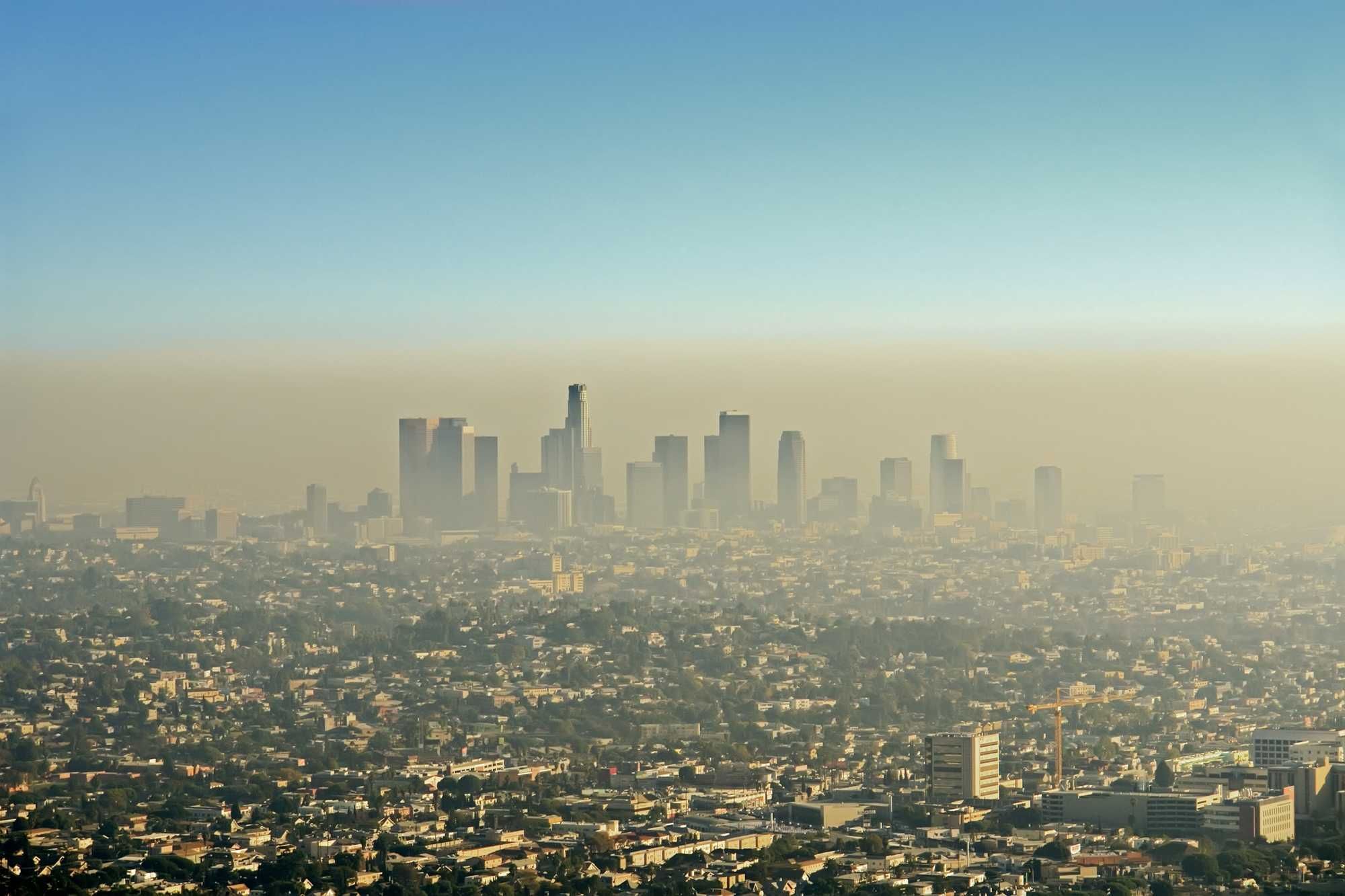
I remember a summer birthday party in the early 1980s at a classmate’s house. It was hot, but she had an awesome pool. I also remember my lungs ached. That day, Southern California was under a first-stage smog alert. The air itself was hazardous. The past did not smell like nostalgia. It smelled like exhaust with lead and cigarette smoke.

I don’t miss that. Not even a little bit.

Yes, I remember riding bikes through neighborhoods with friends. I remember disappearing for entire days. I remember my parents calling my name when the streetlights came on. I remember spending long stretches at neighbors’ houses without supervision. I remember watching old movies on Saturdays with my pal Jimmy. I remember Tom Hatten. I remember listening to KISS and Genesis and Black Sabbath. That freedom existed. It mattered. It was fun. But it lived alongside fear, not in its absence.

Innocence collides with reality

I don’t remember the Adam Walsh murder specifically, but I very much remember the network television movie it inspired in 1983. That moment changed American childhood in ways people still underestimate. It sure scared the hell out of me. Innocence didn’t drift into supervision — it collided with horror. Helicopter parenting did not emerge from neurosis. It emerged from bona fide terror.

And before all of that, my first encounter with death arrived without explanation. A cousin of mine died in 1977. She was 16 years old, riding on the back of a motorcycle with a man 11 years her senior. She wasn’t wearing a helmet. The funeral was closed casket. I was too young to know all the details. Almost 50 years on, I don’t want to know. The age difference alone suggests things the adults in my life chose not to discuss.

Silence was how they handled it. Silence was not ignorance — it was restraint.

RELATED: 1980s-inspired AI companion promises to watch and interrupt you: ‘You can see me? That’s so cool’

seamartini via iStock/Getty Images

Memory is not withdrawal

This is what the warm and fuzzy AI nostalgia videos cannot possibly show. They have no room for recklessness that ends in funerals, or for freedom that edges into life-threatening danger, or for adults who withhold truth because telling it would damage rather than protect.

What we often recall as freedom often presented itself as recklessness ... or worse.

None of this negates the goodness of those years. I’m grateful for when I came of age. I don’t resent my childhood at all. It formed me. It taught me how fragile stability is and how much of adulthood consists of absorbing uncertainty without dissolving into it.

That’s precisely why I reject the invitation to go back.

The new AI nostalgia doesn’t ask us to remember. In reality, it wants us to withdraw. It offers a sweet lullaby for the nervous system. It replaces the true cost of living with the comfort of atmosphere and a cool soundtrack. It edits out the smog, the scarcity, the fear, the crime, and the death, leaving only a vibe shaped like memory.

Here’s a gentler hallucination, it says. Stay awhile.

The cost of living, then and now

The problem, then, isn’t sentiment. The problem is abdication.

So the temptation today isn’t to recover what was seemingly lost but rather to anesthetize an uncertain present. Those Instagram Reels don’t draw their power from people who remember that era clearly but from people who feel exhausted, surveilled, indebted, and hemmed in right now — and are looking for proof that life once felt more human.

RELATED: Late California

LPETTET via iStock/Getty Images

And who could blame them? Maybe it was more human. But not in the way people today would like to believe. Human experience has never been especially sweet or gentle.

Human nostalgia, as opposed to the AI-generated kind, eventually runs aground on grief, embarrassment, and the recognition that the past demanded something from us and took something in return. Synthetic nostalgia can never reach that reckoning. It loops endlessly, frictionless and consequence-free.

I don’t want a past without a bill attached. I already paid the thing. Sometimes I think I’m paying it still.

A warning

AI nostalgia videos promise relief without effort, feeling without action, memory without judgment.

That may be comforting, but it isn’t healthy, and it isn’t right.

Truth is, adulthood rightly understood does not consist of finding the softest place to lie down. It means carrying forward what we’ve lived through, even when it complicates our fantasies.

Certain experiences were great the first time, Lord knows, but I don’t want to relive the 1970s or ’80s. I want to live now, alert to danger, capable of gratitude without illusion, willing to bear the weight of memory rather than dissolve into it.

Nostalgia has its place. But don’t be seduced by sedation.

Editor’s note: A version of this article appeared originally on Substack.

AI’s biggest security risk is hiding in plain sight


The White House, federal regulators, and Congress are scrambling to develop a national approach to artificial intelligence. Yet almost no one is examining AI from an ethical or civil-society perspective. Policymakers frame it as an economic or national security issue. Those angles matter. But the deeper question — what it means to live in an AI-dominated world inside a constitutional republic — remains almost entirely unaddressed.

AI is already reshaping our political life, our civic discourse, and our education system. One of the clearest windows into this shift is the outsized influence of Wikipedia and Reddit. Large language models like ChatGPT and Google’s Gemini consume a training diet heavy on both sites. AI systems don’t “know” anything in a human sense. They mirror patterns. And the patterns they ingest come from platforms run by anonymous editors, ideological moderators, and unaccountable gatekeepers.

No special-interest group today is fighting for Americans who will soon live in a world saturated with AI slop.

The Oversight Project examined the underbelly of this problem, beginning with Wikipedia. After noticing what looked like coordinated ideological editing campaigns, we sought to understand who was shaping the platform. What we found was a small, powerful cadre of editors with the authority to dictate what information is permitted. These editors operate anonymously — or so they believed.

We identified several of them and, more tellingly, where they were editing from. Some connections were foreign. Others showed activity that aligned with a 9-to-5 workday. It was clearly inorganic. That raised obvious questions: who pays these people, who coordinates them, and whether intelligence services are involved.

The most aggressive coordination appeared on politically sensitive topics, especially anything involving Israel or the Arab world. Automated tools tracked and reverted edits across thousands of pages to enforce a narrative. When Wikipedia realized we were mapping these networks, it panicked. To protect anonymity, the platform changed its internal rules to obstruct outside scrutiny. Then it retaliated by downgrading us to “deprecated” status — a ban in all but name. Anything sourced to us became unacceptable on the site.

We are sounding the alarm because foreign actors and domestic ideologues understand the power of controlling Wikipedia’s information flow. Our own intelligence agencies almost certainly understand it as well. In a recent interview, Wikipedia co-founder Larry Sanger told me that intelligence services would be negligent if they were not influencing the platform.

Sanger also expressed regret about founding Wikipedia with Jimmy Wales, noting that like so many other institutions, it has been conquered by the ideological left and turned into a political instrument, a shift made even more consequential in the age of AI.

RELATED: Almost half of Gen Z wants AI to run the government. You should be terrified.

Man_Half-tube via iStock/Getty Images

This is where the danger becomes unmistakable. Most people treat Wikipedia and Reddit cautiously when browsing the internet, aware of the bias. AI does not. When you ask an AI system a question, it generates polished, authoritative-sounding answers built from those same sources — stripped of context, caveats, or transparency. What appears neutral is often laundered opinion.

This information-laundering must become part of the national conversation about AI. Some policymakers seem to understand the stakes. The Senate Commerce Committee has sent oversight letters and plans a hearing. The House Oversight Committee has signaled similar interest. Even Ed Martin, former U.S. attorney for the District of Columbia, has demanded information from Wikipedia.

But the truth is blunt. No special-interest group today is fighting for Americans who will soon live in a world saturated with AI slop. There is plenty of lobbying in Washington for everything except preserving an honest information ecosystem. Without intervention, public knowledge will be shaped by opaque networks of foreign actors, ideological activists, and machine-driven amplification on a massive scale.

Policymakers must recognize what is at stake and act before the architecture of public knowledge is fully captured. The future of AI — and the future of democratic self-government — depends on it.

Stop feeding Big Tech and start feeding Americans again


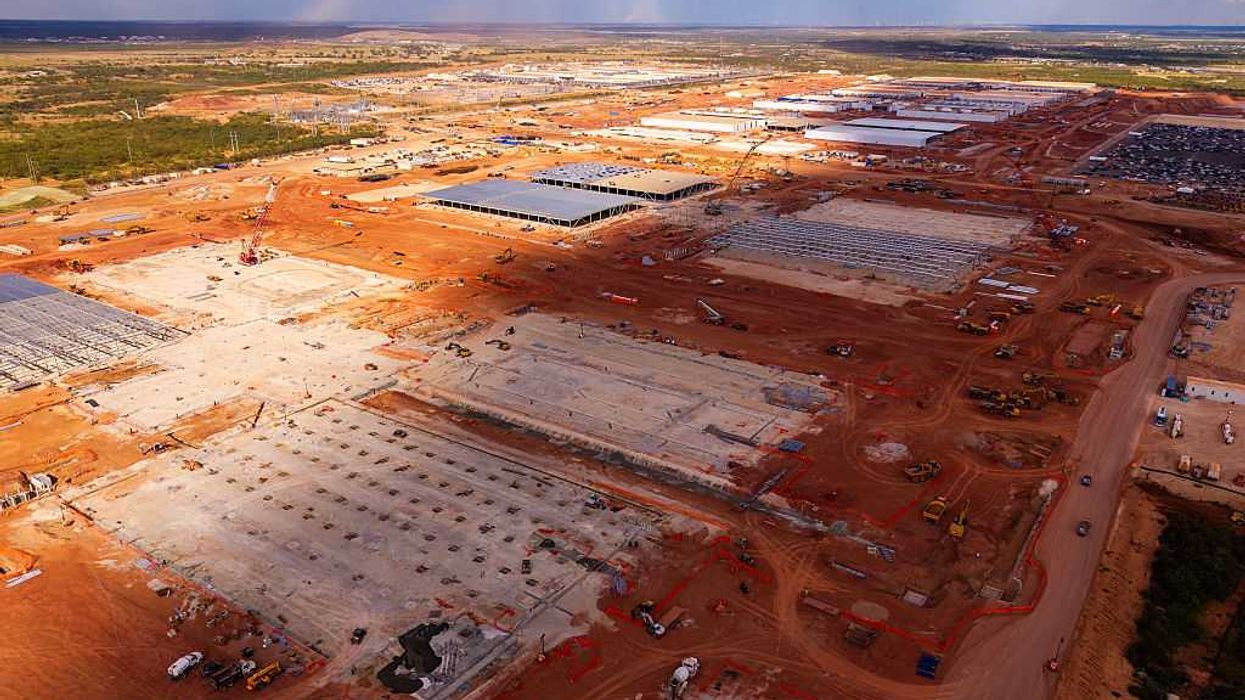
America needs more farmers, ranchers, and private landholders — not more data centers and chatbots. Yet the federal government is now prioritizing artificial intelligence over agriculture, offering vast tracts of public land to Big Tech while family farms and ranches vanish and grocery bills soar.

Conservatives have long warned that excessive federal land ownership, especially in the West, threatens liberty and prosperity. The Trump administration shares that concern but has taken a wrong turn by fast-tracking AI infrastructure on government property.

If the nation needs a new Manhattan Project, it should be for food security, not AI slop.

Instead of devolving control to the states or private citizens, it’s empowering an industry that already consumes massive resources and delivers little tangible value to ordinary Americans. And this is on top of Interior Secretary Doug Burgum’s execrable plan to build 15-minute cities and “affordable housing.”

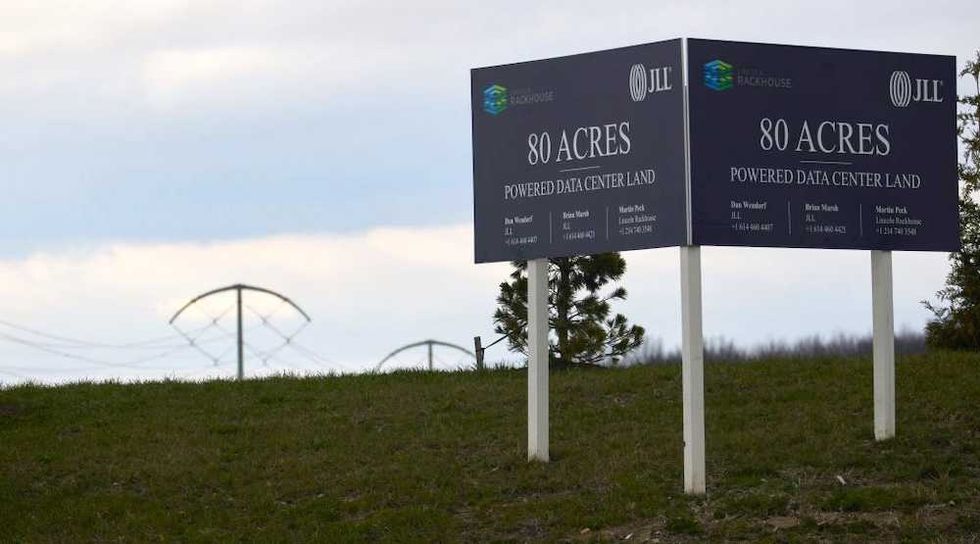
In July, President Trump signed an executive order titled Accelerating Federal Permitting of Data Center Infrastructure as part of its AI Action Plan. The order streamlines permits, grants financial incentives, and opens federal properties — from Superfund sites to military bases — to AI-related development. The Department of Energy quickly identified four initial sites: Oak Ridge Reservation in Tennessee, Idaho National Laboratory, the Paducah Gaseous Diffusion Plant in Kentucky, and the Savannah River Site in South Carolina.

Last month, the list expanded to include five Air Force bases — Arnold (Tennessee), Davis-Monthan (Arizona), Edwards (California), Joint Base McGuire-Dix-Lakehurst (New Jersey), and Robins (Georgia) — totaling over 3,000 acres for lease to private developers at fair market value.

Locating AI facilities on military property is preferable to disrupting residential or agricultural communities, but the favoritism shown to Big Tech raises an obvious question: Is this the best use of public land? And will anchoring these bubble companies on federal property make them “too big to fail,” just like the banks and mortgage lenders before the 2008 crash?

President Trump has acknowledged the shortage of affordable meat as a national crisis. If any industry deserves federal support, it’s America’s independent farmers and ranchers. Yet while Washington clears land for billion-dollar data centers, small producers are disappearing. In the past five years, the U.S. has lost roughly 141,000 family farms and 150,000 cattle operations. The national cattle herd is at its lowest level since 1951. Since 1982, America has lost more than half a million farms — nearly a quarter of its total.

Multiple pressures — rising input costs, droughts, and inflation — have crippled family farms that can’t compete with corporate conglomerates. But federal land policy also plays a role. The government’s stranglehold on Western lands limits grazing rights, water access, and expansion opportunities. If Washington suddenly wants to sell or lease public land, why not prioritize ranchers who need it for feed and forage?

The Conservation Reserve Program compounds the problem. The 2018 Farm Bill extension locked up to 30 million acres of land — five million in Wyoming and Montana alone — under the guise of conservation. Wealthy absentee owners exploit the program by briefly “farming” land to qualify it as cropland, then retiring it into CRP to collect taxpayer payments. More than half of CRP acreage is owned by non-farmers, some earning over $200 per acre while the land sits idle.

RELATED: AI isn’t feeding you

Photo by Brian Kaiser/Bloomberg via Getty Images

Those acres could support hundreds of cattle per section or produce millions of tons of hay. Instead, they create artificial shortages that drive up feed costs. During the post-COVID inflation spike, hay prices spiked 40%, hitting $250 per ton this year. Even now, inflated prices cost ranchers six figures a year in extra expenses in a business that operates on thin margins.

If the nation needs a new Manhattan Project, it should be for food security, not AI slop. Free up federal lands and idle CRP acreage for productive use. Help ranchers grow herds and lower food prices instead of subsidizing a speculative industry already bloated with venture capital and hype.

At present, every dollar of revenue at OpenAI costs roughly $7.77 to generate — a debt spiral that invites the next taxpayer bailout. By granting these firms privileged access to public land, the government risks creating another class of untouchable corporate wards, as it did with Fannie Mae and Freddie Mac two decades ago.

AI won’t feed Americans. It won’t fix supply chains. It won’t lower grocery bills. Until these companies can put real food on real tables, federal land should serve the purpose God intended — to sustain the people who live and work upon it.