What the Flock? Knoxville mayor explains the dark truth about Flock cameras: ‘Not your grandma's license plate readers’


Flock cameras — the automated license plate readers that photograph passing vehicles to capture their license plates, make, model, color, and other details, turning them into searchable records — are popping up all over the country. Proponents argue that they help solve crime and keep Americans safe, but is that actually true?

According to Glenn Jacobs, mayor of Knox County, Tennessee, the answer is no. He argues that Flock cameras actually endanger Americans by putting them under constant surveillance, giving the government a complete record of every citizen’s movements.

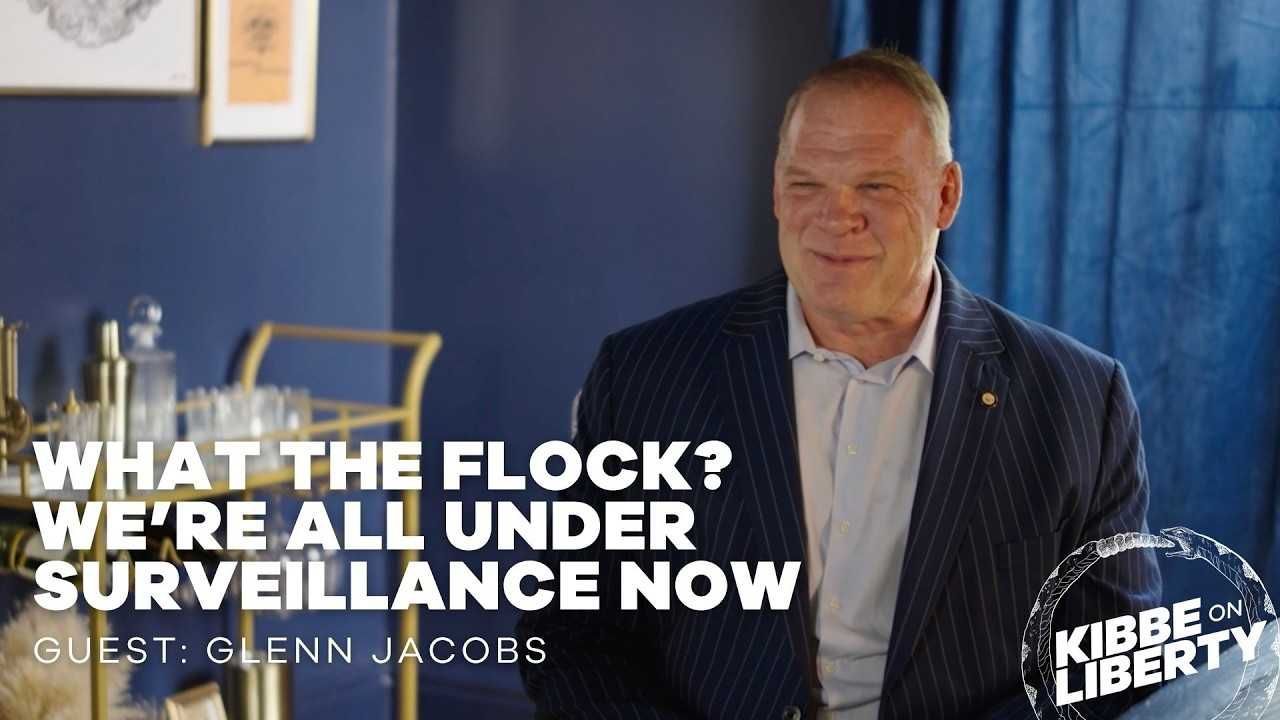
On this episode of “Kibbe on Liberty,” Matt Kibbe sits down with Jacobs to discuss why he believes Flock cameras are a dire threat to privacy and the Fourth Amendment.

“The more I've researched [Flock cameras], the more I dislike them and consider them a very dire threat to our privacy and to the protections guaranteed by the Fourth Amendment,” says Jacobs.

Kibbe, calling Flock cameras “Orwellian,” is concerned that such surveillance will turn America into China 2.0.

“How is this any different than kind of a Chinese surveillance system?” he asks.

Jacobs indicates that it’s not all that different. Flock cameras, he explains, are marketed as license plate readers, but “they do a lot more than that.”

“With the Flock system, it is literally harvesting data. Every car that goes by, it pulls their license plate, but it also uses AI to develop a vehicle footprint,” he says.

“So it's your license plate, but also make, model, color, distinguishing features, roof racks, bumper stickers, all these different things that then go into a database and remain there for 30 days or more, depending on the policy of that particular agency. Then it can be searched through without a warrant for whatever,” he continues.

The lack of established parameters around Flock cameras also gives Jacobs serious pause.

“In Tennessee there's no state rules about how this can be used, and there's no federal guidelines either, so what's happened is this technology has gone out there and it's — until now, it's kind of flown under the radar,” he says.

Then there’s public opinion to consider. As Americans find out more and more about Flock cameras, the opposition has only grown.

“These things are not popular at all, and the more people learn about them, the more they literally hate them,” says Jacobs.

For example, it’s coming out that Flock cameras can gather enough data to form “a pattern of your movements.”

Jacobs illustrates the danger of such power with a hypothetical.

“They could say, you know, Glenn goes to the gun range at least once a week, twice on Sundays. If this happened during COVID, you know, he goes to anti-COVID meetings and rallies. All of a sudden they have a profile on me,” he says.

“No, we do not have an expectation of privacy when we're in public places and on public roads, but the Supreme Court has ruled that without a warrant, your movements can't be tracked like that. They ruled that in Carpenter v. United States in 2018,” he continues, predicting that it’s a matter of time before the Supreme Court will “squash” Flock cameras.

“But in the meantime, it's just important that people are aware that these are not your grandma's license plate readers. These are something much much different,” he warns.

To hear more, watch the episode above.

Want more from Matt Kibbe?

To enjoy more of Matt's liberty-defending stance as he gets in the face of the fake news establishment, subscribe to BlazeTV — the largest multi-platform network of voices who love America, defend the Constitution, and live the American dream.
Fossil fuels fuel the AI boom: Microsoft and Chevron partner on massive Texas energy project


A major tech company has announced that it is coming to Texas with a new partnership with an energy giant in the Lone Star State.

On Monday, Chevron announced that it is partnering with Microsoft to develop a new data center campus, known as "Project Kilby," in Texas.

The project will scale to an estimated capacity of 2.67 gigawatts of capacity over time.

The two companies signed a 20-year power purchase agreement in anticipation of the planned, "co-located" power plant and data center.

Reuters reported that the facility is set to be built in Pecos, Texas, west of Midland.

RELATED: The AI gold rush could become an incumbent graveyard

BENOIT DOPPAGNE/BELGA MAG/AFP/Getty Images

"AI is reshaping the global economy, and abundant, affordable, reliable energy is essential to fueling that transformation," said Jeff Gustavson, Chevron president of New Energies, in a Monday press release. "Chevron is uniquely positioned to deliver power to customers with certainty, speed, and at a competitive cost, leveraging Permian natural gas and our proven execution capabilities. This project links Chevron's traditional strengths to emerging demand, creating differentiated value for our shareholders and the communities where we operate."

This agreement, the press release notes, is an important milestone leading up to the final investment decision, which is expected to be made at the end of this year. The "first power delivery is anticipated in 2028." The project will scale to an estimated capacity of 2.67 gigawatts of capacity over time.

The joint infrastructure appears to be designed, at least in theory, to avoid burdening residential neighbors with higher electricity rates, one of many oft-repeated objections to new data centers being built.

The press release claims that "Kilby is designed to deliver reliable, dispatchable electricity directly to Microsoft while aiming to mitigate impacts on the regional grid that consumers rely on," presumably by, at least in part, circumventing the main power grid in the state.

While proponents of the deal point to economic growth potential for the state and efforts to mitigate negative environmental impacts, critics say there may be some serious drawbacks to the plan.

For example, a Mother Jones article from last month noted that Microsoft may intend to take advantage of significant tax incentives that could cost the state heavily.

Greg LeRoy, the executive director of Good Jobs First, pointed out that Microsoft does not mention tax abatements in its pledge. "If they don't say, 'We will refuse tax abatements,' then they've got their fingers crossed behind their back," LeRoy told Mother Jones.

Oil & Gas Watch warned that the project may have significant environmental impacts, including a yearly output of over 13.8 million tons of greenhouse gases, a comparable annual output to that of nearly 3 million gas-powered vehicles.

This agreement comes less than two weeks after Governor Greg Abbott (R) directed the Public Utility Commission of Texas and the Electric Reliability Council of Texas to "take immediate steps to protect residential ratepayers from the costs of data center expansion."

In the letter, Abbott directed the PUC to "take action to require data centers to pay for all of their electric infrastructure costs to ensure that no residential ratepayer is burdened by those costs." Abbott added that these directives are building upon Senate Bill 6 and directed the PUC and ERCOT to submit a report by July 17 and to take action to reduce residential ratepayer transmission costs by July 31.

Project Kilby will primarily use natural gas power and plans to "use non-potable, brackish groundwater sources for power plant operations."

Like Blaze News? Bypass the censors, sign up for our newsletters, and get stories like this direct to your inbox. Sign up here!

MUST READ: How you survive the impending AI takeover (you’ve never heard this one before)


One thing most people agree on is that an artificial intelligence takeover is inevitable. Whether or not that will be beneficial for society, however, continues to be divisive.

Author, professor, and activist Jon Askonas joins James Poulos to discuss the harrowing implications of artificial intelligence when it comes to our future and what we must do when the takeover arrives.

Skeptics are highly suspicious of AI and immediately write it off as inherently evil, while proponents believe that it will solve all our problems and essentially save us.

But Jon and James do not fall into either camp.

They rather believe that thriving in a world dominated by AI will require a unique approach that neither entirely rejects nor submits to technology.

They also agree that people, especially Christians, must accept that AI is not just a super-science; it’s also a deeply spiritual matter.

“It's a powerful technology that will be used in spiritual warfare for good and for evil … but it’s still part of creation and so, like any part of creation, has to be grasped for its good uses,” Jon explains.

James agrees, adding, “One of the things that really sort of bums me out the most about this whole experience we’re going through is people who look at technology … as an evil god.”

The best way to survive the impending AI takeover is to “pray and pay attention to the world that surrounds you … cultivate [technology] and curate it intentionally as a site of spiritual warfare,” adds Jon.

To hear more of their fascinating conversation, watch the full episode below.


Want more from James Poulos?

To enjoy more of James's visionary commentary on politics, tech, ideas, and culture, subscribe to BlazeTV — the largest multi-platform network of voices who love America, defend the Constitution, and live the American dream.

Obama proposes 'digital fingerprints' to combat 'misinformation' — and cites 'vaccination stuff' as justification


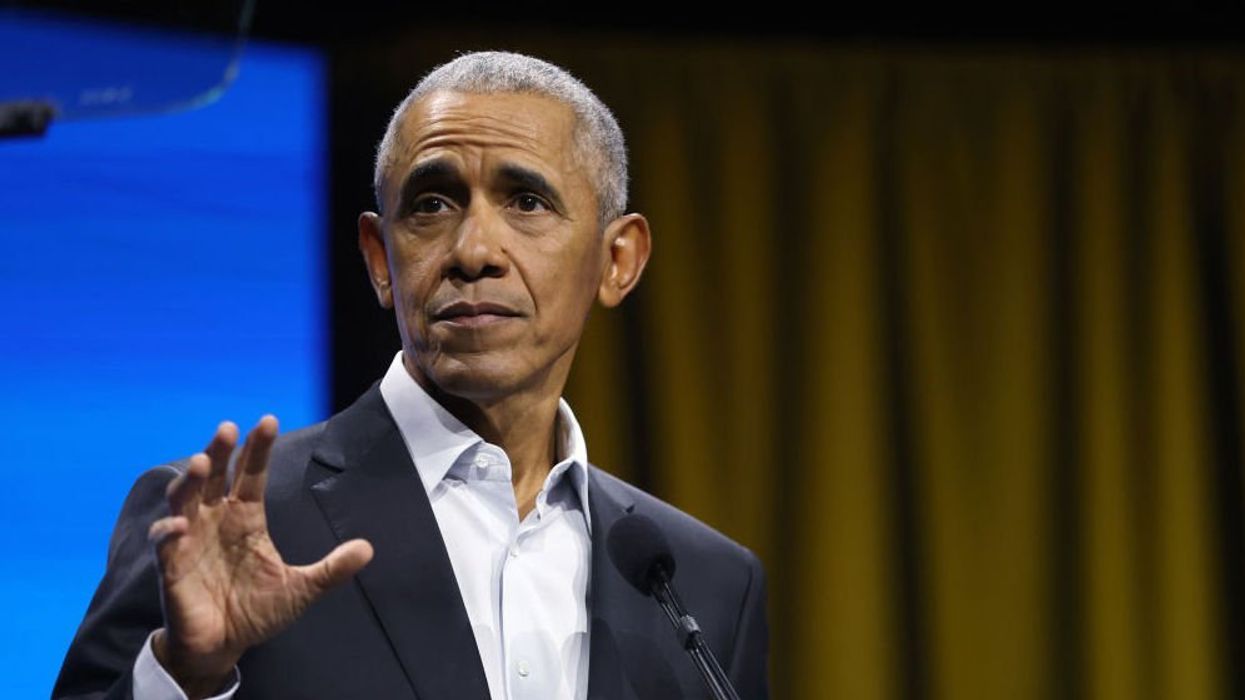
Former President Barack Obama proposed last week that "digital fingerprints" should be used to combat "misinformation."

Speaking with David Axelrod about the rise of artificial intelligence technology, Obama predicted that "misinformation" will plague the 2024 presidential campaign and stressed a need to police digital authenticity.

"Because I was the first digital president, when I left office, I was probably the most recorded, filmed, photographed human in history, which is kind of a weird thing. But just the odds are that I was," Obama said. "As a consequence, there's a lot of raw material there. So usually all the deepfakes start with like some version of Obama doing something, dancing, saying dirty limericks, or whatever. Right?

"That technology's here now. So most immediately we're going to have all the problems we had with misinformation before — this next election cycle will be worse," Obama predicted.

The proliferation of AI technology, Obama went on to say, creates critical needs.

"The need for us, for the general public, I think, to be more discriminating consumers of news and information, the need for us to, over time, develop technologies to create watermarks or digital fingerprints so we know what is true and what is not true," Obama said.

Obama said the ability for Americans to discern between what is true and what is not true is critical because the digital ecosystem has created echo chambers and feedback loops that reaffirm what people already believe. He cited the "vaccination stuff" as evidence that authenticity must be policed.

The problem is: Who is defining what is true and not true? The government? That's a hard sell considering what happened during the COVID pandemic.

Obama has been on a crusade against so-called "misinformation" and "disinformation" — terms used very broadly and almost never defined — in the run-up to the 2024 election season.

Last year, Obama said the government should step in to regulate "clearly dangerous content." And last month on World Press Freedom Day, Obama declared that "widespread disinformation" is a clear and present threat to democracy.

Like Blaze News? Bypass the censors, sign up for our newsletters, and get stories like this direct to your inbox. Sign up here!