![]()
In 1979, as crowds gathered in the streets of Iran to topple the shah, the New York Timesran an editorial describing Ayatollah Ruhollah Khomeini as an “enigma.” Bernard Lewis was then America’s leading scholar on the Islamic world. He had read Khomeini’s works, many of which had been translated into English and were easily accessible.
Far from an “enigma,” Lewis concluded that Khomeini possessed the virtue of candor (to put it mildly) and that in every respect he was a perfect lunatic. But Lewis had been largely discredited as a “racist,” so his offer to write a piece for the Timesfell on deaf ears. An editor at the paper said that Lewis was merely a Zionist agent spreading disinformation.
'Khomeini’s ambitions extended beyond Shiism. He wanted to be accepted as the leader of the Muslim world, period.'
Among other things, Khomeini had written that girls should be married off before puberty (“Do your best to ensure that your daughters do not see their first blood in your house”). His own father — who was stabbed to death when Khomeini was a baby — married his mother when she was just 9 years old. Khomeini himself took his wife when she was 10 years old and had her pregnant by the age of 11. Khomeini blamed poverty in Iran on foreigners and Jews and argued that the idea of nationalism and nation-states was nothing but a Western plot to weaken Islam.
At the heart of Khomeini’s program was conquest. In the words of Vali Nasr, one of the world’s leading authorities on Shia Islam:
Khomeini’s ambitions extended beyond Shiism. He wanted to be accepted as the leader of the Muslim world, period. At its core, his drive for power was yet another Shia challenge for leadership of the Islamic world. He saw the Islamic Republic of Iran as the base for a global Islamic movement, in much the same way that Lenin and Trotsky had seen Russia as the springboard country of what was meant to be a global communist revolution.
No price was too high to pay in the jihadist drive to create a Shiite caliphate. During the blood-soaked Iran-Iraq War of the 1980s, an ayatollah named Mehdi Haeri Yazdi approached Khomeini, his mentor, while he was sitting alone on a rug in his garden facing a pool. The hopeless war was consuming hundreds of thousands of young lives, Yazdi said. Was there no way to stop the slaughter?
Khomeini replied reproachfully, “Do you also criticize God when he sends an earthquake?”
The economic costs of creating a caliphate were a secondary concern for Khomeini as well. He famously cried that “economics is for donkeys” and “the revolution was not about the price of watermelons.”
Khomeini’s ideology lives on
This ideology continued long after Khomeini’s death in 1989. In 2021, a former senior Syrian official named Firas Tlass told an interviewer, “The Iranians have an authoritative plan to take control over the entire region.”
Their strategy was as brilliant as it was simple. They went to any country that had Muslims and a political vacuum. There they set up a school system in which they indoctrinated children with their vision of violent, expansionist, radical Shiite Islam. Twelve short years later, they had legions of young fighters eager to do their bidding. The strategy was implemented in an arc of ruin that extended from Lebanon through the Levant and down to Yemen.
The Iranians even attempted to gain a toehold on the European continent in the 1990s, in Kosovo. Tlass added that in the mid-2000s, former Iranian President Muhammad Khatami predicted, in a private conversation between the two, that in 20 years Iran would be the counterweight to the United States.
This prophecy would be realized almost exactly 20 years later during the Gaza War, when the world got its first taste of the radical Shiite coalition. Tehran mobilized its multi-tenacle proxy army. Though Israel ultimately triumphed, as we have seen, the world got its first taste of the dangers of the would-be Shiite caliphate.
RELATED: Only Trump had the guts to do what every president has promised
![]() Photo by BEHROUZ MEHRI/AFP via Getty Images
Photo by BEHROUZ MEHRI/AFP via Getty Images
There was unprecedented shelling by Hezbollah, which rendered an entire region of Northern Israel uninhabitable. There was disruption of international shipping by Iranian-backed Houthi rebels in Yemen. And at the very moment that Iraq’s prime minister was in Washington hoping to negotiate a much-needed economic package, a Shiite militia in his country joined Iran’s April 13, 2024, assault that launched hundreds of rockets into Israel. A senior member of Iraq’s security forces named Abdul Aziz al-Mohammedawi made no secret of his allegiance to Iran and its supreme leader, Ayatollah Ali Khamenei.
A fundamental misunderstanding
In the face of this challenge, American allies in the region, and particularly the Saudis, were dumbfounded by Washington’s foolishness. Under the banner of “human rights,” the Biden administration undermined Saudi Arabia’s war against the Iranian-backed Houthis of Yemen. As a senior Saudi journalist put it, “You wouldn’t let us fight the Houthis, so now you have to.”
Biden administration envoy Amos Hochstein reportedly offered Hezbollah an aid package to rebuild Southern Lebanon after the war, if the terror group agreed to stop firing into Israel. The administration should have slapped punishing sanctions on Lebanon’s battered economy the minute Hezbollah launched its first rocket.
Even over 130 attacks on U.S. troops by Iranian proxies drew little or no response. On January 28, 2024, Iranian-backed militias killed three American troops stationed in Jordan. The Biden administration carried out a measured response in Iraq and Syria but left Iran out of the fray, even lifting sanctions to permit Tehran to raise oil exports from 300,000 barrels a day to 2 million.
And then there was the Iran nuclear deal. Experts still debate how long it would have delayed Iran obtaining a bomb — the deal, by its very terms, only placed restrictions on Iran for 15 years — but all agree that it gave Tehran access to over $100 billion. To this President Obama said, “Our best analysts expect the bulk of this revenue to go into spending that improves the economy and benefits the lives of the Iranian people.” This statement showed a fundamental misunderstanding of Iranian priorities — a mistake the current Trump administration seems determined not to repeat.
Editor’s note: This article has been adapted from Uri Kaufman’s latest book, “American Intifada: Israel, the Gaza War, and the New Antisemitism.”

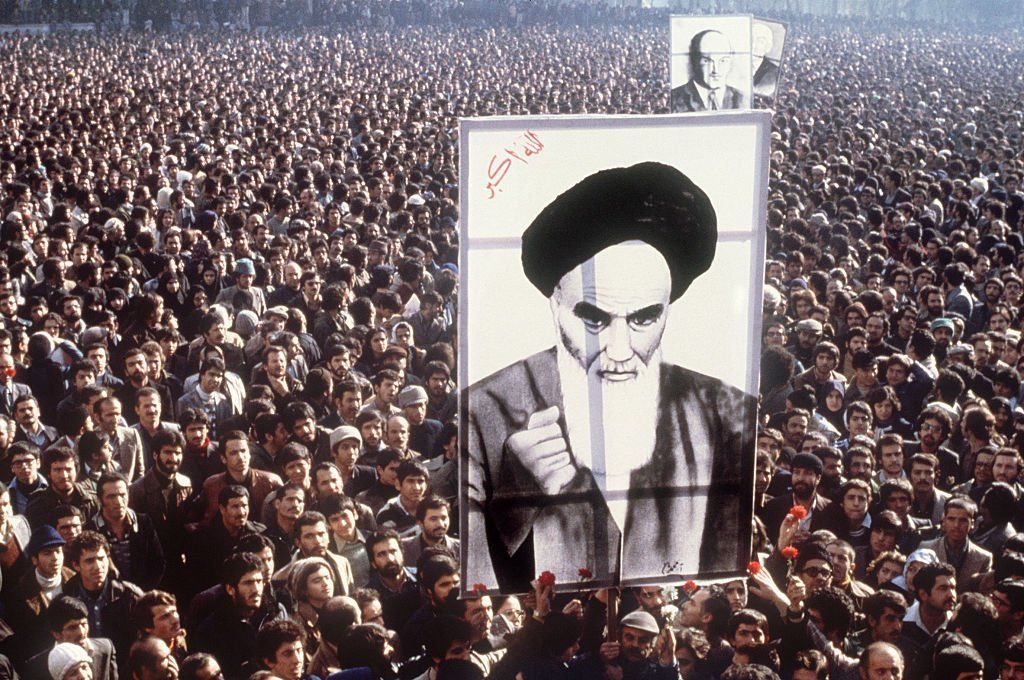
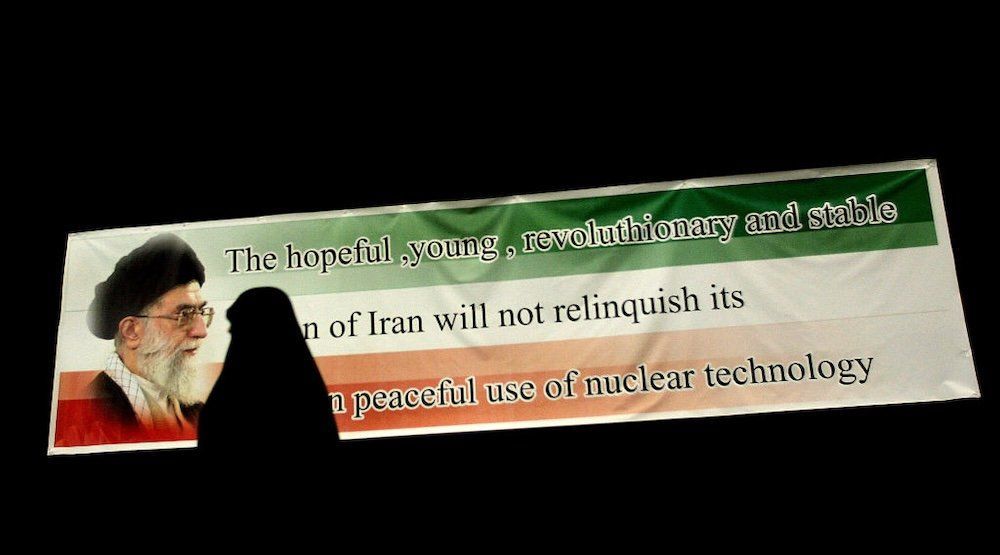 Photo by BEHROUZ MEHRI/AFP via Getty Images
 www.theblaze.com
 www.theblaze.com
 www.theblaze.com
 www.theblaze.com