The Robertsons reveal the biggest mistake Christians make when sharing their testimonies
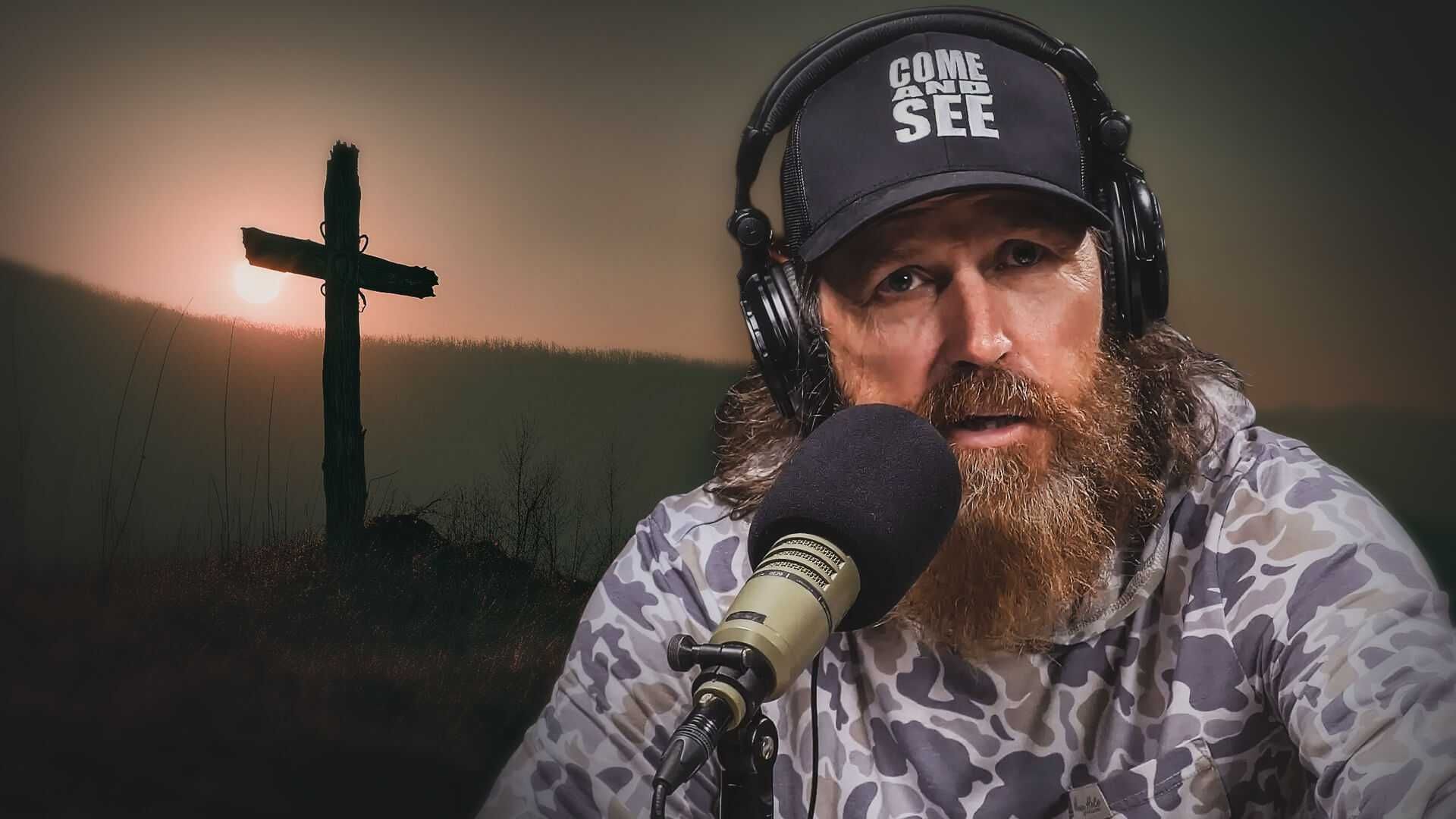


Sharing one’s testimony of faith feels intimidating for a lot of people. Many Christians, churches, and discipleship programs get their guidelines from the apostle Paul’s testimony in Acts 26 when he stood before King Agrippa and shared his coming-to-faith story — starting with his former life, moving to his encounter with Jesus, and concluding with his decision to repent and follow Christ.

While Acts 26 is one of the most commonly used biblical models for creating personal testimony templates in Christian discipleship, Jase Robertson says that people are overcomplicating what should be a simple task.

“There’s one point,” he says, that a testimony hinges on: We give our lives up because He gave his life up for us.

A testimony, Jase says, “should be 99.9% about what He did, and your 0.1% is, I gave my life to Him.”

“Your testimony is, you’re going to point to Jesus and say, ‘You want to define love? You want to define how my life turned around? It all started with God becoming a human and giving up His life,’” he says.

Al agrees and says that too many people when sharing their testimonies overfocus on the bad things they did before they knew Christ, but “those things don’t matter” in light of the redemption Christ freely offers.

“The good part of the testimony is: I finally relented. I finally submitted,” he says.

This submission, Al argues, shouldn’t be just the focus of our testimonies; it should be the focus of the entire Christian walk. He points to the marriage passage in Ephesians 5:21, which instructs married couples to “submit to one another out of reverence for Christ.”

“That’s the idea,” Al says. “It’s the giving up of yourself, and it’s not just for marriage, but of course, it’s for everything.”

To hear more, watch the episode above.

Want more from the Robertsons?

To enjoy more on God, guns, ducks, and inspiring stories of faith and family, subscribe to BlazeTV — the largest multi-platform network of voices who love America, defend the Constitution, and live the American dream.
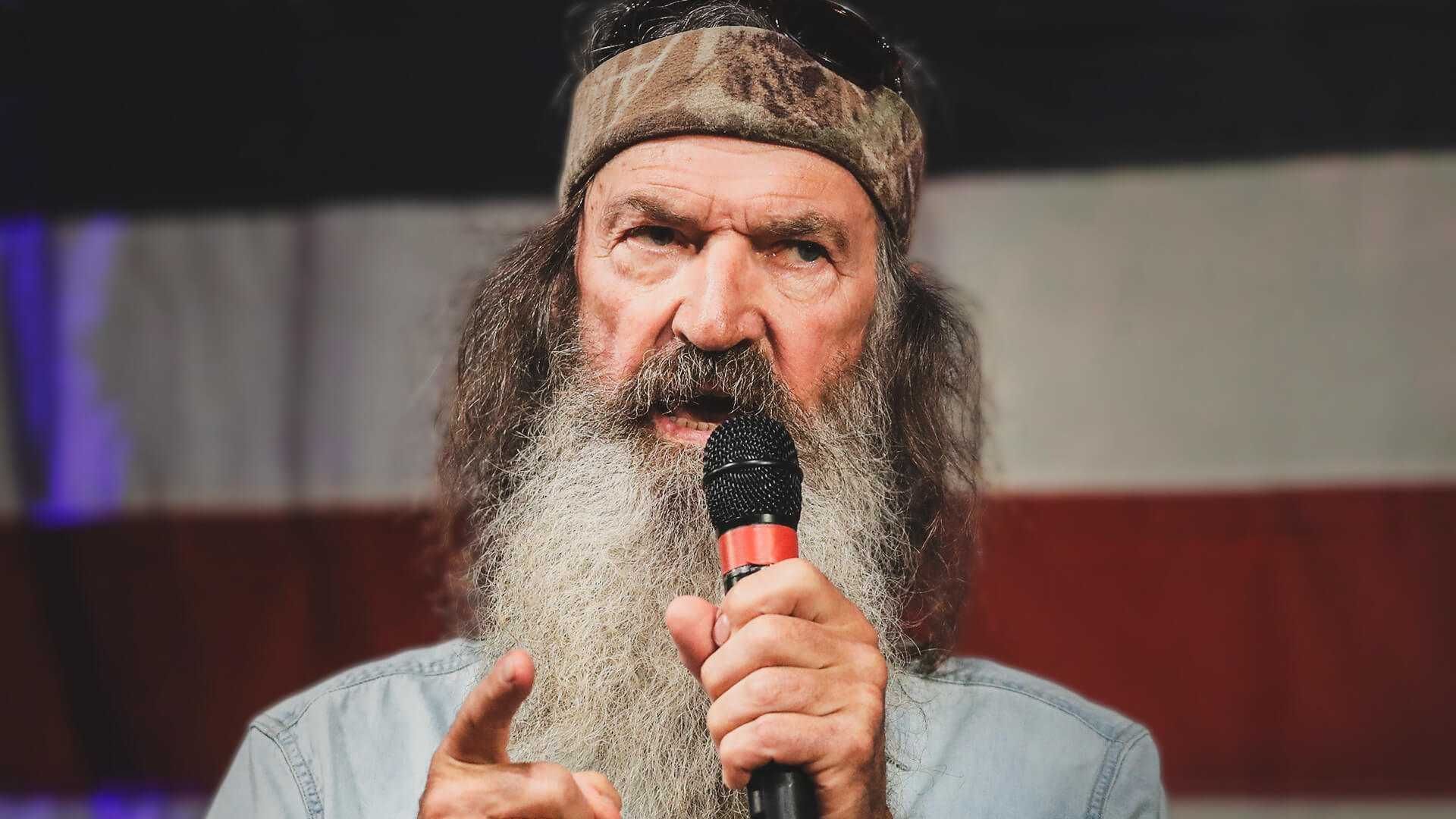
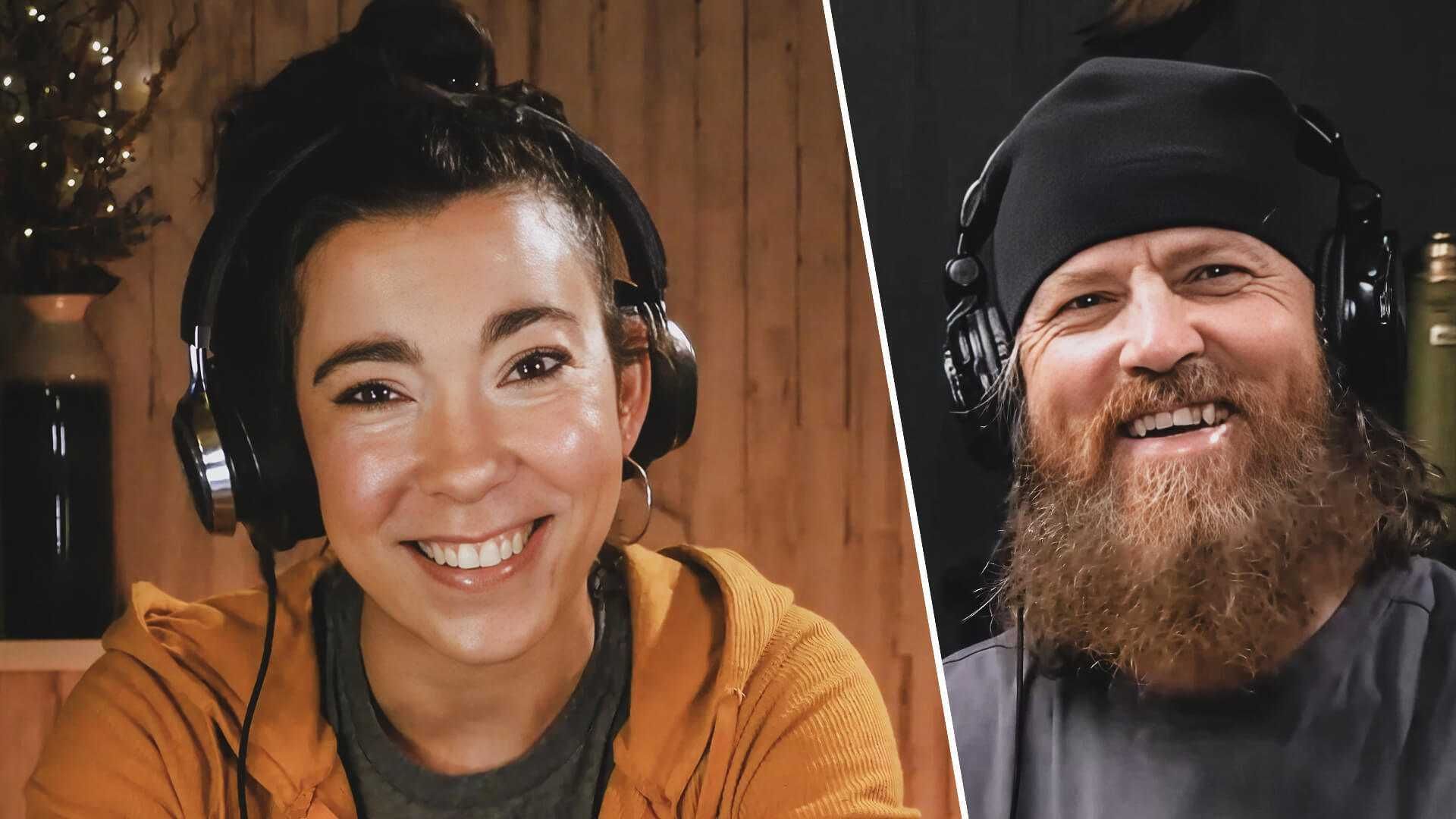
When is anger righteous? The Robertson brothers share Phil’s rule.


Scripture has many warnings about anger. Ephesians 4:31 tells us to put away “all bitterness and wrath and anger and clamor.” Psalm 37:8 warns against anger and wrath. James 1:20 says “the anger of man does not produce the righteousness of God.”

And yet, anger is an emotion we all experience. Even Jesus himself expressed it at times.

So how do we know when our anger is righteous and when it leads us into rebellion against God?

On a recent episode of “Unashamed,” Al and Jase addressed this very question, drawing on the longstanding wisdom of their father, Phil Robertson — the late beloved patriarch of the family.

The key, they explain, is examining what the anger is rooted in. Righteous anger, when boiled down, is ultimately an overflow of love rather than hate.

Al shares a personal example.

“My dad ... became angry at me when the lifestyle that I was living was against the covenant of our family,” he reflects.

“I took that as I was being forsaken and shunned by him, ... but I was 180 degrees wrong. The only reason he had that conversation is because he did love me.”

When Al finally turned from his prodigal ways, his father’s anger immediately gave way, revealing the deep love that had fueled it all along.

“When I came back, guess who was right there waiting — not with hate, not with forsakenness, not with separation, but, ‘Welcome home, son’? The same dad,” he says. “Why? Because his love for me never stopped.”

“A lot of times people think anger is a sin, but it’s not a sin. Anger can lead you to sin,” Al continues, noting that the Bible mentions anger “over 600 times,” but “85% of the 600 times, God is the one who’s angry.”

To hear the Robertsons dive deeper into the powerful tension between God’s love and wrath — especially how they beautifully intersect at the cross — watch the episode above.

Want more from the Robertsons?

To enjoy more on God, guns, ducks, and inspiring stories of faith and family, subscribe to BlazeTV — the largest multi-platform network of voices who love America, defend the Constitution, and live the American dream.
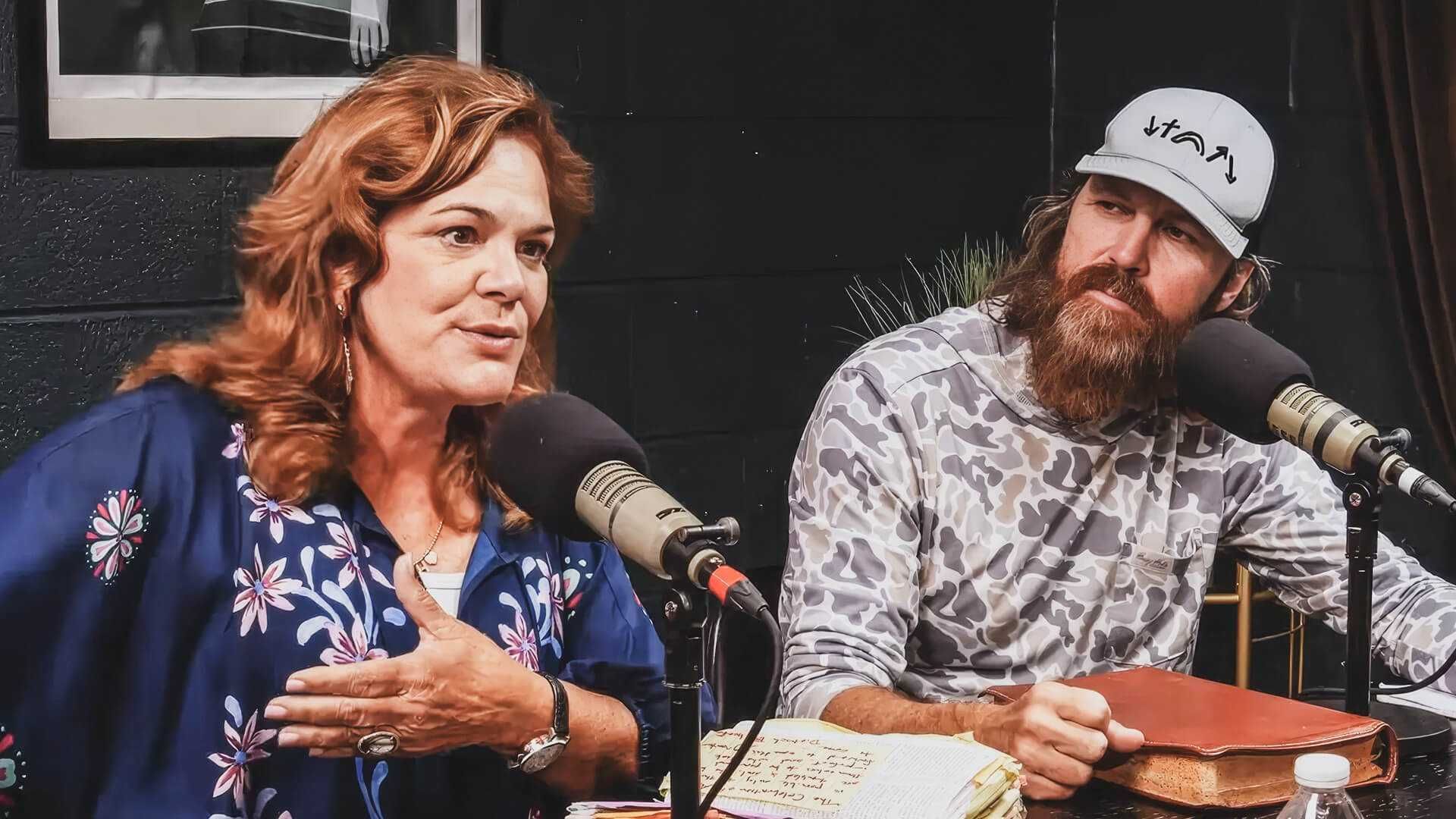
Melissa Dougherty warns: This wildly popular movement is masquerading as Christianity and leading millions astray


Most Christians see the New Age movement’s deep ties to occultism and witchcraft and recognize it as a demonic worldview. But there’s an adjacent movement that, despite its inextricable connection to New Age, is packaged as a Christian belief system.

That movement is called New Thought. It’s a spiritual movement that influenced New Ageism that centers on how the power of the mind shapes reality — emphasizing positive thinking, the law of attraction, mental healing, the divine nature of humanity, and the idea that Infinite Intelligence or God is within all things and accessible through right thinking.

This is the movement author and Christian apologist Melissa Dougherty found herself in before she became a true Christian.

On this episode of “Unashamed,” Melissa unpacks the good-sounding but ultimately evil mechanics of the New Thought movement that has millions of people duped into thinking they’re Christians.

“If I were to define New Thought in two words, it would be metaphysical Christianity. All that means is that everything that you see physically has a spiritual counterpart, including words,” Melissa says.

Instead of reading Scripture in its proper historical context to decipher what’s being communicated, New Thought, she explains, positions the reader as “the arbiter.”

“You're the one that interprets it on how it feels to you and what it means to you. Because metaphysically speaking, truth is found from within, not outside of yourself, because God is in you,” she says. “So it's a subjective interpretation. ... There's a higher, deeper, esoteric, hidden meaning within that text that's meant for you.”

Melissa boils down the movement into one simple concept: “It’s the positive thinking movement in America with Jesus as its mascot.”

People in this movement believe that they “create [their] reality” through cognition. “Sickness, poverty, things like that are all a state of mind. How you feel creates your reality,” Melissa says.

This results in a lot of “distortion of truth,” she laments. For example, “there’s a saying in New Thought that when you look in the mirror, there’s a god staring back at you, and that’s the secret ... of what Jesus was really trying to say.”

While this “sounds really good,” Melissa says, it’s a lie. That’s why she titled her book “Happy Lies” — because it shines a true biblical light on the positive-sounding but heretical New Thought movement.

“It duped me,” she confesses.

To hear more, watch the full episode above.

Want more from the Robertsons?

To enjoy more on God, guns, ducks, and inspiring stories of faith and family, subscribe to BlazeTV — the largest multi-platform network of voices who love America, defend the Constitution, and live the American dream.
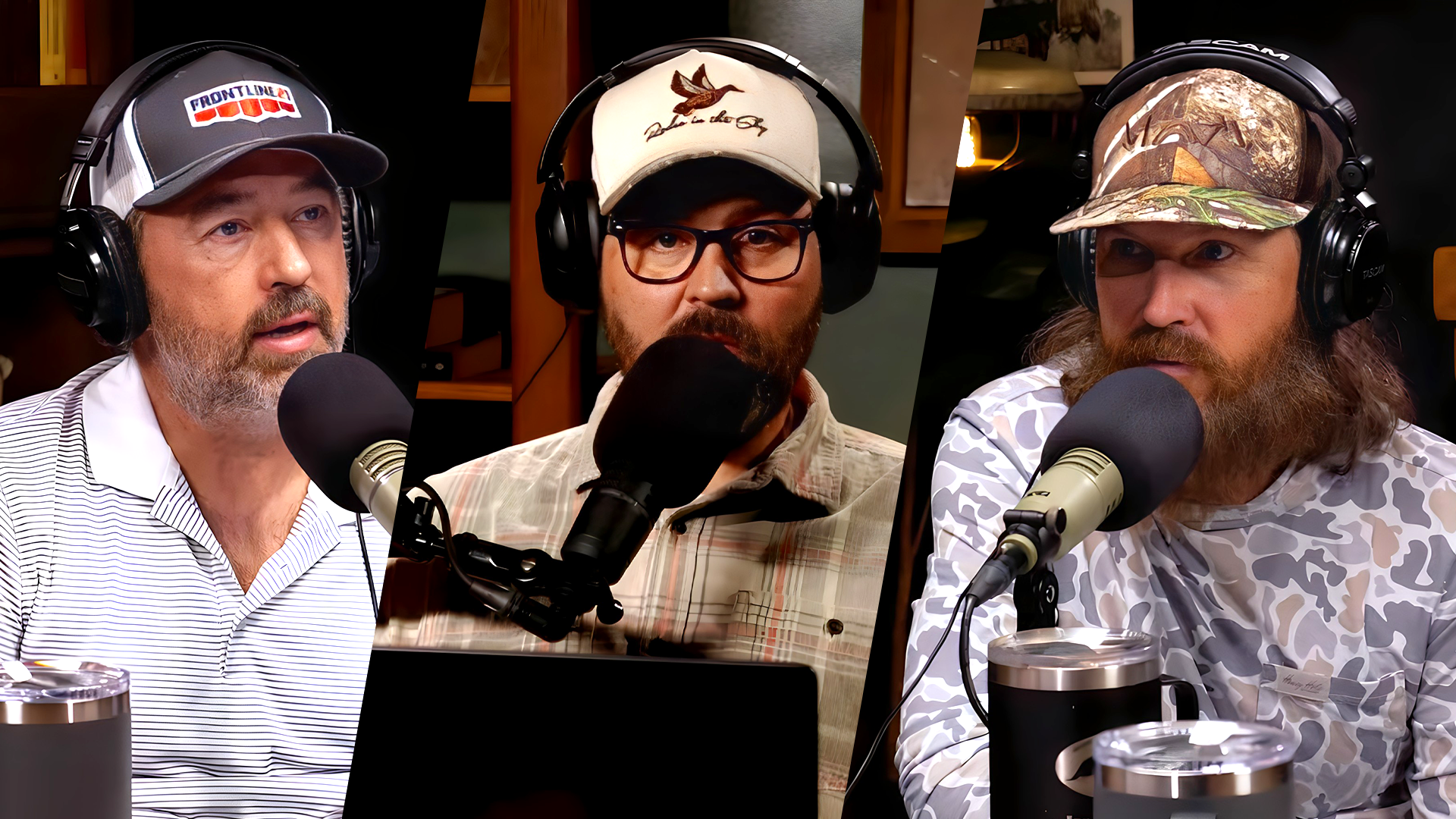
Lisa Harper's heartbreaking yet miraculous adoption journey reduces the Robertsons to tears on 'Unashamed'


Throughout scripture, God, who calls Himself a “father to the fatherless,” pulls no punches about His heart toward orphans: They are to be cared for.

Many faithful believers choose to live out this holy commandment through the adoption of a child. But while the redemption of a broken situation is a beautiful and joyful thing to behold, few talk about the pain that often accompanies adoption.

On this episode of “Unashamed,” the Robertsons speak with bestselling author and podcaster Lisa Harper about her adoption story.

After hearing a sermon on the passage in James about the importance of widow and orphan care, Lisa, a single woman in her 40s at the time, felt convicted to act.

After several years of wrestling, Lisa found herself prepared to adopt a baby from Haiti. “I got written into a story of a precious little girl who was a crack addict and had gotten pregnant,” says Lisa, noting that she “spent Christmas that year in a crack house.”

Right before she was set to bring her baby home, however, the adoption “fell apart at the 11th hour.”

Lisa returned home utterly crushed.

But two weeks later, something miraculous happened. Lisa received a phone call from a friend who was in Haiti working on building a communal kitchen to help feed children in a particular village. While she was there, a young mother in the village died of AIDS, leaving behind a sickly daughter with no one to care for her.

She told Lisa that the Lord spoke to her “clear as a bell in that ER room ... ’Lisa Harper's supposed to be that little girl's mama.’”

Lisa, still mourning the loss of the first child, boldly and faithfully said, “Sign me up.”

“Missy’s 16 now, healthy as a horse,” Lisa says through tears. “She's not my hope. Jesus is my hope, but she is tangible grace.”

“Missy does not have an orphan spirit. I had an orphan’s spirit,” she says, recalling her years of wrestling with feeling undeserving of God’s invitation to be part of his eternal family.

By the end of Lisa’s story, Jase, Al, and Zach Dasher are all wiping tears from their eyes. To hear it in full, watch the episode above.

Want more from the Robertsons?

To enjoy more on God, guns, ducks, and inspiring stories of faith and family, subscribe to BlazeTV — the largest multi-platform network of voices who love America, defend the Constitution, and live the American dream.
The Robertsons open up about pornography: Childhood exposures and the road to freedom


On a recent episode of “Unashamed,” the Robertson brothers and Zach Dasher dove headfirst into the infamous P-word.

Pornography has become an epidemic that enslaves millions and millions of people, most often boys and men. While it’s technically been around for millennia, the digital age has brought porn into the mainstream and made it nearly impossible to avoid. It’s on our televisions; it’s on our phones; even artificial intelligence has fused with the industry in ways that can only be described as sick and depraved.

Today, many boys are exposed to porn long before they hit puberty.

Al, who grew up in an era where pornography was still confined to magazines, says he first encountered it at a “very young” age — “probably 7 or 8 years old” — while living next door to the bar Phil owned and operated before his radical conversion to Christianity. This early exposure caused Al to struggle for years, even into his marriage.

Zach Dasher has a similar story. When he was just 11 years old, his friend’s older brother put on an adult movie with the intention of introducing the younger boys to pornography. Years later, Zach learned from renowned Christian counselor Dr. Trent Langhofer that exposure to pornography before puberty has “the same effect on you as being sexually molested.”

“It made a lot of sense to me because that was an imprint in me that I dealt with for years. ... I think that that early exposure probably set me on a trajectory of sin for many years,” he says.

Jase, who was lucky enough to avoid exposure in his early years, says that he sees pornography as an issue that roots back to creation. God created Adam and said, “It’s not good for the man to be alone,” so out of His kindness, He created Eve and subsequently marriage and sex. Pornography, however, is a perversion of God’s good design.

Not only does it isolate man, which God already said wasn’t good, it also taints his view of reality, and harms his relationships, especially the one with his wife, Jase explains.

Al says something that helped him think differently about pornography was having his own daughters and wrestling with the reality that every girl on a magazine page or a screen is not only someone’s daughter but also an image bearer of God. “You start thinking like Jesus thinks,” he says.

Zach found freedom in not just learning the truth but by taking action. Accountability was key in helping him break the cycle. Confession is the first step, he says, and if you’re married, it needs to be to your wife. “Now you’ve got skin in the game,” he says.

“And then after the confession, you have to find new rhythms ... we are what we consume.”

“If you consume something different, then you will become something different. You will worship what you behold. And so if you're beholding entertainment, then that's what you will eventually begin to worship,” he warns.

Freedom is “truth coupled with discipline.”

To hear more of the panel’s honest conversation, watch the episode above.

Want more from the Robertsons?

To enjoy more on God, guns, ducks, and inspiring stories of faith and family, subscribe to BlazeTV — the largest multi-platform network of voices who love America, defend the Constitution, and live the American dream.
From water to wine: Why Jesus’ first miracle is NOT about alcohol


Many Christians are confused by Jesus’ first miracle documented in the book of John, where he turns water into wine at a wedding at his mother’s request. If Christians are called to refrain from getting drunk, then why would He make more wine, increasing the possibility of drunkenness?

Is this not a contradiction?

Jase and Al Robertson and Zach Dasher, BlazeTV hosts of “Unashamed,” addressed this common question on a recent episode.

“Alcohol is never said to be bad in the Bible ... but getting drunk is always bad,” says Jase.

To explain God’s command against drunkenness, he points to Ephesians 5:18, which says, “Do not get drunk on wine, which leads to debauchery. Instead, be filled with the Spirit.” He also cites Galatians 5:22, which lists “self control” – the opposite of drunkenness – as one of the fruits of the Spirit.

However, these verses, while certainly true, “have nothing to do with John 2,” says Jase.

When He turns water into wine, “Jesus is revealing a picture of who He is and what He's going to do.”

“Jesus turning water into wine is directly connected to the new wine that Jesus says He's bringing. ... So it's no accident that He's doing this miracle, making new wine at a wedding ceremony, right? Because we're the bride of Christ. There's all kinds of imagery here that's being played out,” Zach explains.

The wedding party, Jase adds, is also reflective of the reality that “we're participating in the greatest party of all parties in Jesus.”

Further, in John 2, Jesus is, for the first time in His ministry, showing that miraculous change can only be done through Him. By turning water into wine with a mere thought – an act none but God Himself could accomplish – Jesus is “giving you a picture [of]: If you want to know how to change something, I'm your guy,” says Jase.

Al then brings up another point: The passage is also about Mary’s faith.

“I mean His mom believed in Him enough [that] she said, ‘Do something about this wine situation.’ I mean, that blows me away that she had enough faith in who He was in the moment to think He could do something, which He did,” he says.

John 2, says Jase, is a passage where many Christians, especially new ones, go off in the weeds debating what the text is saying about alcohol, when in reality, the story is about who Jesus is and what He came to do.

That said, it’s still important to abide by God’s command against drunkenness.

People who have a history of alcohol abuse probably “shouldn't touch it at all,” Zach advises.

“Also, I mean, I wouldn’t have a drink around somebody that I knew had an issue with it," he adds.

“The more you get to know this Jesus and what He is really not only offering you but what He's given you ... it becomes not the ‘do’ and ‘don't do,’ but this is who I live for,” says Al.

To hear more of the panel’s conversation, watch the episode above.

Want more from the Robertsons?

To enjoy more on God, guns, ducks, and inspiring stories of faith and family, subscribe to BlazeTV — the largest multi-platform network of voices who love America, defend the Constitution, and live the American dream.
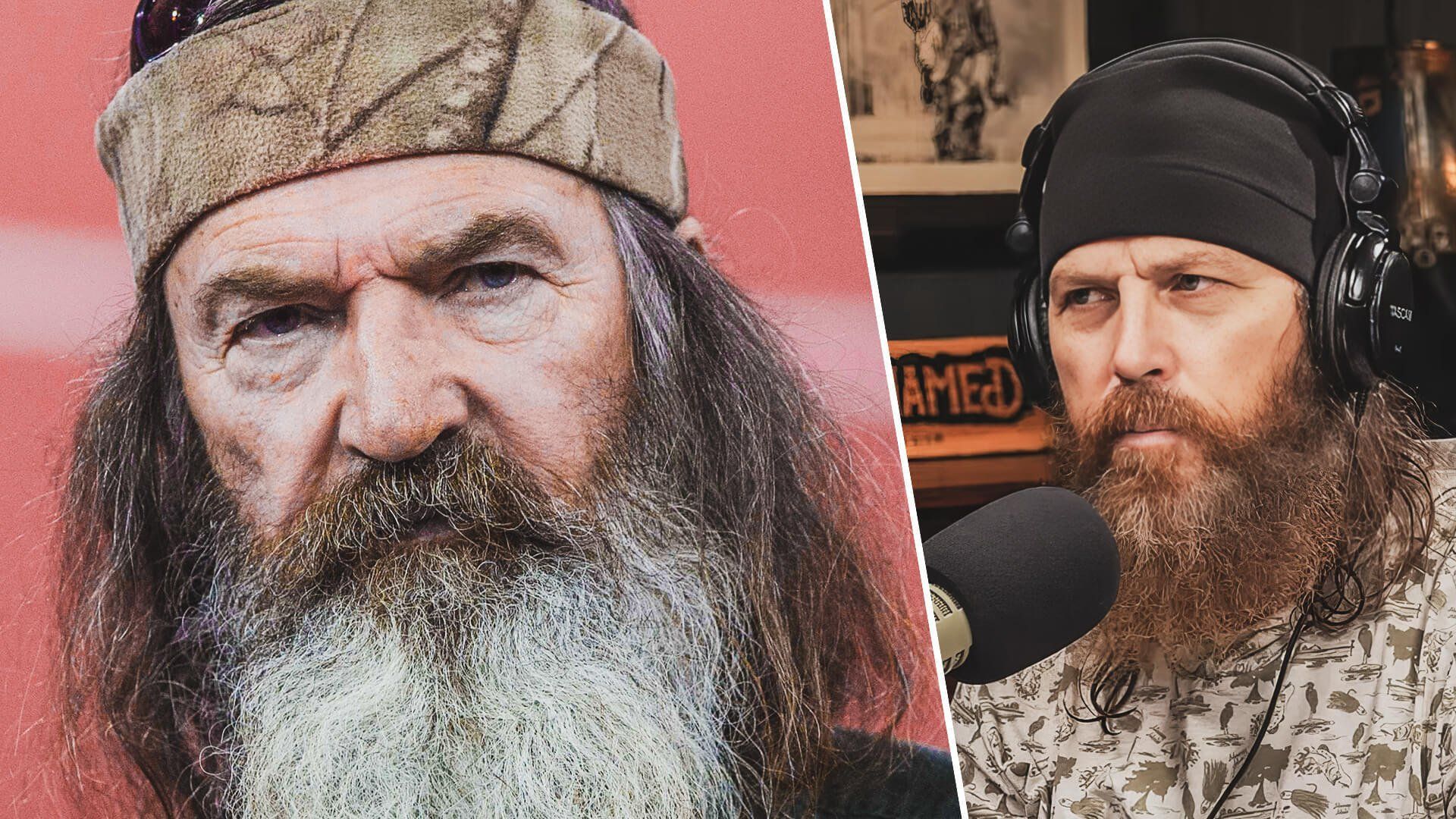
Jase Robertson shares the last thing he heard his father say


On Sunday, May 25, Duck Dynasty patriarch Phil Robertson died following a tough battle with Alzheimer’s disease and other health issues.

After taking some time away to grieve and be with family, Phil’s sons Jase and Al, who are anchors on the “Unashamed” podcast, returned to share details about Phil’s passing and his funeral.

The funeral, which was a family service of 300-400 people, was perfectly suited for Phil. The family worshipped, preached the gospel, and celebrated Phil — not because of what he did, but because of what Christ did for and through him.

"I had to kind of detach myself," Jase admits, "because Phil had this famous line that he said many times: 'When I die, don't cry. You can sing; you can dance; you can do a little jig, but I made it.'"

The funeral was held in the same church — down to “the same room” — that Phil gave his life to Christ in. Per Miss Kay’s request, all four Robertson brothers — Jase, Al, Willie, and Jep — spoke. Phyllis, Phil’s daughter from an extramarital affair before he became a Christian, also spoke. Some of Phil’s grandchildren led a powerful worship service that brought many to tears.

Uncle Si, Phil’s brother, provided some needed comic relief, as he “kept talking back to Willie throughout his entire [speech],” even though he declined the opportunity to give his own speech.

“He was the sidekick to Phil and Kay through their first years of dating and probably 10 years of their marriage, and so he turned into the echo, which was funny,” laughs Jase.

At the grave site, Phil was laid to rest next to his sister Jan Dasher, who played a pivotal role in his coming to Jesus.

Jase’s son Reed says that hundreds of people, many of whom had never met Phil but had only watched his content, reached out in the days following his death to share how their lives were touched by his unshakable faith.

“Heaven got a titan,” he says of his grandfather.

In the final weeks before his death, Jase admits he was struggling watching his dad suffer.

“Every time I thought he was completely gone as far as communication-wise, something would happen, usually with the grandkids or the wives or whatever, and he would just lift up and say something,” he reflects. “My daughter started singing one night. ... He had done nothing all day to show any signs that he was with us, and he reached out his hand and held her hand.”

“It hit me in that moment. I thought God does a lot of good work in suffering,” he adds, citing Romans 5. “My daughter is never going to forget that moment.”

In his last conversation with Phil, Jase told his dad, “You're going to meet Jesus,” and Phil suddenly “came to,” “grabbed [Jase’s] hand,” and eagerly said, “Let’s go.”

To hear more about Phil’s funeral, the family’s final time on Earth with him, and the incredible legacy he leaves behind, watch the episode above.

Want more from the Robertsons?

To enjoy more on God, guns, ducks, and inspiring stories of faith and family, subscribe to BlazeTV — the largest multi-platform network of voices who love America, defend the Constitution, and live the American dream.
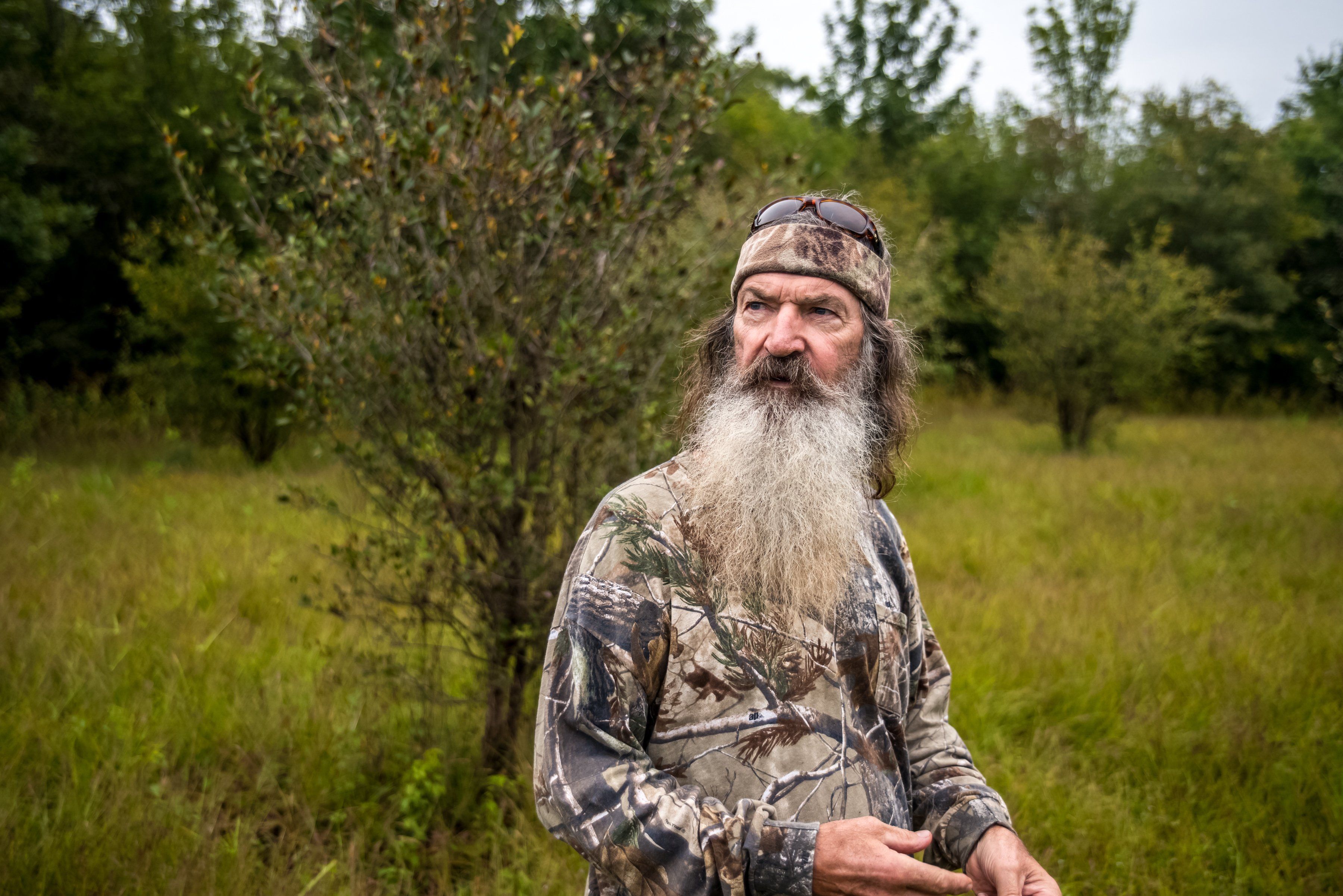
Robertson brothers deliver update on Phil’s health: 'More better days than bad days'


Beloved “Duck Dynasty” patriarch Phil Robertson has been absent from the “Unashamed” podcast for several weeks now due to medical issues.

Back in December, the Robertson brothers announced that their dad had been diagnosed with both a blood disease and Alzheimer’s disease and was suffering greatly as a result.

In a recent episode of “Unashamed,” Phil’s sons Jase and Al Robertson gave an update on the Duck Commander’s health.

It “[does] not seem like he's getting better,” Jase admits, noting that Phil’s waning condition has brought family members to tears at times.

Further, the recent discovery that Phil has several “fractured vertebrae” has only added to his discomfort.

Thankfully, it’s not all bad news.

Phil has “stints where he feels better,” says Jase. “Willie went down there last night, and Phil was perfectly fine — the best he had seen him mentally.”

Al, while heartbroken for his father, sees the silver lining. “It's definitely been a rally point for our family,” he says, noting the cooking and visiting centered around Phil.

“For any family that's going through a difficult time, you can sit around and just feel terrible about the situation, or you could say, ‘Let's pull together as a family and make it the best we can,’ so that's kind of been our approach,” he says.

Despite the difficult days, the family is encouraged that Phil has “more better days than bad days.”

For now, they ask that Phil’s supporters “keep praying."

Want more from the Robertsons?

To enjoy more on God, guns, ducks, and inspiring stories of faith and family, subscribe to BlazeTV — the largest multi-platform network of voices who love America, defend the Constitution, and live the American dream.
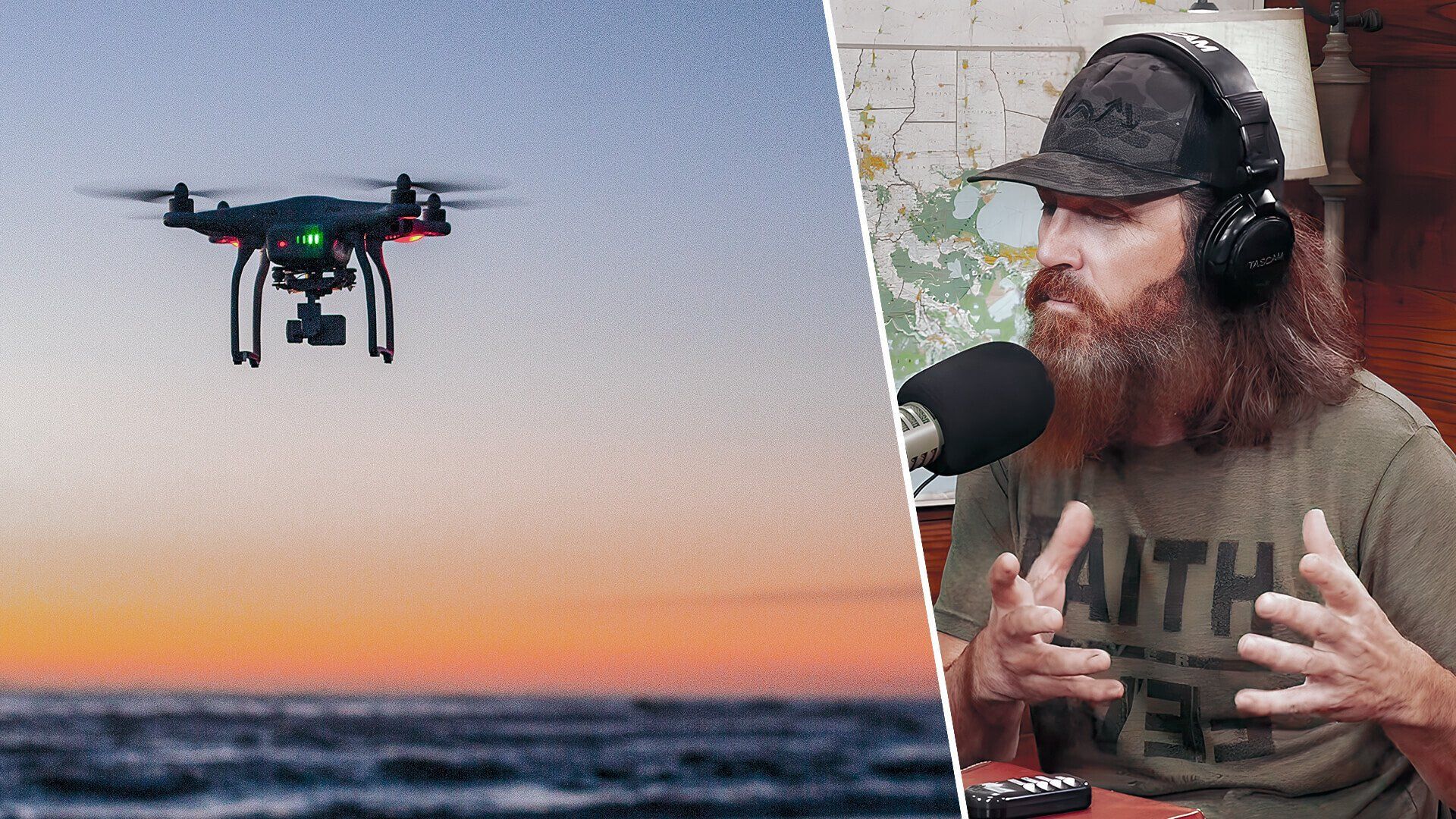
Robertsons ask 2 combat veterans about mysterious drones — 'Can we relax?'


This week, the Robertsons invited combat veterans and podcasters Chad Robichaux and Chadd Wright on the show to talk Jesus and drones.

As for the mysterious drones we still don't know much about, they say that if the military really wanted them down, they’d be down.

“How long would it take to correct this problem?” Jase asks.

“If our military wanted those things out of the sky, they would be down in hours,” says Robichaux. “[John Kirby] says they don't know what they are, but they're not a threat to public safety, and they’re not a national security threat. Well, that means they know what they are.”

“So we can relax?” Jase asks.

“I think so,” Robichaux says.

Even if the drones do belong to us, the American people are still frustrated at the government’s lack of transparency.

However, Wright says that in certain cases, secrecy is necessary.

“I don't like that the government has secrets either, but here's the thing — some things have to remain secret that the government is doing. You have enemies and you have a population who’s going to respond in a way that is detrimental to society if you was to actually tell them what’s going on,” he explains.

“These people in these cities, man, if you was to tell them that there’s some imminent threat and maybe that’s the reason these drones are flying around ... they’re gonna lose their minds,” he adds.

To hear the guys’ incredible stories about coming to know Jesus, watch the episode above.

Want more from the Robertsons?

To enjoy more on God, guns, ducks, and inspiring stories of faith and family, subscribe to BlazeTV — the largest multi-platform network of voices who love America, defend the Constitution, and live the American dream.

Phil Robertson thanks fans for outpouring of support in the wake of his diagnosis: ‘Fight the fight, keep the faith’


The “Unashamed” audience has been wondering where Phil Robertson has been. Their steadfast leader seemed to suddenly disappear from the podcast overnight.

While the Robertson brothers have informed fans that their dad has been under the weather, it wasn’t until recently that they shared what’s really been going on.

Phil “has some sort of blood disease that's causing all kinds of problems” and is in “early stages of Alzheimer’s,” Jase revealed in an “Unashamed” episode over the weekend.

Since this sad revelation, fans across the country have sent prayers and well wishes by the thousands. Many expressed that they learned more about Jesus and the Bible from Phil Robertson than they learned from years of attending church. Others pointed to Phil as the reason they returned to their faith.

“The outpouring of love, of support, of prayer just is ... it's almost been overwhelming for me,” says Al.

“Once my phone started going off, it pretty much hasn't stopped for the last 72 hours,” adds Jase.

Phil is certainly grateful for the love and support he’s received as well.

“Dad's famously not connected to tech, but he does love to hear that out there in ‘computer land,’ as he puts it, there are people that are expressing their love and their appreciation for everything that he's meant to them in their lives,” says Al.

These prayers, it seems, are having a real impact — not just on Phil’s spirit but also on his physical well-being.

“He has had some reprieve in his pain, and I got to think that that's the prayers of millions of people that went up over the last four days,” says Jack Dasher.

Even though the brothers know that decline is inevitable, they want everyone to remember what’s outlined in 2 Timothy 4:7-8.

“I have fought the good fight, I have finished the race, I have kept the faith. Now there is in store for me the crown of righteousness, which the Lord, the righteous judge, will award to me on that day — and not only to me, but also to all who have longed for his appearing,” Al reads.

One thing is absolutely certain — Phil Robertson has fought the good fight and kept his faith.

The Robertsons hope we will do the same as Phil continues his battle.

To learn more, watch the episode above.

Want more from the Robertsons?

To enjoy more on God, guns, ducks, and inspiring stories of faith and family, subscribe to BlazeTV — the largest multi-platform network of voices who love America, defend the Constitution, and live the American dream.