
Alabama sheriff’s office spied on GOP challenger’s home, complaint alleges. Now the left wants that sheriff back.
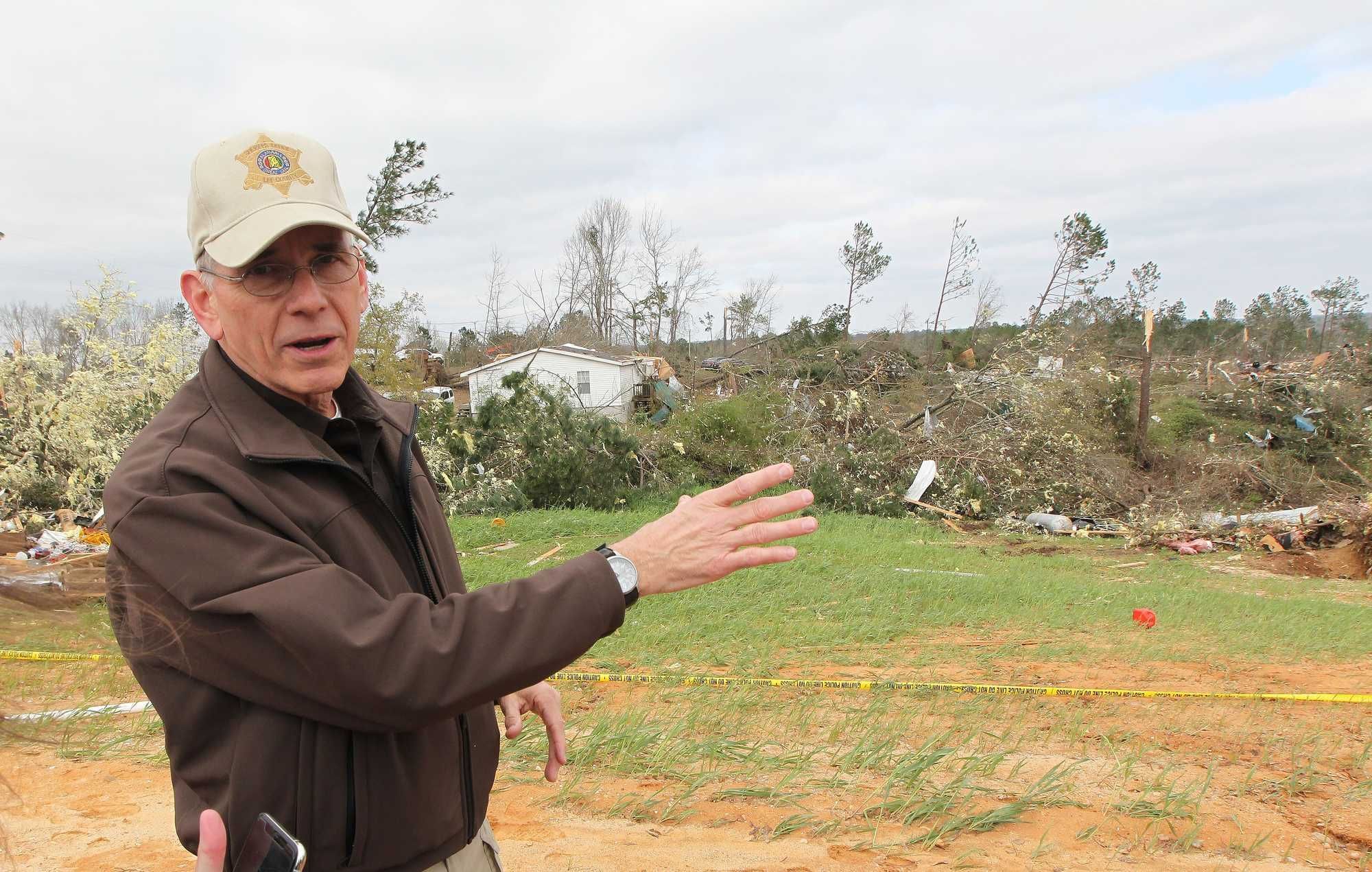
If you're a deputy sheriff upset that your Republican boss isn't doing enough to help with immigration enforcement and you decide to run for sheriff in Alabama, prepare to be fired and apparently spied on by your political opponents.
Just ask former deputy and current Republican nominee for Lee County sheriff Cam Hunt.
'The meeting started at 9 a.m. By 9:10, I was walking out of there, calling my wife to tell her he'd fired me.'
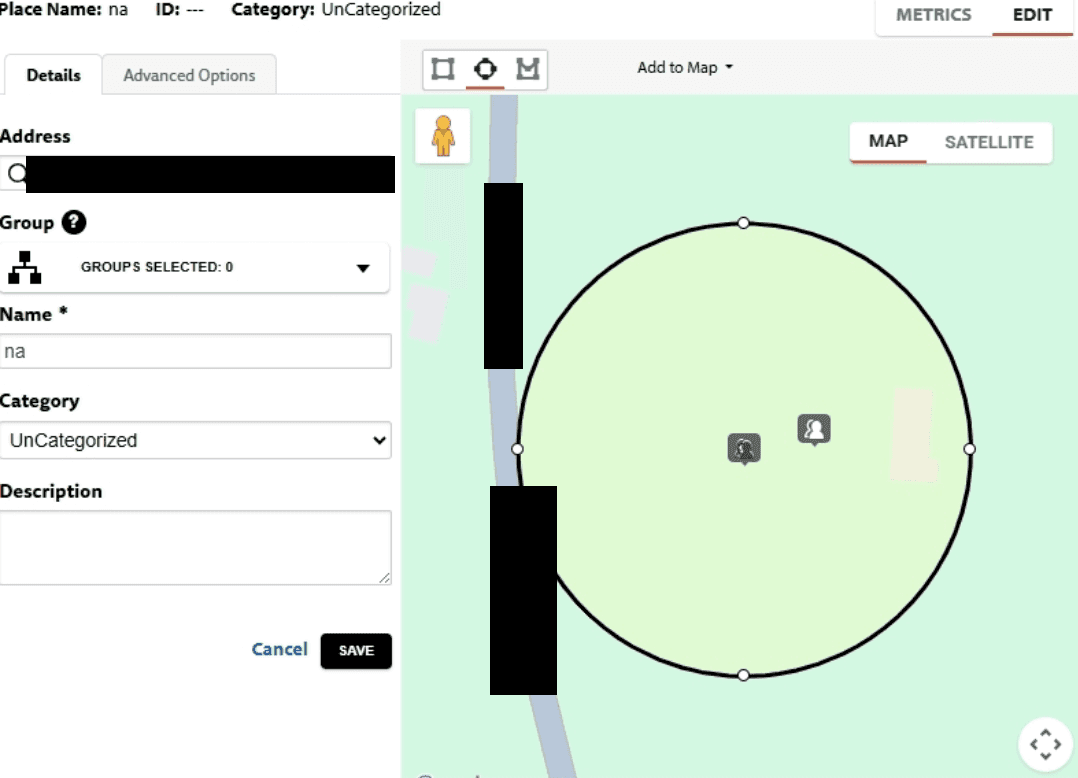
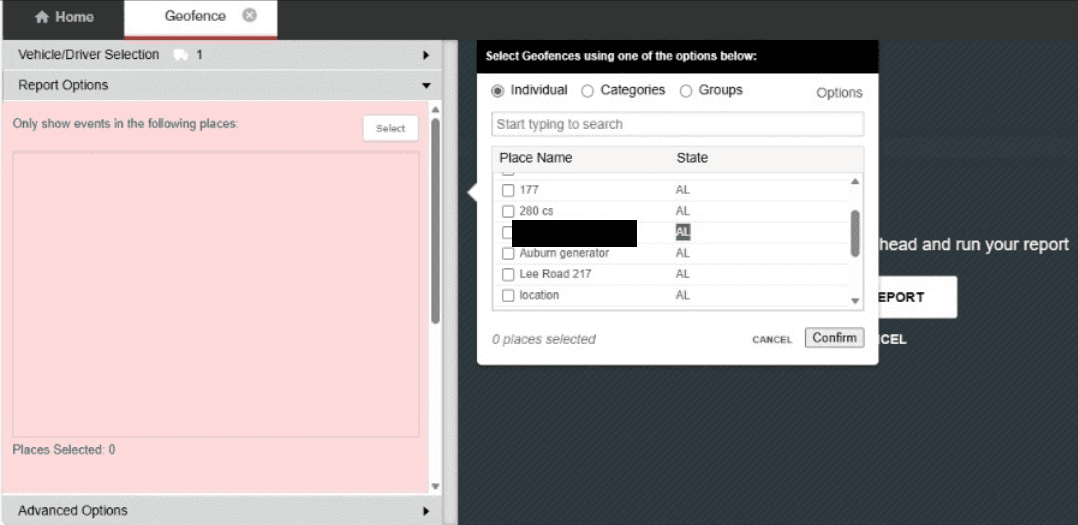
After launching his bid for sheriff and making immigration enforcement a central part of his campaign, someone inside the Lee County Sheriff's Office geofenced Hunt's home during the primary, according to a state ethics complaint and screenshots of the department's taxpayer-funded tracking system provided exclusively to Blaze News by Hunt.
That geofence, allegedly enabled by the department's Verizon fleet GPS system, may have flagged deputies and county vehicles that visited Hunt during his campaign.
On July 1, about four weeks after Hunt filed his complaint, deputies were told to turn in their GPS units because the office had canceled its Verizon contract, according to Hunt.
The sensitive records the system is designed to collect are wiped on a recurring basis, and the state hasn't indicated that it will preserve materials related to the complaint, according to Hunt.
Hunt, a Marine veteran, beat longtime Sheriff Jay Jones in the Republican sheriff primary on May 19, seven months after Jones fired him for informing him of his forthcoming campaign against him.
Hunt says a whistleblower found his address in the geofence list shortly before that vote in May. But Hunt now faces a write-in campaign to keep Jones in office, backed by progressive activists who want a sheriff who will keep federal immigration enforcement out of Lee County.
The local Republican Party has done little to stop it, according to Hunt.
Screenshots provided exclusively to Blaze News by Hunt show two saved locations in the system covering Hunt's home and an adjoining lot he owns, he claimed.
One of the geofences has four vehicle groups attached, each labeled with the name of a sheriff’s office lieutenant. The screenshots do not show what those groups were used for.
RELATED: Maine got robbed under Democrat Matt Dunlap's nose. Now he's running for Congress.
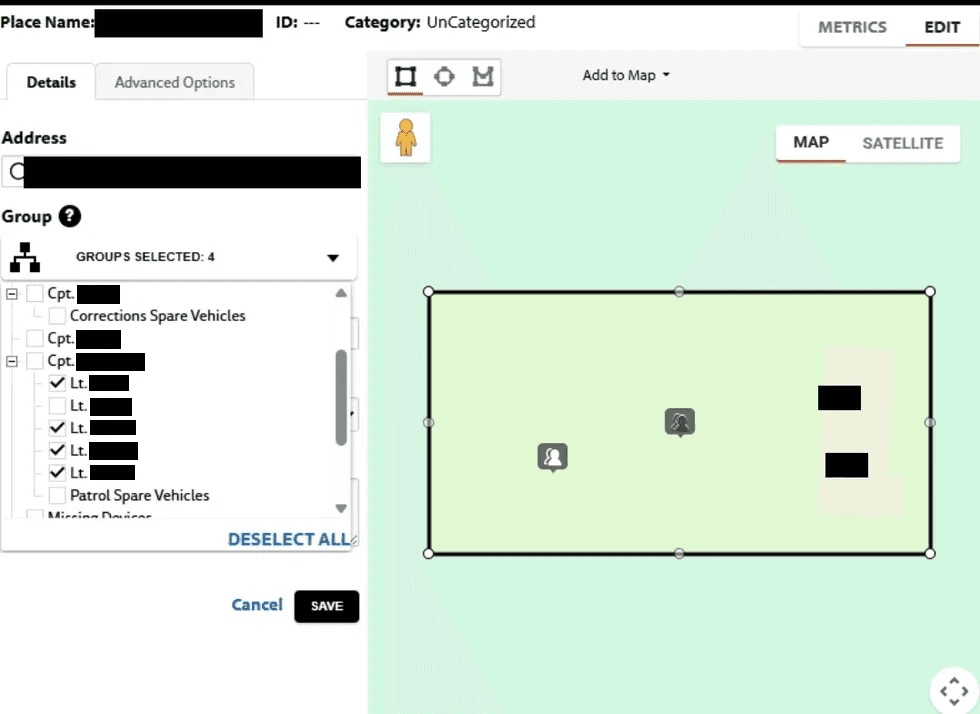
The screenshots do not show who built the geofences, when they were built, or whether any alerts went out. Hunt says a whistleblower spotted his address in the system before the primary.
"From what they could tell, User 1 created a new account. User 2 went into the new account and used it to create the geofences," Hunt told Blaze News. "Once they were established, they went back to the User 1 account and deleted the new account. So, essentially, covering their tracks."
Not long after the geofence was discovered, Jones' office canceled the Verizon contract linked to the system, according to Hunt. There has been no replacement.
"It was to micromanage," Hunt said of how the system had been run. "It wasn't about officer safety or any of that."
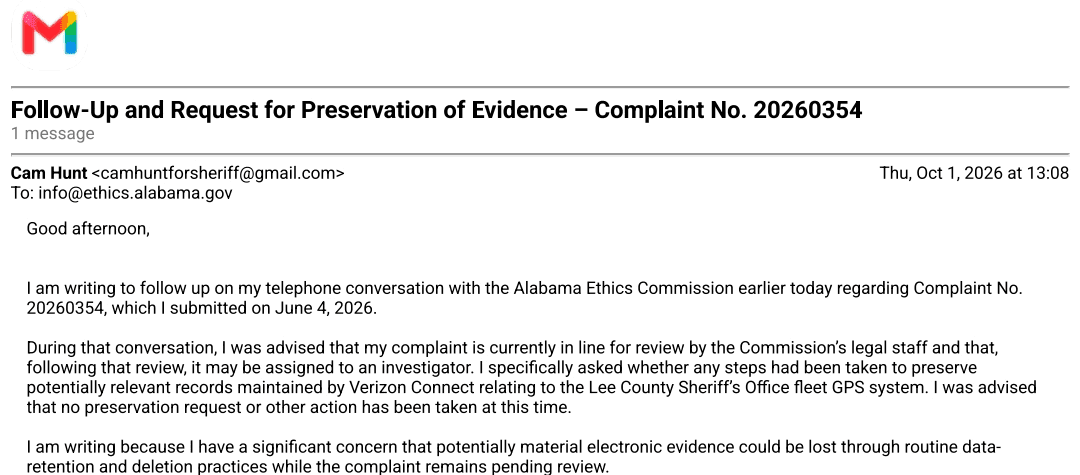
Hunt wrote an email to the Ethics Commission on Oct. 1 after commission staff told him the complaint was still "in line for review" by its legal team and that "no preservation request or other action has been taken." He has asked the commission to preserve the records "relating to the Lee County Sheriff's Office fleet GPS system" before they are lost.
RELATED: GOP operative fired for 'OK' sign rehired after Blaze News report
Jones has denied any misuse.
"The Sheriff's Office has not and would not allow the use of this system for any purpose not involved in the interest of public safety," Jones said in a September statement to WTVM-TV.
Jones and the sheriff's office did not respond to requests for comment regarding the screenshots and the contract cancellation.
Hunt beat Jones 9,301 to 8,994 in the May 19 GOP primary, denying Jones another term after a nearly three-decade tenure that began in 1998.
Jones fired Hunt in October 2025, according to a letter and statement reported by WRBL-TV. The firing occurred immediately after Hunt informed Jones of his intention to challenge him in the Republican primary.
"The meeting started at 9 a.m. By 9:10, I was walking out of there, calling my wife to tell her he'd fired me," Hunt said.
Hunt ran on joining 287(g), the federal program that deputizes local officers to help enforce immigration law. Jones consistently refused to sign on leading up to the primary election.
ICE's list of participating agencies shows at least 26 of Alabama's 67 sheriff's offices in the program. Lee County is not one of them.
"If we did any less, we'd be a sanctuary county," Hunt said of Jones' approach.
Jones says the program carries administrative and liability costs and that "the absence of 287(g) paperwork has never and will never stop our department from deporting illegal immigrants." His office reports 271 transfers to ICE custody in 2025 and 185 from January through September 2026.
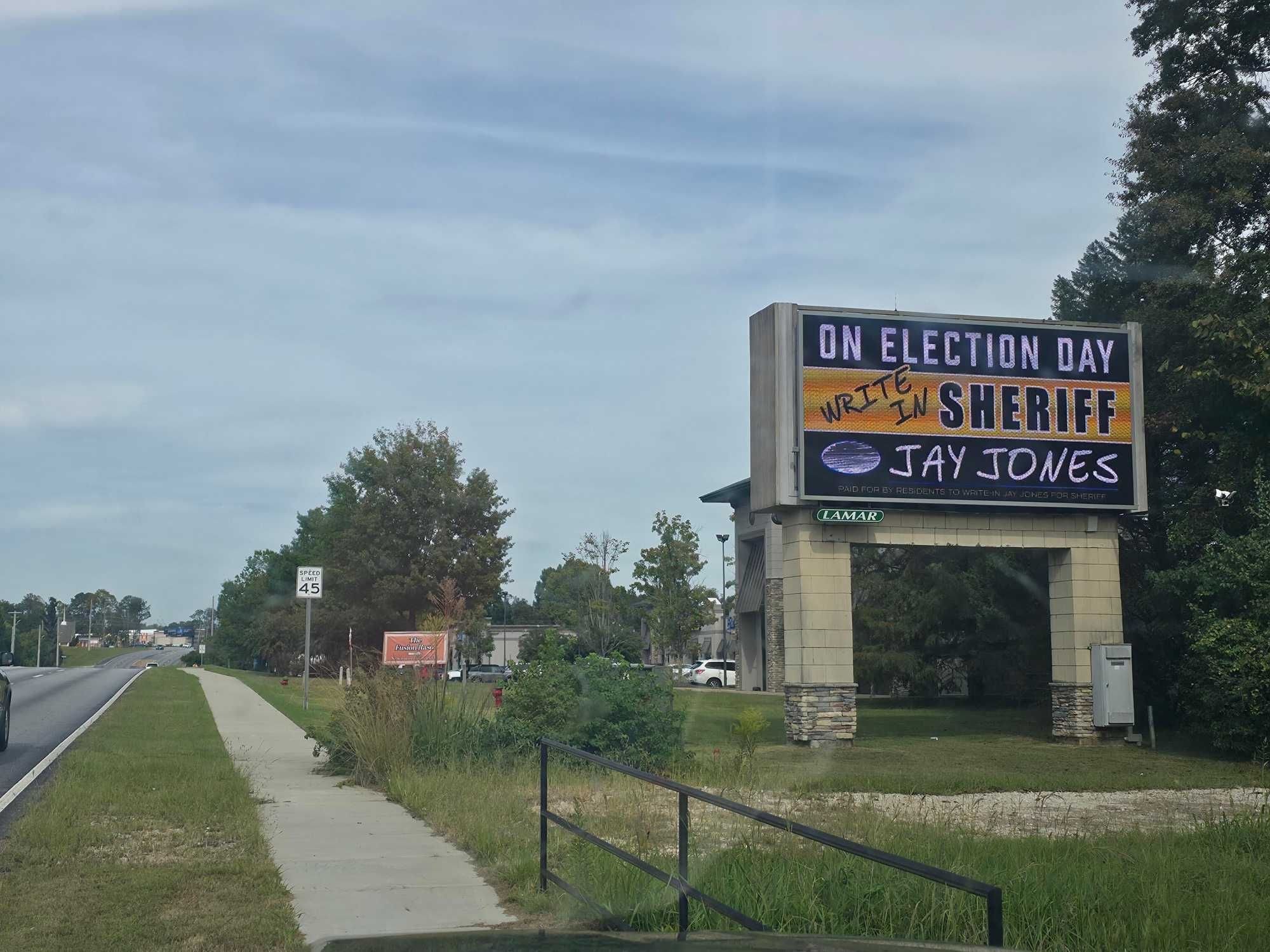
No Democrat is running for sheriff, so Hunt is the only name on the Nov. 3 ballot. That's not stopping liberal partisans, who have taken it upon themselves to organize a write-in campaign for Sheriff Jones.
The idea surfaced in Indivisible Auburn Alabama's Facebook group the day after the primary. "Can we write in Jay Jones for Sheriff in November?" a member asked on May 20.
RELATED: Fraud, fraud, and more fraud: How Maine became a Somali scammer's paradise
"We do not need a Sheriff who has made it abundantly clear that he wants to throw Lee County in with ICE and CBP," another post reads. The poster called on Democrats to write in Jones and called federal immigration agents' actions under the Trump administration "constitutional atrocities."
On Aug. 11, the sheriff's office called claims that it doesn't cooperate with ICE "blatantly untrue" and said it "has, and will continue to, cooperate with ICE in the arrest, detention, and transfer" of people in the country illegally.
When a commenter in the group pushed back that Jones "wants ICE here," a group administrator answered that Jones "has said he would not sign a 287g agreement."
"While the letter isn't what most of us would want to hear, 287g would be worse," the administrator wrote. "I will be writing in Jay Jones."
A former Lee County deputy took the effort public in September, and supporters made signs showing voters how to write Jones in. One supporter promoted an online store selling "write in Jay Jones" yard signs, stickers, and T-shirts; the link now returns an error. Absentee voting began Sept. 9.
Jones has not disavowed the liberal write-in campaign against his own party's candidate. The Alabama GOP's sore-loser rules prevent primary candidates from running as Republicans again if they appear on the other party's ticket or endorse a write-in campaign after a primary loss.
"If people wish to organize for a write-in candidacy, I'm very humbled they would feel that way," Jones told Now Georgia in September. "People have been kind to me over the years. They would like that to continue."
Indivisible Auburn/Opelika did not respond to a request for comment.
RELATED: Retiree radicalism: Behind the scenes with Maine's anti-ICE activists
Jones lost the sheriff's race, but he won a seat on the Alabama Republican Party's State Executive Committee on the same ballot.
Hunt says his own party isn't standing up for him.
On the day he spoke with Blaze News, Hunt was headed to a Lee County Republican lunch where Probate Judge Jere Colley was scheduled to answer questions about write-in voting. Hunt claimed he wasn't supposed to get the invitation.
"I got the impression they weren't on board with it, but at the same time they weren't really willing to put pressure on Sheriff Jones to disavow it," Hunt said. "With the more recent things, I feel like it's a little more than that, and they're a little more complicit in it."
Lee County GOP Chairman Cole Lawson told Blaze News that Jones assured him privately he "has not been involved" in the write-in campaign and "has not asked anybody to write his name in."
RELATED: Exclusive: Republican operative fired after flashing 'OK' sign speaks out
Actively campaigning against the nominee "would be grounds for removal" from the county executive committee, Lawson said, but declining to endorse is not.
“The way this would work is, if a member of the Republican Party here chose to file a formal challenge to remove Sheriff Jones from the executive committee, they would file that to the executive committee," Lawson told Blaze News. "It would come to me to be the judge of whether that line had been crossed or not."
The county party has not disavowed the write-in campaign. Lawson told Blaze News its message to voters is the same one it has pushed all cycle.
"The Lee County GOP urges citizens to get out and vote straight-ticket Republican up and down the ballot on Nov. 3, like their livelihood depends on it."
Like Blaze News? Bypass the censors, sign up for our newsletters, and get stories like this direct to your inbox. Sign up here!

Alabama man allegedly decapitated his grandmother and aunt with chainsaw
A 47-year-old man was arrested after his elderly grandmother and his aunt were found gruesomely killed at their home in Mobile, Alabama.
Court transcripts reveal that a frantic call for help was made to police on Monday about Thomas Steele's erratic statements and behavior.
'He's doing some bizarre things, and I don't know if that's, uh ... good or. ... He says he’s just going to live for God.'
Christy Deloach, 65, called 911 about 11 a.m., according to records obtained by WALA-TV.
Deloach said in the call that her nephew was "off his medication for lithium, and I'm not sure who to call or contact."
"He gave away his phone ... and giving his car away. Um, he's doing some bizarre things, and I don't know if that's, uh ... good or," she added. "He says he's just going to live for God and not going to have any kind of electronics."
The dispatcher asked Deloach if she needed medical help.
"It's in his mind. He's following God," she responded.
"I just needed to figure out what to do. ... He's calm! He's not violent or anything. So, I guess I'll just let it play itself out," she added.
The dispatcher gave Deloach the number for the police department, and the call ended.
About two hours later, police were called to the home on Carolina Court and reported finding the bodies of Deloach and 85-year-old Dora Boone, the grandmother of Steele.
They were decapitated with a chainsaw.
Police said Steele was standing outside the home. He was arrested and booked into the Mobile County Metro Jail on two charges of murder.
He was denied bond on Tuesday, according to a WKRG-TV report, and the judge ordered a competency examination for the suspect.
Steele was told a public defender would be appointed for him, and he gave a bizarre response.
"No, kill him," he said.
Deloach's boss at the hair salon where she worked for 15 years said she had mentioned that her nephew was bipolar.
"She was one of the first employees we had when we took over. And just a real sweet girl. Beautiful person. I considered her a friend," Lenny Zanghi said.
"I'm just going to miss her and think about her every day," Zanghi continued.
Like Blaze News? Bypass the censors, sign up for our newsletters, and get stories like this direct to your inbox. Sign up here!


Alabama state lawmaker among 17 arrested in prostitution sting operation — and 3 others were illegal aliens, cops say

A law enforcement sting operation led to the arrest of several men who allegedly tried to pay for underage sex in Alabama.
Among those arrested for alleged human trafficking were a state representative, three people illegally in the country, a school board member, and a public works director.
If convicted of human trafficking, the suspects could face up to 20 years in prison.
Atmore police pretended to be underage prostitutes advertised online and then arrested men at a hotel when they arrived for sex.
"Instead of it being the clientele that you had ordered on the advertisement, it's numerous law enforcement officers coming out with vests and 'police officer' on their shirts, so it's a big surprise, I'm sure,” Atmore Police Major Chance Thompson said.
Seventeen were arrested in total, but not all were charged with underage trafficking.
Republican State Rep. Brett Easterbrook from Fruitdale is charged with human trafficking and soliciting prostitution after he allegedly sought to pay $500 to a person under 19 years old for sex.
Now-former City of Satsuma School Board President Kory Wesley was charged with human trafficking after he allegedly offered money to a "person known to be a minor."
Former Public Works Director for the City of Orange Beach Timothy Tucker was charged with solicitation for allegedly seeking to pay an escort $220 for sex.
"Doing the actions that the people did in this operation, while looking at the statute and how it is defined right now, is human trafficking in the first degree," Thompson added.
RELATED: New York rabbi nabbed in underage sex sting — and brought disgusting item to hotel, cops say
"The distances these people traveled to come to Atmore, Alabama, to get into what they were doing that night," Thompson said.
If convicted of human trafficking, the suspects could face up to 20 years in prison.
Like Blaze News? Bypass the censors, sign up for our newsletters, and get stories like this direct to your inbox. Sign up here!



 www.theblaze.com
 thefederalist.com
 www.theblaze.com
 www.theblaze.com