Early red flag for GOP? Democrats rack up massive Q1 fundraising hauls


The first-quarter campaign fundraising total for the 2026 midterms reveals that House and Senate Democratic candidates have picked up significant early momentum, potentially spelling trouble for Republicans as more primary elections approach.

At least one Democratic candidate raised more than a Republican in Georgia, North Carolina, Maine, Michigan, Ohio, Texas, New Hampshire, and Alaska, Punchbowl News reported.

'There's no way for Republicans to spin this: Their candidates are getting crushed.'

Texas state Rep. James Talarico (D) raised $27.1 million, breaking a record for the largest amount for a Senate candidate in any state. Talarico's fundraising significantly outpaced his potential opponents. Sen. John Cornyn (R) raised $9 million, and Attorney General Ken Paxton (R) raised $2.2 million.

Georgia Sen. Jon Ossoff (D) raised $14 million during the first quarter. The incumbent's fundraising far outpaced that of Republicans hoping to unseat him. Rep. Mike Collins (R) raised just over $1 million, and Rep. Buddy Carter (R) raised just $470,000.

In Ohio, former Sen. Sherrod Brown (D) is hoping to defeat Republican incumbent Sen. Jon Husted. Brown raised $10.1 million in the first quarter, while Husted brought in $2.9 million.

Former North Carolina Gov. Roy Cooper (D) is running against Michael Whatley (R) and three other candidates to secure retiring Republican Sen. Thom Tillis’ seat. Cooper raised $13.8 million in the first quarter, while Whatley raised $5 million.

RELATED: 'Record' cash advantage gives GOP upper hand in state AG races

James Talarico. Brandon Bell/Getty Images

House Democratic challengers also raised significant funds in the first few months of the year.

In Arizona, JoAnna Mendoza (D) raised over $2.3 million, among the highest reported by a Democratic House candidate. Mendoza's opponent, incumbent Rep. Juan Ciscomani (R), raised $1.1 million.

In Wisconsin, Democratic candidate Rebecca Cooke is looking to oust incumbent Rep. Derrick Van Orden (R). Cooke raised $2.4 million, while Van Orden raised $1.3 million.

"Of course, this is only part of the picture. Candidates are now using joint fundraising committees to air TV ads. Super PACs will play a big role," Punchbowl News reported. "GOP Rep. Ashley Hinson did raise the most in Iowa's open Senate race. And Democratic primaries will drain some resources."

"But there's no way for Republicans to spin this: Their candidates are getting crushed," the outlet stated.

RELATED: 'We have a glaring disadvantage': Democrats panic as GOP dominates in fundraising, NYT reports

Visions of America/Universal Images Group/Getty Images

While Punchbowl News insisted it was all doom and gloom for Republican candidates, the National Republican Congressional Committee saw the Q1 funding results as a win for the GOP.

"Republicans are LAPPING Democrats in fundraising & building a war chest they can't match," the NRCC wrote in a post on X, adding that the GOP "outraised, outworked, [and] outmatched" their Democratic counterparts.

Mike Marinella, the national press secretary for the NRCC, stated, "Once again, and for every single quarter this campaign cycle, @NRCC Patriots have outraised [the Democratic Congressional Campaign Committee] Frontliners."

"House Republicans have the momentum on our side, and the money proves it," he wrote.

Federal Election Commission reporting showed that Democratic Senate candidates have raised $368 million for their 2026 races, compared to $324 million raised by Republicans. Democratic House candidates collected $691 million, while Republicans raised $578 million.

Some of the most prominent names in Republican political consulting did not respond to a request for comment on this story.

Like Blaze News? Bypass the censors, sign up for our newsletters, and get stories like this direct to your inbox. Sign up here!

These 4 States Already Enacted SAVE Act Look-Alikes While John Thune Does Failure Theater

Other states are set to vote on amendment language clarifying that 'only' U.S. citizens can vote in elections.

Greenland gets headlines. Alaska does the job.


In recent years, the national conversation has drifted toward the Arctic and the geopolitical contest unfolding there. Greenland pops into the headlines as a strategic prize for the United States. But the truth is, we already hold the most important ground for early warning, deterrence, and defeat of airborne threats: Alaska.

No other place on American soil combines geography, infrastructure, military capacity, and testing range in a way that can anchor what defense planners call the “Golden Dome” — a multilayered, 21st-century shield against missile and air-launched threats.

From the polar sky to the missile fields below, Alaska stands as the nation’s shield — strong, tested, and ready.

For conservatives who believe in peace through strength, constitutional defense, and American sovereignty, Alaska is not just valuable; it is indispensable.

The geographic high ground

Alaska’s advantage begins with location. At the top of the world, it sits astride the northern approaches that matter in great-power competition. When Russia or China run long-range aviation patrols, they do not approach through Florida or California. They come over polar routes.

For decades, the Alaska NORAD Region has met them first. American and Canadian forces have executed countless intercepts, sending a message that never changes: We see you. You will not approach unnoticed.

That deterrence does real work. It prevents miscalculation. It keeps pressure off the rest of the country. Alaska makes that possible by standing watch on America’s northern frontier.

Building the Golden Dome

Homeland defense now faces threats that do not fit Cold War assumptions. Hypersonic glide vehicles, low-flying cruise missiles, and next-generation systems demand fast detection, precise tracking, and long-range defeat.

A Golden Dome won’t be a single system. It will require an integrated network of sensors, communications, long-range radar, interceptors, and command and control.

Alaska already hosts critical pieces of that architecture: early-warning infrastructure, long-range radar, secure communications, and the operational footprint to integrate new systems quickly. Fort Greely anchors an established missile defense mission, with layered capability aimed at threats inside and outside the atmosphere. That foundation allows faster expansion than any “build-it-from-scratch” option elsewhere.

Closing the gaps

Coastal coverage can track many high-altitude threats. Low-altitude cruise missile detection presents a harder challenge, because adversaries design these systems to fly fast and low and to exploit radar limitations.

The Army’s Long-Range Persistent Surveillance system offers a proven way to close those gaps. Alaska’s geography provides a vantage point no other state can match across northern air corridors.

Detection only matters when response follows. Alaska maintains frontline intercept forces today, including fifth-generation fighter squadrons. A Marine Corps presence in Alaska also supports a mobile ground-based air defense mission that can move to critical nodes and build resilient, flexible layers.

A responsive homeland air defense posture starts with geography. Alaska supplies it.

RELATED: America’s next-gen weapons face a down-to-earth foe: The elements

DAVID MCNEW/AFP/Getty Images

The world’s premier testing ground

Missile defense depends on systems tested, refined, and validated under realistic conditions. Alaska offers a unique advantage: the largest live-ordnance range on Earth.

That range supports testing and training at scale — emerging radar and sensor concepts, counter-hypersonic development, and joint-force exercises in conditions that mirror the northern environment where homeland defense may be decided.

Alaska lets the U.S. test what it builds and field what it tests in the same strategic space.

America’s shield, ready today

Alaska is more than a strategic location. Alaska is a living, operating defense ecosystem.

With infrastructure already in place, the latest technologies ready for deployment, multilayered detection systems available, and unmatched training and testing ranges at our disposal, Alaska stands ready to detect and defeat airborne threats long before they reach American cities.

Every investment that strengthens Alaska’s surveillance, detection, and intercept capacity multiplies security across the country. In an era of tight budgets and rising instability, that is exactly the kind of smart national defense conservatives should demand: protect American lives and territory by leveraging American assets that already work.

Other places capture attention. Alaska carries the burden. It remains the geographic high ground of missile defense, the first line of deterrence, and the proving ground for the systems America needs next. From the polar sky to the missile fields below, Alaska stands as the nation’s shield — strong, tested, and ready.

GOP Voters Have Golden Opportunity To Remove Thorn In Trump’s Side

'Murkowski would face greater pressure to align with voters' priorities'

America won’t beat China without Alaska


America’s past energy weakness wasn't accidental. It was a result of misguided political pressure.

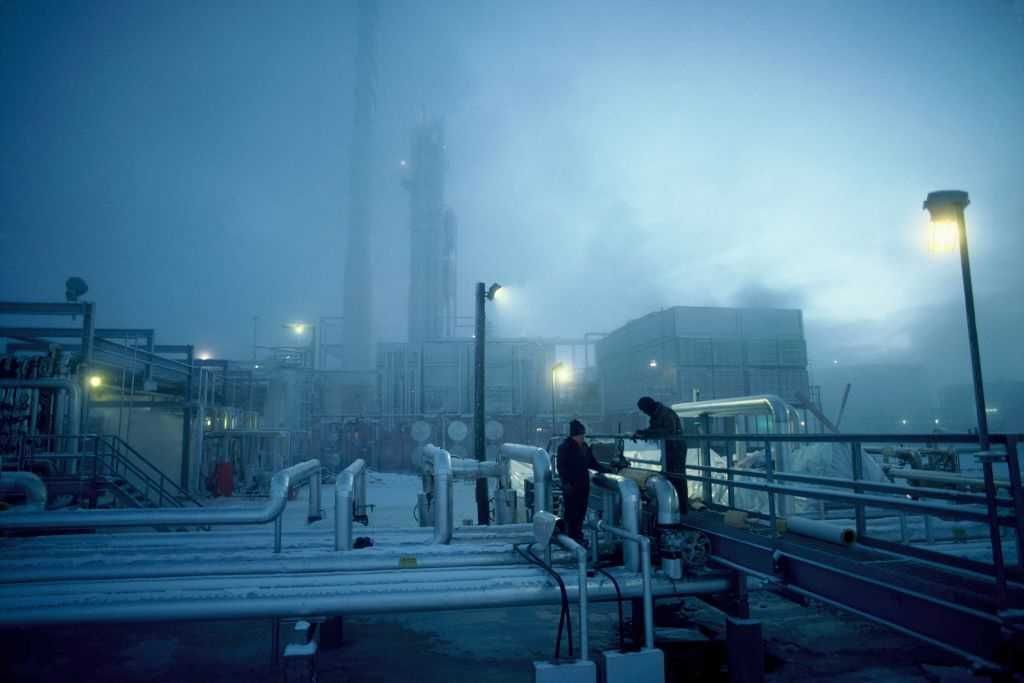
While Washington politicians congratulated themselves on “green leadership,” they systematically strangled the most energy‑rich state in the nation: Alaska. The result has been higher costs, increased foreign dependence, and a national security posture that makes our adversaries smile.

Alaska proves what Washington refuses to admit: You can develop resources responsibly, or you outsource damage to others.

Revitalizing the Alaskan oil industry is the key to reversing these costly mistakes.

The Trans‑Alaska Pipeline System was built after the 1973 Arab oil embargo made the danger of foreign dependence painfully clear. Authorized by Congress and completed in 1977, the 800‑mile pipeline has moved more than 17 billion barrels of oil to U.S. markets.

At its peak, TAPS delivered over 2 million barrels per day, dramatically reducing reliance on OPEC and reinforcing American energy security. It funded public services, created tens of thousands of jobs, and helped stabilize global markets — all while operating under some of the toughest environmental standards in the world.

The truth about foreign energy dependence

The United States still imports billions of barrels of oil every year. Roughly 20%of our petroleum needs are met by foreign suppliers. While Canada and Mexico are reliable partners, global pricing and supply remain hostage to instability in the Middle East and geopolitical maneuvering by OPEC+.

This instability is the cost of blocking domestic development. If America won’t produce energy, others will — often with weaker labor laws, worse environmental practices, and profits flowing to regimes aligned against U.S. interests.

Environmental activism does not stop the demand, but it does decrease American leverage.

In Alaska, the Arctic National Wildlife Refuge Coastal Plain alone holds an estimated 7.7 billion barrels of recoverable oil, with total North Slope reserves exceeding 10 billion barrels. Development could deliver up to 1.2 million barrels per day at peak production — enough to materially offset foreign imports and extend the life of TAPS.

This untapped potential is why restrictions on Alaska energy development were so destructive. They ignored economic reality and national defense in favor of ideology.

Recent deregulatory efforts show the correct path forward: Open ANWR and the National Petroleum Reserve-Alaska, streamline permitting, modernize infrastructure, expand offshore access, and invest in liquid natural gas for both domestic use and exports to allies.

Cheap energy is a conservative value

Affordable energy lowers grocery bills, keeps manufacturing competitive, restrains inflation, and allows young families to build lives without fleeing high‑cost states. It is no coincidence that states with affordable energy policies attract investment and jobs while those with ideological energy policies hemorrhage both.

Alaska understands this reality very well. In a cold, remote state, energy reliability is not optional. That same realism should guide national policy.

Natural gas, large‑scale hydro, clean coal, and next‑generation nuclear are the way forward. They don’t collapse during cold snaps. They don’t require permanent subsidies. And they work at scale.

A country that depends on foreign energy can be easily manipulated and destabilized. A country that exports energy sets its own terms.

Alaska’s location makes it a critical asset. LNG exports from Alaska strengthen allies while undercutting Russian influence and Chinese leverage. Continuing to restrain the state’s energy potential does nothing but weaken America and strengthen our rivals.

RELATED: What’s Greenland to us?

Photo by Leon Neal/Getty Images

The choice in front of us

Critics repeat the same tired scare tactics, but reality tells a different story.

Wildlife adapted around the Trans‑Alaska Pipeline. Fisheries can easily coexist with modern development. Today’s monitoring, engineering, and land management dramatically exceed anything available a generation ago.

Alaska proves what Washington refuses to admit: You can develop resources responsibly, or you outsource damage to others.

America can keep pretending that energy comes from press releases and foreign tankers, or we can reclaim the proven model that once made it strong: Produce at home under American rules, for American families.

The path to energy independence doesn’t run through climate conferences or regulatory delay. It runs through Alaska.

Christopher Rufo drops bombshell report on $26B ‘No White Men’ program — Trump SBA issues quick response


Last week, BlazeTV host and investigative journalist Christopher Rufo, alongside Manhattan Institute Director of Research Judge Glock, published a report titled “No White Men Need Apply,” which pulled back the curtain on the Small Business Administration’s 8(a) program.

Despite functioning under the current Trump administration, Rufo and Glock discovered that the program has been awarding government contracts based on race, gender, and social disadvantage — a stark contradiction to the administration’s vows to abolish DEI.

“The Small Business Administration’s 8(a) program,” Rufo says, is “a $26 billion slush fund for government contracts that are available to every identity group except for one: white men.”

“We blew the whistle on this and made the case that this was a corrupt program” and “totally in violation of the president’s stated principles against DEI,” Rufo says.

The reaction from SBA and White House officials was surprisingly humble.

“I got a call from the SBA administrator, Kelly Loeffler. I got a call from a number of people at the White House, some of whom were a bit annoyed that we had brought this scandal to public attention, but all of whom recognized, ‘Yep, we’ve dropped the ball on this. It’s totally unjust. We’re going to take action,”’ Rufo recaps.

And they clearly meant it because just two days after their conversation, Loeffler posted the following announcement to X:

— (@)

Rufo says, “It’s not a perfect solution. I think the program should be abolished, but it’s at least a step in the right direction.”

But his co-host, Jonathan Keeperman, has questions.

“Is it the case that they’re not just abolishing this whole thing because, as Washington is, there’s just too many people who are sort of dependent on this, some of whom might even be Republicans or friendly to the administration?”

Are we playing the game of, “Look, we know this is bad, but these are our friends, and sometimes in politics, you just got to sort of weigh the cost of alienating people over here versus the cost of kind of just letting these not great things kind of continue because ... that’s just the friction of Washington, D.C.?” he asks.

“From my reporting on this, the White House had contemplated just unilaterally winding down the program, declaring it unconstitutional, and taking it to the courts,” Rufo says. “From what I heard from a number of people is that the White House lawyers, Department of Justice said, ‘Hey, you can’t do that. It’s a statutory program. You have to release regulations, go through public comment, do the whole song and dance.”’

“So actually, the action was stalled, from what I’ve been told, for a number of months in kind of legal limbo, and only because we published this story were they able to start getting that policy process moving again,” he contines.

However, there is also, he says, “an element of kind of long-standing corruption and complicity from Republicans” at play.

He gives the example of Alaska, which receives a disproportionate amount of the SBA’s 8(a) contract money, the majority of which is funneled into companies owned by Alaskan natives.

Many of these companies, however, subcontract the actual work to non-native (usually white-run) companies. To abolish the program would anger Alaska native groups, which are both politically and economically powerful in the state.

According to Rufo’s sources, Senator Dan Sullivan (R-Alaska), for example, has “made it known throughout the administration, ‘We need to keep this cash flowing,’ because he’s dependent.”

“Tribes are pretty powerful in a state like Alaska ... and other red states where there are big tribal populations. They have big lobbying operations. They have big political organizations, a network of businesses, casinos, constructions, contracting, etc.,” Rufo says, “and so there is an element of what I think is legal corruption — even in red states, even with Republican politicians — where they keep this disastrous program alive.”

Regardless, the Trump administration promised to uproot DEI, and Rufo intends to hold them to it.

“It’s been a year. You guys have to get rid of this,” he says.

Even though the SBA is now “letting white men into the program,” Rufo fears that “it will still heavily favor the other groups,” thus allowing the cancer that is DEI to live on.

“The only truly morally defensible position is to get rid of it. And so, I think they should blow it up. I think they should go nuclear,” he urges.

To hear more about Rufo’s investigation into SBA’s 8(a) program, watch the video above.

Want more from Rufo & Lomez?

To enjoy more of the news through the anthropological lens of Christopher Rufo and Lomez, subscribe to BlazeTV — the largest multi-platform network of voices who love America, defend the Constitution, and live the American dream.