America won’t beat China without Alaska


America’s past energy weakness wasn't accidental. It was a result of misguided political pressure.

While Washington politicians congratulated themselves on “green leadership,” they systematically strangled the most energy‑rich state in the nation: Alaska. The result has been higher costs, increased foreign dependence, and a national security posture that makes our adversaries smile.

Alaska proves what Washington refuses to admit: You can develop resources responsibly, or you outsource damage to others.

Revitalizing the Alaskan oil industry is the key to reversing these costly mistakes.

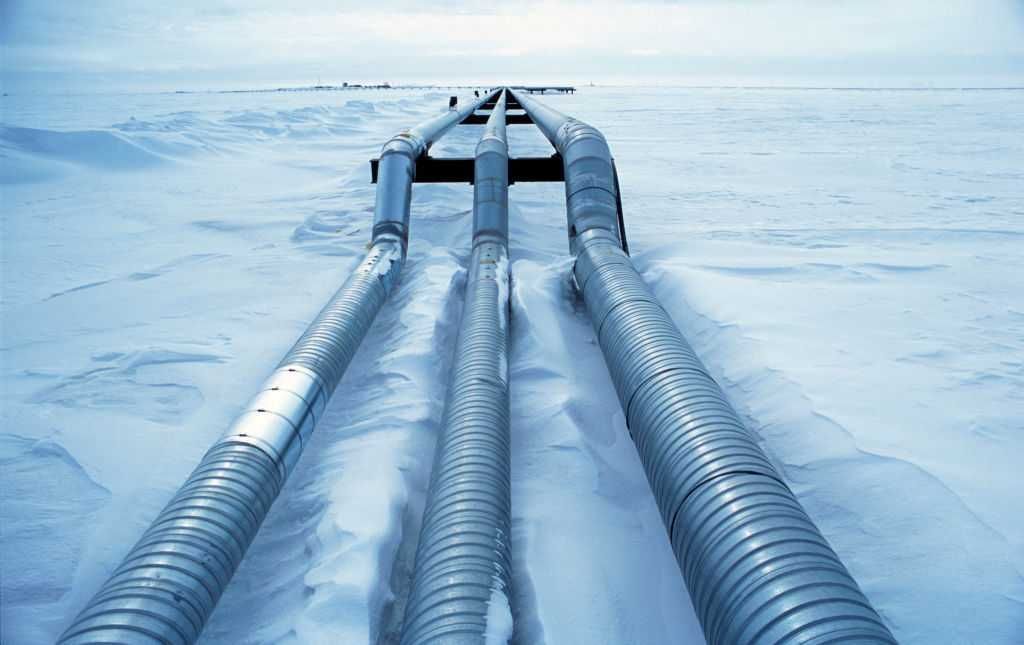
The Trans‑Alaska Pipeline System was built after the 1973 Arab oil embargo made the danger of foreign dependence painfully clear. Authorized by Congress and completed in 1977, the 800‑mile pipeline has moved more than 17 billion barrels of oil to U.S. markets.

At its peak, TAPS delivered over 2 million barrels per day, dramatically reducing reliance on OPEC and reinforcing American energy security. It funded public services, created tens of thousands of jobs, and helped stabilize global markets — all while operating under some of the toughest environmental standards in the world.

The truth about foreign energy dependence

The United States still imports billions of barrels of oil every year. Roughly 20%of our petroleum needs are met by foreign suppliers. While Canada and Mexico are reliable partners, global pricing and supply remain hostage to instability in the Middle East and geopolitical maneuvering by OPEC+.

This instability is the cost of blocking domestic development. If America won’t produce energy, others will — often with weaker labor laws, worse environmental practices, and profits flowing to regimes aligned against U.S. interests.

Environmental activism does not stop the demand, but it does decrease American leverage.

In Alaska, the Arctic National Wildlife Refuge Coastal Plain alone holds an estimated 7.7 billion barrels of recoverable oil, with total North Slope reserves exceeding 10 billion barrels. Development could deliver up to 1.2 million barrels per day at peak production — enough to materially offset foreign imports and extend the life of TAPS.

This untapped potential is why restrictions on Alaska energy development were so destructive. They ignored economic reality and national defense in favor of ideology.

Recent deregulatory efforts show the correct path forward: Open ANWR and the National Petroleum Reserve-Alaska, streamline permitting, modernize infrastructure, expand offshore access, and invest in liquid natural gas for both domestic use and exports to allies.

Cheap energy is a conservative value

Affordable energy lowers grocery bills, keeps manufacturing competitive, restrains inflation, and allows young families to build lives without fleeing high‑cost states. It is no coincidence that states with affordable energy policies attract investment and jobs while those with ideological energy policies hemorrhage both.

Alaska understands this reality very well. In a cold, remote state, energy reliability is not optional. That same realism should guide national policy.

Natural gas, large‑scale hydro, clean coal, and next‑generation nuclear are the way forward. They don’t collapse during cold snaps. They don’t require permanent subsidies. And they work at scale.

A country that depends on foreign energy can be easily manipulated and destabilized. A country that exports energy sets its own terms.

Alaska’s location makes it a critical asset. LNG exports from Alaska strengthen allies while undercutting Russian influence and Chinese leverage. Continuing to restrain the state’s energy potential does nothing but weaken America and strengthen our rivals.

RELATED: What’s Greenland to us?
Photo by Leon Neal/Getty Images

The choice in front of us

Critics repeat the same tired scare tactics, but reality tells a different story.

Wildlife adapted around the Trans‑Alaska Pipeline. Fisheries can easily coexist with modern development. Today’s monitoring, engineering, and land management dramatically exceed anything available a generation ago.

Alaska proves what Washington refuses to admit: You can develop resources responsibly, or you outsource damage to others.

America can keep pretending that energy comes from press releases and foreign tankers, or we can reclaim the proven model that once made it strong: Produce at home under American rules, for American families.

The path to energy independence doesn’t run through climate conferences or regulatory delay. It runs through Alaska.

Biden administration has taken action against Alaska nearly 3 times more than against Iran


According to Governor Mike Dunleavy (R-Alaska), the Biden administration is sanctioning his state of Alaska more than Iran.

While Glenn Beck calls it “quite a statement to make,” Dunleavy has the facts to back it up.

There have been "55 actions since the Biden administration came into office against one of its own states,” Dunleavy tells Glenn, noting that Alaska is not just any state but one that produces significant resources.

In comparison, the administration has taken only 19 actions against Iran.

In 2017 the Jobs Acts was signed into law by President Trump, requiring lease sales in the Arctic National Wildlife Refuge. The Biden administration then unilaterally canceled them, which Dunleavy calls “a violation of law.”

“That’s huge because that has one of the last remaining large oil and gas fines, probably in North America, that was taken off the list. Offshore oil leases in the Arctic, off the list,” Dunleavy says.

“This is just a handful of incidents of what we call sanctions against Alaska that make it difficult for us to produce oil.”

Under the Clinton administration, Southeast Alaska timber mills were dismantled. When President Trump came into office, he began to restore the state as a working force for timber, mining, and recreation.

However, when Biden took over, the government once again closed it down.

“It’s just been a series each year of different actions, different executive orders that are targeted against Alaska,” the governor tells Glenn before explaining that the resources are the entire reason Alaska exists as a state.

This began in 1959, when Alaska was required to collectivize all of its resources under the government in order to become a state. The reason was that the population was too small for people to pay for it through things like an income tax.

“That’s the cruel irony of this whole thing. We were allowed to come in as a state as long as we developed our resources, and now we’re being told we can’t develop our resources, which means our viability as a state is in question,” Dunleavy explains.

Glenn is taking this as a warning.

“If they can do this to Alaska, they’ll do it to a lot of our states,” he says.


Want more from Glenn Beck?

To enjoy more of Glenn’s masterful storytelling, thought-provoking analysis, and uncanny ability to make sense of the chaos, subscribe to BlazeTV — the largest multi-platform network of voices who love America, defend the Constitution, and live the American dream.

Biden admin dumps Alaska oil drilling project started under Trump that was slated to create thousands of jobs


The Biden administration this week formally abandoned a major oil and gas drilling project in northern Alaska that would have bolstered America's energy independence and resulted in the creation of thousands of jobs.

The Department of the Interior declined on Monday to file an appeal of a federal district court decision that blocked the project, known as the Willow Master Development Plan, in the National Petroleum Reserve in Alaska, the Daily Caller reported.

The project, which was being developed by the Texas-based oil and gas firm ConocoPhillips, was slated to produce as much as 160,000 barrels of oil per day to the Trans Alaska Pipeline System, according to Must Read Alaska. The increase would have provided a 32% boost to the throughput of the pipeline, which is currently averaging less than 500,000 barrels per day.

Project summary documents show the project would have "generate[d] hundreds of direct jobs and thousands of construction jobs, and produce[d] substantial revenue for the federal government, State of Alaska, North Slope Borough, and communities in the NPR-A."

The multibillion-dollar project was greenlit by the Bureau of Land Management under the Trump administration in 2020. But after President Joe Biden's election victory, environmentalist groups sued to stop the project.

In August, U.S. District Court Judge Sharon Gleason voided the project's approval, citing a failure by the bureau to adequately review the project's greenhouse gas emissions, which she concluded would ultimately harm wildlife.

Interestingly, the Biden administration initially voiced support for the project and appeared ready to move forward with it despite the environmental concerns. But ultimately, the deadline for appealing Judge Gleason's ruling came and went on Monday without an appeal, effectively killing the project.

Jeremy Lieb, an attorney for the environmental group Earthjustice, one of the plaintiffs in the lawsuit, said in a statement that he is pleased with the Biden administration's change of course.

"We are glad to see that President Biden is taking positive steps in his commitment toward a cleaner energy future. However we are facing a dire climate emergency, and we hope that he continues to align Western Arctic management with climate imperatives and protect it from all new oil and gas activity," Lieb said.

"I think the administration is realizing that defending Willow is utterly at odds with the president's promises of climate action. To protect our planet's future, Biden needs to halt this huge oil project for good and move quickly to phase out drilling in our increasingly vulnerable Arctic," added Kristen Monsell, an attorney at the Center for Biological Diversity, another plaintiff in the suit.

The Willow project had been backed by the entire congressional delegation from Alaska — which includes Republican Sens. Lisa Murkowski and Dan Sullivan and Republican Rep. Don Young.