NYT Finally Admits What We Therapists Have Known For Years: Weed Makes People Insane
 Marijuana is not benign. It is dangerous. And it is long past time for The New York Times to finally admit that.
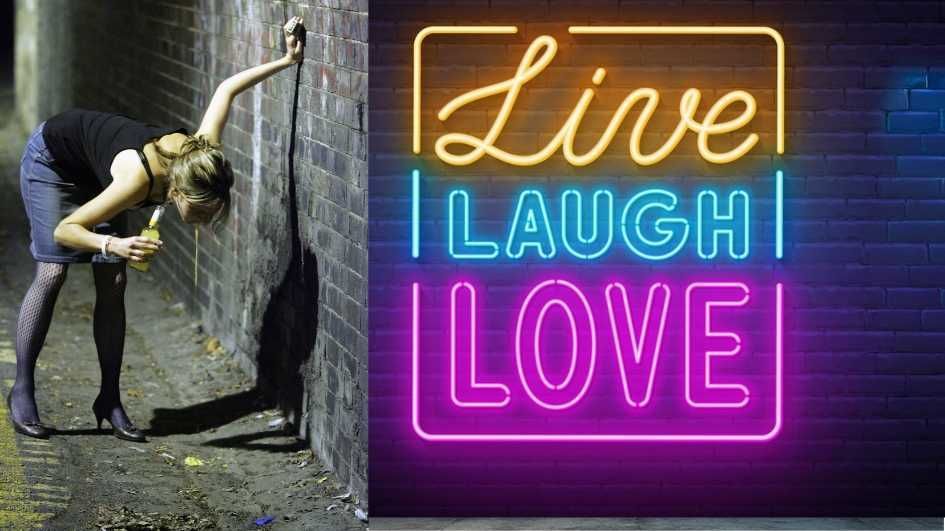
There is a particular aesthetic that holds sway in vast territories of modern motherhood: the throw pillow stitched with Live Laugh Love, the stemless wine glass reading Mommy’s Sippy Cup, the Instagram reel joking that bedtime is encroaching on wine time.
We’re meant to laugh and recognize ourselves in it. It’s harmless humor, we’re told. A coping mechanism. A wink at how hard motherhood can be and why we deserve a mental “break.”
Alcohol allows us to take the edge off without ever naming what’s wrong, smoothing the dissonance between what we feel and what we think we should feel.
But what if the joke isn’t harmless? What if this cultural script, especially the version adapted and shared among Christian women, teaches mothers that it’s better to cope than to heal? What if the cost isn’t just personal, but burdensome for their children in ways that may not appear for years to come?
Jokingly giving women permission to booze it up guilt-free has helped wine sales skyrocket. Along the way, we’ve seen the rates of women dying from alcohol-related illnesses increase by 35%.
These numbers aren’t a coincidence. Overdrinking has become an acceptable way of life, and it is destructive in ways women don’t realize when they first pick up a glass.
Motherhood is exhausting, in both good and hard ways. We’re raising children in an era of constant stimulation, economic pressure, social isolation, and relentless comparison. Many are doing this with less community support than ever before. Their fatigue is real, and feeling overwhelmed is justified.
But reaching for wine doesn't fix the problem. It just makes it worse.
Instead of offering meaningful support or naming the loneliness created by distance from extended family and lives increasingly lived through screens, our culture handed women a temporary salve for wounds that require real presence and care.
Never mind that alcohol worsens anxiety, disrupts sleep, and wreaks havoc with emotional regulation.
This “wine-mom” culture didn’t emerge accidentally. It was marketed by alcohol companies that realized mothers were an untapped demographic. They rebranded drinking as self-care, reward, and relief.
Christians didn’t stand apart from this trend. We joined it because it felt respectable and far removed from the caricature of addiction we were taught to fear. We weren’t legalists, after all.
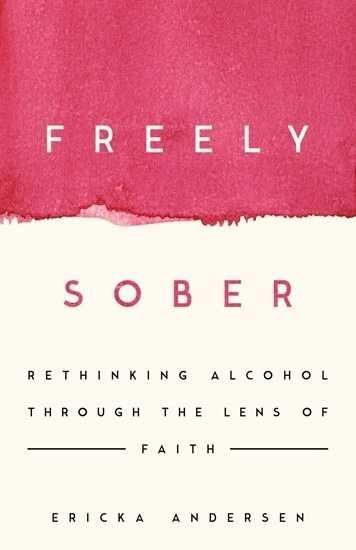
In my book "Freely Sober: Rethinking Alcohol Through the Lens of Faith," I argue that Christian women have been lured into the same trap — and need a pathway out.
Christian women are often taught, explicitly or implicitly, to be grateful, content, and joyful no matter their circumstances. Complaining feels sinful, and naming dissatisfaction feels unspiritual.
Alcohol becomes a work-around. It allows us to take the edge off without ever naming what’s wrong, smoothing the dissonance between what we feel and what we think we should feel. It offers temporary relief without asking hard questions.
And because wine is so normalized — at times celebrated — no one intervenes. In fact, friends often encourage it. Churches rarely question it, and the jokes keep coming, even from those who are well-meaning. Overconsumption becomes a socially acceptable sin, and then we feel ashamed when it is hard to quit or cut back.
Most mothers who participate in wine culture are not falling-down drunk. I was a Christian mom, and to the rest of the world, I appeared to be thriving. Like many women, I was functional — which made the problem easy to ignore.
But our families don’t just get the part of us that keeps it together at the office or always makes it to the gym. They get us in every hard and holy moment. And a mother who is emotionally dulled night after night is less present, even if she’s physically there.
A mother who relies on alcohol to cope is often quicker to irritability and slower to patience. She’s less attuned to her children’s needs, less engaged in conversations, and less available for the simple moments where connection is built. Alcohol dulls perception, and children often communicate distress in the quietest ways — ways that are easy to miss. I know I did.
Children notice more than we think. They learn how adults handle stress, observe what celebration looks like, and internalize the message that hard feelings are something to escape, not endure. The damage of wine-mom culture is rarely dramatic, and that’s where the danger is. It erodes slowly, normalizing emotional absence and teaching that numbing out is fine.
The slogan itself is revealing when you look at it this way:
Live — avoid suffering.
Laugh — drown discomfort in humor.
Love — indulge yourself first.
It is a shallow creed for a culture allergic to pain. Christianity offers a radically different vision. It does not promise escape from suffering, but promises meaning within it. It does not offer numbing, but transformation. Alcohol promises rest, but Christ actually gives it.
Wine is a counterfeit, temporary relief that ultimately does more harm than good when taken in excess. The gospel does not call women to white-knuckle their pain, but neither does it tell them to anesthetize it. True rest comes from truth-telling, community, repentance, and renewal, not a drug-based substitute.
For years, I believed the joke, or pretended to. I wasn’t reckless or spiraling and told myself I was just doing what everyone else was doing. Drinking to unwind, to cope, to feel “normal” again.
But slowly, I realized that alcohol promised something it could never deliver. It made hard days easier (for a few hours), but meaningful growth harder (for years). I justified my drinking based on cultural encouragement, running from the idea that sobriety might be a better choice for me.
When I finally quit drinking five years ago, sobriety didn’t magically fix my life, but it forced me to face it honestly — and that is the beginning of freedom. I want other women to know they too can feel that freedom.
RELATED: 3 healthy habits to bring you closer to God in 2026

In modern America, mothers are often told they are victims — of systems, expectations, and circumstances beyond their control.
What we really need is permission to tell the truth — to admit hardship, even when it forces us to confront the ways we have chosen to cope with it. We need communities and opportunities that acknowledge this season of life without offering numbing as the solution. We need churches willing to name alcohol honestly, not as a forbidden fruit, but as a false savior. We need friendships built on presence, not punch lines or escape rooms.
Most of all, we need to hear that our motherhood struggles aren’t a failure. The desire to overcome the hard moments is totally normal, and it is understandable that we would look for an easy way to do so. But there are better, healthier ways to walk through these times. One of the most countercultural things a mother can do today is stay awake to her own life.
Choosing clarity, and the courage to seek better ways to live, changes a woman, her relationship with God, her family, and the mark she leaves on the world.
A father fell asleep after bringing his toddler daughter into a hot tub with him in the middle of the night, and she drowned, police in Florida said.
Deputies and rescue personnel responded to a home on Nice Court in Kissimmee just after 3:30 a.m. Dec. 13 regarding an unresponsive child who appeared to have drowned in a hot tub, the Osceola County Sheriff’s Office said.
'It's very hard losing a niece this way, and then we have so much hurt for my brother because he's just so distraught and tore up.'
A family from Washington, D.C., was staying at the residence, which was listed as an Airbnb, officials said.
The 20-month-old girl was transported to AdventHealth Celebration where she was pronounced dead shortly after 4:30 a.m., officials said.
Sheriff's office detectives responded to the home to investigate the incident, officials said, and the father said he brought his daughter into the hot tub and fell asleep while holding her. The father reported waking up to find the child unresponsive in his arms while still in the hot tub, officials said. According to WUSA-TV, he said the child was face down when he awakened.
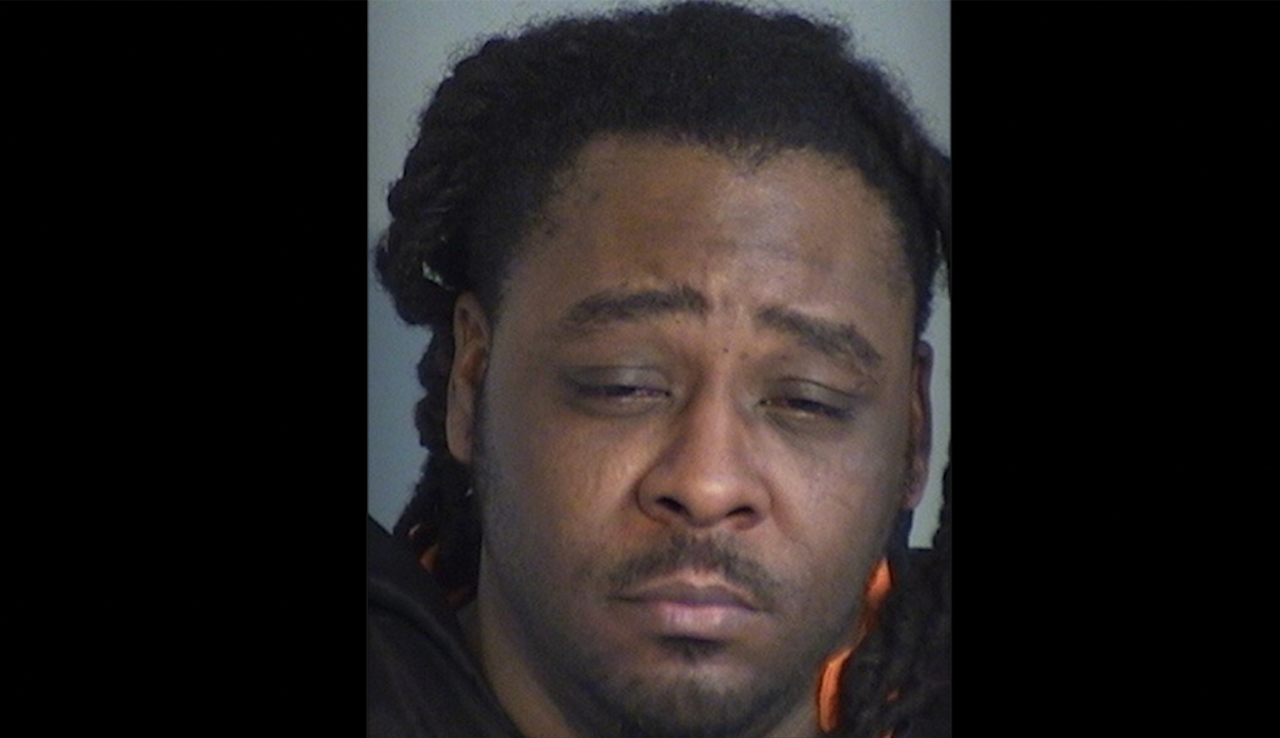
Following the investigation, detectives determined that the father — 33-year-old Reynard Tyrone Hough — was neglectful in the death of his daughter and arrested him on a charge of child neglect causing great bodily harm.
On Dec. 14, detectives added an additional charge of aggravated manslaughter of a child, officials said, adding that Hough was in custody at the Osceola County Jail.
Hough told detectives he was drinking that night, and police say alcohol likely contributed to him falling asleep, WESH-TV reported. Investigators told WUSA they saw various alcoholic drinks at the scene.
Hough also told detectives he ingested two different narcotics before getting into the hot tub with his daughter, WESH added.
RELATED: Dad visits 'the Adult Shoppe' while his kids sit in 125-degree car for almost an hour, cops say
"It's very hard losing a niece this way, and then we have so much hurt for my brother because he's just so distraught and tore up," Angel Hough, the sister of Reynard Tyrone Hough, told WESH.
Capt. Kim Montes with the sheriff's office added to WESH: "I feel bad for this mom and dad; they were devastated, and they had another 6-month-old child at the home. We do know that watching two small kids can be challenging."
Hough appeared in court last Monday and was issued no bond, WESH noted.
Like Blaze News? Bypass the censors, sign up for our newsletters, and get stories like this direct to your inbox. Sign up here!
If you’re like me, nearly every single social media post in your feed over the last week has been about the senseless assassination of Charlie Kirk. And emotions are running high.
From those who loved him. From those who hated him. From those who didn’t really follow him but are lamenting the state of discourse in our country.
The emotions you’re feeling as a result of this and any other type of atrocity are wasted if you drink them away.
I came across one post in particular in which an emotional person suggested a way to cope with everything that’s happened. And I found myself yelling out, “No! Don’t! That’s the last thing you should do. And I don’t think Charlie would want you to, either.”
What is it?
Have a drink. “Pour one out” for Charlie, the colloquial term for having a drink for a fallen friend.
Maybe you’ve seen those posts. We live in a culture that uses anything as an excuse to imbibe. To drink. To get drunk. But especially culture loves to capitalize on tragedy. It tells us that drinking alcohol is not just a way to handle difficult emotions, but the best way to handle difficult emotions, tragedy, and grief.
Your candidate loses an election? Drink.
Work sucks? Drink.
A family member passes away? Drink.
Your team loses? Drink.
The kids are a little feral? Mommy, drink a lot!
So when someone so respected, who spoke on behalf of a generation, is brutally murdered in broad daylight, culture wants you to drink that atrocity away instead of sitting with those painful, confusing, and whatever-else emotions.
In fact, even though drinking is at an all-time low, we’ve still been programmed to think that drinking to deal with our uncomfortable feelings is right, good, and necessary. At minimum it’s accepted.
Trust me, I know.
I’m the best-selling Christian author who became an alcoholic (not the other way around) after hitting the toughest stretch of my life a few years ago. I knew what I should do to best handle all the emotions in that season, but instead, I took the easy path: I drank all the uncomfortable feelings away.
It wasn’t until I found myself a year and a half into a bottle with no bottom and a “night in” that ended with me drunk, alone, and wading in my own excrement at 1 a.m. in Miami’s South Beach that I asked, “What has my life become?”
I’m not saying that having a drink in the wake of Charlie’s murder means you will become an alcoholic. But if I’m being honest, I never thought I’d get to the point I did either. “I don’t look like those people who drink their lives away,” I told myself. And I didn’t. But rock bottom still came.
And I wish someone had told me sooner that drinking away my challenging emotions can easily turn into something I thought it never would — because it can turn you into someone you thought you’d never be.
I think Charlie understood that, too.
“The top-performing people I’ve ever been around, they are very against alcohol, against substances," he said on his show in May in a video titled, “Why I Don’t Drink.”
“And they’ll tell you they perform better, they think clearer, they have better memory, better recall, more energy, more pace.”
“I also find that some of the people that drink the most, they're hiding something, they're masking something,” he concluded.
If Charlie Kirk’s murder has affected you, don’t mask this pain. I beg you, please don’t. Because it can end up doing things to you that are way worse in the long run.
RELATED: A drunkard's terrifying vision: The dark truth behind alcohol’s 'spirit' name
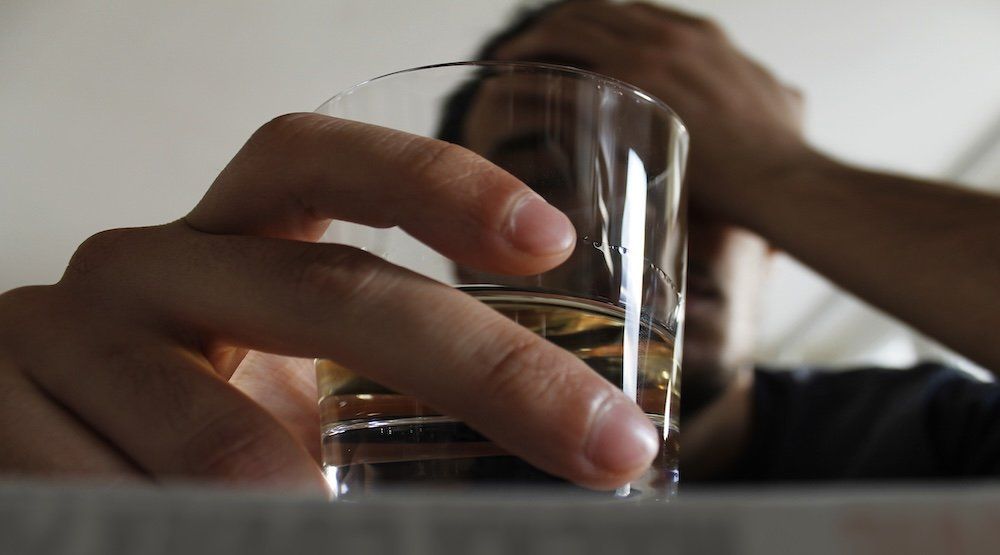
In the end, the emotions you’re feeling as a result of this and any other type of atrocity are wasted if you drink them away. They just are. Instead, I want to suggest that you use them to motivate you — to boldness, to action, to something better. Don’t numb them; name them. And then use them as fuel. Do good as a result of this evil.
In fact, Charlie knew there wasn’t just a better option but a best option when it comes to what to do with complex emotions, an option that has transformed my life: Bring those emotions to the great healer, Jesus. While I didn’t know Charlie personally, I think, from everything I’ve read and seen, that’s what he would have wanted.
But whatever you do, I know this: He wouldn’t have wanted you to “pour one out” for him.
Or maybe, I guess, that’s exactly what he would have wanted. Pour it out. Leave it alone. Put it down.
He did.
A recent Gallup poll has revealed that alcohol consumption in the United States has reached a record low in nearly a century, with only 54% of the country reporting that they drink.
The data is consistent with other research, including Monitoring the Future’s national substance abuse poll that found a drastically reduced interest in alcohol among students from 1975 to 2025.
The subcategories of the Gallup poll revealed several bits of interesting information:
It’s this latter statistic that Stu Burguiere, BlazeTV host of “Stu Does America,” is most fascinated by.
His theory is that conservatives’ massive drop in drinking rates has a lot to do with the pressure to take the experimental COVID-19 vaccine. The anti-vaccine resistance largely fueled MAHA and ignited a movement of distrust in health institutions. Couple that with the new studies coming out that challenge the outdated advice that moderate drinking is safe, maybe even healthy, and perhaps that’s why Republicans are ditching the bottle in droves.
Stu’s theory seems to be consistent with the subcategory of the Gallup poll that assessed people’s perception of alcohol’s impact on health. All three categories showed a rising trend in the percentage of people who believe alcohol is harmful to health. From 2001 to 2025, people who said alcohol makes no difference on health decreased from 46% to a record low of 37%; people who said alcohol is good for health decreased from 22% to a record low of 6%; and people who said alcohol is bad for health increased from 27% to a record high of 53%.
It was also found that young people ages 18-34 were more likely to view alcohol negatively, with 66% reporting it’s bad for health, compared to 50% of adults ages 35-54 and 48% of adults ages 55 and up.
The poll also found that drinkers are consuming less alcohol. The report found that the average number of drinks per week has fallen to 2.8 — the lowest rate since 1996.
Stu is encouraged by these statistics. Not only is this good news for public health, it’s also good news for the culture when it comes to things like graduation rates, unwanted pregnancies, domestic violence, and reduced DUIs and accidents.
“The fact that kids and young adults are choosing to drink less, having fewer drinks, is a real positive thing,” he says.
To hear more about the Gallup poll’s findings and more of Stu’s analysis, watch the episode above.
To enjoy more of Stu's lethal wit, wisdom, and mockery, subscribe to BlazeTV — the largest multi-platform network of voices who love America, defend the Constitution, and live the American dream.
Many Christians are confused by Jesus’ first miracle documented in the book of John, where he turns water into wine at a wedding at his mother’s request. If Christians are called to refrain from getting drunk, then why would He make more wine, increasing the possibility of drunkenness?
Is this not a contradiction?
Jase and Al Robertson and Zach Dasher, BlazeTV hosts of “Unashamed,” addressed this common question on a recent episode.
“Alcohol is never said to be bad in the Bible ... but getting drunk is always bad,” says Jase.
To explain God’s command against drunkenness, he points to Ephesians 5:18, which says, “Do not get drunk on wine, which leads to debauchery. Instead, be filled with the Spirit.” He also cites Galatians 5:22, which lists “self control” – the opposite of drunkenness – as one of the fruits of the Spirit.
However, these verses, while certainly true, “have nothing to do with John 2,” says Jase.
When He turns water into wine, “Jesus is revealing a picture of who He is and what He's going to do.”
“Jesus turning water into wine is directly connected to the new wine that Jesus says He's bringing. ... So it's no accident that He's doing this miracle, making new wine at a wedding ceremony, right? Because we're the bride of Christ. There's all kinds of imagery here that's being played out,” Zach explains.
The wedding party, Jase adds, is also reflective of the reality that “we're participating in the greatest party of all parties in Jesus.”
Further, in John 2, Jesus is, for the first time in His ministry, showing that miraculous change can only be done through Him. By turning water into wine with a mere thought – an act none but God Himself could accomplish – Jesus is “giving you a picture [of]: If you want to know how to change something, I'm your guy,” says Jase.
Al then brings up another point: The passage is also about Mary’s faith.
“I mean His mom believed in Him enough [that] she said, ‘Do something about this wine situation.’ I mean, that blows me away that she had enough faith in who He was in the moment to think He could do something, which He did,” he says.
John 2, says Jase, is a passage where many Christians, especially new ones, go off in the weeds debating what the text is saying about alcohol, when in reality, the story is about who Jesus is and what He came to do.
That said, it’s still important to abide by God’s command against drunkenness.
People who have a history of alcohol abuse probably “shouldn't touch it at all,” Zach advises.
“Also, I mean, I wouldn’t have a drink around somebody that I knew had an issue with it," he adds.
“The more you get to know this Jesus and what He is really not only offering you but what He's given you ... it becomes not the ‘do’ and ‘don't do,’ but this is who I live for,” says Al.
To hear more of the panel’s conversation, watch the episode above.
To enjoy more on God, guns, ducks, and inspiring stories of faith and family, subscribe to BlazeTV — the largest multi-platform network of voices who love America, defend the Constitution, and live the American dream.
The surgeon general’s recent report on health disparities related to tobacco use highlights how ideology can overshadow evidence in public health policy.
Despite its stated goal of reducing disparities and combating disease, the report neglects one of the most effective tools for saving lives: harm reduction. Instead, it falsely equates the risks of all nicotine-containing products, a stance that undermines efforts to reduce smoking-related mortality.
Decades of research demonstrates that harm-reduction strategies, including access to flavored vaping products, significantly lower smoking rates.
The problem extends beyond tobacco policy. Dr. Vivek Murthy, the outgoing surgeon general, recently released an advisory on alcohol use, disregarding a comprehensive review from the National Academies of Sciences, Engineering, and Medicine. The NASEM report, a 230-page analysis prepared to inform the 2025 Dietary Guidelines for Americans, concluded with moderate certainty that moderate alcohol consumption is associated with lower all-cause mortality compared to abstinence. This "J-curve" relationship, supported by decades of research, shows moderate drinkers tend to live longer and experience fewer cardiovascular events than both non-drinkers and heavy drinkers.
Rather than addressing these findings, Murthy’s advisory embraced prohibitionist rhetoric, disregarding the nuanced relationship between alcohol consumption and health. Such selective use of evidence highlights a growing trend where moralistic agendas take precedence over scientific rigor.
The disregard for taxpayer-funded evidence in favor of personal biases is becoming increasingly common. A prime example lies in the ongoing debate over flavored vaping products. Recent studies, including a comprehensive analysis in December led by Abigail Friedman of Yale University, reveal the unintended consequences of flavor bans. Using data from the Behavioral Risk Factor Surveillance System surveys, Friedman found that state restrictions on flavored electronic nicotine delivery systems reduced daily vaping but caused a 2.2-percentage-point increase in daily smoking. These findings indicate that while vaping decreases, smoking — a much greater health risk — rises.
This substitution effect, where reduced vaping leads to increased smoking, is supported by numerous economic analyses and sales data. For every 0.7 milliliters of e-liquid not sold due to flavor restrictions, 15 additional cigarettes are sold, according to Yale researchers. Studies from the National Bureau of Economic Research and the Society for Research on Nicotine and Tobacco confirm similar patterns. These findings emphasize a critical truth: Vaping and smoking are substitutes, and policies restricting flavored vaping products inadvertently push individuals back to harmful combustible cigarettes.
Despite overwhelming evidence of these unintended consequences, policymakers continue to advocate for flavor bans. Democrats in Washington State, for example, have introduced legislation to outlaw flavored electronic cigarettes, menthol cigarettes, and nicotine pouches by 2026. Supporters of the ban argue that flavored products entice young people into risky behaviors, framing the issue as a matter of moral responsibility rather than evidence-based policy.
This moralistic approach obscures the real public health impact. Decades of research demonstrates that harm-reduction strategies, including access to flavored vaping products, significantly lower smoking rates and associated mortality. By dismissing this evidence, lawmakers not only forgo a critical opportunity to save lives but also actively pursue policies detrimental to public health.
The same pattern applies to the alcohol debate. Thousands of studies have established the health benefits of moderate alcohol consumption, particularly its cardiovascular advantages. A 2021 study of European populations, published in Addiction, confirmed the J-curve relationship, showing that moderate drinkers live longer and face no heightened cancer risk from light drinking. Yet, prohibitionist rhetoric continues to overshadow this evidence, sidelining research designed explicitly to inform effective public health policy.
The rise of the “nanny state” mentality reflects a troubling shift away from evidence-based policymaking, where ideological imperatives outweigh scientific evidence. This approach erodes public trust in health authorities and leads to policies that worsen the very issues they aim to address. By treating all nicotine products as equally harmful, disregarding the health benefits of moderate alcohol consumption, and implementing flavor bans that drive people back to smoking, policymakers prioritize moralistic dogma over saving lives.
A course correction is long overdue. Public health policy must follow evidence, not ideology. The stakes are too high to allow moral biases to dictate decisions that affect millions of lives. Policymakers should adopt harm reduction as a key strategy in tobacco control, recognize the nuanced relationship between alcohol and health, and avoid blanket bans that create more harm than good.
The scientific evidence is unequivocal: Harm reduction saves lives. Moderate alcohol consumption can complement a healthy lifestyle. Flavored vaping products help smokers quit. Public health officials and lawmakers have a duty to act on this evidence. Suppressing it does a grave disservice to the people they are sworn to protect.
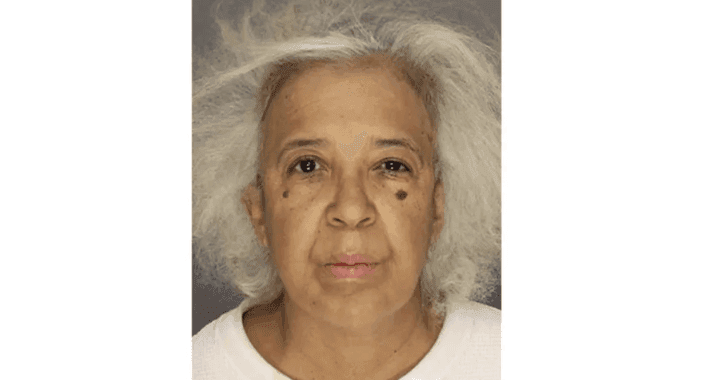
A 64-year-old Pennsylvania female is accused of getting two boys drunk and trying to sexually assault one of them after they came to her house to shovel snow for money, according to police.
Two boys — ages 12 and 13 — reportedly were in their Pittsburgh neighborhood asking people if they could shovel snow from their walkways and driveways for money. The boys offered to shovel snow in front of Rochelle Stewart's home on Jan. 8, according to police. Stewart allegedly agreed to pay the boys $5 for the task.
'The juveniles were speaking in a nonsensical way exclaiming that a lady had just got them drunk and touched them.'
In the criminal complaint obtained by KDKA-TV, the boys told investigators that Stewart invited the pair inside for hot chocolate. However, police said Stewart then offered the boys alcohol, which they consumed. One of the boys allegedly confessed to detectives that he became drunk.
The criminal complaint said Stewart sat down next to the intoxicated boy and put her leg over his and then attempted to touch him in an inappropriate and sexual manner. One of the boys recorded a video of Stewart rubbing the victim’s arm and shoulder, according to the criminal complaint.
The boys told police they then left Stewart's home but had to go back after one of them realized he left his coat at the house.
Stewart called police to report a burglary in progress around 9 p.m. that night, according to Law & Crime. Police said they attempted to make contact with the 911 caller but were unsuccessful.
When police arrived, they reportedly found the boys, who allegedly appeared to be highly intoxicated.
"The juveniles were speaking in a nonsensical way exclaiming that a lady had just got them drunk and touched them," police wrote in the criminal complaint.
Officers said they separated the boys to question them individually, and the children gave a similar version of the events, according to court documents.
Police determined that Stewart was "extremely intoxicated," according to court docs. Stewart told police that neighborhood kids were "pranking" her and were "drug dealers," according to People magazine.
When questioned by police, Stewart reportedly denied the boys were ever inside her house. Police found the boy's coat inside Stewart's home as well as a half-empty bottle of vodka, according to the complaint.
Stewart was arrested and booked at the Allegheny County Jail. Stewart was charged with six misdemeanors: one count of indecent assault, one count of making a false police report, two counts of giving minors alcohol, and two counts of corruption of minors. Court records show that Stewart was released after posting $1,000 bail Thursday.
Stewart is scheduled to appear at a preliminary hearing on Jan. 22.
Like Blaze News? Bypass the censors, sign up for our newsletters, and get stories like this direct to your inbox. Sign up here!
A South Dakota man admitted to hitting a woman in the head with a can; she later died. However, his defense argued that the woman's poor health and alcoholism were major factors in her death.
In October, 44-year-old Pedro Simental pleaded guilty to first-degree manslaughter in connection with a physical confrontation with 40-year-old Edleigha Little in November 2023. Authorities said Little died after Simental struck her in the head with a can of beans.
Simental’s attorney argued that these conditions made her more vulnerable to the 'single, reckless blow' to the head that ultimately caused her death.
On Monday, Seventh Circuit Judge Joshua Hendrickson sentenced Simental to 15 years in prison. Both the prosecution and the defense recommended a 15-year prison sentence.
Simental and Little got into a physical altercation on the evening of Nov. 8.
KELO-TV reported that Simental admitted to law enforcement investigators that he "may have struck the victim in the left side of her head with a can."
When police arrived at the crime scene, they found Little unconscious and suffering multiple bruises on her head, neck, and face. She was rushed to the hospital. However, Little succumbed to her injuries and was pronounced dead a few hours later.
According to KOTA-TV, the defense noted Little’s blood alcohol content was .474% at the time of her death.
The Pennington County State’s Attorney noted in a statement that Hendrickson acknowledged the case's numerous challenges, especially the victim's poor health before the attack.
During the trial, Simental’s lawyer highlighted several of the victim's pre-existing health conditions, including that Little was a “severe alcoholic,” and her years of excessive drinking could have caused the hematoma, according to KOTA-TV.
Defense Attorney Conor Duffy cited statements from two medical examiners that claimed severe alcoholism triggered the hematoma after the blow to the head. Medical examiners noted that Little sustained "minimal external signs of trauma."
A state doctor claimed that her hematoma was "spontaneous."
Simental’s attorney argued that these conditions made her more vulnerable to the “single, reckless blow” to the head that ultimately caused her death.
However, Senior Deputy State Attorney Roxanne Hammond expressed concern over Simental’s lack of accountability.
During the investigation, Simental allegedly stated that he "takes little to no responsibility for his role in her death."
However, Simental stressed in court that he does take responsibility for his actions that led to Little's death.
Little's niece told the court that her aunt was a caring, thoughtful person and accused Simental of regularly abusing the victim. The niece urged Judge Hendrickson to impose a lengthy sentence so Simental could not "do this to another woman and her family."
Like Blaze News? Bypass the censors, sign up for our newsletters, and get stories like this direct to your inbox. Sign up here!



 www.theblaze.com