‘Flight from hell’: Seatmate of duct-taped American Airlines passenger tells Glenn Beck the FULL story
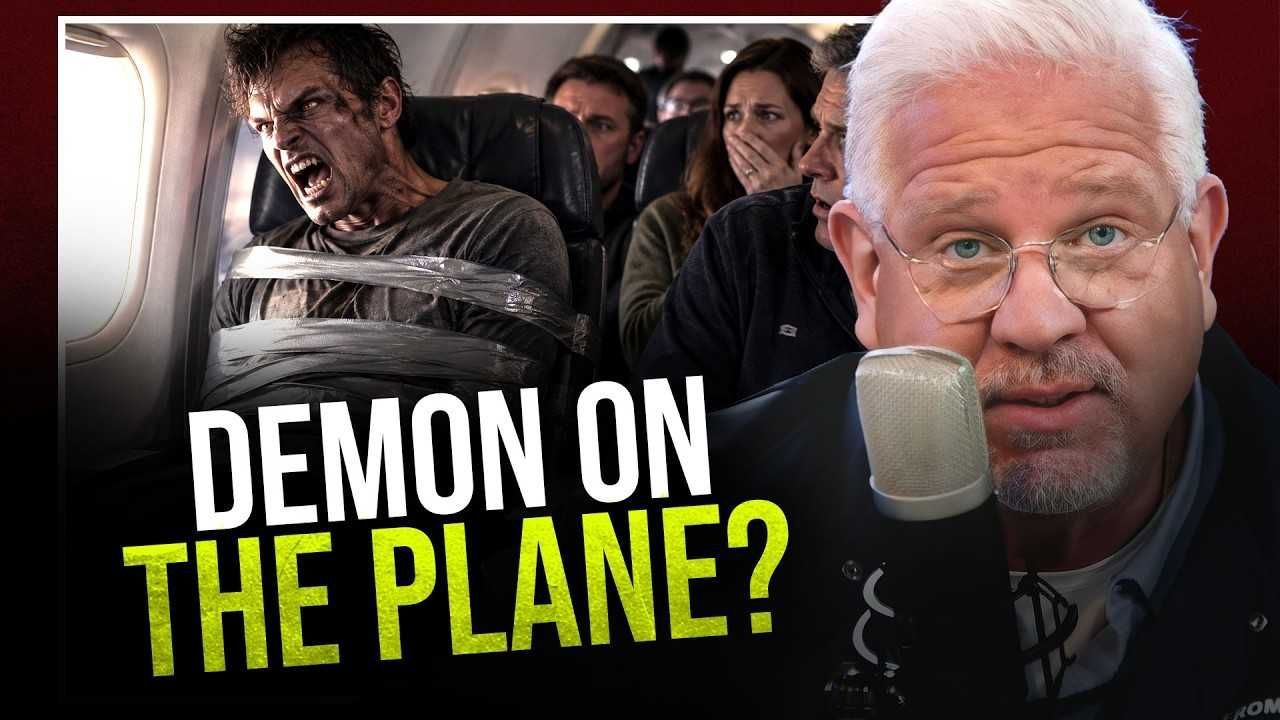


On September 3, Messianic rabbi and bestselling evangelical author Jonathan Cahn was flying home to New Jersey from Dallas on an American Airlines flight when, he says, a casual conversation with his seatmate — 67-year-old Arizona realtor Arthur Lundeen — turned into chaos.

According to Cahn’s account, conversation was flowing normally between them until Cahn mentioned his new book and the gospel, at which point Lundeen allegedly flipped in an instant and began cursing Jesus before allegedly hitting Cahn’s laptop and grabbing at him.

Other passengers described the outburst turning violent, with Lundeen allegedly shouting a slew of profanities, including racial and homophobic slurs, allegedly biting one of the passengers who stepped in to help restrain him, and bleeding from wounds passengers said he inflicted on himself from struggling.

After Lundeen was restrained with zip ties and duct tape, the flight was diverted to Baltimore, where police arrested him and charged him with second-degree assault and disorderly conduct.

On a recent episode of “The Glenn Beck Program,” Cahn told the Blaze Media co-founder that news reports covering the incident are heavily focused on “side things” and are missing the much bigger story behind what he describes as “the flight from hell.”

“What happened was demonic. It was real spiritual warfare,” Cahn tells Glenn, noting that this wasn’t the first time he’s been caught up in the cosmic war between light and dark.

“Every time ... I put out a book there’s crazy attacks,” he says, “and that makes sense ... because the books reveal the spiritual realm.”

Cahn’s newest book, “The Altar of Pergamon: The Mystery of the Dark Angel and the Future of the World,” which his publisher billed as his most “explosive revelation” yet, released on September 1 — just two days before Lundeen allegedly attacked him.

“I get on the plane, and the guy is to my left — friendliest guy in the world. By the way, Glenn, I wasn't supposed to be on that seat. Last minute, I'm switched to that seat,” Cahn recounts.

He says their conversation about family and life went on for “two hours” and was so amicable the flight attendants thought they “knew each other.” But the second Cahn turned the chitchat to spiritual matters, the warmth vanished.

“I wanted to get work done, but I figured, OK, maybe God wants me to talk to this guy ... and then I said, ‘God, give me a chance to share Your love with him, Your salvation with him,’ and so it happens,” says Cahn.

Lundeen, according to Cahn’s account, explained that he had “rejected” Christianity “as a kid” because of things he didn’t like about “Christians.” When Cahn then tried to explain to him that Christianity isn’t about Christians but about “you and God,” “God’s love,” and being “born again,” Lundeen allegedly got defensive.

“He says, ‘How do you know God is real?’ and I said, ‘Well, I was an atheist. I saw biblical prophecy coming true, and I couldn't argue with it,”’ he recounts.

“Everything's great, and then it turns. That moment, I don't know. I've never seen anything like this in my life. It was like his face changes, his voice changes. ... He's cursing God. ... He's cursing Jesus. It's blasphemy on the airplane. They didn't put that in the articles,” Cahn recaps.

Lundeen’s vehement reaction to the gospel, Cahn says, then began to spiral out of control.

“He's saying vulgar things. People all around are getting disturbed. ... Then the flight attendants come over ... and then he stands up, and he goes to the people in front and says, ‘Do you believe in Jesus?’ And then he starts talking about hell,” he says.

“Imagine a demonic manifestation ... and then suddenly, he turns friendly again like he's a different person.”

But the sudden shift back to amiability didn’t last long, says Cahn.

He explains that earlier that week before he went on his book tour, a small “black patch” had unexplainably appeared on his computer screen. According to Cahn, when Lundeen saw the black patch, he “[tapped]” it “three times,” and it immediately “[spread] across [his] screen.”

“Then he puts his hands around me ... and he's laughing like it's a joke,” he tells Glenn.

But what triggered the “ultimate escalation,” he says, is when Lundeen saw an image of his book’s cover — which features a hooded, winged “dark angel” representing Satan — on the computer screen in the area the black patch hadn’t covered.

“Then he starts shouting ... ‘What did you do? What did you do?’ like I did something wrong,” says Cahn.

“You will never see this in any newspaper, but ... he says, ‘I'm going to punch your blanking Jewish face in.’ ... Then he starts hitting me.”

At this point, it dawns on Cahn that dark spiritual forces are trying to destroy his computer, which stores his life’s work as a Christian author.

“I take my computer, I start closing it up. ... At that moment, he lunges at me, and he lunges at my computer, and he grabs my computer with all his might, and he's trying to wrest it from me and undoubtedly to destroy it,” he says, adding that this struggle turned into a “wrestling” match that he ultimately won but not without reinjuring his newly healed arm.

At this point, other passengers got involved, leading to Lundeen being restrained and the plane’s diversion to Baltimore. This is part of the story news outlets have honed in on, says Cahn, adding that some articles he’s seen even frame Lundeen as a “Christian who is racist.”

Glenn confirms that the articles he’s read frame the incident around Lundeen’s alleged racist, sexist, and homophobic comments. “None of what you said was in that story — none,” he tells Cahn.

That’s because the “real story” of the gospel triggering a “demonic manifestation,” says Cahn, is one the media would never dare touch.

To hear more wild details from Cahn’s “flight from hell,” watch the full interview above.

Want more from Glenn Beck?

To enjoy more of Glenn’s masterful storytelling, thought-provoking analysis, and uncanny ability to make sense of the chaos, subscribe to BlazeTV — the largest multi-platform network of voices who love America, defend the Constitution, and live the American dream.

We Chased A California Paper Trail To Show What Happens A Few Years Before A Nick Shirley Moment

'We did not (and currently do not) have a person by this name (Katheryn Nguyen) working at the CVS Health Foundation and have no record of either this letter or a donation to the organization that you mentioned (Abundant Blessings).'

Dear airlines, please stop pitching your credit cards at 33,000 feet


I have never considered flying to be a luxurious experience, and this trip was no exception. I don’t think I’m speaking out of turn when I say that all I or anyone else on the flight from Dallas to Detroit on Christmas morning wanted was for it to be over as quickly as possible.

I had waited in the inevitable jetbridge backlog, found my seat, dutifully ignored the safety briefing, and was ready to see if I could manage an hour or so of sleep. As the plane reached cruising altitude, I — having momentarily gained the upper hand in the case of Pestritto v. airline seat — began to slip into a light doze.

In the back of my mind, I knew it was coming, but that didn't make it any more bearable. The crackle of the PA system, the monotone, forced cheerfulness of the flight attendant as he delivered the fateful words: “We’d like to take this chance to tell you about a special promotion being offered on this flight.”

For a brief instant, some small part of me considered pulling the emergency door handle. Surely the icy blast of air at 33,000 feet couldn’t be any worse than enduring the dreaded American Airlines credit card pitch.

When I arrive at the airport, I am prepared to suffer.

After this brief instant of nihilism, the better angels of my nature prevailed, and I contented myself with a silent sigh, listening to the pitch as I meditated on the script’s use of the passive voice. As if the airline were saying, “This promotion is being pitched without your consent. By whom? No idea. We would certainly never inflict such an indignity upon our paying customers.”

Let me take a moment to make my position clear. I understand that air travel is an unpleasant experience. Anyone who has taken a flight more than once in his life almost certainly understands this fact.

I have shrugged my shoulders for two hours straight in a middle seat. I have sat on the tarmac for longer than I thought possible. I have nearly missed my flight because it took four TSA officers to handle the bomb threat posed by the pink sippy cup belonging to the toddler in front of me.

All that to say: When I arrive at the airport, I am prepared to suffer.

However, air travel and I used to have an agreement. Once I made it through the ritual humiliation of the airport process and actually got to my seat on the plane, I was left more or less alone to endure the next few hours as best I could.

I grew up making two-day road trips in a Suburban with my parents and seven siblings, so I consider myself something of an expert at enduring hours of cramped travel conditions. The trick is just sort of retreating within yourself, ignoring your surroundings, and letting the dull misery of the situation become a sort of vague background noise.

This strategy is why I support Delta’s recent decision to end in-flight refreshments on trips of less than 350 miles. Unless the flight is long enough to warrant it, I don’t want my restless slumber disturbed by a voice asking if I want apple juice like it’s lunchtime at the day care or, if I’m the hapless occupant of an aisle seat, my elbow socket being rearranged by the passage of the snack cart.

I want it to just be me, my popping ears, and my very sore rear end until such time as we touch down and I can begin the "Mad Max: Fury Road" experience of trying to get off the plane.

I should have known, though, that modernity is never content to rest on its laurels. Like a roaring lion, it goes about constantly seeking whom it might devour — if by “devour” we mean “deprive of both money and will to live.” Since most airline passengers are neither sober nor watchful, the airlines are as good a place for devouring as any.

RELATED: Artemis II proves America still knows how to reach for the heavens

Jim WATSON/AFP/Getty Images

American Airlines is not alone in its quest to eliminate any and all in-flight respite. I have sat through what can only be described as lottery drawings on Spirit Airlines (may she rest in peace), heard random promotions for goodness knows what on Frontier, and been pitched on the same Delta credit card I had in my wallet at the time.

I understand, to a certain degree, why the airlines see fit to inflict these announcements on their passengers. If you look into it, you’ll find that most airlines today are basically just “banks that happen to fly planes.” They actually lose money on the flying part of the operation, which probably has something to do with the incessant attempts to bring customers over to the profitable side of the business.

The details of airline loyalty programs and how they have changed the industry is a story for another time. My concern is twofold.

First: How long can I endure these incessant credit card pitches before I commit self-harm or — far worse — break down and get one of them?

Second: What’s to stop this most heinous of sales methods from spreading to other forms of transportation? How long will it be before I have to endure automated pitches for the Honda GroundMiles Card whenever I stop at a red light?

I don’t expect much when I travel. Whether I’m sitting in Dallas traffic or at cruising altitude over Oklahoma, my greatest desire at this point is to endure the agony unassisted by the vicissitudes of corporate marketing.

'Disruptive' woman causes flight with 4 congressmen to divert: 'We live in a fascist state'


A Tuesday American Airlines flight carrying several members of Congress was abruptly diverted over a "disruptive passenger."

'Law enforcement met the flight and removed the customer, and the flight later re-departed for DCA, where it landed normally.'

The flight took off from Phoenix Sky Harbor International Airport in Arizona and was en route to Washington, D.C. Roughly two hours and 41 minutes into the flight, the pilots diverted the plane to Kansas City International Airport.

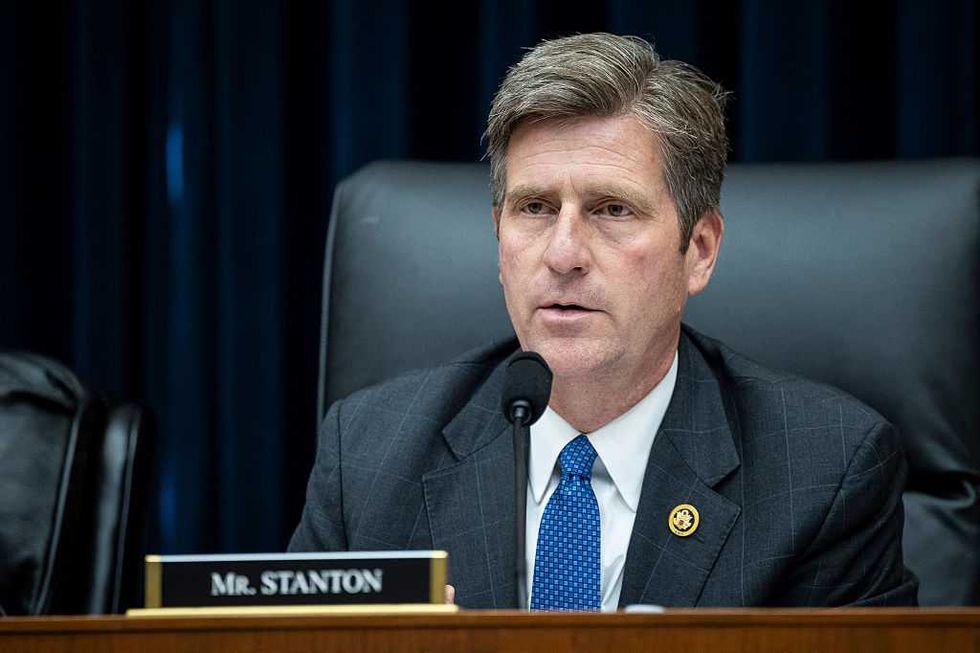
U.S. Reps. from Arizona Greg Stanton (D), Eli Crane (R), Andy Biggs (R), and Paul Gosar (R) were passengers on the interrupted flight.

"Flying to DC rn to vote no on CR that fails to lower health care costs. @RepEliCrane, @RepAndyBiggsAZ & @RepGosar all on this flight," Stanton wrote on X. "We're making [an] emergency stop in Kansas City to remove [a] disruptive passenger. None of my colleagues is the disruptor. Freedom Caucus losing its mojo."

Stanton thanked Kansas City police for "handling the situation professionally and without incident."

RELATED: FAA cancels hundreds of flights, sparking holiday travel concerns amid ongoing Democrat shutdown

Rep. Greg Stanton. Photographer: Graeme Sloan/Bloomberg via Getty Images

Adam Burtner, a passenger on the flight, responded to Stanton's X thread with a video showing an unidentified woman being escorted off the flight by a police officer. Right before exiting the plane, she stated, "Sorry, folks. We live in a fascist state."

American Airlines confirmed that the flight was diverted due to a "disruptive passenger." However, the details of the incident are unclear.

RELATED: Trump officially ends 'pathetic' Democrats' record-breaking shutdown

Rep. Andy Biggs. Photo by Kent Nishimura/Getty Images
"On Nov. 11, American Airlines flight 1218, with service from Phoenix (PHX) to Washington, D.C. (DCA) diverted to Kansas City (MCI) due to a disruptive customer," the airline told KSHB. "Law enforcement met the flight and removed the customer, and the flight later re-departed for DCA, where it landed normally. We thank our customers for their patience and our crew members for their professionalism."

Burtner claimed that the woman said she was removed for taking a photograph of one of the lawmakers.

"Since there is some confusion on what she said, it's as follows: 'I took a picture of someone and they didn't want me to tweet it.' (Picture of a congressman aboard the flight.)," Burtner wrote.

Like Blaze News? Bypass the censors, sign up for our newsletters, and get stories like this direct to your inbox. Sign up here!

FAA cancels hundreds of flights, sparking holiday travel concerns amid ongoing Democrat shutdown


With Americans preparing for Thanksgiving and Christmas travel this year, the government shutdown is beginning to affect travel plans. With operation cuts going into effect over the next week, pressure is mounting for Democrats to come to the table and reopen the government.

According to multiple reports, between 700 and 800 flights at major travel hubs have been canceled as a Federal Aviation Administration emergency order went into effect on Friday.

'This level of cancellation is going to grow over time, and that's something that is going to be problematic.'

Forty major airports are affected by the order, though increased stress has been noted at other airports as well.

Many people in the transportation sector have expressed their frustration with the shutdown, particularly as the holiday travel season looms on the horizon.

RELATED: CNN analyst: Public opinion has shifted amid shutdown — but not for the party you'd expect

Photo by Tasos Katopodis/Getty Images

On CNBC's "Squawk Box," American Airlines CEO Robert Isom called the government shutdown's impact on flights "frustrating": "What we've done today is we tried to minimize the impact on all of our customers. There's only 220 flights out of 6,200 flights, and we've done it in a way that really impacts our smaller aircraft."

"This level of cancellation is going to grow over time, and that's something that is going to be problematic," Isom added.

According to the FAA's emergency order, cuts in operations began November 7 to ensure the safe and efficient use of airspace and aircraft. The reductions will gradually increase over the next week with a planned 10% reduction at "high impact airports" from Anchorage to Orlando by November 10.

Air traffic controllers have been working without pay since October 3, according to the order.

As of Wednesday, this government shutdown surpassed the previous record of 35 days, which took place in 2018.

On Friday, Secretary of Transportation Sean Duffy responded to the increased stress on air travel: "I have done all I can to minimize disruption in the airspace. I’m trying to get people where they want to go and to get there safely."

Noting that the situation is not ideal, Duffy called for the government to reopen: "We are taking unprecedented action at @USDOT because we are in an unprecedented shutdown," he added.

Democrats have signaled that they are unwilling to cooperate with Republicans to fund the government on Friday without more health care concessions, likely extending the 38-day shutdown.

Like Blaze News? Bypass the censors, sign up for our newsletters, and get stories like this direct to your inbox. Sign up here!

Watch: John Fetterman’s heated airplane spat caught on camera


A resurfaced video from February has people looking at Democrat Pennsylvania Senator John Fetterman.

Video footage captures him arguing with the pilot on an American Airlines flight from Washington, D.C., to Pittsburgh over a seatbelt issue.

Pat Gray plays the clip.

In the video, the pilot asks if Fetterman has his seatbelt on, to which he responds, “Yes, it is.”

“Okay, it needs to be visible for the crew at all times. That’s not an us thing; it’s a federal regulation,” the pilot added, offering a seatbelt extender for comfort.

Fetterman, however, refused to comply, culminating in a tense exchange.

“If you want to go to Pittsburgh, it’s simple, you’re going to have to follow our instructions or be asked to get off the airplane,” the exasperated pilot says.

It’s unclear whether or not Fetterman eventually complied, as the video ends abruptly.

Although the spat happened in February, it gained attention after New York magazine published an article on May 2 about concerns regarding Fetterman’s mental health. The piece referred to the airplane incident as an example of his alleged erratic behavior, prompting the video to go viral.

“I mean, nobody got out of control, which is good,” says Pat, calling the regulation “obnoxious.”

“Kudos to John Fetterman. He didn't drop the ‘do you know who I am’ card,” says Keith Malinak.

The panel is mostly just celebrating that the incident happened on an American Airlines flight — which they prefer to call “unAmerican Airlines.”

“Put that in your pipe and smoke it,” laughs Pat.

To see the video footage of Fetterman’s airplane tiff, watch the episode above.

Want more from Pat Gray?

To enjoy more of Pat's biting analysis and signature wit as he restores common sense to a senseless world, subscribe to BlazeTV — the largest multi-platform network of voices who love America, defend the Constitution, and live the American dream.

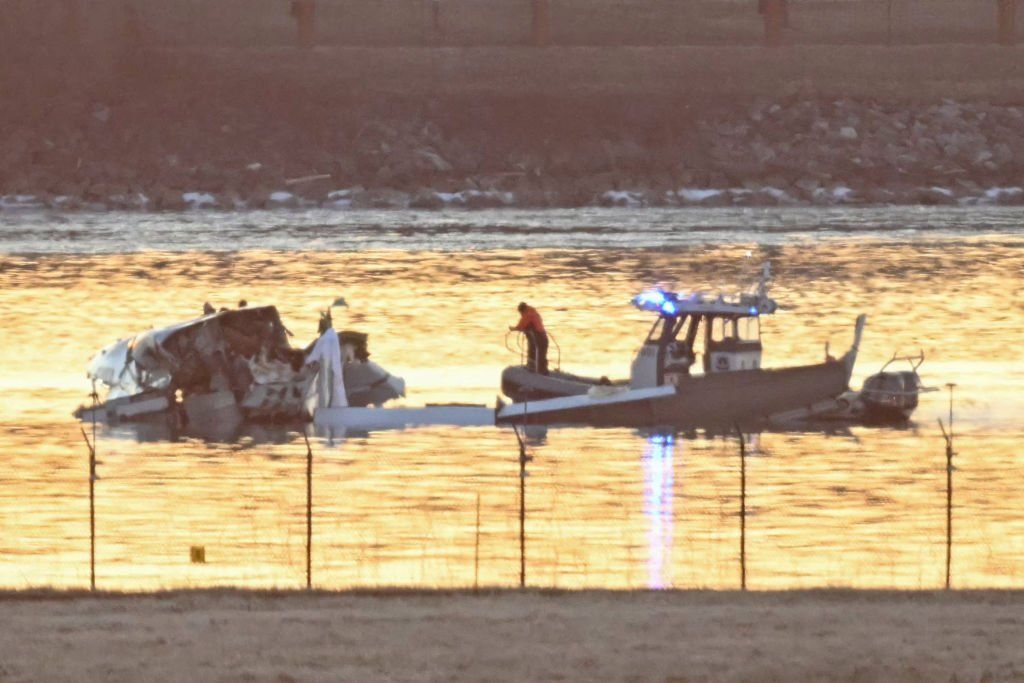
‘Accident Waiting To Happen’: Feds Ignored DC Death Trap For Years Despite Dozens Of Near Misses With Planes, Choppers

'Accident Waiting To Happen': Feds Ignored DC Death Trap For Years Despite Dozens Of Near Misses With Planes, Choppers

Trump, Vance Suggest DEI Contributed To DC Plane Crash

President Donald Trump and Vice President J.D. Vance referenced DEI incompetence as a possible factor in Wednesday's aviation disaster.

A major legal victory over woke investment


A federal judge in Texas granted a victory Friday to American Airlines pilots suing the company for sacrificing the profitability of their 401(k) fund to pursue liberal causes.

It’s a potentially major blow in a long battle against political investing, called ESG (or environmental, social, and governance). And it paves the way for battles against BlackRock and other globe-dominating businesses that funnel trillions of Americans’ retirement and investment dollars toward left-wing causes. More, it demonstrates how the political catastrophe that has befallen corporate governance these past five years can be undone — by the same tool with which it was made.

We stumbled into this morass through risk aversion at the top. By risk aversion it must be undone.

The judge found that American Airlines violated its fiduciary duty of loyalty to the pilots. It comes on the heels of the same judge deciding that the class action can include every pilot who joined the 401(k) since 2017. That’s more than 100,000 people. The judge also found that American Airlines acted within the industry standards at the time, meaning the company did not violate its fiduciary duty of prudence.

“Industry standard” indeed. BlackRock, the firm American Airlines allowed to manage its $26 billion plan, essentially dominates the retirement plan industry, managing $11.5 trillion in assets globally. It is one of the most powerful firms on the planet, but that doesn't mean the company is a friend of the American dream. These are the guys literally buying up every affordable starter house across the country they can, turning would-be owners into permanent renters. The company says it doesn’t buy individual family homes, which is true — it buys the companies that do. While BlackRock isn’t named as a plaintiff in the Texas case, the implications are clear.

The surest way to defeat and destroy woke corporate politics is through litigation and the threat of litigation. We stumbled into this morass through risk aversion at the top. By risk aversion it must be undone.

Attorney General Bill Barr understood this well. In the final days of the first Trump administration, his Department of Justice issued memoranda warning corporations that that weighing race in their decisions could run afoul of the Civil Rights Act. In other words, you can’t punish people for being white, no matter how popular it is at the moment.

This was a real problem. If you believe the statistics from the peak woke years, white men made up only 6% of corporate hires. That’s overt discrimination in hiring practices.

Legal routes are so much more effective than shame, because human resources departments and others completely dominated by 20- and 30-something left-wing activists are hard to manage, even for top company executives. Few things are more ominous than being accused of racism, sexism, or anti-LGBT bias in corporate America, a fear even corporate directors share. Those directors need a way to say “no” loudly and clearly the next time they’re told to stop hiring white men.

Do you know what changes their calculus? Lawyers, lawsuits, and money. Few things would turn the tide quicker than a Justice Department punishing anti-white-male bias for four-plus years, along with an anonymous tip line bringing the force of investigation down on corporations. If the directors won’t shut down the left-wing crusaders in their midst, litigation will.

That’s why the Texas decision is so noteworthy. There’s plenty of road left for the pilots’ class action (and others), but the implications are clear. ESG investing is no longer a safe space. Corporate directors and state officials looking to invest their 401(k)s will all be looking at their own vulnerability — and pushing back on companies like BlackRock that expose them to potential liability. The real battle is going to be in employment, but that’s still big news, even if it isn’t over.

Bedford, July 2021: Corporations like BlackRock are steamrolling small business, buying up homes, and crushing the dream, but we can fight back

Federalist Radio Hour: Can we rescue the American dream from bully corporations?

Sign up for Bedford’s newsletter
Sign up to get Blaze Media senior politics editor Christopher Bedford's newsletter.

THE FIRE RISES

CITY JOURNAL: Trump should abolish the federal mental health agency

People have a habit of assuming the changes all around us are naturally occurring. We grumble when there’s a sudden and clear increase in drug-addicted and mentally ill homeless menacing commuters and taking over public spaces, but we rarely wonder, “Is someone actively doing this? Is someone paying for this outcome because they want it? Am I paying for this outcome?” Sometimes it is just natural. But this one is not. Carolyn D. Gorman reports:

...The Substance Abuse and Mental Health Services Administration, the federal mental health agency ... was created in 1992 to “reduce the impact of ... mental illness on America’s communities” and to target services to people “most in need.” The agency has failed on both counts. People with serious mental illnesses, like schizophrenia and other psychotic disorders, remain disproportionately represented among the homeless, incarcerated, and violent criminal populations. Mental illness has been a factor in nearly all of the deadliest mass shootings, including Sandy Hook, Viriginia Tech, Parkland, Aurora, Uvalde, El Paso, Sutherland Springs, Charleston, Oregon, Navy Yard, Binghamton, Killeen, Lewiston, Austin, Edmond, Pittsburgh, Santa Fe, Boulder, Dayton, Omaha, and Indianapolis — to name only a few.

The agency has not only failed to reduce the impact of mental illness in American life but also has undermined proven solutions by derailing resources from high-quality, intensive psychiatric treatment and advocating against involuntary commitment. Consider SAMHSA’s Protection and Advocacy (PAIMI) Program. The agency claims the program “is intended to protect and advocate for the rights” for people with serious mental illness, but in practice, it often directs funds to lawyers seeking to prevent needed hospitalizations. This can have disastrous results, as it did in 2006, when a mentally ill man named William Bruce killed his mother with a hatchet after SAMHSA-funded lawyers reportedly coached him on how to avoid involuntary treatment.

The federal mental health agency is also a hub for progressive activism. Seemingly any left-wing priority can win SAMHSA support if proponents claim that addressing it would reduce “trauma” or improve “mental well-being.” Billions of taxpayer dollars have been hijacked for things like “non-traditional holistic support” for “LGBTQI+” families; “affirming, comprehensive care” for “unhoused LGBTQ+ youth”; employee trainings and agency publications on “Diversity, Equity, Inclusion, [and] Accessibility”; bulletins on the behavioral health effects of climate change; “Keep it Safe but Sexy” harm-reduction sessions for the “incarcerated and post-incarcerated socially disenfranchised”; and pop psychology-inspired social-emotional learning programs ...