Scott Bessent is the secret weapon for Trump's economic plan
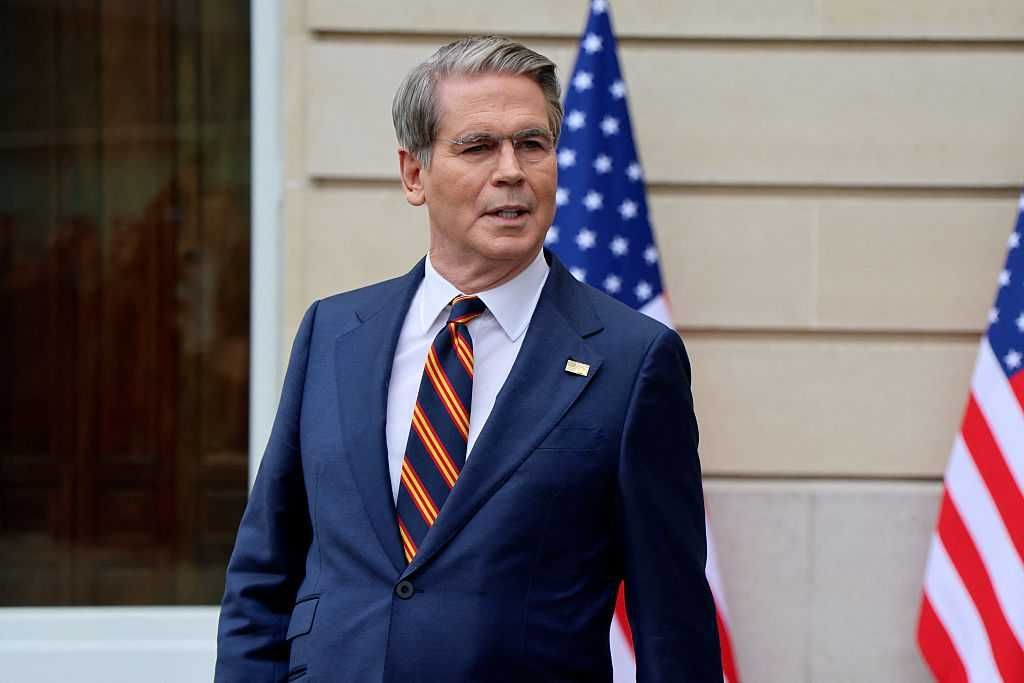
Scott Bessent may well be the most consequential secretary of the treasury since Alexander Hamilton — not simply because of the policies he advances, but because of the conditions he confronts and the clarity with which he is executing President Trump’s broader economic vision.
Like Hamilton before him, Bessent has stepped into an economy weakened by a long period of policies that, however well intentioned, failed to serve the enduring interests of the American domestic economy.
Before entering public life, Bessent operated at the highest levels of global finance. As a key figure alongside Stanley Druckenmiller, he helped execute one of the defining macro trades of the modern era — the successful challenge to the Bank of England’s currency peg in 1992. The lesson was enduring: Systems that ignore economic reality do not last. Markets force alignment.
What Bessent is executing is a re-centering, not only of economics, but of strategy.
It is precisely that market-grounded realism that now underpins the implementation of the administration’s economic strategy. But Bessent is not simply a market practitioner. His time teaching the history of economic thought at Yale reveals the deeper foundation of his approach.
He sees the economy not as a series of quarterly data points, but as a system shaped over time by production, energy, capital formation, and national power. That synthesis, of theory, history, and practice, places him firmly in the Hamiltonian tradition and makes him a natural architect for translating President Trump’s economic doctrine into operational policy.
After the Revolutionary War, the United States was financially strained under extreme levels of debt, industrially underdeveloped, and newly severed from its economic relationship with the British Empire. Hamilton’s achievement was to turn that fragility into a foundation for strength.
He tied fiscal credibility to growth, fostered domestic industry, and deployed tariffs with precision — high enough to generate revenue and support development, but not so high as to suffocate competition. He was not managing decline; he was reversing it.
Bessent faces a modern analogue, an American economy navigating the aftermath of its own rupture, not from a formal empire, but from the post-World War II Pax Americana and the rules-based system it sustained. The task, again, is not to preserve a fading order, but to build a new foundation, one that reflects the strategic reset articulated by President Trump and now being systematically implemented through the Treasury Department and beyond.
The parallel is difficult to ignore. Decades of globalization prioritized efficiency over resilience and consumption over production. The result is an economy that remains large but is increasingly imbalanced, dependent on external supply chains, tilted toward financial engineering, and less capable of sustaining broad-based growth. Bessent’s significance lies in recognizing this reality and acting on it, not in abstraction, but in execution of a defined national strategy.
Like Hamilton, he is not merely managing the economy he inherited; he is working to re-anchor it, aligning markets with the administration’s emphasis on domestic strength, industrial capacity, and economic sovereignty.
That begins with debt. The United States now carries historically elevated fiscal obligations layered on top of structural weakness. The answer, as in Hamilton’s time, is not austerity alone, but growth — stronger, more durable expansion rooted in production, investment, and rising capacity.
Debt is not ignored; it is made sustainable through expansion, a core pillar of the administration’s supply-side orientation.
RELATED: Grants are a secret weapon for American communities

This framework was articulated clearly in Bessent’s speech at the Reagan Library. At its core is a simple recognition: An economy hollowed out by flawed globalization cannot sustain either prosperity or fiscal stability.
The answer is not withdrawal, but reordering, a principle that sits at the heart of President Trump’s economic agenda. His formulation — de-risk, not decouple — captures that balance. It preserves the benefits of trade while restoring the primacy of national resilience.
This is not a rejection of globalization but its correction, a distinctly Hamiltonian instinct and one now being operationalized across trade, capital flows, and industrial policy.
Energy is central to this vision. Cheap, secure energy is not a talking point; it is the precondition for winning the next phase of economic competition, particularly in artificial intelligence.
Computing is power. Without abundant energy, neither technological leadership nor sustained growth is possible. This, too, reflects a deliberate alignment between Treasury policy and the administration’s broader push for energy dominance.
So too does the shift back toward productive capital. For years, policy favored financial engineering over real investment. Bessent’s emphasis is different, directing capital toward infrastructure, manufacturing, and technological capacity, translating strategic intent into capital allocation.
Markets have responded not in spite of this shift, but because of it.
His early attention to Federal Reserve mission creep reinforces the broader theme. By insisting that the Fed operate within, not above, the constitutional framework, Bessent is reasserting a principle that has eroded: Economic power must remain accountable. It is a subtle but critical component of restoring coherence between monetary authority and elected economic leadership.
To understand his significance, however, is to see the broader architecture now taking shape. This is not a collection of policies. It is a doctrine, one that reflects both intellectual lineage and political mandate.
At its core is a modernized American system, domestic production, strategic protection, and national development. Layered onto it is a Monroe Doctrine-style approach to economic security, treating the Western Hemisphere as a strategic sphere.
But what distinguishes this strategy is not its articulation but its execution — the translation of President Trump’s strategic instincts into coordinated economic statecraft.
In late 2025, largely under the radar, pressure on Iran’s financial system intensified and key elements of its banking sector began to fail. It generated few headlines, but the signal was unmistakable — a targeted disruption of financial plumbing rather than a blunt sanctions regime.
This is economic statecraft executed with precision — identifying pressure points, applying force selectively, and achieving strategic effect without spectacle. It reflects Bessent’s background in markets, where understanding fragility is everything, and his role in implementing a broader geopolitical-economic strategy set at the presidential level.
RELATED: No more free ride for federal grant hogs

Within this framework, Bessent is the intellectual anchor and operational executor, aligning fiscal policy, capital markets, and economic structure with national purpose as defined by the administration.
What this represents is a break from the postwar consensus. The Pax Americana was a historic achievement, but over time it evolved into a system that often detached American policy from American strength.
What Bessent is executing is a re-centering, not only of economics, but of strategy.
Just as Hamilton anchored the early United States away from dependence on the British Empire and toward internally generated strength, Bessent is anchoring the modern economy back toward its domestic foundations, while executing a presidential mandate to rebuild American economic sovereignty in a more fragmented world.
But the defining parallel is not philosophical. It is practical. Hamilton did not simply write or speak. He executed, building institutions, implementing policy, and translating theory into durable structure in real time. Bessent is doing the same, not in isolation, but as the principal architect and executor of a broader economic vision set from the top by President Trump.
That is what makes him consequential. Not the speeches, though they matter. Not the framework, though it is clear. But the execution, policy applied in real time, reshaping the trajectory of the American economy.
That is the Hamilton standard. And by that standard, Bessent is the first secretary of the treasury to meet it.
Editor's note: This article was originally published by RealClearPolitics and made available via RealClearWire.



 www.theblaze.com
 www.theblaze.com
 thefederalist.com
 thefederalist.com
Civilizational collapse: Less than 15% of 30-year-olds are married homeowners
Americans used to settle down and start families in their 20s, but according to a chart that went viral all over social media this past weekend, that’s not even happening once they hit 30.
The chart revealed a steep drop-off from 1990, where it sat around 45%, plummeting to under 15% in 2025.
“This is a loss. ... This is like how ‘WALL-E’ happens. No exaggeration. This is the death of a culture. This is without spiritual revival. You cannot materialistically return from this,” BlazeTV host Steve Deace says, horrified.
“If you’re the Chicoms, you don’t need to risk a nuclear war. Just wait this thing out, man,” he adds.
And Deace has a few theories as to why there has been such a significant decline in married homeowners by the age of 30.
“This is unrecoverable. Percentage of 30-year-olds who are both married and homeowners in the last 75 years. You won’t dig out of that. And there’s all kinds of reasons. There’s economic reasons that are very valid. Cultural reasons that are very valid. Familial reasons — where are the dads that modeled this? Very valid,” Deace says.
“Legacy gone, responsibility gone, the family unit gone. If that is not fixed or course-corrected, I’m just going to tell you right now, your kids and grandkids — and I’m talking about my own — they’re going to live in a communist country and/or need to know Arabic. You are not going to Netflix-and-chill your way past that,” he continues.
“So that graphic right there, my friends,” he adds, “is where the rubber hits the road.”
Want more from Steve Deace?
To enjoy more of Steve's take on national politics, Christian worldview, and principled conservatism with a snarky twist, subscribe to BlazeTV — the largest multi-platform network of voices who love America, defend the Constitution, and live the American dream.