How one lowered flag carried me home
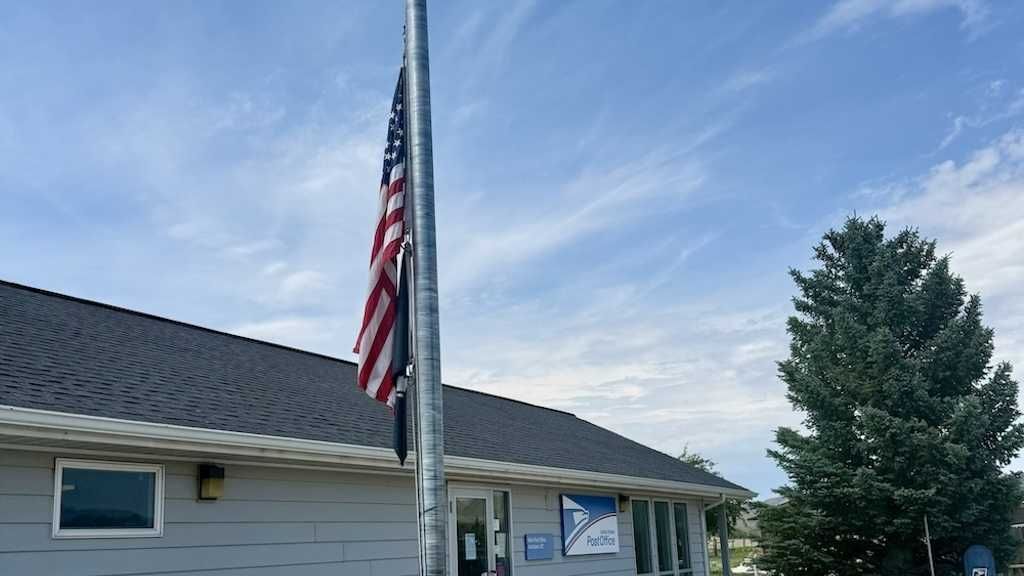


McAllister, Montana, does not take long to drive through. We have a post office, a cabinet shop, and an empty lot where the old bar and restaurant once stood.

Yet there it was. The American flag hung at half-staff.

Somewhere between the Carolina foothills and a tiny town in southwest Montana, I was reminded that no matter how far life carries us, the places that formed us never quite let us go.

It was not for someone from Montana. It was for a boy from upstate South Carolina.

Standing in the parking lot of that tiny post office, I found myself thinking that southwest Montana might as well be another country from the red clay, pines, and dogwoods of northwest South Carolina.

Yet one lowered flag carried me back more than 2,000 miles, leaving me with an unexpected ache for both places.

Lindsey Graham’s passing felt different. There had been no long illness, no farewell tour, no gradual retreat from public life. He worked until the end. One day, he was in the middle of the nation’s business. The next, the flag in our little Montana town flew at half-staff for a man whose life began just a few miles from mine.

Washington knew him as a senator. The world knew him as a fixture on Sunday morning news programs, in committee hearings, and on diplomatic missions halfway around the globe.

Upstate South Carolina knew him simply as Lindsey.

Our paths crossed long before I could have imagined standing beside a lowered flag in a small Montana town thinking about him.

He grew up in Central. I grew up in nearby Anderson. We may even have been born in the same hospital.

When Lindsey first ran for Congress, my sister worked on his campaign. His district included my parents’ home. For a time, his sister lived only a few doors from them. Years later, one of my four brothers worked closely with him through the State Department on matters involving Qatar, Jordan, Saudi Arabia, and other countries.

RELATED: The internet makes monsters and saints before the body is cold

Kevin Dietsch/Getty Images

The first time I met Lindsey personally was at Walter Reed Army Medical Center, where my wife, Gracie, had been invited to sing for wounded warriors. We shared dinner that evening with Sen. Chuck Grassley (R-Iowa) and his wife, along with Montana’s Conrad Burns.

At one point, Lindsey laughed and said he and I could carry on a conversation without anybody needing subtitles.

After meeting several members of my family over the years, he ran into my parents somewhere back home, shook his head with that familiar grin, and asked, “How many of y’all are there?”

That was Lindsey. For all the demands placed on him, he remembered people.

We disagreed on more than a few things over the years. Some of those disagreements mattered. But disagreement is not the same thing as dismissal.

Somewhere along the way, we have forgotten that.

In an era when too many public careers seem measured by growing fortunes and lucrative opportunities after leaving office, Lindsey’s modest estate told a different story. Whatever history ultimately concludes about every vote he cast or every position he took, it is difficult to argue that he entered public life to enrich himself.

He seemed to take the title literally.

It was public service in the truest sense of the phrase.

Whether one agreed with him or not, Lindsey’s work ethic was undeniable. He left behind a reputation far larger than his estate.

Lindsey Graham died with his boots on.

Only hours earlier, he was still in motion — meeting with allies, working with foreign leaders, talking with colleagues, and carrying the responsibilities that had defined most of his adult life.

Then, almost in an instant, the meetings ended, the phones stopped ringing, and the man who had spent a lifetime helping shape history took his place within it.

Flags across America have been lowered. Soon, they will be raised again. The mail will be sorted. Ranchers will stop by the post office. Life will continue, as it always does.

But standing there in the parking lot of our little post office, I closed my eyes and sighed.

I was not thinking about Washington or the halls of power. I was thinking about upstate South Carolina.

RELATED: Consider the lilies — and one old Montana fir

Photo courtesy of Peter Rosenberger

I was thinking about the red clay my mother could never keep her five sons from tracking into the house. Boiled peanuts from a roadside stand. A sticky, hot Carolina afternoon with pine trees swaying just enough to remind you there was a breeze after all.

I was thinking about familiar voices, familiar roads, and a local boy from Central who somehow found himself helping shape the course of a nation without ever quite losing the cadence of home.

The United States lost a man who served first in uniform, then in the House of Representatives, and finally in the Senate.

South Carolina lost a son.

And somewhere between the Carolina foothills and a tiny town in southwest Montana, I was reminded that no matter how far life carries us, the places that formed us never quite let us go.

I suspect Lindsey Graham never heard of McAllister, Montana.

But that flag outside a tiny post office quietly testified that McAllister, along with countless other towns across America, paused to honor him.
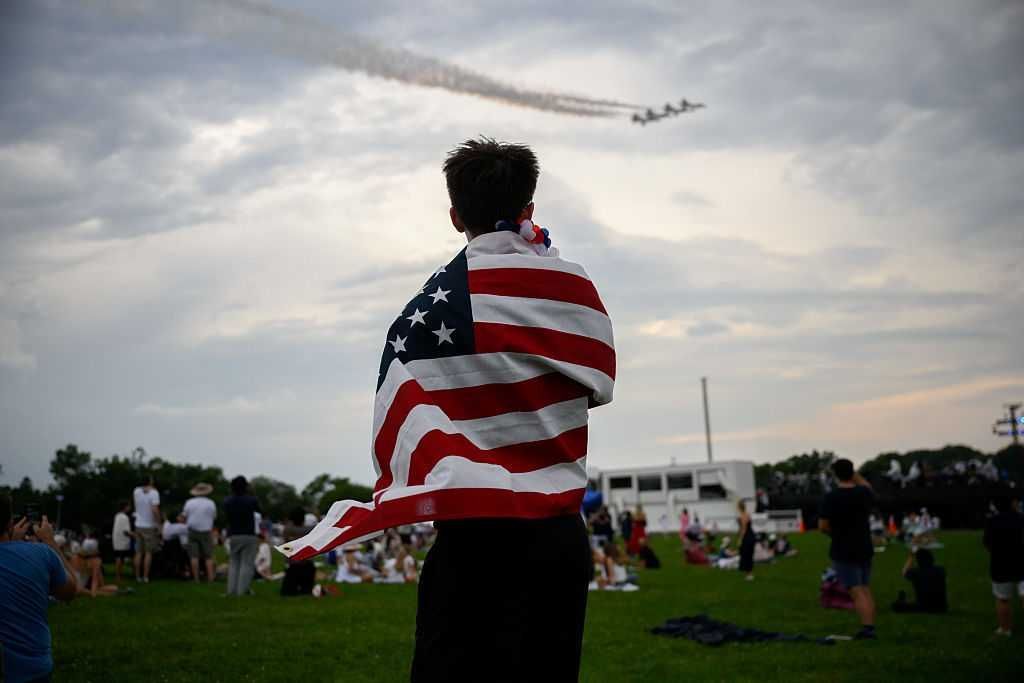
'Patriotic positivity': Hundreds of flag-waving runners descend on New York City — joined by some special guests


Americans all over the country celebrated the 250th anniversary with fireworks, barbecue, and friends and family. Still others celebrated by joining one of the most patriotic-looking events — which was joined by United States Marines.

On Sunday, the day after Independence Day, dozens of Marines joined hundreds of enthusiastic runners for a remarkably patriotic run in the heart of New York City.

'It does not matter who gets in our way. We will tell them we love them, and we'll keep it pushing anyways.'

Video from the run shows rows of uniformed Marines running through Central Park, followed closely by hundreds of proud Americans carrying American flags of various sizes.

The group that organized the run, Unify USA, is on a mission to run with the American flag in all 50 states, uniting the country "one step and one smile at a time."

RELATED: What are the odds? America's birthday is full of incredible coincidences

One of the co-founders, Teagan McCoy, spoke at the event, holding a large American flag as he addressed the enthusiastic crowd of runners in Central Park.

"We are out here to spread patriotic positivity!" he said. "I expect to lose my voice at every event because I'm so passionate about this."

He added that it doesn't matter which state anyone is in because there are patriots all over the country: "I don't care where you're at. There are Americans who care in this country, and we are here to exemplify that."

Teagan's brother and group co-founder, Koston McCoy, also addressed the crowd, emphasizing the message that Unify USA is seeking to promote:

Every single day we have to wake up and decide: Are we going to do what we have to do to unify America one step and smile at a time? Are we gonna continue to ignore that there's division in this country? And are we gonna stand proud for the flag that we hold in our hands today — and not only for today, but for the weeks, months, years, and for the rest of our life say we are proud to be Americans?

"It does not matter who gets in our way. We will tell them we love them, and we'll keep it pushing anyways."

Unify USA started at the end of last year and has gained traction as the 50-state tour has progressed. Its six-pillar mission includes restoring patriotism in the communities they visit, leading more people to heaven, supporting our veterans, and giving back to others.

Like Blaze News? Bypass the censors, sign up for our newsletters, and get stories like this direct to your inbox. Sign up here!

Students Born After 9/11 Prepare Flag Memorials Nationwide

A new generation of students with no firsthand recollection of the Sept. 11 terrorist attacks prepare nationwide flag memorials at more than 200 schools.

New York Times Staffer: Seeing ‘Dozens Of American Flags’ Over The Weekend Was ‘Disturbing’

A member of the New York Times editorial board made the ridiculous claim that she was 'disturbed' upon seeing American flags on American soil.

Columbia University professor complains that the American flag is a 'symbol of genocide'


A Columbia University adjunct lecturer insists that the American flag is a hateful symbol of genocide.

What are the details?

Professor Anthony Zenkus of the university's school of social work, responded to a tweet that said the hammer and sickle "is a symbol of genocide."

Zenkus tweeted, "The American Flag is a symbol of genocide. Unless centuries of slavery and the vanquishing of Native American nations doesn't figure into your equation."

The original user's tweet said, "[T]he hammer and sickle is a symbol of genocide. What you gonna admire next, the swastika?"

The American Flag is a symbol of genocide. Unless centuries of slavery and the vanquishing of Native American natio… https://t.co/eSwpex4dVi
— Prof Zenkus (@Prof Zenkus)1602852088.0

What else?

According to Campus Reform, the Al Gore-trained professor's faculty profile reveals that he is an "activist on issues of racial justice, income equality, and climate justice." Zenkus has also reportedly been an organizer with Occupy Wall Street.

Common Dreams reports that Zenkus is also a licensed social worker and social work educator who "trains judges, law enforcement, medical professionals, and educators on sexual violence and trauma."

The organization also reports that Zenkus has taught at Adelphi University.

In 2018, a user on Rate My Professors said that Zenkus seemed more like a social justice warrior than a social worker.

The anonymous user wrote, "Prof. Zenkus is clearly passionate about what he does, but he comes off as more of a social justice warrior than a social worker. He is very idealistic and shares his personal view very openly. Check out his Twitter and you'll see what I mean. He is very intelligent and I did enjoy taking his class, so at least there is that."

Turning Point USA's Professor Watchlist also describes Zenkus as director of education for The Safe who made the organization's list after "responding to a conservative journalists [sic] comment" about an apparently pro-capitalism CNN tweet.

"Zenkus responded to the pro-capitalism tweet sent by the journalist by saying, 'Odd how you forget the millions who died under #capitalism. The two world wars, centuries of slavery, and the genocide of native americans [sic]. Bet they didn't think that was cool either,'" the organization noted.

Brown University researcher claims pro-Trump signs, American flags 'scare' and 'traumatize' black people


Carycruz Bueno, a postdoctoral research associate at Brown University's Annenberg Institute, has gone viral after complaining that Trump 2020 flags — and even American flags — strike fear in the hearts of black people in America.

Bueno made the remarks on social media, where they soon went viral.

What are the details?

As highlighted by Campus Reform, Bueno — an economics researcher — said that she recently stayed at a Maine AirBnB that, very disconcertingly, had Trump signs in the yard.

Bueno added that AirBnB clearly "doesn't understand the trauma" black people experience in seeing such Trump signs.

Bueno described the experience — which she said left her "immediately scared" — she had when renting a property with her husband.

She explained that when she arrived at the rental — a privately owned property over which AirBnB has no control — she saw "Trump signs and other white nationalist symbols."

Bueno said that the display immediately made her "terrified and scared" for her life and her family's safety.

"Disappointed @airBnB doesn't understand the trauma of TRUMP signs on a @airbnb rental causes black person," she wrote, according to the outlet.

Bueno said she contacted AirBnB, but the company, predictably, said their hands were tied in the matter, as the residence is privately owned.

She then went on to blast the company for being "only words and no action" and called for a "greenbook version of AirBnB" so persons of color would not have to "pay to feel uncomfortable and scared."

Elsewhere during her Twitter rant, Bueno recalled the top five symbols that strike fear in the hearts of black people.

The list includes items such as KKK hoods and the Confederate flag, but also lists the American flag.

"[Y]es, this is a symbol used in many places to scare black people," she insisted.

What else?

In a statement, Brown University Students for Trump President Emma Rae Phillips told Campus Reform that she is "disappointed" in Bueno's remarks.

Phillips — an economics major — said that the researcher's tweets "do not seem to show much understanding of how free markets work."

Phillips added, "American flags and Trump signs are not racist in any way, shape, or form."

You can see the full list of Bueno's tweets below.

At the time of this reporting, Bueno's Twitter feed settings have been set to private.