The Bill of Rights is the antidote to soft despotism
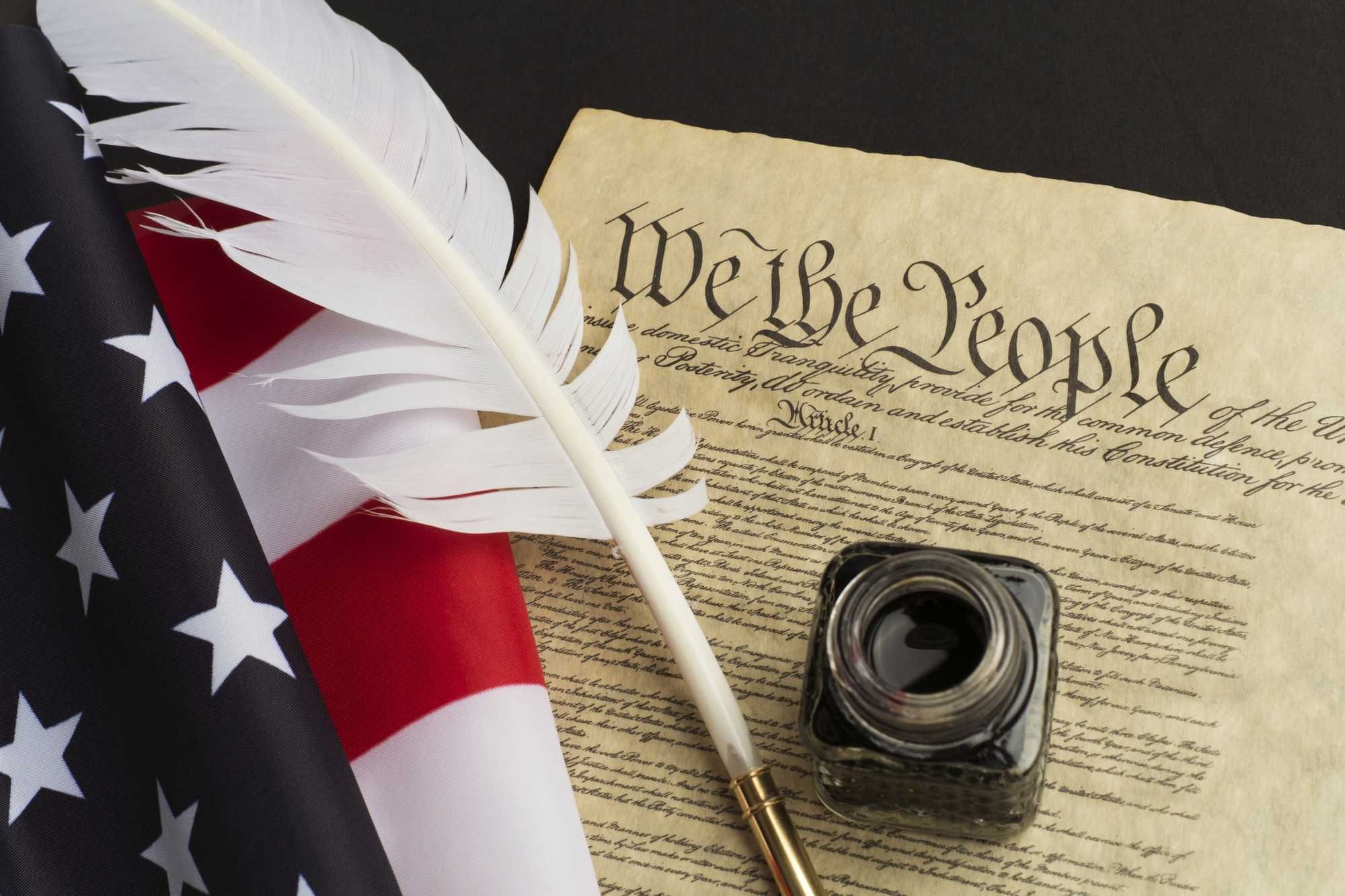


As the nation approaches what looks like a weak and divided commemoration of the 250th anniversary of the Declaration of Independence, another milestone has arrived with little acclaim. Today marks the 239th anniversary of the introduction of the Bill of Rights in the U.S. House of Representatives.

It should be a day of celebration every year. The Bill of Rights is one of the most important documents in human history. James Madison, one of the nation’s central founders and a future two-term president, introduced it in Congress on June 8, 1787.

We have less than half a decade to avert a fiscal collapse of the federal government and the social and economic destruction that would follow.

The central lesson of the Bill of Rights lies in Madison’s purpose: to bind every level of government to one overriding mission — protecting individual rights against majority tyranny.

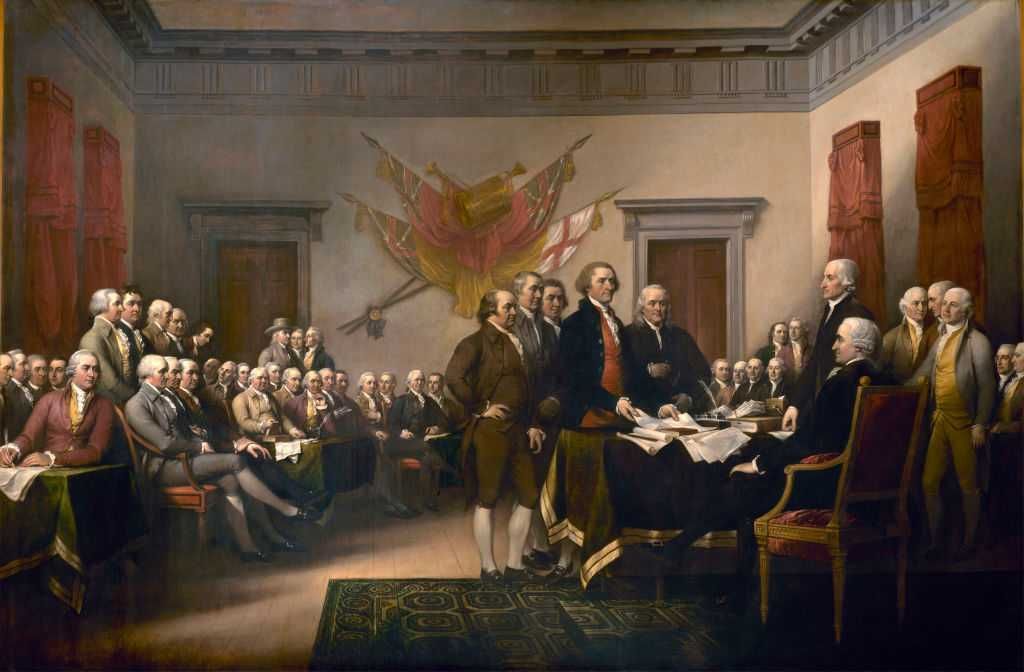
The Bill of Rights Institute summarizes Madison’s concern well. Before the Constitutional Convention, Madison wrote “Vices of the Political System,” an essay detailing the flaws of the Articles of Confederation. One of the chief defects, in his view, was that tyrannical majorities in the states passed unjust laws violating the rights of minorities. He had seen the oppression of religious dissenters in Virginia and became the leading advocate for the Virginia Statute for Religious Freedom.

At the Constitutional Convention, Madison argued for separation of powers, checks and balances, bicameralism, and federalism as safeguards for liberty. But he lost one key feature of his plan: a national veto over state laws meant to prevent majority tyranny in the states.

Today, we are light-years away from Madison’s vision and from the founders’ plan to protect it. Neither Madison nor anyone else could force the American people and their governments to live within the letter and spirit of the Constitution and the common law. The founders could only encode their vision into the Constitution, laws, and judicial precedents, then hope later generations would preserve it.

They often have not.

In 1840, only a half-century into the American experiment, Alexis de Tocqueville anticipated the rise of “soft despotism” in the United States. He saw that the passion for equality could erode devotion to natural law, natural rights, and self-government.

Tocqueville warned of a sovereign power that takes each individual “into its powerful hands” and covers society with “a network of small, complicated, minute, and uniform rules.” Such power, he wrote, “does not tyrannize” but “hinders, represses, enervates, extinguishes,” and finally reduces the nation to “a flock of timid and industrious animals, of which the government is the shepherd.”

He also warned that this mild, regulated servitude could exist “in the very shadow of the sovereignty of the people.”

That is the danger America now faces.

Tocqueville foresaw that citizens might voluntarily give up sovereignty in exchange for temporary economic stability and government largesse extracted from their neighbors. In doing so, they would surrender the things that made the nation great: self-rule, protection against majority coercion, voluntary association, free enterprise, and ultimately each person’s dignity as a unique human being.

RELATED: The timeless truths behind the Declaration of Independence
Fine Art Images/Heritage Images/Getty Images

Restoring respect for the Bill of Rights and the founders’ vision is essential if we hope to rescue the United States from the soft despotism into which the American experiment has devolved — and from the harder totalitarianism toward which it now hurtles.

Documents and laws alone will not achieve that. In our present decline, the only way to reverse the slide is to remove the temptation that feeds it: the ability of majorities at all levels of government to vote themselves ownership over other people’s property, liberties, and lives.

In an ironic turn, the United States may now be approaching a resolution of sorts: the collapse of the national government’s ability to pay for everything Congress, presidents, and courts have promised Americans over the past century and a half.

Entitlements such as Social Security, food stamps, Medicaid, Medicare, federal housing subsidies, and other national bribes have become insupportable. They now threaten a debt spiral as high interest rates and inflation weaken the economy and erode the government’s tax base.

The federal debt has already risen above 100% of gross domestic product — the nation’s entire annual economic output. More ominously, the debt is accelerating. The total now sits just short of $40 trillion. It is projected to rise to $55 trillion by 2031, an increase of more than one-third in five years. By 2036, it is projected to reach $77 trillion, nearly doubling in a decade.

Meanwhile, federal and state governments have steadily eroded individual rights, freedom of association, free enterprise, election integrity, and countless other safeguards of liberty.

This is the outcome of majority tyranny. We have less than half a decade to avert a fiscal collapse of the federal government and the social and economic destruction that would follow. What would arise from such a catastrophe is impossible to know.

History offers little comfort. The chances are strong that whatever replaced our flawed yet hardy constitutional system would not resemble the order our forefathers established in the 1700s. A nation founded on individual rights and self-government could vanish from the earth.

That is what Americans must confront as we approach another election season and another referendum on our founding values.

South Carolina considers bill to require colleges and universities to teach America's founding documents


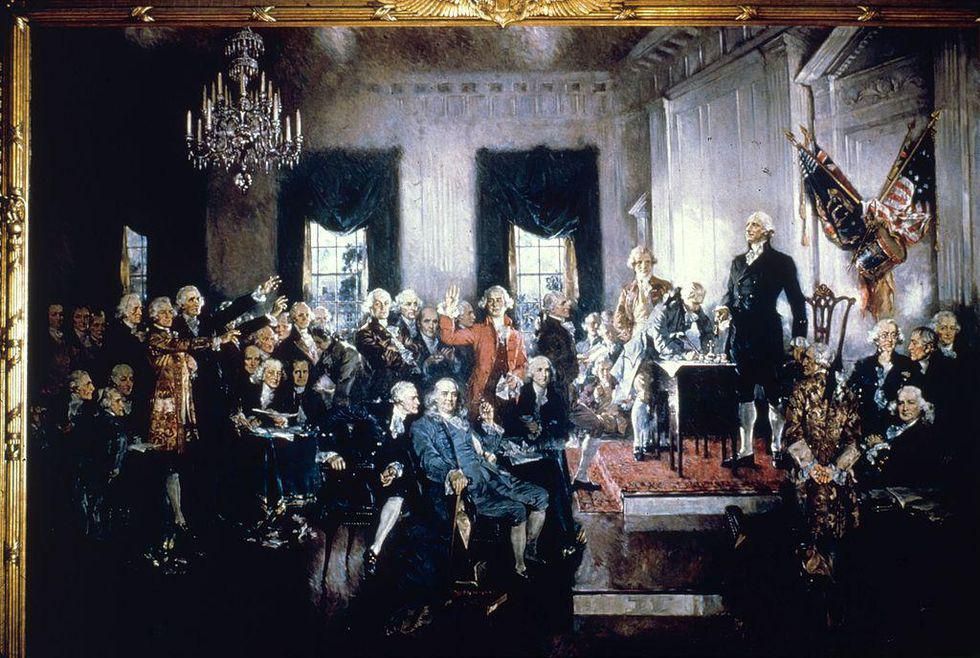
Lawmakers in South Carolina are nearing passage of a bill that would require all public college and university students in the state to study America's founding documents. While the legislation has broad support, some Democrats in the state House opposed the bill in committee, referring to it as "indoctrination" and suggesting that requiring schools to offer a course that teaches the U.S. Constitution and other documents is just "blowing smoke."

Senate Bill 38, the "Reinforcing College Education on America's Constitutional Heritage Act", or REACH Act, was introduced in the state Senate by Sen. Larry Grooms (R-Berkeley) to reform state education law. The bill would require all South Carolina public college students to take a three-credit hour class on American history, American government, or an equivalent course that requires at minimum reading the U.S. Constitution, the Declaration of Independence, the Federalist Papers, and the Emancipation Proclamation.

Grooms' bill would update and modernize existing state law that requires institutions of higher learning to teach a yearlong course on America's founding documents, a law that the bill's supporters say is largely not enforced. The existing law, which is 97 years old, mandates that students complete a "one year" class on America's founding documents and be examined on their "loyalty" to the United States.

The REACH Act would shorten the course requirement from one year to three credit hours, remove the "loyalty" provision — which is problematic for foreign students — and empower the South Carolina Commission on Higher Education to enforce the law.

The bill passed the state Senate in March in an unanimous roll call vote of 45-0. It will be considered in the state House as early as Wednesday this week after advancing through committee on March 16 over the objections of some Democrats.

State Rep. Michael Rivers (D-St. Helena Island) was one of the House Democrats who opposed the bill. Calling it "indoctrination," Rivers said, "we talk about America being built on God ... but until there's repentance there's no forgiveness of sins. And we can write the Federalist Papers, we can write whatever we want. But until there's some acknowledgement about the sins of the past we are just whistlin' Dixie."

Rivers suggested that requiring students to read the Constitution, the Emancipation Proclamation, and other documents could perpetuate "falsehoods" about American history that could lead to "1861 again in South Carolina."

"This stuff in S. 38, what it's saying, is that we want to indoctrinate college students on their dime to what we think is important," Rivers said. "It's just blowing smoke."

State Rep. Garry Smith (R-Greenville), the REACH Act's chief sponsor in the House, told TheBlaze in an interview Monday that studying America's founding documents will ultimately make South Carolina students better citizens.

"An idea of liberty for all, that whole idea in the Declaration of Independence that all men are created equal and endowed by their creator with certain inalienable rights, those things are found in the Constitution. It flows, it goes together, it was meant to do that. And when we're looking at education in the United States and in South Carolina, we're looking at education to build good citizens who can function in our representative republic," said Smith, who is an affiliate professor of political science at North Greenville University.

By reading America's founding documents, he explained, students will be taught the ideas and principles that animate American government, ideas like federalism — how state governments have some powers under the Constitution that the national government must not infringe upon.

"We're in such danger right now of losing these ideas because you've got a Congress and an administration in Washington, D.C., that is looking to take those rights that under the Constitution were reserved for the states and for the people and make them federal rights. That's completely contrary to what's intended," Smith said.

"When you have citizens that don't understand that liberty for all — and they're thinking about equity instead of equality, and dividing us instead of uniting us, then we've got a real problem," he added.

Sen. Ben Sasse calls 'B.S.' on Democrats claiming the filibuster is 'racist'


Senate Democrats do not have enough votes to end the legislative filibuster. But the issue won't go away, and progressive activists clamoring for President Joe Biden to enact a more progressive agenda are searching for midterm election candidates who will campaign on ending the Senate's 60-vote requirement to pass major pieces of legislation. Some have even begun to argue that the filibuster is racist.

In the face of the left's agitation to enact the so-called "nuclear option," Sen. Ben Sasse (R-Neb.) rose to speak on the Senate floor Tuesday, defending the filibuster, pointing out the Democrats' hypocrisy on the issue, and warning against the evils of partisan majority rule.

"This is a debate about nothing less than the nature and durability of American self-government," Sasse argued.

Sasse noted that Democrats, who hold a majority in the 50-50 Senate by virtue of Vice President Kamala Harris' constitutional power to break ties, have begun arguing for filibuster "reform" since President Biden assumed office. In recent weeks, it has become popular for some senators, like Sen. Elizabeth Warren (D-Mass.) to make the case that the filibuster "has deep roots in racism," being used as a tool by white supremacist senators to block civil rights legislation.

Warren and other Democrats, of course, did not make these arguments when President Donald Trump was in office and they were in the minority, and Sasse clobbered them with their hypocrisy.

"[Sen. Brian Schatz (D-Hawaii)] recently said that the filibuster is quote 'stupid' and 'paralyzing.' He also said 'it's time to trash the Jim Crow filibuster,'" Sasse recited. "But just four years ago when Donald Trump was elected and House Republicans were itching to have the Senate eliminate the filibuster because Republicans controlled the House, the Senate and the White House, Senator Schatz and a bunch of his colleagues actually penned a public letter that defended the filibuster and all of its quote, 'existing rules, practices and traditions,' close quote, precisely because it advanced the deliberative purposes of the Senate."

"I don't remember Senator Schatz then calling it the Jim-Crow filibuster when he wrote that letter, or when he was blocking Tim Scott's police reform legislation last year by pointing to the Senate super-majority requirement rules," he continued. "I don't remember Senator Schatz calling it stupid when he filibustered COVID relief in September and again in October under the Senate's current rules."

He continued:

I could give a hours and hours-long speech going through all the flip-floppers in this chamber who had one position 48 months ago and now have a completely different position. I don't need to name all of them, we should just say, "what changed?" We know what changed. The only thing that changed in the last two years is who's in power. When Democrats were in the minority, you were fierce defenders of this "indefensible Senate prerogative."

That was the language that was used. The filibuster was "standing between America and fascism," we heard. But now, when you've got the slimmest majority, actually it's just 50-50 and you need the VPs' motorcade to break a tie, now the filibuster is standing between you and some of your legislative goals, and therefore it needs to be tossed out. But when you were using the filibuster to halt Senator Scott's police reform bill, the filibuster was an essential American institution that forces compromise. But now that it can be occasionally used to resist a 51-50, straight majoritarian exercise of power, it's supposedly exclusively a relic of slavery and a tool of Jim Crow. It's nonsense and the people saying it know that it's nonsense. They use the same rule last year and you weren't racist when you used it last year. This is B.S. that has been focused grouped and particular bills are being used as the excuse to grab power that won't just be for this bill, it will be forever. It will be the end of the Senate. Was the filibuster really a tool of Jim Crow when it was used against Tim Scott last year? I don't think so. And I don't think any of you think so.

If somebody wants to come to the floor and repent of their racism of having used the filibuster last year, please do. But it isn't what it was happening so stop with the nonsense rhetoric that is just for an MSNBC soundbite tonight. It's sad to watch so many of my colleagues who know better be bullied into this position of short sightedness. And they do know better because many of you say it in private. And you're being bullied there by the fringes of your party. But part of the responsibility of being a U.S. Senator is to stand up to the extreme fringes of your party. Part of the responsibility of being a U.S. Senator is to say, "I know that people are angry, I know that people are yelling. I know that there are hot heads. But one of the jobs of the Senator and the job of hits body it tries to find a way to let cooler heads prevail."

Watch:

Hollywood Loses Its Mind Over Texas Gov. Greg Abbott Lifting Mask Mandate

Celebrities lost their minds on Twitter, lamenting that Abbott would embrace freedom and not stay in lockdown mode until the end of time.