Read dangerously — but please, just read


Banned Books Week is baloney.

Not because nobody ever tries to suppress a book. People do. The lure of the ban hammer is strong.

We are staging arguments over banned books in a country where too many people barely read books.

But let’s be serious. A challenge is not a ban. A school-library dispute is not the Palmer raids. A parent objecting to what an 11-year-old reads is not Anthony Comstock resurrected.

Words should mean something.

The American Library Association has spent years blurring those distinctions, and every October around this time, we get the same little morality play: librarians as defenders of civilization, readers as brave dissidents, famous novels wrapped in the aura of forbidden fruit.

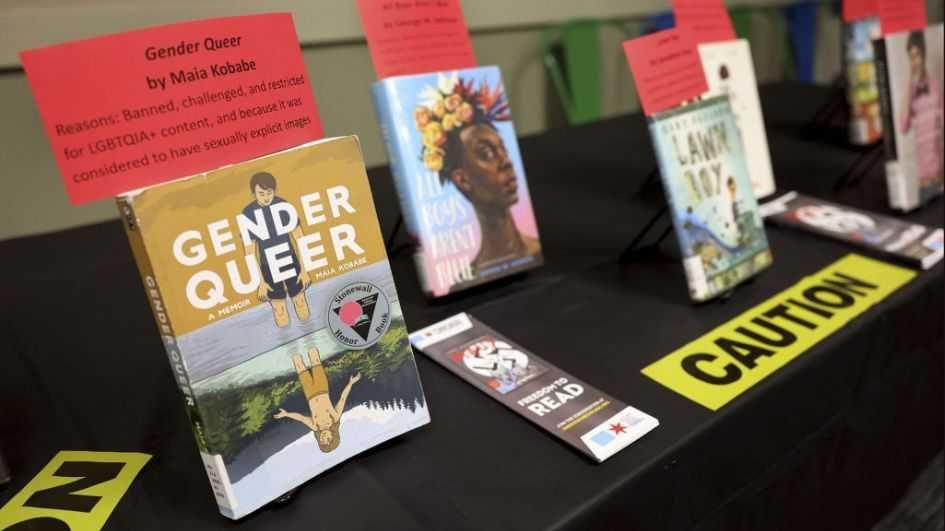
Last weekend at a Barnes and Noble in Southern California, I saw the display in person.

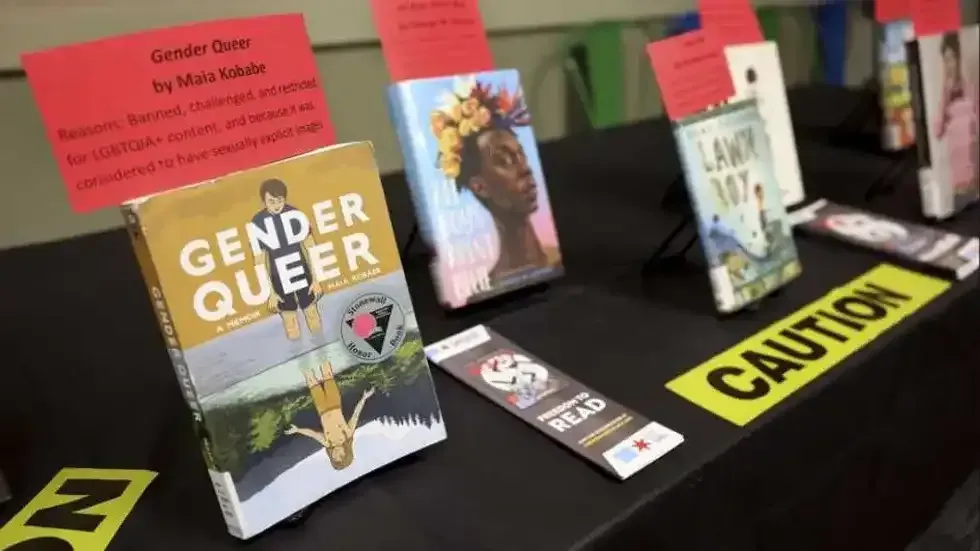
A table that had been marked “required reading” a few weeks prior was now the “read banned books” table. There sat “The Handmaid’s Tale,” “Nineteen Eighty-Four,” “The Catcher in the Rye,” and all the usual suspects. All for sale.

Some ban!

The ALA will object that it uses “ban” in a fairly narrow sense. A book need not disappear from American commerce to count as banned. Remove it from a school or library collection and the word applies.

That’s exactly the problem.

Removing a book from one institutional collection is not the same as suppressing it from public circulation. A restriction is not automatically a ban. Precision is not too much to ask from an organization supposedly devoted to books.

America has known censorship. Real censorship.

In 1926, H.L. Mencken deliberately sold a copy of the “Hatrack” issue of the American Mercury in Boston after the Watch and Ward Society targeted it as obscene. He got arrested.

He beat the charge.

The Postal Service also declared the issue un-mailable. Had that ruling stood, the government could have put his magazine out of business.

Woodrow Wilson’s government sent Eugene V. Debs to prison for an antiwar speech. Federal agents swept up radicals in the Palmer raids. In Schenck v. United States, the Supreme Court upheld the conviction of a man who distributed anti-draft leaflets.

RELATED: Don’t fall for the fake ‘banned books’ narrative
Chris Sweda/Chicago Tribune/Tribune News Service/Getty Images

That is what censorship looks like when the government means it.

Yes, school boards still do stupid things.

In 2013, a North Carolina board pulled Ralph Ellison’s “Invisible Man” after one member said he could find “no literary value” in it. Nine days later, after national ridicule, the board reversed itself.

In 2010, a Riverside County, California, school district briefly pulled Merriam-Webster’s Collegiate Dictionary because a parent objected to its definition of “oral sex.”

The dictionary came back too.

Somebody does something foolish. Somebody else objects. The fool backs down. That’s generally how freedom works.

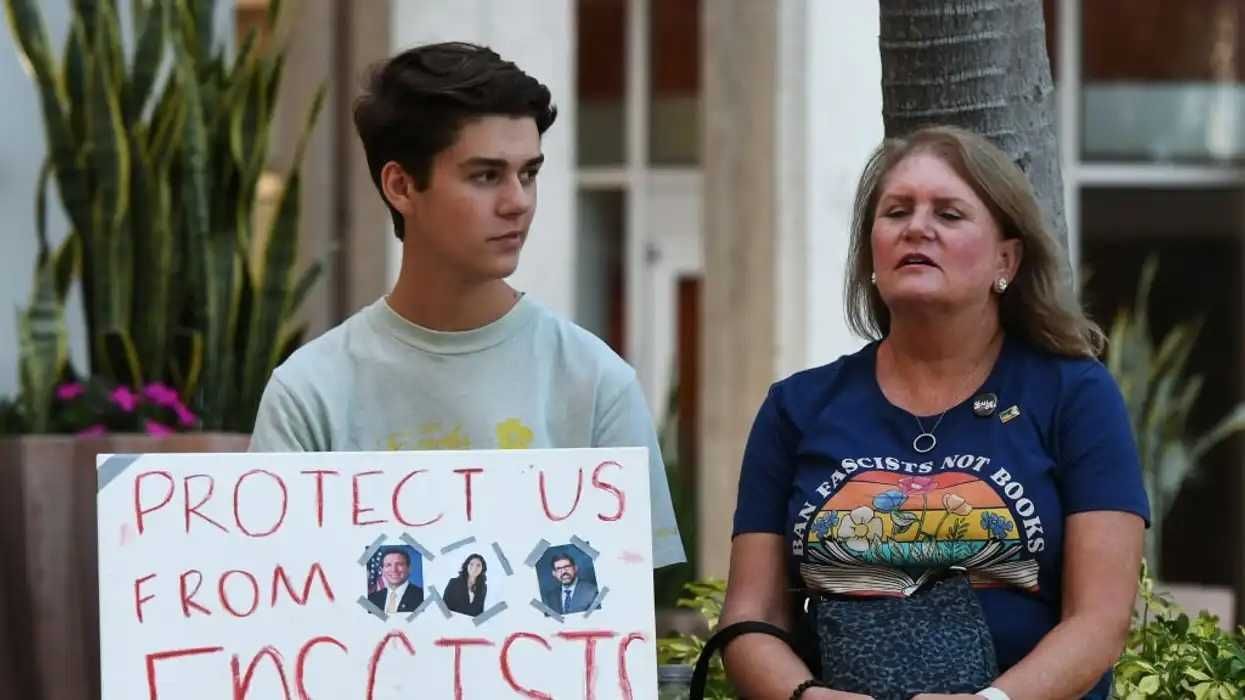
And no, Ron DeSantis did not “ban books” in Florida. He signed laws governing what public schools may place in classrooms and school libraries.

Calling every restriction a ban is how you turn a policy dispute into a stupid morality play.

Azar Nafisi knows more about actual censorship than most Americans ever will. She lived under the Islamic Republic of Iran. In “Read Dangerously,” she writes about “literature as resistance” — literature resisting kings, tyrants, and “the tyrants within us.”

She asks how we confront an enemy without becoming like him or surrendering to him. Good question!

Reading dangerously under tyranny is one possible answer.

But at the risk of stating the obvious, America is not Iran.

And if we are going to use the word “dangerous,” let’s make it mean something.

A dangerous book is not simply one somebody objected to. It may be a book with such a rotten reputation that people condemn it without reading it. A book a publisher drops. A book a retailer refuses to carry. A book that goes out of print and can’t be had for love or money. A book people would rather summarize for you than let you judge for yourself.

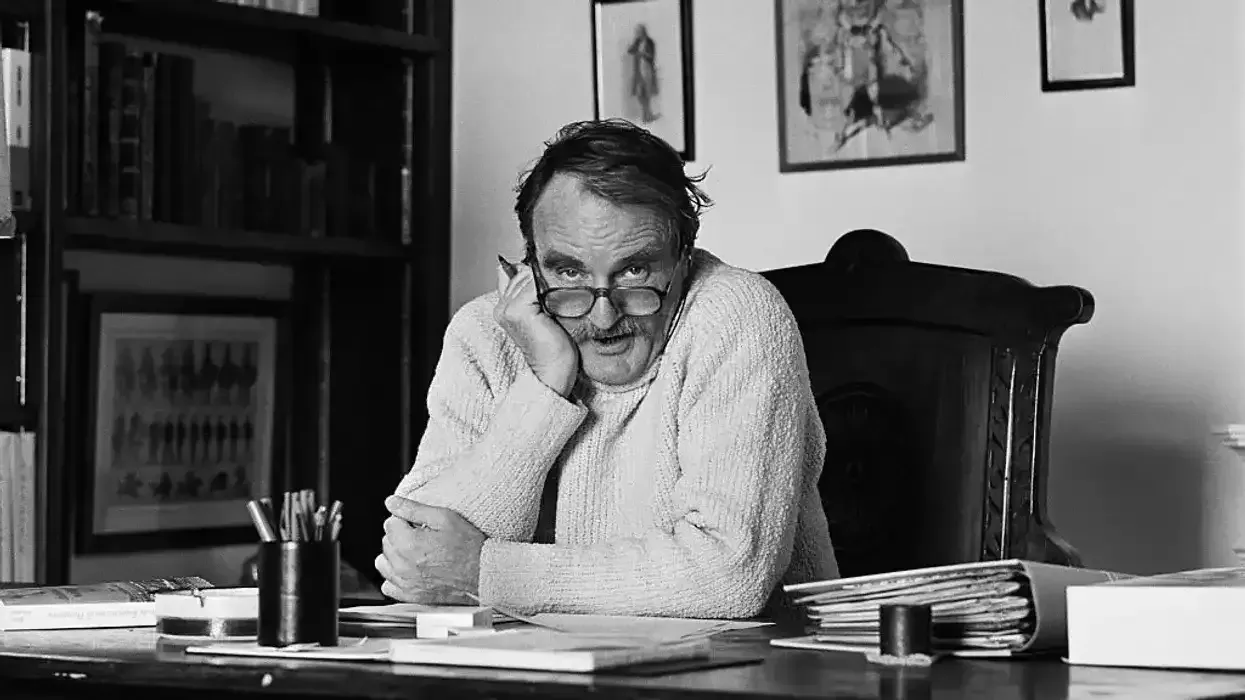
Jean Raspail’s “The Camp of the Saints” will do.

First published in France in 1973, the novel imagines a flotilla of impoverished migrants sailing toward Europe. For decades, it has been reduced to a racist anti-immigrant tract.

I have read it. That is not what the book is principally about.

Raspail’s real villains are the politicians, journalists, clergy, and intellectuals who have lost the nerve to defend their own civilization.

For years, English copies were scarce and expensive. A new translation appeared last year. Amazon briefly pulled the physical edition. People complained. Amazon restored it.

That is a dangerous book because its reputation has done much of the work its critics should have done themselves.

RELATED: Jean Raspail’s notorious — and prophetic — novel returns to America
Pascal Parrot/Sygma/Sygma/Getty Images

So I say read Raspail and Julius Evola and Sam Francis. Read Nafisi and Ralph Ellison and Salman Rushdie.

Read authors who annoy your friends. Read writers your political allies dismiss. Read books with appalling reputations. Read the book everybody quotes and almost nobody seems to have opened.

Or don’t.

There is no virtue in reading a controversial book. Buying “Nineteen Eighty-Four” at Barnes and Noble does not make you Solzhenitsyn.

But please do not pretend.

Do not pretend a challenge is automatically a ban or that a book is unavailable when it is sitting on a table in front of you. Do not pretend reading a famous novel everyone can buy is an act of resistance.

We are staging arguments over banned books in a country where too many people barely read books.

Mencken praised the “gay fellows who heaved dead cats into sanctuaries” and thereby proved “that doubt, after all, was safe.”

He was right.

Read dangerously, if you like. Just read.

Because Libraries Push Racism And Queer Extremism, They Deserve Their Massive Federal Funding Cuts

By turning school libraries into ideological spaces rather than engines of literacy, the American Library Association is sending children the damaging message that politics matters more than their education.
Don't fall for the fake 'banned books' narrative


October 11 marked the end of another Banned Books Week, the American Library Association's annual campaign celebrating works it claims have been unjustly kept from the reading public.

While the event has skewed liberal since its 1982 founding, this year’s theme seems to make a direct appeal to those worried about the Trump era's incipient fascism.

A book does not need to induce the behavior it depicts to have an ideological impact; it just has to imply a world in which such behavior is either normal or inevitable.

“Censorship Is So 1984 — Read for Your Rights” rebukes recent successful conservative campaigns to rid local school libraries of books deemed to promote racial, gender, and Marxist ideology or to expose children to inappropriately explicit material.

Censor censure

On its website, the ALA dismisses these campaigns as either disingenuous, hysterical, or malicious.

“The most common justifications for censorship provided by complainants were false claims of illegal obscenity for minors; inclusion of LGBTQIA+ characters or themes; and covering topics of race, racism, equity, and social justice.”

The recent Kanopy documentary "Banned Together" exemplifies this perspective, portraying book challenges as the work of fearmongering politicians like Governor Ron DeSantis (R-Fla.) or “dark money” groups such as the Heritage Foundation and Moms for Liberty.

Not for teacher

Opponents of these "bans" do have a point. At times overprotective adults can underestimate the capacity of high-school students to handle challenging subject matter. I recall reading Kafka, Camus, and Sherman Alexie as a senior without becoming either a nihilist or an activist.

But there is a deeper question at the heart of this debate: What rights do parents have when it comes to their children's education?

Teachers, progressives argue, are certified experts entrusted with the crucial duty to help students navigate complex issues and protect them from abusive home environments. Who are the parents — relative amateurs when it comes to the formation of young minds — to meddle?

Yet given the recent injection of what used to be considered radical ideas about race, sex, and religion into curricula, skepticism at this expertise is understandable. Educators may laugh off the idea of "liberal indoctrination," but any parent who has been called "racist" or had his faith "deconstructed" by his newly minted college student may disagree.

'Sold' out

The ALA may be technically correct that the books it defends don't meet the strictly legal definition of "obscenity," but something is nonetheless rotten in the state of Denmark (if the reader will permit me a Eurocentric "Hamlet" reference).

Consider the ALA’s "Top 10 Most Challenged Books of 2024." Without exception, each has been flagged by concerned parents as "sexually explicit." It's telling that the ALA diminishes these characterizations as mere "claims." Unlike "pornography," the label "sexually explicit" generally implies no judgment; it's merely descriptive.

So perhaps something more than prudishness is motivating parents. To what end do these books employ explicit depictions of sex? In Patricia McCormick's "Sold," the first-person account of a 13-year-old Tibetan girl sold into sex slavery, detailed scenes of rape and abuse are used to convey the horrors of sex trafficking.

In its defense of "Sold," the ALA clearly sides with McCormick, who says "To ban this book is a disservice to the women who shared their stories with me so the world could know about their plight. And to ban this book is disrespectful to the young readers who want to know about the world as it is."

Conveniently overlooked here is the obvious truth that we regularly educate our children about "the world as it is" while still leaving out age-inappropriate details.

Gender fear

"Tricks" by Ellen Hopkins is another unsparingly graphic account of the sex trade, detailing the stories of five American teens who fall into prostitution. "Crank," Hopkins' other novel on the list, charts a teenager's descent into drug addiction.

Stephen Chbosky's "The Perks of Being a Wallflower" is a slice of high school life that includes a ninth-grader taking LSD, a tumultuous love affair between two teenage boys, a middle-schooler's suicide, and a teen pregnancy that ends in abortion.

"Me and Earl and the Dying Girl" by Jesse Andrews addresses cancer and mortality through the profanity-laden, sex-obsessed voice of its adolescent male protagonist. John Green's "Looking for Alaska" is a coming-of-age novel with a heavy emphasis on drug use and sexual experimentation.

Toni Morrison's "The Bluest Eye" is a multigenerational saga that pivots on a father's brutal rape of his daughter and her subsequent descent into insanity.

The memoirs "All Boys Aren't Blue" by George M. Johnson and "Flamer" by Mike Curato each recount an adolescent's discovery and eventual embrace of his same-sex attraction, while Maia Kobabe's graphic novel "Gender Queer" charts the author's journey toward a "nonbinary" identity and the use of "e, em, eir" pronouns.

RELATED: Librarian group fights woke 'banned books' narrative

Getty Images/Anadolu

Groomer doomers

Likening those who advocate putting such books in the hands of minors to "groomers" only obscures the real issue. A book does not need to induce the behavior it depicts to have an ideological impact; it just has to imply a world in which such behavior is either normal or inevitable.

The "reality" these books represent is in fact the relatively recent consensus of a small liberal elite, imposed on our society from the top down. It confidently asserts that racism is an intractable quality of "whiteness," premarital sex and drug abuse are normal parts of growing up, homosexual relationships are in no way less preferable than heterosexual pairings, and one's "gender" is open to interpretation.

This consensus casually dispenses with the de facto Christian values that have guided America — with varying degrees of success — since its founding.

Slaves to fashion

Most of the "banned" book defenders act not out of malice but rather from an unthinking adherence to fashionable opinion. As G.K. Chesterton observed, compulsory secular education inevitably produces an inoffensive, pluralistic system that offends no one and invests enormous moral authority in teachers:

And if his own private opinions happen to be of the rather crude sort that are commonly contemporary with and connected with the new sciences or pseudo-sciences, he can teach any of them under cover of those sciences.

In other words, educators possess enough authority to smuggle personal beliefs into the classroom. The Ten Commandments and school prayer are impermissible in our secular age, but theories of gender and race are treated as objective truth. Indeed, many insist it would be irresponsible not to teach them.

A glance at what doesn’t appear on the Banned Books list reveals the imbalance. Are activists urging students to read banned right-wing literature? To restore the Bible to school libraries? To study "The Turner Diaries" — a genuinely vile book — in the name for of intellectual freedom? Of course not.

Meanwhile, the publishing industry’s broken business model incentivizes controversy. Slapping a "Banned Book" sticker on a new release is can lead to a major boost in sales.

School for scandal

That might be harmless if confined to a Barnes & Noble display. But it occurs in the context of public education, where foundational classics have been quietly displaced by shallower contemporary novels. Teachers boast about removing Homer, Shakespeare, and other “dead white men” from curricula. "Huckleberry Finn" languishes while legislators debate striking him from schools altogether.

A student’s reading years are limited. Prioritizing great works that shape moral and intellectual formation is essential. Yet in an age of collapsing institutional trust, progressive educators flaunt their credentials and demand the state’s blessing to teach whatever they see fit.

Despite left-wing rhetoric, there is no great epidemic of book-burning in America. Aside from the occasional Pentecostal preacher torching "Harry Potter" for headlines, such incidents are rare. Conservatives, generally, are classicists who want their children reading Homer and Shakespeare. Yet even modest debates over age-appropriate material draw accusations of illiteracy and bigotry.

And that's by design. Banned Books Week is little more than a marketing campaign — an annual ritual of ginning up demand for “forbidden” books and laundering blatant activist propaganda into the merely "controversial." Conservatives who approach this debate on the ALA's terms only add fuel to the fire, as it were. When it comes to the left's persecution narrative, there's no such thing as bad publicity.

America’s Librarians Became Militantly Political, And Now They Suffer The Consequences

America's librarians elected a Marxist to represent them and staked their reputation on providing explicitly sexual material to kids. It's no surprise the Trump administration is pulling federal funding.

Scholastic’s Kid-Focused ‘Read With Pride’ Guide Demonizes Anyone Without A Rainbow Identity

Overt LGBT indoctrination now comes from the most trusted authorities of children’s education and literature.

How To Save Your Local Library From Cultural Marxists

After discovering pornographic material in the children's section, a small group of parents took on the entire city council and won.
Our Library Stopped Late Fees, So I Stopped Returning Books

The American Library Association cited essentially Marxist justifications for urging all libraries to end late penalties and book replacement fees.
Pennsylvania School Board President Sworn In With Pornographic Books

A recently elected Pennsylvania school board president made his priorities clear this month when she was sworn in using sexually explicit material.

Texas Education Board Votes To Protect Kids From ‘Sexually Explicit’ Books In School Libraries

The Texas Board of Education approved guidelines requiring school libraries to implement policies prohibiting 'sexually explicit' books.

Why Is A ‘Banned Books’ Tour Handing Out Titles You Can Overnight On Amazon?

Anyone anywhere in the country can buy these 'banned' books on Amazon and have them at their front door ASAP.