Kennedy’s HHS Puts Gender Medicine’s Biggest Medical Groups On The Clock
 The demand is rather simple: State your current position on gender-transition interventions for minors, identify any planned revisions, and say when they will happen.
The Federal Trade Commission is finally suing the World Professional Association for Transgender Health over sweeping recommendations for pediatric gender medicine that allegedly rested on weak evidence and conjecture.
The action is long overdue.
WPATH’s dishonesty should surprise no one. The organization has openly rejected basic biology.
WPATH has disregarded basic standards of medical honesty for years. Although the complaint was filed only recently, the organization’s indifference to evidence — and to the safety of gender-confused children — has long been apparent.
In 2022, WPATH removed minimum-age recommendations from its standards of care, reportedly under pressure from then-Assistant Secretary for Health Rachel Levine, a transgender-identifying male.
Thousands of detransitioners now live with the physical and psychological consequences of procedures they underwent as minors. Many of the doctors involved relied on WPATH’s prestige and guidelines to justify interventions children could not fully understand or consent to.
Most doctors are unwilling to risk their licenses by prescribing dangerous drugs or performing irreversible procedures without institutional cover, regardless of their ideological sympathies. Organizations such as WPATH, the American Medical Association, and the American Academy of Pediatrics provided that cover.
Holding those institutions accountable could bring down the entire house of cards supporting pediatric gender medicine.
WPATH’s dishonesty should surprise no one. The organization has openly rejected basic biology. In 2024, the Daily Caller News Foundation reported that a senior WPATH official denied that sex is binary.
Other reporting revealed that doctors recommending certain drugs to transgender-identifying patients knew the treatments were untested or potentially harmful but continued promoting them in the name of “justice.”
WPATH went so far as to include “eunuch” as a gender identity in draft guidelines published in 2021. It relied in part on material from the Eunuch Archive, a fetish website, to support the inclusion.
The organization suggested that doctors should castrate people who identify as eunuchs because they might otherwise attempt the procedure themselves.
RELATED: The YMCA broke the first rule of summer camp
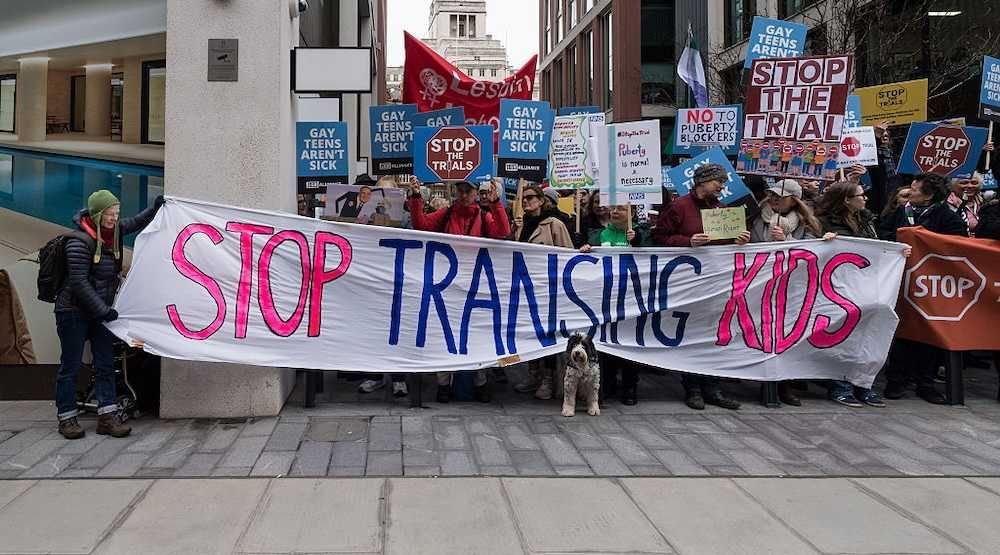
Why should Americans care about an organization few outside medicine had heard of until recently?
Because WPATH’s guidelines became a central source of authority in court cases defending pediatric sex-change procedures.
During 2023 litigation over an Alabama law banning such procedures for minors, opponents repeatedly cited WPATH’s standards to give their case an aura of medical credibility.
A federal judge subpoenaed WPATH’s internal documents concerning the creation of those guidelines. WPATH tried to quash the order, but the judge ruled that the material was of “crucial import” to the litigation.
The resulting documents steadily undermined WPATH’s credibility and helped lay the groundwork for the FTC’s lawsuit.
That judge understood in 2023 what the Trump administration and the FTC understand now: The medical professionals and activists behind WPATH’s guidelines helped create the current regime of pediatric gender medicine.
Calling them to account could become a decisive moment.
The FTC filed its complaint alongside attorneys general from Alaska, Iowa, Nebraska, and Texas. The consequences could extend far beyond WPATH itself, affecting doctors, hospitals, professional associations, and court cases that relied on its authority.
Most important, the case could begin addressing the institutional failure that allowed so many young men and women to be fast-tracked into procedures they ultimately regret.
The American Medical Association is overhauling the way doctors bill for pregnancy care. Anyone who cares about families should be alarmed.
The AMA says the new model promotes accuracy and modern care. Nice slogan. For millions of American families already struggling with rising costs, it looks more like an unelected lobbying organization has found a way to make having children even more expensive.
Policymakers cannot allow the AMA to blow up the current system at the expense of families.
Starting January 1, 2027, the long-standing global maternity payment will be replaced with a more complicated system that bills pregnancy, labor, delivery, and postpartum care in pieces. Instead of treating pregnancy as a single episode of care, the new structure lets providers bill separately for visits and services.
But pregnancy is not a menu where mothers pick one item from column A and one from column B. It is a coordinated journey that should be managed as a whole. A bundled payment system rewards providers for delivering care efficiently and effectively. An unbundled framework rewards the accumulation of billable moments.
For many couples, the question is no longer whether they want children. It is whether they can afford them. Now one of the most expensive moments in family life could become even more expensive.
The AMA controls the billing codes — those five-digit numbers patients see on medical receipts. The codes tell insurance companies what providers did so they can get paid. Moving pregnancy from one bundled code to many separate codes pushes maternity care toward a fee-for-service model. That model incentivizes more services and more fees.
Federal watchdogs have warned for years that fragmented billing creates openings for abuse. The Department of Health and Human Services Office of Inspector General investigates billing practices and often identifies coding and billing integrity problems.
In one audit, the inspector general found that Medicare made up to $17.8 million in potentially improper payments tied to complicated coding and other billing problems in opioid treatment programs. Different specialty. Same lesson. When payment systems get sliced up or loosely controlled, waste, fraud, and abuse follow.
RELATED: The right to life cannot depend on a baby’s zip code

Pregnant women and their families get stuck with the bill. Patient advocates already warn that the new system could mean higher out-of-pocket costs.
Policymakers moved toward bundled payments for maternity care because the model had the potential to lower costs and improve quality. Bundling can discourage unnecessary cesarean sections, which cost significantly more than vaginal births, carry greater risks for mothers and babies, and require longer recovery times.
When payment incentives reward more services rather than better outcomes, families can face higher medical bills, extra recovery time, more follow-up visits, and increased child-care costs.
The policy question is not whether every provider will abuse the system. It is whether Washington should allow a system that makes abuse easier and family life more expensive.
This billing-code change is landing at exactly the wrong moment. The United States recorded its lowest fertility rate ever in 2024. If conservative policymakers are serious about family formation, they should not tolerate the AMA worsening one of the most expensive and stressful experiences in American life.
As the father of a large family, I know firsthand that having children in America is not for the faint of heart. Every new baby is a blessing. Every parent also knows the bills come fast.
Policymakers cannot allow the AMA to blow up the current system at the expense of families. American families will notice when the bills multiply and the care journey is less coordinated. We cannot allow another elite institution to call this progress while ordinary Americans pay more for the privilege of bringing a child into the world and pursuing the American dream.
 The government is looking for your input to decide whether the medical elite should continue to decide what your health care looks like.
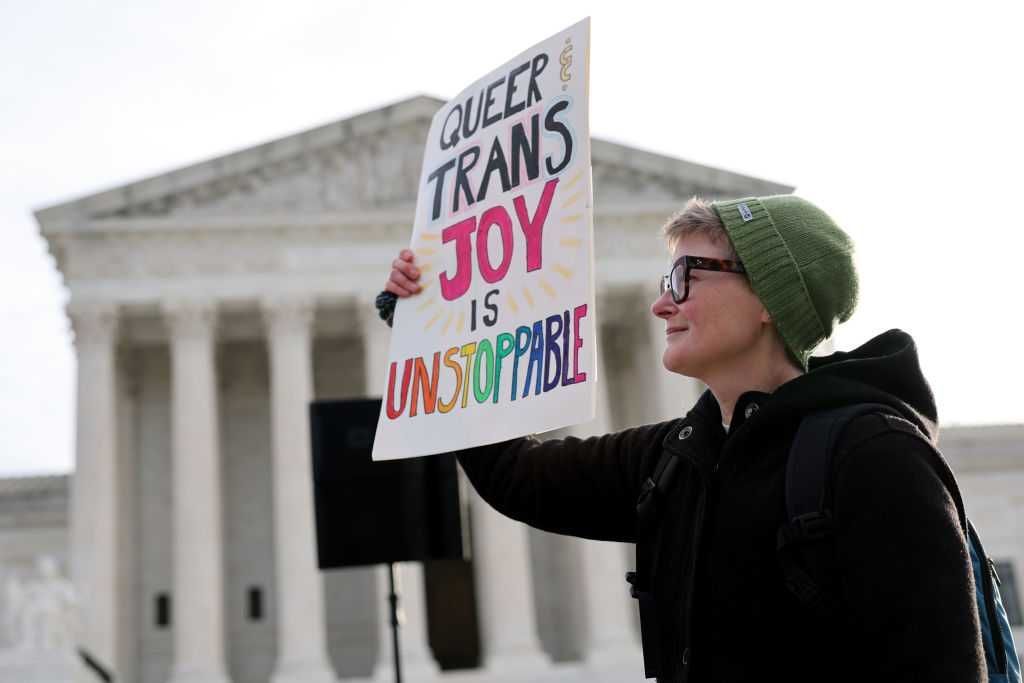

 Them Before Us reports that Human Rights Campaign’s Corporate Equality Index encourages child mutilation through transgender policies.
 MAGA needs to stop the next left-wing manmade disaster before Democrats can 'learn' from it. America can only survive so much more of this kind of education.
 The trans lie is imploding under the pressure of reality.
 'The doctors who advocate for it call it compassion, but ethical doctors are healers, not killers.'
 The American medical establishment ignored the science on Covid, abortion, and transgenderism. They have no credibility to criticize RFK Jr.
 As a government-backed, overtly left-wing monopoly, the AMA no longer deserves a privileged role in the country’s health ecosystem.
 www.theblaze.com
 thefederalist.com
 www.theblaze.com