TAKE OFF, EH? Canada, US trade election meddling charges as Alberta rejects separation
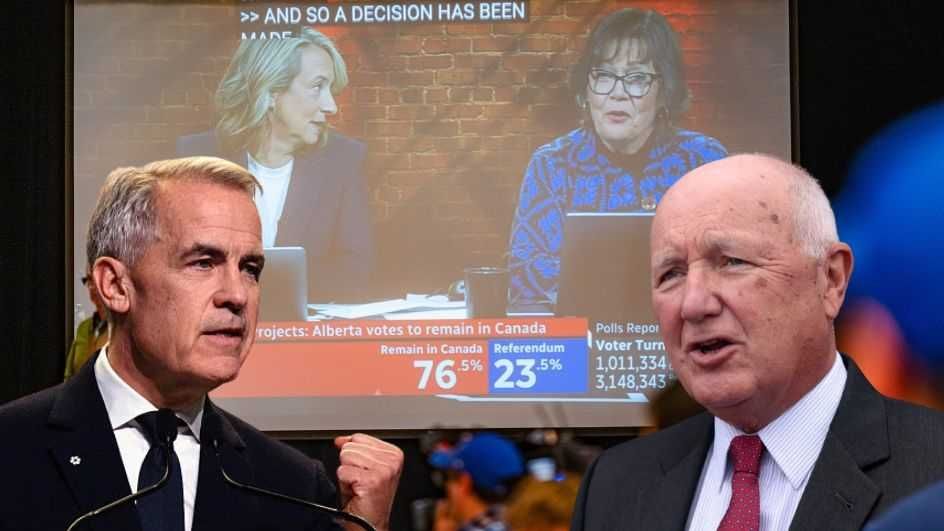


Albertans overwhelmingly rejected a move toward independence Monday, but supporters of separation insist the issue is far from settled.

In a provincial referendum, roughly 76% of voters chose Option 1 — for Alberta to “remain a province of Canada” — while about 24% backed Option 2, which would have begun the legal process required to hold a binding referendum on separation.

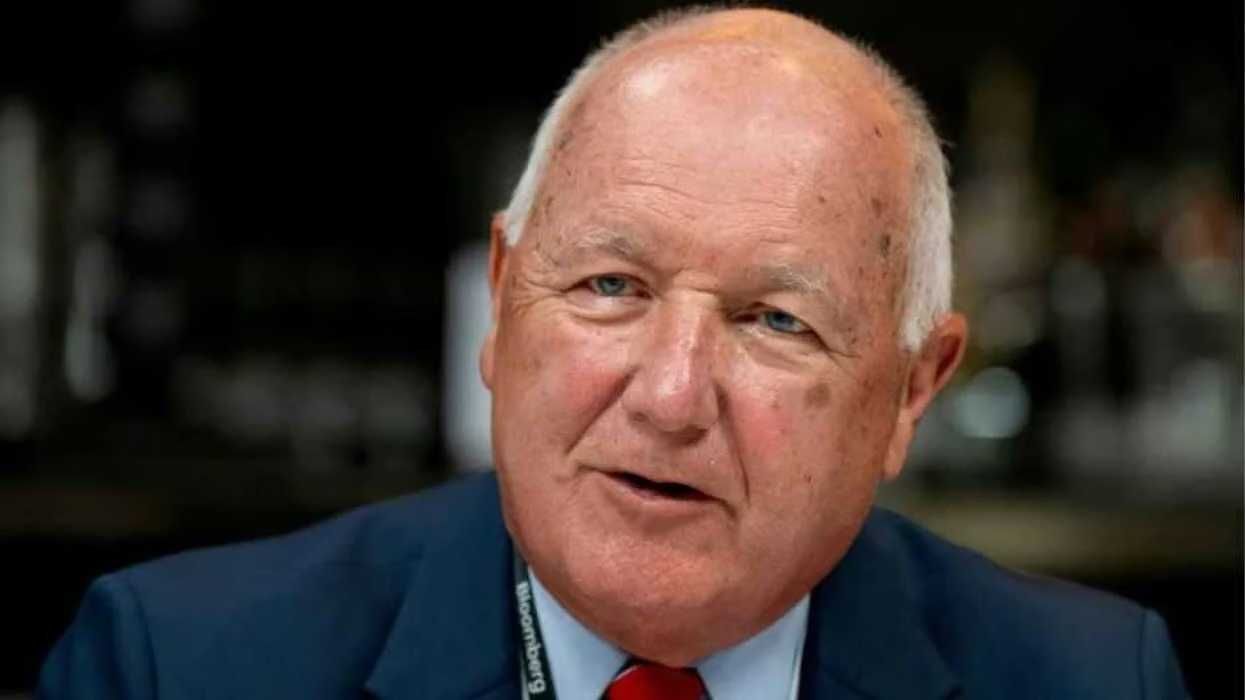
'Keep your nose out of American politics,' said Hoekstra.

The results remain unofficial until October 29.

The vote was quickly dubbed a “referendum on a referendum.” Even an Option 2 victory would not have meant Alberta was leaving Canada. It would have started the process toward another, binding vote on whether the province should separate.

Premier Danielle Smith campaigned for Option 1 alongside Prime Minister Mark Carney and Conservative leader Pierre Poilievre.

American interference?

The federalist cause also received some enthusiastic help from the Canadian press. Days before the vote, the Globe and Mail published a lengthy investigation connecting Alberta separatists to American Republican political operatives and alleging that independence leaders had offered Washington access to the province's natural resources, including fresh water and oil royalties, in exchange for assistance.

But the investigation's most explosive allegations were disputed by some of its own sources.

Dennis Modry, a co-founder of the Alberta Prosperity Project, acknowledged discussing possible resource arrangements with the United States. But fellow APP co-founder Jeff Rath, an Alberta lawyer who arranged the meetings with State Department officials, insisted none of those proposals had been discussed in Washington. The Globe also acknowledged that no agreements had been reached and quoted a White House official saying that no American support or commitments had been offered.

Writing in a sharply critical response, Alberta commentator Colin MacLeod accused the newspaper of combining separate incidents and individuals into a misleading narrative of coordinated American interference.

The investigation also documented American Republican consultants promoting political software to Alberta separatists. But APP leader Mitch Sylvestre told the Globe he refused to give the consultants access to his organization's membership list, citing serious concerns about privacy.

In an exclusive interview with Blaze Lifestyle before the vote, Rath accused the Globe — which he characterized as one of the government's “propaganda arms” — of deliberately misleading readers.

“But what surprised me was, like, how blatantly they lied and how foolish the lies were,” he said, singling out the allegation about trading Alberta's water for American assistance.

“I mean, completely ludicrous. We have the St. Mary's River watershed, and we have the Milk River watersheds. They're the only rivers that flow from Alberta into the U.S. They're governed under an international agreement by an international commission. You know, there's not enough water in either one of those rivers to supply Las Vegas, let alone all of California.”

'A massive machine'

On Tuesday, Rath told Blaze Lifestyle that the defeat would not end the independence movement.

He predicted support would grow as Carney's Liberal government made life more difficult for Albertans and said he was proud of the result his side achieved against a powerful political establishment.

“We fought a battle against a massive machine,” Rath said.

Smith, meanwhile, was ready to put the question behind her.

“So tonight I want to invite every Albertan who may still feel hopeless or frustrated with the past direction of our country, to believe and hope in Canada again,” she said.

“Because although our country isn’t perfect and there is still much work to be done, I believe that Canada is on the rise again.”

RELATED: Exclusive: US ambassador says Canada walked away from 'the best trade deal' — twice
Bloomberg/Getty Images

Who's interfering with whom?

But the referendum produced an awkward bit of cross-border symmetry.

In the closing days of the campaign, Carney warned foreign governments — specifically including the United States — to stay out of Alberta's vote.

“Our expectation is, to be absolutely clear, on foreign governments, United States included, is we don't get ourselves involved in their elections, they don't get themselves in our elections,” Carney said.

At almost exactly the same time, U.S. Ambassador to Canada Pete Hoekstra was accusing Canadian politicians of edging toward interference in America's November 3 midterm elections.

“We are closely watching Canadian activities because it appears that some of this, from our perspective, in the way that we view our elections, could be inferred to be election interference,” Hoekstra said in an interview with "The Really Big Show."

Among his examples were comments from Industry Minister Mélanie Joly about designing retaliatory tariffs to hit politically sensitive U.S. states.

Hoekstra's advice to Canadian politicians was considerably less diplomatic.

“Keep your nose out of American politics,” he said.

In July, Carney appointed Maia Johnson, an American citizen and former Hillary Clinton campaign aide, as chief operating officer of the Prime Minister's Office.

One wonders what the reaction would have been if Carney had appointed a former Trump campaign operative instead. Would the Globe and Mail have been so relaxed about American political influence in Ottawa?
George Washington’s advice for the midterms


The 2026 midterm elections present a tough environment for the Republican Party, raising questions about how to campaign in such challenging circumstances. As is often the case in American politics, the economy is a central concern for voters.

In the last few weeks, prices — particularly for gas — have been too high for the comfort of any incumbent party. What have Republicans been saying to assuage voters’ concerns?

When officers and soldiers complained about not being paid, Washington did not ignore them or tell them they should consider it a privilege to sacrifice for their country.

Some have taken a kind of high road, encouraging or even admonishing voters to rise above self-interest and consider the loftier aims President Trump and his administration are pursuing. Yes, gas prices may be high, but the president is trying to end the Iranian threat to American national security. This process is taking longer and causing more economic pain than anyone would like. But it is worth it for the nation in the long run, and so patriotic voters should toughen up. So the argument runs.

This approach, however, has no shortage of critics. They think it is futile or worse to tell ordinary voters, whose economic means are increasingly limited, to grin and bear higher prices on the necessities of life. This environment, they suggest, is a recipe for electoral disaster for the Republican Party.

The critics have a point. It is never prudent for any political party — especially a pragmatic, competitive party that hopes to win elections and not just advance philosophical arguments — to appear indifferent to the ordinary self-interest of voters.

To make this error is not only to misread the present American electorate, but to misunderstand human nature, the basis of politics at all times and in all places. This is not to say that a successful political party must appeal only to narrow self-interest. Voters can respond to appeals to moral principle and national pride. Nevertheless, to neglect self-interest is to neglect one of the vital springs of human conduct.

The party that does this as a regular practice courts defeat.

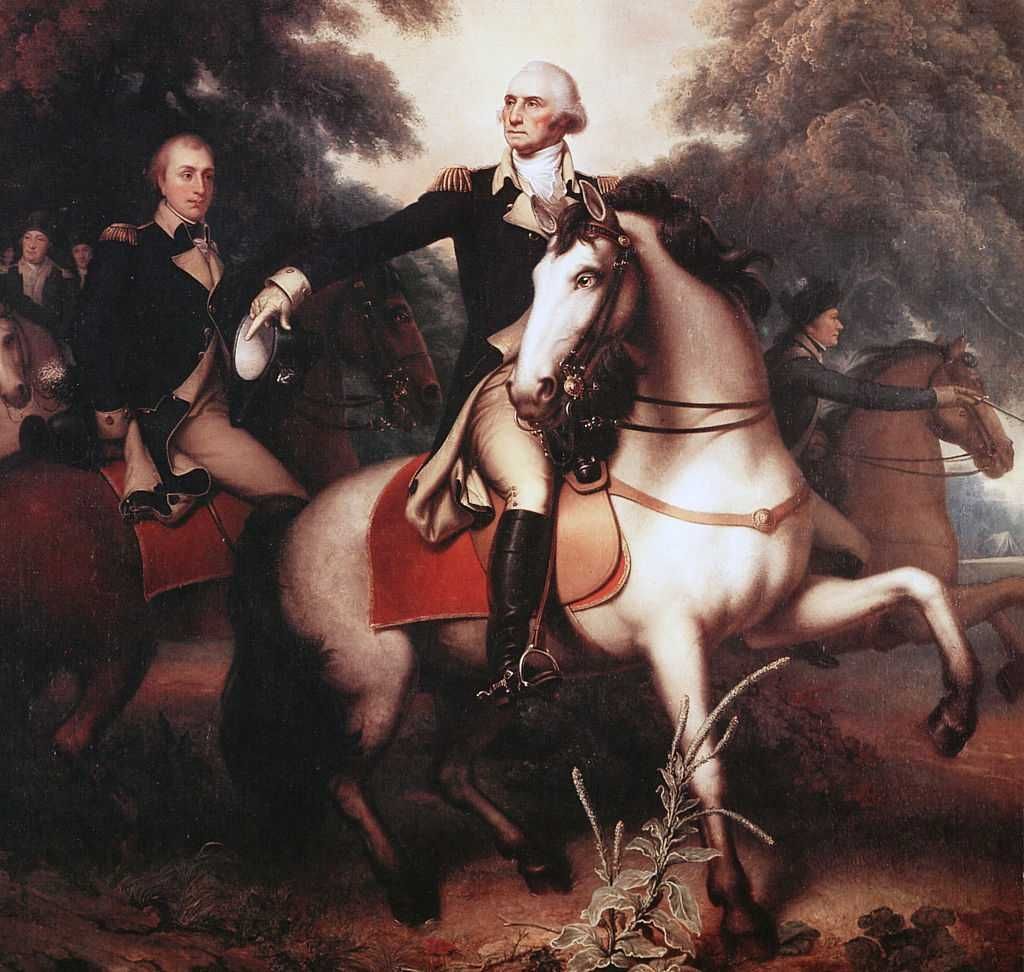
This is one of the practical political lessons that George Washington, one of the greatest Americans, learned during the Revolutionary War. As the war lengthened, he pleaded with increasing urgency with Congress to provide for the army — better pay, better clothes, better food. Washington continually reminded the nation’s political leaders that without adequate provision, it would be impossible to keep the army together, much less achieve victory.

RELATED: The GOP has mastered the art of wasting a majority

Tierney L. Cross/Getty Images

Underlying Washington’s argument is an assumption about the nature of the men composing the army essential to securing American independence — namely, that they could not be relied upon to continue in service if they were not properly compensated.

In other words, Washington assumed that the heroes of the Revolution were governed to a considerable extent by self-interest. Washington laid out this understanding explicitly in a 1778 letter to a committee of the Continental Congress:

A small knowledge of human nature will convince us, that, with far the greatest part of mankind, interest is the governing principle; and that, almost, every man is more or less, under its influence. Motives of public virtue may for a time, or in particular instances, actuate men to the observance of a conduct purely disinterested; but they are not of themselves sufficient to produce a persevering conformity to the refined dictates and obligations of social duty. Few men are capable of making a continual sacrifice of all views of private interest, or advantage, to the common good. It is in vain to exclaim against the depravity of human nature on this account — the fact is so, the experience of every age and nation has proved it, and we must, in a great measure, change the constitution of man, before we can make it otherwise. No institution, not built on the presumptive truth of these maxims can succeed.

It is important to emphasize that Washington is not taking a low view of human nature — he is taking a realistic view of it. Washington does not deny that human beings act on motives other than self-interested ones. He was himself a man of honor and of conscience. In his general orders to the army, he routinely appealed to lofty principles when communicating with his subordinates — officers, gentlemen, and ordinary soldiers.

In his private correspondence, Washington acknowledged that many men had joined the army out of patriotic motives. Such motives are genuine in the human heart and therefore have real influence on political life. Nevertheless, he understood that such motives cannot sustain most men, and certainly not a whole nation, on their own.

Conservatives often say that we would do well to learn from the high principles of our nation’s founders. But it is also just as necessary to learn from their realistic understanding of human nature. Without their realism about what motivates human beings, the founding generation would not have defeated the British and established a republican government in the service of lofty ideals.

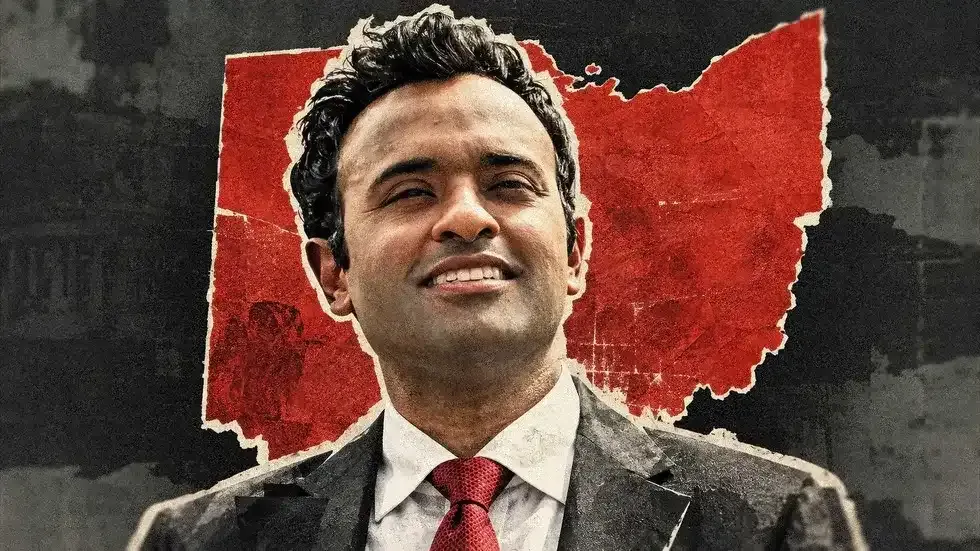
RELATED: Ohio should be easy. Vivek is making it hard.

Blaze Media Illustration

Similarly, no political movement today (or at any time) can succeed in the long term without taking care of its voters’ self-interest and the common good of the country more generally.

Of course, sometimes, despite a ruling party’s best efforts and intentions, bad economic conditions will sour the electorate’s mood. What is such a party to say to its voters? Here, too, Washington provides a good guide.

When officers and soldiers complained about not being paid, Washington did not ignore them or tell them they should consider it a privilege to sacrifice for their country. He reminded his men that their long-term interests would be served by the nation’s independence; he agreed that their complaints were just and reasonable; and he assured them that steps were being taken to improve their situation.

This was a prudent and candid way for Washington to deal with his army, and it offers a model for how Republicans should address American voters today.

Editor’s note: This article was originally published at the American Mind.

‘Need a cop? Thank socialism’ is dumb — but dangerously effective


Zohran Mamdani ran a brilliant campaign last year by promising to make New York City affordable through democratic socialism.

Now the bill is arriving.

Firefighters are good. Firefighters are socialism. Therefore, socialism is good. That is the intellectual caliber of the movement now ascending in American politics.

New York’s new pied-à-terre tax took effect this month. Almost immediately, the luxury real estate market tanked. Wealthy buyers, it turns out, are not livestock. They can delay purchases, move money, change residency, or simply decline to participate in Mamdani’s experiment.

This elementary fact appears to have surprised the people running America’s largest city.

That’s the trouble with democratic socialists. They are forever astonished when human beings refuse to behave like figures in a budget projection.

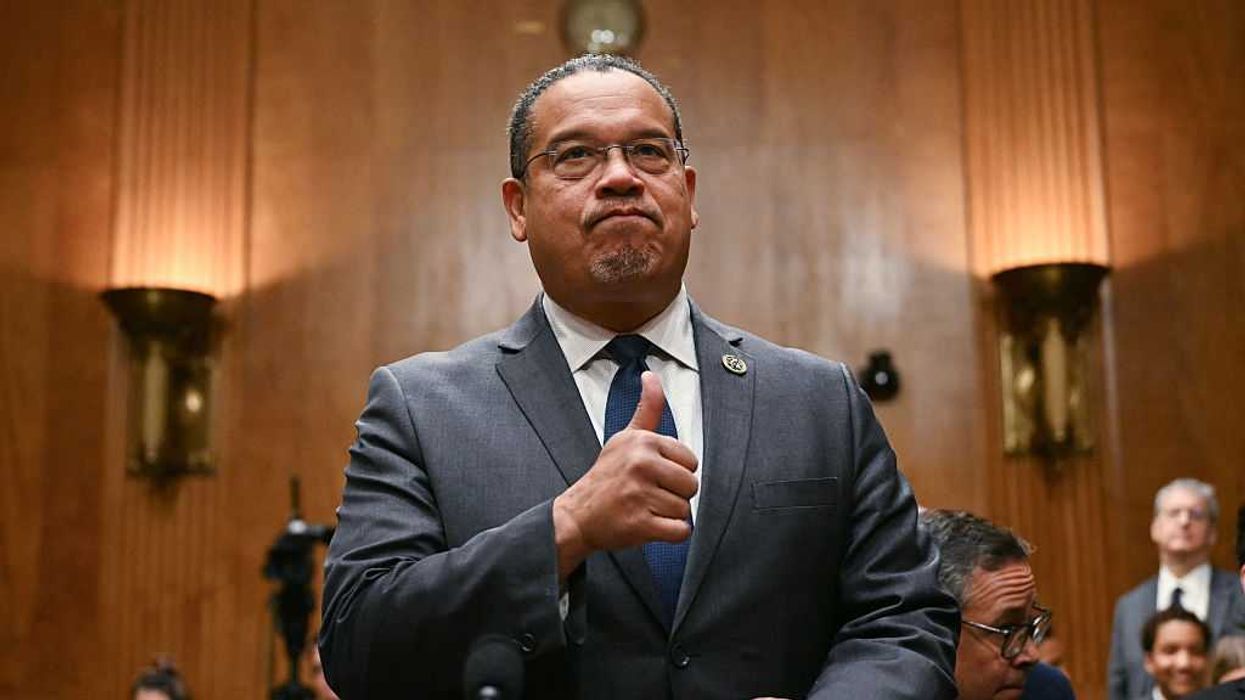
Minnesota Attorney General Keith Ellison has a solution: Make the argument so stupid that nobody can discuss socialism seriously at all.

Appearing recently on “The Dean Obeidallah Show,” Ellison announced that police departments are socialist because taxpayers fund them.

“You call the cops; guess who pays them. Your tax dollars,” Ellison said. “Guess what that is. That’s socialism, pal!”

He threw in fire departments, water inspectors, and public works for good measure.

No, pal. That isn’t socialism. That’s just government.

Ellison wasn’t offering a forensic definition, of course. He was performing a cheap semantic trick for people he assumed would nod and applaud before thinking.

Police are socialism. Firefighters are socialism. Roads are socialism. Public schools are socialism. (Well, yes, kind of.) Once every government function becomes socialist, socialism no longer requires a defense. You already support it. You have no choice. Unless you plan to extinguish your own house fire, arrest your own burglar, and pave the road yourself, welcome to the revolution.

Joe Rogan has been repeating the same dumb line for years, I’m sorry to say. Last year, he again called the fire department socialist because everybody pays for it and everybody receives protection.

I like Rogan. He isn’t a malefactor like Ellison. He simply does not know what he is talking about. That is less wicked, but it is increasingly difficult to excuse in a man who has spent thousands of hours interviewing people who actually know things.

Millions hear Rogan and think: Well, gosh, that makes sense.

No, it doesn’t. It’s flat wrong.

Worse, Ellison and Rogan smuggle in the same fraudulent choice: socialism or chaos.

Either government employs police officers and firefighters, builds roads, and inspects drinking water, or every citizen must hire his own private constable, buy his own fire engine, and fill the pothole at the end of the driveway.

That is not the choice.

RELATED: The media’s Democratic cover-up is collapsing

Chuwy/Getty Images

Socialism concerns ownership and control of productive property. Government collects taxes, enforces laws, maintains courts, fields armies, and provides services. Governments did all of those things long before socialism acquired a name.

By the Ellison-Rogan standard, if we can call it that, every king who collected taxes was a socialist. Ancient Rome was socialist because it built aqueducts. George Washington and Alexander Hamilton were socialists because the national government employed customs agents. Louis XIV was apparently waiting for the workers to seize Versailles.

The alternative to socialism is not anarchy. It is limited government.

Conservatives sometimes make the mistake of talking as though government itself were the enemy. It isn’t. Not necessarily. Bad government is the enemy. Unlimited government is the enemy. Government that exceeds its legitimate purposes, devours private institutions, and treats citizens as dependents is the enemy.

But we need government.

We need cops and firefighters. We need courts, armies, roads, and public works — the odd toll road notwithstanding. Somebody must enforce contracts, punish violence, defend the country, and preserve public order.

Ordered liberty requires order.

The American political tradition does not reject government. It recognizes that government is necessary and dangerous and therefore must be limited by law. That is a much older and more serious idea than the facile view that every tax-funded service is socialism and every objection to socialism is an argument for anarchy.

Ellison knows better. That’s what makes him a bad guy. He understands perfectly well that a police department is not socialism. He chooses to speak as though he does not because the confusion serves him.

If cops and firefighters are socialism, then socialism is already as American as apple pie. No need to defend rent controls, wealth taxes, government grocery stores, confiscatory tax schemes, or the steady expansion of public power on their merits. Just offer the child’s syllogism: Firefighters are good. Firefighters are socialism. Therefore, socialism is good.

That is the intellectual caliber of the movement now ascending in American cities.

RELATED: ‘Back the blue’ cannot mean blind obedience

Fort Worth Star-Telegram/Tribune News Service/Getty Images

Ellison is dishonest about words because dishonesty serves his politics. Rogan is careless with ideas because being laughably wrong has never reduced his audience. Mamdani is careless with markets because he imagines moral righteousness repeals the law of supply and demand.

These are not serious people. But they are seriously dangerous.

They hold offices, microphones, audiences, and influence wildly disproportionate to their judgment. They confuse applause with vindication and slogans with thought. They speak with total confidence because none of them expects to pay for being wrong.

The people who do pay are homeowners, renters, workers, employers, customers, and taxpayers who cannot laugh, wave, and leave the consequences to somebody else.

Democratic socialism’s new champions are not merely wrong about economics. They are frivolous about power. They offer socialism or chaos because admitting the existence of limited government would ruin the con.

They are playing with cities and states they are not wise or disciplined enough to govern. Shine, perishing republic!