EXCLUSIVE: Articles Of Impeachment Filed Against Court Sex Escapades Judge Eleanor Ross
'Congress bears both the responsibility and the constitutional authority'
The House has failed to pass an 18-month extension of FISA after 20 Republicans defied President Donald Trump and tanked the late-night vote.
Republican leadership intended to extend the Foreign Intelligence Surveillance Act through October 2027, but 20 GOP members blocked the extension in a 2:07 a.m. vote Friday, citing major privacy concerns. Due to growing frustration from conservatives, FISA was instead extended only through April 30 to give the conference more time to continue meaningful negotiations before approving a long-term extension.
'I am willing to risk that.'
These hard-liners are: Republican Reps. Sheri Biggs of South Carolina; Lauren Boebert of Colorado; Tim Burchett of Tennessee; Eric Burlison of Missouri; Michael Cloud of Texas; Andrew Clyde of Georgia; Eli Crane of Arizona; Warren Davidson of Ohio; Paul Gosar of Arizona; Andy Harris of Maryland; Diana Harshbarger of Tennessee; Thomas Massie of Kentucky; Mary Miller of Illinois; Ralph Norman of South Carolina; Andy Ogles of Tennessee; Scott Perry of Pennsylvania; John Rose of Tennessee; Keith Self of Texas; and Victoria Spartz of Indiana.
"Last night between midnight and 2am, they tried to pass two bad versions of FISA," Massie said in a post on X. "Both would have allowed Feds to unconstitutionally spy on Americans. We stopped both versions, but the fight isn’t over. Eventually, it was decided to give them two more weeks to fix FISA."
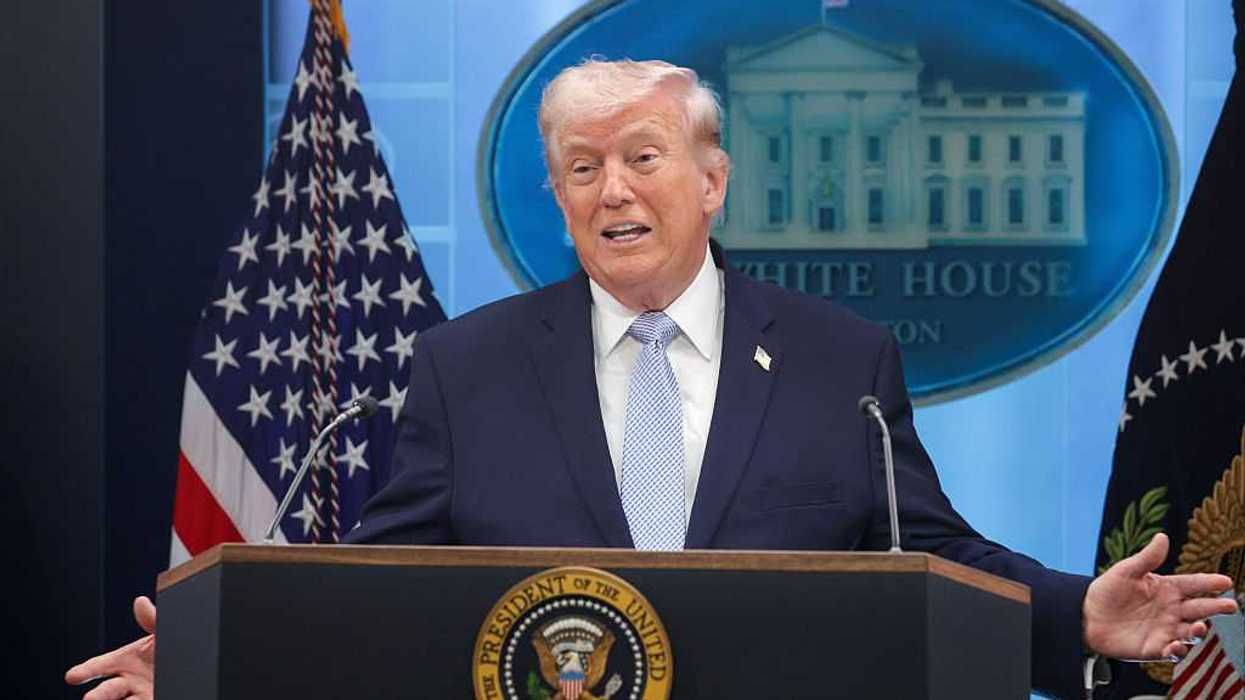
Republicans were well on their way to "fixing" FISA, with conservatives making progress on key requirements. Hard-liners insisted on meaningful warrant requirements and guardrails for central bank digital currency, a source familiar with the negotiations told Blaze News. A two-month extension was also floated in order to give Republicans more time to hammer out these crucial provisions.
Despite negotiations in good faith, this progress was thrown out the window in the 11th hour when a five-year extension with weak warrant requirements was put up for a vote, prompting hard-liners to tank the effort altogether.
This internal rebellion came about despite Trump's advocacy for a FISA extension because "it is extremely important to our Military."
"While parts of FISA were illegally and unfortunately used against me in the Democrats’ disgraceful Witch Hunt and Attack in the RUSSIA, RUSSIA, RUSSIA Hoax, and perhaps would be used against me in the future, I am willing to risk that as a Citizen in order to do what is right for our Country," Trump said in a Truth Social Post.
Like Blaze News? Bypass the censors, sign up for our newsletters, and get stories like this direct to your inbox. Sign up here!
The "big, beautiful bill" passed a key vote in the House Budget Committee Sunday night after five spending skeptics initially tanked the bill on Friday.
Rather than derail reconciliation a second time, four Republicans voted "present" to advance the bill in a 17-16 vote on Sunday night. On Friday, Republican Reps. Chip Roy of Texas, Ralph Norman of South Carolina, Andrew Clyde of Georgia, Josh Brecheen of Oklahoma, and Lloyd Smucker of Pennsylvania all voted against the bill, resulting in a 16-21 vote.
This time around, Roy, Norman, Clyde, and Brecheen voted "present" to advance the bill, while Smucker voted in favor of it. Notably, Speaker Mike Johnson (R-La.) also met with Norman, Clyde, and Brecheen Sunday morning before the vote.
'This bill is a strong step forward. ... But we have to do more to deliver for the American people.'
RELATED: The Republicans who could derail reconciliation
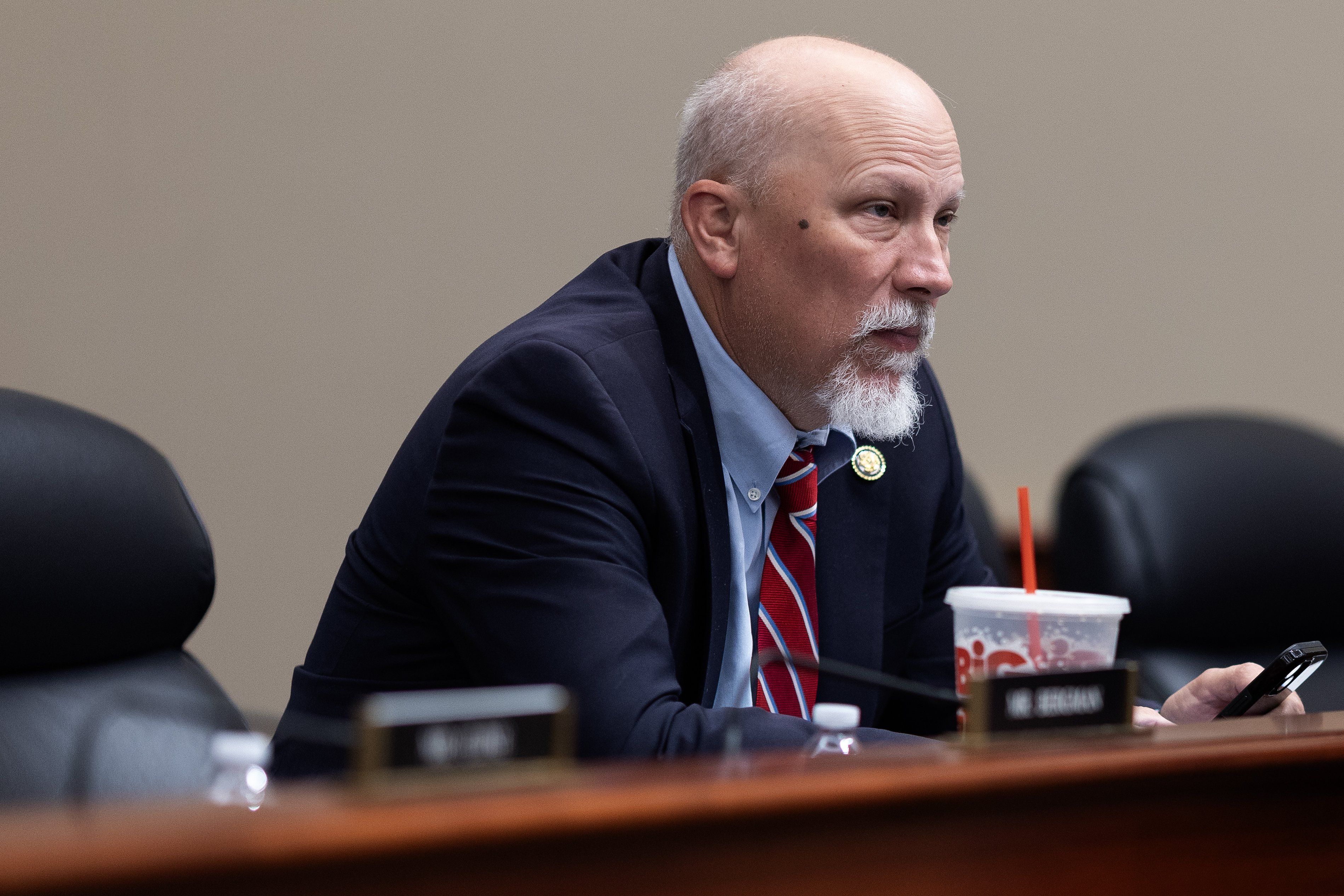
"Tonight, after a great deal of work and engagement over the weekend, the Budget Committee advanced a reconciliation bill that lays the foundation for much-needed tax relief, border security, and important spending reductions and reforms," Roy said in a statement. "Importantly, the bill now will move Medicaid work requirements forward and reduces the availability of future subsidies under the green new scam."
Reforms to the Medicaid work requirements were initially set to take effect in 2029, which was not nearly aggressive enough for fiscal hawks like Roy. Johnson reportedly offered the holdouts a 2026 implementation date, which may have swayed many of the holdouts to allow the bill to advance.
"But the bill does not yet meet the moment — leaving almost half of the green new scam subsidies continuing," Roy added. "More, it fails to end the Medicaid money laundering scam and perverse funding structure that provides seven times more federal dollars for each dollar of state spending for the able-bodied relative to the vulnerable."
"This all ultimately increases the likelihood of continuing deficits and non-Obamacare-expansion states like Texas expanding in the future," Roy added. "We can and must do better before we pass the final product."
RELATED: Vance tells Glenn Beck Congress needs to 'get serious' about codifying DOGE cuts

The bill can be amended only in the Rules Committee, which will hold its hearing on Wednesday at 1:00 a.m. House Republican leadership members have also said they will refrain from sending lawmakers home for Memorial Day, which was their original target.
"As such, I joined with three of my colleagues to vote 'present' out of respect for the Republican Conference and the president to move the bill forward," Roy said. "It gives us the opportunity to work together this week to get the job done in light of the fact our bond rating was dropped yet again due to historic fiscal mismanagement by both parties."
"This bill is a strong step forward — and I am proud of Chairman Arrington, the speaker, and my colleagues for the work we did to make progress with the White House," Roy added. "But we have to do more to deliver for the American people."
Like Blaze News? Bypass the censors, sign up for our newsletters, and get stories like this direct to your inbox. Sign up here!
Reconciliation talks are beginning to boil over as Republican factions begin attacking the "big, beautiful bill" from all angles.
Up until this week, critics have been relatively quiet about reconciliation while the majority of Republicans embraced the bill, meant to codify President Donald Trump's agenda.
To be clear, the bill does so to an extent. The tax policy is studded with pro-family provisions and includes the incredibly popular "no tax on tips" policy Trump floated during his campaign. There are Medicaid reforms intended to trim the fat and reduce fraud by enforcing work requirements. It even increases the endowment tax on elite universities like Harvard, subjecting the largest endowments to the 21% corporate rate.
But what was supposed to be the centerpiece in the Republican-led Congress has become a focal point for conflict, and Speaker Mike Johnson (R-La.) is doing what he can to plug as many leaks as possible.
'I understand that we have a thin majority, but we should deliver.'
RELATED: Vance tells Glenn Beck Congress needs to 'get serious' about codifying DOGE cuts
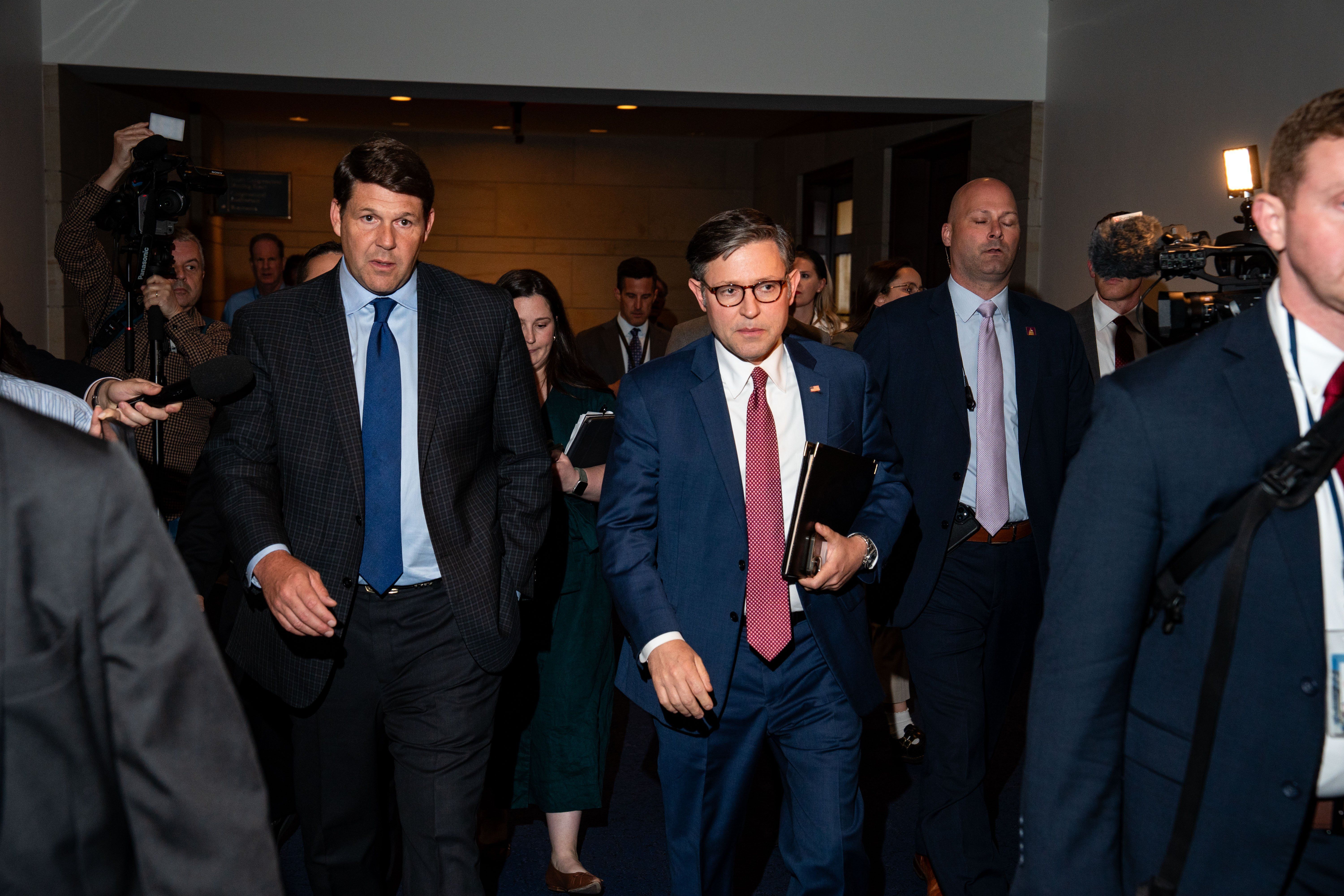
Some defectors who have been the most difficult to please are the SALT Caucus, a bipartisan bunch pushing to eliminate the $10,000 cap on state and local tax deductions. The blue-state Republicans in the caucus, like Rep. Mike Lawler of New York, have been particularly stubborn during these closed-door negotiations.
During one of their many meetings this week, the members even threw out their colleague Republican Rep. Nicole Malliotakis of New York because she supported the proposed $30,000 cap increase that came out of the Ways and Means Committee. Notably, Malliotakis is the only SALT Caucus member on the committee and therefore the only member with direct influence over tax policy, the very thing the SALT Caucus is trying to change.
Even after holding several meetings throughout the week, Johnson said that he will likely have to work through the weekend to strike a deal with SALT Caucus Republicans.
RELATED: Big, beautiful bill advances after 18-hour markup marathon while SALT talks go south
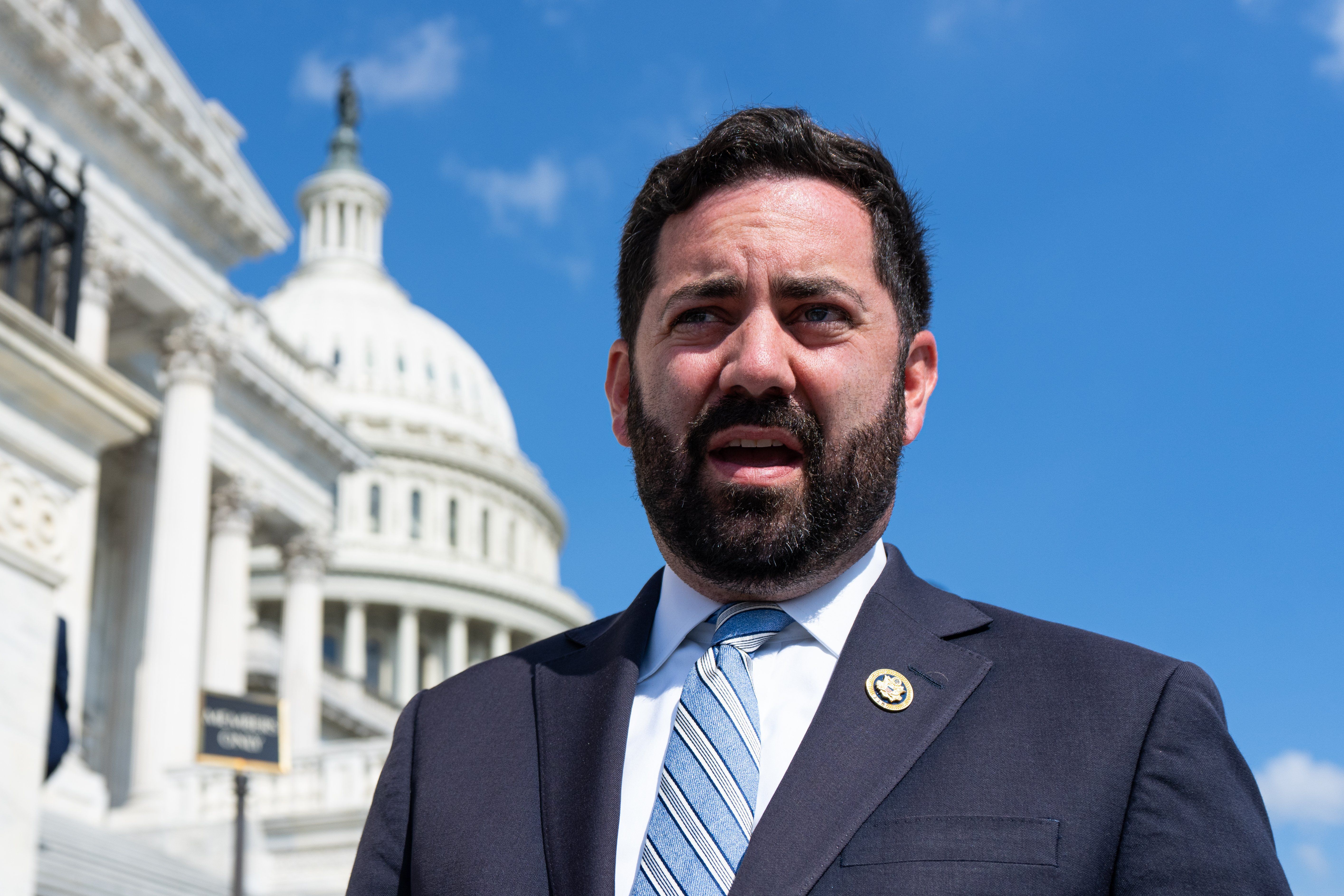
Predictably, Johnson is also facing an uphill battle against conservatives on Capitol Hill, most notably those on the Budget Committee. The committee is the last to hold a markup on Friday morning, which consists of piecing together all the reconciliation portions that have come out of the 11 House committees' markups.
There are no amendments allowed in the Budget Committee. They will simply vote to advance the bill in its entirety.
The problem is that several Republicans on the committee have already committed to voting against the bill's advancement. There are 21 Republicans and 15 Democrats on the House Budget Committee, meaning Republicans can afford to lose only two votes if they want to get the bill across with a simple majority. Yet among those 21 Republicans, four of them said they are willing to tank the bill.
Republican Rep. Chip Roy of Texas told Blaze News earlier in the week that he couldn't get behind the bill because it doesn't do enough to rein in spending and address fraud in the Medicaid system.
"It has to be amended," Roy told Blaze News. "I'm not going to be able to support it as it's currently drafted, and those amendments are going to need to be, you know, relatively significant."
"I didn't come here to perpetuate a broken system," Roy added. "I understand that we have a thin majority, but we should deliver."
Republican Reps. Ralph Norman of South Carolina, Andrew Clyde of Georgia, and Josh Brecheen of Oklahoma echoed Roy's concerns, saying they too intended to vote against the bill in committee.
Despite these naysayers, leadership is pushing on, with Budget Committee Chairman Jodey Arrington (R-Texas) saying he is confident the bill will pass committee on Friday.
"We did the hard work of setting real targets to restore fiscal sanity, and I’m confident we will have the votes in the Budget Committee tomorrow," Arrington said in a statement. "The Republican conference is working in good faith through a few scoring and policy clarifications. With something this big and beautiful, you’ve got to get it right."
If the bill manages to scrape by in the Budget Committee, it will be headed to the Rules Committee on Monday before eventually being put up for a vote on the floor before the Memorial Day target. Unlike the Budget Committee, the Rules Committee allows amendments, which Johnson, who has a historically narrow House majority, will likely need to make if he wants to get enough votes to pass the bill.
Like Blaze News? Bypass the censors, sign up for our newsletters, and get stories like this direct to your inbox. Sign up here!



 www.theblaze.com
 www.theblaze.com