Make antitrust fast again


It was 1903, and Theodore Roosevelt had a problem. The Sherman Antitrust Act, passed in 1890, was effectively dead. It had been used rarely, and when it had been, cases moved sluggishly through the courts. Roosevelt wished to move forward on a multitude of what he believed to be monopolies, including in railroads and energy.

Roosevelt was not wrong to be concerned with monopoly. Coming out of the Civil War, America’s Gilded Age had moved the country lurchingly from a regional power to a global power, one that would soon dominate the world.

America’s antitrust laws simply are not built for these technologies and economic sectors.

But with that explosion of commerce came its domination by a few select companies. And while Roosevelt’s predecessor, William McKinley, had repeatedly urged Congress to crack down on them, it was mostly to no avail. By the time Roosevelt took the reins of power in 1901, several companies effectively ran entire industries.

His problem was solved by Congress, which quickly passed what became known as the Expediting Act. The bill, passed unanimously, allowed for the attorney general to declare a given antitrust case to be of national importance. This in turn mandated the creation of a special three-judge panel on what would today be the level of district courts. After that hearing, which was to be “given precedence over others and in every way expedited,” an appeal could only be levied at the Supreme Court.

Roosevelt and his successor, William Howard Taft, launched a bevy of antitrust cases, breaking apart railroad, cigarette, and energy companies. Americans alive in the 21st century may find it difficult to imagine just how powerful these Gilded Age companies were.

Standard Oil controlled roughly 90% of all oil production in America. American Tobacco produced and sold 86% of all cigarettes in the entire country. And the Northern Securities Company governed effectively all freight railroads from Chicago to the Pacific Northwest. By the end of Taft’s term, none of those companies would exist.

RELATED: America needs heroes who do not apologize for being heroes

Heritage Art/Heritage Images/Getty Images

Eventually, the Expediting Act became a victim of its own success: The large trusts were broken apart, with few — such as the Bell telephone system — existing into the latter half of the 20th century. Eventually, the lack of large antitrust cases gave way to smaller cases filled with minutiae. This, plus complaints from the Supreme Court about its supposedly immense workload, led to the bill's repeal in the 1980s, with antitrust cases ultimately being treated like other civil suits.

Today, the oil industry remains broken up, and no one is concerned about a single cigarette company dominating that industry. But like the turn of the 20th century, there are entirely new industries and economic sectors that have sprung up — and along with them have come entirely new monopolies.

Thirty years ago, the notion that a single company could dominate an online search index would be unfathomable. That the same company could dominate browsers and other aspects of the internet would likewise be difficult to imagine. Amazon, meanwhile, controls America’s book market and facilitates the sale of a majority of all books sold in the United States.

And there are other even more dangerous monopolies that could develop, like in artificial intelligence. OpenAI was founded just over 10 years ago. Its main rival, Anthropic, was only founded in 2021, meaning that it has existed for less time than the United States government has been suing Google. Google, for what it’s worth, owns 14% of Anthropic.

With the speed at which AI is developing, it is not outside the realm of possibility that an AI company controlling an AGI-level large-language model, or beyond, would be able to monopolize the artificial intelligence sector — an extremely concerning prospect, made all the more concerning by the fact that America’s antitrust laws simply are not built for these technologies and economic sectors.

RELATED: The path to America-first AI

Yunping Iiang/Getty Images

While antitrust laws clearly need to be revamped — the foundational law, upon which many antitrust cases are still brought, was passed in 1890 — a quick and relatively easy solution would be a return to the Expediting Act, with small updates to match our current judicial structures.

Forcing judges to put antitrust cases first and move quickly on them — as opposed to taking months to mull over decisions — along with speedy hearings by the Supreme Court would help preemptively prepare America for the possibility of 21st-century monopolization.

The Supreme Court’s original concern over its workload should be discarded. When the American republic was new, government was not year-round. Congress was out of session for months on end. The president, far from barnstorming the country as they do today, stayed in Washington or simply went home when Congress was out of session. The Supreme Court had a similarly light schedule. This was all in keeping with the times, when things simply moved slowly.

But as speeds have increased, so too have government workloads. Today, Congress — though lawmakers take Fridays off — is in Washington far more often, and the presidency is now a 24/7 job.

But the Supreme Court’s calendar still sits empty for multiple months of the year, with bursts of work coming throughout. If the court will have to hear a handful of cases the attorney general deems to be of critical importance, the justices may have to suffer the indignity of having only two months of uninterrupted vacation as opposed to three.

There is something for everyone in bringing back the Expediting Act. Investors and employees will no longer be left in limbo for years as merger trials drag on and on. Antitrust advocates will not need to wait endlessly for results. And America will be better equipped to deal with sudden monopolies that, in our increasingly fast-paced world, can come about in a flash.

No one benefits from slow antitrust hearings. Congress should pass a new version of the Expediting Act and make antitrust fast again.

Clay Travis to Congress: Facebook censorship removed 68% of Outkick's audience
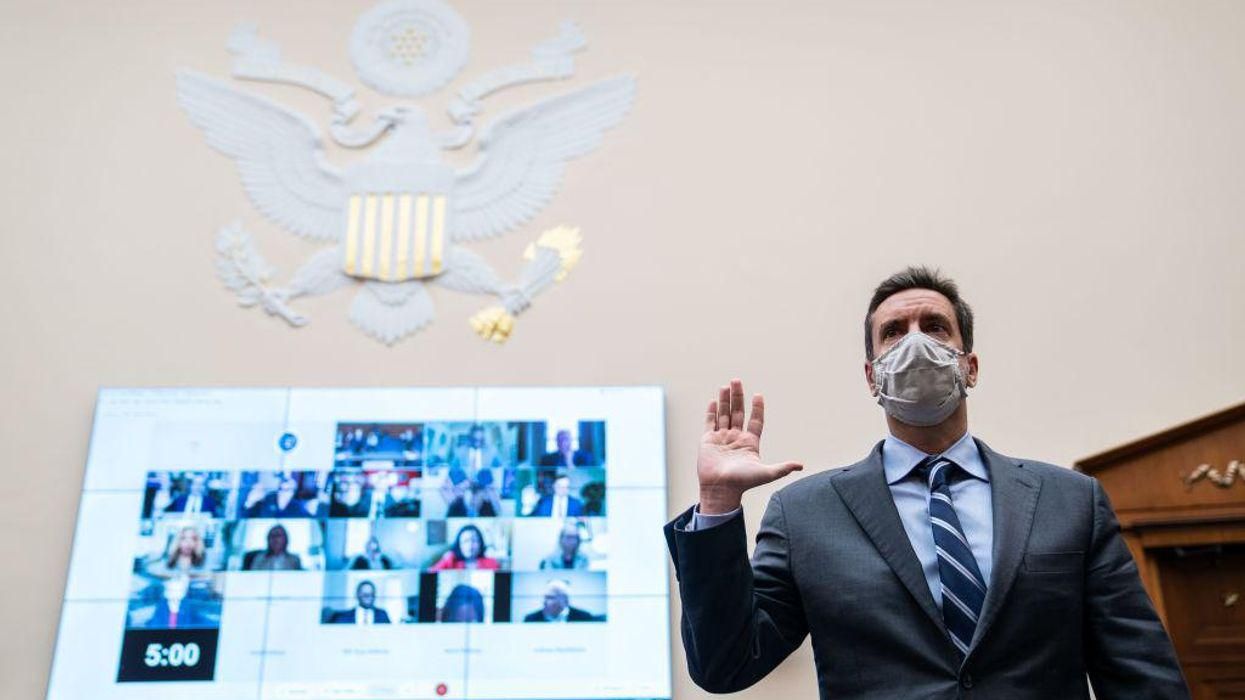


Clay Travis, a radio host and the founder of sports media website Outkick.com, testified to Congress on Friday about the power of Big Tech censorship, accusing Facebook of "content-based speech discrimination" against his media company.

Travis was invited by the House Judiciary subcommittee on antitrust, commercial and administrative law to speak to the relationship Big Tech shares with the media as Congress considers legislation that would allow media outlets to collectively negotiate ad rates with tech companies like Google or Facebook.

In his opening statement, Travis provided the subcommittee with examples of how Facebook allegedly punished Outkick's traffic for posting positive coverage of former President Donald Trump and heterodox opinions from medical experts on COVID-19 lockdowns.

On August 11, President Trump was a guest on Travis' radio program, joining the show to discuss the importance of playing college sports in the fall. Articles covering what the president said about the NBA, the NFL, and college sports were published on Outkick's website.

"The day after that interview Facebook tanked our traffic," Travis said. "The next day and over the next week, Facebook removed 68% of our audience, 76% of our new users. That cost my company hundreds of thousands of dollars."

Travis provided documents to the subcommittee showing the precipitous decline in Outkick's traffic during the timeframe he mentioned.

"To me, it was clear content-based speech discrimination," Travis said. "Facebook didn't like that we had the president of the United States on our radio program and they also didn't like that the majority of the coverage of that interview was positive, which as a sports fan, it's hard to be negative when the favor of the president is aligned with games actually being played."

He warned Congress of the "overwhelming power" that Big Tech holds over media companies, giving a second example of how he says Facebook discriminated against certain speech.

In February, Outkick published an article covering an op-ed in the Wall Street Journal by Dr. Marty Makary, a professor at Johns Hopkins School of Medicine & Bloomberg School of Public Health. In the op-ed, Makary argued that herd immunity was responsible for COVID-19 cases falling and predicted that the United States would reach herd immunity against the virus sometime in April.

"Certainly some scientists and doctors agree with that, certainly some scientists and doctors disagree with that opinion. We wrote about that editorial opinion on our website," Travis said. "Within a matter of days, we received a notification from Facebook with the downright Orwellian subject, 'Important Notification: Misinformation Violation.' Facebook told us we were not allowed to share the opinion of a doctor on our website because they said it was a fact-checked inaccuracy.

"It was, members of the subcommittee, AN OPINION. An opinion of a reasoned and well-learned doctor. That is what the scientific method is, we argue about what the truth is in this country with an idea that we reach a better conclusion. Facebook's own fact-checkers labeled our article about an opinion to be factually inaccurate, which is an impossibility."

He continued: "Who checks the fact-checkers? Our traffic declined by 80%, as you can see, as soon as Facebook found this violation. We would all be rightly concerned if the government of the United States was making these kind of decisions. My concern is all of the Big Tech companies now have the same power that China has to regulate the internet in its country.

"Instead of the government doing it, we have allowed Big Tech to do it."

Watch:

Here’s my opening statement at Capitol Hill today on the massive power of big tech and how it impacts @outkick. Als… https://t.co/qoV4BwuECd
— Clay Travis (@Clay Travis)1615577423.0
Big tech is so powerful they colluded to ban the president of the United States from their platforms. If they can d… https://t.co/2041aD4ir5
— Clay Travis (@Clay Travis)1615576833.0
Section 230 reform or antitrust laws  — how do we STOP Big Tech censorship?


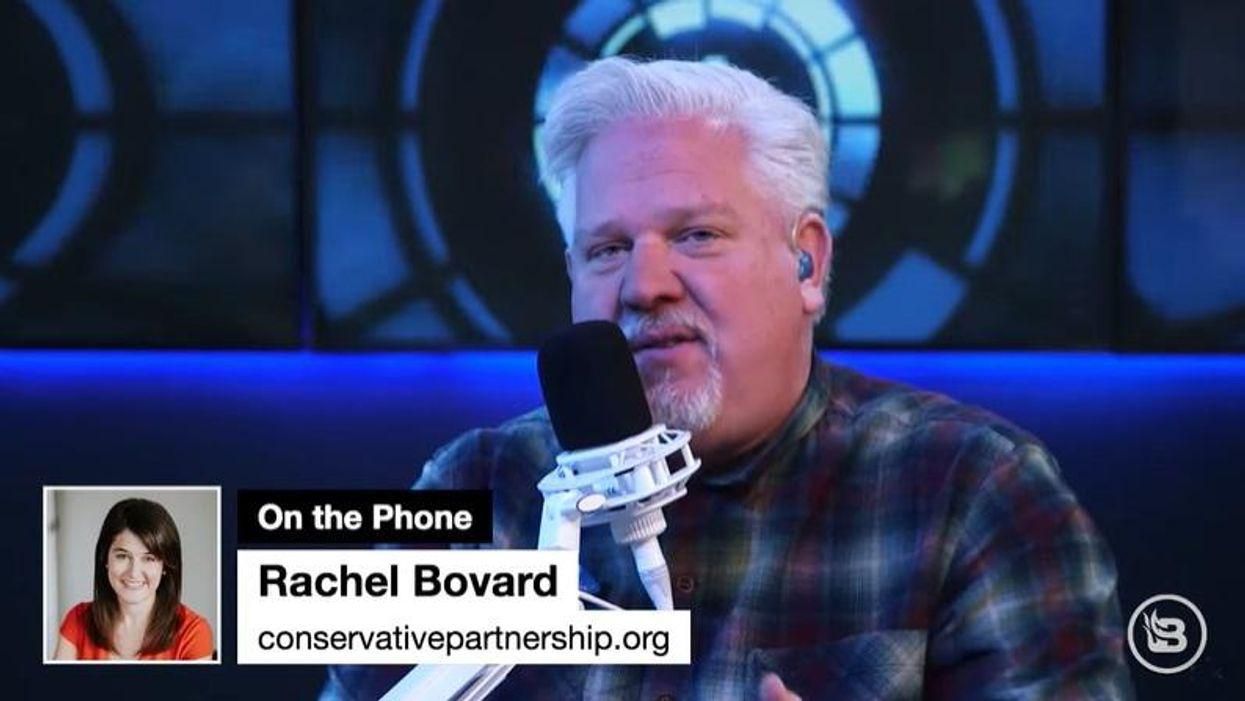
Conservatives are between a rock and a hard place with Section 230 and Big Tech censorship. We don't want more government regulation, but have we moved beyond the ability of Section 230 reforms to rein in Big Tech's rising power?

Rachel Bovard, Conservative Partnership Institute's senior director of policy, joined the Glenn Beck radio program to give her thoughts and propose a possibly bipartisan alternative: enforcing our existing antitrust laws.

Watch the video below:


Want more from Glenn Beck?

To enjoy more of Glenn's masterful storytelling, thought-provoking analysis and uncanny ability to make sense of the chaos, subscribe to BlazeTV — the largest multi-platform network of voices who love America, defend the Constitution and live the American dream.