Smartwatches: The WORST gift of Christmas 2025



More Americans than ever are buying smartwatches. Some are even gifting them in the run-up to Christmas, as if the spirit of the season is best expressed through a vibrating shackle.

I know, because I used to be shackled. A few months ago, I bought a Garmin Venu Sq 2. It’s a sleek little square that promises peace, progress, and a better VO₂ max.

I finally snapped the day the watch informed me that my stress was 'very high' while I was literally sitting still reading a book.

I’m an avid long-distance runner. I’ve run through heat waves, torrential rain, and entire breakups. A watch is supposed to free you, to only respond when you actually want information. Instead, mine turned into a digital probation officer, gleefully reporting every “weakness” it spotted. And it spotted plenty.

Passive-aggressive presence

At first, it was comfortable. A GPS-connected companion with the battery life of a camel. Then, slowly, it tightened its grip — not physically, but mentally. A passive-aggressive presence. A tiny narc. You only slept five hours. Your heart rate variability is low. Your stress is elevated.

No kidding. My stress was elevated because my watch wouldn’t shut up.

What began as a fitness tool became a full-time critic. Every step judged. Every pause logged. Every slight deviation from perfection recorded with the clinical joy of a bureaucrat stamping a form. The absurdity peaked on a Saturday morning when my wrist buzzed to announce that my “body battery” was low. This was a new level of shame: being scolded by a device I literally have to plug in to keep alive.

Mastered by metrics

The paradox at the heart of wearables is simple but worth spelling out. They sell serenity, yet they manufacture unrest. They promise control, yet they cultivate dependence. A smartwatch doesn’t enhance your intuition. Quite the opposite. It replaces it. Instead of listening to your breathing, you listen to a beep. Instead of feeling your cadence, you consult an algorithm. Before long, you become a servant to metrics you never asked for, chasing numbers that never stop multiplying.

Even worse, these trackers harvest every moment — your movement, your pulse, your snoring, your stumbles. Every second is sucked into some server farm, where it becomes a profit stream. A surveillance scheme disguised as self-improvement. Freedom isn’t a wearable. It’s the feeling that hits you the moment you rip the thing off.

Toxic timepiece

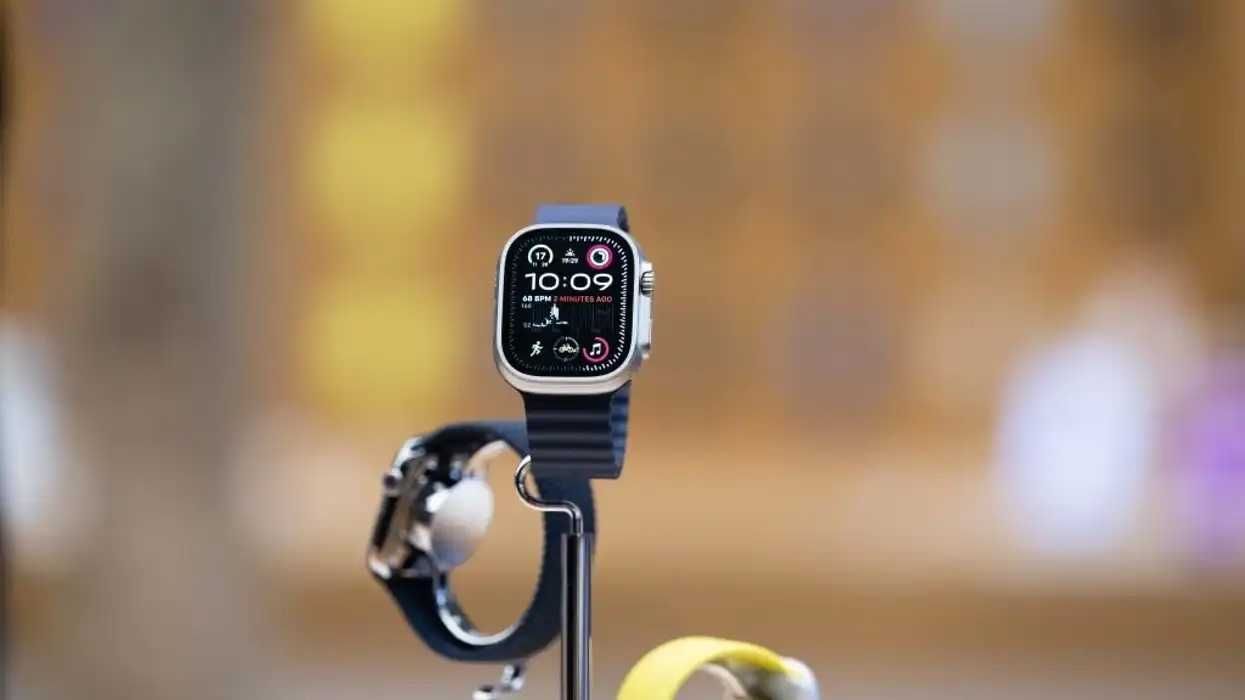
And then comes the part that feels almost satirical. Not only do smartwatches poison your mind, but they also poison your body. Recent studies show that many premium wristbands, especially the fancy fluorinated rubber ones, contain staggering concentrations of PFHxA, a “forever chemical” that sticks around longer than most New Year’s resolutions and certainly longer than any of my attempts at Dry January.

One band clocked in at over 16,000 parts per billion, making it less an accessory and more a portable toxic-waste site. To put that number in perspective, if a river tested that high, the EPA would show up in hazmat suits and politely ask the fish to evacuate.

These PFHxA compounds don’t just sit on the surface. They can seep, inch by inch, through the skin — our largest organ, the one we naïvely assume is busy protecting us instead of actively absorbing industrial runoff from a glorified pedometer.

Researchers say a significant percentage of this stuff can pass through human skin under normal conditions. To be clear, normal conditions simply mean you’re doing absolutely nothing unusual. Sitting at a desk, walking through Target, standing in line for coffee, trying to watch a show that isn’t drowning in homoerotic tension.

To make things worse, the more you sweat, strain, and move (the whole reason you bought a fitness tracker), the more efficiently the band can deliver its toxic little cocktail into your bloodstream. A device that poisons you precisely when you’re trying to be healthy. It’s as poetic as it is perverse.

RELATED: Your smart watch is poisoning you — and your children
Getty Images

'Heeeeeeere's Johnny!'

I finally snapped the day the watch informed me that my stress was “very high” while I was literally sitting still reading a book. That was the moment I had an awakening. The device wasn’t documenting my life. Instead, it was dictating it. I felt like Jack Nicholson in "The Shining," pacing the hallway and giving my smartwatch the same look he gave the door before smashing it in.

So I tossed it. Straight into the trash, like a cursed ring. And the strangest thing happened, almost instantly: peace. Pure, analog peace. I went for a run relying only on my own rhythm, my own breath, and my own internal clock — which has never once asked me to update its firmware. My pace felt smoother. My shoulders loosened. I remembered what running is supposed to feel like.

Your smartwatch needs you far more than you need it. Without you, it’s just a blinking brick. With you, it becomes a constant companion that collects your life, critiques your choices, and sells your data — all while constantly reminding you that you’re not enough without it.

If you’re wearing one right now, consider ripping it off. If you’re thinking of buying one, maybe don’t. And if you’re planning to gift one, absolutely stop. Your loved ones deserve better than a wrist-mounted tattletale. Give them socks. Give them chocolate. Give them a gift card they’ll use happily and mock you for later (because yes, you absolutely phoned that one in). Anything but a smartwatch.
Want to make your clothes look worse? Strap on an Apple Watch


The source of all our problems is right in front of our eyes and on far too many wrists: the Apple Watch.

The Apple Watch is bad. It’s really bad. It’s an abomination. It’s a crime against nature.

The pressing desire to know all these detailed metrics about our body throughout the day isn’t spiritually healthy.

If we wanted to pinpoint the moment everything started going down the tubes, we would find ourselves staring at the release date of the first Apple Watch. Once we crossed that threshold, everything started slipping.

OK, I might be exaggerating a little.

The Apple Watch is not a crime against humanity. It’s not the worst thing in the world. But it’s not good. I know this will anger many who have given into the Apple Watch craze, but someone must tell the truth about this pointless device.

Techno-communist

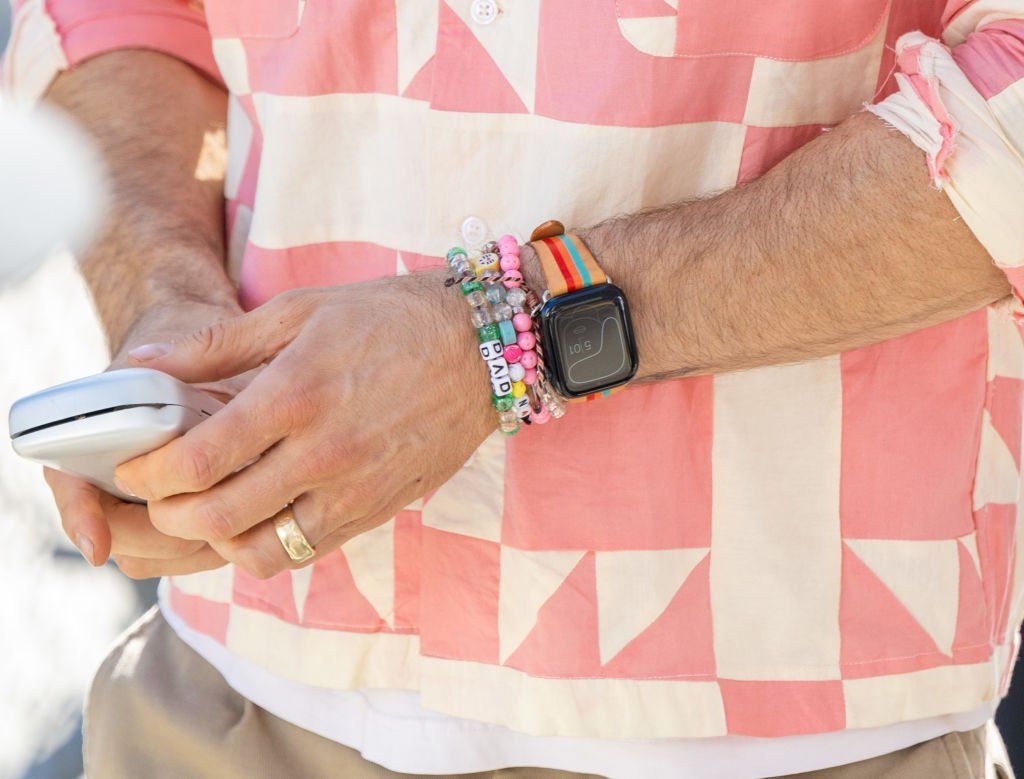
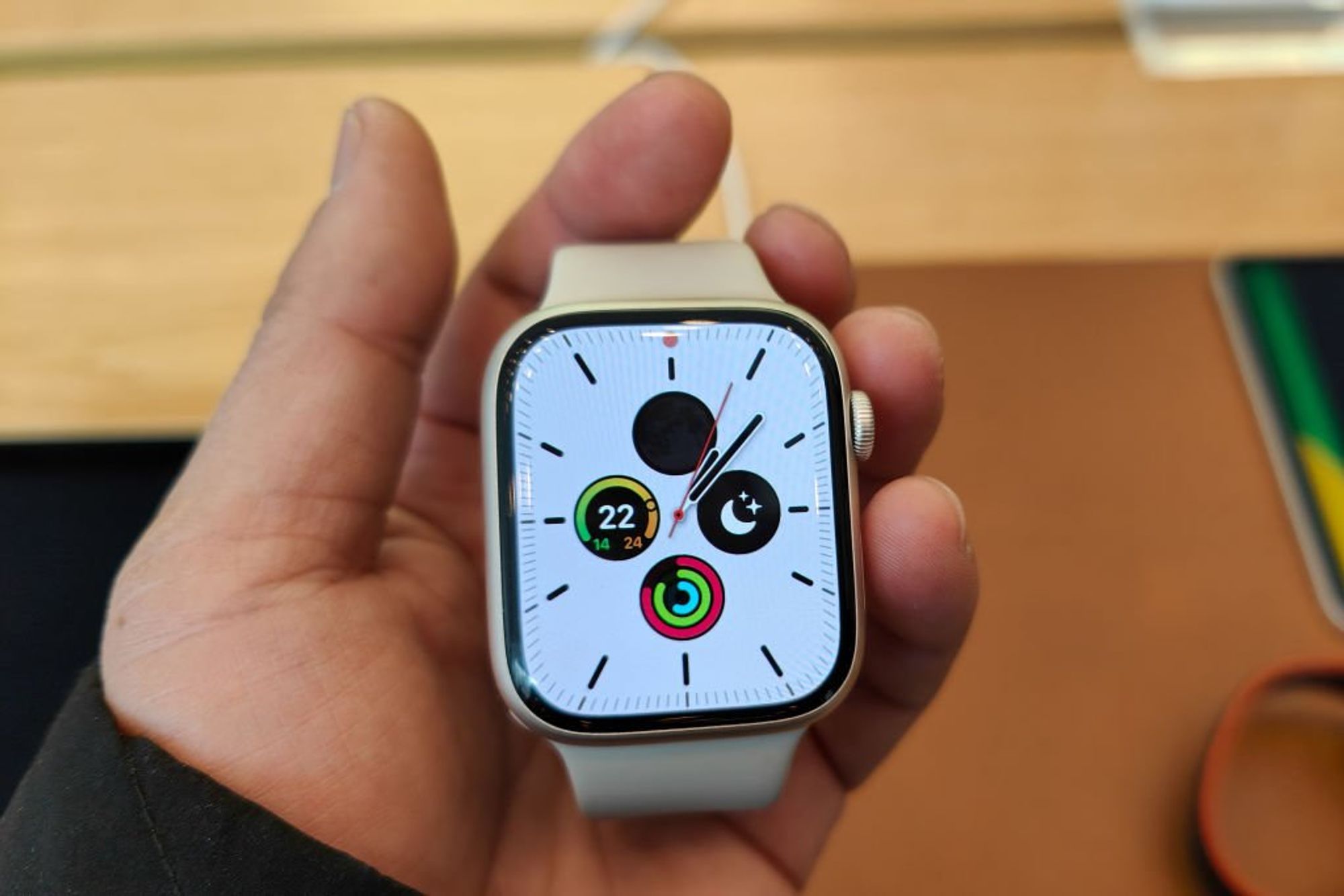
The Apple Watch is ugly. No one in his right mind would try to convince you that this nondescript, black cube that hangs off your wrist is elegant or attractive. It’s not pleasing to look at or wear. It’s not strong or powerful in any understandable way, either. It’s nothing at all. Aesthetically, it barely exists.

Who looks worse with an Apple Watch — men or women? It’s hard to tell. It looks equally ridiculous on both. It looks pointlessly geeky. The smooth black front and the tapping at the touch screen looks less retro-futurism 1986 and more senior special at Del Boca Vista. It looks less Harrison Ford in "Blade Runner" than it does Rick Moranis in "Spaceballs."

For guys, the fragile aesthetic doesn’t exude any kind of strength. It feels overly fastidious and annoyingly particular. It almost feels blandly androgynous, or techno-communist, for lack of a better word.

Traditionally, there are two kinds of men’s watches. Watches that are formal and elegant and watches that are rough and rugged. The Apple Watch is neither. It’s a secret, ugly third thing.

It’s confused, and it makes every outfit look confused. Jeans, a flannel shirt, and boots look strong. Add an Apple Watch, and it looks confused. A sport coat, poplin button-down, and khaki chinos look classic. Add an Apple Watch, and it looks bizarre.

Femininity killer

For women, the size and shape of the Apple Watch looks dreadfully clunky and unfeminine. No woman’s wrist looks delicate or beautiful with an Apple Watch. The same bland androgynous effect that we see with men is felt with the women.

A woman’s watch should be small and delicate. It should be dainty. It should suit the size of her wrist and exude a kind of feminine elegance. It should feel like jewelry.

The Apple Watch on a woman looks like a post-prison ankle monitor or some kind of experimental monitoring device they put on you in the hospital when you are knocking on death’s door.

I have seen women in dresses, heels, and Apple Watches. It’s absurd. The ensemble is one of elegance, and then out of nowhere, the Apple Watch is slapped on the wrist, and it feels like it had to have found its way there by accident. No woman would intentionally wear this thing with a dress, would they?

Slave to sleep

It’s enough to oppose the Apple Watch on aesthetics alone, but that's not the only strike against it. The very idea of the Apple Watch is offensive and neurotic. Unless you have a serious medical condition, you really don’t need to be monitoring your daily bodily functions and variations this closely.

I know that endlessly obsessing over sleep is a trendy thing today among those who have too much time on their hands, but if you are a young and healthy person, you should be able to live your life without turning every day and night into an Excel spreadsheet.

The pressing desire to know all these detailed metrics about our body throughout the day isn’t spiritually healthy. It isn’t normal. It isn’t vital. It’s pointlessly obsessive. The Apple Watch exacerbates this decadent obsession of our age more than any other device.

This obsession is driving people nuts even if they don’t know it yet. Deep down, you know you don’t really need to know all this stuff. You know it isn’t making your life better in any meaningful way. It’s all just pointless data collection.

If you really want to wear an Apple Watch when you exercise, fine. This makes sense. But this silly device really shouldn’t be on your wrist outside the gym. Ugly pieces shouldn’t be staples in a wardrobe, and the Apple Watch is an ugly piece.

Pointless overkill

Apart from the obsessive heath monitoring, the other features of the Apple Watch are completely redundant. You don’t need a watch to receive reminders from your calendar, messages, or emails. You have a phone for this, and nine times out of ten, your phone is sitting right next to you on the table. You end up with two devices within three feet of each other both sending you the same notifications. It’s pointless overkill.

As if all that weren’t enough, the price is the final kick in the shins. You are looking at spending hundreds of dollars on a redundant device that exacerbates your neuroticism while looking ugly and polluting every outfit you wear. Sounds great, huh?

Don’t take the bait. Don’t waste your money on an Apple Watch. Buy a Timex for 50 bucks and call it a day. Grab a $25 Casio for a real retro-futuristic look. Whatever you do, for God’s sake, never buy an Apple Watch.

Reports: Apple Watch developers hit major milestone in bringing no-prick blood glucose monitoring to market


A secretive team at Apple Inc. is developing wearable, no-prick, continuous blood glucose monitoring for its Apple Watch, Bloomberg reported.

"Really the holy grail for a smartwatch is to be able to tell you all of your health metrics, and one of the most important health metrics ... is blood sugar or blood glucose monitoring," said Bloomberg's Mark Gurman.

"Apple wants to create a system using chips, sensors, software algorithms built in to the Apple Watch," said Gurman, who explained that current, more invasive methods involve a finger stick or a blood draw. The technology Apple is developing requires no blood sample.

The secret project, called "E5," hit major milestones recently, and Apple believes it may eventually bring noninvasive, continuous blood glucose monitoring to market, Bloomberg reported in a separate piece last week. No pricking would be required.

Gurman said a measurement process called "optical absorption spectroscopy" and a chip technology called "silicon photonics" make the seemingly impossible feat a reality. The watch uses lasers in such a way that the concentration of glucose in a person's interstitial fluid can be estimated with a special algorithm.

An unidentified person familiar with the confidential initiative told Bloomberg the project is at the proof-of-concept stage.

One major hurdle still to be overcome involves the physical size of the device. An early version "sat atop a table," Bloomberg reported. Today, engineers are focused on getting it down to the size of an iPhone that would be strapped to a person's bicep. Ultimately, the tech could be integrated into the Apple Watch.

Apple's Exploratory Design Group, XDG, is in charge of the moonshot-like project. XDG comprises primarily "engineers and academic types," Bloomberg says. It was originally run by Bill Athas, who passed away suddenly in 2022.

Senior Vice President Johny Srouji now sits at XDG's helm. Top engineers and scientists on the glucose project include Jeff Koller, Dave Simon, and Bryan Raines, according to Bloomberg.

One major goal is to give both diabetic and non-diabetic people actionable information on their health. For non-diabetic people, the technology could allow them to take action, like changing eating habits or exercising, if their glucose levels suggested trouble.

For people with diabetes more than 34.2 million in the United States, according to the Diabetes Research Institute Foundation the technology could mean a welcome relief from pricking their fingers multiple times a day or wearing disposable monitors that also involve a prick.

Like Blaze News? Bypass the censors, sign up for our newsletters, and get stories like this direct to your inbox. Sign up here!

Apple Watch saves life of Maine woman with heart tumor: 'It truly saved my life'


A woman from Maine is now recovering from surgery to remove what would have been a deadly heart tumor, and she has Apple Watch to thank for her new lease on life.

Kim Durkee, 67, said that for three nights in a row back in May, her Apple Watch alerted her that she may be in atrial fibrillation, otherwise known as an abnormal heart arrythmia. At first, she dismissed the alerts and presumed that the watch may have been malfunctioning.

"The third night, the numbers went a little too high for comfort," Durkee said. "Then I said, 'You know what? Go to the emergency room. If they tell you it's nothing to worry about, then toss the watch."

Though she had no other symptoms, she visited local doctors in Maine, who confirmed that she was, indeed, in atrial fibrillation. And the cause of the A-fib nearly floored her: a myxoma, a rare tumor that forms in primitive connective tissue, usually in the heart. In Durkee's case, the myxoma had obstructed blood flow in her heart, causing the arrythmia. If gone undetected, it would've likely resulted in a stroke.

"[The doctors] said, 'Well, how did you know you had A-fib?' And I said, 'Because my watch told me,'" Durkee said.

Durkee then made arrangements to have surgery at Massachusetts General Hospital on June 27. During the five-hour open heart procedure, surgeons removed a tumor approximately four centimeters in size and growing quickly. The medicals teams told her that if it had grown much bigger, it would have "almost certainly" killed her.

After surgery, Durkee spent another 11 days at Massachusetts General, and she still has a long rehabilitation process ahead of her back home in northern Maine. But she isn't taking anything for granted anymore.

"I consider myself to be very lucky, to be here and talking to you," she said.

The Apple Watch that she once bought only to help her tell time and keep track of her exercise routine has now become a semi-permanent feature for her. WBZ-TV reports that she almost never removes it, even when she's at the doctor's office.

And many other lives may also be saved because of the technology in the Apple Watch. Durkee reported that she knows of many people who have since purchased an Apple Watch after hearing her story.