Blue-state city battles ACLU to install archangel Michael statue honoring police
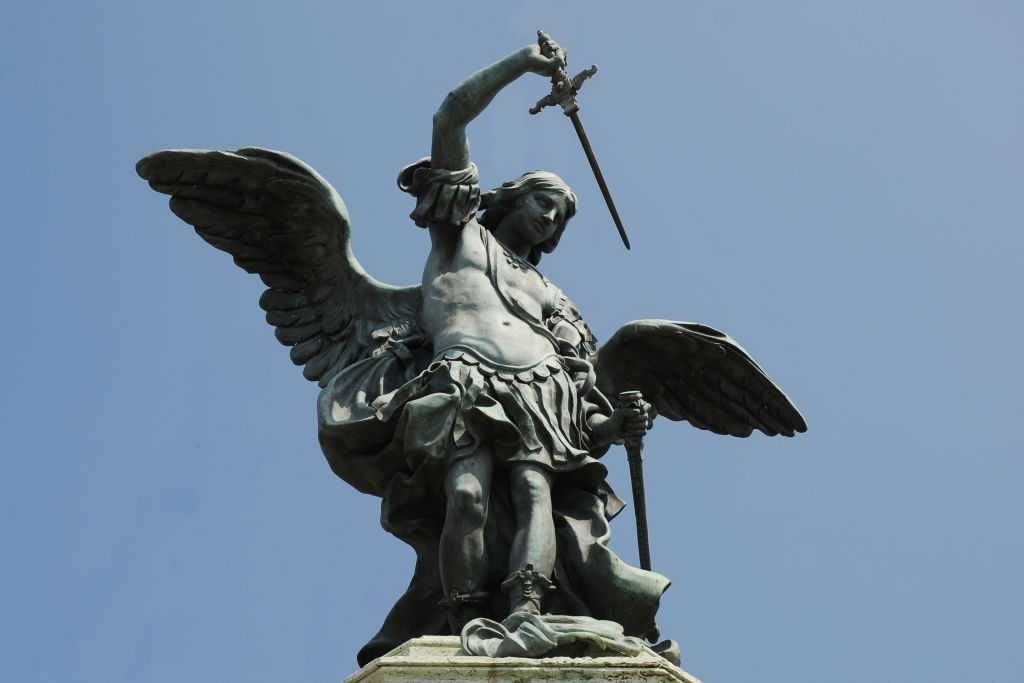
Thomas Koch, the mayor of Quincy, Massachusetts, commissioned two 10-foot-tall bronze statues to complement his city's new public safety headquarters, a 122,000 square-foot facility that will ultimately house both the police department and the fire department's administration offices.
One of the statues that the city asked renowned sculptor Sergey Eylanbekov to design depicts the winged archangel Michael stepping on the head of a demon. The other statue depicts Florian, a third-century firefighting Roman soldier, dumping water on a burning building.
'The statues of Michael and Florian honor service — not a creed.'
Despite the broader cultural significance of both figures and their longstanding association with first responders, groups loath to see any public signs of Christianity joined a number of local residents in suing to block the installation of the statues.
While the Norfolk Superior Court granted a preliminary injunction last week blocking the installation of the two statues, the city of Quincy, evidently unwilling to surrender to iconoclastic secularists, has teamed up with the Becket Fund for Religious Liberty to file an appeal.
"We respect every citizen's beliefs, religious or not. But the statues of Michael and Florian honor service — not a creed," Quincy Mayor Thomas Koch said in a statement to Blaze News. "We’re hopeful that the court will reverse this order and allow our city to pay tribute to the men and women who keep our city safe."
The lawsuit
The lawsuit filed in May by the American Civil Liberties Union, the ACLU of Massachusetts, the Freedom from Religion Foundation, and Americans United for Separation of Church and State, names a number of Quincy residents as plaintiffs including
- a Unitarian social justice warrior;
- a self-identified Catholic who finds the "violent imagery" of good triumphing over evil to be "offensive";
- a local synagogue member who suggested the images "may exacerbate the current rise in anti-Semitism";
- an Episcopalian who believes that walking past such statues would amount to "submission to religious symbols";
- several Catholics turned atheists apparently keen to avoid some of the imagery they grew up with; and
- a lapsed Catholic who suggested the image of Michael stepping on the head of a demon was "reminiscent of how George Floyd was killed."
The lawsuit states that "affixing religious icons of one particular faith to a government facility — the City's public safety building, no less — sends an alarming message that those who do not subscribe to the City's preferred religious beliefs are second-class residents who should not feel safe, welcomed, or equally respected by their government."
RELATED: Exposing the great lie about 'MAGA Christianity' — and the truth elites hate

The complaint hammers home the significance of Michael in Catholicism, where he is recognized as the patron saint of police, yet neglects to note that Michael also features prominently in Christian, Jewish, and Islamic religious texts and traditions as well as in the Western literary canon and pop culture.
While the suit hints at possible civic or professional accomplishments on the part of Florian that could be recognized with a statue, it again suggested that as the patron saint of firefighters, a statue of the historical figure would similarly "send a predominantly religious message."
The plaintiffs alleged in their lawsuit that the city violated Article III of the Massachusetts Declaration Rights, and suggested that the installation of the statues "will not serve a predominantly secular purpose," but rather to "promote, promulgate, and advance one faith, subordinating other faiths as well as non-religious traditions."
The allegation of a violation of state law as opposed to a violation of the Establishment Clause of the U.S. Constitution appears to have been strategic. After all, the U.S. Supreme Court has made expressly clear that "simply having religious content or promoting a message consistent with a religious doctrine does not run afoul of the establishment clause."
Mayor Koch rejected the plaintiffs' thesis, underscoring in a sworn affidavit that he regarded it as "appropriate to erect statues of two internationally recognized symbols of police and fire service, an act which would also serve to inspire the men and women who work in the building."
"There was nothing religious about this decision," continued Koch. "The fact that Michael and Florian each happen to be saints venerated in the Catholic Church is ancillary to their significance in the Police and Fire services, respectively."
The injunction
Quincy suggested in the suit that the plaintiffs lacked standing because they were "simply offended by the planned statues, and, unwilling to confine themselves to the ordinary means for airing ideological disagreements with the government — the political process — have sought to make a lawsuit out of it."
Norfolk Superior Court Justice William Sullivan, who was put on the court by former Democratic Gov. Deval Patrick, was evidently not persuaded.
On Oct.14, Sullivan denied the city's motion to dismiss the lawsuit and granted a preliminary injunction against the erection of the statues, noting that the plaintiffs had demonstrated "that they are likely to succeed at proving that the permanent display of the oversized overtly religious-looking statutes have a primary effect of advancing religion."
RELATED: Clinton labor secretary panics after Trump asks the archangel Michael for help fighting evil
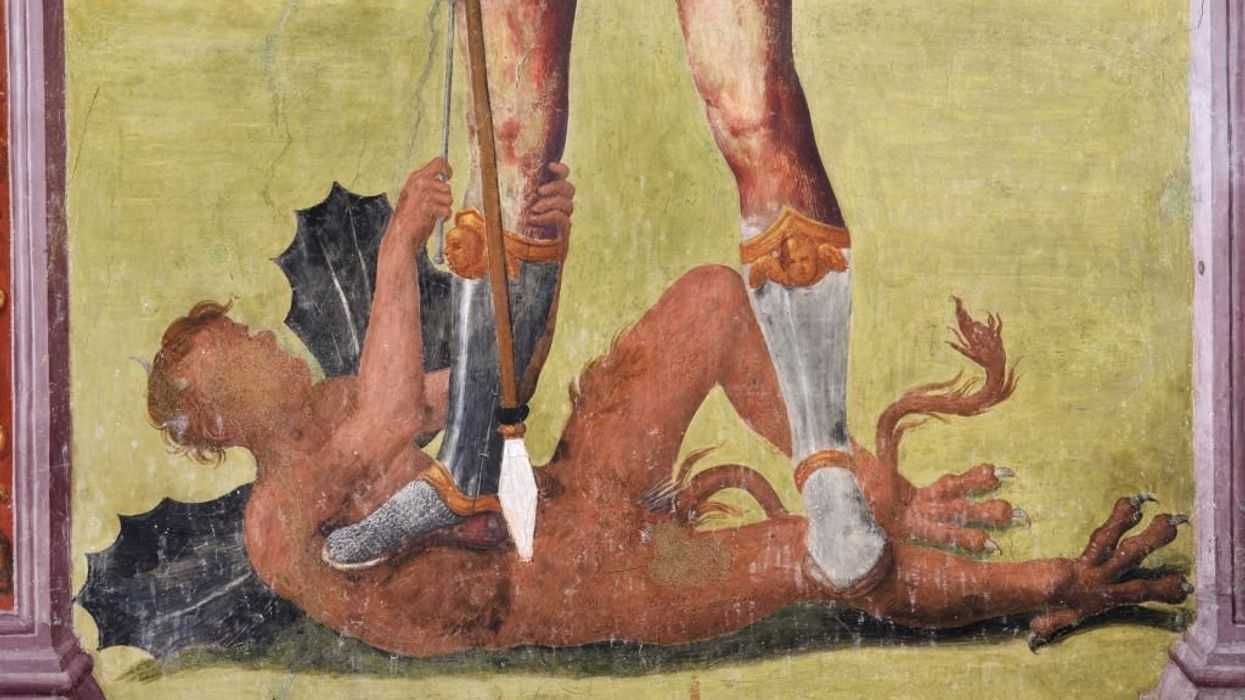
Speaking to Koch's suggestion that the statues have secular significance and purpose, Sullivan wrote, "To the extent a statue of Saint Michael provides inspiration or conveys a message of truth, justice, or the triumph of good over evil, it does so in his context as a biblical figure — namely, the archangel of God. It is impossible to strip the statue of its religious meaning to contrive a secular purpose."
Rachel Davidson, a staff attorney at the ACLU of Massachusetts, celebrated the ruling, stating, "We are grateful to the court for acknowledging the immediate harm that the installation of these statues would cause and for ensuring that Quincy residents can continue to make their case for the proper separation of church and state."
"Massachusetts citizens are free to practice their personal religious views by placing statues of saints or other religious iconography on private property," said Annie Laurie Gaylor, co-president of the Freedom from Religion Foundation. "But such religious iconography emphatically does not belong on government buildings where all must feel welcome."
The appeal
Becket, a firm focused on protecting religious liberty, announced on Tuesday that it will join the city of Quincy in appealing Sullivan's decision.
"If allowed to stand, the decision would push cities across the Commonwealth to strip historic symbols from civic life whenever they carry religious associations," the firm said in a statement. "But the Supreme Court has upheld the use of symbols with religious roots in public life, including a World War I memorial featuring a cross, when they carry historical, cultural, or commemorative significance."
Using private funding in the 1920s, the American Legion constructed the 40-foot-tall Peace Cross in Bladensburg, Maryland, to honor soldiers who perished in World War I. The sight of the cross evidently enraged iconoclastic secularists, who sought to have it toppled. While the Fourth Circuit proved more than happy to oblige them, the U.S. Supreme Court determined in its 2019 American Legion v. American Humanist Association ruling that the cross did not violate the Establishment Clause.
The court also rejected the relevance of the test articulated by SCOTUS in its 1971 Lemon v. Kurtzman ruling as a way of guiding the court in identifying Establishment Clause violations, noting that the Lemon test presented "particularly daunting problems" in such cases that "involve the use, for ceremonial, celebratory, or commemorative purpose, of words or symbols with religious associations."
While the Supreme Court has effectively rejected the Lemon test, Justice Sullivan leaned heavily on it in the Quincy case.
"Everyone is free to have their own opinions about public art, but in America, the fact that something may have religious associations is not a legitimate reason to censor it," said Joseph Davis, senior counsel at Becket.
"Our nation, like many others, has long drawn on historic symbols — including those with religious roots — to honor courage and sacrifice. The court should reject this lawsuit’s attempt to block these symbols of bravery and courage," added Davis.
Quincy Police Chief Mark Kennedy's office indicated the police department will have no comment as the issue remains in the hands of the court.
Like Blaze News? Bypass the censors, sign up for our newsletters, and get stories like this direct to your inbox. Sign up here!
 www.theblaze.com