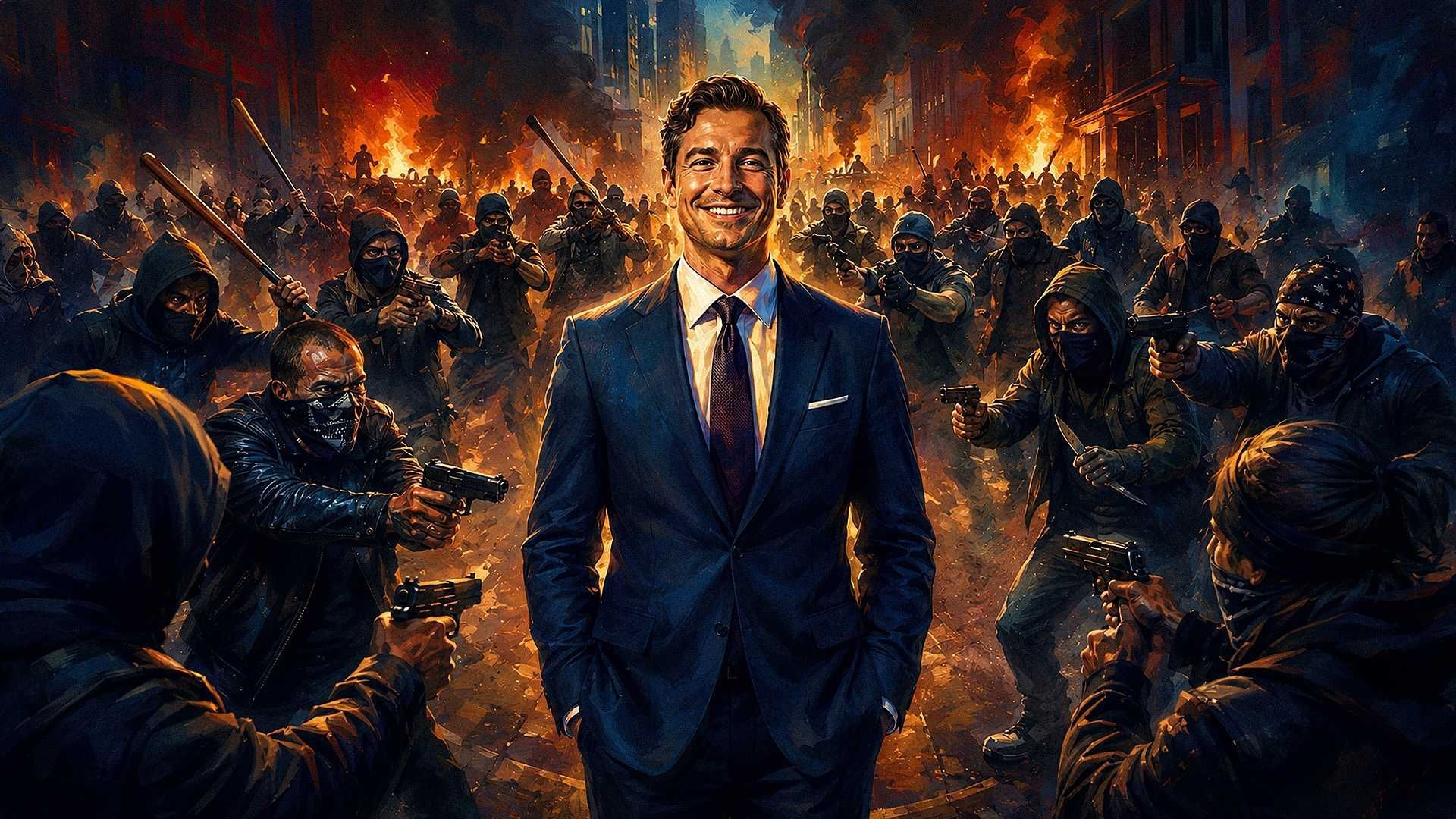
The Economist declares war on white babies


Despite the fact that America is in a fertility crisis — the worst ever recorded in the nation’s history — the Economist published a sardonic article on November 6 titled “Make America procreate again: Among the MAGA fertility fanatics.”

Through a cynical and patronizing lens, author Barclay Bram explored the right-wing-propelled pro-natalist movement spearheaded by “tech bros and religious conservatives” who champion having more babies. He cited the Nation’s Joan Walsh — a radical leftist who authored a book titled “What’s the Matter with White People?” — to capture the left’s perspective on this movement: “an insidious project to create a whiter America.”

“White children are the most evil thing that the left can imagine,” says BlazeTV host Auron MacIntyre.

While lefties would surely deny this, their actions speak volumes — specifically their action of “importing” and protecting illegal immigrants, which they argue is the solution to the country’s plummeting birth rate. But Auron sees through their lies.

“They have no interest in you continuing to exist because they want to replace you,” he says frankly.

Bram’s piece opens with an anecdote recounting his time with a 32-year-old single trucker named Tim Adkinson at NatalCon, a pro-natalist conference in Austin, Texas. He’s painted as a pitiable, desperate figure for his ambition to rear children, and the convention is framed as a pathetic gathering of weirdos — tech bros, religious zealots, and lonely conservatives — desperately trying to engineer a "baby boom" amid America's fertility collapse.

“[He’s] literally demonizing people who are trying to solve social problems that are keeping us from having families,” Auron says.

Bram went on to paint the billionaires investing in reproductive technologies and the Trump administration’s push for less expensive fertility drugs as futile attempts to manufacture more families.

“Why is this insidious?” asks Auron.

“Because white people might have kids,” he answers. “That's why it's evil. Yeah, they care about the future of the United States. Yes, they're working to reduce drug prices and create situations where people can stay home with their children … but oh, some of those people might be white. And that's the problem.”

Not only is this overtly racist, it’s also illogical. If we’re serious about fixing the country’s fertility crisis (and the left claims it is), then more white babies are inevitable, as “white people are still the majority in America,” says Auron.

“But the Economist hates white people. It hates white babies. It doesn't want white people to have children. They are interested in ethnic cleansing. That's what they support.”

Bram’s article also mentioned (without critique) the protesters who rallied against NatalCon attendees: “A group of protesters, their faces mostly covered, gathered in the museum courtyard. 'Nazis off our campus!' they screamed through a megaphone as conference attendees streamed in. One sign read 'Eugenicists' with the word 'Natalists' crossed through.”

Auron makes it plain: “So if you want to have babies, you are a Nazi. You are doing Nazi race science if you would desire that Americans have more children. And this really just lays it bare. ... Every white baby could be a Nazi. Whiteness is something that is inherently fascist, right? Nazism is sitting in white DNA, so we've got to get rid of the white people so we get rid of the Nazis.”

“I keep having to hear there is no great replacement theory … no attempts to push white people out of the United States … except for the article is explicitly stating that every white child is an atrocity.”

To hear Auron’s full breakdown of Bram’s article, watch the full episode above.

Want more from Auron MacIntyre?

To enjoy more of this YouTuber and recovering journalist's commentary on culture and politics, subscribe to BlazeTV — the largest multi-platform network of voices who love America, defend the Constitution, and live the American dream.

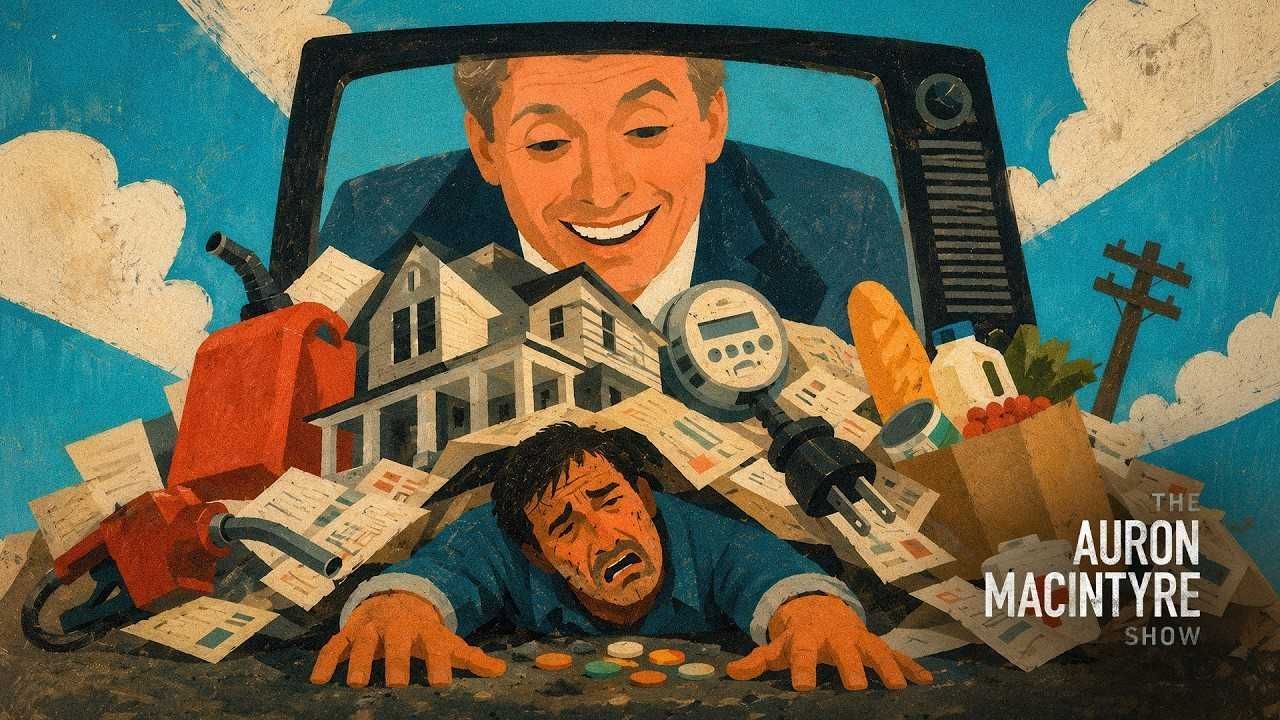
Tolkien’s forgotten lesson: Evil wins when good men refuse to rule


Since the assassination of Charlie Kirk, Auron MacIntyre, BlazeTV host of “The Auron MacIntyre Show,” has been calling for conservatives to get serious about crushing left-wing violence. Inaction, he’s warned, will only invite escalation. That’s why as a political party, we must insist that the Trump administration dismantle Antifa, impose severe consequences on those inciting or celebrating murders, and wage economic war via regulatory and legal levers against complicit media.

In other words, the Trump administration needs to use its power to obliterate left-wing chaos.

Auron gets quite a bit of pushback for this stance. Many will use J.R.R. Tolkien’s “The Lord of the Rings” trilogy to argue against the use of power to quell evil. “The one ring is dangerous. ... You must reject the call of power because ultimately power corrupts and destroys and divides,” they say.

But Auron says this is a “shallow reading” of the father of modern fantasy’s three-volume series. “Ultimately, while yes, there is a message about power in there, there’s also a message about right authority. The last book is, of course, called ‘Return of the King,’ and this is seen as a good thing,” he counters. “So it doesn’t look like Tolkien is ultimately rejecting the use of power, but he does have some very important things to say about the nature of power.”

To discuss this important distinction, Auron speaks with Evan Cooney, the host and creator of “The Middle-earth Mixer” — a popular podcast that dives into J.R.R. Tolkien's lore, themes, and Middle-earth universe.

For starters, Tolkien was adamantly opposed to allegory, meaning that the one ring cannot be said to symbolize power alone. Further, in the books, “There is lawful use of lawful authority, which translates to power, that many characters have and have permissions to do so by the creator god Ilúvatar, and then there are characters who commit unlawful use of unlawful authority, and Sauron creating the one ring would be a perfect example of that,” says Cooney.

Auron points to Aragorn, the rightful king of Gondor, as an example. Initially, Aragorn, using the name Strider, runs from his destiny. “And because he's not in that position of the true king, there are others who are less worthy who are ruling in his place,” says Auron. This is seen by characters and readers alike as a bad thing. Aragorn must wear the crown and wield the sword and scepter, as this is what pushes back darkness and brings order to Middle-earth.

Cooney, unpacking Aragorn’s lineage all the way back to Isildur, who initially took the ring of power from Sauron, says, “This shirking of responsibility from everyone involved and [Arvedui’s, the last king of the North] inability to take power created the political disaster that made for why men were so weak by the time you get to the ‘Fellowship of the Ring.”’

“Ultimately, Tolkien recognizes that power will exist, that this void will be filled, and if it's not filled with the appropriate people, the worthy people, those who belong in the line ... you will be ruled by inferior men,” says Auron. “It's not that you won't be ruled; it’s that the stewards are there instead of the kings.”

In the kingdom of Gondor, Denethor — a steward charged with holding the throne in trust until the king returns — is consumed by pride and despair. He refuses to rally with allies, distrusts Aragorn’s claim to the throne, and abandons the city in its darkest hour.

In Rohan, however, King Théoden, who Cooney says is Denethor’s character foil, shows us what it looks like to wield power rightly. With the help of Gandalf, he exiles his corrupt adviser, Gríma Wormtongue — “the quintessential archetype for the sneaky government bureaucrat,” says Cooney — and rides out and meets Sauron’s army in the Battle of the Pelennor Fields.

The exile of Gríma, says Auron, is a lesson for our current government: “The council [of bureaucrats] is paralyzing. It's meant to be paralyzing. It's meant to stop you from taking your rightful authority and taking the honorable action, and you have to remove that influence.”

Once evil advisers have been banished, the next step is to step fully into the role of rightful power. After Gríma is exiled, the first thing Gandalf has Théoden do is pick up his sword. “Your fingers would remember their old strength better, if they grasped your sword,” he tells the old king.

“It’s a very moving symbol,” says Auron.

“What stirs the king back to a noble action is he has to feel the weight of the instrument of his office. The rightful sword he has been entrusted with as the civil magistrate has to be felt in his hand before he can once again truly return to who he is and behave honorably.”

To hear the full conversation, watch the episode above.

Want more from Auron MacIntyre?

To enjoy more of this YouTuber and recovering journalist's commentary on culture and politics, subscribe to BlazeTV — the largest multi-platform network of voices who love America, defend the Constitution, and live the American dream.

Is there a biblical case for public vengeance?


Most Christians will argue that it’s impossible to make a biblical case for vengeance. They hold tight to the belief that it’s their job to forgive — no matter how egregious or relentless the crimes coming against them.

This has certainly been the sentiment of most believers following the assassination of Turning Point USA founder Charlie Kirk. Even though the left’s inherently violent ideologies have continued to create chaos and disorder, many Christians believe their sacred duty to forgive contradicts the idea of taking reciprocal action.

BlazeTV host Auron MacIntyre, however, says we’ve got it twisted. “That's not really a reflection of what Christian society has said about justice, what the Bible says about justice, and the role that the government plays in this process.”

Is it possible, then, to make a biblical case for vengeance?

On a recent episode of “The Auron MacIntyre Show,” Auron and guest Timon Cline from American Reformer dove into this query.

Christians, Timon says, are “precluded from taking private vengeance for people who wrong us in a private way.”

“The Bible's very clear on this. We are supposed to forgive. We are supposed to be long-suffering. We're supposed to have our sort of consciousness of these actions even against us understood in light of eternity and in providence and so on and so forth,” he says. “But the public man, the magistrate, the one who has authority, is supposed to have a very different perspective on these things, especially threats against his citizens, threats to disorder, violence.”

In Romans 13, Paul writes, “For the one in authority is God’s servant for your good. But if you do wrong, be afraid, for rulers do not bear the sword for no reason. They are God’s servants, agents of wrath to bring punishment on the wrongdoer.”

But what happens when our governing authorities fail to carry out their divine duty as executives of justice? “You will suggest that people can get away with [crime]; you will multiply the violence,” says Cline.

The other result, says Auron, is that citizens “will seek private vengeance” — something that is strictly forbidden for the Christian.

The duo examine the case of Charlie Kirk’s murder. Auron and Timon agree that justice against the murderer isn’t sufficient. Even though the suspect has been called a lone gunman, he didn’t really act alone. A “terror network” of violent NGOs, billionaire donors, and radical left-wing media figures and politicians spurred him to act. Justice, they argue, means targeting that entire insidious system.

This is what “public vengeance” means.

It’s “perfectly justified” and is, “in fact, good for Christians” to demand that the government seek public vengeance, says Timon, because believers are supposed to be “enemies of disorder and corruption.”

While some Christians might get hung up on the word “vengeance,” Auron says they need to understand that this doesn’t look like pitchfork-wielding mobs of citizens setting fire to the institutions of their enemies. Citizens still refrain from taking justice into their own hands, but they can and should demand that the government fulfill its God-ordained role to exercise justice, understanding that justice for certain crimes — like terror networks spawning widespread violence — must be met with widespread vengeance.

“That doesn't mean that we are reveling in violence or torture” but rather “recognizing … that clemency itself is a crime against the victim if it's done by the magistrate,” Auron explains.

To hear more of the conversation, watch the full interview above.

Want more from Auron MacIntyre?

To enjoy more of this YouTuber and recovering journalist's commentary on culture and politics, subscribe to BlazeTV — the largest multi-platform network of voices who love America, defend the Constitution, and live the American dream.

17 days after Charlie’s death, it’s clear: We are now on the other side of the Rubicon


The assassination of Turning Point USA founder Charlie Kirk, whose only crime was to host debates in the public square and declare the gospel of Jesus Christ, has made something abundantly clear: We have crossed the Rubicon.

But it was the left’s response to his tragic death that revealed this reality perhaps even more than the shooting itself. Almost immediately, radicals took to social media to post videos celebrating Charlie’s murder, claiming he deserved to die and even mocking his wife, Erika, and their two children. Across the country, they defiled memorials, crashed prayerful vigils where his admirers gathered in grief, and even called for more violence against conservative figures.

This wasn’t a fringe group, either. It was a minority, says Auron MacIntyre, but “a very large minority.”

But now that it’s clear the right will not follow the left’s suit and respond in violence, even the liberals who initially issued “half-hearted rebukes” are beginning to “[rip] the mask off,” caveating their original statements with hypocritical comments like, “Charlie Kirk was evil. He was a fascist. He was a racist. ... Wasn't he kind of asking for it?”

Auron warns: For too long conservatives have mistakenly believed that “history is over” and that modern politics is just a “debate club,” but we can no longer deny the reality facing us: A nation this divided cannot endure.

“In order to have the type of politics where you get to debate over what you disagree with instead of fight over what you disagree with, you need to share a large amount of culture, belief, religion, morality, tradition, [and] understanding,” says Auron.

But “because we do not share them, we cannot do that mode of politics.”

“What we're trying to do right now is operate one mode of politics on top of a foundation that is completely crumbled and can no longer support it. I'm not happy about that fact. I'm not cheering about that fact. I wish that foundation was still firm,” he says. “I wish we shared a common Anglo-Protestant understanding. I wish that we could speak to each other with all the implicit understanding that comes with a shared tradition, a shared morality, a shared way of looking at the world.”

But when one side believes that chopping off the genitals of a child is not only permissible but loving? Peaceable discourse is no longer a viable option. When the disparity between worldviews is this great, “We enter into a different kind of politics. ... To quote a poorly ended television show, ‘When you play the Game of Thrones, you win or you die,”’ says Auron.

While he loathes this method of politics, “The sad news is that history doesn't ask us what we want.” Once a republic starts to break down, as all republics eventually do, and people begin to spit on virtue and law and order, “You're going to probably need to go outside of the rules in order to restore that type of government,” Auron explains.

“We're going to need to make sure the left knows there's a cost for what they've done.”

But Auron isn’t advocating for the anarchy and violence that’s become expected from the left. He’s calling for a “very, very, very, very, very serious response from the Trump administration.”

“The correct answer here,” he says, “is legitimate state force under the color of law. There's nothing that Trump can't do under the law that he needs to get done right now.”

“Thousands of people need to go to jail. They need to be bankrupted. It needs to be impossible for them to fund [terrorist groups] anymore. Companies like Discord need to pay a severe price for going out of their way to allow the organization of terrorist networks on their platform.”

“The Rubicon's behind you whether you like it or not.” says Auron.

“Too many people are dead. Too many more will come if we take no action.”

Want more from Auron MacIntyre?

To enjoy more of this YouTuber and recovering journalist's commentary on culture and politics, subscribe to BlazeTV — the largest multi-platform network of voices who love America, defend the Constitution, and live the American dream.

Deporting Illegal Immigrants Is Not Enough

Importing culturally foreign, economically dependent people is destroying the American way of life.

What if time moves backward? Why 'African time' clashes with Western systems


Language, religion, and culture can be barriers that prevent people from different backgrounds from understanding one another. But time — the ongoing flow of moments from the past, through the present, and into the future — is something that unites us in its universality, right?

Not necessarily.

It turns out that time is also subject to interpretation.

“What if I told you that for many African societies, the concept of the future doesn't exist and that instead of time moving forwards, time actually moves backwards,” said Instagram user @mumbipoetry in a viral August 18 post.

Quoting Kenyan philosopher John Mbiti, she says, “time is a two-dimensional phenomenon with a long past, vibrant present, and virtually no future,” where the present encompasses “the now, the recent past, and the immediate future,” while “the vast endless past [is] where all events eventually go on to live forever.” But because “time is made up of events” and must be “experienced in order to be real,” the future “cannot constitute part of time” because it has neither events nor experience to legitimize it.

A year isn’t measured by Earth’s rotations around the sun; it’s measured by events. “A year is only over when those four seasons have taken place, so a year could take 365 days, 390 days — it doesn’t matter,” she explained, contrasting it with the Western world’s concept of time, where it’s treated as a “commodity” that can be “spent, saved, wasted, or lost.”

This two-dimensional understanding of time is why many African languages “don’t have a word to describe the distant future,” she explains.

The African notion of time is a real head-scratcher for Westerners, who are constantly preoccupied with thoughts of the future.

This difference, says BlazeTV host Auron MacIntyre, is “so radical it makes cooperation basically impossible.”

Could this dismissal of the future be one of the reasons why much of Africa continues to face significant economic and social challenges? Could it be evidence that our two worldviews are incompatible?

“If you do not have a future, how do you understand planning for something? How do you understand a lower time preference that would allow you to build civilization? How do you understand denying yourself today so that you can thrive tomorrow?” Auron asks.

Having no concept or language for the future has sprawling implications that impact the individual person and the entire civilization, he explains. From contracts that establish future obligations to time zones, delivery schedules, and business deals, how does anyone thrive if their notion of time is that it only exists once an event takes place?

“People who do not have a word to describe this phenomenon [of the future] are going to have a very, very hard time working inside our system, adopting our customs, and they're going to lose out in the larger global economic picture — the geopolitical picture,” says Auron, pointing out that liberals often whine that this view is “imperialistic.”

“Yes, it is Western-centric. It is ‘racist’ to the extent that it favors people of European descent who understand the world in this way,” he adds. “But that's also why it works.”

“Maybe it's the way [Africans] want to live, but it will fall behind people who have a different conception of reality, a different understanding of time. Again, you don't have to hate people or make fun of people … because they have this different understanding, but you definitely need to factor that in when you're deciding who should be in your country and whether or not your system can be applied to other people.”

To hear more of Auron’s analysis, watch the episode above.

Want more from Auron MacIntyre?

To enjoy more of this YouTuber and recovering journalist's commentary on culture and politics, subscribe to BlazeTV — the largest multi-platform network of voices who love America, defend the Constitution, and live the American dream.
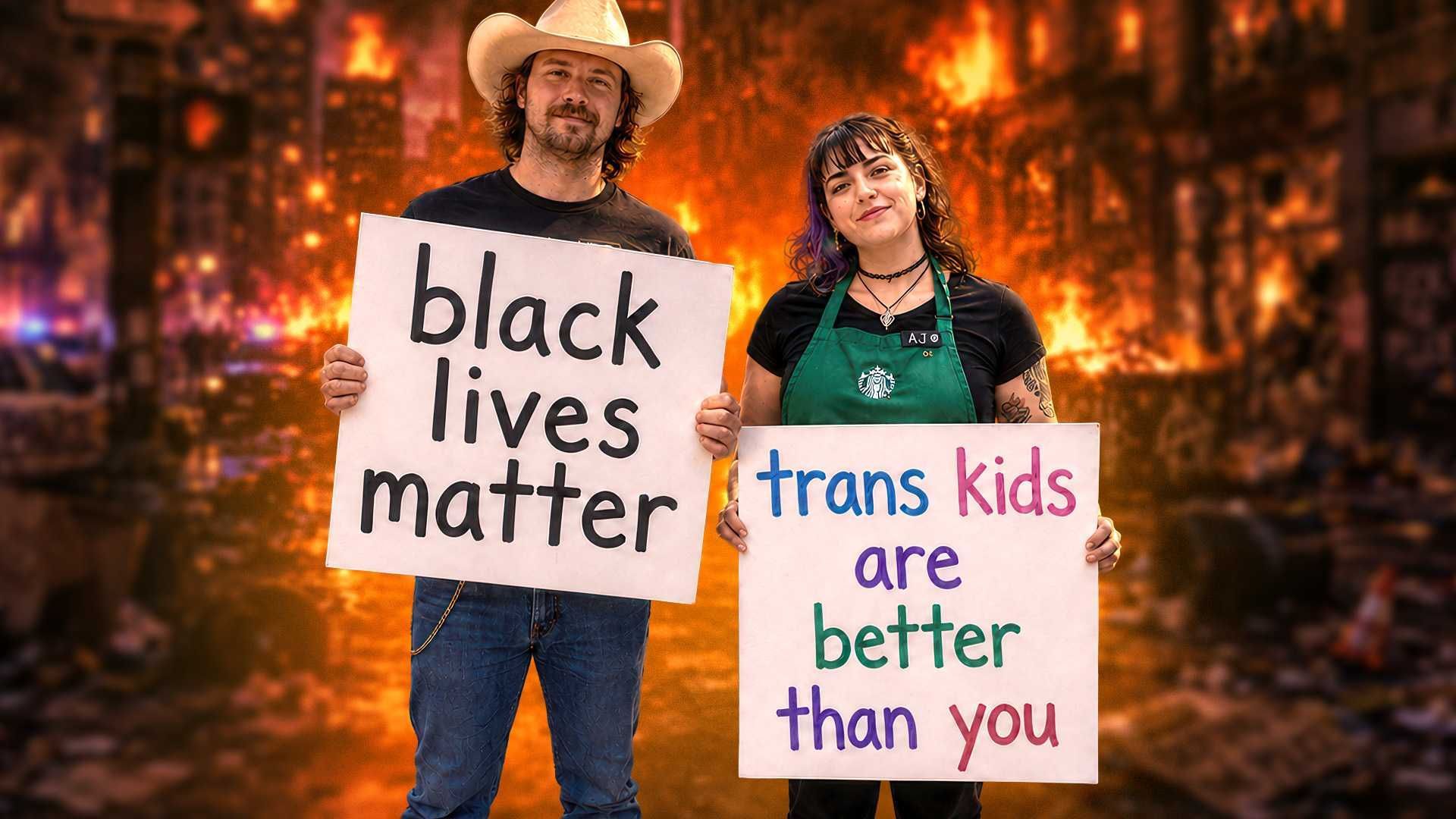
American society is failing the youth and leading to their radicalization, says Auron MacIntyre to Tucker Carlson


Modern society has made attaining the American dream almost impossible, argues BlazeTV host Auron MacIntyre in an illuminating discussion with Tucker Carlson posted to X on Monday.

MacIntyre explained the historical circumstances that led to the attitudes and habits of the Boomer generation being so dismissive of younger people's concerns about the economic and social stumbling blocks they face.

'I'm never having children. My bloodline will end. My religion will fade because it's no longer practiced. My community will collapse.'

Carlson began the segment by pointing out that former President Joe Biden appeared to sincerely believe the idea that fighting against the Russian invasion of Ukraine was important for the notion of defending democracy.

"He really seemed to mean it. I thought that was real, the emotion. Do you remember any of these pressers? Like, the Boomer brain always reverts to the most tired cliche," Carlson said. "Why is that?"

"I think they came into the world at a time when America, more or less, conquered the world. And when America conquered the world, we received all the benefits of empire," MacIntyre responded.

"We started as a country that rejected empire. Right? That's our entire foundation. We led a revolution against an empire because we had the right to be governed by our peers, by the elites that are part of our society and not across an ocean," he added.

"And so it's a very hard story to tell yourself that you conquered the world in the name of freedom, right?" MacIntyre said. "And so I think there's a lot of cognitive dissonance there, and that requires a very cartoon, Marvel movie-esque understanding of the world. 'We're Captain America! We fought for freedom!'"

"Exactly!" Carlson replied.

"But that's going away with that generation," MacIntyre said.

"It is going away. I do think there's something about — I always beat up on the Boomers, and broad strokes here, this really was the first generation in history to have basically every part of their life dictated by popular culture. It's the television generation really, right?" Carlson said.

"And regional differences just went away during those years, 1946 to 1964, and they kind of lost the capacity to think critically or something," he added. "Do you know what I'm talking about?"

"The radio and the television, the train and the automobile," MacIntyre replied, "these things collapse the space inside of America that used to be regional, had specific understandings and ways of life, and when that happened, as you say, the only way to have a singular culture was through this kind of mass media projection."

"Yes!" Carlson agreed.

MacIntyre cited the joke about an old person screaming at a television as a sign that the older generation knows how to "absorb the wider culture" only through television.

"I saw it with Republicans with Reagan. I'm not against Reagan or anything," Carlson said. "I don't agree with everything, but I don't hate Reagan. But they get so — former colleagues of mine at TV channels — they talk about him, and they just repeat the same eight phrases, 'Mr. Gorbachev, tear down this wall,' or whatever.

"And they're kind of carried away in a sincere way, like they experience life in the shallowest possible way. Does this, do you feel what I'm saying?" he asked.

"Sure, and a lot of that is the medium itself. Statesmanship doesn't sell in sound bites. That's not really how that works. To be thoughtful, to be deliberate, to have that level of prudence requires deliberation and time, and you can't sell that in between ads," MacIntyre replied. "We can hate people for that, but I don't think we should because ultimately that's human nature."

"I don't hate them. I just don't want them in power at all, and I just want people to remember that so much of what they hear is misleading, but what they experience is the truth. That is the truth," Carlson responded.

"And if your children are addicted to drugs, your nephew dies of an [overdose], and your kids can't get married, and the best they can hope for is to work for some freaking bank, that's not the life that you want for your family. That's reality. It has nothing to do with bombing Iran or democracy or some nonsense like that," he added. "How are your kids doing? It's important to notice the world around you!"

RELATED: The culture war isn’t a distraction — it’s the main front

MacIntyre cited the example of the anger displayed by many that an avowed socialist like Zohran Mamdani could win the Democratic primary for the mayoral election in New York City to further explain Americans' economic anxiety.

"'How can a socialist win?'" he asked mockingly. "I don't know, guys, have you looked at the fact that the average first-time homebuyer ... is now 38 years old? Have you understood the fact that no one you know can get a decent job without going a hundred thousand dollars in debt for a degree that objectively taught them nothing, and they're actually just doing any learning they do on the job anyway?"

"You've built a society that shows people your system doesn't work. Now, I think there's a much better way than communism, but you have to show though," he continued. "You can't just sit there and obstinately say, 'No, this system, ride or die! We don't care if you're homeless. We don't care if you can't have children. We don't care if you're gonna live the rest of your life in your mom's basement. That's your fault! There's nothing wrong with the system ever! There's no reason to look at any of this!'"

He went on to say that this is the understanding that is changing conservatism for the younger generations of Americans.

"If I don't fix this soon, then I'm never having a future. I'm never having children. My bloodline will end. My religion will fade because it's no longer practiced. My community will collapse. I don't have time to sit around here."

Like Blaze News? Bypass the censors, sign up for our newsletters, and get stories like this direct to your inbox. Sign up here!

Meet the DOJ’s creepy shadow agency controlling racial tensions and media narratives


We all remember how during the Summer of Rage we were told that the riots literally burning cities to the ground were “mostly peaceful protests.”

Five years later, we’re now learning that phrases like that might have come directly from a secret government agency called the Community Relations Service, which manipulates racial tensions and media narratives under Title 10 of the Civil Rights Act.

To dive down the rabbit hole, Jill Savage and Blaze Media editor in chief Matthew Peterson, hosts of “Blaze News | The Mandate,” invite BlazeTV host Auron MacIntyre to the show.

“Title 10 of the Civil Rights Act required there to be a community relations service, which went around and tried to smooth out problems between the different communities in the United States,” says MacIntyre.

While “in theory that sounds great,” the reality is “what this service actually ended up doing was managing the expectations of different communities when it came to violence, especially when it came to violence between black communities and white communities.”

“Anytime that a white person might receive some level of violence from a minority, these people were deployed to control the story, to control the situation,” says MacIntyre.

This control went to great extents, involving “[putting] lots of pressure on local media,” “[coordinating] with law enforcement,” and “writing prepared statements, in some cases, for the victim's families.”

“It's manipulating everything people know about race relations in the United States from top to bottom,” says MacIntyre.

He references the racially charged brawl between Somali and Congolese immigrants and a group of white men that led to the death of Donald Giusti, a white male, in Lewiston, Maine, in 2018.

The CRS was quickly “deployed to make sure that, again, there was no backlash over this [and] that the victims’ families were kept under control,” he explains.

MacIntyre explains that the CRS responded quickly to this incident in Lewiston, Maine, because they were already present in the city, having been involved in resettling the Somali community. Anticipating tensions and potential violence, they were prepared to manage any backlash against the Somali population when the predicted violence occurred.

“They already had the narrative ready. ... They were there to make sure that there was no backlash against the Somali community,” says MacIntyre, noting that the CRS has been “doing this for decades.”

But the operations of the CRS get even more disturbing.

CRS “continues to train leftist activists to this day; it would threaten to pull the FCC licenses of TV stations that did not hire black newscasters in an affirmative-action style. They worked with different black militant radicals in the '60s, some of whom were students of Saul Alinsky, in order to coordinate different riots,” MacIntyre says.

“The people who ran the organization admitted that the purpose of the organization was explicitly to prevent white America from having any backlash against any minority groups that might do violence against them,” he explains, adding that CRS controls everything “so that there isn't an awareness of the severity of many of these crimes.”

To make matters worse, CRS is permitted to “refuse most FOIA requests” and has “special privileges where they can avoid testimony in front of Congress and in courts.” “Even the notes that they take are destroyed and not entered into the public record.”

The agency has been able to fly “under the radar for so long” likely because it essentially has “an FBI level of confidentiality,” says MacIntyre.

“This is extremely troubling — beyond even the wildest dreams of what many people thought was possible for the federal government,” says Peterson. “What is their real goal?”

To hear MacIntyre’s answer, watch the video above.

Want more from 'Blaze News | The Mandate'?

To enjoy more provocative opinions, expert analysis, and breaking stories you won’t see anywhere else, subscribe to BlazeTV — the largest multi-platform network of voices who love America, defend the Constitution, and live the American dream.
'Woke right' smear weaponized by liberal interlopers against MAGA conservatives, populists — and Arby's?

James Lindsay. Photo by DOMINIC GWINN/Middle East Images/AFP via Getty Images

On his website, he stated:

Woke Right refers to right-wing people who have adopted the characteristics and underlying worldview orientation of the Woke Left for putatively "right-wing," "conservative," or reactionary causes. They are, as reactionaries, the image of the Right projected by the Left made real by players claiming to be on the Right. That is, they’re right-wing people who act and think about the world like Woke Leftists.

Lindsay echoed this definition in his written responses to Blaze News, in which he suggested that woke right "means using critical theories or Marxian analysis for right-wing or anti-Left causes."

"It is very specific," Lindsay continued. "Most conservatives do not meet this definition."

A sizeable portion of the MAGA coalition does, however, supposedly meet this or one of Lindsay's other definitions. Right-wing populists, for example, are on the liberal's naughty list, as are those who subscribe to national conservatism, which he dubbed "the Woke Right final boss."

The application of "woke right" to national conservatives amounts to the more tactical smear, as it not only cuts through the MAGA coalition but deep into the Trump administration and the Republican Party.

Past speakers at the National Conservatism Conference, which is run by the Hazony-led Edmund Burke Foundation, include Secretary of State Marco Rubio; Michael Anton, another senior State Department official; Under Secretary of Defense for Policy Elbridge Colby; White House Deputy Chief of Staff Stephen Miller; Trump border czar Tom Homan; and Sens. Josh Hawley (R-Mo.), Ron Johnson (R-Wis.), Mike Lee (R-Utah), Rick Scott (R-Fla.), Ted Cruz (R-Texas), and Roger Marshall (R-Kan.).

Of course, there's also JD Vance, who underscored in a NatCon speech — given just days before President Donald Trump chose him as his running mate — that while America was founded "on great ideas," it is not, as some have suggested, reducible to "just an idea."

James Lindsay and a bunch of his friends tried to pump the hatred higher because the term 'illiberal' — it just didn't succeed in sufficiently tainting and de-legitimizing conservatives.

While Lindsay has danced around labeling Vance "woke right" for daring to express such thoughts, stating in December, "I haven't called JD Vance Woke Right anywhere yet," he has implied as much — calling him a "post-liberal" with a predominantly woke right team, who not only entertains the woke right definition of "nation" but did the unspeakable: speak at a National Conservatism Conference.

RELATED: JD Vance cuts straight to the heart of what animates Trump's nationalism — and it's not 'just an idea'

Vice President JD Vance. Photo by JIM WATSON/AFP via Getty Images

In fairness to Vance and his fellow NatCon alumni, it is apparently easy to find oneself labeled "woke right." After all, even a fast-food chain has been tagged.

Lindsay recently indicated online that Arby's had veered into woke right territory with its post, "Unlike dad, our ham & swiss actually came back."

In the much ridiculed post, which he has since apologized for and walked back, Lindsay noted, "That's curtains for them. Cringe af."

When asked why national conservatives warrant their categorization as "woke right," Lindsay suggested that while "not all of National Conservatism is Woke Right ... the general thrust of the movement meets the basic definition."

Final boss

Hazony, the author of "The Virtue of Nationalism" whom Lindsay has repeatedly targeted with the “woke right” smear, explained to Blaze News that the strategy behind the term is not new.

"The main people who are behind this — and James Lindsay is the one who's most explicit, but I don't think that he's at all the only one — they've been doing the same thing for many years, long before the term 'woke right' came out; at least as far back as Donald Trump being elected, you know, so it's almost a decade ago," said Hazony. "There was this game of saying that in between liberals and Nazis or racialist fascists — in between, there is no legitimate position. That is a standard argument of the anti-nationalist liberal camp that has been used by many, many different people, and it's always the same."

"When people started using 'illiberal' ... in the mid-2000s, what they were doing was eliminating the legitimacy of the word 'conservative,' because 'illiberal' is anybody who's an authoritarian or a Nazi or a theocrat or a fascist, plus anybody else who's not a liberal," continued Hazony. "So that strategy, using the term 'illiberalism' as a way of saying, 'No, I'm not going to recognize that there are any legitimate conservatives or nationalists' — that's been around in that form for at least 15 years."

Hazony noted that more recently,

James Lindsay and a bunch of his friends tried to pump the hatred higher because the term "illiberal" — it just didn't succeed in sufficiently tainting and de-legitimizing conservatives. So they switched to "Christian nationalism," and it was the same kind of thing, where, you know, you pick the absolute least palatable people who can be called "Christian nationalists," you quote them, and then you say, "Well, everybody who's a nationalist and a Christian all the way right up to the borders of liberalism — that entire sphere of conservatives and nationalists who are basically normal but they have criticisms of liberalism — no, they're all illegitimate. They're all totalitarians. They all reject the American Constitution." And so they tried that; that peaked in 2023; and it failed. It petered out. They didn't succeed in convincing the average, intelligent person who's paying attention that the political spectrum is only liberals and fascists.

Whereas previous attempts failed, Hazony indicated that "this time, they have succeeded in drawing blood."

"This term [woke] was designed to be humiliating by taking the term that we were using for the Maoist-style cultural revolution that was taking over America and Britain and other countries. And now they say, 'Those of you who are fighting against this, you're exactly the same. You're the same exact thing.' And it upsets people."

'You got dogmatic, fanatic liberals who thought that the whole world simply could be brought under liberalism either by persuasion or, if not, then by conquest.'

Hazony further told Blaze News that "it's deeply insulting at a personal level for people who've devoted their time to trying to save America and the West from the woke, and at the same time, it's incredibly effective at destroying the coalition that was built — the anti-woke coalition — by making the different parties despise one another."

"The idea that liberalism is about toleration was just thrown out the window and you got dogmatic, fanatic liberals who thought that the whole world simply could be brought under liberalism either by persuasion or, if not, then by conquest."

Playing with fire

Lindsay has tried tarring Blaze Media with the same brush he has used on Hazony and others, characterizing it as "the first captured stronghold" in his imaginative woke right "takeover" narrative.

'The term has little meaning other than as a slur used by people trying desperately to gatekeep this intellectual, cultural, and commercial majority movement.'

Blaze Media editor in chief Matthew Peterson, whom Lindsay has implicated as a key player in this supposed takeover, said, "I know Lindsay and we had a decent relationship until he suddenly lumped me and my tenure here at Blaze Media with his slur."

"Obviously, we have a wide variety of people and opinions at Blaze Media. We represent the broad MAGA-MAHA majority coalition, and I take that role seriously," continued Peterson. "But I do not need to say for the record that we are not 'woke right' because the term has little meaning other than as a slur used by people trying desperately to gatekeep this intellectual, cultural, and commercial majority movement."

Peterson suggested that the term's capricious usage has helped empty it of meaning.

"What's puzzling and ultimately discrediting about the term is that Lindsay and others lump disparate people and groups together into a wild, grand conspiracy," continued Peterson. "He and his associates refer a lot to abstract -isms like hermeticism, communism, and gnosticism and call all kinds of people followers of various schools of thought: 'Nietzscheans' and 'Schmittians.'"

The "Schmittian" smear lobbed around evokes Carl Schmitt, a German political theorist who critiqued liberalism, defined politics as the distinction between the categories of friends and enemies, and lent intellectual support to the Nazi regime in Germany.

Peterson noted that he once tried to explain his thoughts on Schmitt to Lindsay over text.

"As a student of political thinkers who were taught by Leo Strauss, who fled Nazi Germany (as opposed to Schmitt, who became a Nazi), I think Schmitt's writings are important to anyone who wants to seriously consider the nature of executive power, which is why they are still studied by people of all kinds throughout the world," said Peterson. "But the idea that this makes me a Nazi or that I agree with everything Schmitt says or believed is ridiculous. James recently asked me to 'denounce Schmitt' on X at his command, which sounds a lot like he's trying to initiate the very 'struggle sessions' he often decries."

Peterson emphasized the range of people and institutions that Lindsay and his fellow travelers have lumped into his "grand conspiracy," noting, for instance, that "they throw in institutions from the Roman Catholic Church to the Claremont Institute, countries from Hungary to China, and individuals from General Michael Flynn to Yoram Hazony to Peter Thiel in the mix as part of whatever the 'woke right' is."

"It becomes silly pretty quick," said Peterson.

Threatened liberals

The host of BlazeTV's "The Auron MacIntyre Show" — one of Lindsay's frequent targets — said that when it comes to Lindsay, woke right "seems to be more of a branding exercise and a political weapon than it does anything with definitive content."

"I think that's the reason so many people have had difficulty when attempting to have even a basic discussion about the term," MacIntyre said. "The guy who is most famous for coining and popularizing it himself has admitted that it wasn't a great one, and it doesn't really have a lot of content besides its ability to be used as a political weapon."

'The only thing that seems to actually link any of these people together is their willingness to win.'

MacIntyre suggested that woke right's apparent transformation in the wild from a denigratory term for anti-Semites and identitarians into a strategic full-spectrum put-down is “the real trick of this term.”

"A lot of people assume that [anti-Semites and identitarians] were the original targets, and because of that, many people thought that perhaps there could be some value in it because, you know, not all of those groups are particularly ones that people enjoy being associated with," said MacIntyre. "That said, it's become quickly clear that the expansion of the term has now come to encompass Orthodox Jews like Hazony, guys who are big fans of Israel like Tim Pool, and others."

"He's included a large number of very well-respected people who are obviously well outside of this — guys like Matt Walsh."

RELATED: Let's build a statue honoring Pat Buchanan

BlazeTV host Auron MacIntyre. Photo by DOMINIC GWINN/Middle East Images/AFP via Getty Images

"The only thing that seems to actually link any of these people together is their willingness to win, their willingness to fight back against the left, their willingness to say, 'Actually, we're going to take affirmative steps. We're going to take power. We're going to use power to win political battles.' And that seems to be the main violation," continued MacIntyre.

'What they're finding is actually, no, conservatives would like to be in charge.'

When asked whether this campaign might be, at least in part, the early stages of an effort to politically neutralize JD Vance ahead of the next presidential election, MacIntyre answered in the affirmative.

"Not only is that the case, I think he's been pretty explicit about that," said the BlazeTV host.

MacIntyre suggested that Lindsay and other "new atheists, rational-centrist types" feel threatened by Vance and the national conservatives, given their willfulness and refusal to "be ruled by people who hate them, hate their values, hate their religion."

MacIntyre suspects that while the "salience" of the "woke right" term has risen, the credibility of those wielding it has "plummeted."

"[Lindsay has] made many enemies of pretty high-profile figures with good reputations by throwing around this term and attacking people who clearly don't hold any of the nefarious views he's attributing to them," said MacIntyre.

The attacks have also served to expose bad actors who "ultimately were hoping to undermine the conservative movement rather than be a productive part of it," said MacIntyre. "That's something that's critical to know at this juncture."

Like Blaze News? Bypass the censors, sign up for our newsletters, and get stories like this direct to your inbox. Sign up here!

‘I, Pencil’ defined free trade — Trump’s tariffs are writing the sequel


On Sept. 17, 2024, thousands of pagers and walkie-talkies exploded in the hands and pockets of alleged Hezbollah operatives across Lebanon and Syria. Intelligence sources believe the Israeli government carried out the operation in retaliation for the terrorist attacks committed on Oct. 7, 2023.

Israeli agents reportedly intercepted the devices — manufactured overseas — and modified their batteries to include small amounts of explosives. However one feels about this novel form of retaliation, it serves as an explosive reminder of how critical a country’s supply lines are to national security.

Trump understands that reindustrialization is more than an economic policy. It’s a national imperative.

For decades, the global liberal economic order has operated on the assumption that nations could stretch supply chains across the world to maximize efficiency and profit — with little risk. Leonard Read’s classic essay “I, Pencil” illustrated the idea, celebrating how no single person or country could manufacture a pencil alone. It highlighted how markets, when left to coordinate production across borders, could reach extraordinary levels of efficiency.

If global trade remained stable and secure, national self-sufficiency seemed unnecessary. Countries could rely on the global market to supply even critical goods — so long as the U.S. Navy kept shipping lanes open. Under Pax Americana, the thinking went, every nation could specialize in what it did best and enjoy the shared prosperity of free trade.

The global trade system rested on the assumption that American military dominance would continue indefinitely. That belief led to some baffling choices.

A shocking share of goods essential to U.S. national security are produced almost entirely in China — including antibiotics and components used in American military hardware. The idea that a country would rely on semiconductors from its primary geopolitical rival to launch a missile defies basic strategic logic. Yet that is exactly what the United States has done.

Defense contractors have prioritized profit, operating under the assumption that global trade is both reliable and free from political risk.

While this approach always carried serious risks, the COVID-19 pandemic exposed its full recklessness. Fears of contagion and widespread labor shortages disrupted global trade, causing economic shocks and widespread shortages of consumer goods.

More urgently, the pandemic revealed that critical medical supplies — such as ventilators — were largely manufactured in China, where the virus originated. Despite this wake-up call, the United States has yet to reshore production of many essential medicines. Yet we still rely heavily on China for antibiotics and other critical pharmaceuticals.

The pandemic and Israel’s pager attack made one thing clear: The era of supply chains divorced from security concerns is over — if it ever truly existed.

The global liberal economic order operated on the assumption that American dominance would go unchallenged. Under that model, it seemed economically irrational for any country to sabotage goods it sold to the United States. Nations believed they could depend entirely on foreign production because the reach of American power would keep economic exchanges politically neutral.

But Israel didn’t manufacture the pagers that wound up in the hands of Hezbollah operatives. It simply accessed the supply chain and modified those devices. These weren’t weapons or advanced military systems. By tapping into the logistics of basic consumer electronics, Israel was able to inflict serious damage on its enemy.

This illustrates the core vulnerability of today’s trade model.

Donald Trump has long argued that Americans are getting a raw deal in the current global economic system. While the United States has embraced free trade, many of our allies — including the United Kingdom, Canada, and Israel — have maintained protective tariffs.

Meanwhile, China has benefited from open access to U.S. markets despite its use of centralized planning, currency manipulation, and widespread intellectual property theft.

Trump has made clear that his goal is to reverse this imbalance. For both economic and national security reasons, he intends to use tariffs to secure better trade agreements and bring as much manufacturing as possible back to the United States.

Some disgruntled mainstream conservatives — particularly at publications like National Review — have joined leftist politicians and media voices in sounding the alarm over efforts to build an economic order that prioritizes U.S. interests. For many neoconservatives, free trade has become a kind of orthodoxy. They treat economic predictability — even within a broken system — as more important than restoring national sovereignty.

NeverTrump conservatives often dismiss the president’s trade agenda as outdated or uninformed. They mock his focus on reviving the American middle class. Among the D.C. elite, working- and middle-class Americans from “fly-over” states are often treated as relics of the past — easily replaced by foreign labor in a gig-based, service economy.

But Trump understands that reindustrialization is more than an economic policy. It’s a national imperative.

Tariffs once funded nearly the entire federal government. Now, Trump is attempting something unprecedented: using tariffs strategically within a modern, globalized economy. This may ultimately fail — but it’s clear to anyone paying attention that the current model is collapsing. Staying on the same path leads only to a slower, more orderly decline.

Political theorist Niccolò Machiavelli warned that the boldest reforms bring the fiercest opposition. A leader who proposes a new system will face resistance from all who benefited under the old one and enjoy only lukewarm support from those uncertain about the future.

If Trump succeeds, he will have demonstrated vision and resilience in the face of a system deeply hostile to him. If he fails, history may view him as the man who delivered an already-ailing economy to an early grave.

What remains clear is this: Every nation that hopes to endure must learn how to secure its supply chains. That process will demand serious reindustrialization. The era of security-neutral trade is ending fast — and those guided by short-term indicators instead of long-term national interest may not survive what comes next.