Evil never announces itself — it seduces the hearts of the blind
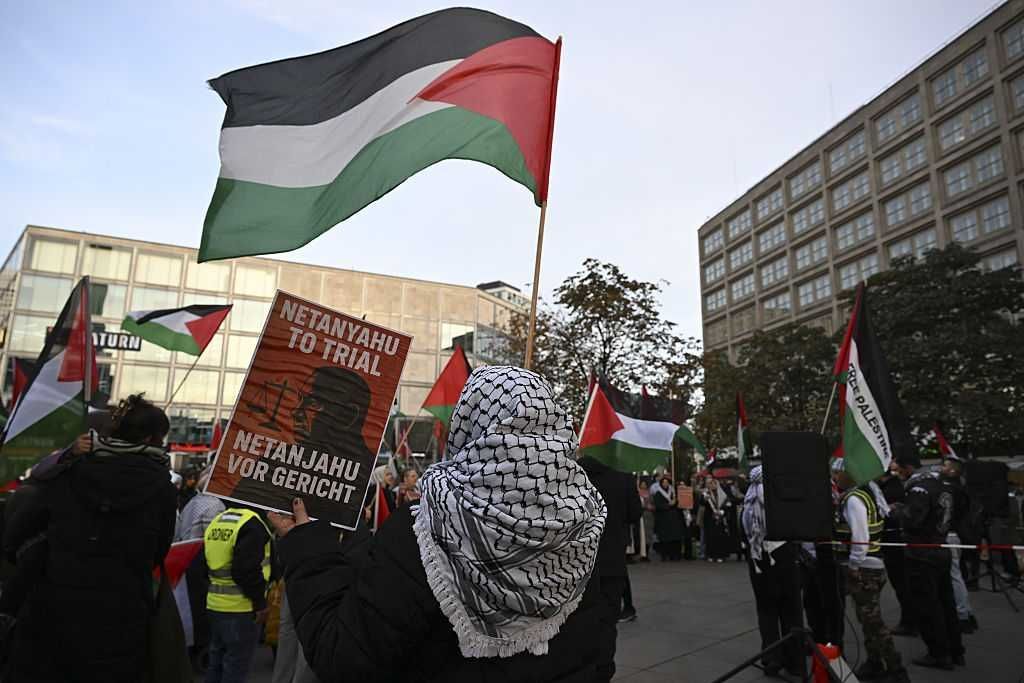


Evil introduces itself subtly. It doesn’t announce, “Hi, I’m here to destroy you.” It whispers. It flatters. It borrows the language of justice, empathy, and freedom, twisting them until hatred sounds righteous and violence sounds brave.

We are watching that same deception unfold again — in the streets, on college campuses, and in the rhetoric of people who should know better. It’s the oldest story in the world, retold with new slogans.

Evil wins when good people mirror its rage.

A drone video surfaced this week showing Hamas terrorists staging the “discovery” of a hostage’s body. They pushed a corpse out of a window, dragged it into a hole, buried it, and then called in aid workers to “find” what they themselves had planted. It was theater — evil, disguised as victimhood. And it was caught entirely on camera.

That’s how evil operates. It never comes in through the front door. It sneaks in, often through manipulative pity. The same spirit animates the moral rot spreading through our institutions — from the halls of universities to the chambers of government.

Take Zohran Mamdani, a New York assemblyman who has praised jihadists and defended pro-Hamas agitators. His father, a Columbia University professor, wrote that America and al-Qaeda are morally equivalent — that suicide bombings shouldn’t be viewed as barbaric. Imagine thinking that way after watching 3,000 Americans die on 9/11. That’s not intellectualism. That’s indoctrination.

Often, that indoctrination comes from hostile foreign actors, peddled by complicit pawns on our own soil. The pro-Hamas protests that erupted across campuses last year, for example, were funded by Iran — a regime that murders its own citizens for speaking freely.

Ancient evil, new clothes

But the deeper danger isn’t foreign money. It’s the spiritual blindness that lets good people believe resentment is justice and envy is discernment. Scripture talks about the spirit of Amalek — the eternal enemy of God’s people, who attacks the weak from behind while the strong look away. Amalek never dies; it just changes its vocabulary and form with the times.

Today, Amalek tweets. He speaks through professors who defend terrorism as “anti-colonial resistance.” He preaches from pulpits that call violence “solidarity.” And he recruits through algorithms, whispering that the Jews control everything, that America had it coming, that chaos is freedom. Those are ancient lies wearing new clothes.

When nations embrace those lies, it’s not the Jews who perish first. It’s the nations themselves. The soul dies long before the body. The ovens of Auschwitz didn’t start with smoke; they started with silence and slogans.

RELATED: Evil unchecked always spreads — and Democrats are proof
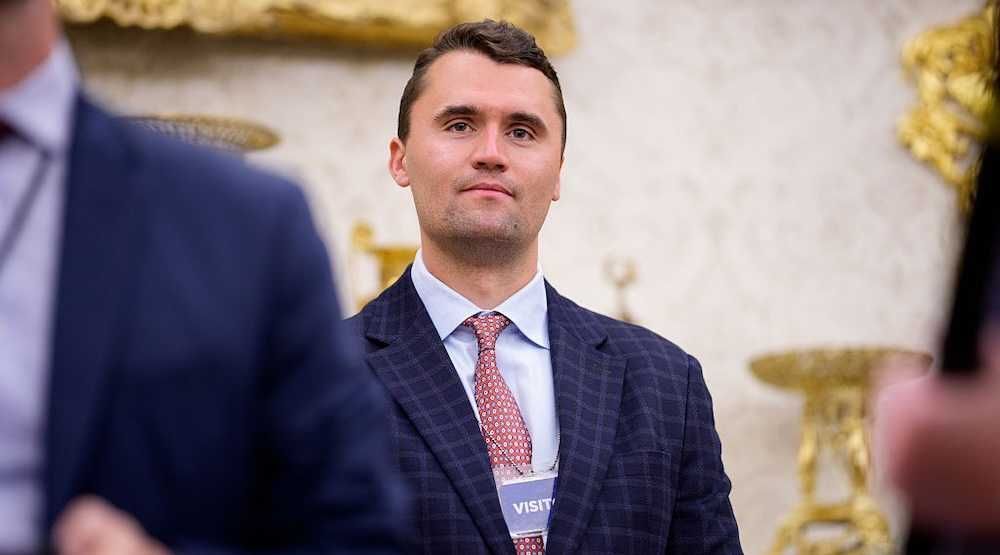
Photo by Andrew Harnik/Getty Images

A time for choosing

So what do we do? We speak truth — calmly, firmly, without venom. Because hatred can’t kill hatred; it only feeds it. Truth, compassion, and courage starve it to death.

Evil wins when good people mirror its rage. That’s how Amalek survives — by making you fight him with his own weapons. The only victory that lasts is moral clarity without malice, courage without cruelty.

The war we’re fighting isn’t new. It’s the same battle between remembrance and amnesia, covenant and chaos, humility and pride. The same spirit that whispered to Pharaoh, to Hitler, and to every mob that thought hatred could heal the world is whispering again now — on your screens, in your classrooms, in your churches.

Will you join it, or will you stand against it?

Want more from Glenn Beck? Get Glenn's FREE email newsletter with his latest insights, top stories, show prep, and more delivered to your inbox.

A New Film Pays Fitting Tribute To The Christian Martyr Of Auschwitz

Like any truly beautiful story, Triumph of the Heart breaks you out of this world, leaving an indelible impression with its message of sacrificial love.
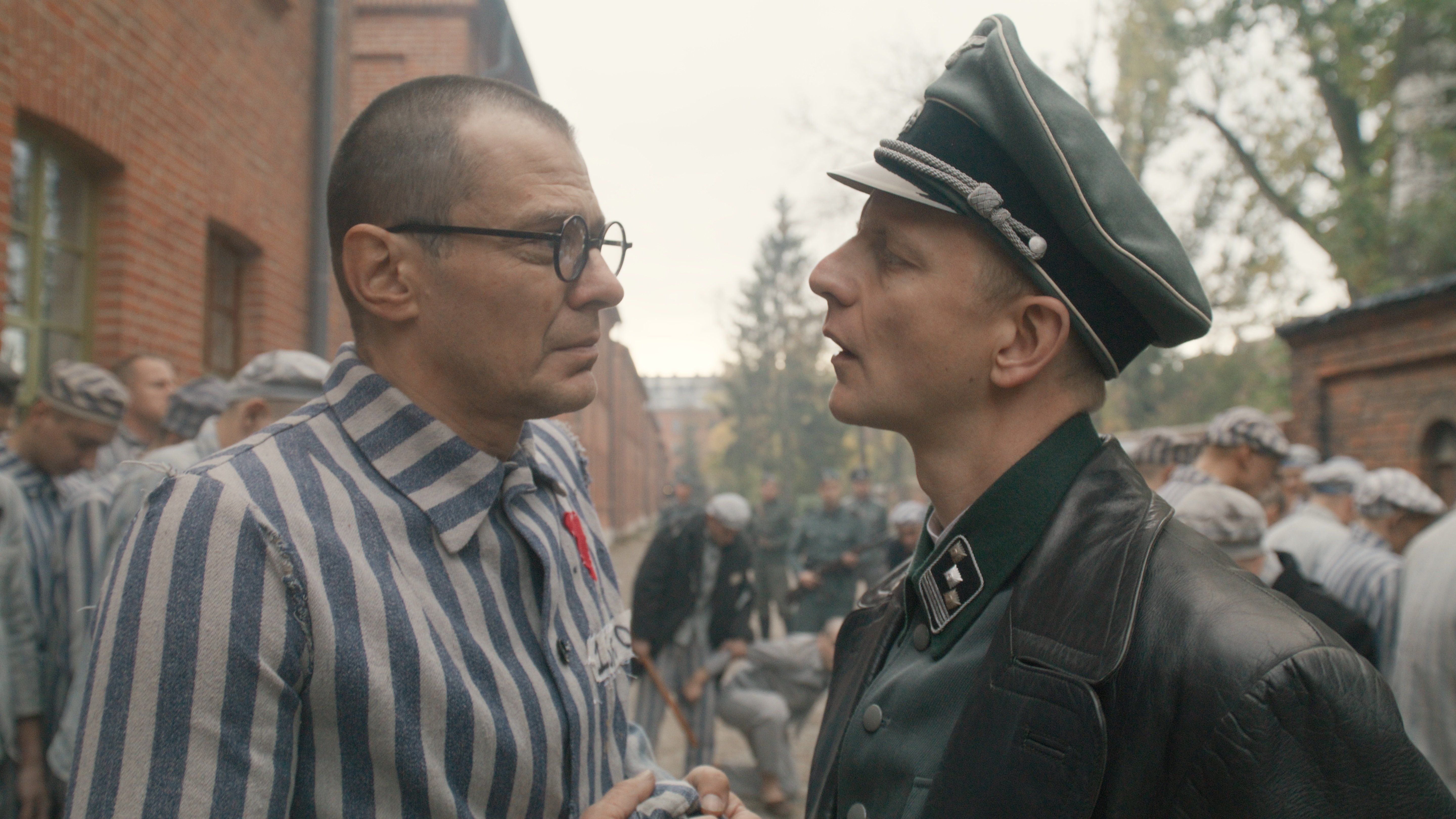
'Triumph of the Heart': An unflinching depiction of what it means to follow Christ


The current landscape of Christian cinema is more desert than garden. Too many films settle for pandering and saccharine depictions of the faith, as if doing the bare minimum to attract what they assume is a captive audience. Meanwhile, moviegoers thirst for stories that challenge them with reality of the Christian life.

With the success of "Sound of Freedom," "The Shift," and "Cabrini," Angel Studios has shown that viewers will show up for more nuanced, high-quality fare, but most "faith-based" films still seem content to take as little risk as possible.

As Kolbe, Marcin Kwaśny embodies an ordinary man who makes the extraordinary decision to pick up his cross and follow Christ, whatever the consequences.

This was all in my mind as I attended the premiere of "Triumph of the Heart." I wasn't sure what to expect; word of mouth has been strong, but would it live up to the hype? I'm happy to answer that question with a resounding yes.

Greater love hath no man ...

"Triumph of the Heart" tells the incredible true story of the Polish Catholic priest and newspaper publisher who would become Saint Maximilian Kolbe (Pope John Paul II canonized him in 1982). Arrested and sent to Auschwitz in 1941, Kolbe volunteers to take the place of a prisoner condemned along with nine others to die in the camp's starvation cell.

As the men cope with despair, starvation, and ideological division, Kolbe's humanity and their shared Polish identity forge a brotherhood that allows them to face down evil and die with honor.

A humble saint

Not since Paul Roland’s "Exemplum" have I seen such a truthful and realistic depiction of Catholicism. These characters are far from perfect, and that includes Kolbe himself. He smokes, he has regrets, he makes mistakes. But he’s also relentlessly hopeful, courageous, and brave in his faith in Jesus Christ, which empowers him to be a source of light for his fellow cellmates who struggle to maintain their dignity.

This is no sanitized depiction of sainthood. As Kolbe, Marcin Kwaśny embodies an ordinary man who makes the extraordinary decision to pick up his cross and follow Christ, whatever the consequences.

Sherwood Fellows

The weight of despair

The actors playing the other prisoners are equally astounding, making you feel the weight of their despair and claustrophobia in the confinement of the hellish, one-window bunker.

Especially impressive is Rowan Polonski’s Albert, who gets the film’s central arc. As he mourns the life with his wife that he passed up to fight in the war, he struggles to accept the inevitability of death and resist the temptation of suicide. It's a dark but layered portrayal of suffering that took me aback like nothing I've ever seen in a Christian film.

RELATED: Father Maximilian Kolbe: A man who lived, and died, for truth

Keystone-France/Getty Images

As camp commandant Karl Fritzsch, the man who condemns the prisoners to death, Christopher Sherwood makes a chilling antagonist. But the more deadly foe is Satan himself. He never shows up, except for some artistic shots of a snake peppered throughout the third act, but his presence is tangible as the heroes grapple with despair. All of which makes Kolbe's admonition to “finish the race” (as seen in the movie's trailer) ring with such emotional power as they reject Satan and embrace the hard way out.

Trusting in God

Writer/director Anthony D'Ambrosio has created a deeply Catholic film. That D'Ambrosio himself struggled with anxiety and insomnia while bringing this story to life comes as no surprise; this is a movie that exudes the painful uncertainty that comes with trusting in God's plan.

"Triumph of the Heart" is also a triumph for Christian/Catholic cinema, a profoundly moving examination of the suffering that often accompanies the pursuit of holiness. I can only hope its example inspires other filmmakers to bring the full richness of the Christian faith to the big screen; the possibilities are endless. For now, go see "Triumph of the Heart." The hype is real.

Beautiful Independent Film Triumph Of The Heart Is An Oasis In Hollywood’s Creative Desert

Triumph of the Heart powerfully reorients us and reminds us -- not only of what our lives can mean but of the powerful role art can play in restoring what our culture has lost.

80 Years After Auschwitz, Remembering The Evil Strengthens Our Resolve To Be Good

Evil will always exist, but on this 80th anniversary of the liberation of Auschwitz, let it remind us to strive to fortify the bridgehead of good that exists in our hearts — both personally and as a nation.

Holocaust Survivors Condemn Harris’ Depiction Of Trump As Next Hitler

Equating the former president to Hitler is a disgrace and a disservice to the Holocaust dead, survivors and their families, Litwok said.

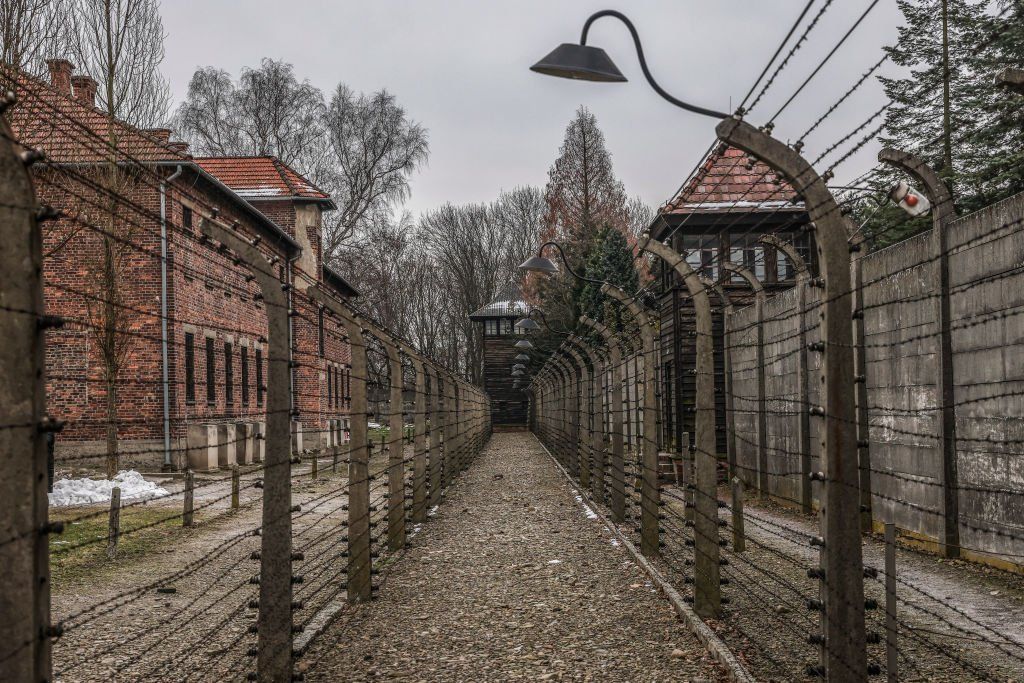
FACT CHECK: Did Auschwitz Have A Swimming Pool?

There is no evidence that this photo was taken at Auschwitz

WWE apologizes for accidentally using Auschwitz footage during WrestleMania promo


During a promotional video for a match at WrestleMania 39, World Wrestling Entertainment accidentally used footage of the Auschwitz concentration camp in a compilation of jails and prisons, subsequently apologizing and removing the footage from future broadcasts.

According to outlet Wrestling Attitude, during "WrestleMania Night 1," the company used footage of the camp in then-Nazi-occupied Poland to promote a match between father and son adversaries Rey and Dominik Mysterio.

The wrestling website states that the match was heavily promoted in the weeks leading up to the event, with the son adopting the character called "Prison Dom" after spending a night in jail, harassing his father until he agreed to wrestle him at the WWE's biggest annual event.

\u201cSomeone in the WWE tried to find prison footage for Dominik Mysterio's "hard time" video and ended up using footage of what I'm pretty sure is the Auschwitz-Birkenau State Museum. It ran during the WrestleMania kickoff.\u201d
— Aaron Wrotkowski (@Aaron Wrotkowski) 1680394155

Despite having the "most successful WrestleMania of all time," the company apologized and removed the footage from tapings.

"We had no knowledge of what was depicted," the WWE said in statement to NBC News.

"As soon as we learned, it was removed immediately. We apologize for this error," the company added. The outlet noted that the spokesman said the WWE took immediate action once the error was flagged.

The footage was reportedly replaced with generic images of jails with barbed wire.

The Auschwitz Memorial Museum called the use of the footage into question, saying in a statement on Twitter that the WWE was "exploiting" the location.

"The fact that Auschwitz image was used to promote a WWE match is hard to call 'an editing mistake'. Exploiting the site that became a symbol of enormous human tragedy is shameless and insults the memory of all victims of Auschwitz," the museum said.

\u201cThe fact that Auschwitz image was used to promote a WWE match is hard to call "an editing mistake". Exploiting the site that became a symbol of enormous human tragedy is shameless and insults the memory of all victims of Auschwitz.\nhttps://t.co/b4bbYgWPwj\u201d
— Auschwitz Memorial (@Auschwitz Memorial) 1680680849

The wrestling giant boasted about its event in a press release, citing over 500 million views over two days, a 42% increase over 2022.

The company also says the event saw over $20 million in revenue, doubling the previous record, and sold the most merchandise ever at the event, along with a record-setting gate of $21.6 million.

\u201c#WrestleMania 39 smashed records across the board.\n\nThank you to the @WWEUniverse at @SoFiStadium and around the world for helping us create the most successful @WrestleMania of all time.\u201d
— Triple H (@Triple H) 1680534868

Like Blaze News? Bypass the censors, sign up for our newsletters, and get stories like this direct to your inbox. Sign up here!