4 Confederate statues make their return — but their fate hangs in the balance


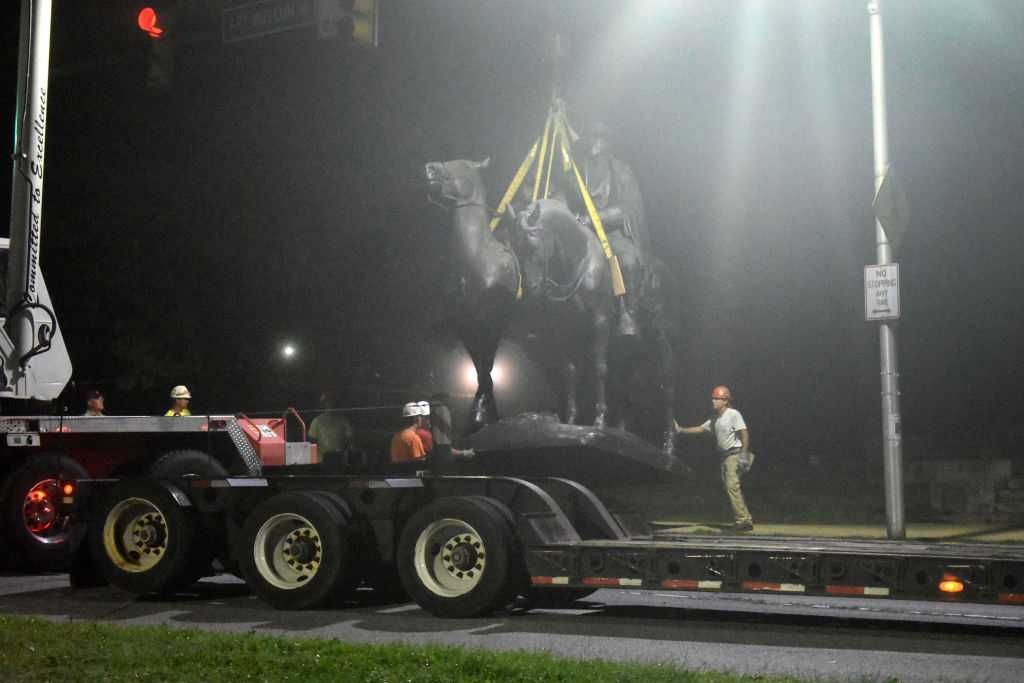
On the eve of the Juneteenth observance, it was reported that several Confederate statues, which were removed almost a decade ago, have made a quiet return to Baltimore, Maryland.

The Baltimore Sun reported Thursday that four Confederate statues have made their return to the city, but many details remain unknown.

'They are being stored in a secure facility. We will not be disclosing their location.'

The statues, which were taken down before dawn on August 16, 2017, just days after the Unite the Right rally in Charlottesville, Virginia, were most recently stored in California. They were on display at the Museum of Contemporary Art in Los Angeles.

Just after the statues were pulled from their pedestals, they were stored for years in a Baltimore impound lot, during which time vandals cost tens of thousands of dollars' worth of damage to the collection.

RELATED: Baltimore nonprofit that was run by mayor's wife shut down after getting $100K of taxpayer cash — and Soros is involved

Baltimore Mayor Brandon Scott Nathan Howard/Getty Images

The statues are: the statue of Confederate Generals Robert E. Lee and Stonewall Jackson that originally stood outside Wyman Park Dell, the Confederate Soldiers and Sailors Monument that stood on Mount Royal Avenue, the Confederate Women's Monument, and the Roger B. Taney Monument.

The Confederate Soldiers and Sailors Monument sustained the most damage during the storage period after vandals "chopped off an arm and a Confederate flag and doused the whole thing with bright red paint," according to the Sun.

But now, officials have confirmed that the statues have been returned to their original city, though questions remain.

“The Confederate monuments are back in Baltimore,” Lauren Schiszik, executive director of the city Commission for Historical and Architectural Preservation, told commissioners during a June 9 briefing session, according to the Baltimore Sun.

“They are being stored in a secure facility. We will not be disclosing their location.”

Baltimore Mayor Brandon Scott (D) has been at the forefront of the removal efforts since before they were taken down by his predecessor Mayor Catherine Pugh (D).

Scott has consistently held that these statues and those like them have "ties to the dark side of America's past."

In a resolution at the time, then-Councilman Scott wrote, “Monuments with ties to the dark side of America’s past have come under increased scrutiny in recent years with cities across the country debating on whether they should be removed. Following the acts of domestic terrorism carried out by white supremacist terrorist groups in Charlottesville, Virginia, this past weekend cities must act decisively and immediately by removing these monuments. Baltimore has had more than enough time to think on the issue — it’s time to act.”

Scott's press office did not respond to a request for comment from Blaze News.

Like Blaze News? Bypass the censors, sign up for our newsletters, and get stories like this direct to your inbox. Sign up here!

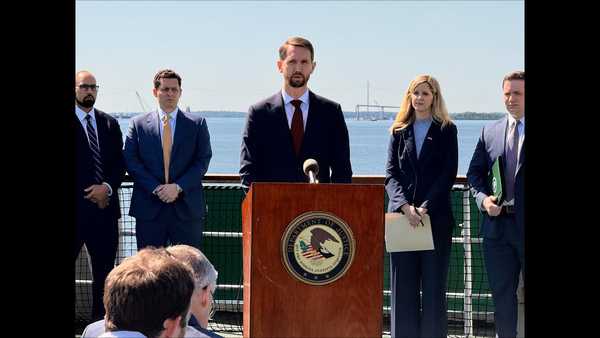
Deadly Baltimore Bridge Collapse Finally Leads To Federal Charges

"The collapse of the Francis Scott Key Bridge was a preventable tragedy of enormous consequence."

Wes Moore Attacks Local Newspaper for Deigning To Report on His Record

Democratic Maryland Gov. Wes Moore has embarked on a preemptive media campaign attacking his state's flagship newspaper, the Baltimore Sun, for a forthcoming investigative series that will allegedly scrutinize Moore's record.

The post Wes Moore Attacks Local Newspaper for Deigning To Report on His Record appeared first on .

Chatbots don’t run on magic. They run on your money.


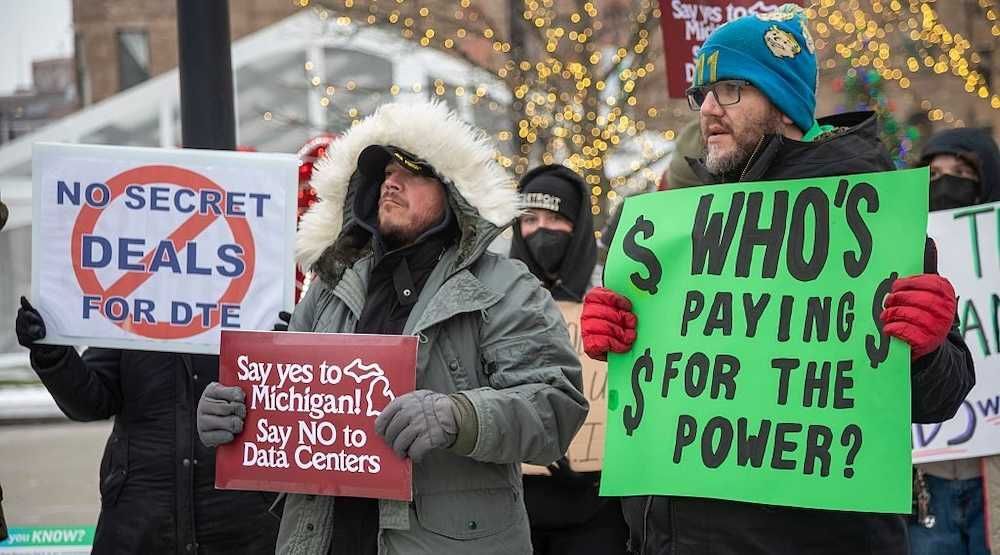
Imagine someone walks into your town with a proposition: Rezone large swaths of residential and farmland. Hand out tax breaks. Let us build ugly, noisy facilities for chatbots — facilities that will devour nearly a quarter of the power supply.

Then, before you run him out of the room, he adds a final promise: Do not worry. We will pay our own way.

Argue about the projections if you want. Do not tell the public they will not pay more for data centers. They already do.

That is the rope-a-dope Americans are supposed to accept from the government-tech oligopoly, even as politicians insist that data centers will not cost the public a dime.

Sensing a growing backlash against the data-slop colonization of rural America, President Trump promised during the State of the Union that every data center company will pay its own way. Awareness of the problem helps. The president’s pledge does not.

Facts on the ground point in the opposite direction: consumers already pay for data centers, the economics make “paying their own way” implausible at scale, and the industry fights efforts to put that promise into law.

The scope of the problem

The hyperscale build-out being stacked on top of roughly 4,000 existing facilities is not a “burden” on the grid. It is an industrial-scale demand shock.

MIT Technology Review reports that AI alone could soon consume as much electricity as 22% of all U.S. households. Boston Consulting Group projects data center energy needs of up to 1,050 terawatt-hours annually by 2030 — about 120 gigawatts on average. That figure exceeds current U.S. nuclear capacity by roughly 23%.

To put it in plain terms, the United States has about 97 gigawatts of nuclear capacity across 94 reactors. If the high end of OpenAI’s hyperscale ambitions materializes, those facilities alone would require roughly 36% of total U.S. nuclear capacity.

Now scale it out. Clearview estimates that if the 680 planned data centers get built and become operational, they would require the energy equivalent of 186 large nuclear power plants.

That should end the fantasy that these companies can “pay their own way” while drowning in debt, burning cash, and chasing thin margins.

These are not last decade’s data centers, either. Bloomberg reports that only 10% of facilities today draw more than 50 megawatts. Over the next decade, the average new facility will draw well over 100 megawatts. Nearly a quarter will exceed 500 megawatts, and a few will top 1 gigawatt.

Electricity is only the first bill. This demand shock forces major grid upgrades: transmission lines, transformers, substations, and capacity expansions. Utilities do not eat those costs. They pass them on to taxpayers — that is, us.

Wood Mackenzie estimates that AI-driven build-outs will push transformer demand beyond supply by about 30% this year, driving costs up and delaying projects. Consumers will pay for that, too.

RELATED: How data centers could spark the next populist revolt

Photo by Jim West/UCG/Universal Images Group via Getty Images

We already pay for data centers

Consumers already pay. Any serious fix starts with admitting it.

Yet Interior Secretary Doug Burgum has the nerve to tell Americans that nobody has paid higher prices because of data centers.

Grid operators say otherwise.

Bloomberg reports that in areas within 50 miles of significant data center activity, wholesale prices have risen by as much as 267% over five years, with more than 70% of recorded price spikes occurring near that activity. Dominion, the largest utility in Virginia — home to “Data Center Alley” — cited data center demand as a factor in proposing a base-rate increase that would add $8.51 a month to typical residential bills in 2026 and another $2 a month in 2027. That comes after rates already surged 13%.

Then look at PJM, the nation’s largest grid. Monitoring Analytics, PJM’s independent market monitor, says consumers will pay $16.6 billion to secure future power supplies from 2025 through 2027, with about 90% of that bill tied to projected data center demand. Monitoring Analytics called it a “massive wealth transfer” from consumers to the data center industry.

Costs spread across state lines. Maryland transmission infrastructure helps serve Northern Virginia’s data centers. In Baltimore, some residents have seen steep bill increases over three years, with additional increases anticipated starting mid-2026. Across the PJM region, capacity charges spiked 833% for the 2025-2026 period as supply struggled to keep up with these behemoths.

Texas faces its own version. ERCOT expects data center demand to exceed 22,000 megawatts by 2030, which could push wholesale rates up 22% or more, even before population growth enters the equation.

Argue about the projections if you want. Do not tell the public they will not pay more for data centers. They already do.

That reality explains why the industry resists any effort to put teeth behind its “we will pay our own way” pledge. Oklahoma state Rep. Jim Shaw (R) introduced HB 3724, which would have required data centers to pay their own way. Every Republican on the committee voted it down.

So the next time the pitch arrives — that you will not pay a dime extra once the facilities go live — treat it as marketing, not math.

Do not trust. Only verify.

Uncovering Fraud And Failure In One Of America’s Large School Systems

Chris Papst's new book investigating corruption in Baltimore schools, 'Failure Factory,' provides startling information on the depth of corruption in big city education.

EXCLUSIVE: ‘The Height of Hypocrisy’: Wes Moore Filmed Campaign Ad Praising Maryland Public Schools Inside His Kids’ Elite Private School

"Maryland is home to some of the nation’s best public schools, but also some of its most neglected," then-gubernatorial candidate Wes Moore (D.) said in a 2022 campaign ad. "We can’t settle for that. We must make sure that every Maryland student gets that fair shot to succeed, the same one that I got."

The post EXCLUSIVE: ‘The Height of Hypocrisy’: Wes Moore Filmed Campaign Ad Praising Maryland Public Schools Inside His Kids’ Elite Private School  appeared first on .

Ruling issued after Baltimore jewelry store owner fatally shoots suspected burglar


Around 2 a.m. Oct. 16, a then-unidentified male reportedly broke the glass front door of a Baltimore jewelry store with a brick.

The problem for the male? The store owner was inside the building — and he was armed with a gun. The store owner fired a warning shot and said, "Freeze!" WJZ-TV reported, adding that the intruder ducked, then popped back up, and the store owner opened fire at him.

The jewelry store owner lives above his business, WJZ said in its video report.

Officers arrived at the scene in the 2200 block of Fleet Street to find a 39-year-old man suffering from gunshot wounds, WJZ said in a follow-up story, adding that police said he was taken to a hospital, where he later died.

Baltimore City State's Attorney Ivan Bates on Monday identified the man as Richard Rolfe — and said no charges will be pursued, WJZ reported.

"Based on the facts of this case, we believe that this shooting meets the requirements of self-defense in the State of Maryland," Bates said in a statement, according to the station.

RELATED: Male reportedly shatters glass front door of jewelry store in middle of night. His problem? Armed store owner is inside.

WJZ said Maryland law stipulates that self-defense or defense of habitation applies if use of force is accompanied by the following five factors:

  • the suspect attempted to enter a home or property;
  • the property owner believed the suspect intended to commit a crime that would lead to death or serious injury;
  • the property owner believed the suspect intended to commit a crime;
  • the property owner believed that use of force was necessary to prevent death or serious injury;
  • the property owner reasonably believed force was necessary.

RELATED: Video: Armed thugs who rush into jewelry store have fast change of heart when worker with gun sends them some smoke

The jewelry store owner lives above his business, WJZ said in its video report.

The state's attorney's investigation found that Rolfe entered or tried to enter a person's home, and the homeowner believed Rolfe intended to commit a crime that would lead to injury or death, the station said.

The investigation also found the homeowner believed the force used against Rolfe was necessary to prevent death or injury, WJZ said.

The homeowner also believed Rolfe was armed, the station said, citing the findings of the investigation.

While it was later discovered that Rolfe did not have a gun, Bates said in a statement that "it is reasonable that the homeowner believed Mr. Rolfe was armed," WJZ reported. Bates added that "it can be said that the homeowner was acting appropriately under the defense of the habitation doctrine," the station added.

Like Blaze News? Bypass the censors, sign up for our newsletters, and get stories like this direct to your inbox.Sign up here!

Male reportedly shatters glass front door of jewelry store in middle of night. His problem? Armed store owner is inside.


A yet-unnamed male reportedly broke the glass front door of a Baltimore jewelry store with a brick in the middle of the night last week — and it proved to be a fateful choice, as the store owner was inside at the time.

A friend of the store owner shared the following account of Thursday's incident with WJZ-TV on his behalf. The station said:

  • The store owner was watching a movie around 2 a.m.
  • The store owner said someone broke through his glass front door with a brick, so he fired a warning shot and said, "Freeze!"
  • The intruder ducked, then popped back up, and the store owner shot him.

Baltimore police described it as a commercial burglary at the intersection of Fleet and Madeira Streets that resulted in the fatal shooting of a 39-year-old man, WJZ said.

'There are very much viable defenses for someone in the business owner's — the jewelry store owner's — shoes right now.'

The station added that the shooting was caught on video and shared with a WJZ reporter. While the camera owner declined to allow WJZ to publish the images, the camera owner did share them with police. The station said the silent video shows a man at the store's entrance who appears to enter the business — and seconds later, he falls to the pavement.

WJZ noted in its Friday story that "bullet holes remained in two windows at the store" and that the broken glass in the store's front door "has since been covered." The station added that the store's owner reportedly lived above his shop.

RELATED: Video: Armed thugs who rush into jewelry store have fast change of heart when worker with gun sends them some smoke

In a follow-up story, WJZ reported that the shooting has raised questions regarding when — and where — lethal force is allowed when you believe you are in danger.

The station said the standards differ in Maryland depending on if you are in your home or in public. WJZ said the law gives you more latitude to use deadly force if you're at home and have a "reasonable" fear that your life is in danger — a.k.a. the Castle Doctrine.

But the station said if you are in public, you have a "duty to retreat" and only can use deadly force as a last resort — and the force should be proportional to the threat.

Attorney Warren Alperstein — who is not affiliated with the jewelry store case — noted to WJZ that "if you're in an alley up against a brick wall at a dead end, and there's no way to get out ... there's no way to retreat — that would be an exception to the requirement."

RELATED: Smash-and-grab robbers turn tail and run when jewelry store employee pulls out gun, starts shooting

The station said in the case of Thursday's fatal shooting at the jewelry store, the store owner lived in the same building as his business. Alperstein added to WJZ that "if it's determined it was in his home, then he does not have to first prove that he retreated before he used the deadly force."

The attorney also told the station that "there are very much viable defenses for someone in the business owner's — the jewelry store owner's — shoes right now."

WJZ said Baltimore police and the state's attorney's office declined interview requests.

Like Blaze News? Bypass the censors, sign up for our newsletters, and get stories like this direct to your inbox. Sign up here!
Bouncer caught on video smashing male's head through car window, putting him in chokehold. But cops get a break in the case.


A viral video out of Baltimore shows a bouncer putting a male in a chokehold outside a bar — and then smashing the male's head through the window of a car parked on the street's curb.

The 51-second clip has garnered views climbing toward 10 million as of Thursday afternoon.

'Learn to de-escalate, communicate, and walk away.'

In the video, the rather large bouncer is standing on a sidewalk telling a smaller male to "leave."

Soon the smaller male's hand appears to make contact with the bouncer's chest, and the bouncer advances toward the guy — who soon appears to bump the bouncer in an attempt to walk by him.

Immediately the bouncer grabs the male around the neck from behind and puts him in the chokehold. About seven seconds later, the male taps repeatedly on the bouncer's arm — a commonly known "I give up" signal in MMA fighting.

But the tap doesn't work on this Baltimore street.

The chokehold continues, the bouncer wrenches the male's neck a few times while spinning him around, and there are more taps on the bouncer's arm.

"He tapped! He tapped! Let him go! Let him go!" one person is heard pleading in the clip.

Then the bouncer ups the ante and smashes the male's head through a car window.

"Yo! Chill out!" a person is heard yelling at the bouncer, who by this point has taken the male behind the vehicle — now missing one window — as a second bouncer approaches.

Finally, the 33-second chokehold ends, the pair of bouncers restrain the male against the back of the vehicle in question, and they appear to let him go into the street as the clip ends.

RELATED: Armed 17-year-old carjacker rolls the dice, promptly meets his match when victim pulls his own gun and opens fire

WJZ-TV reported that the incident occurred on East Cross Street in the city's Federal Hill neighborhood near the Cross Street Public House restaurant.

A restaurant spokesperson told the station the establishment doesn't employ the bouncer in question and that Ace Event Services Group provided security. WJZ added that the restaurant and the security company "have since parted ways."

Baltimore Democrat Councilman Isaac Yitzy Schleifer said that "both Bouncers/Security guards need to be held accountable."

Baltimore police initially told WJZ they were aware of the video and attempting to figure out what went down; by Monday, police told the station they were trying to identify the bouncer in the video.

On Wednesday, Baltimore police announced that 41-year-old Kevin Weaver turned himself in — and is facing a first-degree aggravated assault charge.

Baltimore Police on Thursday told Blaze News, "We are unable to share a mugshot [of Weaver] at this time."

In the aftermath of the viral video, WBFF-TV reported that some in the neighborhood are unsettled about the incident.

"I mean, the kid's not 21, but that doesn't mean you get to rough 'em," one person told the station.

Another added to WBFF that "in security, you have to take some abuse from the public, but you don't hit his head into a window ... that's disgusting."

The station said police have yet to confirm the identity of the person who was placed in the chokehold.

RELATED: Watch what happens after Democrat witness tells Rep. Brandon Gill Baltimore is a safe city

Kim Klacik — host of "Kim Klacik Live" on WCBM-AM and a former candidate for the U.S. House who ran as a Republican — noted to WBFF in a follow-up story that "when it comes to police saying there is no report yet, I don't believe this is something uncommon in these scenarios, considering that that young man that had his head rammed through the car window could have possibly been a minor."

Pete Brazil — who worked security at another bar — told the station in a separate story that the bouncer's actions were over the top: "For 30 seconds — I do not condone that. He tapped, so he shoulda let him go."

WBFF said Brazil recognized the bouncer and described him as usually "a pretty cool, calm, collected dude" who "just had a bad day."

RELATED: Bus rider gets upset at fellow passenger for being impolite, soon shoots him to death, authorities say. Jury returns verdict.

Brazil added to the station that "fights happen every day. I'm just happy that no one really got hurt."

Another area bouncer told WBFF that those working security at bars need to "learn to de-escalate, communicate, and walk away."

Mark Crosby — a pro-life Baltimore resident who was brutally beaten up in front of a Planned Parenthood in the city, only for admitted culprit Patrick Brice to walk away without any jail time — told Blaze News the chokehold and car-window smash were "horrific."

Crosby added to Blaze News that all the much-larger bouncer had to do was "smack him once, and that would've been enough."

Like Blaze News? Bypass the censors, sign up for our newsletters, and get stories like this direct to your inbox. Sign up here!