Perjuring manslaughterer who killed a soldier over an alleged racist comment wins election in Maine


Sergeant Derek Rogers, a 22-year veteran of the Canadian military who played trombone for the Canadian Central Command Band, took his wife of 20 years on a trip to Maine in 2002. It was the last trip they would take together because a pair of siblings of Sioux descent savagely beat Rogers to death while he was taking a stroll on the beach near the cottage his family rented.

On Tuesday, radicals in Bangor, Maine, elected one of Rogers' killers, Angela Walker, to city council.

'That's my past.'

The 2,231 voters who cast ballots for Walker and the leftist group that endorsed her, Food and Medicine, were evidently willing to give her a pass for her history of violence and deception.

After all, it's public record that Walker killed Rogers — a soldier known for his charity and devotion to the Salvation Army — participating in his bludgeoning and lethal force-feeding by sand, according to investigators. It's also a matter of public record that she attempted to blame the killing on an innocent woman named Aimee Pelletier, who investigators later determined had not been at the scene.

Walker and her brother, Benjamin Humphrey, were originally charged with murder following the discovery of Rogers' body by a fisherman on July 31, 2002.

When Humphrey pleaded guilty to manslaughter the following year, the victim's sister, Lorna Simard, said, "I don't feel that any plea bargain is justice," reported the Associated Press.

Simard was ultimately denied the full measure of justice twice as Walker also managed to strike a plea deal.

RELATED: Candidate arrested for allegedly breaking into GOP rival's Ohio home — just days before Election Day

Staff photo by Gregory Rec/Portland Press Herald via Getty Images

Walker pleaded guilty in 2003 to perjury as well as to killing Rogers in exchange for a reduced charge of manslaughter.

Robert Crowley, then-justice of the Maine Superior Court, reportedly sentenced Walker to 10 years in prison and gave her a five-year suspended sentence for committing perjury.

While Walker claimed that Rogers prompted her violent reaction by allegedly calling her a "squaw" — a claim Rogers' family suggested was utter nonsense — Crowley emphasized the victim's innocence, noting, "He didn't do anything to contribute to his death, yet he lost his life."

During her successful political campaign, Walker told the Bangor Daily News, "One of the big reasons that I want to run is because I feel like, with my lived experience and the work that I’ve done in a few different agencies in the area, that I can bring concerns of community members to City Council."

The same perjurer who apparently helped stuff sand down a soldier's throat until he died added that she hopes to "be the voice for people that can’t speak up or don’t speak up."

As for Rogers' horrific slaying, Walker said, "That's my past. I don't live there anymore, and I'm a different person."

Former Bangor City Council chairwoman Sarah Nichols was among those who endorsed Walker, claiming "Angela has achieved positive results in her own recovery and has played a key role in projects that connect many people to crucial resources, supporting their recovery success."

Like Blaze News? Bypass the censors, sign up for our newsletters, and get stories like this direct to your inbox. Sign up here!
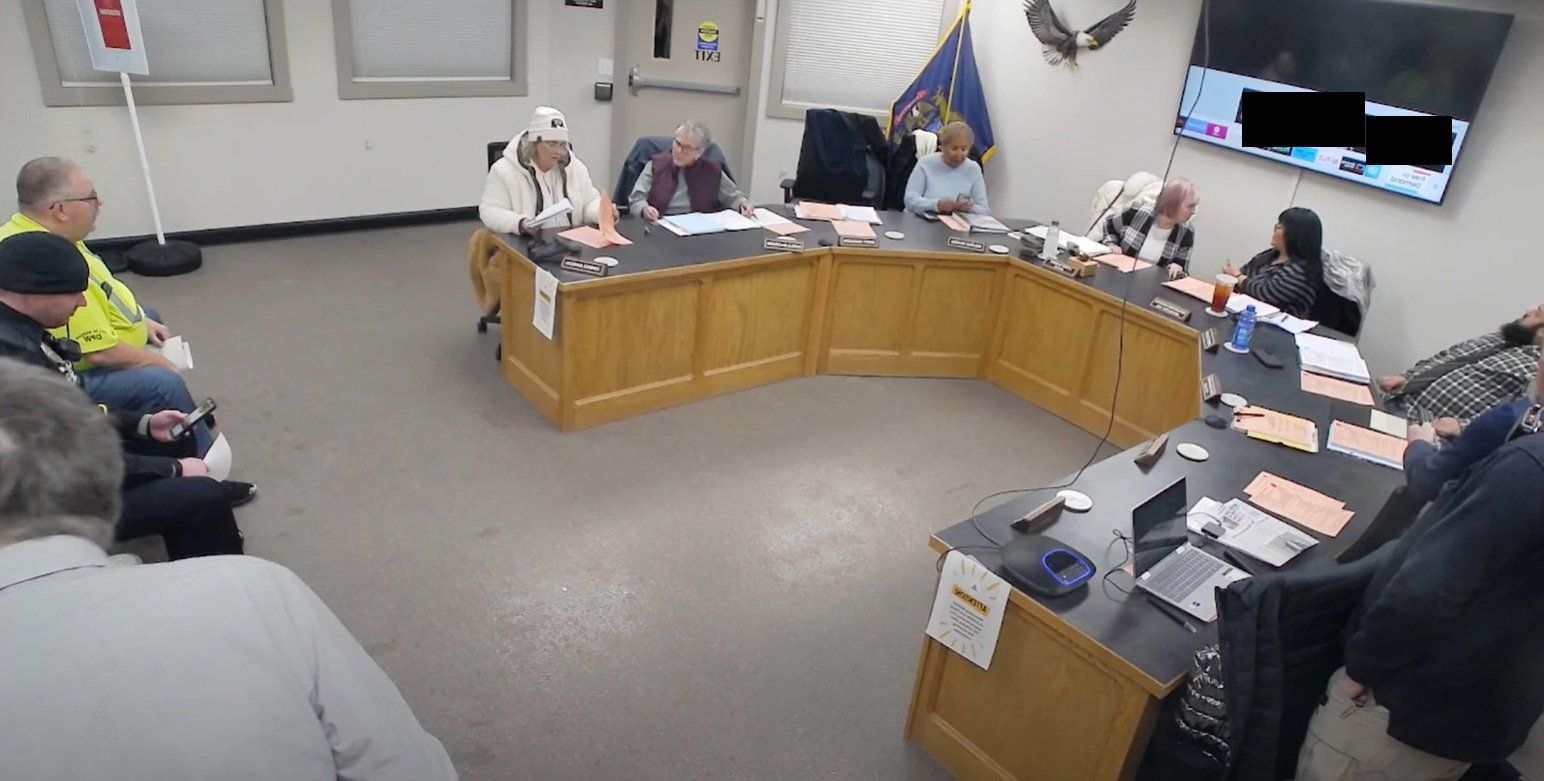

City threatens to sue residents over comments that cause 'harm' amid contentious mayoral race in Michigan


The small Michigan city of Bangor has authorized its city attorney to file charges against any resident who makes comments that cause the city "harm," prompting cries from local residents and freedom-loving Americans across the country.

On January 6, the Bangor City Council voted 7-0 to approve a motion that will allow the city attorney, Scott Graham, "to file charges with the court against all parties involved in statements that have caused harm to the city." Bangor is a city of barely 2,000 residents located about 15 miles from the shores of Lake Michigan in the southwestern corner of the state.

'It’s our job as the council and my job as the mayor to the best of my ability to keep our city workers safe and to make them feel comfortable in the job they’re doing for us.'

The motion came after some area residents began making public statements that officials characterized as "false" and "defamatory." Mayor Lynne Farmer claimed such individuals, whom she did not name, "are sharing things that they know are absolutely false," MLive reported this week.

"This is America,” Farmer said. “You’re free to have your own opinion. But in America, you are not free, under the First Amendment, to keep repeating something that’s false that you knowingly know is."

Mayor Farmer claimed that the ordinance was necessary to protect city officials. "These may seem like extreme measures, but it’s our job as the council and my job as the mayor to the best of my ability to keep our city workers safe and to make them feel comfortable in the job they’re doing for us as citizens," she said.

Farmer even claimed that tensions in Bangor have become so "dangerous" that the city has had to pay three police officers to provide security at recent council meetings. "They should be out there patrolling the streets rather than standing there watching to make sure one of us doesn’t get shot," she said.

She expressed hope that the city will "rescind" the ordinance "once this craziness stops."

At at a council meeting on January 21, attorney Graham echoed her sentiments about the recent spike in local slander.

"So what happens is ... people make knowingly false statements," attorney Graham said . "... People look at those things, and some people will believe the statements. That shows the measure of damages for those who have been defamed because their reputations are harmed."

Graham insisted that the measure was in no way meant to stifle protected speech or political dissent.

In a letter dated January 23, city manager Justin Weber reiterated claims that the new city ordinance applies only to statements that a "speaker knows to be false" and that "harm the reputation of another."

"The publication of false statements regarding the operation of the City has plagued the City of Bangor. These false statements have greatly harmed the City, its elected officials, and its employees," Weber wrote.

In the letter, he also discussed city officials' commitment to free speech "to the maximum extent allowed by law." While describing free speech as "a fundamental right" and "crucial to our society and our government," Weber noted that the city draws the line at speech that "knowingly" makes "false" and "defamatory" assertions.

A.C. Fisher-Aldag, who manages the Bangor Apple Press Facebook page, contacted city officials following the vote, warning that "harm" could be interpreted in a number of different ways.

Fisher-Aldag further suggested that the motion is just the latest attempt by Bangor officials to "trample citizens’ civil rights, including the right to free speech and freedom of the press."

Even the Foundation for Individual Rights and Expression stepped in, slamming the city for engaging in censorship. "Such action would violate the First Amendment, which completely bars government entities like the city of Bangor from suing for defamation," the organization said in a statement.

"If Bangor officials believe a constituent has made a false statement about the city, they can publicly condemn the statement, express disagreement or say why they believe it inaccurate," FIRE continued.

"What they may not do is sue or otherwise punish the speaker."

'Where’s the accountability?'

Steve Honeycutt, a 39-year-old Bangor resident, has another concern. He takes issue with the fact that the Bangor city manager, Justin Weber, also doubles as the city police chief.

"My biggest concern would be he is subordinate to himself," Honeycutt told MLive. "Where’s the accountability? If a citizen has a complaint with the police department or the police chief, the complaint is just going to himself?"

Farmer claimed Weber reports directly to her.

Also worried that Weber may be collecting two salaries from the city, Honeycutt filed a Freedom of Information Act request regarding Weber's city paychecks. The city denied Honeycutt's request, citing privacy concerns.

When MLive asked the city about Weber's pay, Farmer told the outlet that Weber's pay was a matter of public record and to check the city Facebook page. Unable to locate information about Weber's pay on the Facebook page, the outlet asked for an estimate of his pay. When MLive did not receive a response to that request, the outlet filed its own FOIA request on the matter.

"He does not collect double salary," Farmer insisted.

Mayor Farmer alleged that too many residents lately have filed frivolous FOIA requests that have become "burdensome" on city staff. Honeycutt claimed he'd been called a "troublemaker."

Frustrated with what he views as a lack of transparency, Honeycutt decided to make a run for mayor against Farmer, who is seeking another term. "I want to get in there," Honeycutt said. "My mission is accountability, transparency, and I want to give Bangor back to its people."

"I’m bringing to light what they’re trying to hide."

The election is scheduled for May 6.

Like Blaze News? Bypass the censors, sign up for our newsletters, and get stories like this direct to your inbox. Sign up here!

'Hard work pays off': 2 young fans chop wood to earn money for tickets to Luke Combs concert — and Combs pauses the performance to thank and reimburse them


Two young boys in Maine had an evening they will likely never forget after their country music star hero Luke Combs publicly acknowledged them for working hard to earn the money to attend one of his concerts.

Bo Fenderson, 12, of Cornish, Maine, and his friend Tanner both reportedly earned $100 a piece chopping wood so that they could purchase tickets to attend one of two Luke Combs "Middle of Somewhere" concerts in Bangor over the weekend. Not only did Combs notice the signs they held to explain their story, but he read the signs to the entire concert audience, reimbursed the boys for the tickets they bought, and then invited them both backstage to spend more time with him and the other musicians.

"We made $100 bucks stacking 5 cords of wood, bought two Luke Combs tickets," the boys' sign read. "Man, he sounds good. Our Dads swore it was a waste of time, oh but they were wrong. Today’s my 12th birthday, oh Lord when it rains it pours."

Once Combs understood that the two boys had spent their own hard-earned money to attend the concert that Friday, he decided to pay them back for all their effort.

"How much were you tickets? $100? $200? Y’all paid $200, a hundred dollars apiece. Oh my God, I only got $140 right here," Combs told the boys as he handed them cash from his pocket. "Y’all want that, pay yourselves back. I’ll get you some more."


Combs was better than his word. Not only did he give the boys the full $200, but he autographed their hats, and then spent time with them backstage after the concert was over — all on young Bo's 12th birthday.

"I prayed for it to happen," Bo said. "I hoped. I prayed, and it happened."

The mothers of the two boys were equally impressed by Combs's efforts to connect with his fans and reward them for their hard work.

"He’s a great role model to take the time and do that and really acknowledge what they did," said Bo's mom Desiree.

"It wasn’t just Luke," she continued. "It was the rest of the staff too that made it happen and made it a point to come find us and the boys and fulfill that promise that he made to them. I think for all of the sisters, the cousins, and the friends that they all learned a valuable lesson."

The boys recalled that Combs told them backstage that the two most important things in life are kindness and hard work.

"Hard work pays off," Tanner agreed.

Combs's kindness and generosity didn't stop with Bo and Tanner either. During his concert on Saturday night, Combs regretfully informed attendees that he would have to cut the show short because he was struggling with a throat issue. However, he reimbursed the entire crowd for the cost of their tickets — and still proceeded to give them a full performance, despite his struggles.