Ben & Jerry's co-founder melts down — quits progressive ice cream brand after rocky road clash with parent company
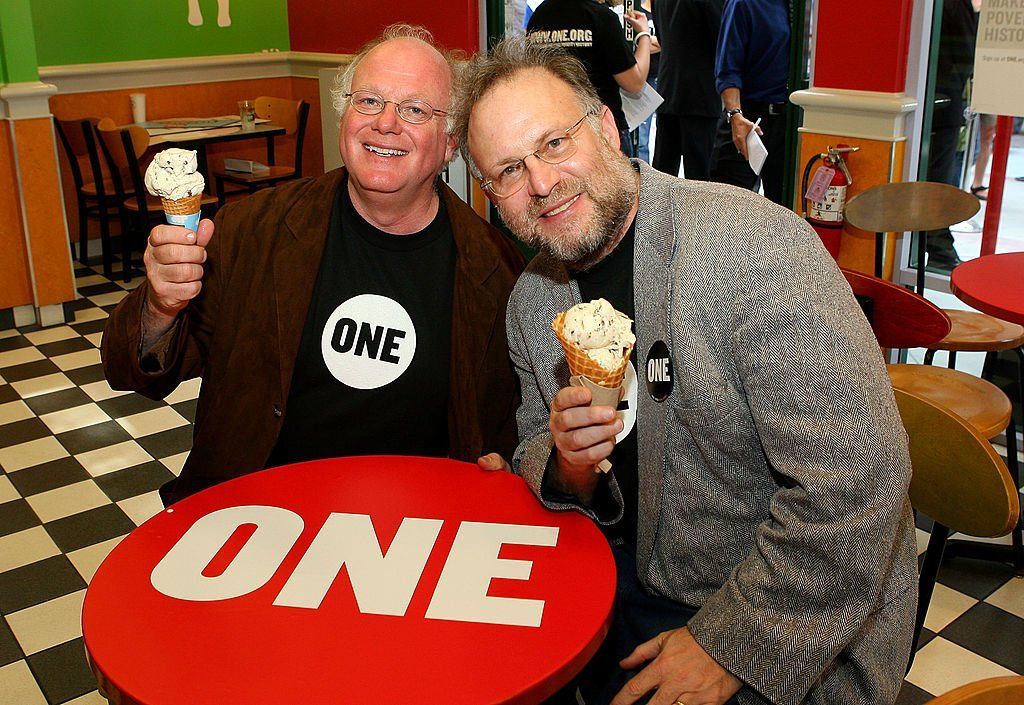


One of the co-founders of Ben & Jerry's has quit, claiming that the ice cream maker has been "silenced" by the parent company.

Ben & Jerry's co-founder Jerry Greenfield has resigned from the company because he was being "muzzled" by Unilever and the Magnum Ice Cream Company.

'Standing up for the values of justice, equity, and our shared humanity has never been more important, and yet Ben & Jerry's has been silenced, sidelined for fear of upsetting those in power.'

"It's with a broken heart that I've decided I can no longer, in good conscience, and after 47 years, remain an employee of Ben & Jerry's," said a statement released on the X social media platform.

"I am resigning from the company Ben and I started back in 1978. This is one of the hardest and most painful decisions I've ever made," the statement from Greenfield began. "This isn't because I've lost my love for the people at Ben & Jerry's. Quite the opposite."

Greenfield claimed that Unilever promised to allow the progressive ice cream brand to continue to spout social justice talking points.

According to CNN, "British-based Unilever bought Ben & Jerry’s ice cream for $326 million in 2000but allowed the company to operate independently and continue its social mission without interference from its new parent company."

Greenfield said that he and his partner, Ben Cohen, "stood up and spoke out in support of peace, justice, and human rights, not as abstract concepts, but in relation to real events happening in our world."

However, the co-founder now claims that their independence has been taken away, which has been "profoundly disappointing."

Greenfield asserted, "And it's happening at a time when our country's current administration is attacking civil rights, voting rights, the rights of immigrants, women, and the LGBTQ community."

"Standing up for the values of justice, equity, and our shared humanity has never been more important, and yet Ben & Jerry's has been silenced, sidelined for fear of upsetting those in power," he continued. "It's easy to stand up and speak out when there's nothing at risk. The real test of values is when times are challenging and you have something to lose."

Greenfield added, "Love, equity, justice. They're part of who Ben and I are, and they've always been the true foundation of Ben & Jerry's. From the very beginning, Ben and I believed that our values and the pursuit of justice were more important than the company itself. If the company couldn't stand up for the things we believed, then it wasn't worth being a company at all."

"It was always about more than just ice cream; it was a way to spread love and invite others into the fight for equity, justice, and a better world," he said.

"Coming to the conclusion that this is no longer possible at Ben & Jerry's means I can no longer remain part of Ben & Jerry's," Greenfield concluded. "If I can't carry those values forward inside the company today, then I will carry them forward outside, with all the love and conviction I can."

RELATED: Ben & Jerry's blasted for spreading misinformation about Kyle Rittenhouse, inventing hypothetical scenario to bring race into the case

Cohen added, "After 47 years, Jerry has made the difficult decision to step down from the company we built together. I’m sharing his words as he resigns from Ben & Jerry’s. His legacy deserves to be true to our values, not silenced by Magnum Global."

Cohen also demanded that Ben & Jerry's be "free" to speak out on political and social issues.

Cohen told NBC News, "Jerry has a really big heart. This conflict with Unilever has been tearing him apart for quite some time now. I think this is the right move for Jerry."

"Jerry felt like the values are getting muzzled by Unilever and now Magnum, and he couldn’t stand it. So he’s decided to resign," Cohen stated.

CNBC reported, "A Unilever spokesperson said the company disagreed with Greenfield’s perspective and that it had sought to 'engage both co-founders in a constructive conversation on how to strengthen Ben & Jerry’s powerful values-based position.'"

The Unilever spokesperson stated, "We remain committed to Ben & Jerry’s unique three-part mission — product, economic, and social — and remain focused on carrying forward the legacy of peace, love, and ice cream of this iconic, much-loved brand. Ben & Jerry’s is a proud and thriving part of the Magnum Ice Cream Company, and we look forward to further building on its success."

The Magnum Ice Cream Company has already begun the process of separating from Unilever, and the demerger process is expected to be completed by mid-November 2025.

Besides being progressive mouthpieces, Greenfield and Cohen have been outspoken critics of Israel.

As Blaze News reported in July 2021, the Vermont-based ice cream company proclaimed that its ice cream would no longer be sold in "Occupied Palestinian Territory" belonging to Israel.

Like Blaze News? Bypass the censors, sign up for our newsletters, and get stories like this direct to your inbox. Sign up here!

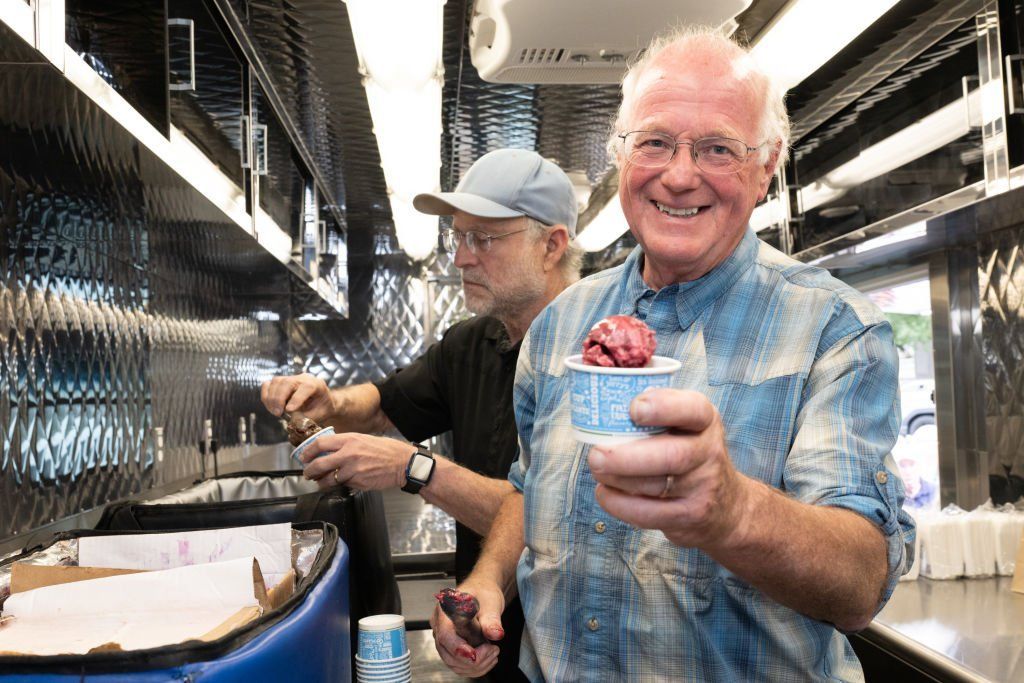
Ben & Jerry’s co-founder ARRESTED while protesting RFK Jr.


In a recent congressional hearing, Robert F. Kennedy Jr. was caught off guard by the protests of none other than Ben & Jerry’s co-founder Ben Cohen — who was then promptly arrested.

Cohen was removed about 15 minutes into the congressional hearing for yelling that “Congress pays for bombs” while the Health and Human Services secretary was trying to speak.

“He’s protesting at RFK Jr., who would be completely aligned with him, I think, on that issue,” Stu Burguiere comments on “The Glenn Beck Program.” “I could be wrong on this, but maybe Ben might even be one of those old school socialist types that would maybe even agree with us on some of the censorship stuff.”


“They were for that when they were the ones being shut up,” Glenn Beck agrees. “And now that they’re not the ones being told to shut up, they’re like, we have every right to tell you to shut up.”

Cohen was also recently interviewed by Tucker Carlson, which Stu believes is actually a symptom of a bigger issue.

“I’ve noticed this thing that we’re doing, and I’m a little concerned,” Stu says. “Us on the right, the conservative side of the spectrum, find someone who has some crossover with us in some way but is really a figure of the left, and we kind of give this warm embrace and say, ‘Hey, come on over.’”

Stu uses Tulsi Gabbard as an example, who made the switch from the Bernie Sanders left to the Make America Great Again movement in the not so distant past.

“She’s great, so this is not a criticism,” Stu says. “But really, what Tulsi is doing in the government right now is she’s being consistent with her old left-wing views on things, like stopping wars and being tough on intelligence issues with the government.”

“Because we woke up on that,” Glenn interjects.

“That’s what I’m getting to here. What seems to be happening is we’re embracing things on the left, and it’s not us changing their views into ours,” Stu says, adding, “it’s us changing our views into theirs and then embracing some of those people. That’s not necessarily bad if we were wrong the whole time.”

Want more from Glenn Beck?

To enjoy more of Glenn’s masterful storytelling, thought-provoking analysis, and uncanny ability to make sense of the chaos, subscribe to BlazeTV — the largest multi-platform network of voices who love America, defend the Constitution, and live the American dream.

Unilever crushes dreams of woke co-founder of Ben and Jerry's


There is a battle under way over the ownership and identity of the iconic ice cream brand Ben and Jerry's — and its radical leftist founders, Ben Cohen and Jerry Greenfield, appear to be losing badly.

Earlier this month, the Wall Street Journal indicated that Cohen was trying to gather investors to buy back the brand that he and Greenfield sold to Unilever 25 years ago.

This buyback initiative came just weeks after Unilever removed the company's anti-Trump CEO Dave Stever, allegedly on account of his commitment to Ben and Jerry's leftist activism and despite a letter of support from Cohen and Greenfield; after years of clashes over how the ice cream company communicates its politics; and amid Unilever's preparations to spin off its ice cream assets.

"In the year 2000, Unilever loved us for who we were," Cohen told the Journal. "Now we've gone separate ways in our relationship. We just need them to set us free."

Unilever crushed Cohen's dream this week, indicating that Ben and Jerry's is "not for sale," reported Bloomberg.

"The separation and listing of ice cream is the option that we consider maximizes shareholder value; that has not changed," Unilever CEO Fernando Fernandez said on a media call.

As of July 1, Unilever ice cream will reportedly become the Magnum Ice Cream Company and be listed in the Netherlands as a separate entity.

After tolerating decades of radioactive politics, Unilever appears keen to decontaminate Ben and Jerry's.

'Many states found Unilever to be in violation of their anti-boycott, divestment, and sanctions laws.'

The ice cream company has long appeared less focused on selling its sugary dessert and more focused on selling a woke political worldview. For instance, under its previous radical leadership, the company:

  • told Americans celebrating the Fourth of July that "it's high time we recognize that the US exists on stolen Indigenous land and commit to returning it";
  • called for the defunding of police;
  • opposed legislation banning men from women's sports, preventing teachers from grooming students behind parents' backs, keeping boys out of girls' locker rooms, and protecting children from drag shows;
  • issued misleading commentary about Kyle Rittenhouse;
  • bemoaned the Supreme Court's Dobbs decision and advocated for looser abortion laws;
  • took hard anti-Israel stances;
  • rolled out "Pecan Resist" in 2018 — a flavor that the company said "supports groups creating a more just and equitable nation for us all, and who are fighting President Trump's regressive agenda"; and
  • promoted Democratic candidates in concert with the leftist organizing outfit MoveOn Civic Action.

Ben and Jerry's still appears to be a sugary leftist front, complaining about "white people occupy[ing] a disproportionate number of positions of power in our society," championing non-straight activism, pushing climate alarmism, creating a coconut-flavored Kamala Harris ice cream, and pouring boatloads of money into radical causes. However, Unilever has apparently begun to suffer the effects of the ice cream company's activism.

Unilever noted in a March legal filing that as a result of the 2021 decision by Ben and Jerry's to halt sales of its ice cream in Jewish settlements in the West Bank and East Jerusalem, "many states found Unilever to be in violation of their anti-boycott, divestment, and sanctions laws leading to multiple lawsuits in the United States and Israel, accusations of antisemitism, severe sanctions, and the divestment of hundreds of millions of dollars in Unilever's stock."

Unilever subsequently sold the company's ice cream business in Israel to its Israeli distributor, ensuring continued sales throughout the Jewish state.

'Business is the most powerful force in our society.'

The Journal noted that this resulted in a lawsuit as well as Unilever's assertion that after two decades of supporting the brand's activism, the advocacy by Ben and Jerry's for "one-sided, highly controversial, and polarizing topics" put it, the ice cream company, and their employees at risk.

Two years after the first lawsuit, Ben and Jerry's sued Unilever again in November, alleging its parent company tried to suppress the ice cream company's efforts to publicly support Palestinians and criticize Israel's war on Hamas terrorists.

"Ben & Jerry's is a company with a soul," Cohen told the Journal. "Business is the most powerful force in our society, and for that, it has responsibility to the society."

With the legal battle still ongoing, Unilever — perhaps recognizing that businesses actually just have a responsibility to their shareholders — recently threatened to pull funding from the Ben and Jerry's Foundation, reported Reuters.

Sources said to be familiar with the matter told Reuters that Unilever has conditioned continued funding — roughly $5 million a year — on the foundation agreeing to an expedited audit of its donations.

The foundation said in a statement Tuesday, "Unilever has funded the work of the foundation as a social justice organization throughout the years since the merger without any issues being raised. We are hopeful we will have the same cooperative relationship with the Magnum Ice Cream Company, the new spin-off company for Unilever's ice cream business."

The foundation added, "We have reached out to Unilever for clarification of news reports about the Foundation’s ongoing financial support."

Fernandez said of the proposed foundation audit, "We have not made any threat," reported Bloomberg.

"It is our responsibility to ensure that these funds are used properly," said the Unilever CEO. "It has to be allocated to areas or institutions that are absolutely in line with the ones that are part of the acquisition agreement."

Like Blaze News? Bypass the censors, sign up for our newsletters, and get stories like this direct to your inbox. Sign up here!
Ben & Jerry get stumped when asked why they sell ice cream in Georgia and Texas but not Israel


Asked a simple question about their principles in practice, the progressive activist co-founders of Ben & Jerry's ice cream were stumped and admitted they don't know why the company won't sell ice cream in parts of Israel but will sell it in red states like Texas or Georgia.

Ben Cohen and Jerry Greenfield no longer own the Ben & Jerry's ice cream brand, but the company still stands up for progressive politics. When the company announced in July it would stop selling ice cream in the West Bank, in protest over Israel's claim to the territory, the two 70-year-old entrepreneurs cheered that controversial decision.

In a recent interview on "Axios on HBO," reporter Alexi McCammond asked: "If you disagree with the Israeli government policy, why not just stop sales completely?"

"Well, I disagree with the U.S. policy," answered Cohen. "We couldn't stop selling in the U.S."

"Now, I think it's fine to be involved with a country, to be a citizen of a country, and to protest some of the country's actions. And that's essentially what we're doing in terms of Israel. We hugely support Israel's right to exist, but we are against a particular policy," he said.

Axios on HBO: Ben & Jerry's founders on sales in the Occupied Palestinian Territory www.youtube.com

But when McCammond asked why their principles matter in Israel but not here at home, Cohen was at a loss for words.

"You guys are big proponents of voting rights. Why do you still sell ice cream in Georgia? Texas — abortion bans. Why are you still selling there?" she asked.

"I don't know," Cohen said with a laugh, after a long pause. "It's an interesting question. I don't know what that would accomplish. We're working on those issues, of voting rights. ... I think you ask a really good question. And I think I'd have to sit down and think about it for a bit."

After McCammond pressed on Texas' abortion restrictions, Cohen said: "By that reasoning, we should not sell any ice cream anywhere. I've got issues with what's being done in almost every state and country."

"One thing that's different is that what Israel is doing is considered illegal by international law. And so I think that's a consideration," Greenfield chimed in.

Of course, the progressive left considers what Texas and other states with abortion restrictions have done to be illegal under the Supreme Court's interpretation of the U.S. Constitution, but everyone in those states can still buy "Half Baked" flavor ice cream at the local grocery store.

After Ben & Jerry's stopped ice cream sales in the West Bank, four U.S. states announced legal action against parent company Unilever for violating anti-Israel boycott laws.

Greenfield denied to "Axios on HBO" that Ben & Jerry's and Unilever are boycotting Israel "in any way."

Unilever, which purchased Ben & Jerry's in 2000, is reportedly a major purchaser of tomato paste from state-owned factories in the Xinjiang region of China, which the U.S. State Department has called out for "horrific abuses" of human rights there, including forced labor.

The question remains, why is Israel singled out by Ben & Jerry's when anti-progressive policies and totalitarian governments exist all over the world and you can still buy their ice cream in those places? The co-founders don't know.

(H/T: Hot Air)