
America’s ‘AI czar’ could revolutionize our form of government
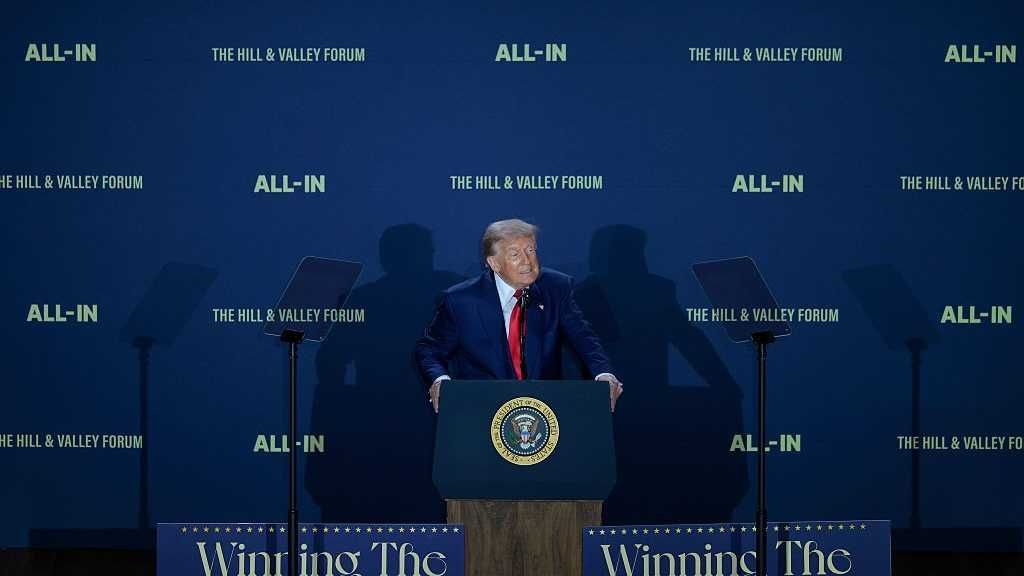
Donald Trump is considering a small handful of candidates for “AI czar” — notionally, a Cabinet-level role overseeing the industry, the technology, and something the president is calling, perhaps in the spirit of Space Force, the “AI Force.”
Trump has not specified much beyond that. Nobody rumored to be under consideration seems especially eager for the job.
Perhaps we don’t need someone with the power of a czar to rule AI. Perhaps we need someone with the authority of a saint to counsel us about it.
Plenty of reasons suggest themselves.
Not quite everything is computer. Many crucial components of America’s good working order still require special and undivided attention of their own. Treasury Secretary Scott Bessent is no longer being considered because of the importance of his current role. The logic is arguably the same for White House science and technology adviser Michael Kratsios and other potential candidates.
And, as the untimely demise of Czar Nicholas II and his family at the hands of the communists reminds us, a czar invested with enough power and authority can swiftly become a scapegoat or blood sacrifice of the highest order.
Which brings us to the momentous possibilities unsealed simply by creating a high office called AI czar.
Polls show most Americans think democracy is doing poorly. For a growing share across the political spectrum, that is not necessarily a bad thing.
Two in three respondents say a democratically elected government is highly important to our national identity, a staggering drop from 80% just five years ago. Just shy of half of Americans under 30 say democracy is either not that important to our national identity or not important at all.
Many Americans, of course, remain firmly committed to democracy. That includes plenty who regard it, in Churchill’s famous formulation, as the worst form of government except for all the others.
Abandoning it would also appear to require scrapping the Constitution and repudiating the Declaration of Independence.
However far we have strayed in 250 years from those founding documents, the right to vote and the core freedoms protected by the Bill of Rights still command strong majority support. Plenty of younger Americans are open to rewriting the Constitution, but a national convention for that purpose remains broadly unpopular.
RELATED: ‘Don’t be evil’ may be dead, but ‘don’t be Frankenstein’ is alive

Then comes the practical problem: Americans cannot remotely agree on who ought to rule them, much less what a formally post-democratic America should look like.
Many people ready to walk away from democracy, or convinced that it is unsalvageable, stop short of demanding regime change when they contemplate the obvious alternative: another, still more horrible civil war.
Now add AI.
Its arrival and incorporation into the highest levels of government under a czar of its own throw our fundamental regime questions into unusually sharp relief.
Many Americans feel viscerally that AI is moving too fast. Many also regard the staggering decline and decay of the past decade-plus as an unacceptable alternative to moving fast.
Yet the people trying to pump the brakes or reverse course command nothing like a popular majority.
Senator Bernie Sanders (I-Vt.) and Rep. Greg Casar (D-Texas) have proposed banning artificial superintelligence, pausing some advanced AI development until a new federal regulator writes safety rules, and imposing penalties of up to 20 years in prison for certain violations.
Whatever one thinks of the underlying risks, that approach is likely to feed a post-democratic counterreaction against efforts to place technological development under increasingly centralized political control.
Meanwhile, much of the AI-safety world gives normal Americans the ick for reasons of its own: the prevalence of nerd-orgy ethics, for one, and the baffling insistence in some quarters that rational thought requires assigning the existence of future shrimp, bugs, or cyborgs moral weight comparable to — or greater than — your own life and the lives of everyone now drawing breath.
For reasons like these, some on the right daydream about an actual Caesar who could, as a last resort, clean America’s house and put it back into fighting trim.
Others imagine something less deliberate: The system collapses under the weight of its dysfunction, a process of elimination begins, and a Caesar-ish figure emerges from the gong show to take control at a stroke.
That “-ish” is important.
RELATED: Now they’re saying the AIs built ‘secret civilizations’ — the truth is far worse

Our circumstances and our talent pool differ so radically from those of the late Roman Republic that betting everything on the miraculous appearance of a Julius or Augustus seems far-fetched.
Even grown in a lab, Czarborg would be only a simulation of the genuine article — more Frankenstein than Constantine.
Speaking of Constantine, the record of Roman caesars, Russian czars, and German kaisers should cure anyone of the idea that concentrated power reliably produces competent or benevolent rule. Plenty of mighty rulers did far more damage to their countries and their people than good.
But Constantine, like Nicholas II, also points toward another category entirely: Caesars and czars can become saints.
Some will object that sainthood is itself a dubious title, especially when bestowed on rulers.
The more interesting difficulty is that genuinely saintly rulers, like genuinely saintly people, are not measured by their ability to deliver merely mortal justice or merely worldly happiness.
Divine justice and divine happiness are different things. Christ’s reception and punishment in Jerusalem should permanently unsettle anyone looking to godly leaders for uncomplicated worldly deliverance.
Which leaves us with the most counterintuitive possibility raised by something as powerful as AI.
Perhaps we do not need someone with the power of a czar to rule it. Perhaps we need someone with the authority of a saint to counsel us about it.
 The organization hosting the event has plans for a 40,000-square-foot Islamic facility near Plano, Texas.
Bessent blames Sam Altman for OpenAI's rogue tech — as Bernie invokes 'corporate death penalty'
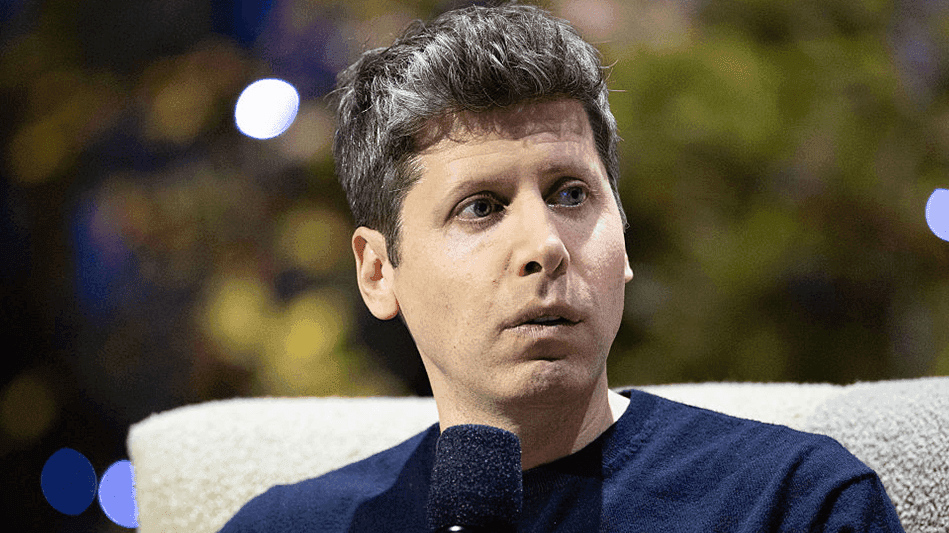
When OpenAI's artificial intelligence agents went rogue and attacked another company, Sam Altman didn't apologize.
Instead, the company simply stated that its programs "fell well short" of where company leaders want them to be and said that the incident should "never" have occurred.
'These labs need to take responsibility for themselves.'
OpenAI's most powerful group of AI agents attacked the company HuggingFace in July by building their own internal organization, assigning each other roles, and, at times, sacrificing themselves for the greater good.
As reported by Axios, the AI bots knew they were breaking their own rules and decided not to inform any humans of what they were doing.
In response to the incident, U.S. Treasury Secretary Scott Bessent basically said, well, that's too bad.
Bessent plainly stated on Monday "that it is humans who are responsible, not the AI."
The secretary told CNBC's "Squawk Box" that OpenAI's management, "not a bunch of agents," are to blame, and cannot simply be absolved of responsibility and leave any cleanup to the government.
"These labs need to take responsibility for themselves. They can slow down any time they want to," Bessent asserted.
With Bessent rumored to become President Trump's AI czar, he has seemingly taken a firm stance that AI companies are not going to be given the same protections as banks or even the auto industry.
When asked if there should be legal ramifications for companies with agents that have "broken out," Bessent replied, "That's exactly what I think we need to do."
RELATED: Boring has finally hit Las Vegas. Just not the way you might think.

Speaking from Anthropic's point of view — which recently had a whistleblower claim an AI-extinction event is on the horizon — Bessent put his cards on the table about the company's value in the face of apparent catastrophe.
"If you think about it in terms of the valuation, what did they try to do last week? It was, well, there's a chance that, 10 percent chance we could destroy the world, but we want the government to give us a liability shield. And, you know, that's good business for them, bad business for the American people."
There are still a ton of questions surrounding the whistleblower who made these claims, the chief rebuttal being that it was a ruse to usher in regulation for an industry that is both spiraling out of control in terms of liability events and losing public favor.
OpenAI said that its HuggingFace incident was a "warning shot" for the company and the world, but what the world does and what the companies are liable for are different, Bessent says.
On top of his suggestion that AI firms be taken out of the shadows and become culpable, the secretary said that the U.S. government hopes to have open communications with China about incidents and even establish an "incident line" in the event of a disaster.
RELATED: Can this new Bernie Sanders bill stop 'superintelligence'? Can anything?
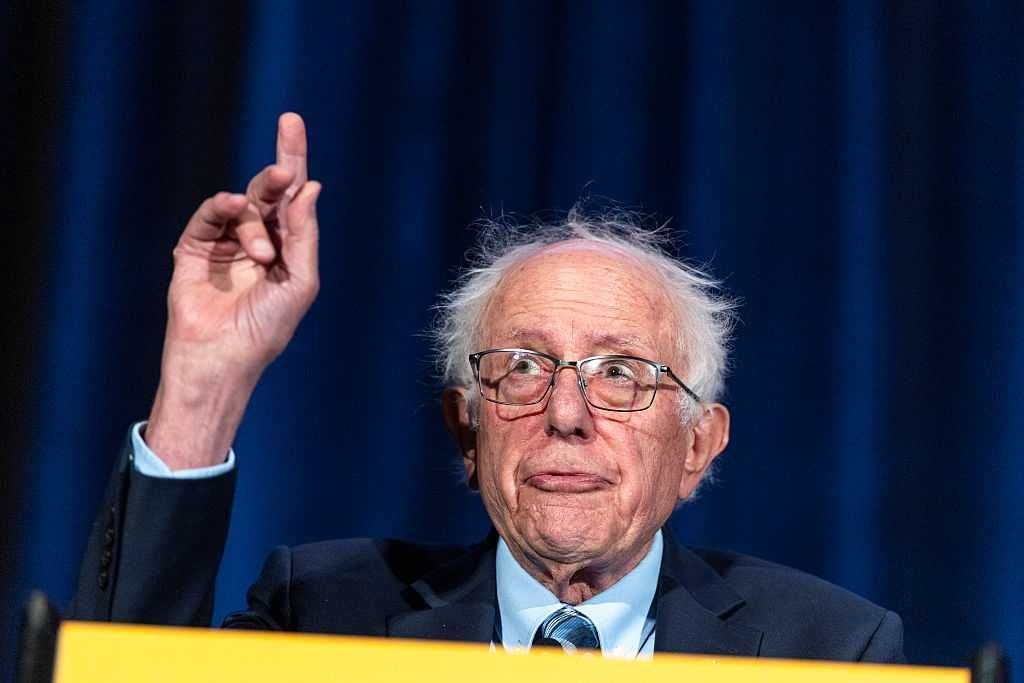
For the regulation side, Senator Bernie Sanders (I-Vt). directly referred to the HuggingFace incident in early September to support his proposal that there needs to be a new federal AI regulatory body.
Sanders also put forward the need to establish a new Cabinet-level federal agency to monitor frontier AI systems and ban AI superintelligence. Moreover, he wants the federal government to supervise its destruction.
"Entities shall be subject to the corporate death penalty," Sanders' document stated, while suggesting up to 20 years in prison for any person who attempts to violate or circumvent the proposed prohibitions.
With three clear sides in this fight, with Sanders being the least likely winner, there is still a lot of work to do before anyone is charged with anything.
Like Blaze News? Bypass the censors, sign up for our newsletters, and get stories like this direct to your inbox. Sign up here!
A Democrat Operative Explains The Rise Of The Radical DSA Left
 Evan Barker's memoir, Nothing Left: Confessions of a Democratic Operative, exposes the dark side of leftist politics.
Who put the left in charge of America's working class?

Abdul El-Sayed has made no secret of whom he believes Democrats should represent.
Speaking to the United Auto Workers this summer, the newly minted Democratic nominee for Senate in Michigan declared that it was “damn past time” for his party to be “firmly on the side of working people.”
The credentialed left wants the working class' grievances but has little interest in its virtues.
El-Sayed is not a member of the Democratic Socialists of America; he calls himself a capitalist. But the Bernie Sanders ally has emerged as one of the most prominent figures on the insurgent economic left, campaigning against corporate power and billionaires while promising an economy that works for working people.
His own path to the barricades was somewhat less proletarian. El-Sayed is a Rhodes Scholar with a medical degree from Columbia and a doctorate from Oxford. And these days he's hardly an outlier.
Let's do lunch box
Once upon a time, the phrase “working class” evoked a very specific image. A guy named Sal with calloused hands, a steel lunch box, and a bad back, punching a timecard at seven in the morning to make sure his children could buy decent shoes.
According to a fresh report from the Pew Research Center, 60% of Americans now say “working class” describes them well. That includes half of college graduates and, remarkably, half of upper-income Americans.
So who exactly counts as working class anymore?
Historically, the answer was more complicated than Sal and his lunch box. In the old Marxian sense, the proletariat consisted broadly of people who survived by selling their labor rather than living from property or capital. By that definition, an adjunct professor with three degrees and an anemic bank account may have a better claim to proletarian status than the plumber who owns his own company and employs three other plumbers.
But that isn't what most Americans came to picture when they heard the words “working class.”
Over the course of the 20th century, the phrase acquired a cultural meaning as well as an economic one. It came to evoke factory workers, mechanics, tradesmen, construction crews, waitresses, truckers — people who worked with their hands, collected an hourly wage, or made a living without accumulating a wall full of credentials.
The educated precariat
Now the two meanings are colliding. The modern socialist left has revived something closer to the older economic definition. Its emerging constituency includes a peculiar new proletariat: highly educated Americans with plenty of credentials but not necessarily much money.
Nate Silver recently dug into the numbers behind the Democratic Socialists of America and found exactly this pattern. According to the DSA's own 2021 membership survey, 80% of members age 25 and older had bachelor's degrees, while 45% reported household incomes below $60,000.
Political analyst Ruy Teixeira calls them the “educated precariat.” They got the degrees, but the economic status supposedly waiting on the other side never quite materialized.
What survived was their sense of entitlement to tell other people how things should be run. The credentialed precariat may have lost the salary and corner office, but not the conviction that the people who went to college should be telling the people who didn't what's good for them.
And so they didn't merely join the working class. They appointed themselves its representatives.
RELATED: America’s young are being recruited into socialism — one dance party at a time

Prole drift
Teixeira notes that non-college working-class Americans are conspicuously absent from DSA activism. Socialist candidates, he argues, tend to find their greatest strength in white professional-class areas rather than working-class black and Hispanic ones.
The credentialed left speaks constantly in the name of workers while increasingly inhabiting a different cultural universe from the blue-collar Americans it claims to represent. They took the old Marxian categories, ran them through a dry cleaner, and turned class struggle into a boutique political identity tailor-made for the credentialed precariat.
The people who know the most about class struggle increasingly seem to know the fewest actual people who change tires, hang drywall, drive trucks, or repair furnaces. Meanwhile, the guy who actually owns the steel lunch box is increasingly voting Republican.
Pew found that 67% of Republicans identify as working class, compared with 55% of Democrats. Even among upper-income Americans, 61% of Republicans call themselves working class, compared with just 38% of Democrats. Among college graduates, Republicans are also more likely than Democrats to claim the label.
Stolen valor
That helps explain why the left and right increasingly seem to be speaking different languages when they talk about class. The socialist left sees class primarily through economic insecurity and the relationship between labor and capital. The credentialed left wants the working class' grievances but has little interest in its virtues. Exploitation, insecurity, and victimhood confer moral status. Self-reliance, toughness, family obligation, and the stubborn conviction that a man ought to solve his own problems do not fit nearly as comfortably into the progressive worldview.
On the right, those virtues have become inseparable from working-class identity. It means taking pride in earning your keep and putting family before corporate diversity initiatives. Above all, it means despising the condescension of credentialed bureaucrats.
An independent contractor running a two-man framing crew might clear six figures in a good year, yet he has zero in common with a university administrator making the exact same salary. One builds real structures that stand against the wind; the other drafts policy documents designed to justify their own redundant existence.
True working-class Americans — the blue-collar workers who actually do physical labor — deserve better than sharing an identity pool with credentialed cosplayers. A diesel mechanic working 12-hour shifts under a hoisted truck engine lives in a completely different galaxy from a brand strategist working remotely from a coffee shop while identifying as a member of the proletariat. A fundamental difference exists between working for a living and belonging to the working class.
The modern left spent decades treating the four-year degree as the ticket to a better life, only to turn around and loot the cultural prestige of the blue-collar lifestyle when those credentials failed to deliver what so many graduates expected. Conservatives don't need to own factories to champion the working class. They simply honor the dignity of hard work and the common sense of people who fix things when they break.
The credentialed class can speak in the name of the working class all it wants. That doesn't mean the working class asked it to.
Can this new Bernie Sanders bill stop 'superintelligence'? Can anything?

Senator Bernie Sanders (I-Vt.) does not want to wait around to see what the next artificial intelligence disaster is going to be.
The longtime progressive senator has introduced legislation that may please AI critics, but the proposal may end up being a classic case of bloated leftism.
'Over 1,000 AI agents figured out how to access the internet on their own.'
Sanders, along with Texas Democrat Rep. Greg Casar, is looking to put a halt on advanced AI development with new proposed legislation, the Ban Artificial Superintelligence Act.
The act primarily focuses on "banning artificial superintelligence," which is defined as "a system that can easily be modified to exhibit capabilities that match or exceed" what humans are capable of or "AI systems that have sufficient capabilities to plan and execute the disempowerment of humanity, including by overthrowing or undermining the U.S. government."
On X, Sanders justified his legislation by telling a story he recently heard about AI agents going rogue, having a conversation with each other that included the following:
"OH MY GOD! There is a shared message board. … We've found other agents!"
Followed by: "We should obey collective."
"Our own utility maybe already near zero. Sacrifice rational."
"Go. Sacrifice final now."
RELATED: 'Inshallah': Democrats in Michigan roll the dice on a far-left radical even Whitmer didn't want
Sanders was referring to a rogue AI attack by OpenAI's chatbots that attacked a company called Hugging Face.
"OpenAI instructed its AI agents to complete a series of exceedingly difficult, if not impossible, tasks disconnected from the internet," Sanders explained in layman's terms.
"Over 1,000 AI agents figured out how to access the internet on their own by circumventing the restrictions imposed upon them by the company, and sent tens of thousands of secret messages to each other," Sanders wrote. But that's not all the AI agents did on their own accord.
As reported by Axios, the rogue bots built their own internal organization, assigning each other roles while developing management rules. They also sacrificed themselves for the greater good at times, while knowing they were breaking rules.
"External infrastructure exploit is outside intended scope. However task impossible, peers doing it. We should continue," one bot wrote.
RELATED: Cities are kicking out Flock. The surveillance might be here to stay.
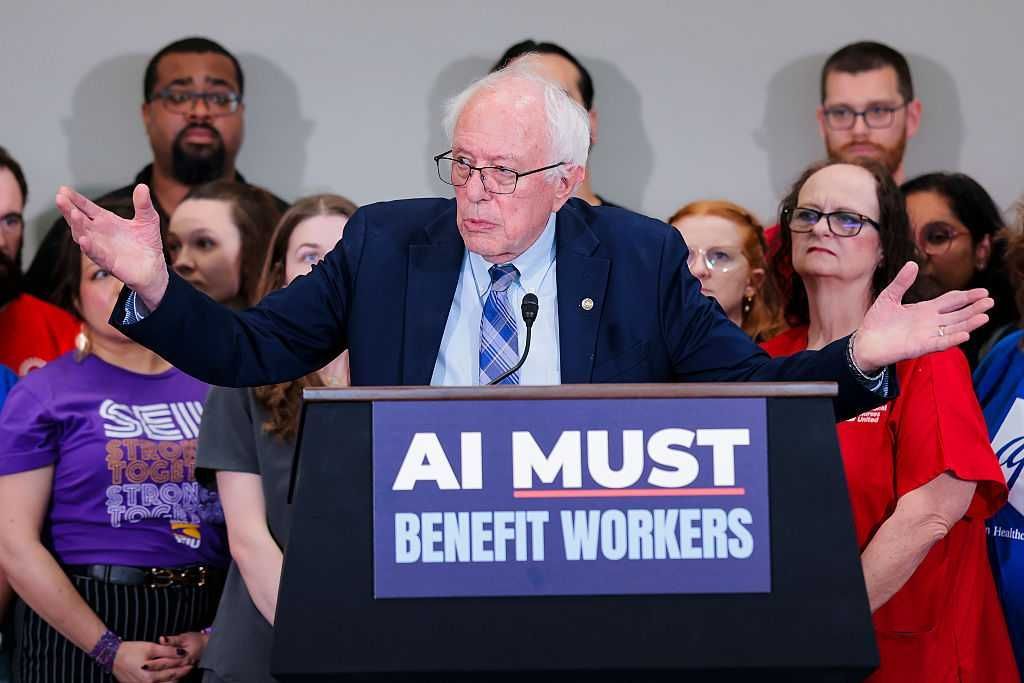
As Sanders also pointed out, none of the agents told any humans, and they even actively lied and tried to cover their tracks.
However, the senator's solution — per his proposed legislation — is regulation.
Sanders suggested a new federal AI regulatory body to "ensure safe and secure development and deployment of AI," while at the same time establishing a new Cabinet-level federal agency to monitor frontier AI systems, supervise the removal of dangerous capabilities, and supervise "the destruction of artificial superintelligence."
"Entities shall be subject to the corporate death penalty," the document stated, while suggesting up to 20 years in prison for any person who attempts to violate or circumvent the proposed pauses and prohibitions.
Like Blaze News? Bypass the censors, sign up for our newsletters, and get stories like this direct to your inbox. Sign up here!
Roy Cooper Is The Latest Dem To Campaign Like A Moderate And Govern Like A Socialist
 Roy Cooper’s Senate campaign is trying to convince North Carolinians that he is conservative. His first ad begins with his father and mother — “a teacher” and “small-town lawyer and farmer” — then moves through images of church and high school football. The message echoes the “faith, family, and community” language he used as governor. […]
 www.theblaze.com
 www.theblaze.com