![]()
The Justice Department published a damning report from the Weaponization Working Group on Monday detailing how elements of the Biden administration allegedly conspired during the pandemic to characterize concerned parents as domestic terrorists.
How it started
Parents around the country made their voices heard during the pandemic about various matters impacting their children, including COVID-19 restrictions, mask mandates, anti-white propaganda in the classroom, and the abuse that inevitably followed districts' embrace of gender ideology-formed school policies.
'Find a reason to suggest that such protests could be federal crimes regardless of the initial skepticism.'
This exertion of political agency by parents apparently enraged the powers that be.
On Sept. 29, 2021, the National School Boards Association claimed in a letter to then-President Joe Biden, "America’s public schools and its education leaders are under an immediate threat. The National School Boards Association respectfully asks for federal law enforcement and other assistance to deal with the growing number of threats of violence and acts of intimidation occurring across the nation."
In addition to complaining about the alleged dissemination of "misinformation," the NSBA suggested in the letter that school officials and educators around the country were "susceptible to acts of violence" and faced threats over their role in pushing COVID-19 and leftist measures.
![]() From the NSBA's Sept. 29, 2021, letter. Justice Department
From the NSBA's Sept. 29, 2021, letter. Justice Department
The NSBA letter also asked the Biden administration to:
- "investigate, intercept, and prevent the current threats and acts of violence against our public school officials";
- consider treating alleged "acts of malice, violence, and threats against public school officials" as "a form of domestic terrorism and hate crimes"; and
- "examine appropriate enforceable actions" against the supposed crimes under the PATRIOT Act and other statutes.
The NSBA also insinuated that certain individuals who attended school board meetings were potential terrorists, the DOJ Weaponization Working Group noted in its report.
Among those referenced was Scott Smith of Virginia. Smith criticized Loudoun County Public Schools officials after his disabled daughter was anally raped by a trans-identifying man in the girls' restroom at Stone Bridge High School.
RELATED: Parents weren't asked. Many still don't know. Inside the new school surveillance nightmare.
![]() Chip Somodevilla/Getty Images
Chip Somodevilla/Getty Images
The DOJ's new WWG report makes mince meat of the NSBA's letter, which was recognized at the time by Republican state attorneys general as a "massive fraud" and "designed to intimidate parents into giving up their constitutional rights to direct the upbringing and education of their children."
The WWG report claims, for instance, that the NSBA identified "numerous instances of constitutionally protected speech and protest as 'threats'"; implored the Biden administration to treat such protected speech as criminal; and falsely suggested that school boards generally faced "angry mobs" and disruptions.
In an Oct. 22, 2021, letter, the NSBA board of directors walked back some of the claims and admitted that "there was no justification for some of the language included in the letter." The damage was, however, done.
The NSBA did not immediately respond to Blaze News' request for comment.
Despite its political bent and inaccuracies, the NSBA's Sept. 29, 2021, letter set the stage for the October 4, 2021, memo sent from then-Attorney General Merrick Garland to relevant Biden officials in the FBI and the DOJ, treating the association's claims as fact and their concerns as warranted.
![]() From Merrick Garland's Oct. 4, 2021, memo.
From Merrick Garland's Oct. 4, 2021, memo.
According documents reviewed by the WWG, Garland's subsequent memo "and its suggestion that such protests could constitute federal criminal activity, including domestic terrorism, was the product of pressure by the White House and high-ranking Department of Justice officials to find a reason to suggest that such protests could be federal crimes regardless of the initial skepticism."
Elements inside the Justice Department and the FBI strongly doubted whether school-directed protest and criticism from parents qualified as criminal conduct.
An attorney in the DOJ's Civil Rights Division noted in an Oct. 3, 2021, email, "I read the letter from NSBA, and looked at the links for a handful of the footnotes, and it appears to me that the vast, vast majority of the behavior cited cannot be reached by federal law."
![]() Justice Department.
Justice Department.
One attorney in the DOJ's Criminal Division reportedly noted that an early version of the Garland memo tied supposed school board threats to election threats and would therefore be regarded "as a partisan exercise aimed at those who do not support the Administration."
Notwithstanding such internal criticism, Garland apparently rushed out his memo. The Biden administration then took steps to implement it, subjecting multiple parents to federal investigation.
The FBI previously confirmed to congressional investigators that it had opened at least 25 counterterrorism "Guardian assessments" based on alleged school board threats. Six of these probes were run by the bureau's Counterterrorism Division.
How it's going
The WWG concluded that the Garland memo "was the product of pressure by senior leadership to support the NSBA and to bring federal pressure to bear on parents protesting school districts that had enacted certain policies."
The WWG emphasized that by suggesting that concerned parents were breaking federal law or on the verge of doing so had a chilling effect on First Amendment rights.
While the Trump DOJ cannot turn back the clock and undo the damage generated by the previous administration, it is offering several remedies.
It will, for instance, enable those Americans targeted by the Biden administration for their participation in school board meetings to see the FBI Guardian assessments that were created for them.
The DOJ will also add a disclaimer to every Guardian assessment associated with the Garland memo, noting that "the Garland Memorandum raised serious constitutional concerns, and so any Guardian assessment resulting from it should be read with caution."
Additionally, the department will review the files of all persons investigated pursuant to the Garland memo to determine if their constitutional rights were trampled.
"Parents are children's natural providers and protectors," stated Assistant Attorney General Harmeet Dhillon. "The Biden-Harris DOJ labeled concerned parents as threats for exercising their right to know what was happening at their kids' schools. This Civil Rights Division stands with parents, and we will continue to partner with the Department of Education to enforce parents' rights under federal law."
Like Blaze News? Bypass the censors, sign up for our newsletters, and get stories like this direct to your inbox. Sign up here!
 All Americans will bear the brunt of elected officials' failure to justly punish Jack Smith and others who weaponized the federal government against conservatives.
 Documents obtained by Senate Judiciary Chair Chuck Grassley shows Smith and his cronies spying on journalists as well as lawmakers.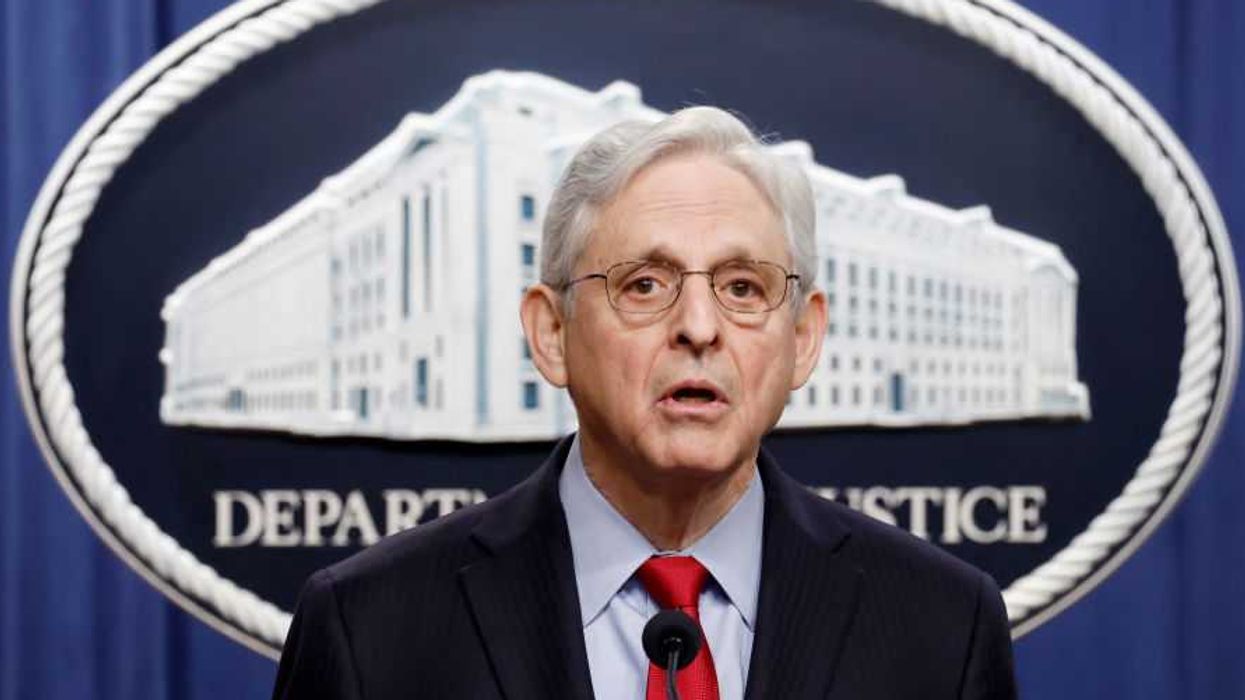
 From the NSBA's Sept. 29, 2021, letter. Justice Department
 Chip Somodevilla/Getty Images
 From Merrick Garland's Oct. 4, 2021, memo.
 Justice Department.
 Special Counsel Jack Smith seized nearly 5,000 personal checks written by donors to President Donald Trump, according to new whistleblower disclosures. Senate Judiciary Committee Chair Chuck Grassley, R-Iowa, released the bombshell findings during a Tuesday hearing featuring testimony from Smith about his lawfare against Trump. The information was disclosed via legally protected whistleblower disclosures. According […]
 Sen. Susan Collins, R-Maine, has earned a reputation as one of the Senate’s most bipartisan and moderate members. But not even that willingness to work across the aisle spared the longtime senator from being ensnared by the left’s lawfare machine. Leftist propaganda outlet ProPublica dropped a hit piece on Tuesday suggesting Collins and her 2020 […]
 www.theblaze.com
 www.theblaze.com
 www.theblaze.com