The socialists want a new Constitution. Believe them.
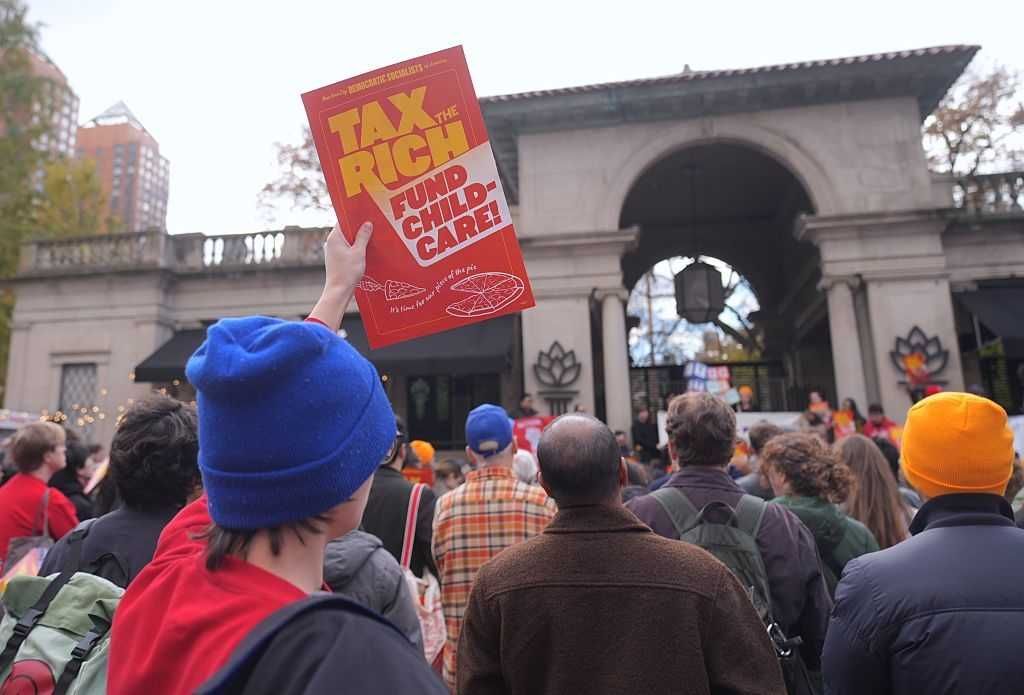


As the midterm elections approach, democratic socialism is attracting renewed attention as an alternative to America’s constitutional order. Recently elected officials in Seattle, Colorado, and New York City, along with dozens of others, identify as democratic socialists. Membership in the Democratic Socialists of America has surged, and a recent CNN poll found that a third of Democrats now identify with the movement’s political program.

The goals of the DSA and the promises made in campaign rallies should be understood by all Americans for exactly its aim: a complete overhaul of the U.S. Constitution and the governing laws that have ensured our freedoms for the last 250 years.

A ‘new society’ that eradicates the right to religious liberty is a familiar step down an extremely dark path.

This is not an esoteric challenge to our economic system. It’s a threat to our entire republic.

At the core of all socialist movements, historically and contemporarily, is the supremacy of the collective over the individual, where the state assumes the role of controlling guardian to determine what is “best for society,” squelching individual liberties, all in submission to this ideological monopoly.

As such, the one thing totalitarian governments will never allow is an appeal to a higher authority than the government. There can be no authority higher than the state. That is why socialist-controlled governments have always viewed religious liberty as a threat and target it as one of the first freedoms to dismantle.

That’s why Virginia Democrat Senator Tim Kaine’s remarks during a 2025 hearing deserve attention. The former Democratic Party vice presidential nominee said he found "extremely troubling" "the notion that rights don't come from laws and don't come from the government, but come from the Creator."

The American founding says otherwise.

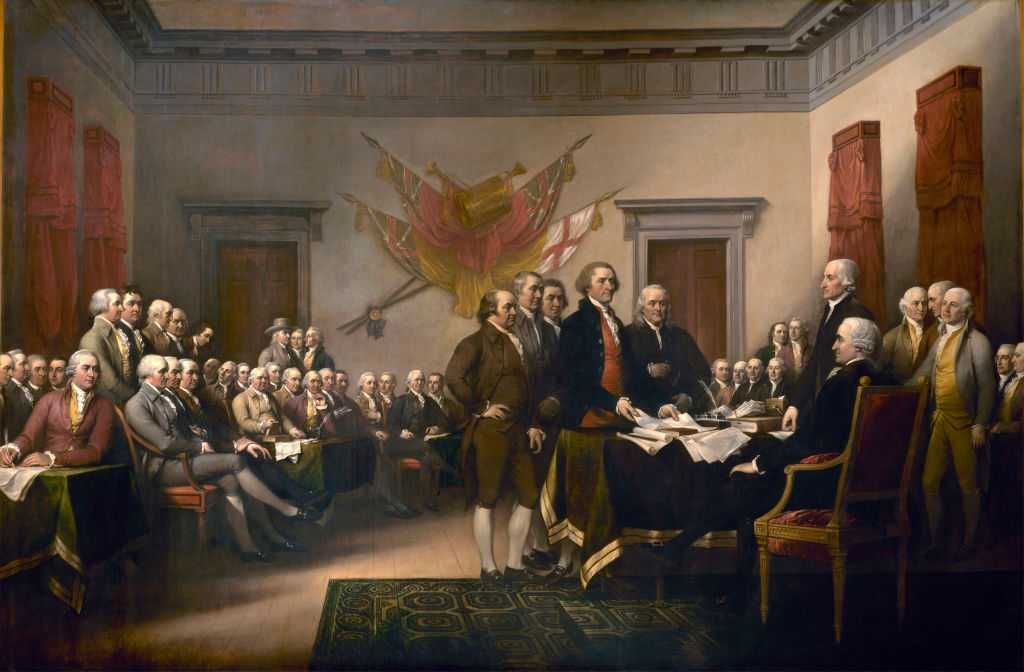
The Declaration of Independence states that “all men are created equal” and “are endowed by their Creator with certain unalienable Rights,” among them life, liberty, and the pursuit of happiness.

That formulation is not ornamental. It establishes a limit on government.

If government grants your rights, government can redefine them or take them away. If rights exist before government, then government is bound to respect them.

That’s why religious liberty is the first right protected in the Bill of Rights. Without the right of conscience, all other liberty disappears.

Members of the DSA counter this assessment by pointing to its Religion and Socialism Working Group outreach to the faith communities. In their own words, “DSA’s Religion and Socialism group is open to DSA members of all faiths whose socialism is in some way inspired by their spiritual identity.” In other words, religion is welcomed and approved only if it agrees with the DSA’s socialist ideology, which in essence, then, is a state-endorsed church. All opposing religious viewpoints need not apply.

RELATED: ‘Reign of terror’: One-third of Democrats give thumbs-up to Trump assassination

Anna Moneymaker/Getty Images

In the old Soviet Union, state regulations defined how religious organizations could function, what they could say, and when they could meet. Eventually, church doors were closed, sectarian schools were closed, and religious leaders were incarcerated, all because socialist regimes cannot allow organizations or the populace to appeal to a higher authority than the government.

The commonly repeated pattern with all socialist movements begins with ideological propaganda denouncing all viewpoints that don’t fall in lockstep with its platform. In the case of the DSA, that means throwing out the old and fundamentally changing the very foundations of our government, including religious liberty.

But that’s just the start. In the DSA’s program for the current year, the objective is quite clear: “Our goal is to put workers in charge of the government through a new democratic constitution …” and “Replace the President and Supreme Court with an executive and judiciary chosen by and subordinate to Congress.”

This “new society” would eliminate the three co-equal branches of government that provide essential checks and balances. Gone are the U.S. Constitution and Bill of Rights that protect the rights of all Americans.

Religious liberty is foundational to a country that values individual freedoms. It defines the relationship between citizens and government by limiting the government’s power and protects freedom of conscience. It is inseparably linked to broad civil liberties including free speech, parental rights, academic freedom, and freedom of assembly.

None of these rights can exist without the foundation of the right of conscience: religious liberty. A “new society” that eradicates this most important right is a familiar step down an extremely dark path. What we need instead is a recommitment to a society that understands and cherishes the liberties protected in our founding documents that have defined us as the “land of the free.”

Supreme Court Data Privacy Ruling Threatens EdTech That Tracks Students’ Parents 24/7

The tension between these K-12 education programs and Chatrie is bound to create a stir as parents — and their students — begin questioning these surveillance practices and asserting their Fourth Amendment constitutional rights.
The Bill of Rights is the antidote to soft despotism


As the nation approaches what looks like a weak and divided commemoration of the 250th anniversary of the Declaration of Independence, another milestone has arrived with little acclaim. Today marks the 239th anniversary of the introduction of the Bill of Rights in the U.S. House of Representatives.

It should be a day of celebration every year. The Bill of Rights is one of the most important documents in human history. James Madison, one of the nation’s central founders and a future two-term president, introduced it in Congress on June 8, 1787.

We have less than half a decade to avert a fiscal collapse of the federal government and the social and economic destruction that would follow.

The central lesson of the Bill of Rights lies in Madison’s purpose: to bind every level of government to one overriding mission — protecting individual rights against majority tyranny.

The Bill of Rights Institute summarizes Madison’s concern well. Before the Constitutional Convention, Madison wrote “Vices of the Political System,” an essay detailing the flaws of the Articles of Confederation. One of the chief defects, in his view, was that tyrannical majorities in the states passed unjust laws violating the rights of minorities. He had seen the oppression of religious dissenters in Virginia and became the leading advocate for the Virginia Statute for Religious Freedom.

At the Constitutional Convention, Madison argued for separation of powers, checks and balances, bicameralism, and federalism as safeguards for liberty. But he lost one key feature of his plan: a national veto over state laws meant to prevent majority tyranny in the states.

Today, we are light-years away from Madison’s vision and from the founders’ plan to protect it. Neither Madison nor anyone else could force the American people and their governments to live within the letter and spirit of the Constitution and the common law. The founders could only encode their vision into the Constitution, laws, and judicial precedents, then hope later generations would preserve it.

They often have not.

In 1840, only a half-century into the American experiment, Alexis de Tocqueville anticipated the rise of “soft despotism” in the United States. He saw that the passion for equality could erode devotion to natural law, natural rights, and self-government.

Tocqueville warned of a sovereign power that takes each individual “into its powerful hands” and covers society with “a network of small, complicated, minute, and uniform rules.” Such power, he wrote, “does not tyrannize” but “hinders, represses, enervates, extinguishes,” and finally reduces the nation to “a flock of timid and industrious animals, of which the government is the shepherd.”

He also warned that this mild, regulated servitude could exist “in the very shadow of the sovereignty of the people.”

That is the danger America now faces.

Tocqueville foresaw that citizens might voluntarily give up sovereignty in exchange for temporary economic stability and government largesse extracted from their neighbors. In doing so, they would surrender the things that made the nation great: self-rule, protection against majority coercion, voluntary association, free enterprise, and ultimately each person’s dignity as a unique human being.

RELATED: The timeless truths behind the Declaration of Independence

Fine Art Images/Heritage Images/Getty Images

Restoring respect for the Bill of Rights and the founders’ vision is essential if we hope to rescue the United States from the soft despotism into which the American experiment has devolved — and from the harder totalitarianism toward which it now hurtles.

Documents and laws alone will not achieve that. In our present decline, the only way to reverse the slide is to remove the temptation that feeds it: the ability of majorities at all levels of government to vote themselves ownership over other people’s property, liberties, and lives.

In an ironic turn, the United States may now be approaching a resolution of sorts: the collapse of the national government’s ability to pay for everything Congress, presidents, and courts have promised Americans over the past century and a half.

Entitlements such as Social Security, food stamps, Medicaid, Medicare, federal housing subsidies, and other national bribes have become insupportable. They now threaten a debt spiral as high interest rates and inflation weaken the economy and erode the government’s tax base.

The federal debt has already risen above 100% of gross domestic product — the nation’s entire annual economic output. More ominously, the debt is accelerating. The total now sits just short of $40 trillion. It is projected to rise to $55 trillion by 2031, an increase of more than one-third in five years. By 2036, it is projected to reach $77 trillion, nearly doubling in a decade.

Meanwhile, federal and state governments have steadily eroded individual rights, freedom of association, free enterprise, election integrity, and countless other safeguards of liberty.

This is the outcome of majority tyranny. We have less than half a decade to avert a fiscal collapse of the federal government and the social and economic destruction that would follow. What would arise from such a catastrophe is impossible to know.

History offers little comfort. The chances are strong that whatever replaced our flawed yet hardy constitutional system would not resemble the order our forefathers established in the 1700s. A nation founded on individual rights and self-government could vanish from the earth.

That is what Americans must confront as we approach another election season and another referendum on our founding values.

For America’s 250th Birthday, Visit Her Founding Documents In D.C. Or A City Near You

'Free and Independent' does a commendable job of explaining the Revolution in a concise display of archival art, documents, and objects.

Katy Tur Should Read The Declaration Of Independence Before Looking Stupid On TV Talking About It

The left increasingly wants a government in which rights are derived from the government and where rights can similarly be revoked by the government.

This Covid Mandates Case Would Let Alito Prove The Left Doesn’t Care About Bodily Autonomy

Leftists cherish the right to bodily autonomy so long as the person exercising it is a woman seeking to abort a child, not an adult who objects to putting an experimental medication in her body.
The founders demanded the Bill of Rights. AI also needs one.


In September 1787, the Constitutional Convention in Philadelphia came to a close. Delegates had spent months debating and negotiating the structure for a new American government. When the final document was presented for signatures, most of the delegates agreed to support it. But one of the most influential figures in the room refused.

George Mason of Virginia would not sign the Constitution.

Mason’s refusal did not stem from radical opposition to the new proposed government. In fact, he played a major role in shaping America’s early political philosophy. Yet when the convention concluded, Mason believed something essential was missing. The proposed Constitution created a powerful federal government, but it contained no explicit protections for individual liberty. Without a Bill of Rights, Mason warned, citizens would have little protection against abuses of power.

If artificial intelligence is going to help shape the future of our society in profound ways, should it not also be built to respect the same freedoms that Americans have fought for since the founding of the republic?

History ultimately proved his concerns justified. Mason’s refusal helped spark the debate that led to the adoption of the Bill of Rights a few years later. His message was simple. When a new, powerful institution is created, the protection of liberty cannot be an afterthought.

A new power is emerging

More than two centuries later, we find the United States again standing at the edge of a transformative moment. Today, the institution taking shape is artificial intelligence. And this institution may end up being just as consequential to society as the shaping of the country in the late eighteenth century.

The most advanced AI systems are already beginning to shape our culture and how people access information, businesses make decisions, institutions function, and public discourse unfolds. These systems are being integrated into everything from banking and education to media and health care. In many cases, AI models act as intermediaries between humans and the world of information around them.

This development carries enormous promise. Artificial intelligence could accelerate medical research, improve productivity, and unlock scientific discoveries that once seemed impossible.

At the same time, the growing influence of AI raises an important question. What values will guide the systems that increasingly shape our society?

AI is not neutral by default. Every model reflects decisions made by its designers. The data used to train it, the rules used to filter its responses, and the priorities embedded in its algorithms all influence how it interacts with users. Beyond just answering questions and responding to prompts, these systems influence what information people encounter and how issues are understood.

In other words, the institutions building AI today are quietly creating the informational infrastructure of the future.

Where are the safeguards for freedom?

George Mason understood that powerful institutions require clear limits. His concern centered on ensuring that a strong central government would respect the rights of the people it serves.

Artificial intelligence deserves the same scrutiny.

Recent controversies surrounding AI tools have revealed how easily political or ideological assumptions can shape technological systems. A growing body of studies has found that many leading AI models tend to reflect left-leaning political assumptions in their outputs, raising concerns about viewpoint bias. Major AI platforms have faced backlash for producing historically inaccurate outputs to satisfy modern ideological expectations, as seen in widely publicized image-generation failures.

Social media platforms, powered by similar AI-driven algorithms, already curate what users see, amplifying certain viewpoints while quietly burying others. Even leaders within the AI industry have acknowledged the risk that these systems could influence public discourse in ways that are difficult for users to detect.

More egregious examples can be seen with Chinese AI models, such as DeepSeek, which have been shown to avoid or redirect discussion on topics that conflict with official government positions, reflecting the priorities of the state rather than the pursuit of truth.

Taken together, these examples demonstrate how AI can be shaped to filter reality itself, whether by governments, corporations, or the assumptions embedded by developers.

These examples illustrate a basic reality. Artificial intelligence can either serve as a tool for expanding human freedom or as an instrument for shaping and controlling public discourse and, by extension, society. The outcome will depend on the values embedded in these systems today.

A meaningful step forward would be the adoption of clear, principled guidelines for building and deploying these systems. At minimum, AI development should prioritize truth-seeking over narrative-shaping, ensuring that systems are designed to inform rather than steer users toward predetermined conclusions.

Developers should also commit to transparency in training data sources, so the public has a clearer understanding of what informs these models.

Just as important, developers should resist coercion from governments or corporations seeking to suppress lawful speech or manipulate outcomes. They should reject internal policies that seek to bury dissenting views under the vague banner of “safety,” a term that too often masks subjective judgment.

These principles may not solve every problem, but they would begin to align AI with the values of a free society.

George Mason’s warning for the AI age

George Mason refused to sign the Constitution because he believed liberty needed stronger protection before a new federal government was enacted. His insistence on a Bill of Rights helped ensure that the American experiment would endure longer by providing explicit protections for individual freedom.

The United States now faces a similar moment as artificial intelligence becomes woven into the fabric of modern life. AI will influence how people learn, communicate, and understand the world. The values guiding these systems will shape society in ways that are difficult to predict.

Before this technological infrastructure becomes fully embedded in our daily lives, it is worth asking a question that George Mason would likely recognize.

If artificial intelligence is going to help shape the future of our society in profound ways, should it not also be built to respect the same freedoms that Americans have fought for since the founding of the republic?

The founders believed liberty required clear protections before a new, powerful structure was fully unleashed. As we enter the age of artificial intelligence, their lesson remains as relevant as ever.

To Celebrate America’s 250th, Read Her Founding Documents In Person

These D.C. exhibits cultivate a greater appreciation for the freedoms and people who created the first quarter-millennium of our rich American story.

The Idea Of ‘Birthright Citizenship’ Rests On Some Fundamental Misunderstandings

Contrary to what 'experts' and Democrats say, the 14th Amendment is anything but clear on birthright citizenship.

Why You Should See The Full Constitution At The National Archives This Month

The display of the full Constitution seems timely, given not just our country's impending 250th birthday but our polarized political climate.