Trillionaires Like Elon Musk Aren’t A Problem For America, Envious Leftists Are

Multimillionaire politicians denounce billionaires as the source of all evil, to the applause of college graduates pretending to be working class. It's a dangerous farce.
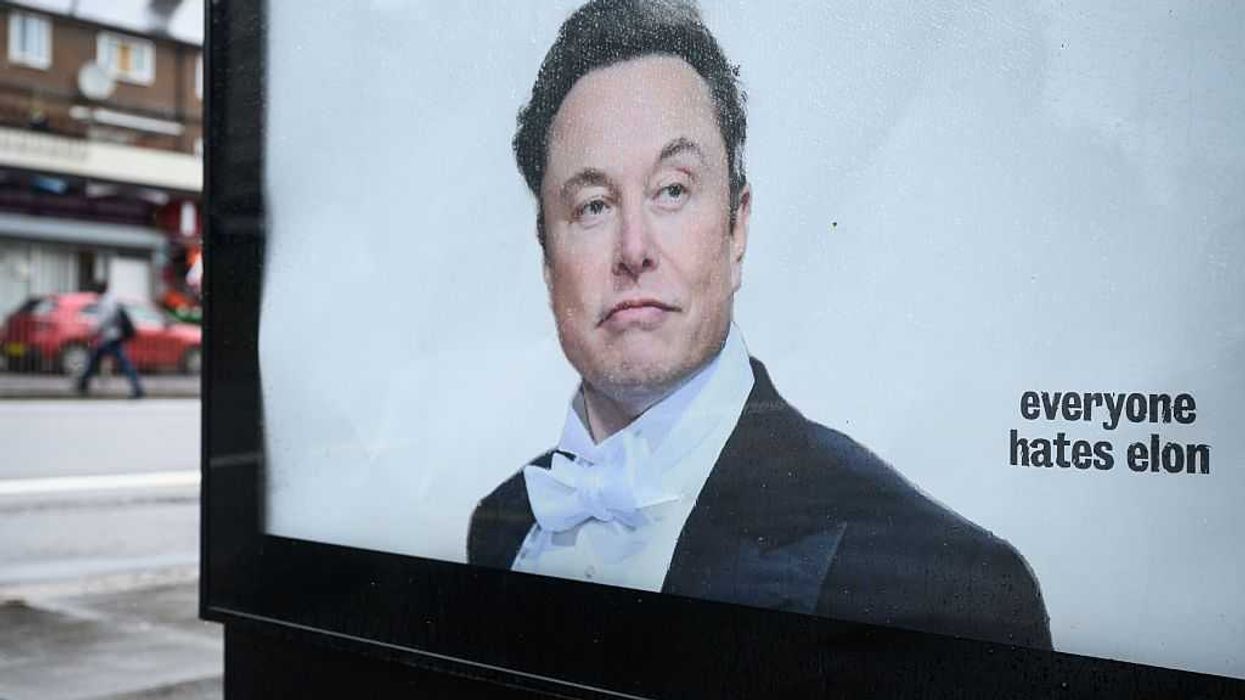

Who wants to eat a trillionaire?


Let me tell you about the very rich,” F. Scott Fitzgerald wrote a century ago. “They are different from you and me. They possess and enjoy early, and it does something to them, makes them soft where we are hard, and cynical where we are trustful, in a way that, unless you were born rich, it is very difficult to understand.”

Last week’s SpaceX initial public offering made company founder and CEO Elon Musk the world’s first publicly known trillionaire — very different from all of us, at least on paper.

Bad enough he became too rich. Worse, Elon Musk became too independent.

On paper is doing plenty of heavy lifting. We’ll get back to that.

If billionaires “shouldn’t exist,” as our boring socialist friends never tire of saying, then a trillionaire must be not merely obscene but downright apocalyptic. If the existence of billionaires is a policy failure, the arrival of a trillionaire is a crime scene. Call Congress! Summon the United Nations! Eat the rich!

Let me tell you about the very left-wing. They are different from you and me. They enjoy little, and it does something to them. It makes them covetous where normal people are merely curious, bitter where normal people are merely skeptical, and stupid where the rest of us are trying very hard to be charitable.

Musk’s gargantuan wealth is a test no leftist can pass.

“If we liquidated Elon Musk as a financial entity we could each pocket $3,000,” one frivolous X user wrote. “Just putting that out there. 3K. Not bad.”

“Elon Musk is a trillionaire but it’s def the people on SNAP ruining your life,” a tedious Democratic strategist posted.

“Right? He could fund SNAP himself and still have a boatload left to spare,” a pseudonymous Marxist replied.

This is what happens when resentment collides with arithmetic.

“Elon Musk could easily fund” makes for a terrific party game, especially if everyone playing has skipped high school civics, freshman economics, and the day in third grade when Mrs. Campbell broke the news that Monopoly money was not legal tender.

RELATED: A child’s guide to why billionaires should, in fact, exist

RapidEye/iStock/Getty Images

With $1 trillion, Musk could buy every major carmaker in America, Europe, and Japan. With $1 trillion, Musk could fund global famine relief dozens of times over, provide clean water to the world, rebuild Gaza, or hand every person on earth a modest cash gift. With $1 trillion, Musk could cover the United Nations’ humanitarian appeals, the Australian budget, or — according to my friend Mac Owens — roughly 3.5 miles of Gavin Newsom’s high-speed rail system.

Cool. Put it all on the board. Have fun. Pour another drink. (Maybe pour me one, too.)

But Musk does not have $1 trillion in a checking account. He is not Scrooge McDuck swan-diving into a vault of gold coins (not that it would even work that way). He owns shares in companies that other people believe are valuable because those companies build things, launch things, connect things, sell things, and promise things investors think may be worth a lot more later.

His wealth is not a pile of cash. It is a claim on productive enterprise.

The socialist imagination never really gets past the pile. The left sees wealth and pictures a dragon atop a hoard. It sees equity and imagines stolen bread. It sees a balance sheet and imagines a pantry that can be raided without consequence.

But Musk’s wealth cannot be “liquidated” without destroying much of the value the envious wish to seize. Sell enough shares, and the price falls. Seize the company, and watch the engineers leave. Convert capital into consumption, and the thing that made the wealth possible begins to disappear.

Welcome to Economics 102. Economics 101 teaches scarcity. Economics 102 teaches that capital is not loot.

None of this makes Musk a saint. I don’t know if he is a good man. I don’t know if any man should have as much influence as he has, and neither do his fanboys. Musk is erratic, strange, reckless, sometimes brilliant, and often his own worst enemy. But he is not a political theory. He is not a catechism. He is not your dad.

I know do this much, though: If Musk had not bought Twitter in 2022 for the eye-watering sum of $44 billion, Americans would know less about their own country and less about the people who presume to manage it.

That purchase did not make him richer. It made him more dangerous.

Dangerous to whom? To the people who think “misinformation” means information they cannot control. To governments that prefer pressure campaigns to open censorship. To NGOs that discovered a business model in laundering political speech control through the language of “safety.” To journalists who miss the days when a few institutions could decide which scandals were real and which ones respectable people were expected not to notice.

RELATED: Democrats love free speech — until conservatives get some

mikkelwilliam/iStock/Getty Images

This is why the hatred aimed at Musk is never really about money. The money supplies the moral pretext. Control supplies the motive.

The left does not hate Musk because he could “fund SNAP.” The federal government already spends enormous sums on SNAP, and no serious person believes American nutrition policy should depend on one weird rich guy hawking rocket shares. The left hates Musk because he took a portion of his unrealized fortune and bought a speech platform that was supposed to belong forever to the consensus managers.

Bad enough he became too rich. Worse, he became too independent.

A billionaire who funds the approved foundations may be vulgar, but he can be managed. A billionaire who underwrites lawsuits, climate conferences, university centers, “democracy” initiatives, and grants for people who use the word “equity” as an incantation may still be welcomed at the proper tables. His money can be baptized.

Musk’s money did something else. It bought the key to a door the regime wanted to remain locked.

No wonder they want to eat him.

The NFL’s antitrust exemption is a win for fans


Critics have long argued that the NFL gets an unfair pass under antitrust law. The Sports Broadcasting Act of 1961 allows the league to do things that would normally raise legal red flags, including pooling all 32 teams’ television rights and negotiating media deals as one entity. That kind of coordinated behavior is exactly what the Sherman Antitrust Act of 1890 was designed to scrutinize.

But measured by what matters most under modern antitrust law — consumer welfare — the NFL’s exemption looks far less like a sweetheart deal for billionaires and much more like a good deal for fans.

The irony of stripping the NFL’s exemption in the name of protecting fans is that fans would likely end up worse off.

Antitrust law generally asks a simple question: Does the challenged conduct hurt consumers? By that standard, the NFL’s model holds up well. Fans have more access to games at lower real prices, even as league costs have risen sharply, including large inflation-adjusted gains in player salaries.

Hometown fans can watch every one of their local team’s games free over the air each season. The typical fan can access more than 100 games a year without paying for cable or a streaming bundle. Even the avid fan who wants every regular-season game can, according to research by LightShed Partners, watch all 272 games in 2026 for less than $600.

That comes to less than $3 per game.

Compare that with 2006, when full coverage required paying roughly $60 a month for DirecTV plus $290 for Sunday Ticket. Adjusted for inflation, that is more than $1,600 in today’s dollars. In other words, the real cost of watching the full NFL season has fallen by more than 60% over the past two decades.

That is not what consumer harm usually looks like.

Some critics argue that if the NFL lost its exemption, individual teams would cut their own media deals and fans would benefit from more competition. In practice, that would likely mean 32 teams signing separate deals with different streaming services, regional networks, cable channels, and digital platforms. Fans who wanted to follow the whole season would have to assemble a patchwork of subscriptions, apps, logins, blackout rules, and geographic restrictions.

That would not help fans. It would make watching football more expensive and more frustrating.

European soccer offers a warning. Leagues there have spent years fighting over collective television licensing, and fragmented rights have often made the product harder for ordinary fans to follow while enriching a handful of powerful clubs. The irony of stripping the NFL’s exemption in the name of protecting fans is that fans would likely end up worse off.

The NFL also differs from ordinary industries in a deeper way. In most markets, antitrust law assumes independent competitors produce better outcomes than coordinated actors. A dominant firm may seek to squeeze out rivals, raise prices, and control the market. But professional sports do not work like normal markets.

The NFL’s “product” requires competition among many teams. A single team cannot produce a season. Fans do not merely want great franchises; they want close, unpredictable games. If the same teams win every year and the outcome seems predetermined, people stop watching.

RELATED: Sports broadcasting blackouts are killing American culture

PRANGKUL RUANGSRI/iStock/Getty Images

That is why the NFL needs coordination in a way most industries do not. Revenue sharing, pooled media rights, and coordinated scheduling are not tricks to suppress competition. They help preserve competitive balance. When money flows from richer franchises to smaller-market teams, the league prevents a handful of clubs from dominating year after year.

Few industries operate by having winners subsidize losers. In most markets, that would look suspicious. In professional football, it helps create the product fans want.

Antitrust law usually assumes cooperation among competitors harms consumers. In the NFL, cooperation among competitors helps produce better competition on the field.

The Sports Broadcasting Act is not a dusty relic or a lobbyist favor from another era. It reflects a real difference between sports leagues and ordinary industries. Coordination can benefit consumers when the product itself depends on balanced competition, shared scheduling, broad access, and national distribution.

The data supports that conclusion. Fans are paying less in real terms for more access than ever, despite rising league costs. Blow up the current system in the name of a simplistic demand for “more competition,” and the likely result would be higher prices, fragmented access, and a worse viewing experience.

Antitrust law exists to protect consumers, not to punish cooperation for its own sake. In the NFL’s case, coordination lowers prices and improves the product by giving fans more football, broader access, and closer games. It’s the opposite of what it does in many other industries where antitrust concerns are relevant.

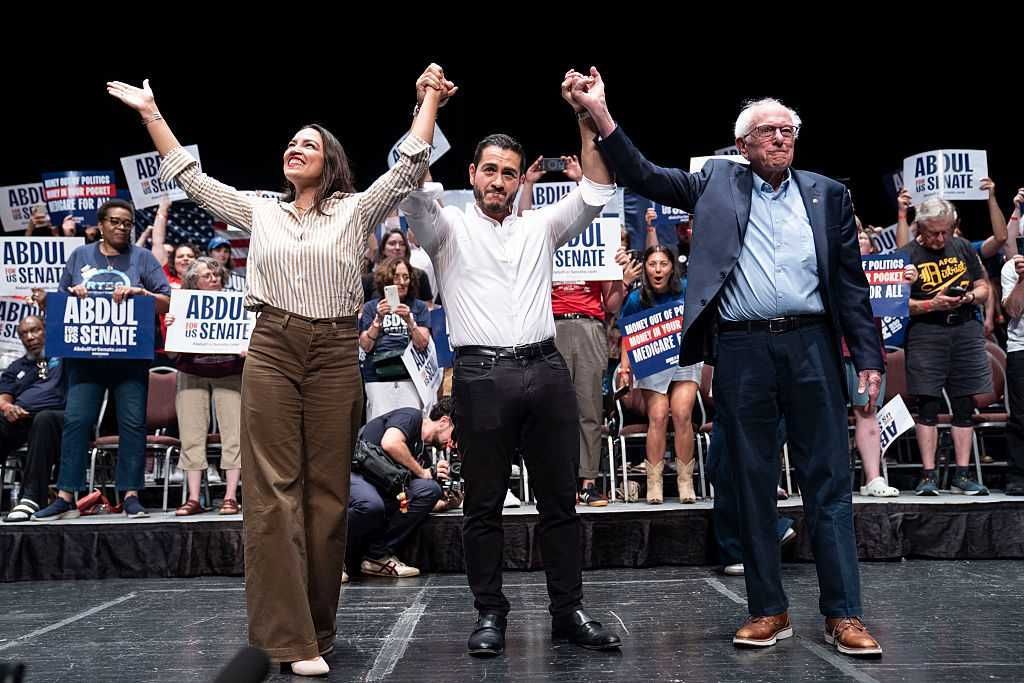
'Speaking of stupid Democrats': AOC blasts billionaires and founding fathers in ridiculous podcast appearance


In a recent podcast appearance, Rep. Alexandria Ocasio-Cortez (D-N.Y.) made some shocking comments regarding billionaires and the founders of our country — and BlazeTV host Pat Gray is not surprised.

“Speaking of stupid Democrats, holy cow,” Gray says, playing a clip of AOC.

“There’s a certain level of wealth and accumulation that is unearned, right? You can’t earn a billion dollars. You just can’t earn that,” the congresswoman said on “It’s Open with Ilana Glazer.”

“You can get market power, you can break rules. You can do all sorts of things. You can abuse labor laws. You can pay people less than what they’re worth,” she continued.


“Since you didn’t earn that, you have to create a myth of earning it,” she added.

AOC went on to claim that “there are very few real archetypes” of “what America is all about.”

“I think about the civil rights and voting rights movement and how black Americans really created democracy in this country,” she said.

"White Americans have to be eliminated from every aspect of this society,” Gray comments, shocked.

“Anything good that happened in America didn’t come from white people. They’re all evil and bad, and they have oppressed and murdered their way to prominence,” he adds.

“You’re familiar with the father of our country, right?” executive producer Keith Malinak chimes in, showing a photo of George Washington that’s been updated by activists to have darker skin.

“George Washington, Black Lives Matter,” he adds, laughing.

Want more from Pat Gray?

To enjoy more of Pat's biting analysis and signature wit as he restores common sense to a senseless world, subscribe to BlazeTV — the largest multi-platform network of voices who love America, defend the Constitution, and live the American dream.

Right-wing billionaires are barking up the wrong tree


Democrats are currently on track to take the House of Representatives in the 2026 midterms. If this happens, they will empower resistance bureaucrats to slow down all Trump administration initiatives. Of course, they’ll not only impeach Trump, but will also pursue impeachment proceedings against many Trump officials. This will substantially drain momentum from the administration and increase it for Democrats heading into the crucial 2028 presidential election.

The Democrats are already putting together plans, formulating a narrative, and accumulating evidence, which they will use against Republicans should they retake power. We’ve seen this movie before.

Since the billionaires do not know how to wield their potential power, they have become targets.

The Marxist machine has had time to learn from its mistakes during 2020-2024. The Democrats will likely pursue criminal prosecution against key targets in the MAGA orbit, including big donors like Elon Musk, the DOGE bros, and even junior Trump staffers. We’ve already seen in Arctic Frost an effort to spy on sitting Republican United States senators — they’ll be on the target list, too.

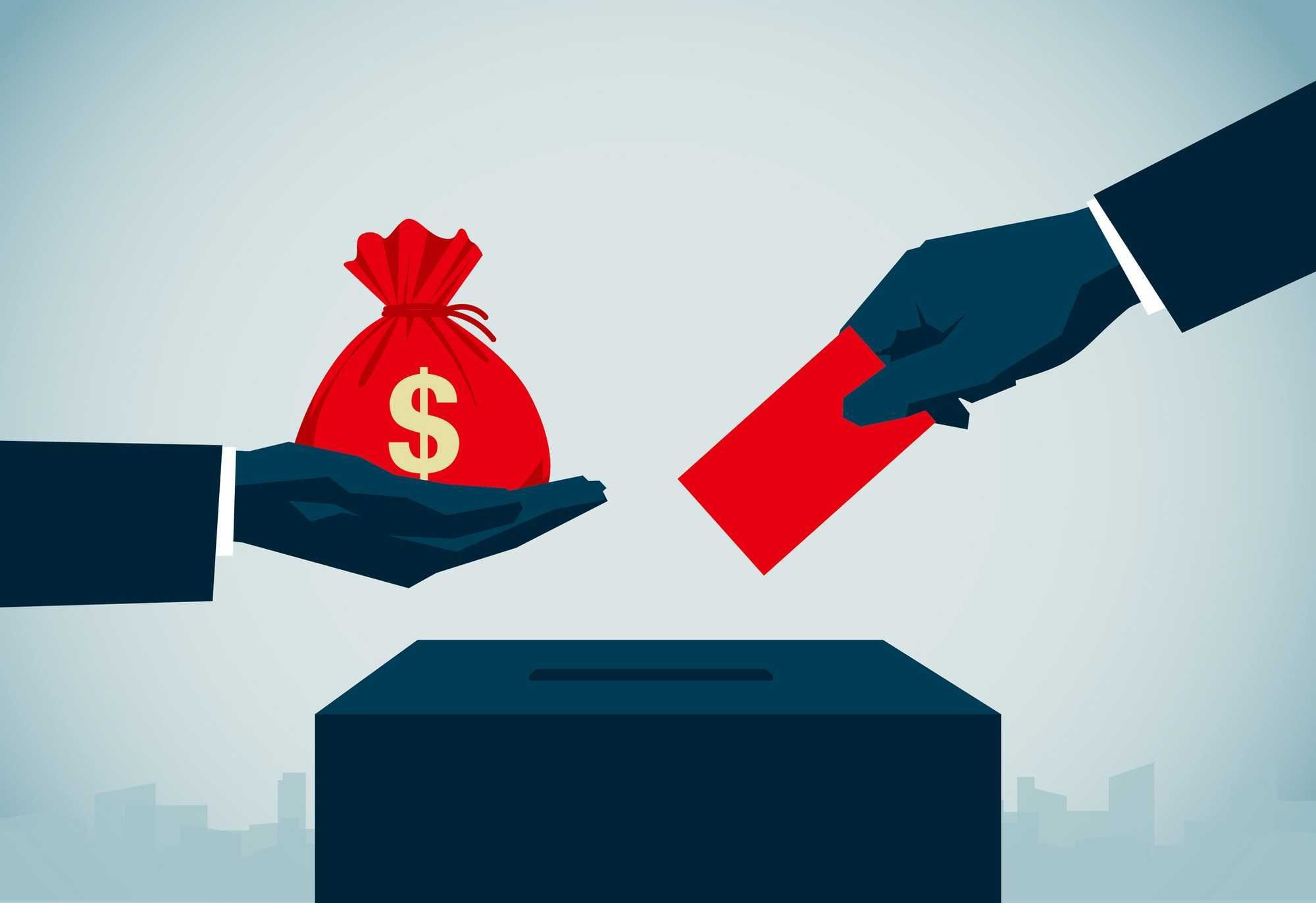
This is power. Force is power. Politics is the management of force. For his tech-oriented publication Pirate Wires, Mike Solana recently published “Theory of Power,” which outlines how the left will replicate California’s wealth tax to target billionaires nationwide. He believes that the left is targeting billionaires because wealth is power. He’s half right.

Wealth itself is not power — it is the means to power. The left seeks to redistribute the wealth of the billionaire class to the people living in America in exchange for power. Leftists are not targeting the billionaires because their wealth poses a threat to the left’s power — they want to seize the power of that wealth for themselves. Since the billionaires do not know how to wield their potential power, they have become targets. If they did, the California wealth tax wouldn’t even be an issue.

Wealth cannot protect its holder from force. If politics is the management of force, then political influence is power. There are plenty of people with political influence and no wealth who have more power than billionaires. There are 20-something political staffers who have more political power than billionaires. There is a legion of bureaucrats with more political power than billionaires. Who has more power, a billionaire or the IRS lawyer investigating him? Of course, it’s the IRS lawyer, because the IRS lawyer is backed by regime power.

The billionaire class has largely abdicated regime power — the question of who is in charge — with a few notable exceptions, such as Elon Musk’s 2024 election engagement and purchase of Twitter. The wealthy are quite good at influencing politics for their discreet business interests, with one analysis finding that they receive a 220-times return on investment through their lobbying efforts (other analyses attribute the rise in corporate profits to lobbying).

However, regime politics is not fundamentally about lobbying for an appropriation or a carve-out in the tax code, which puts generating wealth above gaining political power. Machiavelli warned against this in “The Prince”:

And, on the contrary, it is seen that when princes have thought more of ease than of arms, they have lost their states. And the first cause of your losing it is to neglect this art.

Wielding political influence for higher corporate profits to buy another jet or a fifth vacation home is thinking of ease more than of arms.

If politics is the management of force, then political influence is the “arms.” The billionaires are on track to lose their “state,” because they’ve neglected the art of influencing regime politics.

RELATED: The case against ‘principled conservatism’

wenjin chen/Getty Images

For all its faults, the left understands regime politics. Billionaire wealth extraction is just one part of its plan to sustain and deepen its regime-level power. If its only opposition, the MAGA political class, is destroyed by regime politics, the left’s wealth extraction scheme is not only inevitable, but it will also be the least of the billionaires’ worries.

All of this means that right-aligned billionaires should move immediately to gain regime-level political influence. To be clear, wealth can be a strong amplifier of political influence. Still, political influence has a simple recipe: It requires access, credibility, leverage, and the ability to change behavior. In other words, donating to campaigns is not enough. Elected officials must be lobbied to act in the interest of those who support them, or someone else will lobby them for their own interests.

Before a politician is elected, the benefactor has the leverage. But once the politician has regime-level power, the benefactor is subject to the beneficiary’s power. If right-wing billionaires want to survive what’s coming, they must have a well-run machine to influence politicians after they are elected. Solana makes this point — with which I fully agree: They must “respond as if [their lives depend] on it, because my reading of what these people are saying, casually, cheerfully, and increasingly out loud, is…it does.”

But power is fickle. Any billionaires who wield political influence strictly for their own benefit rather than on behalf of the people will find themselves burdened with all the paranoia and stress of a tyrant. To that end, Xenophon’s “On Tyranny” provides relevant advice: “Consider the fatherland to be your estate, the citizens your comrades, friends your own children, your sons the same as your life, and try to surpass all these in benefactions. For if you prove superior to your friends in beneficence, your enemies will be utterly unable to resist you.”

Editor’s note: This article appeared originally at the American Mind.

Blame bias, not Bezos, for the Washington Post’s downfall


The Washington Post just laid off more than 300 employees — roughly 30% of its newsroom — cutting back sports, local coverage, international reporting, and books. The paper has shed staff before, including a reduction in 2025 and voluntary buyouts, as losses piled up. Reports put the Post’s losses at $177 million over the past two years, with annual deficits topping $100 million since 2023.

Predictably, fired staffers and their allies blame owner Jeff Bezos for refusing to write blank checks indefinitely. They want the world’s fourth-richest man to underwrite their failing business model forever.

Downsizing isn’t a tragedy. It’s a market verdict.

But that’s not the story. The Post didn’t collapse because Bezos got cheap. It collapsed because its newsroom got ideological — and readers stopped trusting it.

The Post built its modern reputation on tough reporting and institutional seriousness. Then its editors and writers started injecting personal politics into straight news, smuggling advocacy into headlines, and treating dissent as moral failure. That approach earned applause inside the Beltway, but it bled credibility outside it. Readers left. Subscribers disappeared. Revenue followed.

Immigration coverage captures the pattern.

In 2018, the Post ran a story headlined “How Trump is changing the face of legal immigration.” The piece claimed an 81% drop in arrivals from Muslim-majority countries and a 12% overall decline in legal immigration, framing the change as a deliberate demographic overhaul. The story leaned on cherry-picked State Department numbers that covered only part of the admissions system while ignoring other federal data. The paper dressed activism up as analysis and called it news.

That same year, the Post published “U.S. is denying passports to Americans along the border, throwing their citizenship into question,” implying a broad campaign of anti-Hispanic discrimination. The story suggested “hundreds, possibly thousands” faced baseless fraud accusations tied to midwife-assisted births.

The piece ignored the long history of documented fraud in those cases and left readers with a clear impression: The Trump administration targeted Hispanics. In fact, denial rates actually fell under Trump — from 35.9% in 2015 to 25.8% in 2018. The Post later appended an editor’s note acknowledging errors challenged by the State Department. That kind of walk-back never repairs the original damage.

In 2024, the habit remained. The Post accused Republicans of “misleading ads” about the border while soft-pedaling the scale and timing of the Biden-era surge. It scolded language choices, such as “illegals” and “harsher,” framed enforcement as cruelty, and applied different standards depending on which party spoke.

This isn’t just an immigration problem. It’s a newsroom culture problem.

RELATED: Bernie Sanders gets obliterated online for dragging Melania into left-wing criticism of WaPo layoffs

Photo by Demetrius Freeman/The Washington Post via Getty Images

The Post’s rush to judgment during the Nicholas Sandmann incident in 2019 showed how quickly narrative can replace verification. The paper treated a Kentucky teenager as a national symbol of Trump-era racism based on a misleading clip, then watched the fuller video upend the story. The Post paid an undisclosed settlement. The reputational hit lingered.

That pattern — moral certainty first, facts later — has infected much of corporate media. CNN, the New York Times, and their peers keep hemorrhaging trust because they keep selling ideology as “objective” reporting. They blur the line between news and opinion, then act shocked when audiences treat them as partisan actors.

That distortion carries consequences beyond subscriptions. When media outlets portray immigration enforcement as inherently malicious and frame routine operations as persecution, they turn policy disagreement into moral panic. They train audiences to view law enforcement as an occupying force. That mindset fuels the kind of street-level provocation that turns tense encounters into tragedy.

Journalism carries a sacred obligation: Tell the truth plainly, verify before amplifying, and separate reporting from activism. Too many at the Post treated that obligation as optional. The audience noticed. Circulation reportedly plummeted to about 97,000 daily in 2025. Financial losses followed.

Downsizing isn’t a tragedy. It’s a market verdict.

If the Washington Post wants to survive, it must rediscover objectivity — or keep shrinking until only its own employees bother to read it.