How groupthink replaces truth


When did facts or verifiable evidence get replaced by consensus within a specific community that continually repeats collectively held ideas or feelings? And is this trend why, everywhere we look, demonstrable truth is becoming subservient to imagination? Do we now live in a world where truth-seeking is taking a back seat to groupthink?

As far back as the 1980s, when regular folks were confronted with mics and asked for their man-on-the-street opinions on everything from when life begins to tactical strategy for war, I remember thinking, “This practice is going to be a problem.”

What happens to the fabric of society if what one personally believes attains precedence over what is proven to be true?

Why?

Because for the past 40 years or so, subjective constructs have been elevated to the status of fact and given far more credibility than verifiable truth. As if fallible human feelings determine what is true — they do not.

Granted, opinions are relative; we all have them, and in America, we can still freely express our point of view. This is also true of individual preferences and judgments, which remain relative. But more and more, people treat fictional beliefs and unsubstantiated claims as factual simply because large, loud, and strongly opinionated groups adopt and agree upon them.

Thus culture has become a delusional world where definitions can be altered to protect belief and political identity determines what is considered true or false.

This penchant for self-determined reality makes healthy debate almost impossible because what’s considered correct becomes tainted by distinctions shaped by a consensus around feelings rather than by credible substantiation.

The perversion of truth is increasingly evident in definitions of male and female, as well as in criteria defining human life.

Contemporary progressives seem most culpable for elevating subjectivism, self-perceived identity, and personal opinion above facts. Partisans on the left are so committed to redefining everything that moral or political debate has devolved into a one-way assault of accusations, denial, and the exaltation of fantastical beliefs.

One skill set missing from the relativists’ playbook is logic.

Viewed logically, calling something “my truth” concedes that whatever you believe or promote is personal rather than universally established as a certainty. The fallacy of “my truth” becomes most heated around topics like the dignity of life in the womb, biological sex, and who should ultimately bear personal responsibility when an “oppressed” woman commits a criminal act.

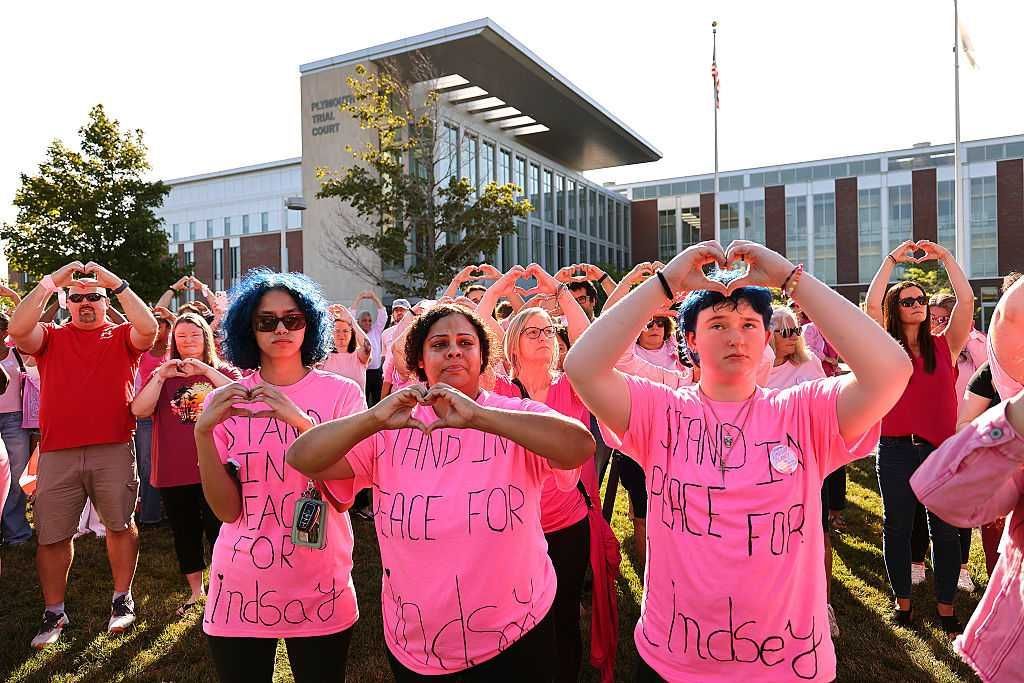
RELATED: Did Lindsay Clancy lose her mind — or her free will?

David L. Ryan/The Boston Globe/Getty Images

That is where we have witnessed the tendency to promote personal opinion over what is morally, biologically, historically, legally, and philosophically accepted.

This is especially true when pro-life and pro-choice opinions clash. One side aligns with 95% of 5,502 biologists who agreed that human life begins at fertilization. Despite biological assurance, however, one side insists that a woman’s choice supersedes truth.

The looming danger is that if moral relativism continues to gain credibility, right and wrong vanish and opinion rules. The bad news is that opinions change, which means that on a collective whim, every life at whatever stage could become justifiably disposable.

What happens to the fabric of society if what one personally believes attains precedence over what is proven to be true?

What we have seen lately is that morally relativistic people are so steeped in the certainty that their opinions are correct that they applaud themselves for exposing those they view as evil, which seems not only an estimable goal but also a justification for violence.

Societal relativism has reached a boiling point and has put innocent individuals in the literal crosshairs of vigilantes responding to sentiments widely accepted as true.

According to this moral barometer, a conservative influencer can be assassinated publicly, and some who feel morally convicted by his views on biblical matters, politics, and traditional male and female roles think it’s fitting to cheer his death.

And these are the people who fancy themselves kindness warriors?

RELATED: Campus free speech is alive — barely

Robyn Beck/AFP/Getty Images

Among progressives, this pattern has evolved to the point that a devoted husband and father like Charlie Kirk is derided, while a woman who admitted to strangling her three children is defended and supported by female activists who have convinced themselves that children are disposable and women are an oppressed class.

Because of political differences, these same women feel justified in demonizing Kirk’s grieving widow merely because she holds the same conservative convictions as her dead husband.

These people have convinced themselves that, based on personal opinion alone, Patrick Clancy should be strung up, drawn, and quartered and that one black, male juror, who they have collectively concluded is also guilty by reason of maleness, deserves condemnation.

As if feelings and thoughts were evidence, some online defenders have made extraordinary accusations against Patrick Clancy, not on demonstrable proof but solely on a fairy tale they have concocted in their own toxic minds.

So the kind of psychosis that accompanies the delusional reality our culture is currently steeped in — especially in political debate — has now been deemed the authority to determine who is considered insane by the insane?

If carried to its logical conclusion, a relativistic mind meld can lead to mob rule, which is now depicted as “democracy,” a political system in which the potential exists to have an innocent individual dragged to the guillotine merely because the crowd believed he or she deserved it.

We see this now when evidentiary truth is automatically dismissed as coming from the wrong source. Yet the truth remains true even if no one believes it; reality cannot be reinvented to suit our fallible human proclivities.

As Flannery O’Connor once wrote, “The truth does not change according to our ability to stomach it emotionally,” a more than 70-year-old observation that supports the contemporary idea that the clash between human self-deception and moral reality is nothing new.

Portland schools turned one mom into a culture-war enemy


Although transgenderism has been on the retreat since its peak in 2023, it is still quite alive in blue states like Oregon. Last month, a Portland mother, Allison Roberts, filed a lawsuit against Portland Public Schools after receiving a trespass order because of her protests against gender ideology in her children’s elementary school.

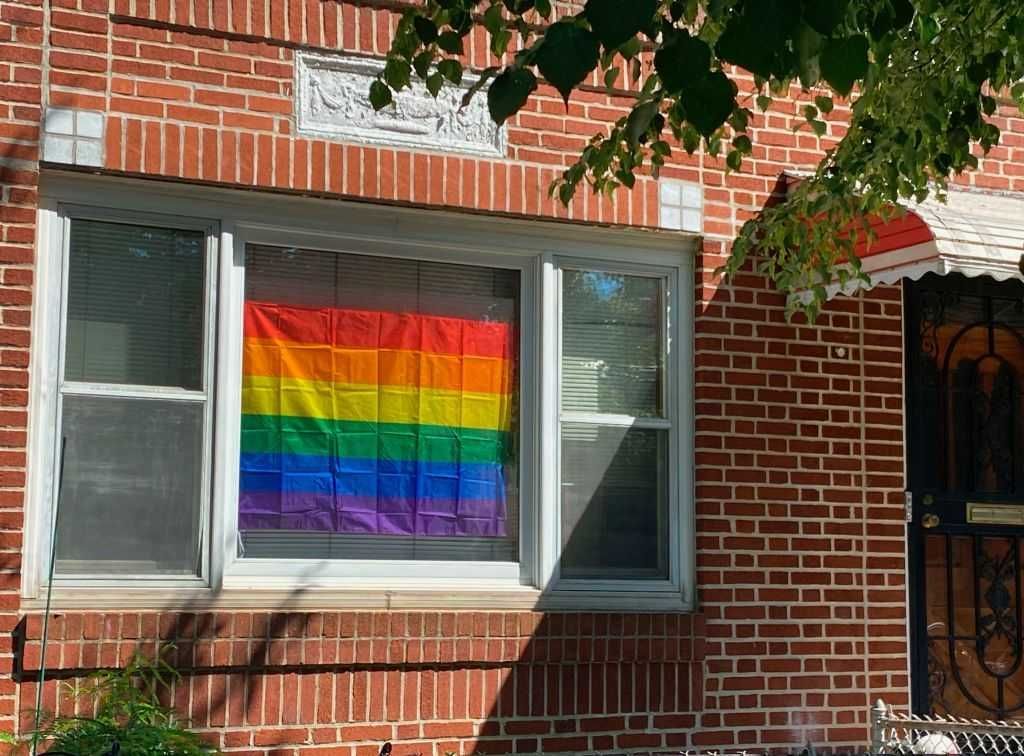
According to reports, Roberts took issue with an assignment given to her 11-year-old that asked students to identify and discuss their gender identity with classmates and teachers, as well as the school’s decision to repaint its traditional rainbow Pride flag into an “Intersex-Inclusive Progress” variant. Roberts alleges that parents received no advance notice of the assignment or opportunity to opt their children out.

Schools exist to educate children, not to claim authority over their understanding of sex, identity, and morality.

When she tried to meet with the school’s principal, she got an unsatisfactory response. She then wrote an open letter opposing the school’s policies and passed it out to other parents outside the school. A clash with another parent followed, and eventually the district issued a one-year trespass order barring Roberts from school property.

It goes without saying that the school principal handled the matter badly. In my experience teaching in public schools, parents with concerns like Roberts’ are heard and usually accommodated. The principal could have asked the teacher to stop giving the assignment or simply allowed Roberts’ children to complete an alternative. Respectfully listening to her complaints about the flags would probably have de-escalated the situation.

Instead, the school treated Roberts like some deranged religious kook, dismissed her concerns, invoked the law, and idiotically made itself the center of a culture war.

On the bright side, the story presents an opportunity to reject transgenderism in schools by confronting the main arguments used to defend it.

The first and most obvious claim is that parents like Roberts are trying to impose their religion on others by rejecting transgender indoctrination. This has it completely backward: Portland Public Schools are imposing their religion by requiring children to discuss gender identity and surrounding them with symbols endorsing a particular understanding of sex and gender. This is the endorsement of a particular set of beliefs and values — what many people would recognize as functioning much like a religion.

RELATED: When government breaks the law, can you even sue?

DNY59/Getty Images

Of course, the usual follow-up is that leftist ideologies are not exclusive religions bound to dogmas and theories but inclusive agendas based on science and democratic values.

Again, Roberts’ case shows the problem with that framing. Some transgender activists describe disagreement with their ideology as a form of genocide. Claims that biological sex can be overridden by subjective gender identity remain fiercely contested, yet dissenters are routinely treated as though they reject established scientific fact. The result is an ideology that frequently marginalizes Christians and others who understand sex as fixed and binary.

Nevertheless, transgender advocates maintain that it is critical to welcome and affirm transgender children. Transgender young people report depression and anxiety at substantially higher rates than their peers, and advocates argue that acceptance is therefore essential.

This is where the argument becomes harder, not easier.

For those who have personally interacted with young people suffering from gender dysphoria, it is one thing to consider transgenderism in the abstract; it is another to watch a young person take cross-sex hormones and permanently alter a healthy body in pursuit of an identity that may itself change.

Young women can develop facial hair, lowered voices, and other permanent changes from testosterone. Young men who take estrogen undergo their own profound physical changes. Whatever one thinks about such treatments for adults, there is nothing trivial about medicalizing confused or distressed children.

And none of this belongs in a K-12 curriculum presented as though there were no serious moral, medical, or scientific dispute.

There have also been several highly publicized mass shootings committed by transgender perpetrators. Those cases do not demonstrate that transgender people as a class are dangerous, and pretending otherwise would be bad reasoning. They do, however, make especially foolish the insistence that every concern about gender ideology must arise from irrational hatred.

As Roberts’ experience shows, merely requesting the removal of such materials and imagery at a public school may not be enough. Restoring sanity requires removing transgender propaganda from classrooms and replacing ideological instruction with a moral framework that actually helps children flourish.

In practice, this would mean looking in part to my home state of Texas. Besides restricting certain LGBTQ teaching materials and accommodations for transgender identities, Texas lawmakers have banned students from using cell phones and other personal communication devices during the school day.

RELATED: Parents, not bureaucrats, should call the shots

The phone ban gets children off screens and forces them to interact with the people around them. They cannot as easily retreat into online worlds where anxieties and pathologies can be cultivated in isolation. They have to engage with reality.

Texas lawmakers have also required public school classrooms to post the Ten Commandments. The law has faced constitutional challenges, although the Fifth Circuit in April vacated an earlier preliminary injunction against it. Other litigation continues.

Unlike transgender flags, which signal allegiance to a contested secular ideology, the Ten Commandments clearly articulate a moral code centered on reverence, honesty, respect for others, and self-control. These are useful guidelines for any classroom.

Despite their roots in Judeo-Christian Scripture, many of the principles contained in the Ten Commandments can be understood and practiced by anyone. They provide a moral framework ordered toward human flourishing and are far more useful to children than slogans about gender identity.

At least Texas is moving in the opposite direction from Portland.

Allison Roberts should not have been treated as a threat merely for objecting to what her child was being taught. Her lawsuit will determine whether Portland Public Schools crossed a legal line. The larger argument belongs to every parent: Schools exist to educate children, not to claim authority over their understanding of sex, identity, and morality.

The VFW has wandered off mission


Democrat lawmakers recently demanded that the Department of Veterans Affairs restore dedicated LGBTQ+ veteran care coordinators and identity-based programs, putting the fight over gender policy at the VA back in the spotlight. The VA has instead redesignated those positions simply as “care coordinators” serving all veterans and restricted the use of VA resources to promote gender ideology.

As the VA moves away from identity-based programs, the Veterans of Foreign Wars organization has taken a different path.

The VFW’s principles are broad enough to unite veterans across the political spectrum. Abortion and gender ideology do not.

A veterans’ organization should support every veteran. That does not require endorsing every political or ideological position associated with a veteran’s identity. Yet this summer, the VFW again declared “Happy Pride Month” and celebrated veterans specifically on the basis of sexual orientation and “gender identity.”

The VFW has a long and distinguished history. It traces its roots to veterans of the Spanish-American War and helped shape the modern federal veterans system. But in recent years, the organization has also embraced positions on abortion and gender policy that go well beyond its core mission.

The VFW claims it has honored LGBTQ+ veterans during Pride Month since President Bill Clinton’s first proclamation in 1999. In 2019, then-National Commander B.J. Lawrence supported additional VA resources for LGBTQ+ veterans in congressional testimony.

The shift is also visible on abortion. In 2020, the VFW argued that the VA should provide certain abortion-related care. In 2022, it testified in support of H.R. 345, legislation that would have required the VA to provide information and counseling about abortion to veterans facing unwanted pregnancies.

On gender policy, the VFW has continued publishing Pride Month statements. One VFW leader learned how contentious that issue had become after criticizing Pride Month publicly.

The organization’s advocacy deserves scrutiny because policy requests framed simply as “health care” can include deeply contested medical interventions. In past testimony, the VFW demanded expanded resources for transgender veterans. The debate over those treatments has intensified as critics point to the risks of puberty blockers and cross-sex hormones and irreversible surgical interventions.

RELATED: The VFW’s political stunt backfired

Robert Alexander/Getty Images

Detransitioners have also brought malpractice claims, including one case that reportedly ended in a $3.5 million settlement. Whatever one thinks of the broader policy debate, these developments make it harder to treat every disputed intervention as politically neutral veterans' care.

The VFW’s advocacy also now conflicts with the direction of federal policy. The VA has reinstated a ban on abortion and abortion counseling in its medical benefits package, while the Trump administration has issued executive orders directing federal agencies and the military to recognize biological sex.

That does not mean the VFW should exclude gay or transgender veterans, or deny that they served honorably. It means the organization should distinguish between serving veterans and endorsing contested ideological programs in their name.

The VFW’s own mission is to “advocate on behalf of all veterans.” Its core values include honoring military service, caring for veterans and their families, and respecting “the diversity of veteran opinions.” Those principles are broad enough to unite veterans across the political spectrum.

Abortion and gender ideology do not. When the VFW takes sides in some of the country’s most divisive moral and political disputes, it risks alienating veterans it is supposed to represent.

The better course is simpler: Fight for veterans’ benefits, health, dignity, and families. Leave woke social causes to the organizations created to fight those battles.

Veterans need a VFW that puts veterans first.

Congress gets a clean vote on gender sanity


Common sense versus crazy is the defining feature of today’s politics.

On immigration, the choice is between enforcing the law and tolerating policies that burden U.S. workers and communities. On elections, the SAVE America Act has exposed the same divide: More than 80% of Americans support voter ID, yet Democrats continue to resist basic election-integrity safeguards.

Do lawmakers recognize biological reality and protect children from irreversible treatment, or do they protect the establishment that branded dissent dangerous?

But one contrast between Republicans and Democrats this cycle is even more fundamental: whether government should recognize biological sex as real.

That fight now runs through women’s sports, military readiness, and the treatment of children suffering from gender dysphoria. Common sense says boys are boys, girls are girls, and children should not be rushed into life-altering medical interventions. The alternative is crazy.

For years, the gender-medicine establishment told vulnerable children that puberty blockers, cross-sex hormones, and surgeries could align their bodies with an internal identity. Too often, institutions presented those interventions with more certainty than the evidence justified.

U.S. Rep. Bob Onder (R-Mo.) wants Congress to answer that problem with H.R. 7651, the Chloe Cole Act, which targets providers where accountability is most likely to be felt: civil liability.

The bill would create a federal cause of action allowing patients and families to sue medical providers that prescribed puberty blockers or cross-sex hormones or performed sex-rejecting surgeries on minors.

Chloe Cole, the bill’s namesake, is a detransitioner and activist who says she was pushed toward irreversible treatment without clear, informed consent. Her own malpractice case has made her one of the most prominent critics of pediatric gender medicine.

The legislation also arrives as institutions that once claimed broad consensus are facing harder scrutiny. The Trump administration filed a complaint with the Federal Trade Commission against the World Professional Association for Transgender Health, challenging claims about medical necessity and insurance coverage.

RELATED: Taxpayers paid $9.6 million for a gender ideologue's puberty-blocker study. She hid it. Now we know why.

L-R: Luis Soto/SOPA Images/LightRocket/Getty Images; Michael Tullberg/Getty Images

In a recent legal filing, WPATH described portions of its guidance as “opinion” rather than binding scientific consensus. That distinction is important. Parents were told for years that the science was settled. Now the institutions involved are emphasizing judgment, interpretation, and professional opinion.

Malpractice cases are moving too. In the Varian case, a jury awarded $2 million in damages over a sex-rejecting surgery. Individual lawsuits may expose failures one patient at a time. The Chloe Cole Act would be a major step toward stopping this industrial-scale profiteering once and for all.

As Congress returns for its pre-midterm September sprint, the choice is once again common sense versus crazy. Do lawmakers recognize biological reality and insist on caution before children undergo irreversible treatment, or do they protect a medical and political establishment that insisted for years that dissent itself was dangerous?

Congress has already seen versions of the same fight. Rep. Jodey Arrington (R-Texas) is leading the charge to define men and women clearly under Title IX. Before the August recess, Heritage Action key-voted an amendment from Rep. Lauren Boebert (R-Colo.) to codify President Trump’s “Prioritizing Military Excellence and Readiness” order requiring service members to serve in accordance with their biological sex.

The legislation asked Congress to say something extraordinarily simple: Men serve as men, and women serve as women. Every Democrat who voted on the amendment went on the record against it.

The Chloe Cole Act offers another clean vote. Members can side with children and families seeking accountability for irreversible medical treatment or with the institutions like the billion-dollar transgender lobby that told the country for years that common sense had to yield to crazy.

The YMCA broke the first rule of summer camp


Since its founding in 1844, the YMCA has become a household name, earning a reputation for safety, reliability, and positive childhood experiences, such as youth sports, summer camps, and neighborhood gyms that offer something for everyone.

Recently, however, the YMCA has cashed in on its longstanding trust with families to quietly implement policies that are antithetical to this reputation.

The YMCA has made crystal clear that it has no interest in protecting girls — neither their innocence nor their safety.

Last summer, American Parents Coalition exposed YMCAs across the country for effectively eliminating separate boys’ and girls’ private spaces by allowing men and boys into girls’ locker rooms, bathrooms, and private spaces. In many locations, these policies even extended to sleeping accommodations at summer camps.

When the YMCA was confronted with questions about these policies, it deleted references to its values from its corporate website.

Since the attempt to hide these values and recommendations one year ago, APC has discovered that the policies extend not only to branch patrons and summer campers but also to counselors. Certain camps are allowing older teen and adult biological male counselors to sleep in girls’ cabins too, provided they “identify” as girls.

According to Michigan’s Sherman Lake YMCA’s 2026 camp policy, counselors may choose whichever gender-segregated cabins they feel “comfortable leading and sleeping in,” regardless of biological sex. The camp also offers “all-gender” cabins that can include children and counselors “of any gender.”

McGaw YMCA Camp Echo, also in Michigan, similarly promotes “all-gender cabins with multiple counselors who have different gender identities,” while admitting that counselors assigned to cabins separated by gender only “most often” share “the same gender identity as campers in that cabin.”

In Colorado, Camp Shady Brook’s May 2026 handbook states that both campers and staff are assigned to cabin groups based on “gender identity.”

Not only do Sherman Lake YMCA and McGaw Camp Echo allow children and counselors to choose cabin assignments based on gender identity, but staff are also instructed to withhold information from parents if a child identifies as LGBTQ+ unless the child gives “express consent.” Sherman Lake further states that staff are “trained” to “regularly” ask children to share their preferred names and pronouns.

In Minnesota, YMCA Camp Olson says, “Some of our campers don’t fit in the boxes of ‘boy’ or ‘girl,’” and offers special cabins for children who identify “outside the gender binary,” while allowing “trans individuals” to “select either restroom.” In New York, Camp Gorham claims its cabins are “gender specific” before immediately clarifying that “Girl+ cabins are a space for girls, trans, and nonbinary campers.”

Camp Hazen YMCA in Connecticut similarly lets families choose between “Girls+,” “Boys+,” and “all-gender” cabins, with the “+” specifically intended to include “cisgender, trans, and nonbinary youth.”

RELATED: The Supreme Court finally confirmed what I knew all along

Kirby Lee/Getty Images

If that were not enough, South Mountain YMCA in Pennsylvania now offers a “Pride Camp” for children as young as 7, described as a “safe-space, non-gendered village” complete with programming built around LGBTQ+ identity and “social justice conversations.”

How is this the same YMCA generations of Americans grew up trusting? The YMCA has made crystal clear that it has no interest in protecting girls — neither their innocence nor their safety. At countless YMCAs across the country, camps are still operating with policies that place gender ideology above biological reality and parental rights.

Sadly, the YMCA has become yet another activist institution obsessed with appeasing a radical fringe that demands everyone around them, including children, embrace the lie that biological sex is meaningless and that boundaries between men and women do not matter even in the most intimate spaces.

What many Americans do not realize, however, is that American families fund the YMCA. Nearly every one of the camps named above has received thousands, if not millions, of dollars in federal funding through various government grants and taxpayer-supported programs.

If the YMCA insists on functioning like an activist organization while ignoring Title IX requirements, then the federal government must stop treating it like a neutral public institution worthy of taxpayer support.

Enough is enough.

Women’s sports finally got a reality check


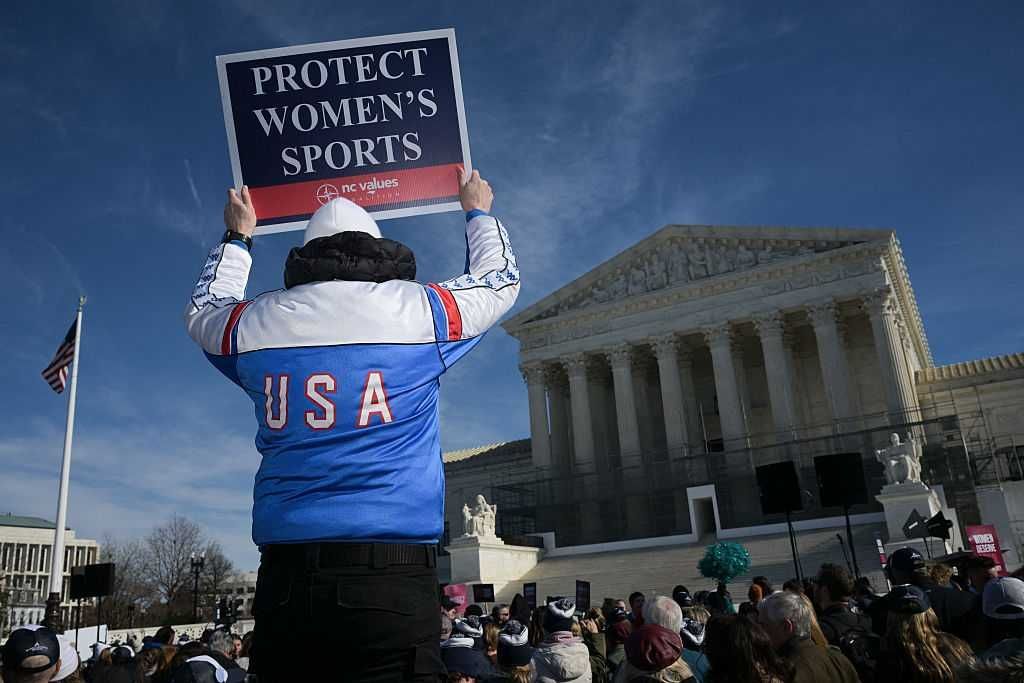
In a decisive ruling Tuesday, the Supreme Court has settled the most consequential legal question for women's sports in a generation — affirming what biology and fairness have always made clear: Women's sports must remain protected spaces for female athletes.

The court ruled 9-0 that Title IX — the federal law that ensures equal opportunities for women in education and sports — and 6-3 that the Equal Protection Clause allow states to protect female athletes with sex-based categories in sports.

Changing the culture means rejecting the lie that biology is bigotry.

The decisions in Little v. Hecox and West Virginia v. B.P.J. mark a watershed. The court recognized that sex is a biological fact, not a feeling, and that it shapes athletic performance in ways no paperwork or policy can undo.

Writing for the majority, Justice Brett Kavanaugh held that Title IX "cannot plausibly be interpreted to refer to anything other than biological sex."

By upholding the constitutionality of state laws safeguarding sex-based categories in athletics, the court has reinforced the rights of girls and women in the 27 states that have already passed protective legislation. This is a win worth celebrating.

No longer will biological males like B.P.J. dominate girls’ shot-put competitions in West Virginia next season. The ruling draws a firm line: Sex is not a feeling, and paperwork and lip gloss cannot rewrite reality.

Female athletes deserve fair competition, safe locker rooms, and equal opportunity — the principles Title IX was built to protect and that reflect simple scientific truth. The majority opinion emphasizes immutable biological differences in strength, speed, and physiology and rejects the claim that gender identity can override sex in the context of physical athletics.

Yet this victory, meaningful as it is, remains incomplete.

In the remaining 23 states — California chief among them — business as usual persists. Biological males can still claim girls’ and women’s titles, taking podium spots from female athletes they outperform.

The patchwork nature of this decision means fairness remains geographically contingent. But a girl’s right to compete on a level playing field should not depend on her zip code.

We have made progress. President Trump’s 2025 executive order provided critical momentum, functioning with the force of law and prompting the NCAA to reaffirm that women’s categories are for women. The International Olympic Committee has committed to protecting the female category starting with the 2028 Los Angeles Games. Ballot initiatives in blue states like Colorado and Washington this November will let voters decide directly whether girls deserve their own sports. In Maine, fathers have mobilized to put the Protect Girls’ Sports in Maine initiative on the ballot so their daughters can have the same opportunities their mothers did.

These developments are encouraging. But the challenges remain formidable.

The NWSL and the WNBA still operate without meaningful sex verification. Professional leagues, private events such as the Boston Marathon, and college athletics remain fractured. Birth certificates — the only proof of sex required by the NCAA — can be changed in 44 states. Given the fungible nature of paperwork and other IDs, documents cannot substitute for actual biological testing at the highest levels of sport.

Blue states continue to defy federal guidance, treating fairness as optional. Interstate competition creates impossible inconsistencies. A female athlete protected in Tennessee could still face unfair qualification scenarios against out-of-state males if she advances to national competition.

How is that fair?

The deeper truth is that a Supreme Court ruling can set a legal boundary, but it cannot change the culture by itself. That work falls to all of us — parents, athletes, coaches, journalists, and everyday citizens who refuse to stay silent.

RELATED: Democrats can’t escape their trans problem

Kirby Lee/Getty Images

For too long, institutions have prioritized feelings, optics, and activist pressure over the safety, dignity, and opportunity of girls and women. We saw a version of the same pattern in the gymnastics sex abuse scandals I helped expose decades ago: Adults in power looked the other way while vulnerable athletes paid the price.

The Safe Sport Act now exists to protect young athletes from abuse, but the coaching culture has not changed enough, and abuse still occurs. SafeSport faces a four-year backlog of abuse reports.

Changing the culture means rejecting the lie that biology is bigotry.

It means parents showing up at school board meetings, statehouses, and ballot initiatives with unrelenting clarity. It means athletes — female and male — finding the courage to speak the truth even when it costs them. It means sponsors, leagues, and media outlets facing real consequences for enabling unfairness.

And it means raising a generation that understands sex is real, fairness is not optional, and protecting female spaces is not hate. It is basic decency.

Legal wins are essential guardrails, but they are not the finish line. We must build a culture where courage defeats compliance, evidence defeats ideology, and the protection of girls takes precedence over performative virtue.

Only then will the promise of Title IX — and the promise of fair sports — be fully realized for every daughter, in every state.

The fight continues. But today, with the Supreme Court’s backing, we have firmer ground beneath our feet.

Now let’s use it to shift the culture for good.

The data continues to stack up against the trans narrative


For years, the public has been sold a false narrative: Children who experience gender distress must be affirmed — socially, hormonally, and even surgically — or they will suffer devastating mental health consequences.

However, now that some time has passed, the data shows a very different picture.

The treatments being presented as lifesaving are not addressing the pain and root problem whatsoever.

A large-scale Finnish study tracking young people referred for gender dysphoria found that the primary driver of poor mental health outcomes was not gender identity itself, but underlying psychiatric conditions.

Even more unsettling, medical interventions such as hormones and surgeries did not demonstrate a clear reduction of suicide risk.

In other words, the treatments being presented as lifesaving are not addressing the pain and root problem whatsoever. The current model of treating gender-confused youth is not delivering on its promises.

When I was a teenager, I was subjected to coercion to “become” a boy because my doctors and counselors peddled this as the solution to all of my problems. Turns out, it wasn’t.

I vividly remember walking into many doctors’ and therapists’ offices. I was depressed, had an eating disorder, and grew up in a tumultuous environment as a kid. That combination is usually a recipe for disaster. The root cause wasn’t that I was trans; it was that I had been through several traumatic experiences that no teenager or adolescent should face.

I am a detransitioner, meaning I am someone who went through the processes of “gender-affirming care” and have now reverted to identifying with my biological sex — a woman.

My experience is just one of many. Several of my friends and peers have experienced the same coercion and pressure to “accept” that they are another sex.

The Finnish study is not alone, however. It also aligns with another study done in the U.K., which found that the evidence for pediatric gender medicine is “remarkably weak” and that young patients often present with complex mental health needs requiring comprehensive psychological care, not surgical mutilation.

Together, these studies show a clear picture: The way that we currently handle this issue is completely wrong.

Children who present with distress, a rough home life, and being chronically online are often put on a conveyor belt of social transition, puberty blockers, cross-sex hormones, and irreversible surgeries.

Even more outrageous is that some of these can get approved in a doctor’s office without the consent of a parent or guardian. To do this behind parents’ backs and to encourage secrecy surrounding their social transition should be a crime.

RELATED: DEI went into hiding — but remains as dangerous as ever

Carl Lokko/Getty Images

The result of these practices has been disastrous for trust in our institutions, our health care system, and our school districts. Escalating these so-called treatments only further amplifies their harmful effects.

Hormonal interventions affect bone density, fertility, and long-term endocrine function. Surgical interventions are irreversible. These are serious medical decisions being made for patients who are, by definition, still developing.

My fight for justice is not simply about my own experience, although I have been through hell and back. It is fundamentally a question of ethics in medicine that the legal system must answer.

The evidence is stacking up against the false narrative that trans surgeries equate to lifesaving care. Children placed on this path often do not and will not fully understand its consequences until years later. By then, the damage has already been done.

Without action in every state, every medical institution, and every governing body, there will be continued pressure to worship an ideology with no scientific backing. The data is no longer in question. The evidence is settled. I believe the consensus is clear: We must end this abominable practice immediately.

Justice Alito’s ‘What Is A Woman?’ Question Leaves Left-Wing Attorney Flailing

How are courts supposed to be able to 'determine whether there's discrimination on the basis of sex without knowing what sex means?' asked Justice Alito.

North Carolina Lawmakers Override Dem Governor’s Veto Of Bill Preventing ‘Sexual Exploitation Of Women And Minors’

The North Carolina state legislature overrode the Democrat governor’s veto of HB805, which seeks to “prevent the sexual exploitation of women and minors,” on Tuesday, passing it into law. Both the state House and the state Senate voted to override Gov. Josh Stein’s veto of the a Republican sponsored legislation that would officially “recognize two […]