California’s next dumb tech idea: Show your papers to scroll
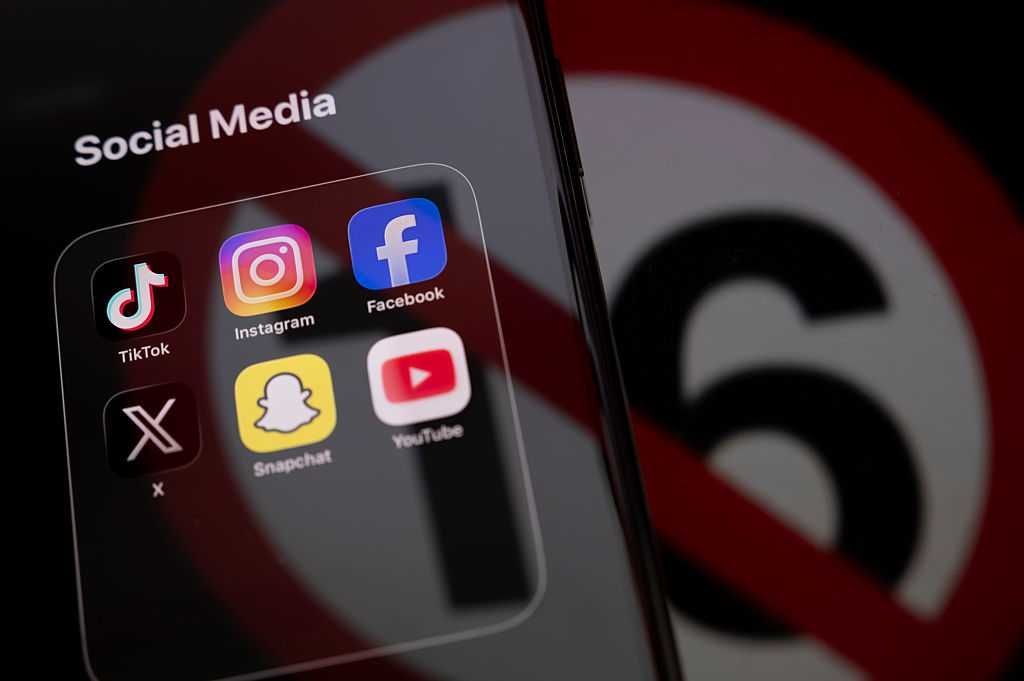
California has a habit of importing some of the worst tech-regulation ideas from overseas. After lawmakers enacted a censorial statute cribbed from the U.K. in 2022 — and watched it run headlong into an injunction — the Golden State now appears eager to borrow from Australia, which in December barred children from major social media platforms.
Earlier this month, California lawmakers introduced a bill to impose “a minimum age requirement to open or maintain a social media account.” Governor Gavin Newsom (D), who usually avoids weighing in on pending bills, publicly endorsed the idea.
Will America keep light-touch rules that protect consumers without strangling innovation — or import Europe’s heavy-handed, fear-driven approach?
However well intentioned, the Australian model collapses on prudential grounds. In the United States, it also invites a swift constitutional challenge — and likely a swift defeat in court.
Most proposals that force platforms to distinguish between adults and minors require age verification. That means users must hand over sensitive personal information — usually government ID documents or biometric data — as the price of entry to the platforms where everyday digital life happens. Once companies collect, process, and store that data, it becomes a tempting target. Hackers do not need ideology, only opportunity.
The roster of victims reads like Don Giovanni’s catalogue. The list includes corporations such as Target, Equifax, Marriott, Capital One, MGM Resorts, and T-Mobile. Platforms from Facebook to X.com to the “Tea” app were also hit. So were third-party verification services. Even in France, where regulators tried to build a privacy-protective system, a third-party age verifier exposed sensitive user data. In the digital age, breaches and leaks are simply a fact of life.
Legislation promoted as “child protection” thus runs into a basic contradiction: it can expose children to new forms of harm. As the R Street Institute and Experian have reported, 25% of minors will become victims of identity fraud or theft before they turn 18. Age-verification mandates would widen the attack surface and increase the odds that minors’ information gets stolen, misused, or sold — and that families spend years cleaning up the wreckage.
Some advocates now treat constitutional objections to “child-safety” bills as impolite. Courts don’t share that squeamishness. In recent years, judges have enjoined multiple constitutionally defective state laws, leaving behind little more than wasted taxpayer dollars and public frustration, while state attorneys general mount doomed defenses.
Newsom’s favored approach also clashes with a Supreme Court precedent California already lost: Brown v. Entertainment Merchants Association. In that 2011 case, the court struck down a California law that restricted minors’ access to violent video games. Justice Antonin Scalia’s majority opinion applied strict scrutiny — a demanding standard — and rejected the state’s argument that the law simply “helped” parents.
Scalia’s point applies with even greater force here. A sweeping ban on minors’ access to social media would function less as parental support and more as state substitution. The state would not merely empower parents; it would decide what parents should want, then impose that judgment across the board.
RELATED: Kids have already found a way around Australia's new social media ban: Making faces

In American law, parents generally hold the duty — and the right — to decide what media their children consume. That principle does not stop at the edge of the internet.
The broader fight over technology policy often turns on a single question: Will America stick with light-touch, sensible regulation that protects consumers without strangling innovation — or will it import the heavy-handed, fear-driven regulatory posture popular abroad, especially in Europe?
The American technology sector grew and thrived in the internet era. Many foreign regimes, more focused on expansive “safety” mandates than innovation, privacy, or consumer benefit, have not.
Lawmakers should borrow good ideas wherever they find them. But California keeps shopping in the wrong aisle. If Sacramento wants to protect kids, it should start with tools that don’t require building a mass ID-check system for the entire public — and that don’t hand criminals a richer trove of data to steal.
It’s wise to learn from other countries. It’s foolish to copy their worst mistakes.

 guruXOOX via iStock/Getty Images
  CNN was found liable on Friday for defaming U.S. Navy veteran Zachary Young. Following roughly eight hours of deliberations, jurors found CNN both “committed defamation per se” and “committed defamation by implication.” Jurors awarded Young $4 million in economic damages and $1 million in emotional damages and agreed that punitive damages are warranted, prompting phase […]
 CNN also failed to include in their report that Young had successfully evacuated 22 women and one child out of Afghanistan.
 Evidence presented to jurors on Wednesday in the defamation trial against CNN shows U.S. Navy veteran Zachary Young warned CNN on multiple occasions that its “facts” were inaccurate prior to CNN airing the allegedly defamatory segment. Young sued CNN, alleging that “The Lead with Jake Tapper” aired a segment that falsely accused him of exploiting […]
 'CNN didn't know about it's own videos, it's news to CNN that they created these videos...'
 thefederalist.com
 www.theblaze.com
 www.theblaze.com