The continuing diversity obsession


Dozens of “gap” statistics have become so deeply embedded in our political discourse that we hardly question whether unequal outcomes are actually evidence of discrimination. “Women make 77 cents on the dollar compared to men.” “Hispanic students make up a disproportionately small percentage of university graduates.” “Black women must work into the following July to catch up to what white men made the previous year.”

In our equity-obsessed age, each one of these “gap stats” has a grimy underbelly, made up of individuals who are unfairly denied the fruits of their talents because institutions have tried to force equal outcomes: men who work longer hours on average; Asians who have higher SAT scores on average; Millennial and Gen Z white applicants who get passed over at work because they don’t add to diversity, equity, and inclusion.

Though no example exists anywhere of a world without disparities, it seems that most American institutions — government agencies, universities, and corporate workplaces — cannot tolerate the reality of their existence.

We are living through a decade of wokeism in which racial favoritism has graduated from an ostensibly temporary thumb on the scale for the almost-qualified to the kind of unqualified frenzy that attracts grifters and con artists. And, correspondingly, the discrimination against the disfavored has gone from ambient to so intense as to bar advancement in culturally prestigious industries.

Contra to dismissive talking points from purveyors like AOC, Woke 1 has done real damage to many lives.

Think, for example, of the nameless crowd of people denied the sinecures, positions, and honors bestowed on Cambridge’s former “youngest black professor,” Jason Arday. He was a serial fabulist and plagiarist and tragically died by suicide earlier this month.

In addition to the coveted position from which he resigned, Arday had a lucrative book deal in an industry in which just three of the 70 National Book Awards nominees in the past decade were white men, a shift that happened far too suddenly to have occurred naturally.

The Arday debacle shows that the quest to eliminate disparities has turned hiring into a de facto racial spoils system. Despite every remedy applied against them, disparities persist everywhere — in every profession, school, boardroom, prison, scientific award category, sports field, and socioeconomic tier for reasons that are cultural, political, family-based, genetic, religious, and natural.

RELATED: DEI refuses to die
Love Employee/Getty Images

Sometimes the reasons are even historically arcane. The majority of nail technicians in the United States are Vietnamese, even though they make up just 0.75% of the population. It turns out that this particular disparity can be traced to a single American actress, Tippi Hedren of "The Birds" fame. She visited a refugee camp near Sacramento after the Vietnam War and paid her manicurist to provide training, which then spread like wildfire throughout that community.

Disparities of a thousand hues are the norm. As Thomas Sowell wrote in "Discriminations and Disparities" back in 2018, “Neither in nature nor among human beings are either equal or randomly distributed outcomes automatic. On the contrary, grossly unequal distributions of outcomes are common, both in nature and among people.”

Though no example exists anywhere of a world without disparities, it seems that most American institutions — government agencies, universities, and corporate workplaces — cannot tolerate the reality of their existence, even where there is no evidence that they arise from discriminatory practices.

University of San Diego School of Law professor Gail Heriot, an experienced civil rights lawyer and author of the aptly titled article “Title VII Disparate Impact Liability Makes Almost Everything Presumptively Illegal,” regularly challenges audiences to come up with a single hiring criterion that does not produce disparate outcomes on the basis of some protected characteristic — that is, race, sex, religion, or national origin.

She has never received a satisfactory answer, even after offering a cash reward.

The ubiquity of disparities allows government agencies to choose their victims at will. No government body tasked with enforcing laws against workplace discrimination has ever investigated whether requiring a bachelor’s degree for entry-level office work causes disparities among different demographic groups. Instead, the government seeks to root out all disparities against protected classes.

During the Biden administration, the EEOC sued the grocery store chain Sheetz for screening out potential employees with certain kinds of criminal records. The government admitted that Sheetz had no intention of discriminating against black and Native American job applicants. But because a higher percentage of job-seekers from those backgrounds had criminal records, it had the effect of constituting illegal discrimination.

Welcome to disparate impact liability, a branch of the law now declared dead for the time being — and potentially unconstitutional — by the Trump administration’s Office of Legal Counsel.

RELATED: We need lawfare for white men
Blaze Media Illustration

When the law presumes that these gaps exist because of discrimination, it places defendants in an impossible position: When the inevitable disparities appear in your organization, you can either accept them — and open yourself to litigation — or discriminate against unprotected classes to make the numbers even out — and open yourself to litigation.

As I testified before the House Oversight Committee in July, our universities, corporations, and public institutions have been “at war with the reality of disparities” for decades. In their effort to vanquish them, often under shapeshifting terms, they’ve turned to actual discrimination against “overrepresented” groups in a way that is both deeply unjust and illegal under U.S. law.

For too long, even those on the right were defensive about the existence of these disparities.

They went beyond the laudable goal of reforming the K-12 education system to make it function better for all students to promising that their reforms would “close the gaps” and selling them as a way to render affirmative action at the university level unnecessary.

But the problem with DEI, and before that affirmative action, is simple: It tries to impose a Harrison Bergeron dystopia of equitable outcomes at mass scale. But doing that in a real world full of disparities requires discrimination against individuals.

As a multiethnic republic, we can no longer tolerate a system that institutes a legalized hierarchy of favored and disfavored classes. We can either enforce civil rights laws equally for everyone, which the Trump administration has done an admirable job of pursuing, or we can continue to degenerate into balkanized bloc politics marked by increasing resentment.

For the good of everyone, we must kill the god of the gaps: equality under the law for all, special favor for none, and let the disparities fall where they may.

Editor’s note: This article was originally published at the American Mind.
Woke 2.0 is coming ... and it will be worse


Readers familiar with the Dr. Seuss classic "The Cat in the Hat" will remember the twin chaos agents Thing 1 and Thing 2. “‘These Things are good Things,’” the Cat reassures the children, whose mother has inexplicably left them under the supervision of a fish. “‘They are tame. Oh, so tame! / They have come here to play.’”

The Things briefly feign innocence, then quickly reveal themselves to be marauding imps, knocking over nightstands and ruining the linens. “I do not like the way that they play!” says the son of the house.

Now here comes Woke 1 and Woke 2. “Woke 1 was crazy,” said U.S. Rep. Alexandria Ocasio-Cortez, quoting an unnamed city councilman in a viral interview for ABC. The congresswoman sheepishly acknowledged that Americans did not like the way Woke 1 played out, while also implicitly announcing that there will soon be, or already is, a Woke 2. And it will be tame. Oh, so tame!

For purposes of advertisement, Woke 2 will try to keep its trans members less conspicuous than Woke 1 did, for at least as long as it takes to re-establish national power.

There is, in fact, a new version of wokeness in the making. But just as Thing 2 was fundamentally identical to Thing 1, Woke 2 will not be any different in essence from Woke 1. They are both here to upend the furniture.

Wokeness in all its forms is grievance politics. Its central idea is that an injustice lies at the heart of America and must be corrected to atone for the historical misery inflicted on groups of innocents.

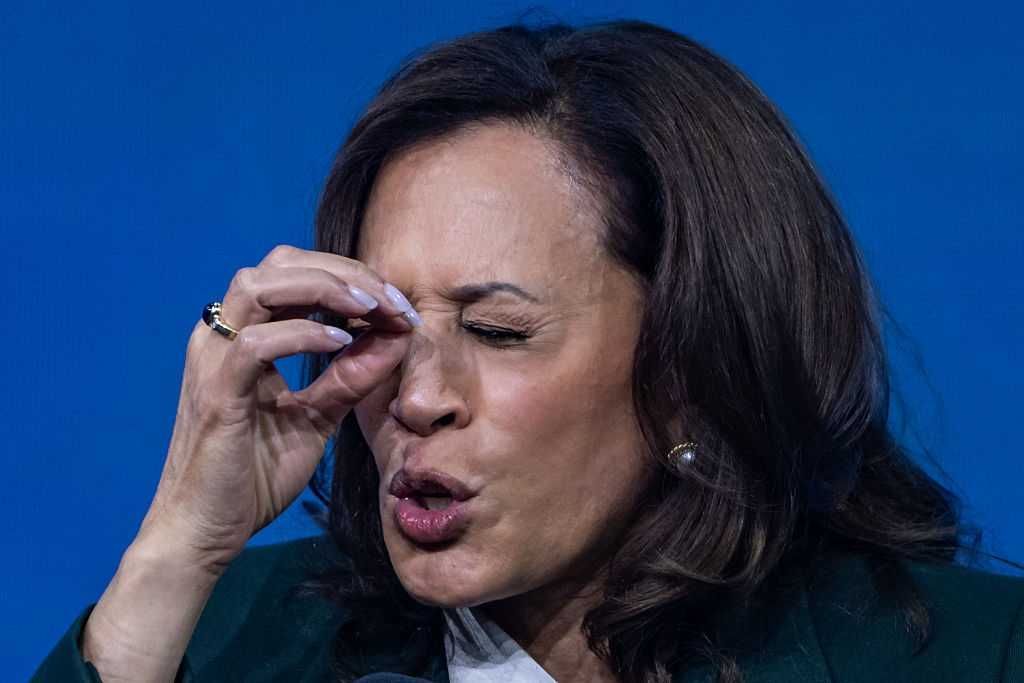
What is changing in Woke 2 is the account of who those innocents are and how they have been wronged. Woke 1 was founded on the notion that black women are the most oppressed, and therefore most righteous, of all people. “I’m thinking,” said Kamala Harris in her vice presidential victory speech, “about her and the generations of women — black women.” She mentioned many other kinds of women, of course, but the list began and ended with “the black women — who are too often overlooked, but so often prove that they are the backbone of our democracy.”

This approach had rhetorical power, up to a point. It traded on the successes of second-wave feminism and the reality of black slavery in America’s past. But it ran into some problems. Third-wave feminism, as worked out by theorists like Judith Butler, made it basically impossible not to affix the prefix “trans-” wherever the word “woman” appeared. So the flag of Woke 1 became the complicated and confusing progress Pride flag — a gay rainbow with black and trans colors intruding from the left.

RELATED: How Kamala Harris accidentally sold the SAVE America Act

Christian Bruna/Getty Images

To make matters worse, the legacy of slavery did not actually touch all the racial minorities that Democrats wanted to bring into their fold. Most Nigerians, for example, had not experienced segregation in the United States. Nor had the millions of unvetted South and Central Americans streaming across the border.

They were certainly “people of color.” But so were Chinese, Japanese, and Indian Americans, whose typically enviable life outcomes fit awkwardly into the narrative that the country was built on a ruthless caste system.

The contradictions heightened as Woke 1 faced a series of embarrassments such as Students for Fair Admissions v. Harvard, the 2023 Supreme Court case in which Asian students complained that admissions officers were discriminating against them in favor of black applicants. Then there were the notorious Trump ’24 ads that pinned Harris to her previous support of taxpayer-funded gender surgeries for federal prison inmates.

Placing black women at the center of the moral universe created an unexpected and electorally unworkable set of obligations to illegal immigrants and queer felons.

Clearly, the coalition needed shuffling. And so rearranging the order of priorities in the grievance hierarchy is what the reinvention of woke has actually been about. In place of the black trans woman who defined Woke 1, Woke 2 has chosen as its ideal victim the dispossessed Palestinian liberationist, fighting with Hamas against Israel. This has a number of interesting strategic advantages.

First, the racial argument has been neatly streamlined. Rather than implausibly analogizing every racial group in America to the victims of Jim Crow, Woke 2 presents the black American story as just one instance of a global fight for justice carried out by minorities everywhere and epitomized in the intifada.

RELATED: Socialism’s favorite bait-and-switch

Scott Olson/Getty Images

In 2023, on a panel for the Democratic Socialists of America, future New York Mayor Zohran Mamdani claimed that “when the boot of the NYPD is on your neck, it’s been laced by the IDF.”

He was outlining the blueprint for Woke 2, which takes its cues not from Judith Butler but from post-colonialist Frantz Fanon’s "The Wretched of the Earth" (1961). “Between colonial violence and the insidious violence in which the modern world is steeped,” wrote Fanon, “there is a kind of complicit correlation, a homogeneity.” Therefore, “The colonized, underdeveloped man is today a political creature in the most global sense of the term.”

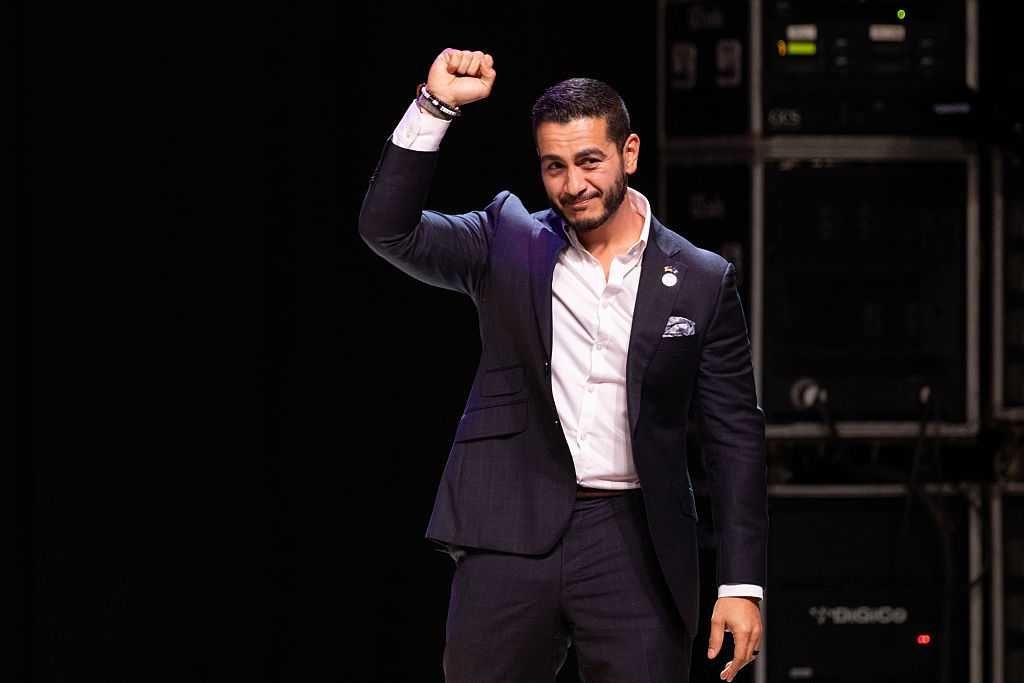
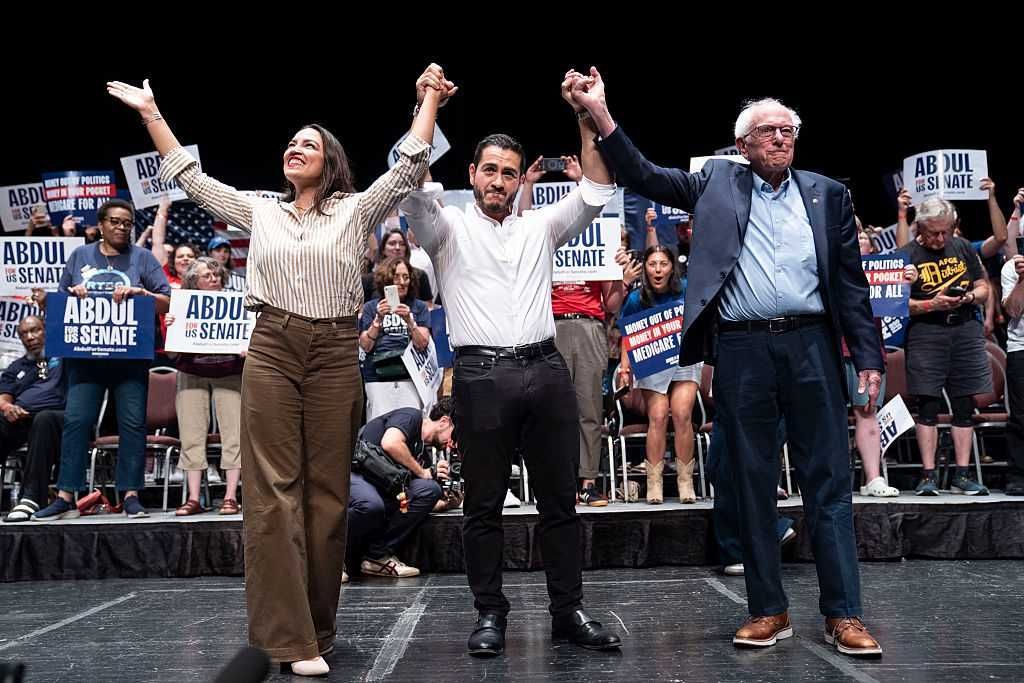
Recently, in an intriguing interview with the New Yorker’s David Remnick, Democrat Senate hopeful Abdul El-Sayed put forward an argument that connects Fanon’s global struggle to America’s domestic economy. He claimed that pro-Israel politicians are allowing “the money that should be spent taking care of our kids to be sent to a military that has done a genocide.”

In other words, Woke 2’s new order of priorities allows its proponents to suggest that white or white-coded (read: Jewish) oppressors are funneling money away from America’s working poor to fund a worldwide campaign of mass slaughter.

Distant as this account is from reality, it is much more ruthlessly focused as a line of woke reasoning. It emphasizes foreign policy and the economy, where the public’s real anger lies, and deftly mutes the discredited claims of LGBTQ extremists.

In practice, any woke administration of any variety will end up imposing pretty much the same bizarre sexual priorities on the country once elected. But for purposes of advertisement, Woke 2 will try to keep its trans members less conspicuous than Woke 1 did, for at least as long as it takes to re-establish national power.

Replacing the progress Pride flag with the Palestinian flag will distract from the ravages of queer excess while infusing socialist revolution with the moral self-righteousness of anti-white resentment.

Whether this tactic succeeds with voters is another matter. If it does, though, Americans will discover that both Woke 1 and Woke 2, like Thing 1 and Thing 2, only play nice until they can start turning over tables. If we want to avoid a rerun of the early 2020s, then — to paraphrase Seuss — we will have to get rid of Woke 1 and Woke 2.

Editor’s note: This article was originally published at the American Mind.
Ketanji Brown Jackson avoids bias ... by joining Michelle Obama’s podcast?


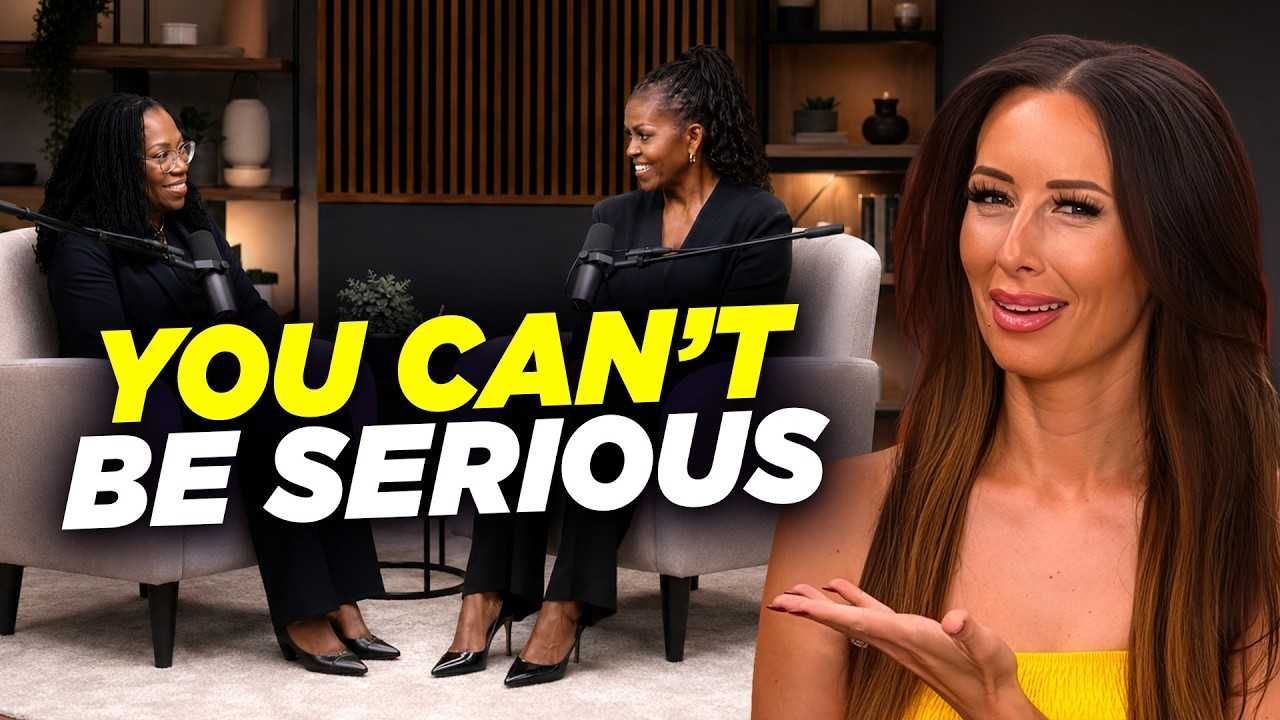
In a recent appearance on Michelle Obama’s podcast, Supreme Court Justice Ketanji Brown Jackson explained that she refuses to do anything that might appear biased.

“When I get invitations to do things, I always have them screened by the legal office, the public information office, just to make sure that there are no ethical conflicts, that it’s not a fundraiser. You know, there are lots of limits on what judges can do,” Jackson told Obama.

“And I try to be very, very mindful and scrupulous with respect to that because, as you say, our obligation is to be unbiased in our approach. And so, you have to then navigate all the sources that could make for an appearance of partiality, which you want to avoid,” she continued.

“So, there are lots of things that I end up not accepting for that reason,” she added.


BlazeTV host Sara Gonzales can’t help but point out the glaring issue with her statement.

“It’s just that you’re on Michelle Obama’s podcast,” Gonzales comments.

“I’m just going to say, nothing says impartial and unbiased like appearing on Michelle Obama’s podcast. Like what?” Gonzales asks.

But Jackson isn’t the only one Gonzales is tired of hearing from, as Rep. Jasmine Crockett (D-Texas) recently made a “wild claim about DEI.”

“When they decided to go after quote, unquote ‘DEI,’ black women, the most educated demographic in this country, somehow ended up the most unemployed out of everyone,” Crockett said.

“So, black women are the most educated demographic in this country,” Gonzales comments. “I think we need a fact check here.”

According to the Emerald Pages, 56.7% of Asian women hold bachelor’s degrees, making them the most educated in the country. Following closely behind them are white women at 52.9%.

Meanwhile, only 29.3% of black women have bachelor’s degrees.

“I don’t know where you’re getting your information,” Gonzales says. “Once again, I’m very uncomfortable with the way they keep passing out these law degrees like candy to all of these people who seem to be dumber than a box of rocks.”

Want more from Sara Gonzales?

To enjoy more of Sara's no-holds-barred takes on news and culture, subscribe to BlazeTV — the largest multi-platform network of voices who love America, defend the Constitution, and live the American dream.

Jason Whitlock: Tyler Perry’s ‘Straw’ is ‘demonic’


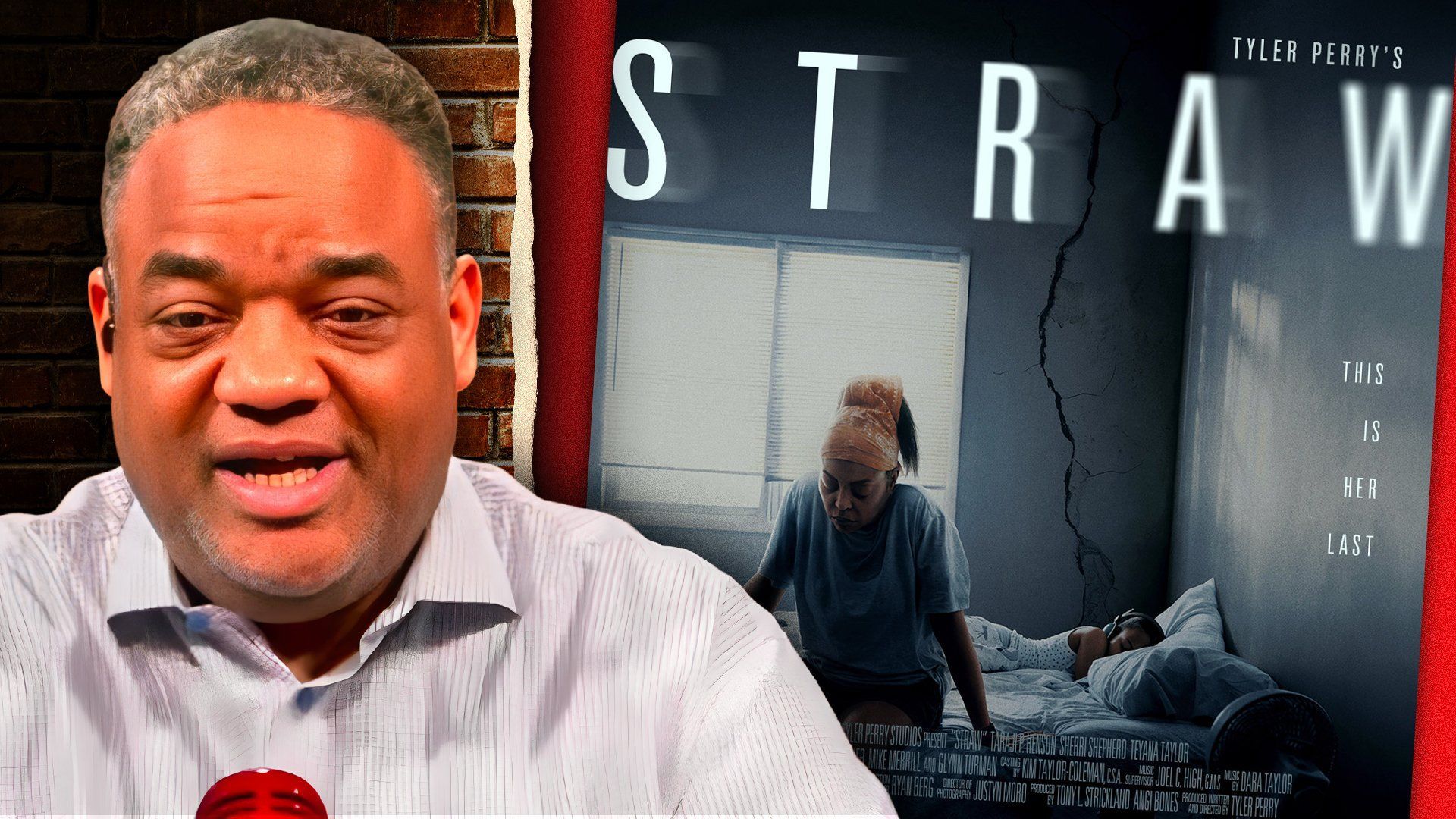
The number-one film currently streaming on Netflix is Tyler Perry’s latest movie, called "Straw," which follows a single mother who faces “a series of painful events.”

BlazeTV host Jason Whitlock and BlazeTV contributor Shemeka Michelle didn’t love the film, but they do think it revealed something about Perry’s audience.

“Initially, I was very upset with Tyler Perry, simply because I thought, you know, his greatest fan base, which he himself has admitted is black women, I thought it would go completely over their heads,” Michelle tells Whitlock.

“Spoiler alert, for those who haven’t seen it,” she continues, “he waited until the very last minute of the movie to really show that this woman was suffering from psychosis, which is a mental disorder based on being completely detached from reality, which is what she was.”


“I got even angrier when I got online and it was proven that it completely went over women’s heads, and I kept seeing them say, ‘Oh, I am Janiah,’ who is the main character of the movie. ‘I stand with Janiah,’ you know, ‘Janiah is me, this is what single women go through every single day,’” she continues.

However, not all black single women are walking around suffering from psychosis.

“This is not what single women or single mothers go through every day,” Michelle says. “And then I had to say it’s not Tyler Perry’s fault that his main group of supporters are intellectual midgets.”

“I’m just trying to figure out where to stand with Tyler, because I thought he just could have done a better job, but I think it exposes the psychosis in black women, the detachment from reality, the hallucinations, the bad behavior, because so many of them were just applauding this,” she adds.

After watching the film, Whitlock had a similar realization.

“Corporate media, the movies, Netflix: They’re all just dumping poison. You’re a victim no matter what you do, no matter how crazy you are, no matter how violent you are, you’re only doing it because this system is racist and because you’ve been mistreated,” Whitlock says.

“And this is where you and I disagree,” he tells Michelle. “Tyler Perry is the source of a lot of the delusion that black women have. His movies are there to create delusion among black women, to create a false reality.”

“His movies are demonic, and his movies are there to make black women think they can do no wrong, they’re a victim of everything, the world is against them,” he adds.

Want more from Jason Whitlock?

To enjoy more fearless conversations at the crossroads of culture, faith, sports, and comedy with Jason Whitlock, subscribe to BlazeTV — the largest multi-platform network of voices who love America, defend the Constitution, and live the American dream.

Michelle Obama claims black women need permission to 'articulate pain'


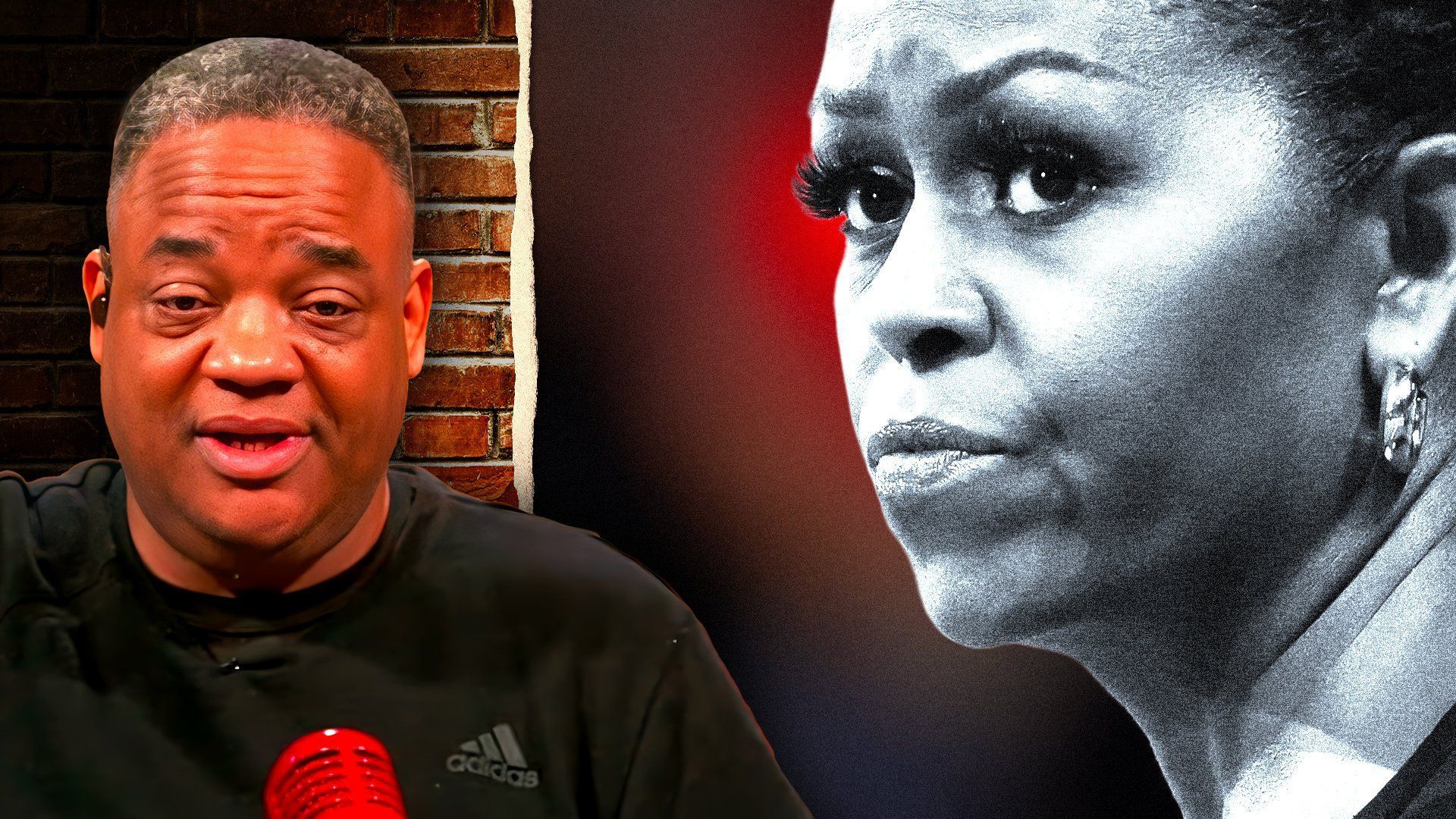
Michelle Obama has taken the uncommon path of a former first lady and started a podcast where she talks about the important issues like how black women think they need permission to express pain.

And it’s every bit as insufferable as one might expect.

“We grew up with women who weren’t voicing the pain and the burden,” Obama told her brother, Craig Robinson, and Taraji P. Henson. “They made it look easy. And when you make stuff look easy, people assume that you must like this, it’s okay with you.”

“We don’t articulate as black women — our pain — because it’s almost like nobody ever gave us permission to do that,” she continued, before Henson interrupted, asking, “And does anyone care?”


“If we knew, I think we would care,” Robinson answered, before Obama continued waxing poetic.

“We have to ask ourselves, the men in our lives, is ‘Why wait to be asked?’ It seems like what we go through is pretty obvious. I mean, maybe we’re not complaining, but we’re actually living life out loud.”

Obama went on to lament that black women are “so easily labeled as angry and bitter” while white women are viewed as “lightness” and have “an ability to be in this world and see what’s going on.”

“Are black women struggling to talk about their pain? Are they not free to do that in America?” Jason Whitlock of “Jason Whitlock Harmony” asks co-host Shemeka Michelle.

“Initially I thought, ‘This is so stupid,’ because that’s all we hear and see is the pain of black women. That’s all they talk about. And I found it ironic that she was sitting there talking to Taraji P. Henson, who has complained over and over again. She pretty much tanked ‘The Color Purple’ because all she was doing was complaining,” Michelle says.

“Maybe black women aren’t articulating ‘their pain’ in the correct way, because everytime I turn around I’m seeing some type of video where they’re tearing up the McDonald's, or trying to run over their baby daddy, or fighting in a Walmart in their pajama pants and their bonnets,” Michelle continues.

“So maybe she has a point that they don’t ‘articulate’ their pain, because they’re busy showing out and acting like untamed gorillas,” she adds.

Want more from Jason Whitlock?

To enjoy more fearless conversations at the crossroads of culture, faith, sports, and comedy with Jason Whitlock, subscribe to BlazeTV — the largest multi-platform network of voices who love America, defend the Constitution, and live the American dream.

Joy Reid gives 'white progressive women' some bad news about black women's interest in Democrat causes after Harris' defeat


MSNBC host Joy Reid remained on her far-left warpath following Vice President Kamala Harris' resounding loss to now President-elect Donald Trump last week, sharing some bad news with "white progressive women."

Reid hopped on TikTok Saturday and said, "I just wanna give some free advice to the white progressives, particularly white progressive women, who may be thinking about marching against the Trump victory, maybe putting back on the P-word hats and doing that thing. I would just say probably don't send any of those invites to any black women you know. I'm just gonna tell you right now they're not coming."

'Yeah,' one commenter wrote to Reid. 'I'm going to be busy vacuuming my ceiling.'

Reid continued: "Like, I'm pretty sure black women have resigned from the ‘Save America’ coalition, ‘Save Democracy’ coalition, and definitely the ‘Save the Democratic Party’ coalition. I think that's probably not happening; I would just keep those invites maybe among your own friends 'cause I don't think they're coming. … I think black women are now [focused] on the [goals of] save black women, prioritize black men, and prioritize black communities, black businesses, and ... the black spaces. But save America, save the Democratic Party? Yeah, I don't think that's happening."

Indeed, Reid on election night complained that "white women" failed to come through for Harris in the battleground state of North Carolina — merely one of Harris' numerous crushing losses in the electoral vote tally.

"Black voters came through for Kamala Harris; white women voters did not," Reid lamented last week. "That is what appears happened in that state." She went on to say that the Harris campaign wasn't able to "flip enough white women" even though women in North Carolina "lost their reproductive rights."

She added during MSNBC's broadcast, "That message obviously was not enough to get enough white women to vote for Vice President Harris, a fellow woman, this will be the second opportunity that white women in this country have had to change the way that they interact with the patriarchy."

How are observers reacting?

In the comments underneath Reid's TikTok video, it appears other black women are agreeing — some rather hilariously — with her prediction that they'll be sitting out future activism for Democrats:

  • "Yeah," one commenter wrote to Reid. "I’m going to be busy vacuuming my ceiling."
  • "I can't I'mm washing my hair, it's gonna take 4yrs," another user announced.
  • "I’m tired!" another commenter shared. "I’m watching 227 reruns that day…"
  • "Facts! On a 4 year PTO…" another user stated.
  • "Thank you," another commenter said. "I'm tired of fighting for others. I have no fight in me right now."

Like Blaze News? Bypass the censors, sign up for our newsletters, and get stories like this direct to your inbox. Sign up here!

Black Abortion Rates Are As Disproportionate As Incarceration, But The Left Doesn’t Care

Democrats in angst over Dobbs believe that aborted babies, including black babies, are something less than human requiring no protection.

Race-Obsessed Leftists Don’t Want To Talk About The Abortion Rate Of Black Babies

The multi-billion-dollar abortion industry isn’t trying to protect anyone’s rights; it’s trying to profit off vulnerable black women.
New poll shows vast majority of Americans reject Biden's Supreme Court nominee promise


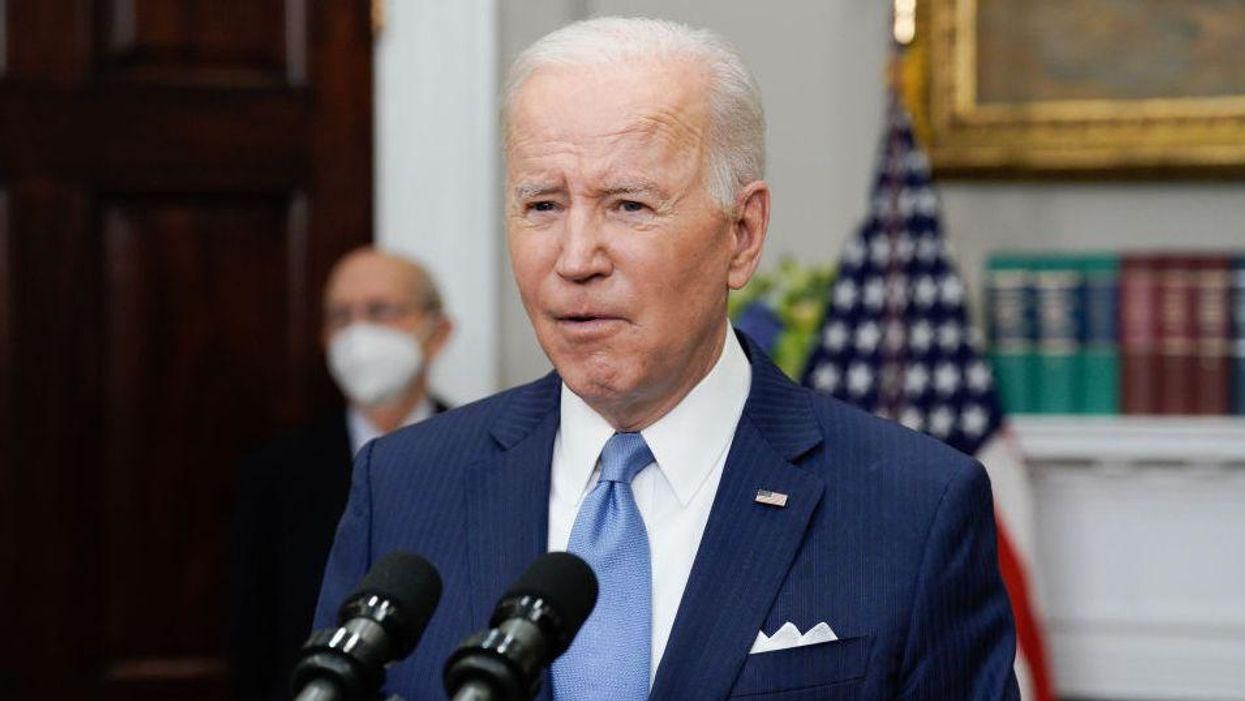
The vast majority of Americans disapprove of the criteria with which President Joe Biden has promised to use when nominating the next Supreme Court Justice.

After Supreme Court Justice Stephen Breyer announced his retirement last week, Biden immediately reaffirmed a campaign promise to nominate a black woman to replace Breyer.

"The person I will nominate will be someone with extraordinary qualifications, character, experience and integrity. And that person will be the first black woman ever nominated to the United States Supreme Court," Biden said on Thursday. "It's long overdue in my view. I made that commitment during the campaign for president, and I will keep that commitment."

What did the poll say?

A new ABC News/Ipsos poll published Sunday discovered that 76% of Americans want Biden to "consider all possible nominees" — not make a decision based on race or gender. Just 23% of respondents said they want Biden to follow through on his promise, the poll found.

Nearly every Republican surveyed (95%) said Biden should consider every possible nominee, while a majority of Democrats polled (54%) said the same.

BREAKING: Just over three-quarters of Americans (76%) want Pres. Biden to consider "all possible nominees," while 23% want him to follow through on his commitment to nominate the first Black woman to the Supreme Court, per a new @ABC News/Ipsos poll.https://abcn.ws/3AI4Rgn
— ABC News Politics (@ABC News Politics) 1643552426

Meanwhile, the poll found that a whopping 69% of Americans disapprove of Biden's handling of record inflation; 75% of respondents described the state of the economy as "not so good" or "poor."

What is the White House saying?

White House spokesman Andrew Bates rebuffed criticism over Biden's promise, which critics have likened to affirmative action.

In fact, Bates claimed that Biden's promise "is in line with the best traditions of both parties and our nation," according to the Washington Post. Bates specifically invoked Ronald Reagan's promise to appoint a woman to the Supreme Court, a promise that resulted in Sandra Day O'Conner becoming the first female Supreme Court justice in 1981.

However, constitutional scholar Jonathan Turley, a professor at George Washington University Law School, disputed on Friday the exact comparison that Bates made.

According to Turley, Biden essentially ruled out considering any male judges or non-white female judges by promising that his nominee "will be the first black woman ever nominated to the United States Supreme Court." On the other hand, Reagan did not rule out non-women from consideration.

"What is most striking about the Reagan-Biden comparison is how unnecessary it was for Biden to categorically rule out non-female and non-black applicants. He could have simply made clear that he wanted to add a black female to the Court and would make that a priority without promising that the first vacancy would be barred to other genders or races," Turley explained.

Ric Grenell gives scorching response to Michelle Obama's claim that black women are 'invisible' to white Americans


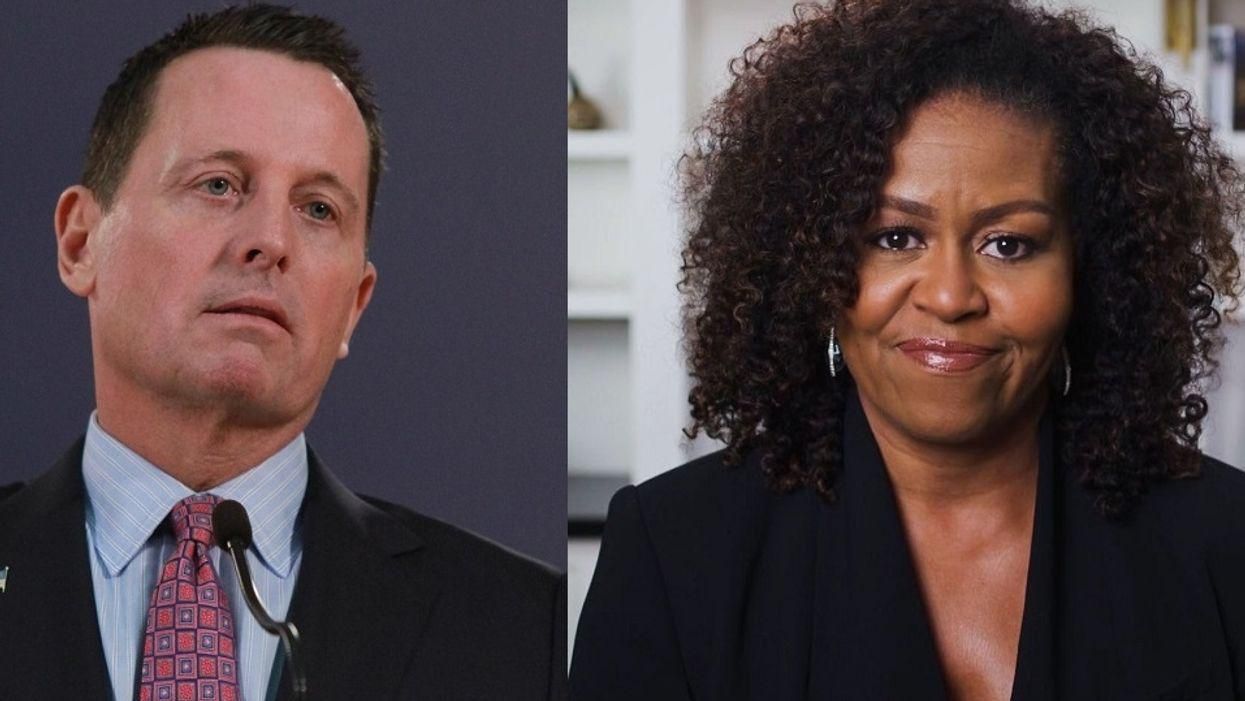
Former acting Director of National Intelligence Richard Grenell offered a counter argument Monday to former first lady Michelle Obama's assertion that black women like her are "invisible" to white Americans — and he invoked her husband to make his point.

What are the details?

The New York Post reported last week that Mrs. Obama claimed on her podcast that black women are "invisible" to white people in the U.S., recounting a story where a white woman cut in front of her and her daughters when they were in line for ice cream without their Secret Service detail.

In response to the Post's story on Twitter, Grenell noted, ". @realDonaldTrump saw Alice Johnson. @BarackObama didn't see Alice Johnson."

. @realDonaldTrump saw Alice Johnson. @BarackObama didn’t see Alice Johnson. https://t.co/71odJI5j85
— Richard Grenell (@Richard Grenell)1598919002.0

Alice Johnson — who is black — served over 21 years of a life sentence for a nonviolent drug offense before President Donald Trump commuted her sentenced two years ago. Just days ago, President Trump granted her a full pardon.

Johnson, now 65, was denied clemency by President Barack Obama three times.

Grenell, who is the first openly gay person to serve in the cabinet of a U.S. president, has been an ardent defender of President Trump, and has especially been a thorn in the side of the media and other critics of the administration on social media. Grenell and Johnson spoke at the Republican National Convention last week.

Anything else?

Johnson has used her platform to serve as an advocate for further criminal justice reform and has praised President Trump for not only freeing her from prison, but for signing the First Step Act legislation into law.

Last week, she was reportedly one of the people harassed by rioters outside the White House after leaving the convention.

According to an exclusive report by The Daily Caller, two sources told the outlet that Johnson disclosed to a group of journalists and other public figures on a call over the weekend that "as [Johnson] left the White House, she was accosted by a group of demonstrators who yelled things at her that she had never heard before."

One source added that "Johnson also told the group that the demonstrators told her they wanted to do 'terrible things' to her."

A number of guests were seen on video being accosted leaving the RNC on its final night, including Sen. Rand Paul (R-Ky.), who was harassed and physically threatened along with his wife, Kelly. The perpetrators repeatedly urged the senator to say the name of Breonna Taylor.

Sen. Paul — a longtime advocate of criminal justice reform — introduced the Breonna Taylor Act earlier this year, calling for an end to no-knock warrants.