Who put the left in charge of America's working class?
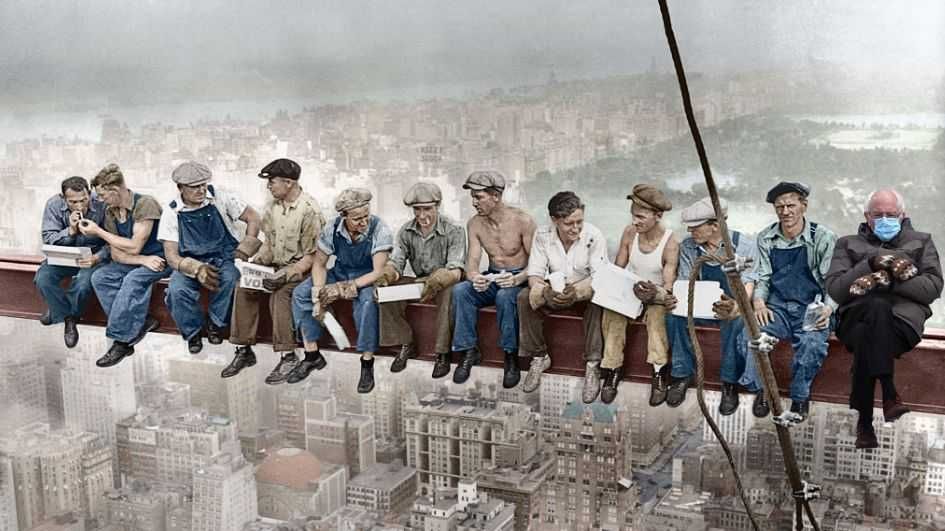


Abdul El-Sayed has made no secret of whom he believes Democrats should represent.

Speaking to the United Auto Workers this summer, the newly minted Democratic nominee for Senate in Michigan declared that it was “damn past time” for his party to be “firmly on the side of working people.”

The credentialed left wants the working class' grievances but has little interest in its virtues.

El-Sayed is not a member of the Democratic Socialists of America; he calls himself a capitalist. But the Bernie Sanders ally has emerged as one of the most prominent figures on the insurgent economic left, campaigning against corporate power and billionaires while promising an economy that works for working people.

His own path to the barricades was somewhat less proletarian. El-Sayed is a Rhodes Scholar with a medical degree from Columbia and a doctorate from Oxford. And these days he's hardly an outlier.

Let's do lunch box

Once upon a time, the phrase “working class” evoked a very specific image. A guy named Sal with calloused hands, a steel lunch box, and a bad back, punching a timecard at seven in the morning to make sure his children could buy decent shoes.

According to a fresh report from the Pew Research Center, 60% of Americans now say “working class” describes them well. That includes half of college graduates and, remarkably, half of upper-income Americans.

So who exactly counts as working class anymore?

Historically, the answer was more complicated than Sal and his lunch box. In the old Marxian sense, the proletariat consisted broadly of people who survived by selling their labor rather than living from property or capital. By that definition, an adjunct professor with three degrees and an anemic bank account may have a better claim to proletarian status than the plumber who owns his own company and employs three other plumbers.

But that isn't what most Americans came to picture when they heard the words “working class.”

Over the course of the 20th century, the phrase acquired a cultural meaning as well as an economic one. It came to evoke factory workers, mechanics, tradesmen, construction crews, waitresses, truckers — people who worked with their hands, collected an hourly wage, or made a living without accumulating a wall full of credentials.

The educated precariat

Now the two meanings are colliding. The modern socialist left has revived something closer to the older economic definition. Its emerging constituency includes a peculiar new proletariat: highly educated Americans with plenty of credentials but not necessarily much money.

Nate Silver recently dug into the numbers behind the Democratic Socialists of America and found exactly this pattern. According to the DSA's own 2021 membership survey, 80% of members age 25 and older had bachelor's degrees, while 45% reported household incomes below $60,000.

Political analyst Ruy Teixeira calls them the “educated precariat.” They got the degrees, but the economic status supposedly waiting on the other side never quite materialized.

What survived was their sense of entitlement to tell other people how things should be run. The credentialed precariat may have lost the salary and corner office, but not the conviction that the people who went to college should be telling the people who didn't what's good for them.

And so they didn't merely join the working class. They appointed themselves its representatives.

RELATED: America’s young are being recruited into socialism — one dance party at a time

Bettman/Michael Tullberg/Getty Images

Prole drift

Teixeira notes that non-college working-class Americans are conspicuously absent from DSA activism. Socialist candidates, he argues, tend to find their greatest strength in white professional-class areas rather than working-class black and Hispanic ones.

The credentialed left speaks constantly in the name of workers while increasingly inhabiting a different cultural universe from the blue-collar Americans it claims to represent. They took the old Marxian categories, ran them through a dry cleaner, and turned class struggle into a boutique political identity tailor-made for the credentialed precariat.

The people who know the most about class struggle increasingly seem to know the fewest actual people who change tires, hang drywall, drive trucks, or repair furnaces. Meanwhile, the guy who actually owns the steel lunch box is increasingly voting Republican.

Pew found that 67% of Republicans identify as working class, compared with 55% of Democrats. Even among upper-income Americans, 61% of Republicans call themselves working class, compared with just 38% of Democrats. Among college graduates, Republicans are also more likely than Democrats to claim the label.

Stolen valor

That helps explain why the left and right increasingly seem to be speaking different languages when they talk about class. The socialist left sees class primarily through economic insecurity and the relationship between labor and capital. The credentialed left wants the working class' grievances but has little interest in its virtues. Exploitation, insecurity, and victimhood confer moral status. Self-reliance, toughness, family obligation, and the stubborn conviction that a man ought to solve his own problems do not fit nearly as comfortably into the progressive worldview.

On the right, those virtues have become inseparable from working-class identity. It means taking pride in earning your keep and putting family before corporate diversity initiatives. Above all, it means despising the condescension of credentialed bureaucrats.

An independent contractor running a two-man framing crew might clear six figures in a good year, yet he has zero in common with a university administrator making the exact same salary. One builds real structures that stand against the wind; the other drafts policy documents designed to justify their own redundant existence.

True working-class Americans — the blue-collar workers who actually do physical labor — deserve better than sharing an identity pool with credentialed cosplayers. A diesel mechanic working 12-hour shifts under a hoisted truck engine lives in a completely different galaxy from a brand strategist working remotely from a coffee shop while identifying as a member of the proletariat. A fundamental difference exists between working for a living and belonging to the working class.

The modern left spent decades treating the four-year degree as the ticket to a better life, only to turn around and loot the cultural prestige of the blue-collar lifestyle when those credentials failed to deliver what so many graduates expected. Conservatives don't need to own factories to champion the working class. They simply honor the dignity of hard work and the common sense of people who fix things when they break.

The credentialed class can speak in the name of the working class all it wants. That doesn't mean the working class asked it to.

Noticing America’s Affordability Crisis Doesn’t Make You A Socialist

You are not a socialist for noticing that young people and families are being priced out of the economy in large parts of America, and you are not a socialist for wanting to fix these problems.

If You Didn’t Get A Great Education, It’s Never Been Easier To Repair It

Those of us in the majority of Americans who have been deprived of an excellent education have never had more opportunities to remediate ourselves.
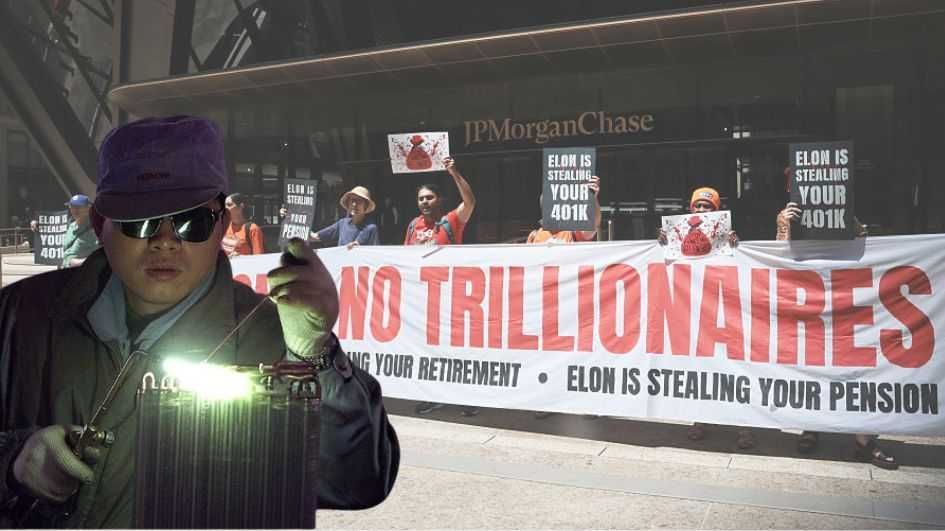

HOT STOCK: SpaceX IPO is making even its welders rich


A welder named Juan Hernandez joined SpaceX in 2015 at $28 an hour. He took stock instead of a fatter paycheck. The day the company was listed, those shares were worth about $880,000.

He has company. More than 4,000 current and former SpaceX employees became millionaires when the company began trading on the Nasdaq at $135 a share. The valuation hit $1.77 trillion, the seventh-largest public company and ahead of Tesla. It was the biggest IPO ever recorded. About 400 of those workers now hold stakes above $100 million, and some of them ladle soup in the cafeteria.

The teenager weighing a coding boot camp against welding school should study the leaderboard in Brownsville.

Learn to weld

That last part flips the usual script. Rank-and-file employees have struck gold in stock debuts before, but most often they were the ones writing code or creating marketing decks

This time it’s very different.

SpaceX handed equity down to welders, machinists, and line workers at Starbase, many of whom took below-market pay for shares. The bet looked reckless a decade ago, back when SpaceX still lost rockets on the launchpad. Today, the only thing still exploding is their net worth.

The setting makes it stranger. Brownsville sits near the bottom of every income chart in Texas, and SpaceX put more than 3,000 jobs there. Home prices in Cameron County have more than doubled since the rockets arrived, climbing from around $131,000 in 2014 to over $281,000.

Critics call that unaffordable, but the complaint misses who is doing the buying. The new money was earned in the county, by people who lived there before SpaceX showed up. When a poor town's home values double on the back of local paychecks, the residents hold the deeds. Rising prices turn dangerous when wages sit still. Brownsville got richer faster than it got expensive.

Deskbound

Now for the mandatory dread about machines coming for our jobs and, in the more ominous forecasts, our throats. But now automation is a white-collar problem. AI can draft a deal sheet or pass the bar exam. What it can't do is snake a wire past a joist or seal a fuel tank that holds at cryogenic temperatures without splitting. The jobs vanishing first are the ones done sitting down. Paralegals should sweat. Plumbers can light up a cigarette and relax.

In April, a humanoid robot built by the phone maker Honor finished a Beijing half-marathon in 50 minutes and 26 seconds, quicker than any human has run the distance. A year before that, at the first such race, one machine toppled at the start and another walked into a barrier, and every robot needed a human handler jogging beside it like a parent at a toddler's first steps. Ask one of those to fish a cable through a finished wall and find the live wire before something ignites. Fine motor control and sound judgment still belong to people. The robots can run, but keep them away from your breaker box.

So the trades have an opening, and it widens if manufacturing returns. A factory needs hands long before it needs a wellness coordinator. The teenager weighing a coding boot camp against welding school should study the leaderboard in Brownsville.

RELATED: The first trillionaire: SpaceX goes public — and it's not just Elon Musk who's striking it rich

Marvin Joseph/Washington Post/Getty Images
Elon earned it

Then there is Musk. The IPO makes him a trillionaire, the richest man alive. Bernie Sanders, the millionaire who wrote a best-seller about the immorality of millionaires, calls the number obscene. Paul Krugman blames a "rigged system."

None of this started with the IPO. Attacking Musk has been a fixture on the left for years, somewhere between a hobby and a second income. The trillion-dollar number raised the stakes. The objections write themselves and skip the question worth asking first. How did he get there?

Plenty of fortunes start with a dead grandparent and end in an offshore account. But this one came from hardware that lands itself and flies again. Musk bet on factories and launchpads while easy money chased apps. He keeps hours that would bury most executives. He sleeps on factory floors when a launch date slips, a habit his critics conveniently ignore.

And he paid everyday Americans in stock when cash would have cost him less, allowing them to win as well.

Before wheeling out the guillotine and inviting Mark Cuban to drop the blade, separate the fortunes built on extraction from the ones built on output. Musk is a visionary, a builder of truly great things. He made the rocket cheaper and the cook richer. Capitalism has never looked so hard to hate.

Longest Shutdown Ever Reveals U.S. Could Stand To Fire A Lot Of Federal Workers

One thing the shutdown seems to show is that there may very well be quite a few federal employees America could do without.

Americans Who ‘Learned To Code’ At Obama’s Behest Can’t Find Jobs Now

'Learn to code' turned out to be one of the most misguided pieces of career advice, and college grads are bearing the brunt of it.


Democrats wanted a makeover. They got Marxism and Molotov cocktails.


In February, Democratic Party operatives and elected officials met for a retreat in Virginia hosted by Third Way, a self-described center-left organization. Their goal: develop a strategy to reverse the party’s hard-left drift and reconnect with working-class voters.

They brainstormed ways to neutralize the far-left infrastructure that now defines the party. Among their key recommendations? Embrace patriotism, community, and traditional American imagery. Show up at tailgates, gun shows, local diners, and churches.

Corporate media and DC careerists will pretend these protesters don’t represent the party. They’ll try to repackage the fury in the streets as civic activism. But we won’t let them.

That plan flopped.

Democrats didn’t pivot to working-class America. They ran straight back into the arms of their radical base. By June, they had poured money and institutional support into the No Kings protests erupting nationwide.

These protests didn’t happen at tailgates or in small-town churches. They returned to the same streets torched during the Black Lives Matter riots of 2020 — angrier, louder, and even more extreme.

And the party cheered them on.

From Hillary Clinton to Chuck Schumer, Democrat leaders lined up in support. Corporate media echoed their talking points. None of them could rein in their base. More damning, none of them wanted to.

The protests weren’t fringe outbursts. In fact, they revealed the party’s core. Their rhetoric was radical. Their goals were openly anti-democratic. Many participants waved explicitly communist banners, marched under Marxist slogans, and called for the dismantling of American institutions.

That imagery — the rage, the theatrics, the ideological extremism — was exactly what February’s conference attendees feared. But it’s now the public face of the Democratic Party. The working class isn’t clamoring for more street theatrics. They want real solutions from people in power.

So we at the Oversight Project did what we do best: investigate.

We focused on a key protest organizer, a group called 50501 — short for “50 protests in 50 states for 1 movement.” Its website paints a clear picture. Placards read “Impeach the dictator,” “Impeach the bitch,” and “No one is illegal on stolen land.” Moderate? Hardly.

We compiled Instagram activity from 50501’s state chapters — 34 in total, plus Washington, D.C., and several national branches. We tracked who its social media managers followed, and what emerged was a clear pattern of associations: communist, neo-Marxist, anti-American, and foreign-aligned groups.

These protests didn’t bubble up from the grassroots. They were built from the same radical networks that have long tried to destabilize the country from within.

RELATED: Billionaire Walmart heiress funds anti-Trump chaos, backs radical ‘No Kings’ protests

Photo by Spencer Platt/Getty Images

Seventeen accounts followed nearly 20 accounts tied to the Party for Socialism and Liberation — a Marxist-Leninist group that splintered from the Workers World Party. One of its former members carried out the shooting of two Israeli embassy staffers in Washington, D.C., earlier this year.

Thirty-three accounts followed Democratic Socialists of America pages. Sixteen followed Students for a Democratic Society. Twelve connected with Students for Justice in Palestine.

Many accounts also followed known foreign-aligned activist groups, including Code Pink — famous for its disruptions in congressional hearings — and the Act Now to Stop War and Racism coalition (ANSWER).

Naturally, we found ties to Antifa as well, including groups like Anti-Fascist Aktion and prominent members such as @PunkwithACamera.

We wish we had this report back in February. We would’ve printed it out and handed it to every Democrat in attendance — just to watch their faces drop as they saw what their party has become.

This is the story of the American left for the next decade: the radical tail wagging the party dog.

Corporate media and D.C. careerists will pretend these protesters don’t represent the party. They’ll try to repackage the fury in the streets as civic activism. But we won’t let them.

We’ll keep exposing the ties. We’ll name the names. And we’ll make sure every Democrat trying to rebrand ahead of 2028 wears the consequences of these alliances around their necks.

Business spending reaches near 30-year high under Trump: 'It's the real deal'


Business production spending has seen its highest climb since 1997, when accounting for post-COVID reopenings, the Trump administration has announced in a release obtained by Blaze News.

Capital expenditures — or capex, which refer to what companies spend on their research and development, software, transportation, and more — are a great way to gauge how much businesses are expanding or developing their operations.

Additionally, real wages are also rising, according to the Trump administration, and the growth speed in 2025 has been outpaced by only one previous administration.

'Trump is a real idea man. Everything in his plan is interconnected.'

Business equipment production jumped 11% in Q2 2025 after already garnering a 23% gain in Q1, which marks the strongest growth since 1997, the announcement said.

"President Trump's capex comeback has clearly been generated by the One Big Beautiful Bill," Joe Lavorgna, counselor to Treasury Secretary Scott Bessent, told Blaze News. "Businesses trusted from the get-go that President Trump would implement positive policies, and they implemented them sooner rather than later. This caused the growth we've seen in both quarters."

Capex are up over 16% in the first half of 2025, the administration explained, noting that there is a major wave of investment in American industry already under way.

Another strong factor the administration pointed to was the growth of blue-collar wages. Lavorgna said that President Trump had one former president he had to compete with in this regard: himself.

RELATED: Read it and weep: Tariffs work, and the numbers prove it

— (@)

"Real wages are rising at a very fast pace. The second fastest ever, second only to President Trump in 2017," Lavorgna told Blaze News.

Secretary Bessent said on X that thanks to Trump's policies, real wages for hourly workers are up nearly 2% in the first five months of Trump's second term. This marks the strongest growth in the category in 60 years.

Lavorgna added, "The 'big, beautiful bill' was designed to encourage high-tech manufacturing, and the fact that wages for non-supervisory production workers are going up, that means we're making the right moves."

In comparison, President Biden saw a 1.7% decline, while Presidents Barack Obama, George W. Bush, Bill Clinton, George H.W. Bush, and Ronald Reagan all saw negative growth in real wages.

RELATED: We’re finally living through the conservative revolution we’ve always needed

— (@)

Lavorgna stressed that the Trump administration wants to bring high-value manufacturing jobs back to the United States, and at the same time, ramp up production in certain industries to become a worldwide leader.

This includes the artificial intelligence race, which has seen significant investment that has since spawned data centers and campuses. These campuses and centers employ more people and need more energy brought to them, providing employment to even more people.

"Trump is a real idea man. Everything in his plan is interconnected; it's the real deal," Lavorgna added.

Like Blaze News? Bypass the censors, sign up for our newsletters, and get stories like this direct to your inbox. Sign up here!

The Laptop Class Disparages Manufacturing Because It Creates More Value Than They Do

Many white-collar workers only put in a few hours of actual work per week, unlike factory workers — which is a reality and source of shame that the laptop class doesn’t want people catching onto.