Trump’s Pro-America Vision Will Only Succeed If He Pushes Republicans To Implement It

President Trump painted an uplifting, “America First” vision for the country during his State of the Union address on Tuesday. Filled with recognitions of American patriotism and savvy political moves, the president pledged that America’s future “will be bigger, better, brighter, bolder, and more glorious than ever before.” While Trump’s address was certainly as pro-America […]

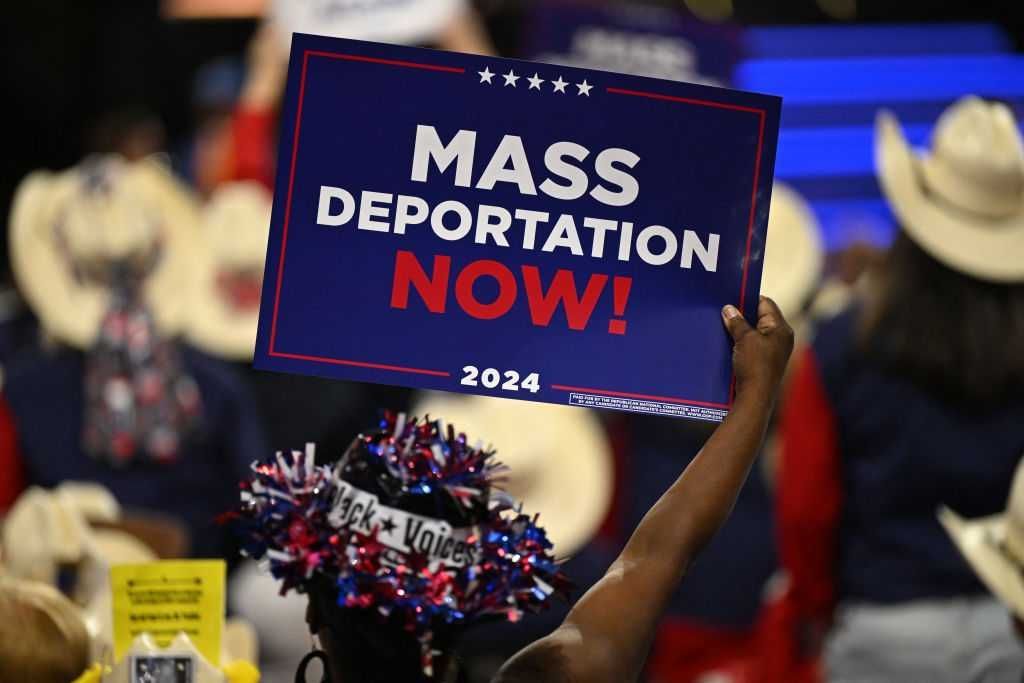
The State of the Union is Trump’s chance to reset deportations


At the Munich Security Conference earlier this month, Secretary of State Marco Rubio didn’t mince words. He told European leaders that mass migration is not, was not, and will not become “some fringe concern of little consequence.” It was and remains a crisis that is transforming and destabilizing societies across the West.

Rubio also made the point that should be obvious but too often goes unsaid: Controlling who enters a country — and how many people enter it — is not xenophobia. It is not hatred. It is a basic act of national sovereignty. Failing to do it is not merely a policy mistake. It is an abdication of one of government’s first duties to its own people and an urgent threat to social order and civilizational stability.

We need to confront sanctuary employers, sanctuary farms, and sanctuary factories.

That is bold. It is also correct.

Yet special interests continue to pressure President Trump to abandon his promise to “carry out the largest deportation operation in American history” into a much smaller project focused only on “the worst of the worst.”

Violent criminal illegal aliens must be removed, and the administration was right to begin there. Public safety comes first.

But that was always the opener. It was never the endgame.

The American people did not vote for President Trump because he promised a narrow immigration enforcement strategy. They voted for the restoration of the rule of law. They voted for what the president himself promised: to deport the illegal aliens Joe Biden unlawfully allowed to enter the United States.

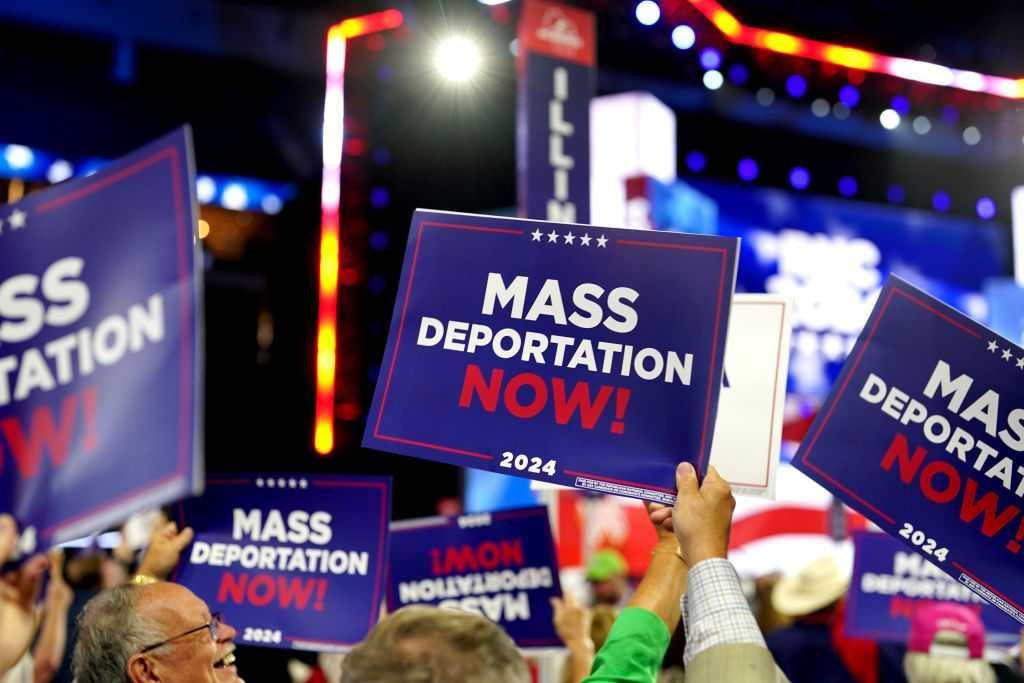
The mas -deportation coalition, of which I am a proud member, exists to help the president accomplish that goal.

Two hundred thousand or even 300,000 interior removals per year may sound significant. Put it beside an illegal population that could approach 20 million, however, and the number shrinks fast. At the current pace, the math does not get you to the largest deportation operation in American history over four years.

President Trump needs help keeping his promise, and he needs a strategy calibrated to the scale of the problem.

RELATED: ‘Phase one’ was quality control. ‘Phase two’ needs to be quantity control.

Photo by John Moore/Getty Images

When President Eisenhower enforced immigration law in the 1950s, he did not limit enforcement to select criminal categories. The message was clear: Unlawful presence would not be tolerated. That clarity changed behavior. People left because they knew they had broken the law and would face consequences if they stayed.

That is the kind of clarity we need now.

It means expanding worksite enforcement, not merely fighting over sanctuary cities. We need to confront sanctuary employers, sanctuary farms, and sanctuary factories.

It means taking on industries that rely on and exploit illegal labor at the expense of American workers and their families. It means making clear that unlawful presence in the United States carries consequences — not selectively imposed, but consistently and uniformly applied.

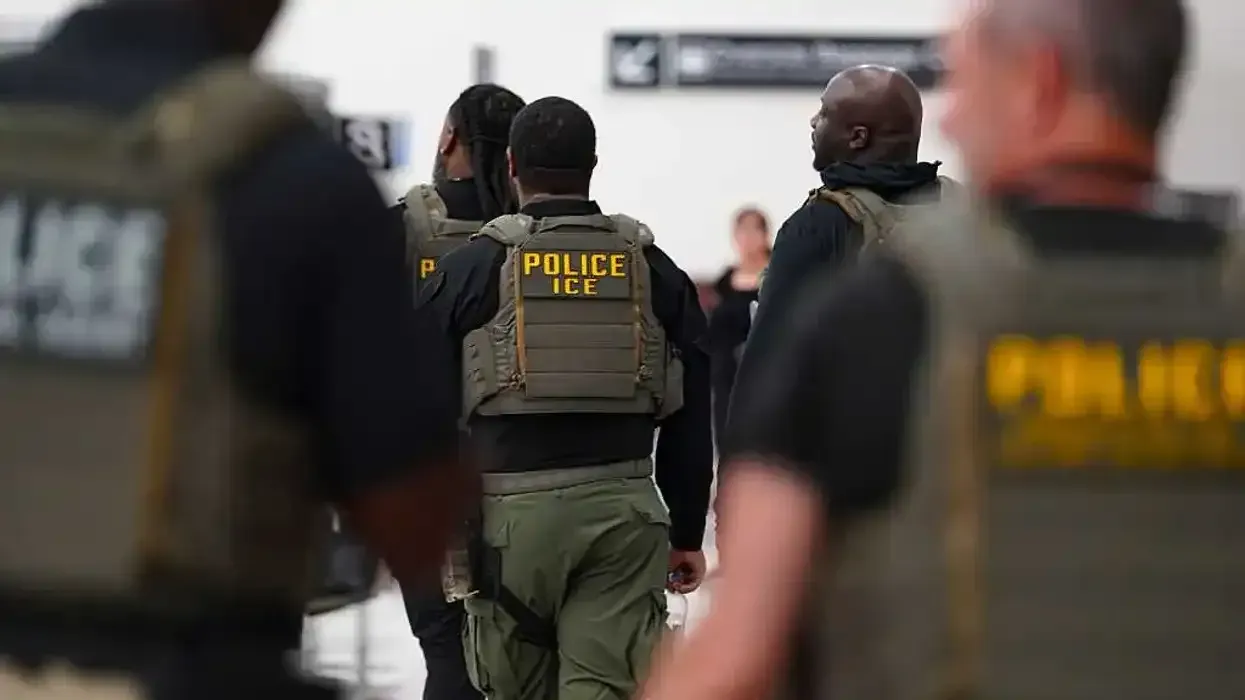
As someone who led ICE and CBP under President Trump in his first term, I can say this with confidence: The machinery and capability exist to achieve 1 million interior removals by the end of 2026.

The real question is political will.

Opponents of the president’s campaign promise are trying to box him into a narrower and narrower enforcement lane. Special interests, campaign consultants, and media talking heads want enforcement to stall — and then to end in amnesty.

If enforcement remains confined to this narrow lane and eventually grinds to a halt, amnesty will come next.

RELATED: Two ‘I’ agencies, one Democratic double standard

Photo by Anna Moneymaker/Getty Images

The State of the Union is the president’s golden opportunity to make clear to supporters, detractors, and, above all, the American people that he intends to fulfill the promise he made on the campaign trail.

It is time to move to phase two: enforcement at scale, without fear or favor.

That may sound bold to some. I know firsthand that it can be done — and must be done.

The American people returned President Trump to the White House after he made that promise. They will reward him with a historic legacy if he keeps it.

The Fifth Circuit cracks down on the asylum excuse factory


For nearly three decades, Washington has insisted that America’s immigration chaos stems from outdated laws, insufficient authority, or humanitarian necessity.

Last week, the Fifth U.S. Circuit Court of Appeals shattered that narrative.

For the first time in decades, a federal court treated immigration law as law, not a suggestion.

In Buenrostro-Mendez v. Bondi, a divided panel did something radical by modern standards: It enforced immigration law as Congress wrote it. The result ranks as one of the most consequential immigration rulings in a generation — and a direct rebuke to the legal fiction that has shielded millions of illegal aliens from mandatory detention for decades.

What the court actually said

The case turned on a simple question with enormous consequences: Do illegal aliens who entered the United States unlawfully — often years ago, without inspection or lawful admission — get discretionary bond hearings while in removal proceedings?

The Fifth Circuit answered no.

Writing for the majority, Judge Edith H. Jones, joined by Judge Stuart Kyle Duncan, held that any alien present in the United States who has not been lawfully admitted is, by statute, an “applicant for admission.” Congress supplied that definition in 1996.

Under the law, applicants for admission who cannot show they are “clearly and beyond a doubt entitled to be admitted” shall be detained pending removal proceedings.

“Shall” means mandatory. It leaves no room for discretionary bond hearings. It applies regardless of how long the alien has remained unlawfully in the country.

Physical presence does not confer the legal status or constitutional entitlements that accompany lawful admission, much less citizenship.

This ruling rejects the long-standing practice of treating interior illegal aliens as governed by the bond statute. As the Fifth Circuit panel made clear, that statute applies after lawful admission. It does not override Congress’ command for those who were never admitted at all.

No other federal appellate court has squarely held that mandatory detention applies not only to recent border crossers but also to long-term illegal aliens living in the interior who entered without inspection years — even decades — ago.

Long-delayed enforcement

Nothing in the Fifth Circuit’s decision turns on novel statutory interpretation. Congress enacted this framework in 1996 to eliminate incentives for evading inspection and remaining unlawfully in the United States.

What changed was not the law but the willingness to enforce it.

After the Board of Immigration Appeals acknowledged the plain meaning of the disputed section in Matter of Yajure Hurtado, DHS implemented a policy treating illegal entrants as Congress defined them: applicants for admission subject to mandatory detention.

The response was immediate and predictable. District courts across the country rushed to block the policy, issuing a wave of rulings restoring bond eligibility.

The Fifth Circuit is the first appellate court to say what should have been obvious all along: Courts do not get to rewrite immigration statutes because enforcement is politically uncomfortable.

RELATED: We escaped King George. Why do we bow to King Judge?

Photo by Pierce Archive LLC/Buyenlarge via Getty Images

Asylum is not a loophole

One of the most persistent myths in immigration discourse claims that filing for asylum legalizes illegal entry. It does not.

Congress made illegal entry a federal misdemeanor. The statute contains no asylum exception. Illegal entry remains a crime even for those who later request asylum.

Asylum also does not create a “right to remain.” It is discretionary relief from removal.

Federal law allows an alien to apply for asylum after illegal entry. That provision does not cure inadmissibility, erase criminal violations, or entitle the applicant to release from custody.

When an alien crosses the border illegally — between ports of entry — the alien violates federal law and becomes inadmissible for lack of valid entry documents. That inadmissibility triggers expedited removal.

The law allows an alien to request asylum after unlawful entry, but it does not legalize the entry, erase inadmissibility, or prevent removal. In this posture, asylum is defensive. The alien raises it after DHS initiates removal proceedings, and the alien receives it, if at all, as discretionary relief — not as a right to remain.

Aliens who enter without valid documents remain inadmissible and subject to detention or removal.

Mandatory detention applies to many asylum seekers. Under the statute:

  • Illegal entrants go into expedited removal unless they establish a credible fear.
  • When an alien claims credible fear, the alien remains detained pending final adjudication.
  • Release runs through limited DHS parole authority, not judicial bond hearings.

The Supreme Court confirmed this framework in Jennings v. Rodriguez (2018), holding that the statute mandates detention and does not allow courts to invent bond hearings where Congress declined to authorize them.

Law on the books vs. law in practice

The detention statute does not suffer from ambiguity. The conflict lies elsewhere.

Congress criminalized unlawful entry without exception. Congress also enacted the asylum provision through the Refugee Act of 1980, permitting any alien “physically present” in the United States or arriving at the border to apply for asylum regardless of manner of entry. That provision does not exempt such individuals from prosecution, detention, or removal. It does not repeal the detention mandate.

The Refugee Act incorporated aspects of the U.N. Refugee Convention and Protocol, including Article 31’s discouragement of “penalization” for unlawful entry in limited circumstances. Article 31 does not prohibit detention, prosecution, or removal. It confers no right to unlawful entry or release pending adjudication. Nothing in the treaty framework — or U.S. law — displaces Congress’ mandatory detention commands.

RELATED: Federalism cannot be a shield for sanctuary defiance

Photo by John Moore/Getty Images

Over time, however, executive agencies — and sometimes courts — expanded a limited non-penalization principle into a broader immunity regime. Officials treated asylum eligibility as a basis to avoid detention, delay removal, and suspend enforcement mandates Congress never repealed.

That is not discretion. It is dereliction. It nullifies the statute Congress enacted.

Until Congress revisits asylum law or alters treaty commitments, that structural tension will invite exploitation — regardless of what the detention statute requires.

Why this ruling matters

By enforcing the law as written, the Fifth Circuit restored a foundational principle of sovereignty: Illegal entry does not generate superior legal rights.

The dissent warns that enforcing the statute could produce large-scale detention. That warning is not a legal argument. It is a policy objection rooted in disagreement with the statute Congress enacted.

This ruling binds only Texas, Louisiana, and Mississippi — for now. Other circuits have signaled resistance. A split is coming. Supreme Court review seems likely.

When that moment arrives, the court will face a question it has avoided for years: Does immigration law mean what it says — or only what politics permits?

The Fifth Circuit has answered.

For the first time in decades, a federal court treated immigration law as law, not a suggestion.

Preparedness isn’t paranoia. It’s pattern recognition.


A certain smug comfort belongs to people who have never stood between a riot line and a camera, never smelled accelerant on the wind, never watched their phones lose signal while fire chewed through an entire neighborhood. They talk about “heated rhetoric” and “charged atmospheres” as if danger were theoretical. For women reporters on the ground, it isn’t.

The front line is not a metaphor. It is a place. And it is getting more dangerous by the year.

This is not a gadget story. It is a survival story.

I have covered Antifa riots where the mob knew my name before I reached the sidewalk. I have been screamed at, followed, and threatened by people who publicly denounce violence while privately practicing it. I have watched law enforcement stand down under progressive policies that place the comfort of agitators above the safety of citizens. And I have learned, the hard way, that when cities become unlivable, women pay first.

The left loves to talk about “lived experience.” Here is mine: Democrat governance has made America’s major cities objectively less safe, and being a female independent journalist in them now requires the mindset of a survivalist.

That became brutally clear during the Los Angeles wildfires of 2025.

I was there when the sky turned orange and evacuation orders contradicted one another. Cell towers failed. Emergency lines were overwhelmed. Friends and family lost homes — not hypothetically, not statistically, but completely. In that chaos, the only reason I was able to coordinate help, locate people, and call for assistance was a satellite phone. While 911 systems collapsed, that device worked. No signal dependency. No excuses.

That is not a gadget story. It is a survival story.

The same lesson repeats itself elsewhere. In Washington, D.C., shootings now occur in places that once felt immune — near offices, events, and corridors of power. I was at Butler. I have been steps away from moments that could have gone very differently. Anyone insisting that “these things don’t happen here” is either lying or sheltered by privilege.

When whistleblowers reach out to me, they do not do it over casual cell calls. They use secure satellite communications, because they understand something our leaders prefer not to acknowledge: privacy is safety. Satellite phones are resistant to interception, independent of fragile infrastructure, and immune to spam and shutdowns. When people have something dangerous to say, they choose tools that help keep them alive.

This is not paranoia. It is pattern recognition.

People have died hiking because there was no signal. Boaters have vanished because help could not be reached. Hurricanes do not care about ideology. Fires do not check voter registration. Yet one party consistently opposes disaster preparedness, energy independence, and resilient infrastructure — while demanding blind trust in systems that fail precisely when they are needed most.

Preparedness is not extremism. It is common sense.

Redundancy in communication is not political. Neither are solar-powered backups or hardened devices. Nor is concern about electromagnetic vulnerabilities when our lives run through centralized, fragile networks. Thinking ahead does not make you radical. It makes you female in a country that keeps telling women to be brave while stripping away the tools that make bravery survivable.

And yes, it matters who builds those tools.

If I am calling for help, I want American customer service — American voices, American-owned companies. Safety should not come with a foreign accent and a hold button. Trust is part of security.

This is why satellite phones, solar chargers, emergency kits, and hardened cases are no longer niche products. They are rational responses to an increasingly unstable political and physical environment. They are also meaningful gifts — because nothing says you care like giving someone a way to come home alive.

RELATED: A nation without trust is a nation on borrowed time

Photo by Jay L Clendenin/Getty Images

Which brings us to 2026.

Around President Trump, TPUSA events, or Republican members of Congress, the threat environment is asymmetric. The left has normalized political violence while denying it exists. Media figures excuse it. Politicians minimize it. Prosecutors decline to prosecute it. And women journalists who refuse to conform are expected to absorb the consequences quietly.

I won’t.

The question voters should ask heading into the midterms is not which party sounds kinder on cable news. It is which party acknowledges reality — and equips Americans, especially women, to survive it.

One side treats chaos as a political tool. The other treats safety as the foundation of freedom.

I know which one kept me connected when the fires closed in. I know which one refuses to pretend riots are “mostly peaceful.” And I know which one understands that strong borders, strong policing, resilient infrastructure, and personal preparedness are not luxuries in dangerous times.

The front line is expanding. It runs through our cities, our forests, our streets, and our inboxes. Women are already on it — whether policymakers realize it or not.

The only question left is whether America will choose leaders who take our safety seriously or continue sacrificing us to ideology.

Because the danger is real. And pretending otherwise is the most reckless policy of all.

Trump official pins DC National Guard attack on Biden's open border crisis


The Trump administration’s National Counterterrorism Center Director Joe Kent exposed a terrifying reality about the fallout from former President Joe Biden’s open border crisis.

'That number, alarmingly, remains unknown at this time.'

During a Thursday Committee on Homeland Security hearing, Kent testified that, under the Biden administration, thousands of foreign nationals with known or suspected terrorist ties were allowed into the country.

“Despite the progress that we’ve made so far in the Trump administration, the threat posed by terrorists of all brands remains very high right now,” Kent said in his opening statement before lawmakers.

He explained that the country is facing “a persistent threat from the individuals that were allowed into this country by the previous administration.”

Kent noted that the most significant threat “is the fact that we don’t know who came into our country in the last four years of Biden’s open borders.”

“What we have identified is alarming,” he stated, adding that the federal government recently issued a warning about the heightened risk of terrorist attacks, particularly posed by ISIS and Al-Qaeda.

RELATED: White House makes touching gesture to honor assassinated National Guard member, allegedly by CIA-linked Afghan

Photo by GUILLERMO ARIAS/AFP via Getty Images

“So far, NCTC has identified around 18,000 known and suspected terrorists that the Biden administration let come into our country,” Kent revealed.

He accused the prior administration of having “facilitated” the entry of individuals with ties to jihadi groups, including the Afghan suspected of attacking National Guard troops in Washington, D.C., on November 26. The attack resulted in the death of 20-year-old National Guard member Spc. Sarah Beckstrom, while Staff Sgt. Andrew Wolfe was wounded.

“That Afghan was brought into the country as a group of over 100,000 Afghans who were brought here during the disastrous withdrawal from Afghanistan. These individuals, despite what has been reported, were not vetted properly to come into the United States,” Kent said.

RELATED: Wajahat Ali says quiet part out loud in attack on Trump's re-migration plan: 'Mistake that you made is you let us in'

Photo by GUILLERMO ARIAS/AFP via Getty Images

He stated that the NCTC is working with the Department of Homeland Security and the FBI to track down individuals with ties to terrorist organizations. However, he noted that the 18,000 figure does not include foreign nationals who came into the U.S. illegally through the open border.

“That number, alarmingly, remains unknown at this time,” Kent remarked. “We’re trying to figure out who those individuals are as well.”

Like Blaze News? Bypass the censors, sign up for our newsletters, and get stories like this direct to your inbox. Sign up here!

‘Grow a backbone’: Border czar Homan fires back at heckler who interrupted TPUSA event


Border czar Tom Homan fired back at a heckler during a Turning Point USA conference at the University of Texas at El Paso on Thursday.

During the event, Homan spoke and answered questions from the audience, which numbered roughly 500.

'I don't want anybody hurt. I don't want anybody to die — that includes officers and that includes aliens.'

He compared the border security under the Trump administration to that of the previous White House, describing the difference between them as "night and day."

"There was 12,000 a day sometimes crossing the border illegally," Homan said, referring to illegal crossings under the Biden administration. "You know what it was yesterday — 106 across 2,000 miles of border. And those 106, not a single one of those were released into the United States."

The audience erupted in applause.

Homan debunked the legacy media's narrative claiming that Immigration and Customs Enforcement is disproportionately arresting non-criminals. He stated that the most recent stats indicated that 64% of immigration arrests were of criminals.

RELATED: 'He's not that smart': Homan lampoons Chicago mayor for pleading with UN to intervene against ICE

Photo by Anna Moneymaker/Getty Images

He slammed the media and immigration enforcement critics for labeling him the architect of "family separations."

"It wasn't done to punish. It was done in an attempt to save lives and stop sexual assaults, and maybe control the border," Homan said.

"You are a racist!" a heckler shouted. "You are destroying the Constitution!"

The audience responded with boos and drowned out the heckler's rant by chanting, "USA!"

Homan continued his speech unfazed by the disturbance, explaining that the Biden administration lost track of over 300,000 unaccompanied alien children and had not attempted to locate them. He reported that the Trump administration had already located 40,000 of those children.

RELATED: DHS to increase operations in Twin Cities region as Somali fraud becomes unignorable

Photo by BRYAN R. SMITH/AFP via Getty Images

"Every night [when] I go to bed, I pray for the safety and security of every Border Patrol agent, ICE agent, and I pray for everybody that we're looking for," Homan said. "I don't want anybody hurt. I don't want anybody to die — that includes officers and that includes aliens. ... Call me what you want."

"Traitor!" a heckler shouted back.

Homan replied by telling the heckler to "grow a backbone, put a Kevlar vest and a gun on your hip, and go secure this border!"

Like Blaze News? Bypass the censors, sign up for our newsletters, and get stories like this direct to your inbox. Sign up here!

'Your nightmare is finally over': Trump pardons Texas Democrat who opposed Biden's border policy


More than a year and a half after a Democrat congressman was indicted on federal charges under the Biden presidency, President Trump has announced that he will be granting an "unconditional pardon."

On Wednesday morning, President Trump announced on social media that he will be granting a "full and unconditional PARDON" for embattled Texas Democrat Rep. Henry Cuellar.

'It has tested our faith in ways we never expected, but it has not broken it. We still believe in justice.'

In the post, President Trump slammed Joe Biden for weaponizing the Department of Justice and the FBI against his political opponents — including members of his own party.

Trump suggested that Cuellar was targeted by the Biden regime because of his unflinching demands for tighter border security.

RELATED: 'The border is not secure': Democrat Rep. Henry Cuellar says Biden's border policies allowed 'over 5 million' migrants to enter the US

Photo by Chip Somodevilla/Getty Images

"Sleepy Joe went after the Congressman, and even the Congressman's wonderful wife, Imelda, simply for speaking the TRUTH. It is unAmerican and, as I previously stated, the Radical Left Democrats are a complete and total threat to Democracy! They will attack, rob, lie, cheat, destroy, and decimate anyone who dares to oppose their Far Left Agenda, an Agenda that, if left unchecked, will obliterate our magnificent Country," Trump said in the post.

"Because of these facts, and others, I am hereby announcing my full and unconditional PARDON of beloved Texas Congressman Henry Cuellar, and Imelda. Henry, I don't know you, but you can sleep well tonight — Your nightmare is finally over!"

In the Truth Social post, Trump included a letter written by the Cuellars' daughters, Christina and Catherine, who asked for a full and unconditional pardon.

In the letter, they wrote, "This ordeal has taken a deep emotional and financial toll on all of us. It has tested our faith in ways we never expected, but it has not broken it. We still believe in justice. We still believe in America — a country built on truth, fairness, and compassion, even during the hardest of times."

Cuellar and his wife were indicted on several federal charges related to bribery in May 2024, though they were never convicted.

At the time, Trump said, "Biden just Indicted Henry Cuellar because the Respected Democrat Congressman wouldn’t play Crooked Joe’s Open Border game. He was for Border Control, so they said, 'Let’s use the FBI and DOJ to take him out!' This is the way they operate."

Like Blaze News? Bypass the censors, sign up for our newsletters, and get stories like this direct to your inbox. Sign up here!

Chip Roy’s immigration blitz hits the lawless left and the squish right


Let’s face it: Republicans are staring at a wipeout in the midterm elections. The economy is battered, GOP leadership looks unfocused, and swing voters show signs of fatigue with the endless drama surrounding Trump. The trend lines point in one direction.

But another truth sits alongside it: Republican voters still want a reason to show up. The base will not match the left’s turnout intensity unless the party gives them a fight worth having. And no issue energizes the conservative electorate more than immigration. If Republicans intend to use their remaining political capital, this is where to use it.

At a minimum, Trump should return to his original 2015 promise: Pause immigration and restore sanity to a system voters believe is broken beyond recognition.

Last week, Rep. Chip Roy (R-Texas) introduced exactly that fight.

What the PAUSE Act does

Roy’s PAUSE Act freezes all legal immigration — except temporary tourist admissions — until the federal government establishes permanent enforcement against illegal entry and against categories of immigration voters have opposed for years. The bill sets clear conditions for lifting the moratorium.

  • Reversing Plyler v. Doe, allowing states and localities to deny illegal aliens access to public schools.
  • Reforming birthright citizenship so that minors receive citizenship only when at least one parent is a U.S. citizen or green card holder.
  • Ending chain migration and the diversity visa program; limiting entries to spouses and unmarried minor children; ending extended-family preference categories.
  • Prohibiting the entry of Sharia-law adherents, Chinese Communist Party members, known or suspected terrorists, and members of foreign terrorist organizations.
  • Barring noncitizens from accessing means-tested federal benefits such as SNAP, SSI, TANF, Medicaid, Medicare, WIC, federal student loans, and public housing.
  • Ending adjustment of status for H-1B visa holders and abolishing the unconstitutional optional practical training program that displaces American tech workers.

The bill accomplishes all of this in fewer than 10 pages. Original co-sponsors include Reps. Keith Self (R-Texas), Brandon Gill (R-Texas), Andy Biggs (R-Ariz.), Lauren Boebert (R-Colo.), Eli Crane (R-Ariz.), and Andy Ogles (R-Tenn.).

A long-delayed agenda

Conservatives have pushed these reforms for nearly two decades. Some ideas surfaced in the Trump years through executive actions, but courts blocked several and entrenched others — especially anchor-baby citizenship and taxpayer-funded K-12 education for illegal aliens.

Other essential reforms, such as ending optional practical training, halting visas from China, or barring Sharia-law adherents, were never attempted.

RELATED: Trump can’t call it ‘mission accomplished’ yet

Photo by Anna Moneymaker/Getty Images

The genius of Roy’s bill is simple: It creates a standing incentive for courts, presidents, and future Congresses. If judges want legal immigration to continue, they must revisit the policies that created the crisis in the first place.

Staring at political reality

If Trump focused his attention on this bill — and forced congressional Republicans to choose — he could unite conservatives heading into primary season. A transformational immigration fight would energize GOP voters at a moment when the party shows weakness across the map.

Democrats have over-performed by an average of 15 points in recent special elections. That surge alarmed Republicans enough that they pulled Rep. Elise Stefanik (R-N.Y.) from consideration for U.N. ambassador for fear of losing her district, which Trump carried by 15 points. Democrats are now pouring money into Tennessee’s 7th Congressional District, which Trump carried by 20. A party that cannot defend safe seats is a party in trouble.

If Republicans can’t win in red America during a bad economy, it’s not because voters demand new talking points. It’s because the party has failed to deliver on the core issues that animate its base.

RELATED: The right must choose: Fight the real war, or cosplay revolution online

wildpixel via iStock/Getty Images

The choice ahead

Trump could offer a fresh economic vision or finally follow through on repealing Obamacare. But at a minimum, he should return to his original 2015 promise: Pause immigration and restore sanity to a system voters believe is broken beyond recognition.

The window is closing. If Republicans refuse to use the power they still possess, they will lose it — not gradually, but suddenly.

The PAUSE Act gives them a chance to reverse that trajectory. The question is whether they will take it.