We argue about what a woman is. What about a gentleman?
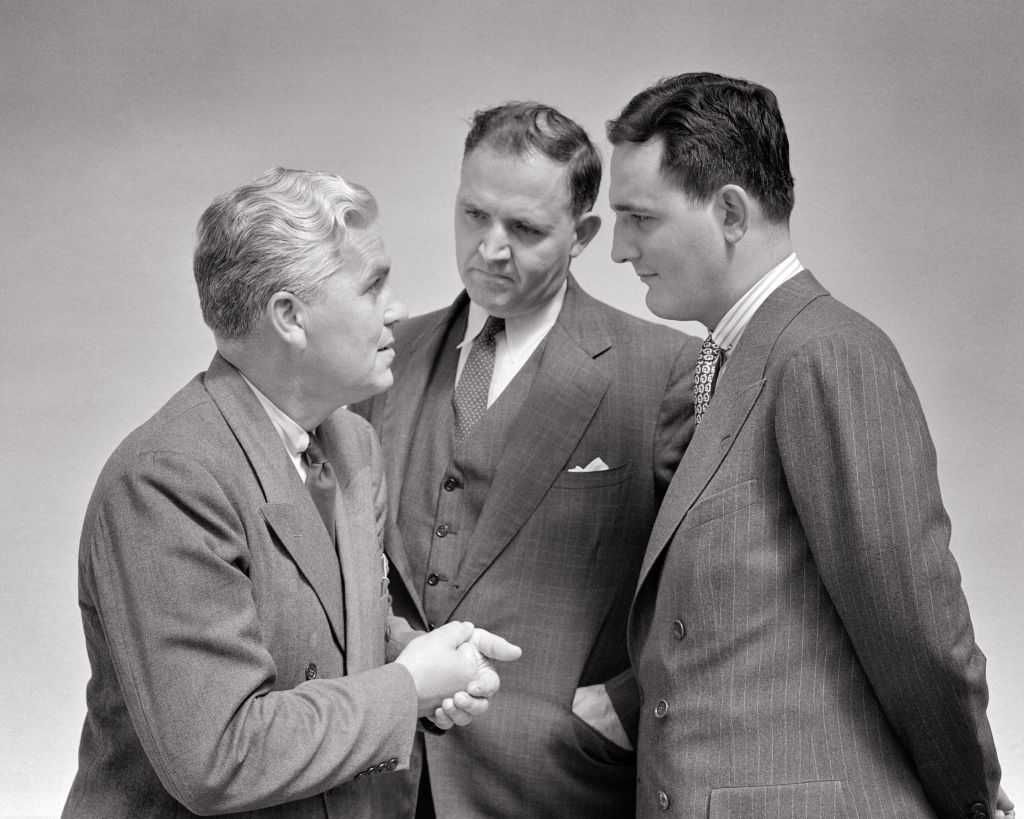


Years ago, my wife and I walked into a Nashville restaurant and found every waiting bench occupied. Young men took up many of the seats.

Gracie was using two canes. Her prosthetic legs were clearly visible. The young men appeared oblivious.

If our manners depend on applause, we have more learning to do ourselves.

“Which of you is going to offer her your seat?” I asked pointedly. Embarrassed, they all jumped up. They recognized what the moment required once someone brought it to their attention. Embarrassment can be a good teacher.

But boys shouldn’t have to wait for a stranger in a restaurant to teach them consideration. Men can teach those lessons much earlier, often through gestures so ordinary that a boy absorbs them before he understands their meaning. Removing a hat is one of them.

In 1 Corinthians 11:4, Paul addresses men praying with their heads covered. For generations, Christian men removed their hats during prayer and in church. Women followed a different tradition, rooted in the same passage. A woman’s Sunday hat and her husband’s uncovered head could both express reverence.

Military and civilian customs also made uncovering a gesture of respect. In 1745, the Coldstream Guards instructed soldiers to salute by bringing their hands to their hats and bowing rather than removing them, helping shape the modern hand salute. The Emily Post Institute still advises men to uncover during worship, meals, and the national anthem.

I learned the gesture before I learned the history. My father wore a Navy captain’s cap adorned with an eagle. When he entered a building, he removed it and cradled it in his hand. He didn’t announce that he was demonstrating respect. I just watched him do it.

I’ve seen men remove their hats as funeral processions passed, honoring people whose names they didn’t know. At gravesides, they stood bareheaded beside grieving families. They didn’t need an introduction to recognize someone else’s sorrow.

From my usual perch at the church piano, I’ve watched younger men arrive for worship or funerals with their hats still on. Some may dismiss the custom. Others may never have been taught.

In a country arguing over what a woman is, perhaps we ought to spend some time teaching boys what a man is. Particularly a gentleman.

RELATED: Before pride drives the tractor through the fence

Peter Rosenberger

Holding a door for a woman is another place to start. Any door. Most women respond graciously. Occasionally, one responds derisively or remains absorbed in her phone. Hold it anyway. Her response needn’t dictate your manners.

My father expected that courtesy of me. If our manners depend on applause, we have more learning to do ourselves.

I taught my sons to stand when a woman leaves or returns to the table and to help seat her. When I extend my hand for a handshake, I remove my glove. Even in a Montana winter, though I try to keep the introductions brief.

One of my sons told me how sad he finds it that so many in his generation, and the one following, struggle with basic introductions: shaking a hand, looking someone in the eye, and speaking clearly. Those moments can open a friendship, begin a job interview, or help someone feel welcome. Boys need men willing to practice with them.

Why do these things? Because consideration ought to require something of us. We rise from a comfortable chair. We pause to hold a door. We expose a hand to the cold to greet someone properly. We recognize that “Yeah” is a poor replacement for “Yes, sir” or “Yes, ma’am.”

Sometimes we surrender a restaurant bench to a woman standing on prosthetic legs.

RELATED: What Montana taught this Southern storyteller about shutting up

Karla Ann Cote/NurPhoto/Getty Images

Some boys have no father at home. Some grown men never had one to teach them either. Grandfathers, uncles, pastors, coaches, and neighbors can pass along what someone once taught them. When necessary, a stranger can speak up too.

Keeping males out of women’s sports is only part of the work. Being male doesn’t automatically make someone a gentleman. We have to teach boys what mature manhood requires, and expect it of grown men: consideration, restraint, and a willingness to put someone else’s needs ahead of our own.

Those lessons take shape in small gestures, repeated until they become habits. A seat offered. A door held. A hat removed.

After moving to Montana, we attended our first rodeo in the community. The announcer asked the men to remove their hats. As I remember it, he called them “lids.”

The invocation echoed through the stands, and we remained standing for the national anthem. Beyond the grounds rose the purple, snowcapped Rockies. A woman on horseback carried the American flag as the crowd joined in singing. Cowboy hats and a few ball caps rested over hearts.

That rodeo reminded me these values are still being taught. A little boy stood in boots and jeans with his cowboy hat over his heart. Someone had taught him. Around him stood men modeling the same lesson.

Sometimes the way back is paying attention to the small things.

​Young men are being left behind


From a young age, we ask kids what they want to be when they grow up. Firefighter, doctor, president, mechanic, astronaut, teacher, actor — the list goes on.

Dreams shift as children discover their gifts, what they enjoy, and where the two overlap. The kid who wanted to be a doctor might change his mind after finding out he can design spaceships and likes math better than anatomy.

What discoveries, studies, and breakthroughs are missing from academia simply because the men who would have made them were unfairly denied the opportunity?

Allowing people to follow their dreams has always been an American aspiration and part of what makes our country exceptional. Yet today, one group of Americans — young men — is at risk of being shut out from their dreams, largely through no fault of their own.

Mountains of evidence show that our education system and economy are increasingly leaving boys and men behind. This is a national crisis our political leaders must urgently acknowledge and address.

For Exhibit A, simply look at the last 50 years of wage trends. Although earnings for women have steadily increased, nearly doubling in the last half-century, men’s wages have remained largely stagnant. Indeed, while the inflation-adjusted median full-time wage for women has grown by $21,750 since 1976, it has increased for men by only $7,570.

But it gets worse. In August, 98% of U.S. job growth went to women according to government statistics. While female employment has grown by 870,000 since last year, male employment has contracted by 1.5 million. Roughly one-third of men are not participating in the labor force, including over half of young men ages 16-24.

The same trend is happening in college participation. In the mid-1990s, American men and women ages 25-34 were equally likely to have completed college, but the gap has ballooned since then. Today, about 47% of young women have a bachelor’s degree compared to 37% of young men. Women make up about 55% of U.S. undergraduate enrollment, while men account for 40% (with the remaining 5% being unknown or unreported).

Male education and workforce success directly impact family formation. Women are more likely to marry a man with a steady income, and men are more likely to want to work if they have something to work toward. But couples are told to wait until they have financial stability before having kids, a goal that is increasingly difficult to reach, leading them to have fewer children.

And while feminists may cheer the number of women in the 9-to-5 work world, it has not come without a cost. As many observers (including Elizabeth Warren before she entered politics) have pointed out, more mothers entering the workforce has made households increasingly reliant on both parents working to stay afloat, creating a “two-income trap.” It is financially unfeasible for many women to stay home with their children, even when they want to.

Many factors have led us to the current status quo. American industrial and trade policy over the last half-century has shipped many blue-collar jobs overseas while driving down wages for those who remain. Economic policy influenced by feminism has convinced many women to invest in careers rather than family. But we should not overlook another important driver of young men’s present disadvantage: the rapid proliferation of DEI across society.

RELATED: The global meritocracy myth sells Americans’ inheritance cheap

Blaze Media Illustration

Jacob Savage’s essay in Compact magazine last December highlighted the devastating impact of the DEI regime on young men. Fittingly titled “The Lost Generation,” Savage chronicled how Millennial and Gen Z men over the last 10 to 15 years have found themselves chained to the same job, or without one entirely, while less qualified but more “diverse” employees rise in the ranks. This practice has run rampant across numerous industries — entertainment, academia, the medical field — with untold casualties.

What film masterpieces did we miss by passing over a promising writer for a more diverse candidate? What medical breakthroughs did we forgo to reach a quota? What discoveries, studies, and breakthroughs are missing from academia simply because the men who would have made them were unfairly denied the opportunity?

Fortunately, DEI has been in retreat lately, thanks in large part to the Trump administration’s crackdown. DEI has also declined in popularity in the workforce, though it still boasts majority support amid widespread ignorance about its true consequences. Even so, DEI remains a powerful force that could regain greater influence if political conditions become more favorable.

Meanwhile, young men continue to suffer. A recent Institute for Family Studies survey found that about half of men ages 18-29 now see the American dream as out of reach. Many have retreated into destructive pastimes such as pornography and gambling, while suicide rates have risen to record highs. The statistics are grim in every direction.

So where does this leave us?

Our young men are still dreaming as they did when they were little boys, but they are being forced to acknowledge that hard work may not be enough to achieve those dreams. In America especially — the country founded on the ability to get ahead and create something spectacular — this is a reality we should not tolerate.

The situation young men face is an issue lawmakers can no longer afford to ignore. We need an economy where men’s skills and contributions are valued and appropriately compensated. We also need to make it possible for a family to raise children on one income. There is no easy fix for these problems. It will necessarily involve a myriad of approaches, from fully eliminating DEI to bringing back blue-collar work and stabilizing our broken dollar, whose debasement undergirds so much of Americans’ current struggles.

To save the American dream from today’s threats, we must tackle this challenge. We owe it to the next generation of boys who still dare to dream.

Editor’s note: This article was originally published in the American Mind.

3 males — ages 8, 11, 12 — steal car, crash into house; driver, 11, says he learned how to steal cars from YouTube: Cops


Three males — ages 8, 11, 12 — were arrested Saturday after stealing a car, leading cops on a chase, and crashing into a home, police in Newburgh Heights, Ohio, told Blaze News. Newburgh Heights is about 12 minutes southeast of Cleveland.

Police said officers received an alert just before 3 p.m. from its Flock Safety license plate readers about a stolen car driving westbound on Harvard Avenue around East 54th Street.

The 11-year-old stated that 'something just came over his body, and he could not control it, he needed to take the car,' police said.

A Newburgh Heights officer spotted the vehicle and attempted a traffic stop, but the driver fled from officers, police said.

The vehicle crashed into a home where three juveniles fled on foot, police said.

RELATED: After HS hallway bump, Florida 15-year-old to be tried as an adult for allegedly shooting 16-year-old dead

Image source: Newburgh Heights (Ohio) Police

Officers quickly apprehended the occupants of the car and discovered that they were ages 8, 11, and 12, police said, adding that officers later determined the 11-year-old was the driver.

Police bodycam video shows the arresting officer drawing his gun on the 8-year-old and the 11-year-old males, who were cowering against a fence, and ordering them on their stomachs. One can be heard whimpering.

RELATED: 11-year-old arrested for alleged 'kill list' at Florida school — just 2 weeks after similar incident in same school

Image source: Newburgh Heights (Ohio) Police bodycam video screenshot

Soon the 12-year-old is seen approaching the officer, who orders him on the ground as well.

RELATED: Males — ages 11, 13, and 15 — took video of themselves in car purposely hitting 63-year-old bike rider who was killed: Cops

Image source: Newburgh Heights (Ohio) Police bodycam video screenshot

One of the males can be heard moaning that "I'm going to jail!" and "I'm sorry!"

As other officers arrive, one can be heard saying, "You should've thought about that before you got in the car." He added, "And you suck at driving." All three were placed in handcuffs.

The 12-year-old — who was wearing a gray hoodie adorned ironically with the words "Essentials: Fear of God" on the back — appeared to giggle and tell another male that "you gotta laugh."

RELATED: Cops arrest 6 children — ages just 11 to 14 — after 3 armed robberies, 2 crashes on interstate highway

Image source: Newburgh Heights (Ohio) Police bodycam video screenshot

An officer yanked him away from the fence and said, "Real funny, ain't it." He replied, "No, ma'am."

Police said they were seeking the following charges against the 11-year-old driver: failure to comply with order or signal of police officer and receiving stolen property. Police said they were seeking the following charges against the 8-year-old and 12-year-old: obstructing official business and receiving stolen property.

RELATED: 4 more girls — just 11 to 14 years old — arrested for beating woman in DC; all 6 suspects now charged with hate crimes: Cops

According to police, the juveniles stated they went to a store and saw "this car sitting there." The 11-year-old stated that "something just came over his body, and he could not control it, he needed to take the car," police said.

The 11-year-old said he and the 12-year-old "knew how to steal a car" from YouTube, police said.

RELATED: Gut-wrenching video shows thugs beating up crying boy, 12, even pulling off his pants; 5 charged — all age 13 or younger

Image source: Newburgh Heights (Ohio) Police

"All three boys stated that they know right from wrong and admitted what they did was wrong," police said. "While in our custody, they were concerned about how this would affect Santa coming to bring them presents."

Police added that at one point, one of the juveniles said "he knew because of what they did he was going to get coal for Christmas."

The juveniles were released to their parents pending the filing of criminal charges in juvenile court, police said.

Like Blaze News? Bypass the censors, sign up for our newsletters, and get stories like this direct to your inbox. Sign up here!

Schools made boys the villain. The internet gave them a hero.


After Nick Fuentes catapulted into the spotlight following his appearance on “The Tucker Carlson Show,” Americans faced an unwelcome reckoning: Who is this person, what are “Groypers,” and is he really so revered by young boys and men?

The media frenzy produced predictable reactions. Republicans insisted he doesn’t represent them. Democrats blamed Donald Trump and “fascism.” Reporters rushed to diagnose “extremism” in young men. Everyone condemned the boys who followed him. Almost no one asked what made those boys susceptible to Fuentes’ content in the first place.

In today’s school culture, behaving and learning like a boy are treated as failure.

We labeled these boys racist, anti-Semitic, and homophobic without ever considering how we got here. It is easier to scold than to understand. But when it comes to Gen Z and social media-saturated boys, we default to quick, reductive narratives that ignore the larger picture.

Here is the real crux of the issue: If you ignore boys’ needs in school, the red-pill internet is more than happy to fill that void.

One father of an 11-year-old boy went viral after describing what he saw at his son’s elementary school band orientation night. “I despise the Groyper movement,” he wrote, “… [but] as the night went on it became obvious to me why young men rage against the larger social system.”

He described classrooms covered in DEI messaging, trans Pride flags, and “basically ever[y] sort of race and gender social justice messaging you can imagine.” He also noted the political commentary from teachers and the strict behavioral expectations placed on boys throughout the school day.

He shared two points that reflect what millions of boys experience today: “The boys are treated almost as though they are defective girls,” he wrote. His son even came home excited because he had seen a male teacher at school.

That is the reality for boys across the country. Thousands of families report a growing feminization of schools that leaves boys bored and disengaged. As author Richard Reeves put it on “On Point,” many parents feel their sons are square pegs being forced into round holes.

Boys just aren’t engaged. I wonder why?

But it isn’t just boys. The ongoing assault on male teachers — and their resulting exodus from the school system — leaves boys without anyone to look up to.

Scott Yenor captured what is happening in a recent article for the Federalist. “Today’s schools emphasize belonging and nurturing at the expense of objective standards,” he wrote. Turning in work on time is no longer imperative; loose grading is expected; schools are now run by inclusivity and "gentle parenting."

Yenor ends with a pointed observation: “Men should be given enough credit to know where they are not wanted.”

With schools shifting ideologically and male teachers disappearing, boys lose crucial role models. Research shows male teachers — especially in elementary and middle school — boost test scores, engagement, and behavior. Young boys, particularly those from unstable backgrounds, rely on male teachers for support they cannot get elsewhere.

The effects on boys who are “treated like malfunctioning girls” go far beyond academics. Boys are falling behind both emotionally and developmentally. They read at lower levels, enter kindergarten less prepared, and take on fewer leadership roles.

In today’s school culture, behaving and learning like a boy are treated as failure.

RELATED: America’s new lost generation is looking for home — and finding the wrong ones

Olga Yastremska via iStock/Getty Images

So the internet, in all its damaged glory, fills the void. As Rolling Stone’s Eli Thompson observed, Fuentes’ content once popped up on Instagram occasionally, but now his voice is everywhere for teenage boys.

“But even when he makes comments they see as fringe, it boosts his popularity because he’s edgy and willing to say whatever comes to his mind,” Thompson noted. “That has become his perfect recipe to get young male fans.”

Thompson identifies a hard truth: It is not the extremist content that hooks them. Boys don’t necessarily identify with what is being said. They identify with being identified.

Does Nick Fuentes promote views we wouldn’t want spreading in a democratic society? Certainly. Is he anti-Semitic, racist, and everything we don’t want boys absorbing? Yes. Boys do need better media literacy so that they aren’t enthralled by money-driven influencers like him.

But none of that changes the basic reality: In times of isolation, boys look for connection.

What can schools do to keep boys from turning to Nick Fuentes? Stop ignoring them. Bring back male teachers. Use instructional methods that recognize the strengths of both boys and girls. Pair boys with strong adult male mentors who teach them to channel their strengths, not suppress them. And when inviting guest speakers, bring in men who model discipline, purpose, and genuine success.

Boys aren’t broken. They’re ignored. Fix that, and the red-pill internet — and Nick Fuentes — lose their grip.

Kids Don’t Just Need A Father Figure. They Need A Dad

America’s children need both fathers and dads in their lives to grow up strong and healthy.

Support School Choice To Save America’s Lost Boys

An Urban Institute study reports significant benefits for male students who participated in EdChoice, Ohio’s school choice voucher program.

CO Christian Camp Risks Losing License For Not Letting Trans-Identifying Boys Bunk With Girls

Christian camp IdRaHaJe in Colorado refuses to comply with progressive gender ideology policies and faces potential shutdown.

This isn’t just baseball — it’s a rebellion in cowhide


May 31, 1997. I was 9 years old and had just hit my first home run for Tampa Bay Little League. After the game, a parent handed me the ball, and I wrote the date on it. Today, that ball still rests on a shelf in my den — a small monument to childhood and a boyhood milestone.

Last week, my 7-year-old son earned the game ball after his own baseball game. He plays in the same league and on the same field where I hit that home run. Naturally, I placed his ball right next to mine.

After our last game, my fellow coaches and I said what we all knew to be true: We’re not just teaching a sport. We’re raising boys into men — through baseball.

As I set his ball on the shelf, I picked mine up. The handwriting made me laugh — so innocent, with a crossed-out word where I had misspelled something. Suddenly, the memories came rushing back: the smell of the concession stand, the taste of my glove laces from chewing them in the outfield, and the voice of that one dad in the bleachers who never liked an umpire.

Then, something else caught my attention. The two baseballs, separated by 32 years, looked exactly the same. Same color. Same stitching. Same weight. Indistinguishable.

For a few minutes, I just stood there, staring at the two baseballs. In that quiet moment, something struck me: In a world where nearly everything feels up for grabs — values, definitions, identities, expectations, even truth — a baseball almost feels like an act of rebellion.

In a culture obsessed with chasing the next big thing, those two identical balls offered a much-needed reminder: Not everything needs to be reinvented or improved. Some things are worth preserving.

If you’re familiar with my work, you know I take pride in celebrating the things that never go out of style — faith, family, and freedom. I cast shade on what’s trendy and shine a bright light on what’s true, good, and beautiful. When the world wobbles, these values steady the ground beneath us. They hold together not just our personal lives but the country itself.

And let’s be honest. The world feels very wobbly right now.

RELATED: ‘The Man in the Arena’ wears red, white, blue — and wins

Photo by Hunter Martin/Getty Images

Our institutions keep demanding that we reconsider basic truths: that men can become women, that state ideology trumps parental authority, that patriotism poses a threat, that faith offends, and that masculinity is somehow toxic.

Every tradition gets questioned. Every boundary, blurred. Every norm, up for debate.

And yet — there sits the baseball. Quiet. Unchanged. Still exactly where I left it.

That’s not an accident. It points to something deeper, something God has written into the human heart: a longing for the eternal. For stability. For order. For truth that doesn’t shift with the culture.

When I coach my son on the same diamond I played on as a boy, I don’t think about preparing him for the chaos of the world. My job is to anchor him in the things that aren’t chaotic. After our last game, my fellow coaches and I said what we all knew to be true: We’re not just teaching a sport. We’re raising boys into men — through baseball.

We’re teaching them that manhood isn’t a moving target. That marriage is a covenant, not a contract. That freedom comes with responsibility.

Tradition isn’t something to escape. It’s something to inherit, to steward, and to pass on. That’s what fatherhood demands. It’s what citizenship requires. It’s what faith commands.

Despite what modern culture preaches, tradition isn’t about control — it’s about continuity. It’s the through line that links generations, so we don’t get swept away by every cultural trend. Headlines change. They don’t define you.

You’re defined by how you love your family; how you serve your neighbors; how you show up when it’s inconvenient; how you choose courage when convenience would be easier; how you pray when no one’s watching; how you toss the ball around with your kid in the backyard.

The stitching on that baseball never changed; neither did the role of a father; neither did the moral clarity of the gospel; neither did the beauty of a shared meal or the dignity of honest work.

It’s time we return to those things.

In a culture obsessed with change, maybe the wiser path is to focus on what doesn’t. Maybe the real challenge isn’t keeping up with the world — it’s keeping faith with the people and principles that mattered before the world got so loud.

In 1776, North Carolina’s constitution echoed that truth. American founder George Mason wrote, “A frequent recurrence to fundamental principles is absolutely necessary to preserve the blessing of liberty.”

That baseball on the shelf hasn’t changed — neither have the things that matter most.

And I’m holding on tight.

Shocking video: Boys, just 7 and 9 years old, wrestle for loaded gun — and 1 points it at deputies during tense standoff


Newly released video shows two young boys engaging New Mexico deputies in an armed standoff.

The boys, ages 7 and 9, both handled a loaded handgun — and one of them even pointed it at Bernalillo County Sheriff’s Office deputies on Feb. 16

'We know where the children learned the behavior from, and that is being addressed as well.'

The two young boys, seen in the video dressed in "Minecraft" and "Star Wars"-themed pajamas, are standing next to an air-conditioning unit while handling a loaded handgun.

During the nearly seven-minute video, the boys are seen struggling with each other to take control of the gun.

Image source: Bernalillo County (N.M.) Sheriff’s Office

A female voice is heard saying in the drone video, "Put it down, baby. Put it down, babe."

A deputy tells the children, "Just throw it on the ground, bud. Come talk to us. You're not in trouble."

After more than five minutes into the standoff, police fired a warning shot — a non-lethal projectile — near the children, and the boy holding the gun immediately pointed it at officers.

Image source: Bernalillo County (N.M.) Sheriff’s Office

Deputies scream in unison, "Drop it! Drop it!"

The boy who was not holding the gun put his hand up and hid behind the air-conditioning unit.

Police fired another warning shot.

As both boys took cover between the air conditioning unit and a house, a deputy rushed toward the children and wrestled the gun away from the boy, after which other deputies converged on the scene and took the pair into custody.

Image source: Bernalillo County (N.M.) Sheriff’s Office

Image source: Bernalillo County (N.M.) Sheriff’s Office

The sheriff’s office said in a statement, "Utilizing BCSO’s drone program, deputies were able to monitor the situation in real-time, providing critical updates and enhancing situational awareness. This technology allowed deputies to secure the area swiftly and safely, ultimately preventing a potential deadly force encounter with the juveniles."

Bernalillo County Sheriff John Allen stated, "I will tell, if it was not for our drone program, we would have probably went in there a little bit more blind and been into a deadly force confrontation pretty quick, and as you can imagine, it would have not gone well with us killing and shooting a 7- and 9-year-old."

Police said the drone program has been "instrumental in providing deputies with additional tools to manage diverse and high-risk situations."

Sheriff Allen said, "This case illustrates the complex intersection of juvenile crime, mental health, and public safety. We are taking important steps to close service gaps and expand our ability to work with juveniles involved in firearms or violent crimes."

Allen added that his department previously had been called to the home at least 50 times due to issues with the boys and their family, according to the Albuquerque Journal.

Allen did note that if the boys were several years older, the department would 'probably be speaking differently and doing it the reverse route.'

BCSO Behavioral Health Unit Clinical Manager Michael Lucero said members of the unit immediately went to the boys' home to assist the family with "numerous issues they’re experiencing" and conducted psychiatric evaluations of the children.

Lucero said the unit is working on getting help for the children and the parent who reportedly has an extensive history of trauma.

The family’s case agent, Danielle Smith, told KRQE-TV, "I don’t know how much I’m able to say, so I’m just gonna leave it very vague, but we know where the children learned the behavior from, and that is being addressed as well."

BCSO Deputy Deanna Aragon said the boys were not arrested, and no charges were filed against the children. She noted that the children have not been removed from the home.

Law enforcement did not divulge where the boys got the gun but said the firearm was seized after the standoff.

Sheriff Allen said the boys “were taught how to use the firearm.”

Police said the case is still under investigation, and the parents could face charges.

“We’re dealing with a 7- and 9-year-old, so now we’re looking at the adult side, how they had the firearm, are they gonna be charged with the Bennie Hargrove law, we’re looking into all of that,” Allen stated.

The Bennie Hargrove law holds adults criminally liable for negligently allowing minors access to firearms.

Allen also pushed back against critics who called for the arrest of the young boys.

"Children are our future, and we know one side is going to say, ‘Lock them in jail.’ They’re 7 and 9 years old. I told you before, numerous times in numerous interviews, that I understand the frontal lobe,” Allen said, referring to children's incomplete brain development.

Allen added, “Arresting people isn’t the only way out of this crisis of juvenile crime. ... You have to look at it from a bunch of different avenues and use the resources you have, and then criminal elements can come later.”

Allen did note that if the boys were several years older, the department would "probably be speaking differently and doing it the reverse route."

Like Blaze News? Bypass the censors, sign up for our newsletters, and get stories like this direct to your inbox. Sign up!

Scientists: Doctors Give Kids ADHD Drugs For Adults’ Convenience

Clearly, schools are a bad environment for a heck of a lot of little boys, if one-quarter have to be medicated just to go there.