Idaho is deep red. So why do leftist bureaucrats still run the show?


Idaho votes like a conservative juggernaut. Republicans hold the governor’s mansion, both legislative chambers, and every statewide office. Yet the administrative state still runs on autopilot, and progressives who never win at the ballot box keep their hands on levers of power.

Last week delivered a clean example. Estella Zamora, the 72-year-old vice president of the Idaho Human Rights Commission, lost her seat after Gov. Brad Little withdrew her reappointment. Progressive activists erupted. The press corps dutifully framed it as a purge. But the real scandal sits one step earlier: Little’s office initially recommended her for another term, as if nobody bothered to look.

President Trump’s ‘drain the swamp’ mandate doesn’t end at Maryland and Virginia’s borders. It reaches every state capital where permanent bureaucrats ignore the electorate.

That rubber-stamp culture explains how red-state voters keep getting blue-state governance.

Zamora held influence for more than three decades. She didn’t win it from voters. She inherited it from the system. A Democratic governor appointed her in the 1990s. Republican administrations kept renewing her anyway, term after term, until she became another “untouchable” fixture inside Idaho’s bureaucracy.

Only public pressure forced movement. Conservative activists and outlets like the Gem State Chronicle, along with our own program, Idaho Signal, highlighted Zamora’s political activism online. She appeared before the Senate State Affairs Committee on Jan. 28 as part of the reappointment process. Lawmakers asked questions. The public noticed. Little reversed course a few days later.

Little made the right call in the end. The process that led to the near-miss should worry every Idaho voter.

Zamora didn’t simply hold personal opinions. She couldn’t resist using her public platform to attack Immigration and Customs Enforcement, an agency charged with enforcing federal immigration law. Her posts pushed anti-ICE propaganda, circulated protest material, and condemned enforcement operations as “harmful.” She aligned herself with the activist line that treats border enforcement as a moral offense.

Idaho doesn’t need every commissioner to share the governor’s politics. Idaho does need commissioners who can credibly carry out their duties without turning a state post into a political megaphone. A human rights commission depends on public confidence. Activism that signals contempt for lawful enforcement undermines that confidence.

This isn’t a free-speech dispute. Zamora can say whatever she wants as a private citizen. Voters can judge it. Officials must still decide whether that behavior fits a role that demands impartiality and restraint.

Progressives are already shouting “censorship” and “partisan purge.” They’re portraying Zamora as some saintly Latina icon victimized for speaking out. That rhetoric flips the facts. Nobody owes a lifetime appointment to someone who campaigns against the policies Idaho voters repeatedly choose in overwhelming numbers at the ballot box. Public service carries conditions. When the public loses trust, leaders should act.

RELATED: Trump’s primary endorsements are sabotaging his own agenda

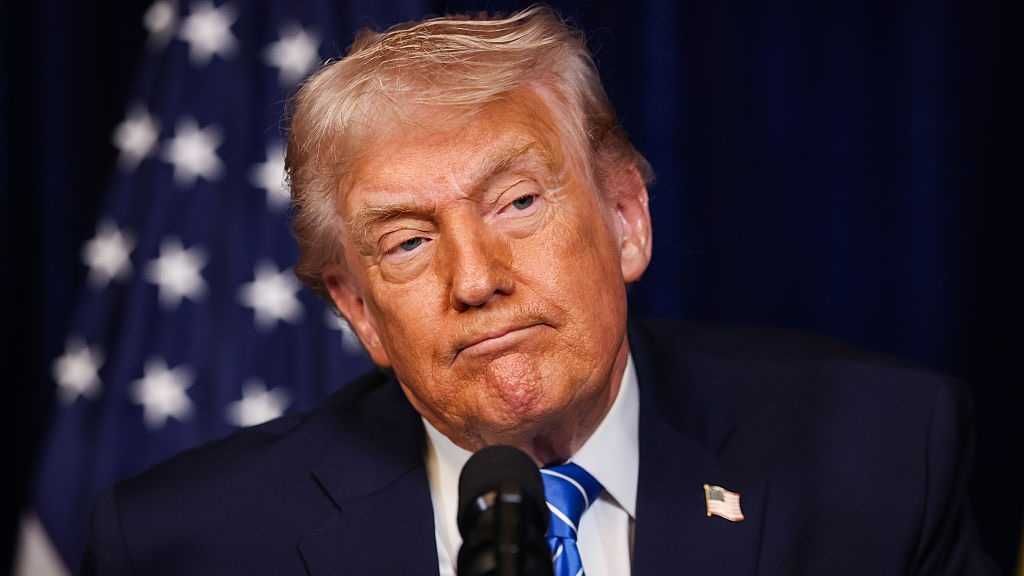
Photo by JIM WATSON/AFP via Getty Images
The greater lesson extends beyond Zamora.

Idaho’s bureaucracy keeps reappointing the same figures because too many Republican offices treat commissions and boards as background noise. Staffers recycle names. Vetting becomes procedural. Appointments become habit. Progressives understand this weakness, so they play the long game: They entrench themselves in institutions that outlast elections.

That pattern repeats across the country. Red states elect Republican leaders. Agencies keep advancing progressive priorities through regulation, enforcement discretion, and institutional culture. The left loses elections and wins governance anyway.

Republican governors and legislators can’t keep solving this problem only after activists force their hand. They should audit commissions and boards, review reappointments with real scrutiny, and replace partisan operatives with people who respect the mission and the law without bias and without apology.

President Trump’s “drain the swamp” mandate doesn’t end at the Maryland and Virginia borders. It reaches every state capital where permanent bureaucrats ignore the electorate and treat public posts as ideological turf.

Idaho voters spoke loudly. The administrative state had better listen because we’re just getting started.

Six questions Trump and conservatives can no longer dodge in ’26


For conservatives, January 2025 felt like an auspicious moment to be alive. Donald Trump sat atop the world with a bully pulpit larger than any media outlet and the power to drive virtually any narrative he chose. Yet instead of using that power, we spent the year arguing over the power the GOP supposedly lacked.

Almost no legislation was passed. Many of the most transformational policies Trump enacted through executive action now sit mired in the courts.

Where is our Mamdani?

Fast-forward to January 2026. The economy looks grim. Democrats are crushing Republicans in special elections. It feels like a different universe.

Republicans tend to operate on a familiar two-year cycle. After a victory, the first year involves explaining why campaign promises cannot be fulfilled. The second year, ending in November elections, turns into defensive posturing: As disappointed as voters may be, they must remember that Democrats represent instant political death.

The implication stays constant. Voters must dutifully back the GOP, ignore the fact that Republicans currently hold power, and politely bypass the primary process out of fear of weakening resistance to Democrats.

As we enter the new year, we have reached the “rally around the GOP to stop the Democrats” phase of the cycle once again.

But reality intrudes. No matter how faithfully the base rallies, Republicans will likely lose in November because of the economy. Absent a dramatic national reset, Democrats will retake the House, probably with a substantial majority.

That makes the present moment decisive. With trifecta control still intact for now, Republicans must use what power they have to improve daily life, enact changes harder to undo, and reinforce red-state America so the coming blue wave does not obliterate the remaining red firewall.

Whether Republicans break free from their familiar cycle of election-failure theater comes down to the answers to these six questions.

1. Will the red firewall hold?

Republicans will likely lose the House and surrender residual power in battleground states such as Georgia and Arizona. Independents have abandoned the GOP, and that trend will accelerate as economic conditions worsen.

The question is whether Republicans will give their voters something worth turning out for. Base turnout alone will not flip purple territory, but it could stop the bleeding deep into red states and keep races such as the Iowa and Ohio governorships out of reach.

This past year made clear that Republicans are losing races they never should have had to defend. A deeper economic downturn would push that line even farther.

2. How toxic do AI data centers become — and will Republicans notice?

By the end of 2025, opposition to data centers surged across ideological lines. Communities worry about water use, power strain, housing values, and secondary effects.

Democrats have begun embracing that resistance as Trump elevates data centers and tech interests as pillars of his economic agenda. Will this issue fracture Republicans’ coalition or even force a break with Trump?

3. What will Republicans do with health care?

Democrats engineered a trap that forces Republicans to address health care, the single largest driver of deficits, inflation, and household pain.

Obamacare made unsubsidized insurance unaffordable for most Americans. Democrats then timed the expiration of expanded subsidies to land on Trump’s watch, ensuring that voters blame him rather than the law’s architects.

Anything Trump does — or refuses to do — will be pinned on him. That reality argues for pushing a genuinely free-market repeal-and-replace that lowers costs. History suggests that outcome remains unlikely. I’m not holding my breath, anyway.

4. Will Trump finally ignore a lawless court?

Could a powerless judge issue a ruling so egregious that it would prompt Trump to defy it at long last?

I am not holding my breath on that one, either.

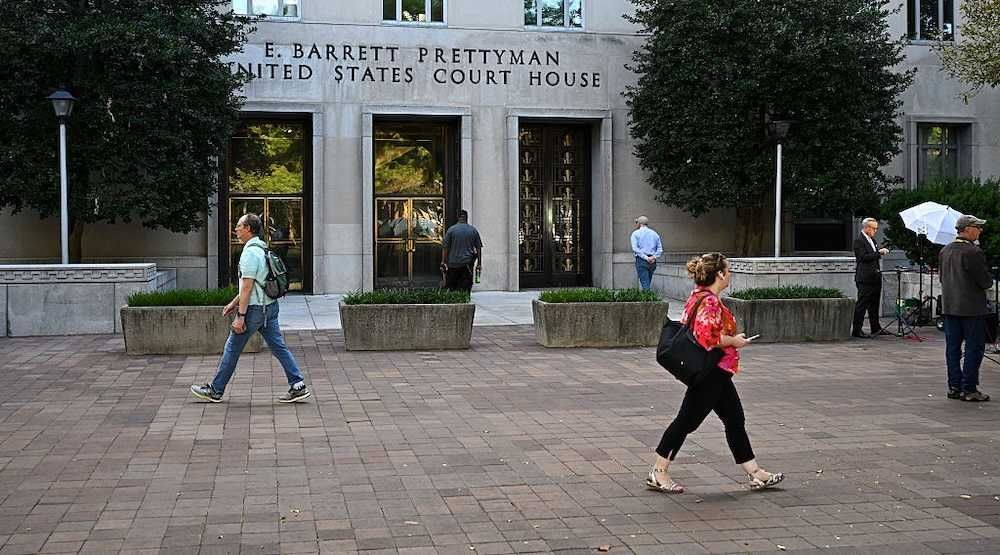
RELATED: The courts are running the country — and Trump is letting it happen

Photo by Graeme Sloan/Bloomberg via Getty Images
5. Will Trump clear the decks on his promises dating back to 2015?

Democrats will likely control one or both chambers for the remainder of Trump’s term. Regardless of strategy, they probably win the midterms.

That means Trump has nothing to lose by executing fully on his original agenda now. Immigration moratoria, judicial reform, welfare devolution, bans on the Council on American-Islamic Relations and Antifa — these changes should be forced through every “must-pass” bill available.

An all-out approach carries policy upside and political clarity.

6. Will Trump stop making bad primary endorsements?

This year’s primaries matter far more than the general election. They will determine whether red states have leaders willing to defend their prerogatives when Democrats reclaim federal power.

If Trump continues endorsing lackluster governors and candidates such as Byron Donalds in Florida, Greg Abbott in Texas, and Brad Little in Idaho, conservatives will have nowhere to retreat when figures like Zohran Mamdani dominate national politics.

RELATED: Trump’s agenda faces a midterm kill switch in 2026

Photo by Amir Hamja-Pool/Getty Images

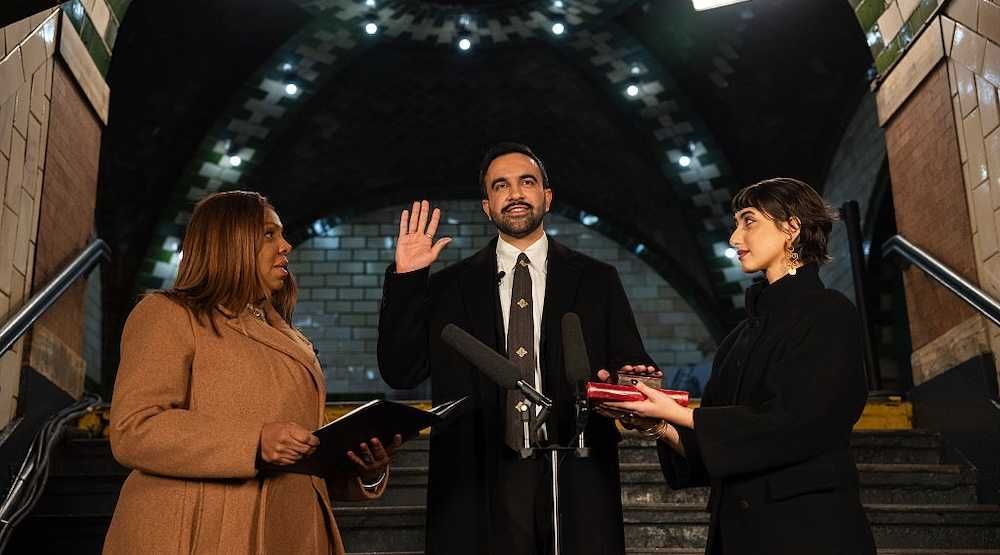
Mamdani’s takeover of New York and his appointment of Ramzi Kassem — a 9/11 al-Qaeda defense lawyer — as chief counsel drew outrage on the right. At his inauguration, Mamdani declared, “We’ll replace the frigidity of rugged individualism with the warmth of collectivism.”

Rather than merely lamenting how Marxists consolidate power in deep-blue America, conservatives should let that example ignite action where they actually govern. If the left can floor the gas pedal in its strongholds, why can’t we?

Where is our Mamdani?

This moment demands urgency. GOP power has become a “use it or lose it” proposition. Trump must finally become the right-wing disruptor his supporters were promised.

If he cannot — or will not — then Republicans deserve to go the way of the Whigs.

Woke Boise mayor tosses Appeal to Heaven flag aside like trash, raises LGBTQ flag in defiance of state law


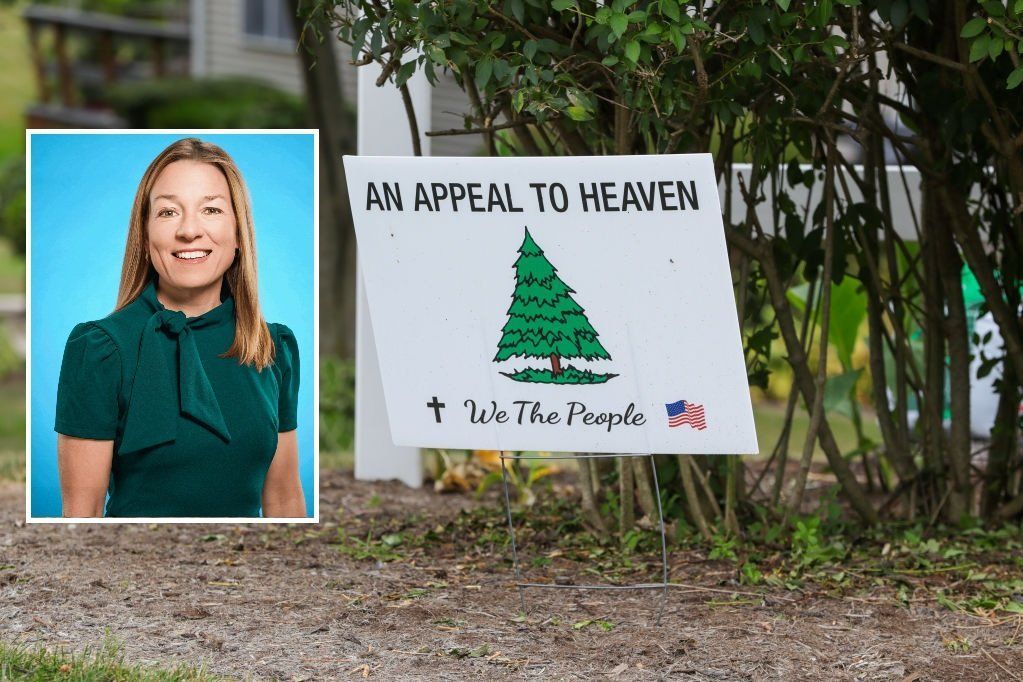
The radical mayor of Boise, Lauren McLean, took time on Easter Sunday to crumple up an Appeal to Heaven flag like trash so she could hoist an LGBTQ flag unobstructed at city hall in direct defiance of a new Idaho law.

Earlier this month, Republican Gov. Brad Little signed into law H.B. 96, which strictly regulates the flags that counties, municipalities, and other governmental entities in Idaho may fly on public property. The law mainly permits only those flags representing the U.S., the military, the state of Idaho, schools, and Indian tribes.

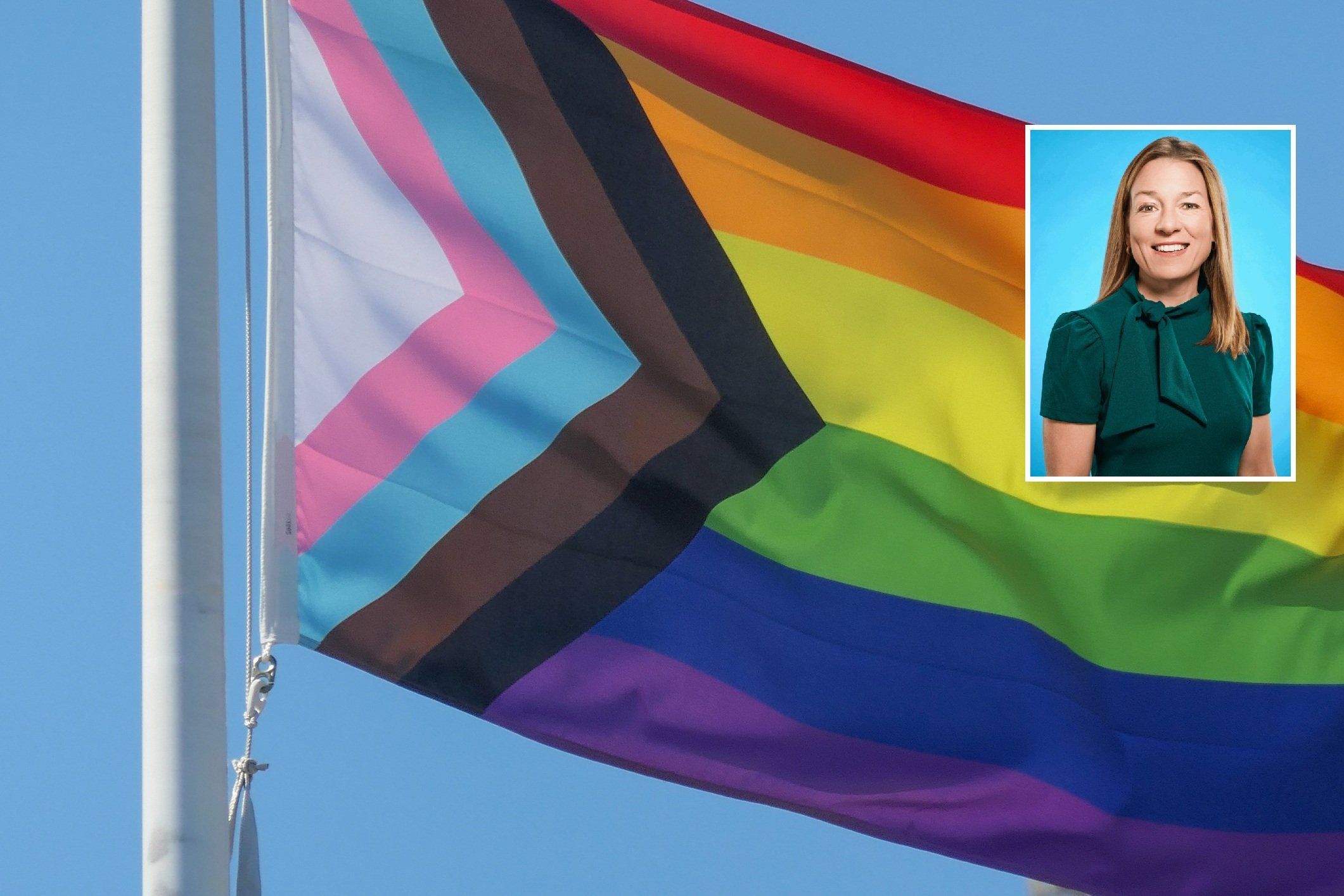
Despite this new law, Boise has continued to fly the "Progressive Pride" flag, depicting the rainbow associated with non-heterosexual identities, the colors affiliated with so-called transgenderism, and black and brown stripes that pay fealty to non-white skin colors.

"We will continue flying it because we are a safe and welcoming city that values all comers," McLean said in a statement.

'Now this is a mayor. We gotta re-elect her. She stands for all the people.'

Early Sunday morning, some area activists attempted to beat McLean at her own game. They brought a ladder, positioned it on the city flagpole, then proceeded to make some changes to the flags blazing there, video showed.

For one thing, the two men placed black trash bags over the Pride flag and a flag promoting organ donation.

They also clipped to the pole an Appeal to Heaven flag made famous during the American Revolution. Because of its official association with the state of Massachusetts, the Appeal to Heaven flag does not violate H.B. 96, the Idaho statesman said.

Later that morning, undeterred by the attempts to bring Boise into compliance with the new state law, Mayor McLean and an assistant went to the flagpole and restored the flags to the way they were.

Far from passively rearranging the flags, McLean took a knife of sorts and cut part of the Appeal to Heaven flag before her assistant finished the job, tearing away the flag and the black bags covering the Pride and organ-donation flags. McLean then balled the flag up into one of the black trash bags and tossed it on the ground like garbage.

Their actions were so politically charged that the Idaho statesman criticized McLean's lack of "respect" for a flag "which has a lot of historical significance for Americans." Yet McLean was so nonchalant about it all that at one point, she paused and wished some passersby a "happy Easter."

Pam Hemphill — a rabid leftist who claims to have previously supported President Donald Trump and the MAGA agenda but who now takes every opportunity to excoriate MAGA and trumpet Democratic talking points — filmed McLean and her assistant and could barely contain her enthusiasm for their woke flag stunt.

"I am so happy. ... This is wonderful," Hemphill gushed.

"Now this is a mayor. We gotta re-elect her. She stands for all the people," Hemphill continued, even as McLean and the assistant basically ignored her.

Hemphill also characterized her detractors as "idiots" and "haters." "All you know is propaganda and hate," she said.

Mayor McLean has managed to flout H.B. 96 so brazenly because the law is basically toothless. Even Ada County Sheriff Matt Clifford, whose office has been bombarded with complaints about the flag mess in Boise, has admitted there's little he can do.

"The law, as it stands, doesn’t provide any enforcement mechanism," Clifford said in a statement posted to social media.

Clifford further noted that criminal laws generally "apply to individuals, not institutions," but H.B. 96 applies mainly to local governments and government bodies.

Idaho Attorney General Raul Labrador, a Republican, also acknowledged that "the law does not allow for criminal prosecution in this situation."

"I cannot prosecute conduct that is not a crime, and I will not distort or stretch Idaho law to invent one. What I can do — and am actively doing — is reviewing every available civil legal option under Idaho law in response to this situation," he added.

Like Blaze News? Bypass the censors, sign up for our newsletters, and get stories like this direct to your inbox. Sign up here!

Leftist mayor ignores deep-red state law, flies racial LGBTQ flag


A leftist mayor has opted to defy a new law in her deep-red state by flying a flag that represents the woke racial and sexual agenda.

Less than two weeks ago, Idaho Republican Gov. Brad Little signed into law H.B. 96, which strictly regulates the flags that counties, municipalities, and other governmental entities may fly on public property. Introduced by state Rep. Heather Scott (R-Blanchard), the bill basically restricts public flags to those representing the U.S. and its military, the state of Idaho, local cities, schools, and Indian tribes.

Scott indicated the purpose behind the law was to keep flag-flying from becoming too "political."

"I believe this bill is necessary for government to be neutral and unified and that government buildings should represent all Idahoans and not be used for political movements or social movements," she said, according to KIVI-TV.

The law took effect immediately. However, Lauren McLean, the radical mayor of Boise, does not seem to care.

According to reports from over the weekend, Boise City Hall still flies a flag known as the "Progressive Pride" flag, depicting the rainbow associated with non-heterosexual identities, the colors affiliated with so-called transgenderism, and black and brown stripes that pay fealty to non-white skin colors.

The Idaho Dispatch reported that the flag was momentarily removed, but the mayor's administration raised it again.

McLean indicated in a statement that the sex- and race-based flag represents the inclusiveness of the Boise community. "We will continue flying it because we are a safe and welcoming city that values all comers," she said.

'I never looked at her as a law breaker, but I guess she is.'

McLean also claimed in her statement that flying the Pride flag has been a Boise tradition that dates back almost a decade. "For nearly ten years the city has been flying the Pride flag," she said.

However, keen observers at BoiseDev noticed that the flag that flies over the city currently appears in better condition than the one that flew as recently as February. The colors on the current flag "now appear more vibrant, and a small hole in the flag is no longer present," the outlet reported.

The city did not respond to questions from BoiseDev about whether a new flag had been used.

BoiseDev also noted that McLean and other city leaders quickly abided by another state law, S.B. 1141, that prohibits sleeping in outdoor public places or inside cars, even while they continue to ignore H.B. 96.

The difference may be that S.B. 1141 imposes penalties for noncompliance. Cities that fail to enforce S.B. 1141 can be hit with a $10,000 fine imposed by the state attorney general. Even McLean admitted that she would work with the police department to enforce S.B. 1141 "because we must."

H.B. 96 has no such enforcement mechanism. Still, Scott is shocked by McLean's defiance.

"I just assumed [McLean] would follow the law," Scott told BoiseDev. "It’s interesting that she’s not going to follow the law. I never looked at her as a law breaker, but I guess she is."

In a conversation with KIVI, state Rep. Monica Church, a Democrat who represents a district that includes Boise City Hall, seemed to relish the fact that there is no way to enforce H.B. 96 at the moment. She also views H.B. 96 as "an opportunity for political grandstanding," the outlet added.

Gov. Little and Attorney General Raul Labrador did not respond to a request for comment from the Idaho Dispatch.

Like Blaze News? Bypass the censors, sign up for our newsletters, and get stories like this direct to your inbox. Sign up here!

Idaho Bill Sitting On GOP Governor’s Desk Could Shatter School Vaccine Mandates

The Idaho Freedom Act would prohibit businesses and schools from requiring vaccines for employment or attendance.

Idaho enacts new protections for teachers who don't play the pronoun game — and all the right people are upset


Idaho has enacted new protections for teachers and other public employees who do not use someone's "preferred pronouns."

On Monday, Gov. Brad Little (R) signed H.B. 538 into law. The bill prohibits:

... any governmental entity in the State of Idaho from compelling any public employee or public school student to communicate preferred personal titles and pronouns that do not correspond with the biological sex of the individual seeking to be referred to by such titles or pronouns.

The legislation explains the prohibition is necessary to "ensure that the constitutional right to free speech of every person in the State of Idaho is respected."

Teachers, moreover, are empowered under the law to sue their school district if they are forced to comply with someone's preferred name or pronouns. No student, teacher, or government employee can be disciplined for not using someone's preferred pronouns or for refusing to call someone by a name other than that person's legal name, the law states.

The law takes effect on July 1.

A spokeswoman said Gov. Little signed the Republican-backed bill because he supports policies that advance "free speech and parental rights."

"While Gov. Little expects state employees to treat each other and members of the community with dignity and respect, he does not support government compelling speech at risk of penalty or excluding parents from significant decisions impacting a child’s health and wellbeing," spokeswoman Madison Hardy said.

Progressive organizations, meanwhile, have voiced their opposition to the law.

The American Civil Liberties Union of Idaho claimed the "human cost" of the law is "devastating."

"Transgender people live in and call Idaho home. By creating exclusionary public work and school environments, the state is subjecting them to predictable and dire harm," the organization claimed.

Planned Parenthood said that Gov. Little should be "ashamed" for supporting H.B. 538 and H.B. 421, a bill that would change the legal definition of "sex" in Idaho to "an individual’s biological sex, either male or female."

Mistie DelliCarpini-Tolman, Idaho state director of Planned Parenthood Alliance Advocates, called Little "callous and cruel" for supporting "harmful bills that target LGBTQ+ Idahoans."

"We’re heading in the wrong direction. Our state needs more kindness, compassion, understanding – not permission to discriminate against others," DelliCarpini-Tolman said.

Like Blaze News? Bypass the censors, sign up for our newsletters, and get stories like this direct to your inbox. Sign up here!

Idaho Governor Signed Bill Banning ‘Abortion Trafficking,’ First Of Its Kind

"The provisions of this act are hereby declared to be severable"

Idaho governor signs legislation allowing firing squad executions


Idaho's Governor Brad Little (R) signed legislation Friday allowing execution by firing squad beginning July 1.

"The families of the victims deserve justice for their loved ones and the death penalty is a way to bring them peace," said Gov. Little in a transmittal letter to Idaho's Speaker of the House, Rep. Mike Moyle (R).

"Fulfilling justice can and must be done while minimizing stress on corrections personnel ... For the people on death row, a jury convicted them of their crimes, and they were lawfully sentenced to death."

Idaho's House Bill 186 calls for the director of the Idaho Department of Corrections to determine within five days of a death warrant being issued whether lethal injection is available. available. If lethal injection is available, lethal injection will be used as the method of execution. If the director does not so certify, fails to file the certification, or determines lethal injection is not available, the method of execution shall be firing squad.

In addition, the bill says if a court finds lethal injection to be unconstitutional, the method of execution shall be firing squad.

The legislation applies to all executions carried out on or after July 1.

Pharmaceuticals used to carry out executions by lethal injection have become more challenging to acquire due in part to pharmaceutical companies barring the use of their drugs for that purpose, the Associated Press reported.

The Idaho Department of Corrections estimates the cost to retrofit a death chamber for firing squad executions at about $750,000, CBS News reported.

Idaho became the fifth state to permit execution by firing squad when Gov. Little signed HB 186. Other states allowing the method include Mississippi, Utah, Oklahoma, and South Carolina. South Carolina's law, however, is currently being challenged in court, AP also reported.

Ronnie Gardner, the most recent person to be executed by firing squad in June 2010, chose the method himself, according to the Death Penalty Information Center.

How are executions via firing squad carried out?

TheBlaze cautions readers that the following section contains graphic descriptions of death via firing squad.

The death row inmate sentenced to execution by firing squad is typically first bound to a chair with leather straps across his or her waist and head, DPIC explains. Sandbags surrounding the chair are meant to absorb the blood. The chair is positioned in front of a canvas wall.

A black cloth is pulled over the prisoner's head. A doctor pins a cloth over the target, the prisoner's heart.

A number of shooters either 3 or 5, depending on the state, stand in an enclosure about 20 feet away. Each shooter has a .30 caliber rifle with single rounds. One of the shooters is given blank rounds. In South Carolina, each shooter's rounds are live.

Each shooter aims his or her rifle through a slot in the canvas wall and fires. If the shooter(s) miss the prisoner's heart, the prisoner slowly bleeds to death.

Like Blaze News? Bypass the censors, sign up for our newsletters, and get stories like this direct to your inbox. Sign up here!