DHS Investigating Eric Swalwell Amid Accusations He Illegally Employed Brazilian Nanny
'No employer, including a member of Congress, is above the law'
A Brazilian state deputy put on blackface during a government proceeding in order to protest another member of the federal government.
Fabiana Bolsonaro, a state rep. of the São Paulo State Legislative Assembly, shocked attendees on Wednesday when she applied brown makeup not only to her face, but to her arms as well.
'I want precisely to show that it's useless to put on makeup.'
Now, lawmakers are now calling for the Liberal Party member's removal and have filed an ethics complaint against her, according to Brazilian outlet Folha de S. Paulo.
However, Bolsonaro made it clear during her speech that her reason for putting the makeup on was to protest another member of government. Bolsonaro was protesting the appointment of Erika Hilton as chair of the Chamber of Deputies' Women's Rights Committee because Hilton — born Felipe Santos Silva — is a male who believes he is a woman.
Santos Silva is a federal deputy from Brazil's Socialism and Liberty Party, which holds 14/513 seats in the Chamber of Deputies, equivalent to the U.S. House of Representatives.
During Bolsonaro's speech, the politician explained she was protesting the idea that one can become a woman simply by declaring so.
"I, being a white person who has lived everything that I lived as a white person, now at 32 years old, decide to put on makeup, to dress myself up as a black person, applying makeup and making only the outside appear [black]. ... Have I become black?" she asked, according to a translation.
RELATED: Alleged forced labor scandal rocks EV industry: ‘This is the price of environmentalism’
"Am I black now?" she continued.
Bolsonaro put emphasis on the fact that she could not possibly have experienced what it is like to be black in Brazil simply by putting on makeup.
"I want precisely to show that it's useless to put on makeup. It's useless to pretend something," Bolsonaro added. "I say to you as a woman: I am a woman. It does no good to dress up as a woman. I am not offending any transsexual. Quite the contrary, I am saying that I am a woman."
The liberal also called out the accolades that Hilton has acquired since posing as woman, saying, "The Woman of the Year cannot be a transsexual. ... Someone took her place to put a transsexual there."
RELATED: Megyn Kelly reminds America: Jimmy Kimmel wore blackface — yet she was the one canceled
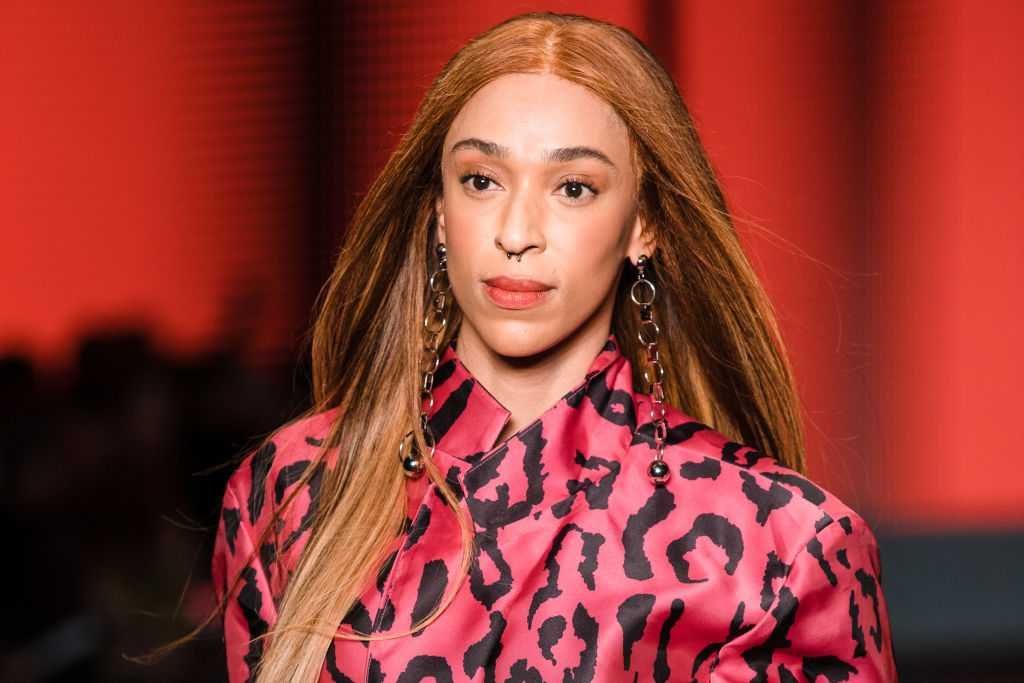
Hilton has been named as Woman of the Year by Marie Claire Brasil, celebrated as a model for Sao Paulo Fashion Week, and given the label of having won the most votes of any woman in Brazil by British Vogue in 2020.
Bolsonaro remained respectful in her comments, however, saying that "transsexuals must be respected," and claimed there is "an increase in the murder of transsexual people."
She concluded, "I don't want any trans person to go through prejudice, murder, or discrimination for being trans. But I also don't want any trans to take my place."
Bolsonaro, who is not related to former Brazilian President Jair Bolsonaro, changed her name in 2022 ahead of elections in support of the president, GB News reported. Her former name was Fabiana Barroso. At the same time, she changed her racial classification from white to mixed-race, the outlet stated.
Since the remarks last week, Hilton has requested electoral authorities to investigate Bolsonaro's change of racial identification, based on Brazilian regulations introduced in 2021 that increased public funding for candidates who are black or female.
Like Blaze News? Bypass the censors, sign up for our newsletters, and get stories like this direct to your inbox. Sign up here!
The cultural powers that be determined long ago that a film needn’t deal directly with the Nativity of our Lord and Savior to qualify as a “Christmas movie.”
Many films apparently qualify simply by virtue of their plot events’ proximity to December 25, their festive backdrops, and their occasional visual reference to Coca-Cola Claus, starred pines, and/or the birth of God.
In a way, the Christmas imagery does visually what the movie’s eponymous theme song does sonically: tease at something lovely and wonderful beyond the nightmare.
Rest assured as the bare-footed cop wastes German terrorists at his estranged wife’s office party; as the two burglars repeatedly fall prey to an abandoned adolescent’s mutilatory traps; and as the inventor’s son unwittingly turns his Chinatown-sourced present into a demon infestation — these are indeed Christmas movies.
Given the genre’s flexible criteria, Terry Gilliam’s 1985 masterpiece “Brazil” also qualifies.
In truth, the Python alumnus’ film about a bureaucrat’s maddening investigation of his totalitarian government’s execution of the wrong man is a far stronger entry than “Die Hard,” “Home Alone,” “Gremlins,” and other such flicks.
Not only is there Christmastime imagery throughout, but such visuals are also of great importance, providing insights both into the treachery of the film’s principal antagonist — the state — as well as into what appears missing in Gilliam’s dystopian world.
In the opening scene, a man pushes a cart full of wrapped presents past a storefront window framed by tinsel and crowded with “Merry Christmas” signage, television sets, and baubles.
Next we enter an apartment where a mother reads “A Christmas Carol” to her daughter, a father wraps a present, and a boy plays at the foot of a well-dressed evergreen.
After numerous scenes featuring gift exchanges, mutterings of “Happy Christmas," and Christmas trees, we meet a kindly faced man dressed as Santa.
This is, however, no feel-good Christmas movie.
The storefront window is firebombed.
Armored police storm into the family’s apartment, jab a rifle in the father’s gut, and take him away in a bag while his wife screams in horror.
The gifts exchanged and piling up throughout the film — besides the offers of job promotions and plastic surgery — appear to all be versions of the same novelty device, a meaningless “executive decision-maker.”
The kindly faced man dressed as Santa is a propaganda-spewing government official who rolls into the protagonist Sam Lowry’s padded cell on a wheelchair to inform Lowry — played by Jonathan Pryce — that his fugitive lover is dead.
With exception to the heart-warming domestic scene interrupted by the totalitarian bureaucracy’s jackboots at the beginning of the film, the Christmas imagery rings hollow and for good reason.
Extra to dehumanizing workplaces, purposefully meaningless work, bureaucratic red tape, and paperwork that’s so bad it ends up killing Robert DeNiro’s character — at least by the tortured protagonist’s account — the regime’s population-control scheme relies on consumerism.
The regime has, accordingly, done its apparent best to empty Christmas of the holy day’s real significance and meaning, donning it as a costume to sell and control.
RELATED: Santa Claus: Innocent Christmas fun or counterfeit Jesus?

“Brazil” is not, however, an anti-Christmas film.
The emptiness of the costume prompts reflection about its proper filling — a reflection that should invariably lead one to Christ.
In a way, the Christmas imagery does visually what the movie’s eponymous theme song does sonically: tease at something lovely and wonderful beyond the nightmare Gilliam once dubbed “Nineteen Eighty-Four-and-a-Half.”
“I had this vision of a radio playing exotic music on a beach covered in coal dust, inspired by a visit to the steel town of Port Talbot. Originally the song I had in mind was Ry Cooder’s 'Maria Elena,' but later I changed it to 'Aquarela do Brasil' by Ary Barroso,” Gilliam told the Guardian.
“The idea of someone in an ugly, despairing place dreaming of something hopeful led to Sam Lowry, trapped in his bureaucratic world, escaping into fantasy.”
Whereas the recurrent theme from the samba references a fantasy the regime can crush, the various indirect reminders that Christmas is about more than presents and half-hearted niceties reference a hidden truth and source of eternal hope: that God was born in Bethlehem.
A single man had near-unending influence over the infrastructure of the largest North American cities.
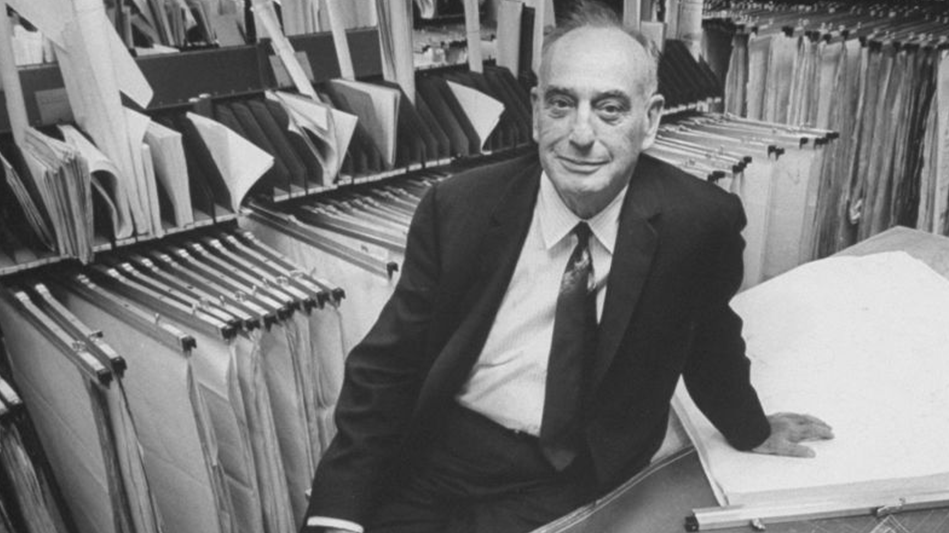
Robert Moses, born in 1888 in New Haven, Connecticut, helped pioneer large-scale urban infrastructure built around cars and commerce. His top-down planning approach later influenced other controlled, master-planned environments, including those created by Walt Disney.
'An extraordinary man who, denied power within the normal framework of the democratic process, stepped outside that framework.'
Moses held many titles during his time in politics and city/park planning, including secretary of state of New York (1927-1929), the first chairman of New York State Council of Parks (1924-1963), and the first commissioner of the New York City Department of Parks and Recreation (1934-1960).
Moses' influence can be seen all over New York City, and he is predominantly responsible for turning a collection of neighborhoods into the common metropolis that most cities appear as today.
It was Moses' idea to run expressways right through the middle of cities to maximize access to commercial zones. He was responsible for infrastructure projects like the Brooklyn-Queens Expressway, the Staten Island Expressway, and the Cross Bronx Expressway. Many bridges that lead into New York City and Manhattan were his doing as well.
FDR Drive, where the United Nations headquarters is located, is also a creation of Moses.
Aside from numerous bridges and expressways, Moses also built nearly 30,000 apartment units by 1939, which is discussed in his biography, "The Power Broker," by Robert Caro.
The book describes Moses as "an extraordinary man who, denied power within the normal framework of the democratic process, stepped outside that framework to grasp power sufficient to shape a great city and to hold sway over the very texture of millions of lives."
It was that influence and power in New York that led him to becoming the president of the World's Fair in 1964. Which, according to a documentary by Defunctland, led to Moses implementing mass evictions in low-income neighborhoods to make way for road systems.
RELATED: Comedian Shane Gillis shocks ESPN crowd with Epstein and illegal alien jokes: 'This is Disney'
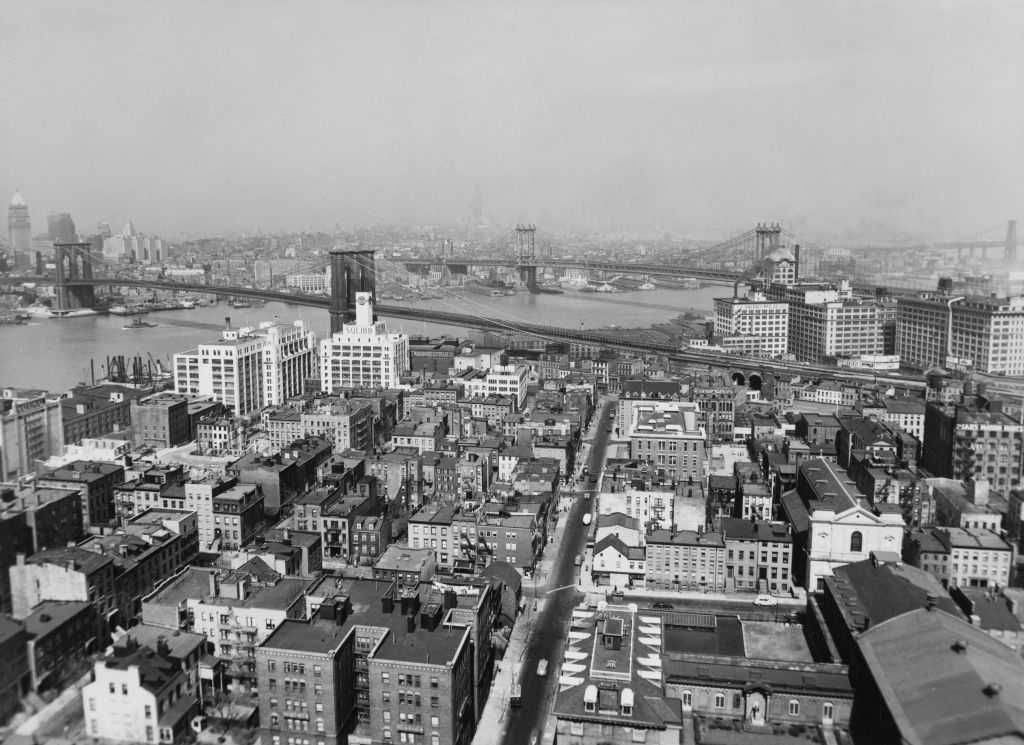
Moses planned to make at least half of the fairgrounds permanent and openly said that much of the infrastructure was meant to stay as part of his vision of a futuristic park. This plan mirrored Moses' suggestions for many of the city projects he worked on.
At the same time, the fair was more heavily commercialized than any before it. Moses abandoned the visual and thematic consistency of earlier fairs to maximize profit, allowing companies to design their own exhibits in exchange for high rental and repair fees — services that were allegedly monopolized by a small number of favored contractors.
Moses' success in commercialization was noted by Disney, who wished to replicate his overall design thesis when plotting out Disney World in Florida. The two had worked together on the 1939 World's Fair, for which Disney created a special promo cartoon and even licensed a Donald Duck Day.
The first animatronics were created for the 1964 iteration of the fair as well.
Moses' influence goes far beyond Disney, though. He either directly consulted on, or influenced, the planning of at least a dozen North American cities. He is responsible for the infrastructural theory that cities should be focused on commercial centers, not residential housing.
The idea that cars should move swiftly through cities on expressways took hold in places like Portland, where Moses was hired to help design the freeway network.
In Pittsburgh, Moses put his skills in planning both parkways and parks into practice when he was hired by the Pittsburgh Regional Planning Association to solve congestion issues. He ended up building the Penn-Lincoln Parkway, the Crosstown Boulevard, and the Point State Park.
RELATED: Tragic Kingdom: String of mysterious deaths shakes Disney World

Moses acted as a consultant for a "high-speed freeway" in New Orleans in the 1940s and "stressed the benefits of removing vehicle traffic from the crowded streets," according to an article by urban planning expert Jeff Brown.
While most of his suggestions were not taken in New Orleans, they were in Hartford, Connecticut, where he planned another freeway. The city declined his suggestion to build a parking garage in tandem with the expressway, though.
Interestingly, Moses' road was reportedly placed through a slum in order to capitalize on "urban renewal funds" to help pay for the project.
Other cities like Boston, San Francisco, Baltimore, Memphis, Phoenix, and Toronto, Canada, have seen indirect influence from Moses. In the 1940s and 1950s, Moses eventually faced resistance, and many of his highway projects were scaled back or canceled, according to the New World Encyclopedia.
As the desire for Moses' planning skills eventually soured, he and others looked to opportunities in Latin America.
The article "Transforming the modern Latin American city: Robert Moses and the International Basic Economic Corporation" discusses how in 1950, the mayor of Sao Paulo, Brazil, hired a commercial corporation headed by Nelson Rockefeller to design the public works for the city.
Moses was appointed director of studies to work in the "Program of Public Improvements" for Sao Paulo and allegedly caused great controversy in Brazil due to his intentions to import American companies to operate in the country.
Moses' influence is still visible in major cities where congestion is chronic and housing is scarce. Disney World succeeded for a simpler reason: It was designed entirely around consumerism, without the complications of cars, housing, or civic life.
In that sense, Disney World represents a kind of Robert Moses ideal — an urban space devoted purely to consumption, perfectly controlled, and freed from the democratic friction and human needs that constrained Moses in the real world.
Over 50,000 climate alarmists from across the globe climbed aboard fuel-guzzling planes, boats, and automobiles and traveled to Belém, Brazil, this month to attend the 2025 United Nations Climate Change Conference.
On the second-last day of anti-American diatribes and globalist pearl-clutching over the supposed crisis that Bill Gates recently admitted "will not lead to humanity's demise," the conference went up in smoke, at least partly.
'The world is watching Belem.'
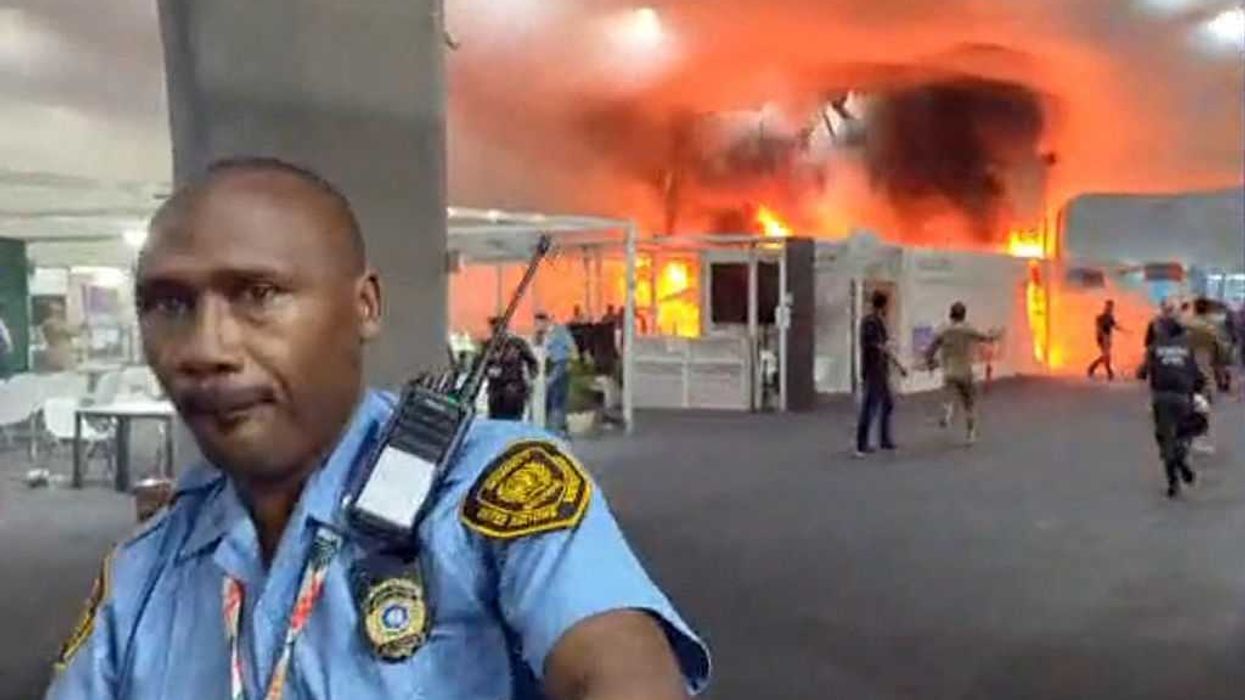
Footage circulating online shows a hectic scene: of flames erupting in the pavilion area of the Hangar Convention and Fair Center of the Amazon, where nations and various NGOs had set up their public-facing stands; of security guards blowing whistles and shooing panicked delegates and observers away; and of some individuals attempting to extinguish the growing inferno as it ate a hole in the roof.
One person in the office of the summit presidency confirmed that the blaze had been contained within about 30 minutes, the New York Times noted.
"Firefighters and security teams responded promptly and continue to monitor the site," Cop30 organizers said in a statement obtained by Le Monde.
It's presently unclear what started the fire. No injuries have been reported.
RELATED: Bill Gates does stunning about-face on climate 'doomsday' claims: 'This view is wrong'
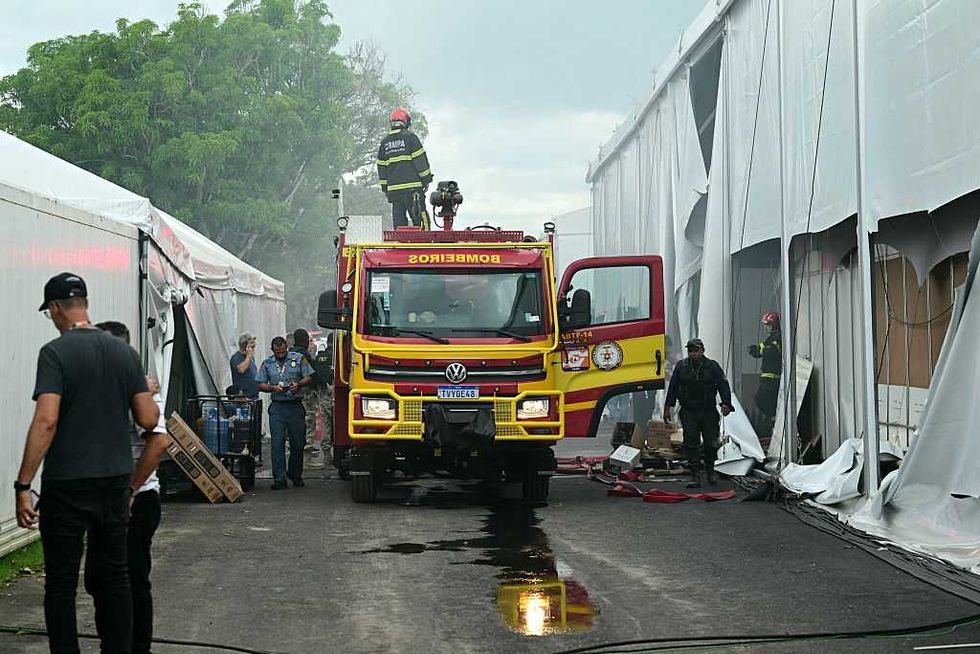
The fire proved to be the latest of several issues affecting the conference.
For instance, torrential rainfall at the outset of the conference flooded the entrances to the venue and left certain meeting areas soaked. There were reportedly also complaints of non-functional restrooms and oppressive heat.
In addition to complaining about "inadequate air-conditioning in venue areas" and the "poor condition of the delegation offices provided," Simon Stiell, executive secretary of the U.N. Framework Convention on Climate Change, whined in a Nov. 12 letter to Andre Correa do Lago, the president of COP30, that the conference's security was substandard. According to Stiell, hundreds of protesters had damaged property and injured staffers.
COP30 was embroiled in scandal even before it began as the result of the local government's decision to cut a four-lane highway through tens of thousands of acres of protected Amazon rainforest to ensure that COP30's participants would enjoy easy motorized transit in and out of the hosting city.
Hours before the fire began, U.N. Secretary-General Antonio Guterres urged negotiators to reach an "ambitious compromise" on an anti-fossil-fuel agenda, stating, "The world is watching Belem."
Like Blaze News? Bypass the censors, sign up for our newsletters, and get stories like this direct to your inbox. Sign up here!
A handful of Senate Republicans defied President Donald Trump in a contentious vote to block the administration's tariffs on Brazil.
The Senate narrowly passed a resolution Tuesday night to zero out Trump's 50% tariffs on Brazilian imports in a 52-48 vote. Five Republicans — Sens. Susan Collins of Maine, Mitch McConnell of Kentucky, Lisa Murkowski of Alaska, Rand Paul of Kentucky, and Thom Tillis of North Carolina — aided all 47 Democrats to pass the resolution.
The resolution is likely to die in the House before ever making it to Trump's desk.
This rebuke comes from Trump's most vocal critics in the Senate, all of whom have bucked the administration in the past.
Paul has repeatedly voted against Republican funding bills, including the continuing resolution that would reopen the government, all but guaranteeing he is disinvited from many White House events his colleagues attend. Tillis, who announced he would be retiring following this term, also voted against the One Big Beautiful Bill Act. Collins, Murkowski, and McConnell have been a thorn in Trump's side, repeatedly voting against key nominees.
RELATED: Vance casts tiebreaking Senate vote after Republicans join Democrats to tank Trump's tariffs
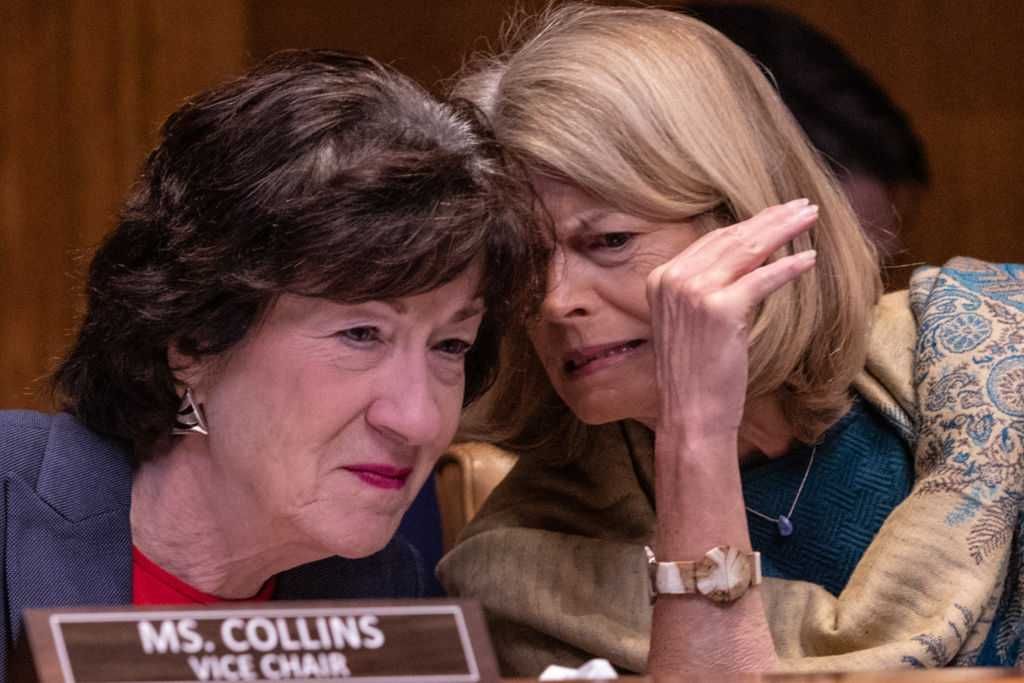
The resolution is likely to die in the House before ever making it to Trump's desk. Even if Speaker Mike Johnson (R-La.) were to hold a vote on the resolution, the Republican majority would likely side with the administration.
Notably, this is not the first time Republicans defied the White House to block Trump's tariffs.
Vice President JD Vance had to cast a tiebreaking vote back in May to block a similar resolution that would have halted Trump's tariffs. At the time, Murkowski, Collins, and Paul were the three lawmakers who went against the grain.
RELATED: Vance casts tiebreaking vote after Republicans betray Trump's 'big, beautiful bill'
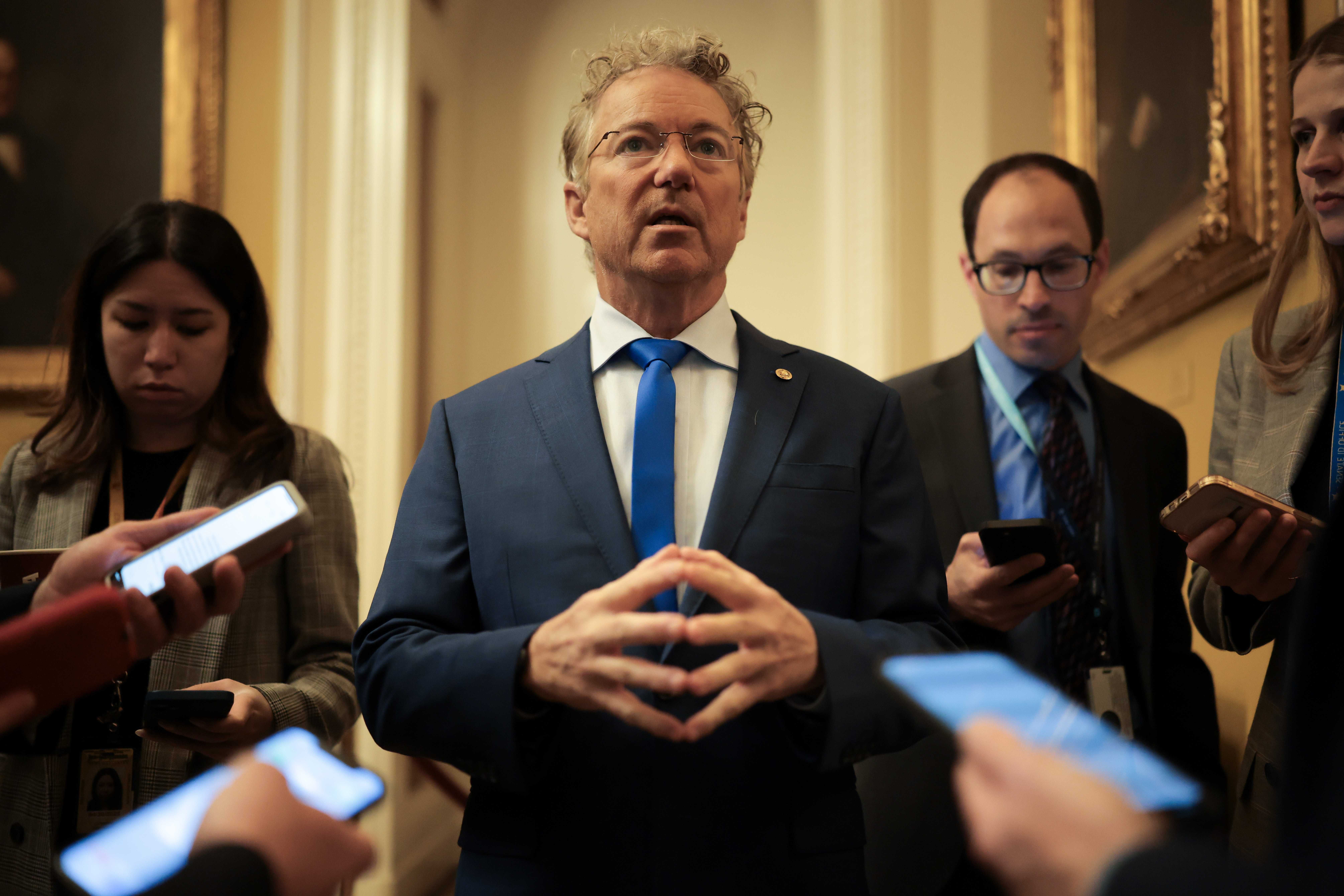
"Farmers are hurting. Inflation is squeezing every worker. And tariffs are making it worse," Paul said in a recent post on X. "We can’t print enough money to paper over bad policy."
Like Blaze News? Bypass the censors, sign up for our newsletters, and get stories like this direct to your inbox. Sign up here!

 Isadora Borges, a Brazilian veterinary student, faced trial last month for a post stating 'trans women are not women.'
 President Donald Trump is filling a dangerous power vacuum in the Americas opened up by the Biden administration.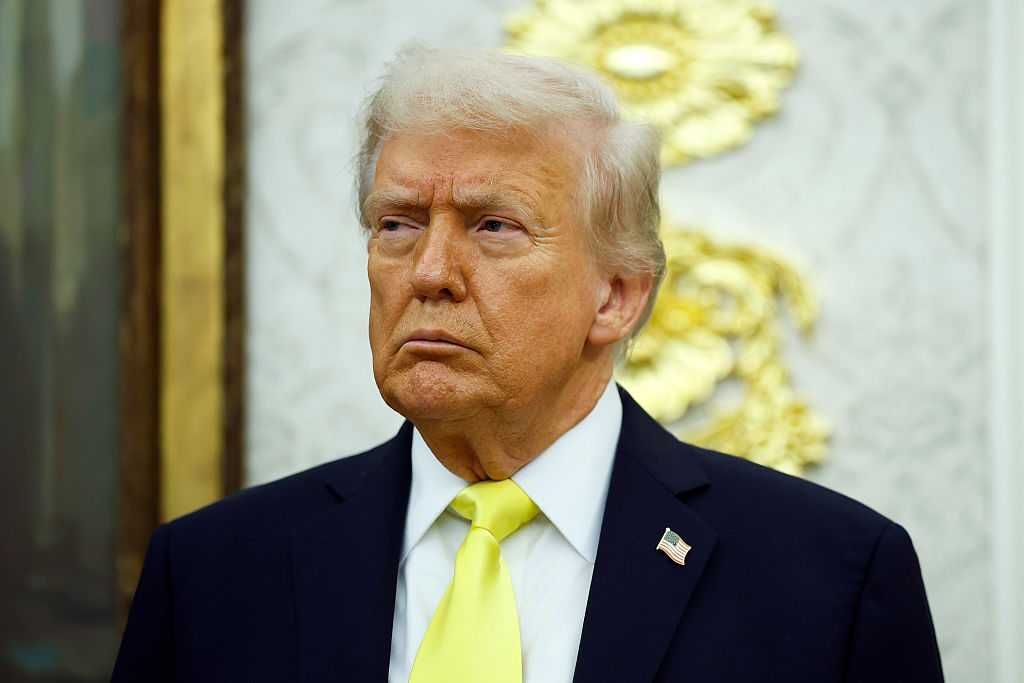
 www.theblaze.com
 thefederalist.com
 www.theblaze.com