At Trump’s State of the Union, remember the free-market miracle in your pocket


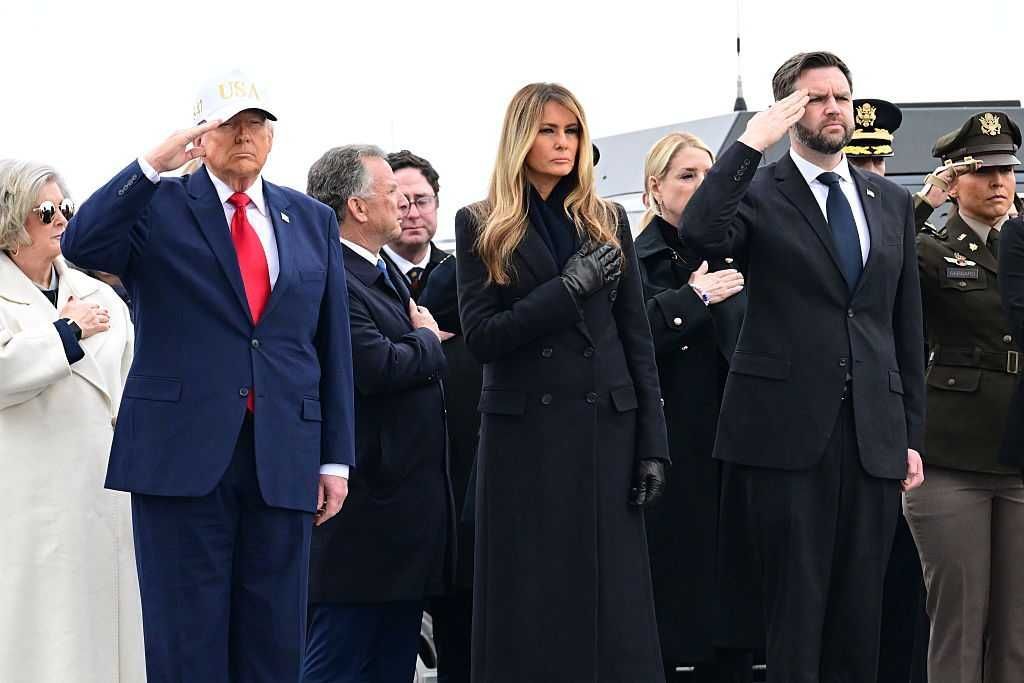
President Trump will deliver the first State of the Union of his second term on Tuesday, an address that lands near the 250th anniversary of a nation built on freedom and enterprise. He will likely highlight ending foreign conflicts, restoring border security, reasserting American strength, and advancing his legislative agenda. He will point to economic gains — growth returning, inflation easing, energy prices falling, tax relief delivered, and markets responding. He will argue that the Trump economy is putting Americans back in charge of their own prosperity.

But one success story may not make the headlines: Under pro-investment, pro-competition policies, America’s wireless market has delivered lower prices, better service, and more choice — without mandates, price controls, or government-run networks.

Wireless shows free markets still work when Washington lets them.

Since Trump took office, wireless prices are down 4%. The White House even lists it as Win No. 132 in “365 Wins in 365 Days.” Backed by Bureau of Labor Statistics data, wireless plans and smartphones cost less in real dollars today than they did decades ago — while delivering hundreds of times faster speeds and vastly more data.

Twenty years ago, wireless networks mostly carried voice calls. Today they power work, school, health care, navigation, banking, entertainment, and small business. A wireless subscription also takes a declining share of the household budget.

That didn’t happen by accident. Competition, private investment, and smart policy drove it.

Better service, more choice, lower cost

Plans now deliver more data, faster speeds, and wider coverage than most people imagined 20 years ago. What once required a wired connection at home now works almost anywhere.

Fixed wireless access has helped drive that shift — home internet delivered over wireless networks. Nearly 15 million households now use wireless service instead of a fixed line, giving families a new, often cheaper alternative.

Americans also benefit from real choice. Most people are covered by three or more national wireless networks, each offering multiple brands, including lower-cost and prepaid options for families, seniors, students, and budget-conscious users. Dozens of smaller carriers and resellers add even more price competition. Companies need to earn customers’ business.

Wireless saves families real money

Wireless doesn’t just connect people — it cuts costs.

Parents save time and fuel by working remotely. Seniors can use telehealth instead of driving long distances. Students can learn from anywhere. Small businesses can reach customers without expensive storefronts or phone systems.

No other essential service — housing, health care, food, or energy — has improved this much while becoming more affordable. Wireless quietly delivers more value every year.

America leads because America invests

None of this works without investment. U.S. wireless companies invest about $30 billion a year to build and upgrade networks. Per person, that’s nearly double what Europe invests.

As a result, the United States leads the world in wireless performance, coverage, and innovation. That leadership didn’t come from government-run networks or price controls. It came from letting companies compete, invest, and take risks.

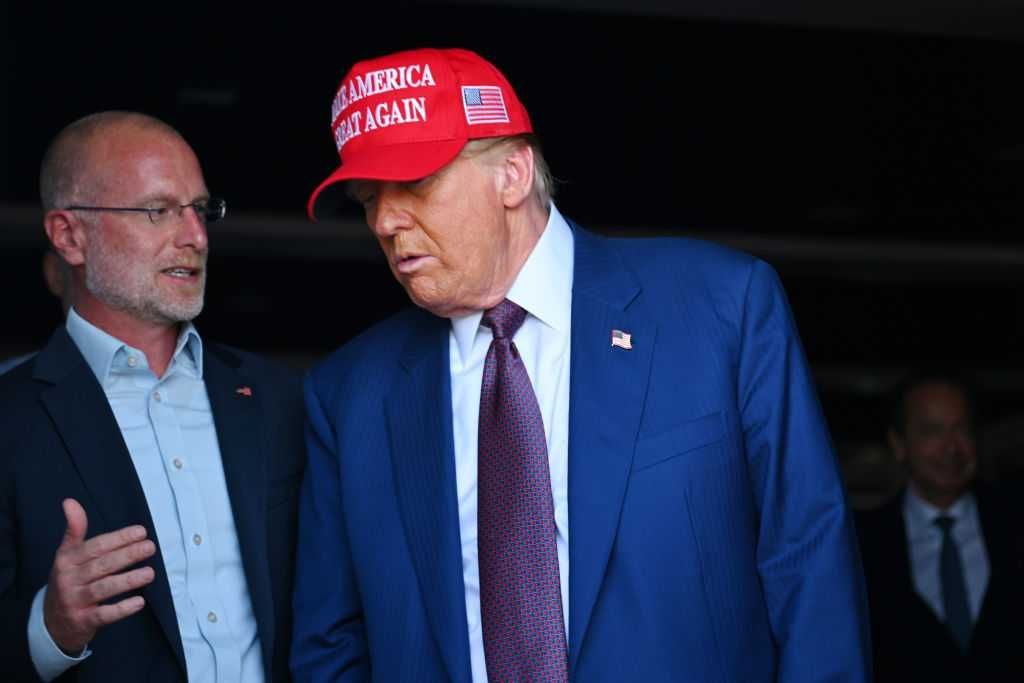
President Trump’s first-term spectrum auction raised a record $90 billion and helped fuel today’s 5G networks. Now FCC Chairman Brendan Carr is moving quickly toward another auction to free up more airwaves — the raw material wireless networks need to grow.

The spectrum bottleneck is real

Wireless runs on spectrum, and America is running tight.

Large blocks of valuable spectrum remain locked up by federal agencies, even when lightly used. Other countries — China, South Korea, and Japan — have moved faster to free spectrum for commercial use.

More spectrum means better service, more competition, and lower costs. Without it, growth slows and prices rise. That makes unlocking spectrum a national priority.

RELATED: Phones and drones expose the cracks in America’s defenses

dikushin/Getty Images

The hidden fee on your phone bill

Another problem stays mostly invisible to consumers.

The Universal Service Fund is meant to support rural connectivity and essential communications. But instead of being funded broadly, it gets tacked onto phone bills, often as a separate line item. Seniors and working families pay about $9 a month without ever voting on it.

Meanwhile, the biggest users of America’s networks — massive internet platforms — pay little or nothing into the system. They generate enormous traffic, earn billions, and rely on wireless infrastructure built by others.

President Trump has argued that Big Tech should pay its own way when it comes to energy-hungry AI data centers. The same principle should apply here. If you benefit from the network, you should help pay for it.

The bottom line

Wireless shows free markets still work when Washington lets them. Competition pushed prices down. Private investment built world-leading networks. Smart spectrum policy unlocked innovation.

Now policymakers face a choice: Protect what’s working, or burden it with bureaucracy and political favoritism. Free up more spectrum. Preserve real competition. End Big Tech’s free ride on infrastructure funded by American consumers.

If President Trump wants a model of American strength and market-driven success in his State of the Union, he doesn’t have to look far. It’s already in the hands of nearly every American holding a cell phone.

Colbert and Talarico promoted phony censorship ‘hoax,’ FCC chair tells Glenn Beck


Federal Communications Commission Chairman Brendan Carr accused "The Late Show" host Stephen Colbert and Democrat Senate candidate James Talarico of spreading a "hoax" about their interview segment.

Colbert claimed during his Monday-night show that the FCC's new guidance on the equal time rule forced CBS to block Talarico from appearing on his program.

'This was a decision by Colbert, by Talarico to put a hoax out there that they knew the media would run for purposes of Talarico, apparently, scoring political points against Jasmine Crockett.'

"[Talarico] was supposed to be here, but we were told in no uncertain terms by our network's lawyers, who called us directly, that we could not have him on the broadcast," Colbert told his viewers.

CBS released a statement explaining that Colbert's show was "provided legal guidance" that broadcasting the interview "could trigger the FCC equal-time rule for two other candidates" running against Talarico for the U.S. Senate seat in Texas. The network stated that it "presented options for how the equal time for other candidates could be fulfilled," but that Colbert's team instead "decided to present the interview through its YouTube channel."

During a Thursday episode of "The Glenn Beck Program," Glenn Beck asked Carr whether the FCC had provided any legal guidance to CBS concerning the interview. Carr insisted the FCC had not.

He told Beck, "I woke up Tuesday morning and logged onto social media, and that was the first time that I'd even heard about this. And I woke up to a politician claiming that the FCC had somehow not aired — is what they said — the FCC refused to air this segment, and that wasn't true at all."

"Not only was that not true, but the subsequent claim that it was CBS that refused to air it was also proved to be a hoax as well," Carr continued. "In fact, CBS, apparently, had advised Colbert they could run the exact interview that they wanted, and they just needed to be mindful that it could trigger an equal time obligation for other candidates."

RELATED: Stephen Colbert melts down after CBS pulls interview with Democrat just months before his show ends

Stephen Colbert. Photo by Scott Kowalchyk/CBS via Getty Images

He accused Colbert of running a "hoax," arguing that "he knew he could fool ... the legacy media by claiming he was censored."

Carr speculated that the alleged trick aimed to give Talarico "a leg up" on his Democrat opponent, Rep. Jasmine Crockett of Texas.

"This was a decision by Colbert, by Talarico to put a hoax out there that they knew the media would run for purposes of Talarico, apparently, scoring political points against Jasmine Crockett," Carr told Beck.

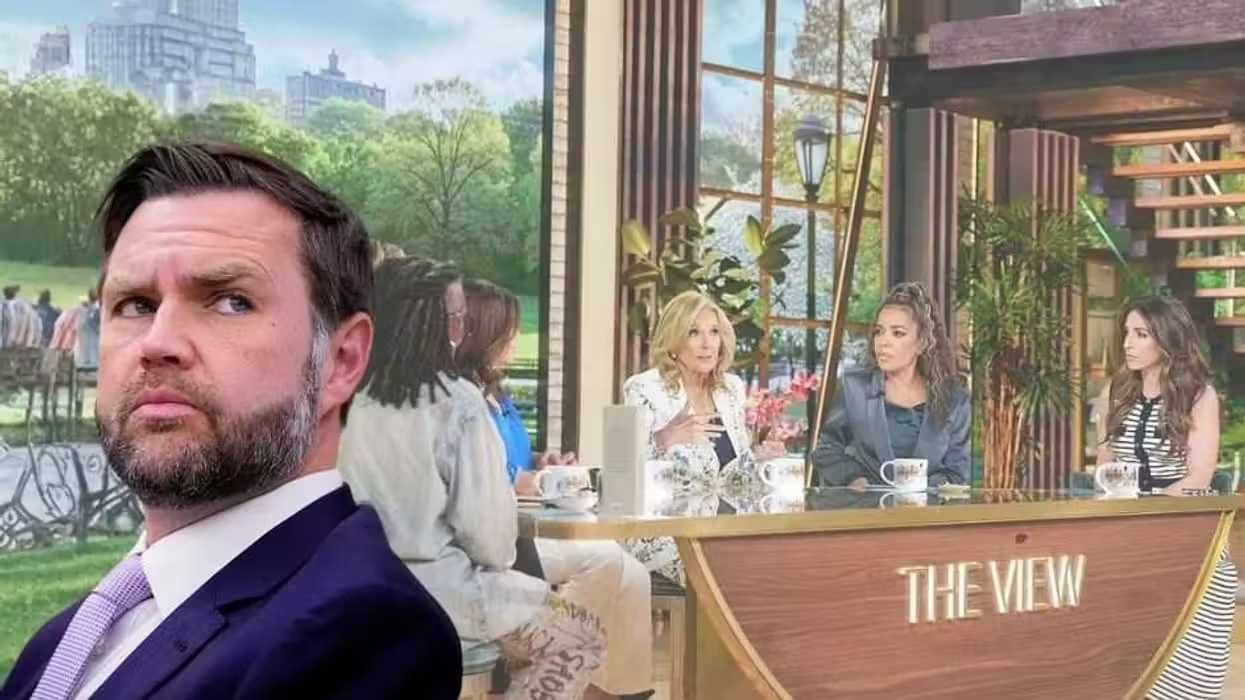
RELATED: 'The View' under investigation for potential violations, says Trump's FCC chief

"The View." Photo by Lou Rocco/American Broadcasting Companies Inc. via Getty Images

Beck also questioned Carr about "The View" after reports surfaced that the show is facing an FCC investigation for possible equal time violations.

Carr explained that "The View" has argued that it is a "bona fide" news program, meaning that it should be exempt from the equal time rule, which would allow the ABC program to have a political candidate on the show without providing an equal opportunity to other candidates running in the same election.

Carr insisted that "The View" has "not made the case to the FCC that they do, in fact, qualify for the exception to the rule."

"And so we have started an enforcement inquiry, taking enforcement actions to explore this issue with them and move forward," he stated, adding that the FCC is "actively looking" at the show's claim that it is a bona fide news program.

CBS, ABC, Talarico's campaign, and representatives for "The Late Show," "The View," and Colbert did not respond to a request for comment.

Like Blaze News? Bypass the censors, sign up for our newsletters, and get stories like this direct to your inbox. Sign up here!
Crockett hits back, says CBS and Colbert are full of it: 'They just didn't want to air it'


Democratic Rep. Jasmine Crockett of Texas is taking aim at late-night talk show host Stephen Colbert for pulling an interview with her opponent.

Colbert lashed out at President Donald Trump after CBS pulled an interview with James Talarico, another Democratic candidate running for Senate against Crockett, citing new FCC guidelines. While Colbert pointed the finger at the government, Crockett was quick to push back on the narrative, insisting that the federal government had nothing to do with the decision to pull Talarico's interview.

'This was because of a fear that the FCC may say something to them.'

"We did receive information suggesting that the federal government did not shut down the segment, number one," Crockett said.

"That is my understanding that the federal government did not shut this down, and we will do an official statement once we get another official statement that we anticipate is going to be coming from Paramount," Crockett added. "So we will read what they say, and then we'll go from there."

RELATED: Stephen Colbert melts down after CBS pulls interview with Democrat just months before his show ends

Photo by Scott Kowalchyk/CBS via Getty Images

Crockett's assessment was counter to CBS' official statement, which claimed that Colbert's show was "provided legal guidance" by the FCC.

"The show was provided legal guidance that the broadcast could trigger the FCC equal-time rule for two other candidates, including Rep. Jasmine Crockett, and presented options for how the equal time for other candidates could be fulfilled," the statement read. "THE LATE SHOW decided to present the interview through its YouTube channel with on-air promotion on the broadcast rather than potentially providing the equal-time options."

FCC Chairman Brendan Carr reiterated these guidelines in late January, reminding networks of their "obligation" to provide candidates equal airtime.

"For years, legacy TV networks assumed that their late night & daytime talk shows qualify as 'bona fide news' programs — even when motivated by purely partisan political purposes," Carr said in a post on X. "Today, the FCC reminded them of their obligation to provide all candidates with equal opportunities."

RELATED: Trump says Colbert is to blame for his show's cancellation — but adds Kimmel and Fallon are next

Bob Daemmrich/The Texas Tribune/Bloomberg via Getty Images

As CBS' statement said, Colbert opted to post the interview on social media rather than broadcasting it live on the program in order to work around the FCC's new guidance requiring shows to provide competing candidates equal time on air. Although Crockett has been on Colbert's show multiple times, she noted that she "did not get a request" to appear on his show.

"It is our understanding that Colbert, either Mr. Colbert or CBS, decided that they just didn't want to air it," Crockett said of the Talarico interview. "And this was because of a fear that the FCC may say something to them and that there may have been advice to just have me on and then they could clear the issue."

"It was my understanding that someone somewhere decided we just don't want to do that and instead, we're going to just do it this way."

Like Blaze News? Bypass the censors, sign up for our newsletters, and get stories like this direct to your inbox. Sign up here!

Trump’s FCC Is Right To Make Late-Night TV Follow ‘Equal Airtime’ Rules

When it gave them an excuse to grouse about a Republican on late-night, Democrats were all for the equal-time rule.

Ted Cruz Goes On Rampage In Hearing, Opens Up Old Wounds With Top Trump Official

'We cannot have the government arbitrating truth or opinion'

'Terrible reporter': Trump eviscerates 'fake' news ABC — calls for FCC to consider yanking license


President Donald Trump called on Federal Communications Commission Chairman Brendan Carr to investigate ABC News and consider pulling its license for its “fake” reporting.

'I think the license should be taken away from ABC because your news is so fake and it’s so wrong.'

During Trump’s bilateral meeting with the crown prince of Saudi Arabia, an ABC News reporter pressed the president about the delayed release of files related to Jeffrey Epstein.

“Why wait for Congress to release the Epstein files? Why not just do it now?” the ABC reporter asked.

“It’s not the question that I mind; it’s your attitude,” Trump replied.

“It’s the way you ask these questions. You start off with a man who’s highly respected, asking him a horrible, insubordinate, and just a terrible question. You could even ask that same exact question nicely.”

“You’re a terrible person and a terrible reporter,” the president remarked.

Trump reiterated that he had “nothing to do with Jeffrey Epstein,” adding, “I threw him out of my club many years ago because I thought he was a sick pervert.”

RELATED: With Trump's blessing, House approves resolution to release the Epstein files: 'We have nothing to hide'

President Donald Trump, Crown Prince and Prime Minister Mohammed bin Salman of Saudi Arabia. Photo by Win McNamee/Getty Images

He slammed the legacy media outlet for ignoring the relationships liberal political figures had with the sex predator.

“All these guys were friends of his. You don’t even talk about those people,” Trump said.

“I just got a little report, and I put it in my pocket, of all the money [Epstein has] given to Democrats. He gave me none. Zero.”

He called ABC a “crappy company.”

RELATED: Epstein emails SHAME Obama/Clinton ally: Larry Summers quits public life amid calls for Harvard to cut ties

Photo by Spencer Platt/Getty Images

“I think the license should be taken away from ABC because your news is so fake and it’s so wrong,” Trump declared, presumably referring to the news outlet’s broadcasting license obtained through the Federal Communications Commission.

“We have a great … chairman, who should look at that,” he added.

“I think when you come in and when you’re 97% negative to Trump and then Trump wins the election in a landslide, that means obviously your news is not credible and you’re not credible as a reporter.”

Trump told the ABC News reporter that she could not ask any more questions during the bilateral meeting.

ABC and the FCC did not respond to a request for comment.

Like Blaze News? Bypass the censors, sign up for our newsletters, and get stories like this direct to your inbox. Sign up here!

Trucks destroy roads, but railroads — yes, rail! — can save taxpayers billions


Anyone who drives America’s highways knows the story: potholes, cracked pavement, and endless construction zones. States pour billions of tax dollars into road maintenance every year, yet the pavement always seems to crumble faster than it can be repaired. What most motorists don’t realize is that heavy trucks cause much of the damage — and pay almost nothing to fix it.

Federal estimates show that a single fully loaded 18-wheeler can inflict as much pavement damage as nearly 10,000 passenger cars. Fuel taxes and highway user fees from trucking companies cover only a small fraction of the destruction they cause. Taxpayers pick up the rest, footing the bill for constant repaving, bridge work, and the cycle of crumbling roads.

Every additional ton of freight shifted to rail represents pavement preserved and taxpayer dollars saved.

Trucking keeps the economy moving, and freight rail, shipping, and trucking together form the backbone of America’s supply chain. But shifting more freight to rail makes sense. The rail network is self-maintained by the companies that use it, and trains move goods more safely and efficiently than trucks. The more freight we move by rail, the less damage we’ll have to repair on the nation’s roads.

A merger serving Americans

The recently proposed merger of Union Pacific and Norfolk Southern offers an opportunity to improve both our roads and our supply chains simultaneously. By creating a more efficient coast-to-coast rail network, the merger would allow railroads to capture more freight that currently travels by truck — relieving taxpayers of billions of dollars in hidden subsidies for road repair.

Merging Union Pacific’s vast western network with Norfolk Southern’s eastern lines would create the nation’s first true transcontinental railroad — from the Pacific to the Atlantic. For shippers, that means single-line pricing instead of juggling multiple operators to move goods from point A to point B.

It also means faster delivery, fewer interchanges, and lower costs.

Railroads, unlike trucking companies, build and maintain their own infrastructure. Every mile of track, every bridge, and every switching yard comes from private capital, not public funds.

When freight moves from trucks to trains, taxpayers win twice: less highway damage to repair and more freight handled by a system that pays its own way.

The savings aren’t theoretical. Heavy trucks cause roughly 40% of the wear on America’s roads while accounting for only about 10% of total miles driven.

A North Carolina Department of Transportation study found that trucks with four or more axles underpay for road damage by anywhere from 37% to 92%. State budgets from Texas to Pennsylvania tell the same story: Highway repair costs soar while trucking fees barely make a dent.

Every ton of freight shifted to rail means less pavement destroyed and more tax dollars saved.

False cries of monopoly

Naturally, critics of the merger will cry “monopoly,” as they always do when industries consolidate. But that misses the real competitive landscape. In addition to competing with other railroads, rail competes vigorously with trucks, which dominate American freight today.

Trucks control roughly 70% of domestic freight volume — subsidized in part by taxpayer-funded roads. Allowing railroads to offer a stronger alternative isn’t anti-competitive — on the contrary, it’s pro-market. It creates stronger competition for taxpayer-subsidized trucking.

RELATED: DOT withholds $40M from blue state for flouting English requirements for truckers

Photo by Eric Lee/Bloomberg via Getty Images

At its heart, this merger is a test of whether the Trump administration trusts the free market to deliver solutions. Union Pacific and Norfolk Southern are not asking taxpayers to fund their merger. They are not asking for subsidies, grants, or carve-outs. They are investing their own capital to create a system that reduces public costs, strengthens supply chains, and keeps America competitive.

If policymakers are serious about preserving America’s battered roads, as well as strengthening our supply chain infrastructure, the choice is obvious. Let the free market work, and let railroads take more freight off the highways.

Pot, Meet Kettle: Dan Rather, Fired for Peddling Fake Bush Documents, Describes 'Dark Day' As CBS Hires Bari Weiss

Former CBS News anchor Dan Rather, who was fired in 2006 for peddling fake documents about then-President George W. Bush, on Thursday condemned the network’s hiring of Free Press founder Bari Weiss and its parent company Paramount’s merger with Skydance. Paramount’s decision to appoint Weiss as CBS editor in chief, and to merge with Skydance, […]

The post Pot, Meet Kettle: Dan Rather, Fired for Peddling Fake Bush Documents, Describes 'Dark Day' As CBS Hires Bari Weiss appeared first on .

Woke CEOs mocked conservatives. Now the joke’s on them.


Corporate America is bending to conservatives’ market influence. Not out of sudden ideological sympathy, but because conservatives have more economic power than the left — and they’ve stopped pretending not to notice.

For years, corporations ignored conservative concerns. Worse, they often went out of their way to antagonize them, stripping away team mascots like the Redskins and Indians, embracing diversity quotas, and saturating entertainment with left-wing tropes. The squeaky wheel got the grease, and the left made all the noise.

Free markets punish bad bets more effectively than Washington ever could. Let them.

Conservatives, meanwhile, were taken for granted. Corporate leaders assumed they would keep buying no matter how many insults were thrown their way. For a long time, they were right.

That ended when conservatives started fighting back. Bud Light’s Dylan Mulvaney stunt turned into a disaster. Victoria’s Secret collapsed under its “new image” campaign. Cracker Barrel’s woke makeover backfired so badly its chairs stopped rocking. And when employees mocked Charlie Kirk’s assassination, corporations finally began to realize that “the customer is always right” still applies.

Numbers don’t lie

Corporations aren’t embracing conservatives because they’ve had a change of heart. They’re doing it because they need to survive.

The 2024 election was a wake-up call: Conservative voters outnumbered liberals 35% to 23%. Add moderates, and non-liberals outnumbered liberals more than three to one.

Conservatives overwhelmingly vote Republican. Ninety percent cast ballots for Trump. Pew data shows a majority of middle- and upper-middle-income Americans lean Republican — and 51% of Americans identify as middle class. That’s a lot of disposable income.

Family size makes the math even stronger. The Institute for Family Studies reports that counties where Trump won big also have higher birth rates: 1.76 compared to the national average of 1.63. Harris counties, by contrast, averaged just 1.37. Republicans also want bigger families: half want three or more kids, compared to only 31% of Democrats.

Bigger families and higher incomes mean bigger market clout. And the left’s most extreme advocates — the loudest drivers of corporate wokeness — are a small minority inside an already shrinking ideological bloc.

Why the shift happened

So why did corporations bow to the left for so long? Two reasons.

First, executives themselves lean left. Pew Research found upper-income Americans tilt Democrat, and CEOs have marched steadily leftward over the last two decades. Second, conservatives tolerated it. They didn’t punish woke messaging, making it appear costless for companies to indulge their leadership’s politics.

That illusion is gone. Conservative consumers are awake. And companies are finally capitulating to reality.

RELATED: The right message: Justice. The wrong messenger: Pam Bondi.

Photo by Andrew Harnik/Getty Images

Don’t let government ruin it

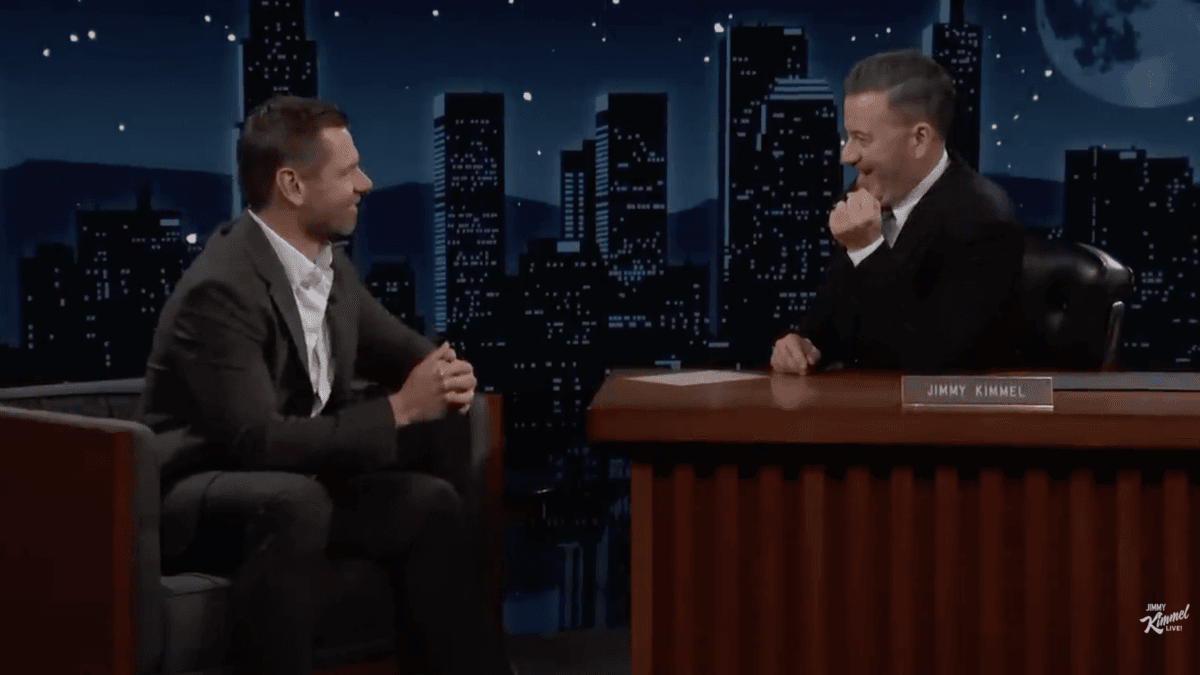
This is why Republicans should resist the urge to meddle. FCC Commissioner Brendan Carr made a mistake threatening ABC over Jimmy Kimmel. “We can do this the easy way or the hard way”? Let’s not.

That kind of government action obscures the real shift — a market correction, not a political one.

Markets speak louder than regulators. If conservatives let economics do the work, corporations will continue adjusting out of necessity. But if government steps in, companies will chalk the change up to political coercion, not consumer demand, and drift back toward the left as soon as administrations change.

Already the left is trying to spin it that way, casting Jimmy Kimmel as a martyr for “free expression” instead of what he is: a bad business decision. The left wants companies to believe government, not consumers, forced the pivot.

Conservatives know better. Free markets punish bad bets more effectively than Washington. Let them.