Big Tech gets the network. You get the bill.

The Federal Communications Commission’s latest broadband report makes two things clear: America has made real progress, but the rural job is far from finished.
The number of Americans lacking access to fixed terrestrial broadband with download speeds of 100 Mbps and upload speeds of 20 Mbps fell roughly 23% in one year, while rural gaps shrank more than 44% over two years. Prices for the mid-tier plans most households buy have also fallen in real terms.
The path is simple: Make the biggest users and beneficiaries of Universal Service Fund-supported networks help pay, without raising prices for consumers.
Yet the FCC still says deployment is not “reasonable and timely” for all Americans, especially in rural areas and tribal lands. For many families, broadband is now one of the rare essential services that is both faster and more affordable than it was a few years ago.
That’s why the Universal Service Fund remains indispensable. It connects an estimated 130 million Americans each year, supporting low-income and rural households, schools, libraries, students, and health care providers. At roughly $8.5 billion annually, USF underwrites a crucial piece of America’s digital infrastructure. It also supports the infrastructure beneath an internet economy measured in the trillions of dollars.
The problem is how we pay for it. Consumers bear a monthly surcharge on legacy voice services, while the largest internet platforms, which depend on broadband to generate enormous revenues, contribute nothing.
Congress knows the system needs reform. In 2023, Senators John Thune (R-S.D.) and Ben Ray Luján (D-N.M.) launched a bipartisan Universal Service Fund Working Group. Deb Fischer (R-Neb.) now shares leadership with Luján, joined by Reps. Richard Hudson (R-N.C.) and Doris Matsui (D-Calif.), and the working group has heard from hundreds of stakeholders. Its assignment is straightforward: preserve a program that works while replacing a financing mechanism that does not.
Alphabet, Amazon, Apple, Meta, Microsoft, Netflix, and TikTok all depend on broadband networks to reach Americans. Each USF-connected household generates an estimated $3,000 annually in revenue for these companies, which collectively consume roughly two-thirds of U.S. broadband capacity. Data-center expansion will only increase that traffic. As more data centers come online to support AI, cloud computing, streaming, and other digital services, the demands placed on those networks will only grow.
Broadband providers, meanwhile, must keep investing in the networks that carry it. Without USF support, many networks would not be built, and broadband could become unaffordable for millions.
Don’t put the bill on consumers
Congress should not solve the problem by adding another fee to household broadband. Affordability remains politically and economically sensitive, and even modest price increases can push consumers out of the market. Broadband has remained relatively stable in price even as Americans have absorbed years of inflation elsewhere in the household budget.
RELATED: The FCC finally cuts local TV loose

Economists Hal Singer and Ted Tatos found that a 5% increase in broadband prices could cause roughly 10 million households to cancel service. Their review found a different dynamic for large digital advertising platforms, where end users generally do not pay subscription fees and companies are better positioned to absorb assessments.
Former FCC Chairman Brendan Carr suggested assessing digital advertising revenue from the largest platforms. Congress could also consider certain transmission services — cloud interconnection, backhaul, content delivery networks, satellite transport, and wide-area networking — that depend heavily on the broadband ecosystem.
The precise mechanism matters less than the principle: Broaden the contribution base so consumers carry less of the burden. Bipartisan legislation already points in that direction. The Lowering Broadband Costs for Consumers Act would extend contributions to large internet service providers, with thresholds aimed at companies of significant scale.
The rural job is not done
Some argue that low-earth-orbit satellite services have largely solved rural broadband and made subsidies unnecessary. They have not. Satellite is valuable where terrestrial networks are uneconomical, but it remains capacity-constrained and is not a full substitute for high-capacity terrestrial broadband in every household or community.
A rural family with several people working from home, taking virtual classes, or using telehealth can need sustained high-speed service and reliability that satellite cannot always guarantee as cell density grows. Prices have also risen, weakening the case for satellite as a cheap universal backstop. Satellite belongs in the mix, but it cannot carry the entire rural-connectivity burden by itself.
Big Tech should pitch in
Big Tech benefits from some $200 billion annually in USF-supported broadband investment, yet the companies oppose contributing to the fund by calling such payments a “tax.” That evades the basic question: Why should the largest users and beneficiaries of broadband infrastructure be the only major participants paying nothing toward its cost?
Google, Amazon, Microsoft, and Meta spend billions building their own data centers, cloud networks, and related infrastructure because infrastructure has economic value. They would never give unlimited use of those facilities away for free. Yet they expect private broadband networks to reach their customers without contributing to the universal service system that expands access to those networks.
RELATED: This app censors your phone in a stunning new way — and people are using it on purpose

The contradiction is especially striking because 13 bipartisan governors recently joined major technology companies at the White House, where the firms pledged to cover the cost of infrastructure upgrades needed for their data centers while protecting consumers from higher electricity bills. The Ratepayer Protection Act would codify those pledges. Congress should apply the same logic to broadband.
How Congress can act
Universal service already enjoys bipartisan support. In Consumers’ Research v. Federal Communications Commission, 29 lawmakers and working-group members filed an amicus brief defending USF before the Supreme Court. They warned that dismantling the fund would harm millions of Americans, particularly low-income and rural households. Congress established universal service in 1996 and has repeatedly recognized the need to adapt it as communications technology changes.
The Supreme Court upheld the program’s constitutionality. Congress defended USF in court; now it should make the funding system fair and sustainable in statute.
The path is straightforward: Broaden the contribution base to include the largest users and beneficiaries of the networks USF supports, while protecting consumers from rising costs. The companies that profit most from ubiquitous broadband should help ensure that ubiquitous broadband continues to exist.
 The sprawling power of TVA has inserted itself into the region’s politics and infrastructure like a tumor that’s too politically ingrained to be excised.
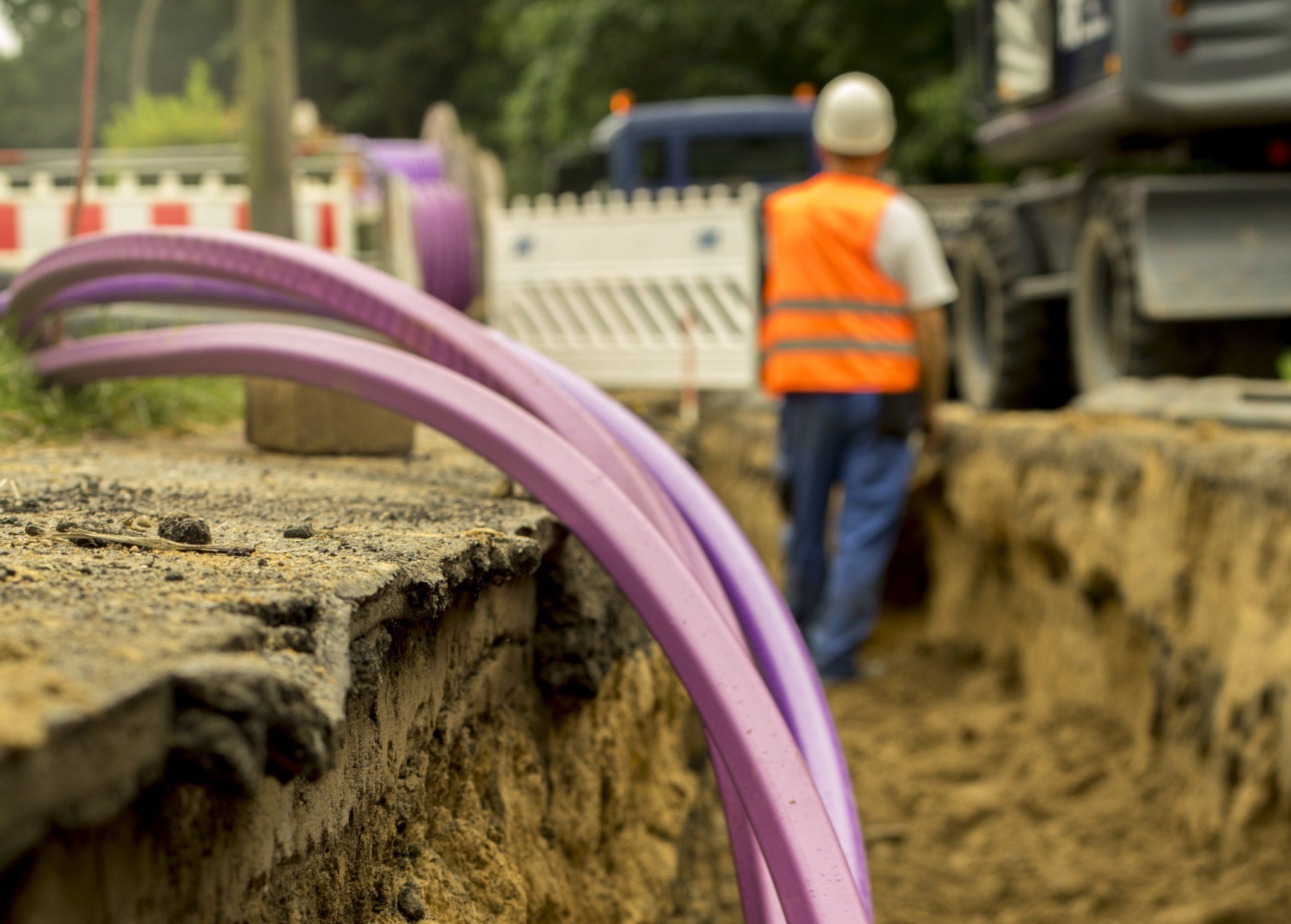
 Photo by Shutthiphong Chandaeng via Getty Images
 The FCC's war on Musk may have contributed to Helene's death toll, which is already at 138 Americans across six states, with many hundreds still missing.
 The rules will hinder industry leaders from developing and deploying new technologies that could transform internet access.
 www.theblaze.com