Trump-backed candidate scores major victory in one of the year’s high-stakes gubernatorial primaries
One of the most contentious gubernatorial primary races of the election season was called Tuesday night, sealing the nomination for another Trump-endorsed candidate.
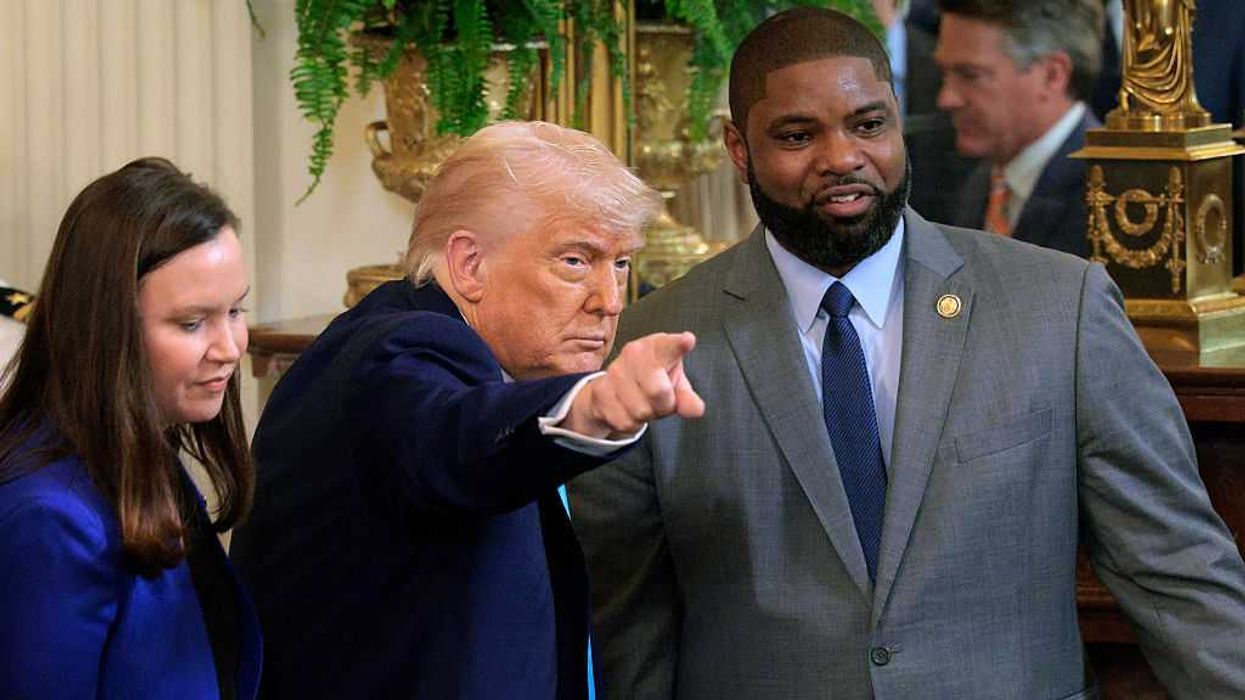
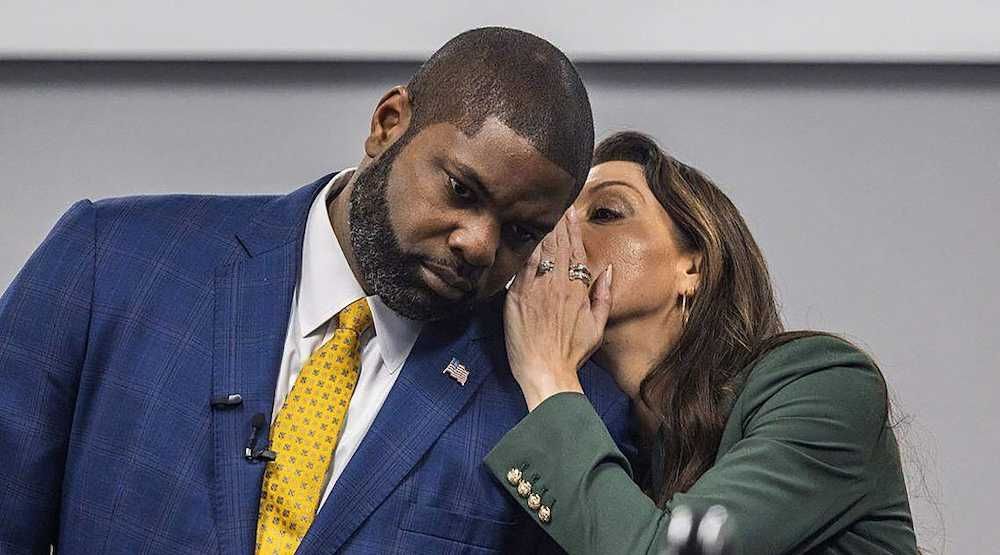
On Tuesday night, Rep. Byron Donalds (R-Fla.) secured the Republican gubernatorial nomination in Florida against a crowded field of candidates.
'Now is the time for the Republican Party to unite.'
Donalds, who was endorsed by Trump, celebrated the win on X, saying, "I am grateful to my family, my team, my volunteers, and every Floridian who powered us to this victory."
"Now is the time for the Republican Party to unite. By working together, we can make Florida more affordable and defend the Florida Dream for our families, seniors, and young people," Donalds added.
According to a CBS report, with 99% of the votes in, Donalds clinched the nomination handily with 48% of the votes.
Jay Collins, the current lieutenant governor of Florida serving since August 2025, came in second place behind Donalds, with 25% of the vote.
RELATED: Cory Mills goes down in flames in Republican primary
Collins released a statement on X thanking his staff and volunteers for their dedication and conceding the election.
"It has been the honor of a lifetime to meet so many incredible Floridians, earn the trust of hardworking families, and be welcomed into neighborhoods in every corner of this state as I’ve run for governor," Collins said in the post.
"I congratulate Byron Donalds on his victory and vow to continue fighting like hell to ensure we remain the free state of Florida in November," he concluded.
President Donald Trump celebrated the win with a Truth Social post highlighting his endorsement of Donalds, among other Republican victories.
"A lot of great WINS tonight!!!" Trump added in a subsequent post, referring to the victories of other Trump endorsees.
Republican challenger James Fishback earned 10% of the vote, coming in third behind Jay Collins.
In an address to his supporters after the race had been called, Fishback said he called Donalds and congratulated him on his victory, adding, "And the truth is that while I concede this race, I do not concede this fight — because the future of our country is on the line."
"The truth is victory is near. Perhaps not for this campaign tonight, but victory for our movement has never been closer. I am here to tell you that America First is inevitable."
Gov. Ron DeSantis (R-Fla.) has remained neutral throughout the election season, and as of early Wednesday morning, he has not released a statement on X regarding the election's outcome.
Byron Donalds will face Democratic nominee David Jolly in November. According to CBS, Jolly emerged as the undisputed champion of the Democratic primary with 61% of the vote, with a handful of challengers trailing far behind.
Florida has had an unbroken line of Republican governors for 27 years, since Jeb Bush took office in 1999.
Like Blaze News? Bypass the censors, sign up for our newsletters, and get stories like this direct to your inbox. Sign up here!
The quiet candidate is making noise in Florida
Political campaigns have a rhythm. At first, the questions are easy: Who raised the most money? Who landed the biggest endorsement? Who dominates the headlines? Consultants love this stage because it allows them to declare winners before most voters have begun paying attention.
Then the race changes.
The primary is no longer simply a contest over money, endorsements, or online attention. It is becoming a test of who understands what comes next — and who has prepared to govern through it.
Momentum gives way to scrutiny. Personality must give way to policy. Candidates who looked inevitable begin answering questions about their records, judgment, and ability to govern.
Florida’s Republican primary for governor has reached that stage.
Only a few months ago, the race appeared nearly settled. U.S. Rep. Byron Donalds had President Donald Trump’s endorsement, national attention, and a fundraising operation that dwarfed the rest of the field. Political insiders spoke of inevitability as though Republican voters had already rendered their verdict.
Donalds remains the front-runner. That position deserves acknowledgment — and scrutiny. Increased attention has brought new questions about his record, campaign, and legal controversies. Voters and the courts, where appropriate, will decide those issues. But they are now part of the race, whether his supporters welcome them or not.
James Fishback entered the race as an energetic outsider with a strong social media operation and a talent for commanding attention. He has proved capable of generating enthusiasm and headlines. Campaigns, however, eventually demand more than velocity.
Voters begin asking harder questions: Can this candidate govern? What’s the plan? How would bold promises become legislation and administration?
Those questions have become more urgent as Fishback defends himself against a legal challenge to his eligibility under Florida’s constitutional residency requirement. Fellow Republican candidate Jay Collins brought the challenge. Fishback disputes the allegations and says he meets the requirement. Whatever the outcome, the case has introduced uncertainty into a campaign built largely on momentum and personality.
Collins faces a different test.
A decorated Green Beret with a compelling personal story, Collins entered the race with credentials few could dismiss. Yet campaigns turn on trust as much as biography. Critics have questioned whether his rhetoric and financial support align, particularly on hyperscale data centers and real estate development. Collins has defended his positions, but the dispute illustrates how quickly Republican voters now demand consistency between campaign language and governing priorities.
That leaves the most overlooked candidate in the field: Paul Renner.
Renner lacks Donalds’ financial advantage and has not relied on celebrity, inevitability, or viral attention. Instead, he has offered voters something less theatrical and potentially more consequential: a governing program.
Voters may disagree with parts of his First 100 Days agenda, but it is a road map rather than a collection of applause lines.
Renner has addressed property insurance, affordability, infrastructure, parental rights, election integrity, illegal immigration, and Florida’s response to the emerging artificial intelligence economy. More important, he has tried to show how those priorities connect.
RELATED: ‘It’s past time’: Florida launches investigation into Fauci
That is where the race is changing.
Florida Republicans have spent years fighting over freedom. They are now asking how to preserve the quality of life that freedom was supposed to protect.
How does Florida keep teachers, firefighters, nurses, sheriff’s deputies, and young families from being priced out of the communities they serve? How can the state welcome investment without overwhelming roads, utilities, and water supplies? How should it embrace artificial intelligence while protecting property rights, local communities, and natural resources? How can growth enrich Floridians rather than merely raise their cost of living?
Those are real governing questions, not merely campaign slogans.
The next governor will inherit one of America’s fastest-growing states and most dynamic economies. He will also inherit rising insurance costs, strained infrastructure, rapid population growth, technological disruption, and mounting pressure on the affordability that helped make Florida attractive.
The primary is therefore no longer simply a contest over money, endorsements, or online attention. It is becoming a test of who understands what comes next — and who has prepared to govern through it.
Momentum changes. Fundraising advantages narrow. Polls rise and fall. Eventually, voters stop asking which candidate can win and start asking which candidate should govern.
Florida’s Republican primary has finally reached that question. The candidate who answers it most convincingly may discover that the race was never as settled as the consultants claimed.
Trump’s endorsement power keeps saving the wrong Republicans
For a decade, not one lukewarm Republican incumbent senator or governor has lost a primary and been replaced by a more conservative challenger under Donald Trump’s leadership of the GOP. That changed Tuesday night.
Four-term U.S. Sen. John Cornyn (R-Texas) did not merely lose to state Attorney General Ken Paxton. He got routed by 28 points.
The Paxton endorsement and Cornyn’s defeat should have marked a turning point in Trump’s political strategy. Instead, they look like the high point of the cycle.
The decisive factor was obvious: Trump finally endorsed the challenger instead of the RINO incumbent. Now, imagine what the party might look like if he had done that over the past five election cycles.
The point is not to dwell on missed opportunities. Upcoming primaries in red states will determine whether conservatives retain any real statewide fighters.
Paxton’s victory proves Trump could finish his term by draining the swamp. Sadly, he more often sides with the swamp or stays silent long enough for moneyed interests to crush more principled candidates.
Most insurgent challengers lack Paxton’s name recognition. But if Trump’s endorsement could move Paxton from a close race to a 240-county rout, it could make lesser-known challengers competitive against weak incumbents. In open seats, a grassroots conservative with Trump’s backing would be nearly unbeatable.
Several upcoming races offer conservatives a chance to make red states actually govern like red states. Too often, Trump is absent or on the wrong side.
Start with Iowa.
Gov. Kim Reynolds is retiring, and Democrats have fielded a credible challenger pretending to be a moderate while running against land grabs. Republicans need a non-corporatist nominee who does not carry the baggage of the status quo Republicans in Congress.
Betting markets have RINO Rep. Randy Feenstra as the heavy favorite for the GOP nomination because he has the most money and name identification. Conservatives have fielded multiple candidates, but with only days until the election, Zach Lahn has the most traction and the clearest message against data centers and land grabs.
Thankfully, Trump has not endorsed Feenstra. But if he endorsed Lahn, Lahn could win outright without a runoff.
The Iowa Senate race shows the opposite problem. Former state Sen. Jim Carlin challenged Sen. Joni Ernst after she obstructed Pete Hegseth’s nomination. Trump should have endorsed Carlin. Instead, he encouraged Ernst to run again. Then, when Ernst retired thanks to Carlin’s hard work, Trump endorsed RINO Rep. Ashley Hinson, ensuring no improvement over Ernst.
RELATED: Trump-backed candidate easily wins primary to replace Sen. Mitch McConnell in Kentucky
Trump made a similar move in Louisiana. Sen. Bill Cassidy was already politically wounded, with conservative challengers in the race. Trump could have helped finish him. Instead, he helped clear the field for Rep. Julia Letlow, a carbon capture supporter backed by major AI money who declined to run when the race looked difficult.
South Dakota presents the next major red-state test.
Sen. Mike Rounds represents everything MAGA claims to hate on social, fiscal, and national security policy. Yet Trump endorsed him last year, clearing the field and guaranteeing no serious opposition. This has become a familiar pattern. A Trump endorsement effectively cancels the primary.
The biggest prize in South Dakota is the governor’s race. After MAGA Inc. promoted Kristi Noem as a conservative champion, many of us warned she was a capricious establishment Republican. Her lieutenant governor, Larry Rhoden, took over the term and now seeks a full one. Rep. Dusty Johnson, former leader of the RINO Main Street Partnership, is also running. So is wealthy businessman Toby Doeden, who claims the MAGA label while pushing data centers.
Speaker Jon Hansen is the only conservative in the race. He led the fight against carbon capture land grabs, helped build a conservative majority in the state House, and fought the abortion amendment, marijuana amendment, and COVID tyranny in South Dakota. Now, he is fighting data centers.
A Trump endorsement would likely win the race for Hansen. Instead, conservatives have to worry that Trump might intervene on the wrong side if the race heads to a runoff.
Anyone who thought Trump’s late endorsement against Cornyn signaled a strategic turning point should look at South Carolina. Trump recently reaffirmed his endorsement of Sen. Lindsey Graham ahead of the June 9 primary against Matt Lynch and several other candidates.
Trump’s endorsements of Graham in 2020 and again now have driven off stronger challengers. That is clearly why, barring a miracle, one of the most obnoxious Republicans in the Senate will probably remain there until he dies.
Even when conservatives cannot defeat incumbent RINOs, they should at least ensure that open seats produce better Republicans. Montana shows how hard the establishment works to prevent that.
Trump and the RINO establishment that runs the Montana GOP helped execute a sleazy scheme around Sen. Steve Daines’ retirement. Daines announced his retirement on the filing deadline while the establishment had U.S. Attorney Kurt Alme lined up to walk into the seat without a primary. The goal was obvious: avoid a competitive race from a member of the Montana Freedom Caucus.
Meanwhile, Gov. Greg Gianforte, another RINO Trump ally, is at war with the state Freedom Caucus and is spending heavily to defeat conservative incumbents in the legislature next Tuesday.
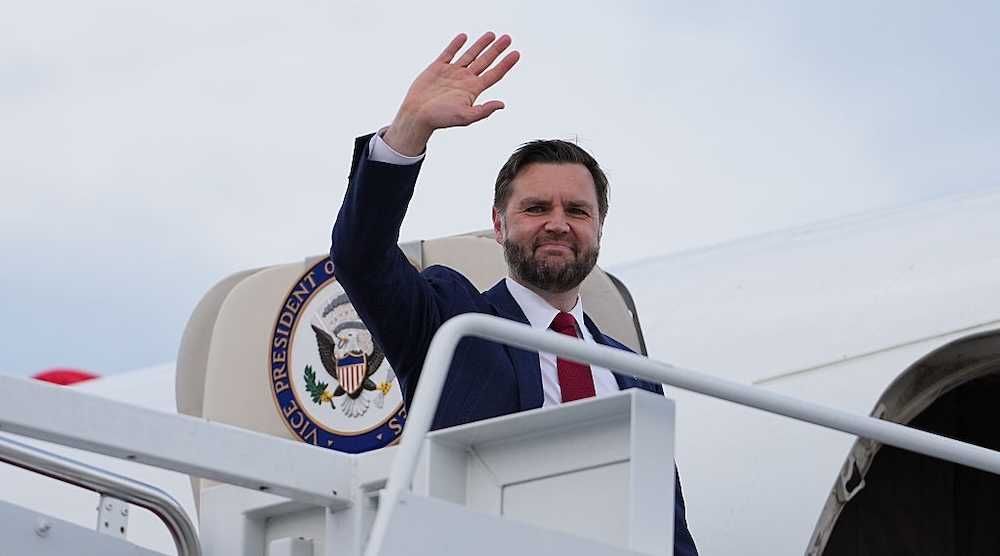
RELATED: JD Vance might be unstoppable in 2028
This pattern keeps repeating. Trump elevates, preserves, and empowers statewide GOP leaders who hate conservatives. Those leaders then turn their guns on freedom caucus members in their own legislatures.
Idaho proved the point last week. Trump’s endorsement of Gov. Brad Little for a third term helped keep him in power. Little then spent hundreds of thousands of dollars helping defeat five conservatives in the legislature.
North Dakota shows the same dynamic. Trump cleared the field for governor two years ago and helped install Rep. Kelly Armstrong, one of the most liberal Republicans in Congress. Armstrong is not up for re-election this year, so he is using his money and clout to target the few conservatives in a legislature with almost no official Democrats but plenty of undocumented ones.
Trump has generally stayed out of state legislative races. But his long shadow of RINO endorsements now creates a greater headwind against conservative candidates than ever before.
And don’t even get me started on Trump’s endorsement of Byron Donalds in Florida to replace the greatest governor of this generation.
The Paxton endorsement and Cornyn’s defeat should have marked a turning point in Trump’s political strategy. Instead, they look like the high point of the cycle.
From here, conservatives have every reason to worry that Trump will return to his old habit: rewarding the swamp, clearing the field for weak Republicans, and leaving the movement’s best fighters to fend for themselves.
'We will not be intimidated': Republican gubernatorial candidate claims his house was target of arson attack in Florida
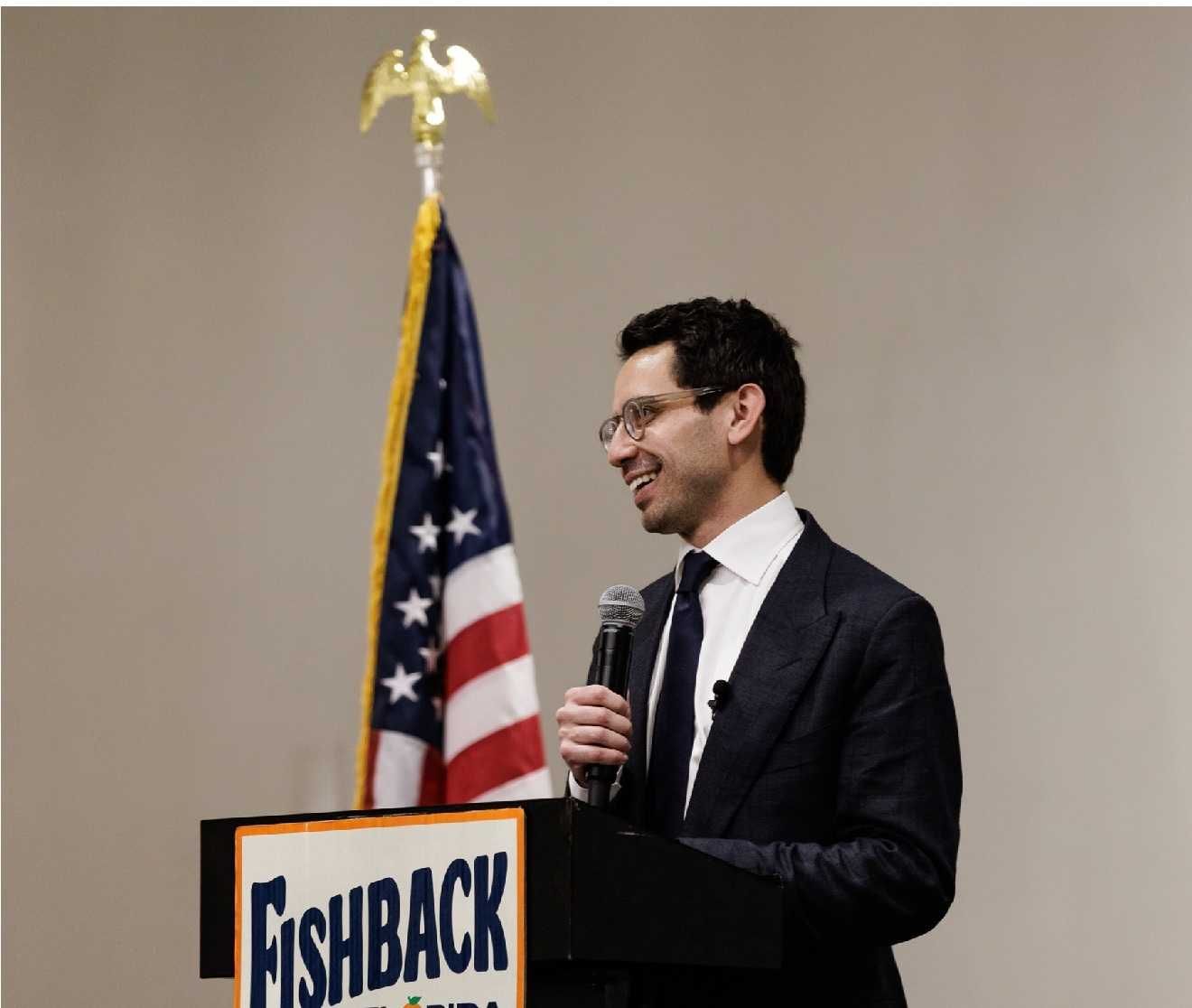
While James Fishback, a Florida Republican gubernatorial candidate, has seen a good deal of campaign success since the launch of his campaign in late November, he has also seen a great deal of resistance — and potentially intimidation.
On Sunday night, Fishback's campaign alleged that a fire was "intentionally set" near his house, where he and his team were working.
'I'll be hosting a rally in my own backyard tomorrow night.'
Emma Wright, Fishback's campaign manager, posted an official statement less than an hour after the alleged incident.
"Shortly after 5:50 p.m. on Sunday, a fire was intentionally set in his side yard and began spreading toward his home, where Mr. Fishback and members of his staff were working. We are grateful to the Madison County Fire Rescue for their swift response and for containing the fire before it damaged his home," the statement read.

Fishback's campaign also condemned political violence of any kind, stressing that it has "no place in America."
Fishback quote-tweeted the statement from his campaign manager, adding, "My team and I are okay."
In a post that has since received 560,000 views, Fishback provided some photos of the scene, including what appears to be a burned area of a yard with the fire department on the scene.
Fishback followed up with a few more posts in the hours following the alleged attack, including an invitation to an unconventional rally.
"I'll be hosting a rally in my own backyard tomorrow night," he wrote just hours after the alleged incident on Sunday. "We will not be intimidated."
Shortly thereafter, he added an invitation to his house for a "backyard rally." The invitation included what appears to be his home address in Madison, Florida. The rally will be held on Monday night.
Blaze News reached out to Madison County Fire Rescue for comment. The Fishback campaign did not respond to a request for comment.
Like Blaze News? Bypass the censors, sign up for our newsletters, and get stories like this direct to your inbox. Sign up here!
 www.theblaze.com
 www.theblaze.com
 www.theblaze.com
 thefederalist.com