Republicans are leading the field in the California governor race


Steve Hilton, the leading candidate for governor of California despite his status as an unapologetic Republican, called it a perfect metaphor for the state’s spate of recent failures.

After the University of Southern California abruptly canceled its televised gubernatorial debate less than 24 hours before it was set to take place, Democrats scrambled to come up with an alternative forum. Despite the frantic reaction, the crowded field of Democratic candidates couldn’t agree to the proposed ground rules.

As candidates scrambled to regroup after USC canceled the debate, the large field of Democrats still couldn’t agree on a commitment to continue including all the candidates in future debates.

The debate implosion and the subsequent failure to quickly reorganize played right into the leading GOP contender’s hands.

“This is just so symptomatic of everything that's wrong with California,” Hilton told RealClearPolitics on Tuesday in the aftermath of the debate’s cancellation. “Everything is broken, from the high-speed rail, where they haven't laid any tracks. Then last week we saw that $100 million butterfly bridge to nowhere. Nothing works. Everything’s broken. It’s all a shambles. They can’t even organize a debate.”

Decades ago, USC was considered a conservative alternative to public academic institutions across the state. More recently, the private university has become indistinguishable from the rest — at least when it comes to cancel culture.

All of the candidates the university had decided to invite to participate in the planned debate, hosted by Univision and KABC, are white. All of the candidates left out are minorities who also happened to be polling in the single digits: California Superintendent of Public Instruction Tony Thurmond (D), former Los Angeles Mayor Antonio Villaraigosa (D), and former California State Controller Betty Yee (D) were not invited after the university said they had not met their debate criteria.

Those invited included former Fox News host Steve Hilton (R), Riverside County Sheriff Chad Bianco (R), Rep. Eric Swalwell (D), former Rep. Katie Porter (D), businessman Tom Steyer (D), and San Jose Mayor Matt Mahan (D).

“We recognize that concerns about the selection criteria for tomorrow’s gubernatorial debate have created a significant distraction from the issues that matter to voters,” the university said in a statement. “Unfortunately, USC and [debate co-sponsor] KABC have not been able to reach an agreement on expanding the number of candidates. ... As a result, USC has made the difficult decision to cancel tomorrow’s debate and will look for other opportunities to educate voters on the candidates and issues.”

The university would not commit to a new date for the debate.

Hilton and Bianco have been leading the crowded pack of candidates for months, stirring up panic amid veteran Democratic Party operatives that they could both emerge from the June 2 primary to run against one another and shut out Democrats entirely. Swalwell and Porter have been polling around 10%, with Steyer, despite spending tens of millions of dollars, a few points behind.

Under California’s “top-two” primary system, only the two candidates with the most votes, regardless of party, will advance to the general election. Democrats are concerned that Hilton and Bianco are poised to do so if the field of Democratic candidates doesn’t narrow down quickly.

It was Mahan’s invitation, however, that really stung among those sidelined from the stage. A white Democratic centrist candidate, Mahan had only recently entered the race and was polling in the single digits along with those excluded from the debate.

Still USC explained his inclusion by citing a new debate-inclusion criteria that valued intensive fundraising. The Democrats complaining about being left out didn’t buy the rationale and instead cited Mahan’s USC ties as evidence of special treatment.

RELATED: ‘Things will return to normal’ is not a serious policy

Tayfun Coskun/Anadolu/Getty Images

Mike Murphy, co-director of the USC Dornsife Center for the Political Future, which was hosting the debate, had been, on a voluntary basis, advising an independent expenditure committee supporting Mahan. Yet Murphy claimed to have nothing to do with organizing the debate and pledged to temporarily step down from his university role if he decided to accept a paid position from any entity backing Mahan.

Over the weekend when Xavier Becerra (D), Thurmond, and others started complaining about Mahan’s inclusion, top Democratic legislators decided to weigh in.

The speaker of California’s Assembly, Robert Rivas, and the leader of the state Senate, Monique Limon, joined the leaders of the legislative Latino, Black, Asian and Pacific Islander, Native American, LGBTQ, Jewish, and women’s caucuses in writing a letter to USC President Beong-Soo Kim demanding that they change their “biased criteria.”

“The outcry over this debate is deafening and includes legal demands from the excluded candidates’ attorneys, public calls by elected leaders across the state, concerns from the included candidates’ own campaigns, and growing alarm from California voters,” the legislators wrote. “Instead of responding to these valid concerns by expanding the debate, USC has doubled down.”

The debate was supposed to take place at a critical time — with two Republican candidates consistently running ahead of their Democratic counterparts, none of whom has broken out of a crowded field. It also was set to occur less than two months before the state planned to send ballots to every registered voter.

In early March, California Democratic Party Chair Rusty Hicks published an open letter urging Democratic contenders to consider dropping out if they didn’t see a realistic path to a primary victory.

“If you do not have a viable path to make it to the general election, do not file to place your name on the ballot for the primary election,” Hicks wrote just days before the March 6 filing deadline. But no candidate decided to heed Hicks’ call, and the letter drew a scathing response from Thurmond, who asserted that it was aimed at pressuring “candidates of color” to end their gubernatorial bids.

“Our political system is rigged,” Thurmond said. “The California Democratic Party is essentially telling every candidate of color in the race for governor to drop out.”

Hicks rejected that criticism, noting the letter did not name any specific candidate.

As candidates scrambled to regroup after USC canceled the debate, the large field of Democrats still couldn’t agree on a commitment to continue including all the candidates in future debates.

Part of the group wanted all parties to abide by a pledge to participate in future debates only if all Democratic candidates are invited. But that idea fell apart when they couldn’t get a commitment from fellow Democratic candidates.

Still Becerra, one of the candidates who was not invited to the USC debate, celebrated the decision to quash it entirely in a post on X:

We fought. We won! We stood up against an unfair candidate debate set-up that prematurely chose winners and losers. Tonight USC made the right decision to cancel their March 24 gubernatorial forum ... so hopefully next time it’s done right. Thank you to everyone who stood up, raised hell and demanded justice. Never give up when you’re fighting for fairness!

The Democratic disarray on rescheduling handed an opportunity to Hilton and Bianco. Instead of taking the night off, Hilton held an X.com space with more than 300 people participating. Meanwhile Bianco spoke to supporters at an event in Los Angeles.

A Bianco campaign social media post crossed out the words “debate watch party” and blamed Democrats for the abrupt change.

“The Ds got the debate canceled, but we’re showing up anyway!” the post said. “See you tonight @sheriffbianco will be there.”

Hilton, who has been campaigning for roughly a year and has led in the polls for months, shared an X space forum with Elaine Culotti, an independent candidate for governor who is running under “NPP” — no party preference.

Culotti, a California real estate developer and interior designer who starred in the Discovery+ reality series “Undercover Billionaire,” appears poised to throw her support to Hilton if he wins the primary, even though she argues that her current participation in the race takes votes away from Swalwell.

The two more ideologically aligned candidates continued to criticize Democrats for blowing up the debate while laying out their own visions for reforming California, by not only stopping the U-Haul exodus of those moving out to find more affordable places to live but attracting more businesses to the state. Culotti said she would do so by reducing taxes to attract more than 100,000 businesses, leading to more jobs and more tax revenue.

Hilton said he would address affordability and businesses’ exodus from the state by opening up more oil and gas exploration, something he said could be done by executive order and by “kicking out all the climate fanatics” that California Gov. Gavin Newsom (D) placed in key positions in the government.

“Right now, they are denying the industry permits for every aspect of [oil and gas] operating in California, whether that’s maintaining existing wells or expanding them, or drilling new ones — all of that,” Hilton said.

RELATED: California’s next dumb tech idea: Show your papers to scroll

Jonathan Raa/NurPhoto/Getty Images

Hilton and Culotti also discussed the positive aspects of having a governor in Sacramento who could work with the Trump administration to implement a forest management plan that would help prevent devastating wildfires while providing billions more in federal funds to help the Palisades and Eaton wildfire victims rebuild.

“Whatever happens in the 2028 presidential election, we know we’re going to have two years where the next governor will overlap with the Trump administration,” Hilton said. “And that’s one of the things I'm most excited about. I’ve got good, good relationships with, you know, half the Cabinet.”

No one asked Hilton how he will contend with deep animosity toward Trump in a state where the number of registered Democratic voters outnumber Republicans nearly two to one.

Instead Hilton said he would prefer that Bianco drop out so he could consolidate the Republican support while working to turn out independents and Republicans in November in an election that includes ballot initiatives to institute voter ID and to maintain Proposition 13, a state constitutional amendment that imposes strict limits on property tax increases.

"You’ve got people in charge now who just don't think like this, and as we saw with the debate nonsense and raising the race card ... they’re just on a different planet," Hilton said. "But the underlying answer to how you deliver all of these things is just to take a sledgehammer to the massive, bloated nanny-state bureaucracy that is making everything so expensive and so difficult."

Editor’s note: This article was originally published by RealClearPolitics and made available via RealClearWire.

I walked away from California Democrats to keep my sanity


It used to feel good to be a Democrat in California.

Emphasis on used to — and President Trump’s recent State of the Union address illuminated exactly why I left the party.

California is not failing because it cares too much. It is failing because it confuses caring with governing.

In Silicon Valley, voting blue often feels like the default setting.

In many professional circles, especially in technology and venture communities, political alignment is assumed. Fundraisers double as social gatherings.

It feels compassionate, enlightened, on the right side of history.

But that night, the president challenged any member of Congress to stand who believes that the first duty of the American government is to protect American citizens, not illegal aliens. Shockingly, Democrats remained seated, providing a stunning visual of the current values of the Democratic Party.

What changed my mind was not the rhetoric. It was the outcomes. California is the glaring example of the failure of liberal policies.

Three areas illustrate the pattern.

Elections: Confidence is a safeguard

California does not require photo identification to vote in person. A voter provides a name and address and signs the roster. More than 30 states require some form of voter ID, according to the National Conference of State Legislatures. Countries such as Canada, France, and Germany require identification to vote. A 2023 Gallup poll found roughly three-quarters of Americans support requiring photo identification at the polls, including majorities across party lines.

Even if large-scale fraud is difficult to quantify, administrative failures and inconsistent verification practices fuel public doubt. Visible safeguards deter misconduct and preserve confidence in the system.

When California Democrats treat voter ID as ideological heresy, they weaken the legitimacy of the system they claim to defend.

Family: When the state becomes the decision-maker

Under California law, minors ages 12 and older may consent to certain mental health services without parental notification if deemed mature enough by a provider. State law also allows minors to access reproductive health services confidentially. Recent legislation has expanded confidentiality protections in sensitive areas.

The justification is protection, but the effect is state supremacy in decisions that belong to parents.

The Supreme Court has long recognized parental rights as fundamental. Family authority is the first layer of civil society.

When the state positions itself as the confidential decision-maker in significant medical and psychological matters involving minors, it undermines that sovereignty.

It is not compassionate to expand state authority at the expense of parental sovereignty. It is government overreach into the most intimate sphere of civil society. As the co-founders of Moms for Liberty have put it, “We do not co-parent with the government.”

Compassion cannot justify dissolving the family as the primary unit of accountability.

Fiscal reality: Math still applies

California’s budget rests on a narrow and volatile base. The Legislative Analyst’s Office has documented that the top 1% of earners account for close to half of the state’s personal income tax revenue. That revenue is heavily tied to capital gains and is therefore inherently unstable.

Instead of broadening and stabilizing that base, state leadership has repeatedly targeted it. Wealth-based tax proposals focus on the very taxpayers who fund a disproportionate share of state commitments. Capital is mobile. IRS data shows sustained net out-migration of high-income households from California to states such as Texas and Florida over the past decade.

Then comes execution.

California’s high-speed rail project, approved in 2008 at an estimated $33 billion, is now projected to exceed $100 billion and remains incomplete. Florida, by contrast, expanded Brightline passenger rail through a public-private partnership model that attracted private capital and delivered major segments on time.

Between 2019 and 2023, California spent roughly $24 billion on homelessness programs. During that same period, homelessness rose statewide. In 2024, the California state auditor found the state failed to consistently track whether billions in spending produced measurable results.

The pattern is simple.

Spend expansively. Measure loosely. Promise morally. Deliver inconsistently.

The issue is not the stated goals, but the absence of discipline.

In each case, the rhetoric was noble, and the result was dysfunction.

RELATED: Gavin Newsom’s California is looting Medicaid in broad daylight

Photo by Benjamin Fanjoy/Getty Images

This is the governing model Kamala Harris rose within and that Gavin Newsom refined over time. Not because they lack intelligence, but because the system they represent rewards virtue-signaling over measurable performance. It resists basic electoral safeguards despite broad public support. It expands state authority into the family. It builds budgets on volatile revenue while accelerating out-migration. It spends billions without demanding outcome verification.

If that framework scales nationally, the consequences will be dire.

I did not leave the Democratic Party because I stopped caring about vulnerable people. I left because I care about institutional durability. Compassion matters. But governing requires discipline. California is not failing because it cares too much. It is failing because it confuses caring with governing. Compassion without competence becomes institutional rot.

If you are a Democrat in California who feels uneasy but cannot quite articulate why, I understand. I defended the language long after I stopped believing in the results. At some point, loyalty to outcomes must matter more than loyalty to a label. It did for me.

Editor’s note: This article was originally published by RealClearPolitics and made available via RealClearWire.
California Democrats Pile Out Of Clown Car At Their Convention

An all-you-can-eat buffet of free stuff and Trump sucks represented the ideological substance of California's late-AWFL Khmer Rouge party.
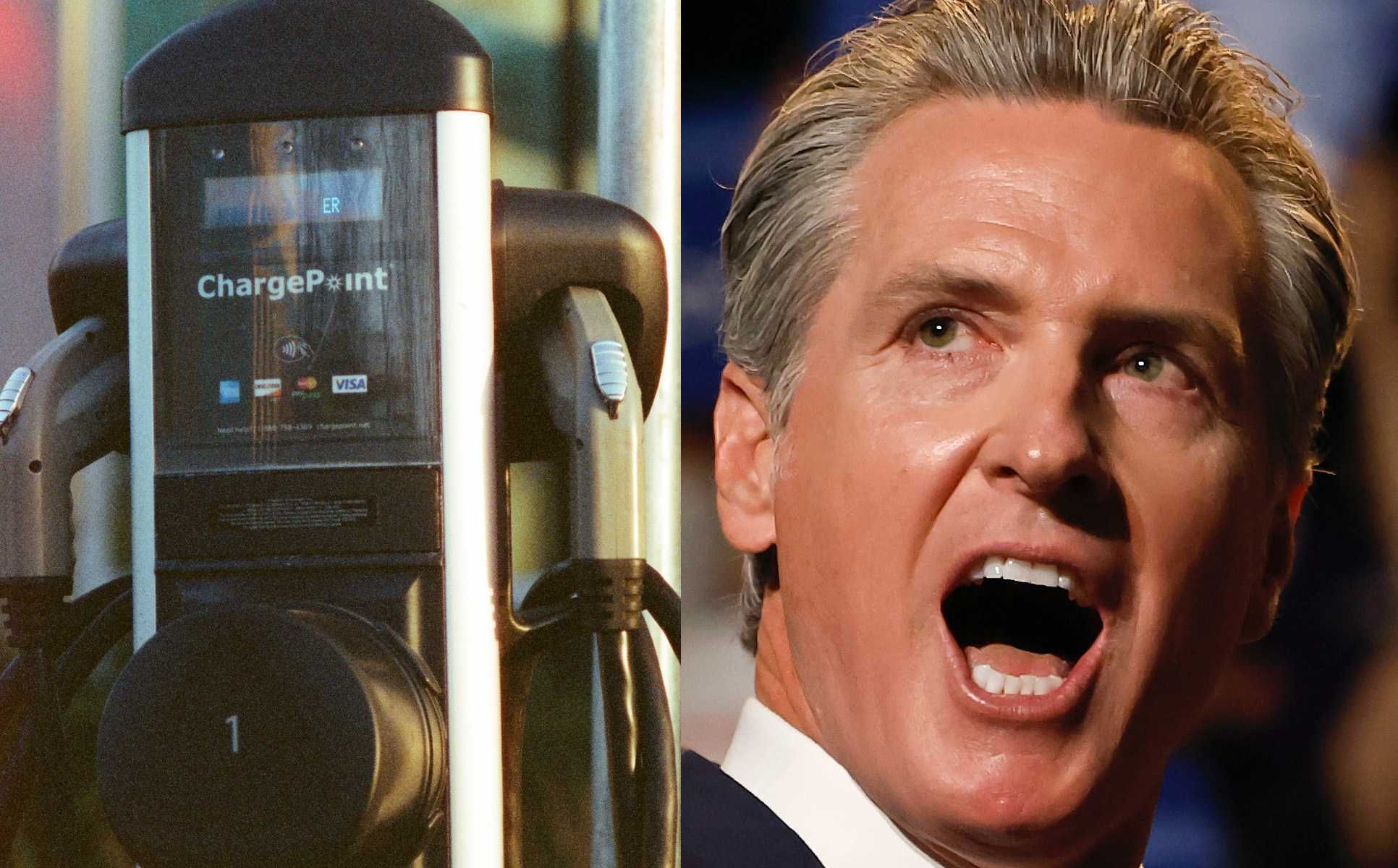
California Democrats crushed by backlash against tax proposal to replace revenue lost by electric car mandate


California Democrats are seeking to replace missing revenue after they passed an electric car mandate that undermined inflows from a gasoline tax.

While some are pushing a tax-by-the-mile to reclaim the revenue, a backlash from Californians has led to Democrats backing off from the proposal.

'We already pay the highest gas taxes in the nation. Now Sacramento is talking about adding a new tax for every mile people drive.'

Democrats have known the state would be hit with lower tax revenue since 2023 when an independent legislative analyst released a report saying the mandate would lead to a loss of $5 billion per year by 2035. The gas tax is also affected by increased vehicle gas efficiency.

However, when Republicans in the state raised the alarm about the possibility of a mileage tax, legislative staffers in Sacramento said they were hit with angry calls from voters against it.

The outrage was so strong that Gov. Gavin Newsom (D) was forced to address the controversy.

"Studying a concept is not enacting it," his press office wrote on social media Wednesday. "Despite national support from prominent *conservatives* like the Cato Institute, there is no mileage tax proposal in California — and the Governor would not sign one."

Democrats were also hit with angry messages on social media.

RELATED: LA Times gets obliterated online for scolding people wanting to leave high-tax California

"Californians are already getting crushed by the cost of food, housing, power, and gas," Republican Assembly Leader Heath Flora said. "We already pay the highest gas taxes in the nation. Now Sacramento is talking about adding a new tax for every mile people drive."

Newsom is widely considered to be trying to expand his national brand recognition in preparation for a possible presidential campaign in 2028.

Like Blaze News? Bypass the censors, sign up for our newsletters, and get stories like this direct to your inbox. Sign up here!

Democrats Choose Supporting LGBT Activists Over Stopping Child Rape

We have yet to find a point at which the left will actually stop its slide down the slippery slope of gay rights.
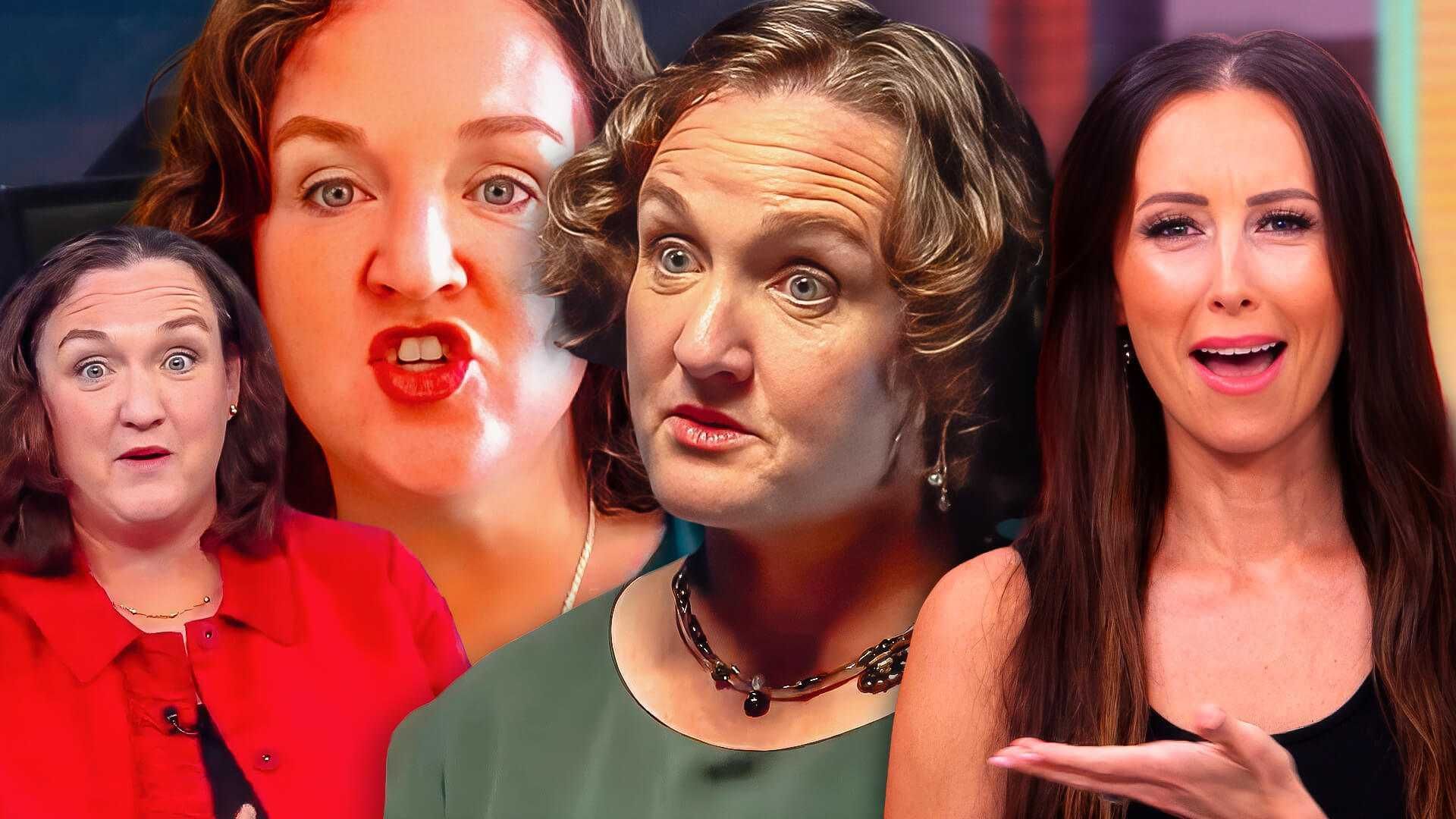
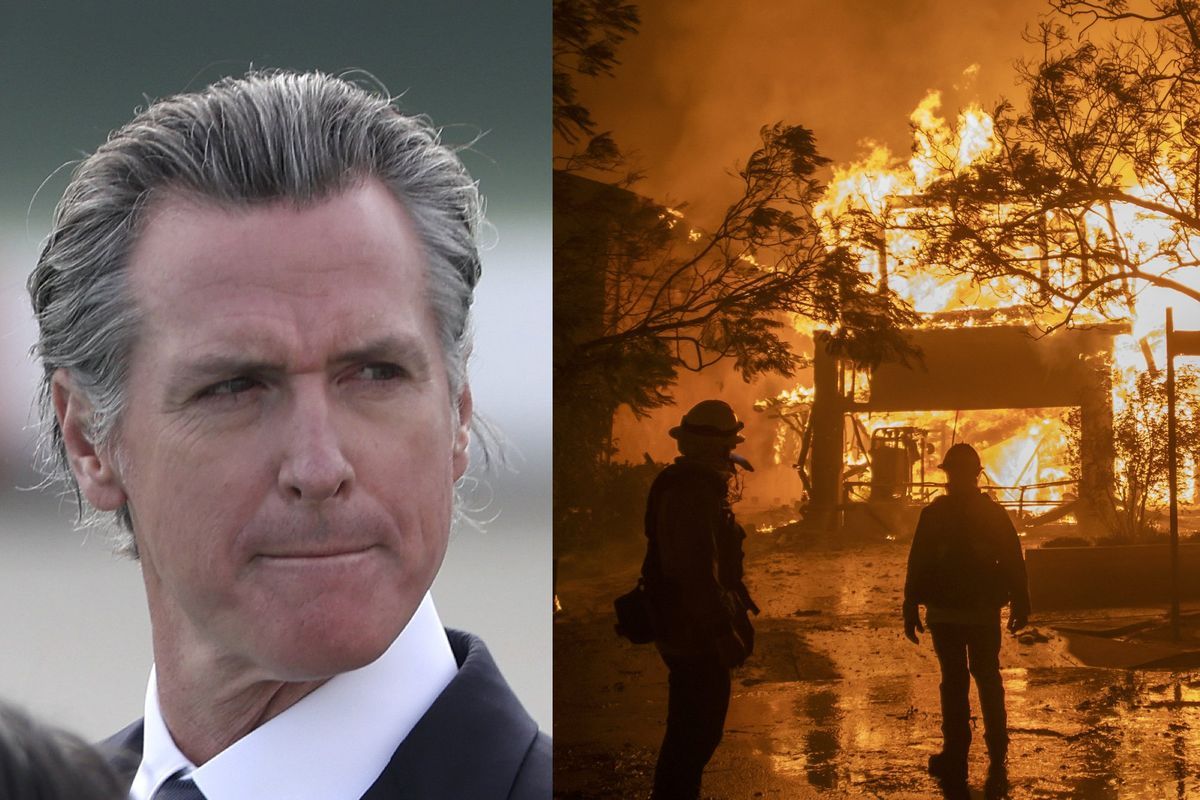
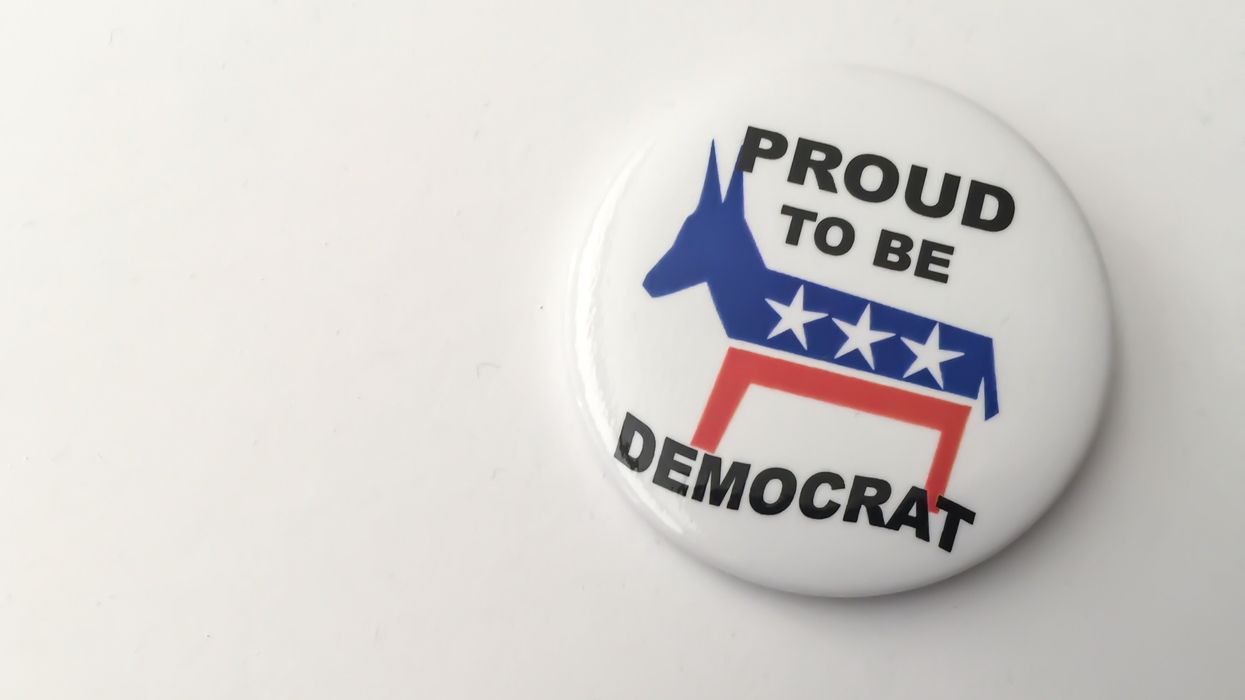
Katie Porter’s WORST moments come back to bite her


California Democrat gubernatorial candidate Katie Porter made a huge mistake when she threw a fit on air with a local reporter who was asking her simple questions — because it’s not the first time Porter has acted out.

And those wronged by her are taking the opportunity to pile onto her worsening PR crisis.

Now, footage from 2021 has resurfaced of an interview Porter did with Politico.

“Politico is like, ‘We’ve been waiting. We’ve been waiting to release this. Now is our moment,’” BlazeTV host Sara Gonzales says, before playing a clip of Porter screaming at one of her staffers during the interview for getting in her shot.

“Get out of my f**king shot,” she yells at the staffer, who can be seen wearing a mask in the background of the virtual meeting with Politico.


Her staffer then pulled down her mask and said she wanted to tell Porter that what she was talking about was “actually incorrect.”

“Okay. You also were in my shot before that. Stay out of my shot,” Porter responded.

“So, this was not the first time, by the way,” Gonzales comments, laughing.

“We’ve got another clip of her bullying staffers, and I want you to pay very close attention, because ... you can see the anger bubbling within her. And then there’s a moment where she turns off her camera, and I just, I’m really worried about her staffers in that moment,” she continues.

When Porter resurfaces, one of her staffers can be seen running to get out of the shot in the background.

“I just feel like we need to check on those staffers and make sure that they didn’t end up mysteriously missing because if so, I think I know who killed them,” Gonzales says.

Even worse, texts from 2022 have resurfaced where Porter berates and lets go of a staffer for failing to take a COVID-19 test, despite exhibiting no signs of illness. The staffer explained to Porter that after her friend was murdered, she was going through a difficult time and slacked off a little — but Porter wouldn’t hear it.

“I cannot allow you back in the office, given your failure to follow office policies,” Porter wrote via text to her staffer, Sasha.

“I understand. Thank you for the last two years and all that I have learned. I hate to have disappointed you in the manner, as I know it isn’t an excuse I had found out my friend from the navy had been murdered and my head was not in the best place. Not an excuse, but the reasoning for the lack of forethought. I appreciate everything this office has done for me,” the employee wrote.

“Well, you gave me Covid. In 25 months, it took you not following the rules to get me sick. My children have nobody to care for them,” Porter responded coldly.

“I think your children owe Sasha a thank-you, because any moment that they don’t have to spend with your miserable ass is probably greatly cherished,” Gonzales says. “They should write her a thank-you card and send her a bouquet, Sasha, for getting you sick.”

However, that's not even the worst of it.

According to divorce records, Porter also “frequently abused” her ex-husband “verbally” and threw “toys, books, and other objects” at him during their marriage. She once even poured scalding-hot mashed potatoes on his head during a fight.

“This is who wants to be in charge of the state of California,” Gonzales says. “Guys, they are not sending their best.”

Want more from Sara Gonzales?

To enjoy more of Sara's no-holds-barred takes on news and culture, subscribe to BlazeTV — the largest multi-platform network of voices who love America, defend the Constitution, and live the American dream.

California Democrats hammered for pushing special session to oppose Trump policies while Los Angeles continues to burn


Democrats in the California legislature are facing criticism for continuing with a plan for a special session to oppose the policies of the upcoming Trump administration while Los Angeles continues to burn.

Republicans have called on Democrats to focus on the wildfires spreading destruction through Southern California rather than continue with the anti-Trump scheme.

'We shouldn’t be focusing on Trump-proofing California, we should be focusing on fire-proofing California.'

“We have so much bigger issues right now that we really need to tackle,” said California assemblymember James Gallagher to reporters Thursday.

Democrats in California announced their plot to become a haven of resistance after Trump won the 2024 election and Republicans gained full control of the U.S. Congress. They want to allocate millions of dollars to the state attorney general's office for lawsuits against the incoming Trump administration.

“We shouldn’t be focusing on Trump-proofing California,” said Republican Senate Minority Leader Brian Jones. “We should be focusing on fire-proofing California.”

On Wednesday, state assemblymember Bill Essayli called on Gov. Gavin Newsom to call a special session to address the wildfires instead of the Trump administration.

Ashley Zavala pressed California Assembly speaker Robert Rivas, a Democrat, on why they were pushing forward with the special session when they had the power to oppose Trump without one.

"Rivas would not answer my questions," Zavala said.

She posted video of her questioning Rivas on her X account.

More than 2,000 structures have burned down in the fires, and at least five people are believed dead, though officials say far more fatalities are expected from the disaster. Some firefighters are reporting that fire hydrants are running out of water, prompting angry residents to demand full accountability from local leaders, most of whom are Democrats.

Like Blaze News? Bypass the censors, sign up for our newsletters, and get stories like this direct to your inbox. Sign up here!

The growing list of lawmakers ditching the Democratic Party


The Democratic Party is hemorrhaging not just voters, but lawmakers too.

Most recently, Florida state Rep. Hillary Cassel announced Friday that she would be switching her party affiliation from Democrat to Republican because she believes in "their vision for a better, more prosperous Florida."

There is no greater evidence of this shift than the overwhelming loss Democrats endured on November 5, especially among constituents and voting demographics that have reliably voted blue for decades.

"As a mother, I want to help build a world where our children are judged on their character and their actions, not on their labels," Cassel said. "As a proud Jewish woman, I have been increasingly troubled by the Democratic Party's failure to unequivocally support Israel and its willingness to tolerate extreme progressive voices that justify or condone acts of terrorism.

"I'm constantly troubled by the inability of the current Democratic Party to relate to everyday Floridians," Cassel continued. "I can no longer remain in a party that doesn't represent my values."

Although she is switching her affiliation, Cassel points out that her values won't necessarily always be in line with the entire Republican conference.

"I know I won't always agree on every detail with every Republican, but I do know that I will always have input, collaboration, and respect," Cassel said. "The House Republican Conference empowers members to find common-sense solutions to real issues facing all Floridians. They welcome different ideas and collaboration, which is the cornerstone of effective government. Those are my values."

Cassel is the second Florida lawmaker to switch her party affiliation this December. Recently re-elected Florida state Rep. Susan Valdes also announced that she will be changing her affiliation from Democrat to Republican in a statement echoing Cassel's.

"In the House, I have long known that no one has a monopoly on good ideas," Valdes said. "I will not waste my final two years in the Florida Legislature being ignored in a caucus whose leadership expects me to ignore the needs of my community."

"I want to roll up my sleeves and work," Valdes continued. "I want to be a part of solving problems for West Tampa. I'm tired of being the party of protesting when I got into politics to be part of the party of progress. I know that I won't agree with my fellow Republican House members on every issue, but I know that in their caucus, I will be welcomed and treated with respect."

This change of heart from Valdes and Cassel is not an isolated incident. California state Sen. Marie Alvarado-Gil also announced in August that she would be abandoning the Democratic Party and switching to the Republican Party.

“In the past two years that I’ve been working in the Senate, I have not recognized the party that I belong to,” Alvarado-Gil said. “The Democratic Party is not the party that I signed up for decades ago.”

Among the lawmakers and voters who have increasingly rejected the Democratic Party, the common thread has been the fact that the party has become unrecognizable. There is no greater evidence of this shift than the overwhelming loss Democrats endured on November 5, especially among constituents and voting demographics that have reliably voted blue for decades.

Whether Democrats decide to correct course for the sake of political viability is yet to be seen.

Like Blaze News? Bypass the censors, sign up for our newsletters, and get stories like this direct to your inbox. Sign up here!

California Passes Bill Preventing Huntington Beach From Requiring Voter ID

Both the state legislature and CA attorney general have gone after Huntington Beach's voter ID requirement.

Democratic state senator switches parties to Republican in deep blue state


A Democratic state senator is switching parties to become a Republican in the far-left state of California.

Sen. Marie Alvarado-Gil had flipped the seat in the 4th Senate District from red to blue, but according to a Politico report, she's changing her political affiliation.

'I don’t tend to follow the race train. I’m looking at society as a whole.'

Alvarado-Gil has been known as a moderate Democrat who has challenged the Democratic Party on many issues, including bills related to retail theft, a growing concern in California.

She also represents a Republican-leaning district that would be difficult to defend when she comes up for re-election in 2026. About 39% of the residents in the district are registered as Republicans while only 34% are registered as Democrats, according to state records.

Politico cited two sources with direct knowledge of the decision but said Alvarado-Gil's office had not confirmed the report.

The 4th State Senate District includes the counties of Alpine, Amador, Calaveras, El Dorado, Inyo, Madera, Mariposa, Merced, Mono, Nevada, Placer, Stanislaus, and Tuolumne. The district has about a million residents.

In comments to the Sacramento Bee, she said she was upset that Democrats were pressuring her to blindly follow and support their decrees.

“I would get asked,’ How can you side with the DAs? This is going to put more Black and brown people in jail. I don’t tend to follow the race train. I’m looking at society as a whole. I also understand that if we don’t hold people accountable for their actions, there is a domino effect," she said.

"Not only in our prisons system, our education system, our economic system, our housing system and whether or not Californians see themselves as part of communities or they are packing their bags and leaving," she added.

Alvarado-Gil's defection to the Republicans is unlikely to change legislation in the blue state as the legislature is in firm control of the Democrats.

Like Blaze News? Bypass the censors, sign up for our newsletters, and get stories like this direct to your inbox. Sign up here!