Fresno candidate's registered child sex offender status sparks outrage after city council campaign launch


Outrage has erupted as people have learned that a child sex offender has launched a bid to land a seat on a city council in California.

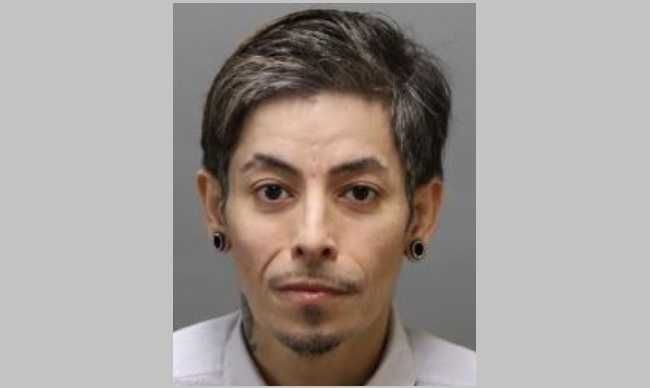
Rene Campos, who recently launched a bid to represent District 7 in Fresno, California, is facing some pushback over a highly concerning conviction not too long ago.

'I was raised in Fresno by a mother who taught me to protect the vulnerable, tell the truth even when it costs you, and never tolerate abuse of power.'

Campos was arrested in 2018 and later pled no contest to a misdemeanor charge of possession of child sex abuse material, according to court records. In October, he pled no contest to failure to register, records indicate.

However, the New York Post reported that he is perfectly eligible to run for office under California law.

RELATED: 'Sadistic' PA man sexually assaulted and cut 13-year-old girl at California motel after grooming her on Discord, feds say

Bill Oxford/Getty Images

This fact has sparked outrage at the prospect of a convicted child sex offender holding a seat of power. Others pointed out other obvious absurdities in the potential arrangement.

Nav Gurm, a small business owner and attorney who is opposing Campos for the District 7 seat, noted: "If someone is a registered sex offender, they can't be on campus at a school site; how are you going to be able to fulfill the duties of the job?"

Campos told ABC 30: "I believe Fresno deserves leaders who are honest from the very beginning, not the end. Going into this, I am putting my life out there."

Campos gave some information on his campaign website about his upbringing and the "values" he brings to the table, including "protecting the vulnerable": "I was raised in Fresno by a mother who taught me to protect the vulnerable, tell the truth even when it costs you, and never tolerate abuse of power. Those values didn't come from politics — they came from life."

While Campos claimed in the interview that he will not be running from his past, a review of his campaign website yielded no direct mention of his criminal past. Instead, there is one brief mention of a "legal situation that has been fully resolved" in the frequently asked questions section of the site.

Campos seemingly first announced his candidacy in late January, according to his Facebook page.

The primary election is scheduled for June 2.

Campos' campaign did not respond to a request for comment from Blaze News.

Like Blaze News? Bypass the censors, sign up for our newsletters, and get stories like this direct to your inbox. Sign up here!

Klobuchar running for Minnesota governor on anti-ICE platform


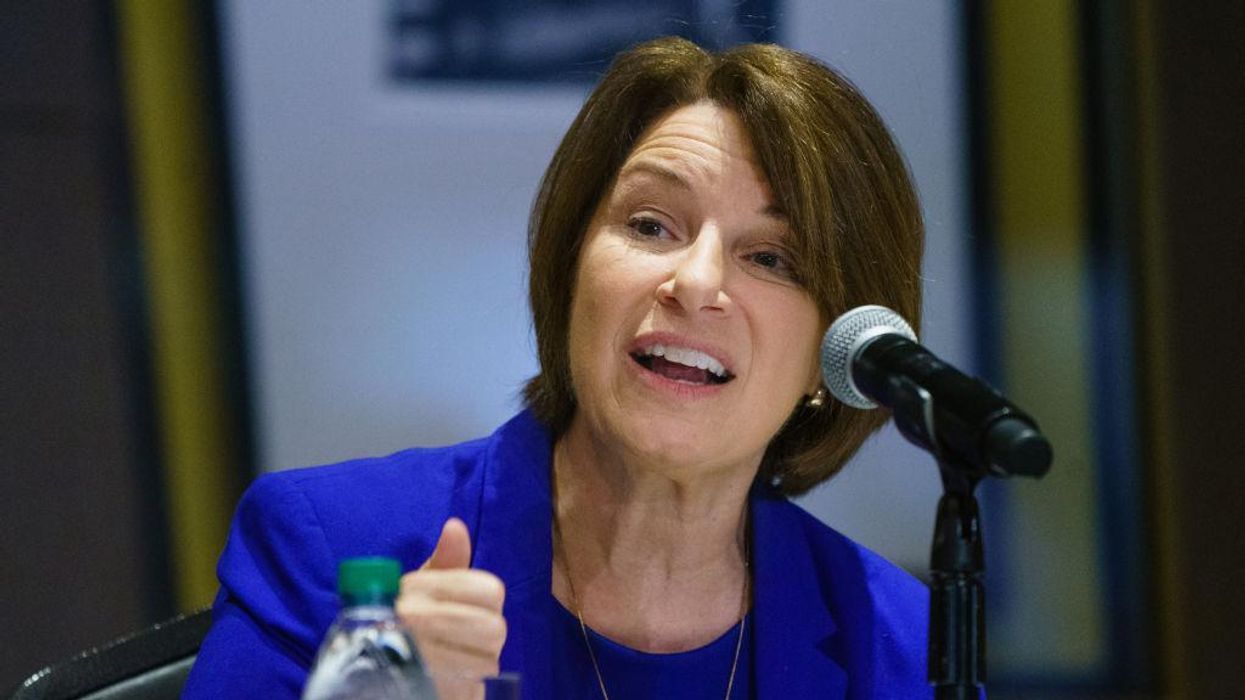
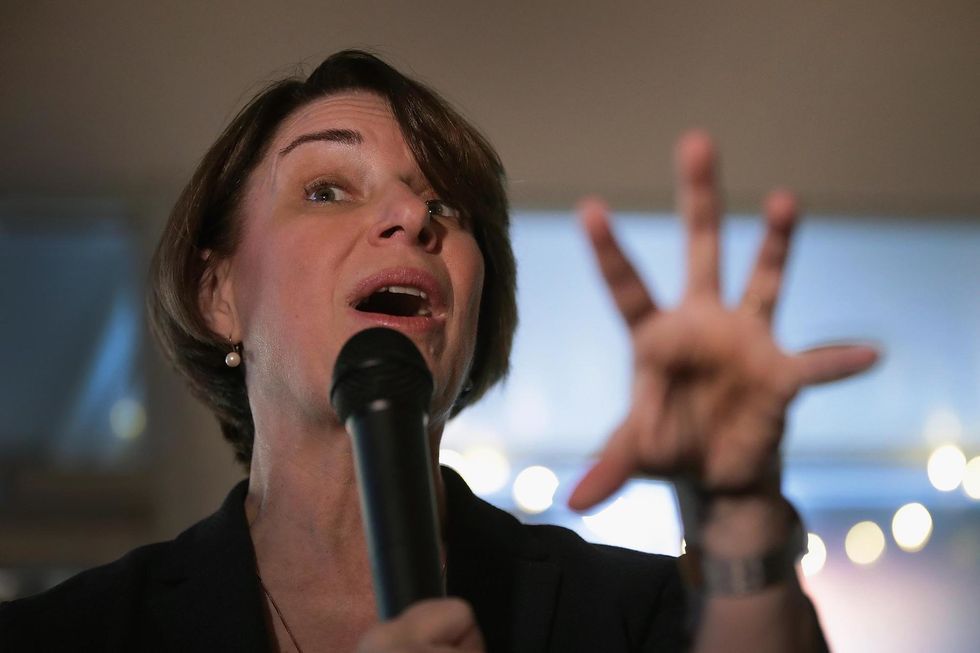
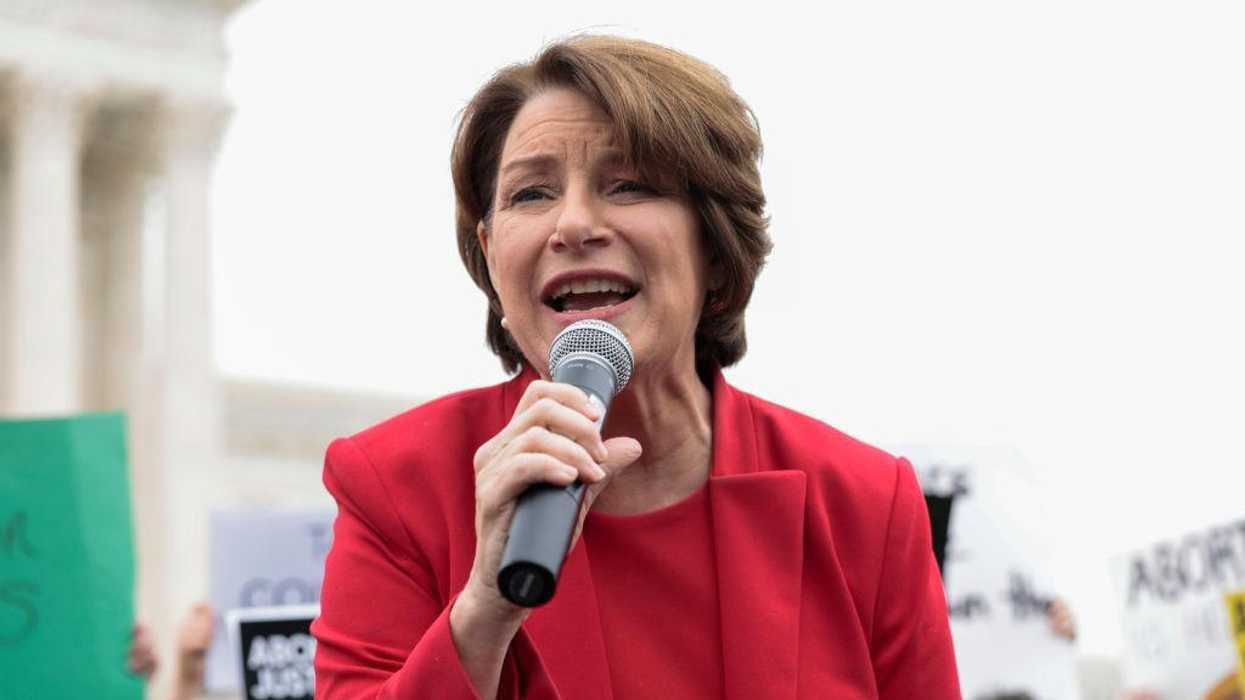
After the withdrawal of Democratic Gov. Tim Walz, U.S. Sen. Amy Klobuchar (D) formally declared her candidacy for governor of Minnesota in a polished campaign video released Thursday.

Klobuchar emphasized unity during what she described as a period of deep division in the state but repeatedly invoked federal immigration enforcement as a core concern for voters.

‘Get out of our state.’

“I’m running for every Minnesotan who wants ICE and its abusive tactics out of the state we love,” Klobuchar said, echoing remarks she has made repeatedly on the Senate floor and in public appearances as Minnesota has grappled with a federal immigration enforcement surge.

In recent speeches, she has urged Immigration and Customs Enforcement to leave Minnesota and criticized congressional efforts that would fund expanded ICE operations.

Klobuchar said the federal immigration surge in Minnesota was “making us less safe” and called on ICE to “get out of our state,” arguing that the deployment of thousands of agents inflamed tensions rather than improved public safety.

RELATED: 'Organized obstruction': Leaked alleged Signal chats show anti-ICE radicals tracking ICE agents, chasing vehicles

Photo by Scott Olson/Getty Images

Following the fatal shooting of Renee Good, Klobuchar also issued a statement through her Senate office criticizing the operation as being carried out “against the wishes of local leaders” and warning that federal enforcement actions were destabilizing Minnesota communities.

Klobuchar further condemned congressional proposals that would increase ICE funding without additional restrictions, saying she would not support legislation that “doubles down on enforcement-first policies” while communities are already facing unrest tied to federal immigration operations.

Her gubernatorial campaign video opens with Klobuchar addressing recent tragedies, saying, “Minnesota, we’ve been through a lot,” before referencing a string of violent incidents, including the deaths of Renee Good and Alex Pretti, both of which occurred amid unrest tied to federal immigration enforcement activity.

RELATED: 'You should f**king kill yourself': DHS releases terrifying audio of anti-ICE agitator threatening Minnesota agent

Sen. Amy Klobuchar (D-MN) (Photo by Anna Moneymaker/Getty Images)

She also criticized the presence of roughly 3,000 federal immigration agents operating in Minnesota communities, criticizing an administration she said “relishes division.” Klobuchar has publicly said that immigration enforcement operations in Minneapolis are “making us less safe” and has joined other Minnesota leaders in calling those federal actions a threat to community safety.

Klobuchar said Minnesota needs leaders who can stand up to Donald Trump’s administration while still finding common ground to address problems at the state level.

Like Blaze News? Bypass the censors, sign up for our newsletters, and get stories like this direct to your inbox. Sign up here!

Socialism didn’t win New York. Marketing did.


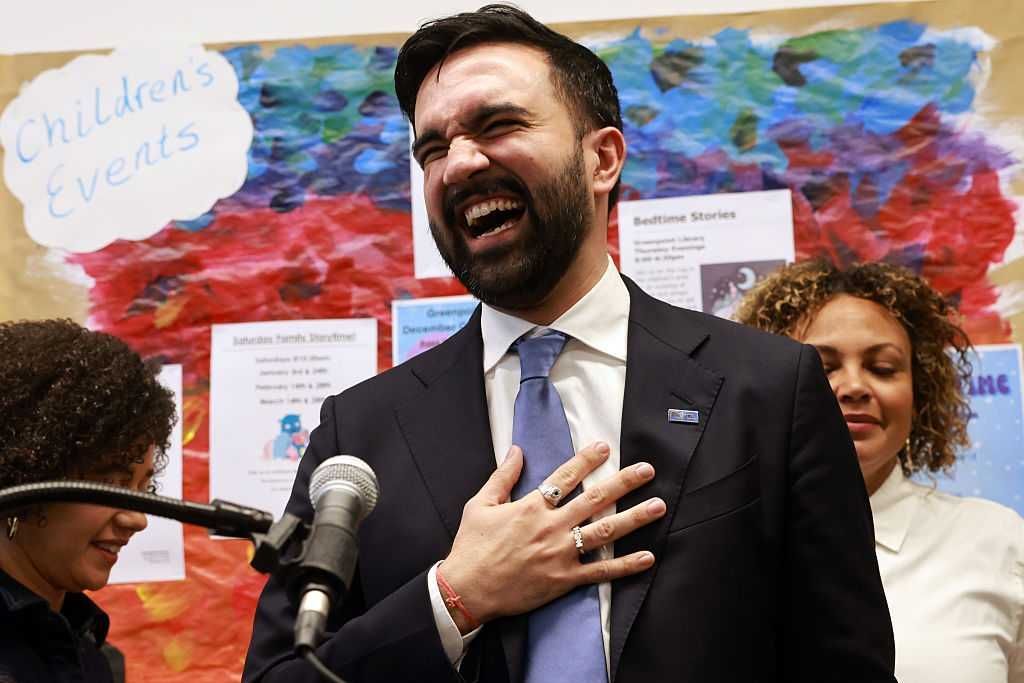
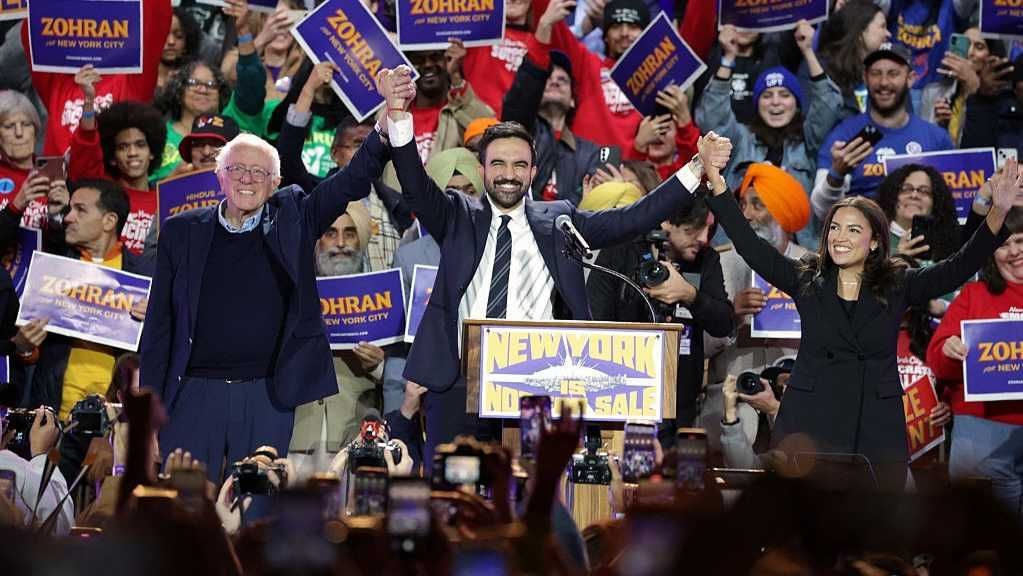
I oppose Zohran Mamdani’s Democratic Socialist agenda. But if Republicans are serious about winning elections next year and in 2028, they need to take a hard, unsentimental look at how he just won one of the most consequential mayoral races in the country.

This was not an ideological earthquake. New York did not suddenly “discover” socialism. What happened was a marketing and mobilization breakthrough. Mamdani’s campaign understood attention, simplicity, participation, and distribution better than anyone else in the race.

Republicans often confuse seriousness with stiffness. Mamdani showed that message discipline does not require lifelessness.

Joe Perello, the city of New York’s first chief marketing officer, noted in PRWeek after Mamdani’s victory that the campaign did more than communicate a message. It built an engine that converted online engagement into real-world turnout.

“For marketers and strategists alike, the implications are clear,” Perello wrote. “Growth hacking, iterative testing, and data-driven amplification can convert digital sentiment into real-world behavior. In Mamdani’s case, that meant converting hearts, clicks, and hashtags into ballots.”

Here is the part many on the right do not want to hear: Mamdani did not spend his time lecturing working-class voters about the virtues of socialism or defending failed economic theory. He focused on immediate, kitchen-table concerns and paired them with simple, slogan-ready answers.

Is halal food expensive? Make it cheaper. Struggling to get to work? Free buses. Grocery bills too high? Government-run grocery stores.

He took Bernie Sanders’ 2016-era talking points and filtered them through a polished, Obama-style optimism that voting-age New Yorkers were willing to engage with.

Most voters do not have the time — or patience — to think through how these promises would actually work. They just want to hear that someone intends to make their lives easier.

As Citizens Alliance CEO Cliff Maloney observed during Mamdani’s surge in the polls, the public’s lack of understanding about how government operates — and how socialism consistently fails — created the political environment Mamdani exploited. He did not create that environment. He mastered it.

Republicans’ digital blind spot

For years, Republican campaigns have treated digital media as messaging rather than infrastructure. Social platforms are used as megaphones for press releases, fundraising tools, or dumping grounds for cable-news clips. The underlying assumption is that persuasion happens elsewhere — on TV, at rallies, through mailers — and that digital simply amplifies those efforts.

Mamdani reversed that logic. Social media was not an accessory to his campaign. It was the campaign.

His approach drew praise even from outlets like the Guardian, where journalist Adam Gabbatt noted that Mamdani “has won social media with clips that are always fun — and resolutely on-message.”

His team treated TikTok and Instagram like serious growth channels. Short videos were not vanity content; they were experiments. Different neighborhoods, different faces, different tones, different pacing. What held attention? What sparked comments? What traveled across boroughs? Each post generated data, and each data point informed the next iteration.

This was politics run as a full-funnel acquisition strategy. Awareness led to engagement. Engagement led to identification. Identification led to turnout. Republicans can mock the aesthetics, but the mechanics work.

Energy is a signal

One of the most underrated elements of Mamdani’s campaign was how it looked. He was constantly in motion — walking Manhattan, running a marathon, bouncing between boroughs. Rarely behind a lectern. Rarely static. Always visible.

That energy communicated youth, optimism, and confidence in the same way John F. Kennedy outperformed Richard Nixon on television in 1960. A similar contrast appeared in 2024, when Donald Trump’s unscripted, high-visibility media strategy stood in sharp contrast to Joe Biden’s and Kamala Harris’ tightly controlled appearances.

The predictable response on the right is dismissal. ‘That’s just TikTok nonsense.’ ‘Our voters aren’t like that.’ Those excuses are comforting — and dangerously wrong.

In an age of low trust and low information, energy reads as competence. Movement suggests effort. Visibility substitutes for familiarity. Mamdani’s omnipresence created the impression — fair or not — that he was accessible and engaged with everyday life.

Republicans often confuse seriousness with stiffness. Mamdani showed that message discipline does not require lifelessness.

RELATED: When Bernie Sanders and I agree on AI, America had better pay attention

Photo by ANGELA WEISS/AFP via Getty Images

From supporters to fans

The most uncomfortable lesson for traditional campaigns is that Mamdani did not just mobilize voters. He activated fandom.

Much of the campaign content that flooded social media did not come from official accounts. It came from supporters remixing clips, creating fan art, cutting moments to music, and sharing them within their own networks. The campaign made Mamdani easy to clip, easy to celebrate, and then got out of the way.

Wired magazine described it as a rare case of participatory political culture usually reserved for celebrities.

This matters because peer-to-peer persuasion scales faster and carries more credibility than anything a campaign can manufacture. Fan-made content travels further, feels more authentic, and costs nothing. Republicans, by contrast, tend to over-police their messaging, choking off organic enthusiasm in the name of control.

Younger voters understand fandom instinctively. They grew up online. Mamdani did not lecture them about politics; he gave them something to belong to.

The wrong reaction

The predictable response on the right is dismissal. “That only works for Democrats.” “That’s just TikTok nonsense.” “Our voters aren’t like that.”

Those excuses are comforting — and dangerously wrong.

Trump understood this dynamic in 2024 when his campaign was largely shut out of legacy media. Figures like Charlie Kirk reached millions of Gen Z voters by blending serious political content with the humor and energy of youth activism.

Algorithms do not have ideologies. Participation is not a left-wing monopoly. Visibility, simplicity, and community are not progressive inventions. In a low-information, high-attention environment, the side that understands distribution wins.

The real danger is not Mamdani’s policies alone. It is a Republican Party that keeps confusing being correct with being effective.

RELATED: How anti-fascism became the West’s civil religion

Blaze Media Illustration

What Republicans should learn — now

First, treat digital as organizing, not advertising. Stop thinking in posts and start thinking in systems. How does attention become action?

Second, simplicity wins. Republicans often pride themselves on being right — and then lose because they are incomprehensible. Clarity scales. Long explanations do not.

Third, loosen control. Let supporters remix, clip, and share. Reach matters more than perfect phrasing.

Finally, build communities, not just campaigns. Email lists decay. Ad budgets run out. Communities endure.

The bottom line

I do not agree with Zohran Mamdani’s politics, and I do not want his policies implemented anywhere. But ignoring how he won would be malpractice.

He demonstrated how power is built today — not through party machinery or television dominance, but through attention, participation, and relentless simplicity. Republicans can learn from that reality, or they can keep losing to it.

Disagree with his ideology. But study his marketing. Ignore the lesson at your own risk.
Sinking Ship: Graham Platner's Finance Director Becomes Third Adviser To Flee Scandal-Plagued Campaign in Two Weeks

Maine Senate candidate Graham Platner's finance director resigned Friday, the third departure from the scandal-plagued campaign in the past two weeks.

The post Sinking Ship: Graham Platner's Finance Director Becomes Third Adviser To Flee Scandal-Plagued Campaign in Two Weeks appeared first on .

Kamala Ruled Out Mark Kelly for VP To Avoid Attacks on His Military Record. Then She Picked Tim Walz, Who Misrepresented His Military Record.

Kamala Harris ruled out Arizona senator Mark Kelly as her running mate because she was worried about attacks on his military record, she reveals in her new book. Instead, she went with Minnesota governor Tim Walz, who soon came under fire for misrepresenting his military record.

The post Kamala Ruled Out Mark Kelly for VP To Avoid Attacks on His Military Record. Then She Picked Tim Walz, Who Misrepresented His Military Record. appeared first on .

DNC Duped Donors Into Paying Off $20 Mil in Kamala Campaign Debt: Report

The Democratic National Committee quietly funneled more than $20 million in donations to cover Kamala Harris's 2024 campaign debts while leading donors to believe their money was going toward future elections, according to a report.

The post DNC Duped Donors Into Paying Off $20 Mil in Kamala Campaign Debt: Report appeared first on .

Democrats desperate for cash while GOP stockpiles surge


Following a brutal electoral loss in November, Democrats continue to fall behind Republicans in the race for cash.

The Republican National Committee has significantly outpaced its Democratic counterpart with respect to fundraising. As of June, the RNC had $80 million on hand, while the DNC only had $15 million in its war chest.

'Donors see the DNC as rudderless, off message and leaderless.'

To put this disparity in perspective, the DNC has less cash on hand this summer than they did at any given time over the last five years.

"Under President Trump's leadership, the RNC is laser-focused on expanding our majorities in 2026," RNC spokeswoman Kiersten Pels told Blaze News. "Donors know their investment with Republicans pays off — we win."

RELATED: Conservative firebrand Chip Roy bids Congress farewell, targets new political venture

Tom Williams/CQ-Roll Call, Inc via Getty Images
This fundraising gap is not unique to the parties' national committees. The National Republican Congressional Committee has also outpaced the Democratic Congressional Campaign Committee during this fundraising cycle.

In June alone, the NRCC raised over $18 million with a total of $32.2 million raised in the second quarter. At the same time, the DCCC only brought in $12.7 million in June, totaling about $29 million in the second quarter.

"The NRCC is fueled by unstoppable momentum because voters know what's at stake," NRCC Chairman Richard Hudson said in a press release. "While House Democrats are embracing the largest tax increase in history, open borders, and a radical socialist agenda, House Republicans are on offense. Americans are rallying behind the Republican mission to lower costs, make communities safer, and stop the far-left chaos consuming the Democrat Party."

RELATED: The brutal reality Democrats can't ignore

Photo by Michael M. Santiago/Getty Images

Democratic donors' hesitancy is often attributed to the progressive overhaul of the party. With candidates like Zohran Mamdani and politicians like Rep. Alexandria Ocasio-Cortez (N.Y.) taking center stage, the Democratic Party has become harder to sell.

"Donors see the DNC as rudderless, off-message, and leaderless," one Democratic donor adviser told Politico. "Those are the buzzwords I keep hearing over and over again."

The DNC did not respond to a request for comment from Blaze News.

Like Blaze News? Bypass the censors, sign up for our newsletters, and get stories like this direct to your inbox. Sign up here!