Democrats' 'Sergeant Schultz strategy' on Chavez and Swalwell


No one should believe Cesar Chavez's and Eric Swalwell’s stories were unknown to Democrats. Far more likely is that the details behind both men’s downfalls were not unknown to Democrats; they were simply unacknowledged. There’s a big difference, and it makes all the difference. Second only to the scandals themselves is the fact that Democrats stayed silent about them while letting the men who generated these continue to ascend. California values strike again.

In the 1960s American television comedy “Hogan’s Heroes,” one of the dupes of the Allied prisoners in Stalag 13 was Sergeant Schultz. Whenever he encountered, and he frequently did, evidence of the prisoners’ illicit activities, he would say, “I see nothing! I hear nothing! I know nothing!” to absolve himself from all blame. Apparently, when it comes to the myriad revelations about Cesar Chavez and Rep. Eric Swalwell (D-Calif.), the Democrats are reprising the “Sergeant Schultz strategy,” only they’re not doing it for comic relief; they are dead serious. They are equally transparent.

'I see nothing! I hear nothing! I know nothing!'

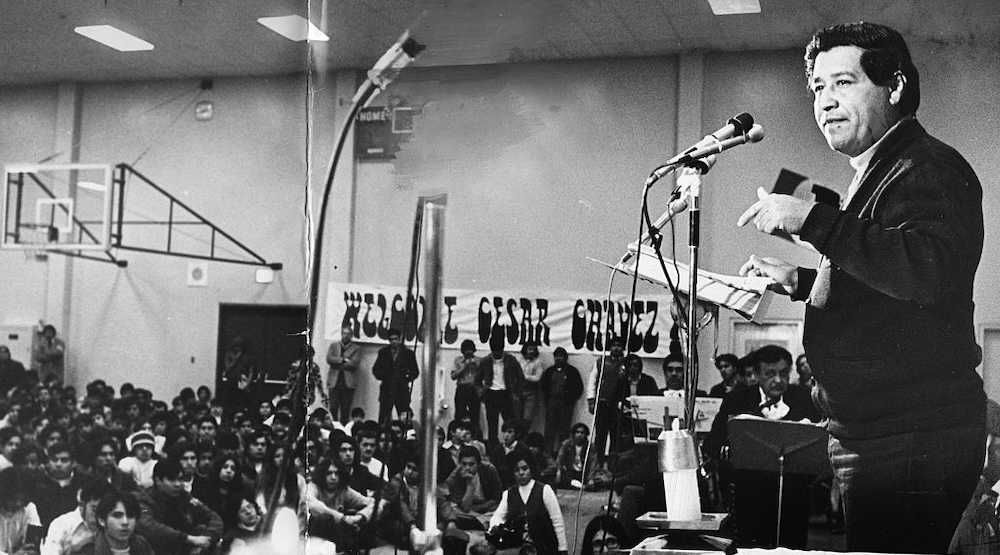
Beginning in the 1960s and continuing until his death in 1993, Cesar Chavez became a cultural icon to America’s left as he sought to organize agricultural workers, who were predominantly Hispanic, in California and the West. His tactics combined nonviolence, strikes, urging consumers to boycott produce not gathered by his United Farm Workers union, and heavy usage of Catholic imagery in his actions (pilgrimages, processions, Masses, and more) and speeches. According to a bombshell NYT expose, he was also grooming and abusing young girls who were involved with his movement. He did so for years.

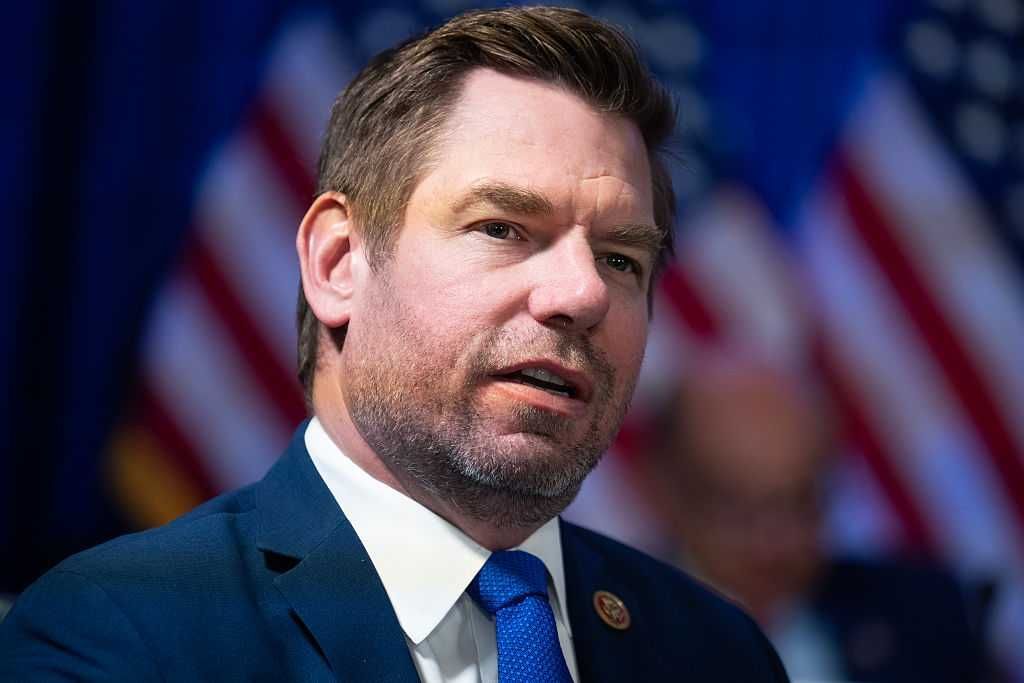
Thirty-three years after Chavez died, now-former Rep. Eric Swalwell is accused of similar sexual assaults. One woman accuses Swalwell of raping her in July 2018. Four other women have also made accusations of sexual assault and harassment.

This was hardly the first time Swalwell had been involved in controversy. A decade ago, he was at the center of a story regarding Christine Fang, aka Fang Fang, a woman accused of being a Chinese operative. According to an Axios story on Fang, she was a fundraiser for Swalwell’s 2014 campaign and “interacted with Swalwell at multiple events over the course of several years.”

Swalwell also had other questionable activities. He was involved in the Hunter Biden laptop scandal. As commentator Jonathan Turley described Swalwell’s role in a Hunter Biden 2023 press conference held to thumb its nose at a congressional investigation of the laptop episode: “Swalwell was standing in front of the same building aiding and abetting both a potential crime and the obstruction of congressional proceedings.”

RELATED: The left’s Cesar Chavez problem is much bigger than Cesar Chavez

Bettmann/Contributor/Getty Images

Chávez has been dead since 1993; the first accusations against him go back decades earlier. Swalwell first began serving in Congress in 2013; accusations of questionable conduct began almost immediately. In both cases, there were many episodes and many years.

Yet during this time, we are supposed to believe that no word about these two men got out within Democrat circles. The word was certainly out about both. There were reports about Chavez’s sexual improprieties that go back to the time when he was still alive. Swalwell’s seriously questionable decisions go way back, too.

Neither the inner ring of Democratic Party nor the House of Representatives is heavily populated. People know each other. They talk to each other. Yet we are supposed to believe that none of them talked about these episodes.

Instead, Democrats were elevating both. Chávez has schools and streets named after him; there are public holidays; there is a national monument to him in California, which Senate Democrats just blocked from being abolished. Swalwell was not diverted from moving up the California Democrat ladder. Until days ago, he was the front-runner for the state’s gubernatorial nomination.

While both stories have sickening similarities, the most overlooked one is the Democrats’ ignoring them for years.

Both scandals were covered up until someone uncovered them and made all the details public. Then Democrats were forced to run for cover themselves. Now they are rushing to run from them and make us forget that they, in all likelihood, knew significant details about both.

This is nothing new in their behavior. We are supposed to believe that the same thing happened with President Biden’s incapacity. With Hunter Biden’s behavior.

The pattern of admitting only when a thing is undeniable, and despite that it was obvious earlier, is all too clear. It is not simply the product of being above the rules. It is also the product of an establishment news media that Democrats know regularly avoid covering their scandals for as long as humanly possible. And when they are forced to cover them, Democrats know they will not ask the broader question: How did you not know? And when the rumors began to swirl — as they did in both cases — how did you not bother to see if they were true?

For both Chavez and Swalwell, Democrats had to ignore evidence before their eyes. They had to ignore the evidence brought to them. They had to either explicitly or tacitly construct an excuse. And they nonetheless let both men move forward despite what they knew or would have known had they simply looked. Now they want us to believe that, in the words of Sergeant Schultz, “I know noooooothing.”
The left’s Cesar Chavez problem is much bigger than Cesar Chavez


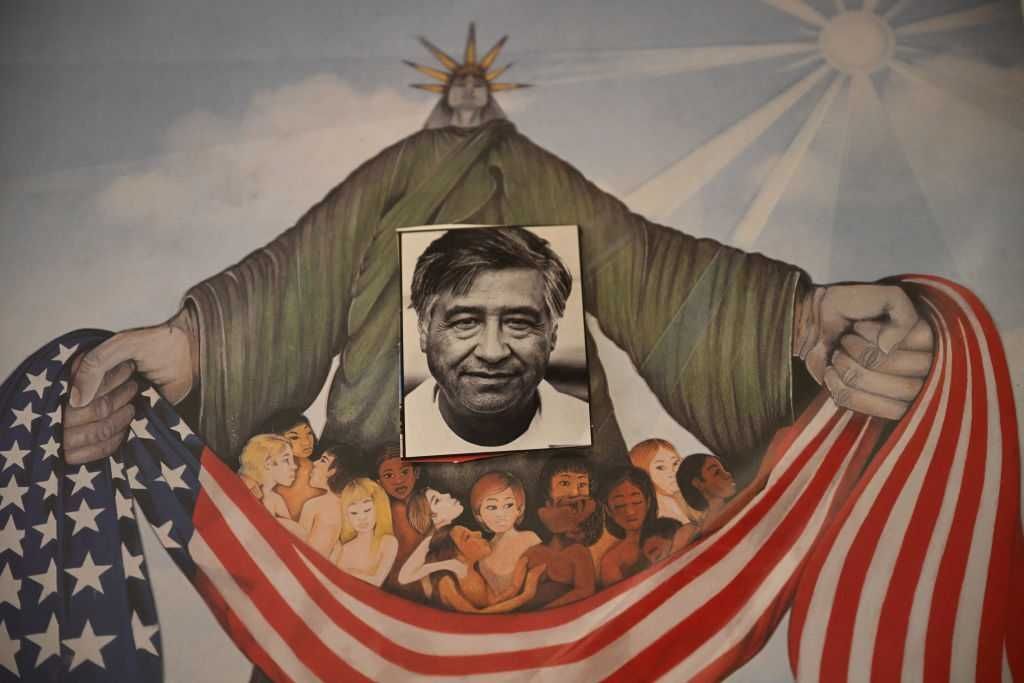
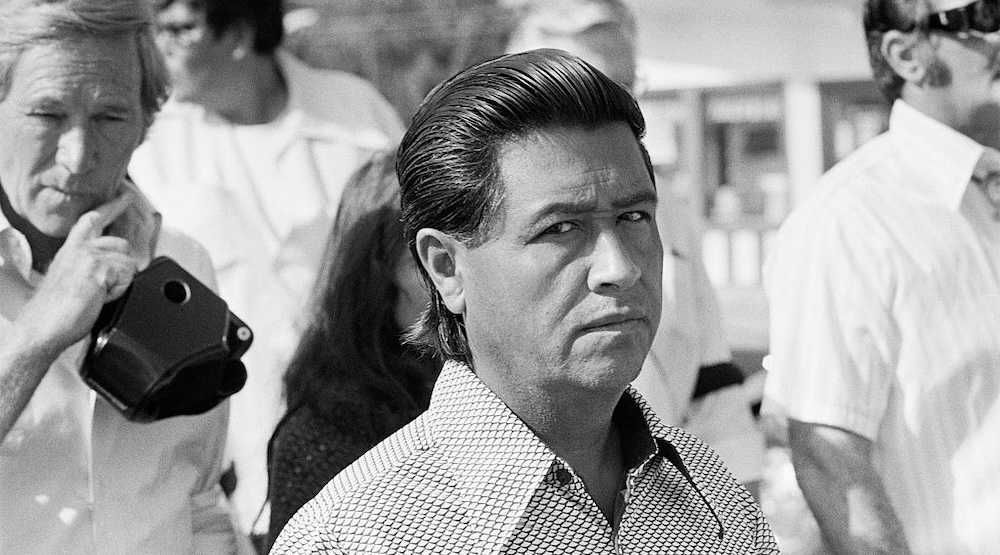
For decades, Cesar Chavez occupied near-canonical status in American universities. The United Farm Workers leader’s name adorned schools, his image filled lecture slides, and his story was told as secular hagiography: the humble labor leader who organized the oppressed, challenged exploitation, and embodied moral courage in the struggle for justice.

Now that image is cracking.

The reassessment of Chavez is not the end of something. It is the beginning of a broader reckoning.

A blockbuster New York Times story this month detailed serious allegations of sexual misconduct, including deeply disturbing claims that, if true, must force a fundamental reassessment of Chavez. The question is not only whether the allegations are true, but why this reckoning arrived only now.

What we are witnessing is not merely the fall of a man but the exposure of a pattern — one that reveals more about the moral framework of academic elites than about Chavez himself.

The manufactured hero

For years, Chavez has been presented, especially in university settings, as a hero of the proletariat. Not always in explicitly Marxist terms, of course. The language is smoother than that. But the structure is unmistakable: Chavez as the labor leader who stood against capital, exposed exploitation, and mobilized collective struggle in the name of justice.

Students are taught to see history as the story of structural oppression and economic conflict. Chavez became a usable symbol in that story. Because he served that function, his image was carefully curated.

What is now becoming clear is that the darker aspects of Chavez’s life were not entirely unknown. Reports of infidelity, domineering leadership, and abuses of power were not buried in some inaccessible archive. They were part of the broader historical record.

Silence around sin

Yet they were largely ignored.

That is how leftist professors handle their heroes. The facts that do not serve the narrative get minimized, reframed, or omitted. This is the first lesson of the current moment: The moral concern of the DEI professoriat is not truth but rather usefulness to the cause.

A figure is praised or condemned not by a consistent moral standard, but by whether he advances a political project. As long as Chavez could serve as a symbol of labor activism and anti-capitalist struggle, his sins remained background noise. Now that those sins threaten his usefulness, they have moved to the foreground.

No new moral conscience has emerged on the left. What we’re seeing is pure calculation.

RELATED: Labor group cancels Cesar Chavez events over 'profoundly shocking' new allegations

Tony Korody/Sygma/Getty Images

A narrow moral vision

The deeper problem goes beyond hypocrisy. The moral vision offered by Chavez’s academic admirers is radically narrow. It focuses almost entirely on one category of wrongdoing: economic injustice. Greed, real and serious as it is, gets elevated into the supreme moral concern. Entire departments and movements organize themselves around exposing and correcting it.

But what about lust? What about pride? What about the abuse of power in personal life, not just economic systems?

Those sins get treated as secondary or, worse, as distractions from the real work of social transformation. The result is a moral framework that is selective and shallow. It addresses external structures while neglecting the corruption of the human heart. Marxism 101 still teaches that if we revolt our way into a better system, we can somehow produce a better man.

But a philosophy with no coherent account of sin cannot solve sin.

From moralism to tyranny

That failure has predictable consequences. If the problem lies mainly in external systems, then the solution must also be external: regulation, enforcement, and conformity. Behavior must be monitored. Speech must be controlled. Dissent must be suppressed.

That is why academic environments that preach tolerance so often practice censorship. That is why calls for equity come paired with ideological compliance. Those who depart from the approved narrative do not get argued with. They get disciplined.

Until we recover a full account of human nature, one that takes sin seriously and looks beyond man for its cure, we will repeat this cycle again and again.

And that is why such movements, once they gain power, tilt toward tyranny. They do not govern by the standards of fairness they once demanded, because their moral framework never grounded those standards in the first place. It only deployed them when useful.

The fall of Chavez is not an anomaly. It is a case study. A movement that cannot account for sin will eventually be undone by it. Robespierre gets guillotined every time.

The deeper problem

At the heart of all this sits a basic misdiagnosis. Man’s greatest problem is not economic inequality. It is not structural oppression. It is not even political injustice, though all of those are real. Man’s greatest problem is sin.

It is the corruption of the heart that gives rise to every form of injustice, whether in the marketplace or the home, the factory or the family. No amount of social reorganization can fix that. You can redistribute wealth, rewrite laws, and restructure institutions and still end up with the same fallen human nature operating under new conditions.

That is why movements that promise moral transformation through politics end in disappointment. They try to fix what is internal by manipulating what is external. A Latin American studies professor once told a friend of mine, “Che su Christo.” Che is Christ.

RELATED: The lie that launched a thousand riots

Fitzgerald Whitney/Los Angeles Times/Getty Images

The only real solution

But there is only one Christ and only one remedy for sin, and it is the one most conspicuously absent from the classrooms that long celebrated Chavez.

The answer is not a program or a policy. It is a person.

Christ does not merely demand outward reform. He gives a new heart. He restores sinners to communion with God. He addresses not only the consequences of sin, but its source. He transforms the inner man, and from that transformation flow justice, righteousness, and love.

That is precisely why He is excluded. A system built on human effort, collective struggle, and ideological conformity cannot tolerate a solution rooted in repentance, grace, and divine authority. It is the works-righteousness religion of our age.

The inevitable reckoning

The reassessment of Chavez is not the end of something. It is the beginning of a broader reckoning. If our heroes are chosen for usefulness rather than virtue, they will disappoint us. If our moral standards are selective, they will collapse under their own inconsistency.

And if we refuse to acknowledge the true nature of sin, we will keep acting surprised by its consequences. The real lesson of this moment is not that another historical figure has fallen. It is that a moral system built on partial truths and ideological commitments cannot bear the weight of reality.

Until we recover a full account of human nature, one that takes sin seriously and looks beyond man for its cure, we will repeat this cycle again and again.

RFK Jr. Can’t Keep Up ‘Moderate’ Facade While Celebrating Violent Radical Cesar Chavez

Environmental extremist Robert F. Kennedy Jr. is planning a celebration this weekend for the late socialist to mark Cesar Chavez Day.

Jill Biden Honors Illegal Immigration Opponent Cesar Chavez As Human Rights Disaster Rages At The Border

Unlike today's left-wing activists, Chavez was a lifelong advocate for tight borders and vehemently opposed illegal immigration.

Why Does Biden Have A Bust Of An Anti-Immigration Radical In The Oval Office?

Cesar Chavez was a fierce opponent of illegal immigration and a proponent of border vigilantism. But because he’s a hero of the left, no one cares.