Parents: Let your kids out to play
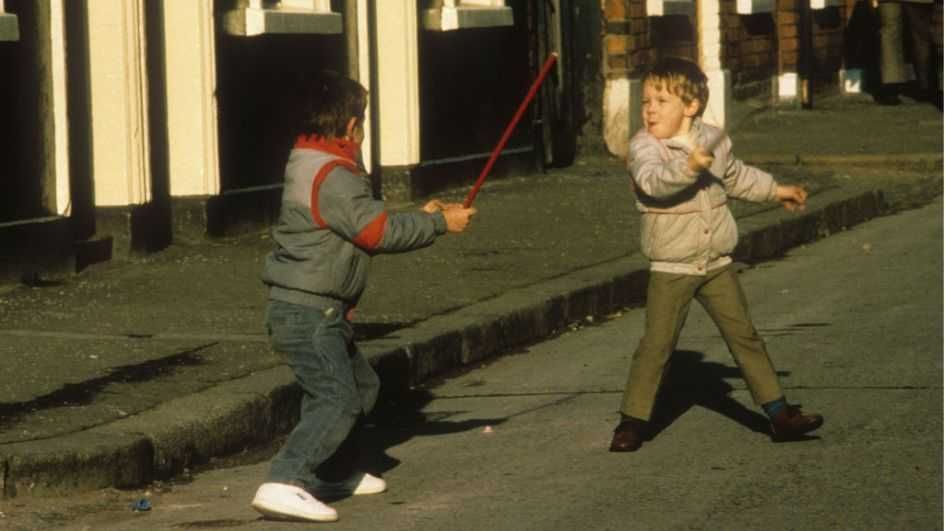


My childhood had a simple structure: Leave the house, come back when hungry.

Nobody tracked my location. Nobody scheduled my fun. I roamed a small Irish village with a rotating gang of kids, knocking on doors to collect whoever was free, wandering fields we didn't own, climbing trees we absolutely shouldn't have.

Our treehouse was born from boredom. Three of us, on a long summer afternoon, with nothing to do.

Our treehouse — built from stolen timber, held together, technically, by two bent nails — would have given a structural engineer a full breakdown. We were enormously proud of it.

Bumps and bruises

There were scuffles. Real ones, occasionally bloody, always brief. Someone would throw a punch over some perceived injustice. A disputed goal, a broken rule, an insult that landed a little too cleanly. Five minutes later, we'd be back at it, whatever it was that day.

No adults mediated. No one processed feelings. The fight resolved itself because the game needed bodies, and everyone knew it. You learned, quickly, that holding a grudge cost you far more than swallowing it.

The point isn't that we were tougher or that children today are soft, although I would argue that both are true. The point I’m trying to make is that we were unsupervised, and supervision, it turns out, changes everything.

I say this not from a rocking chair but as someone who, at age 8 or 9, split his time between farm chores and disappearing into the village like a feral little fugitive. Less than 25 years ago. A blink of the eye, really, except apparently long enough to completely reinvent childhood.

Rationing daylight

Now, one in 10 parents say their young children play outside once a week or less. One week. Seven days. Imagine rationing daylight like that. Childhood has migrated indoors, onto screens, into carefully arranged playdates where two children sit in a living room while two adults hover nearby, making sure nobody says anything upsetting. The kids sense the performance. They behave accordingly.

Researchers from Denmark recently did something beautifully simple: They asked children what good play actually feels like.

Not what it teaches. Not what skills it builds. What it feels like from inside.

The answers were slightly embarrassing for every adult who has ever built a color-coded activity schedule. Children cared about the feeling of play. That loose, almost electric sense that something is genuinely alive. They cared about belonging — not polite, managed inclusion, but being genuinely wanted by the group. They cared about imagination running slightly off the rails. They even valued a certain productive chaos, the kind that adults instinctively shut down.

Adults, predictably, care about outcomes — cognitive development, motor skills, social learning they can point to and measure. Children care about none of this while they're playing. What they actually care about is whether it's fun, whether they're wanted, and whether there's the slightest chance that it might go delightfully wrong.

Screen police

Our games always went somewhere unexpected. A football match would mutate, mid-afternoon, into something involving a rope, an old mattress someone had dumped in a field, and rules nobody could fully explain afterward. The logic was impeccable at the time. The mattress did not survive.

Modern play environments iron out exactly these qualities. Soft surfaces, approved equipment, and an adult nearby to ensure fairness and prevent anything resembling genuine consequence. The result looks like play. Children sense that it isn't, the way you sense when a photograph has been retouched slightly too much. Something essential has been removed.

Screens fill the gap with surgical efficiency. Nearly a third of young children now engage regularly in what researchers call "media play" — a phrase that earns its quotation marks. Tapping a screen is not the same as negotiating who gets to be the villain or managing the social fallout when the smallest kid turns out to be the best climber and everyone has to begrudgingly update their hierarchy. Digital games have fixed rules, predictable rewards, and zero social friction. That's precisely their appeal. It's also precisely their poverty.

The consequences don't arrive with bruises or a note from school. They arrive later, wearing other disguises. Low frustration tolerance. Social anxiety with no obvious origin. A deep unfamiliarity with boredom, which is actually the raw material of invention.

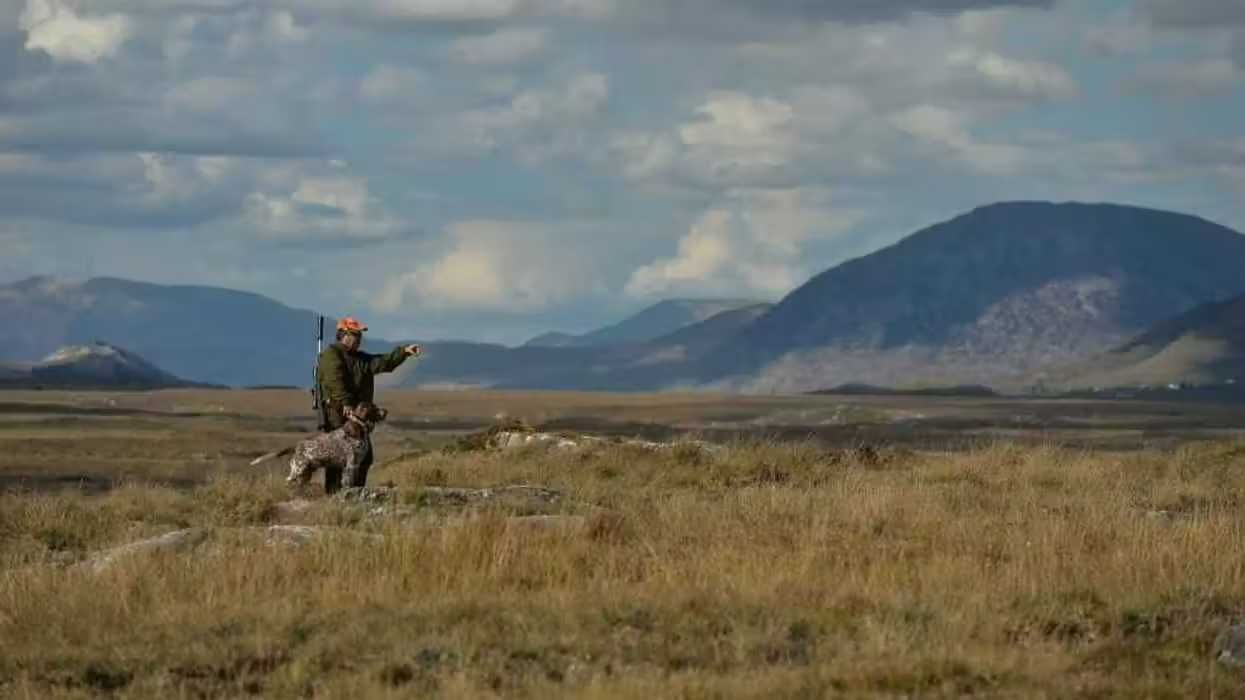
RELATED: The day my father handed me the gun
NurPhoto/Getty Images

Free range

Our treehouse was born from boredom. Three of us, on a long summer afternoon, with nothing to do. Within an hour, we had made a plan. Within a week, we had made something structurally catastrophic and deeply satisfying. Nobody told us to build it. Nobody approved the design. Nobody stood beneath it checking for hazards, which was probably wise given what happened to the second shelf.

Children need exactly that kind of space. Not the park for 15 minutes before the grocery run, but long, unscheduled stretches where the only available resource is other children and whatever the back yard contains. Boredom long enough to become uncomfortable. Discomfort long enough to force creativity.

They need, occasionally, for nobody to be watching.

We turned out fine, most of us. There were scraped knees. One incident involved a gate left wide open, a bull wandering into the street, and a level of collective amnesia that has never fully lifted. The treehouse was, after much deliberation, abandoned to the weather. The nails, I'm told, are still there.

Parents Must Actively Opt Out Of Turning Their Kids Into Digital Age Zombies

The highest civic skill in the digital age is not coding or content creation, but the ability to look away.
We built abundance and lost the thing that matters


We have built a world overflowing with noise, convenience, and endless choice, yet something essential has slipped out of reach. You can sense it in the restless mood of the country, the anxiety among young people who cannot explain why they feel empty, in the angry confusion that dominates our politics.

We have more wealth than any nation in history, but the heart of the culture feels strangely malnourished. Before we can debate debt, or elections, we must confront the reality that we created a world of things, but not a world of purpose.

You cannot survive a crisis you refuse to name, and you cannot rebuild a world whose foundations you no longer understand.

What we are living through is not just economic or political dysfunction. It is the vacuum that appears when a civilization mistakes abundance for meaning.

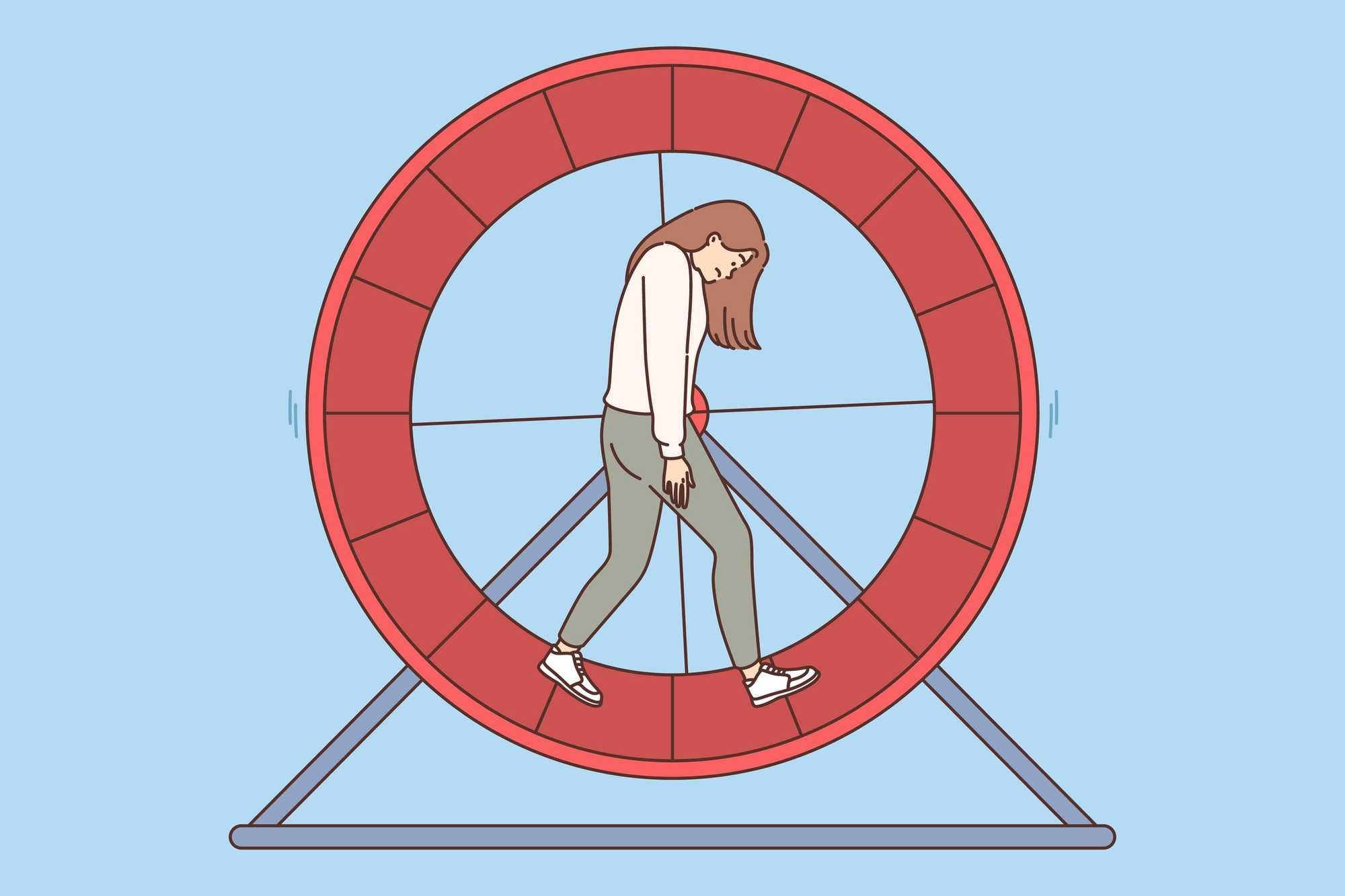
Modern life is stuffed with everything except what the human soul actually needs. We built systems to make life faster, easier, more efficient — and then wondered why those systems cannot teach our children who they are, why they matter, or what is worth living for.

We tell the next generation to chase success, influence, and wealth, turning childhood into branding. We ask kids what they want to do, not who they want to be. We build a world wired for dopamine rather than dignity, and then we wonder why so many people feel unmoored.

When everything is curated, optimized, and delivered at the push of a button, the question “what is my life for?” gets lost in the static.

The crisis beneath the headlines

It is not just the young who feel this crisis. Every part of our society is straining under the weight of meaninglessness.

Look at the debt cycle — the mathematical fate no civilization has ever escaped once it crosses a threshold that we seem to have already blown by. While ordinary families feel the pressure, our leaders respond with distraction, with denial, or by rewriting the very history that could have warned us.

You cannot survive a crisis you refuse to name, and you cannot rebuild a world whose foundations you no longer understand.

We have entered a cultural moment where the noise is so loud that it drowns out the simplest truths. We are living in a country that no longer knows how to hear itself think.

So people go searching. Some drift toward the false promise of socialism, some toward the empty thrill of rebellion. Some simply check out. When a culture forgets what gives life meaning, it becomes vulnerable to every ideology that offers a quick answer.

The quiet return of meaning

And yet, quietly, something else is happening. Beneath the frustration and cynicism, many Americans are recognizing that meaning does not come from what we own, but from what we honor. It does not rise from success, but from virtue. It does not emerge from noise, but from the small, sacred things that modern life has pushed to the margins — the home, the table, the duty you fulfill, the person you help when no one is watching.

The danger is assuming that this rediscovery happens on its own. It does not.

Reorientation requires intention. It requires rebuilding the habits and virtues that once held us together. It requires telling the truth about our history instead of rewriting it to fit today’s narratives. And it requires acknowledging what has been erased: that meaning is inseparable from God’s presence in a nation’s life.

RELATED: A nation without trust is a nation on borrowed time

Denis Novikov via iStock/Getty Images

Where renewal begins

We have built a world without stillness, and then we wondered why no one can hear the questions that matter. Those questions remain, whether we acknowledge them or not. They do not disappear just because we drown them in entertainment or noise. They wait for us, and the longer we ignore them, the more disoriented we become.

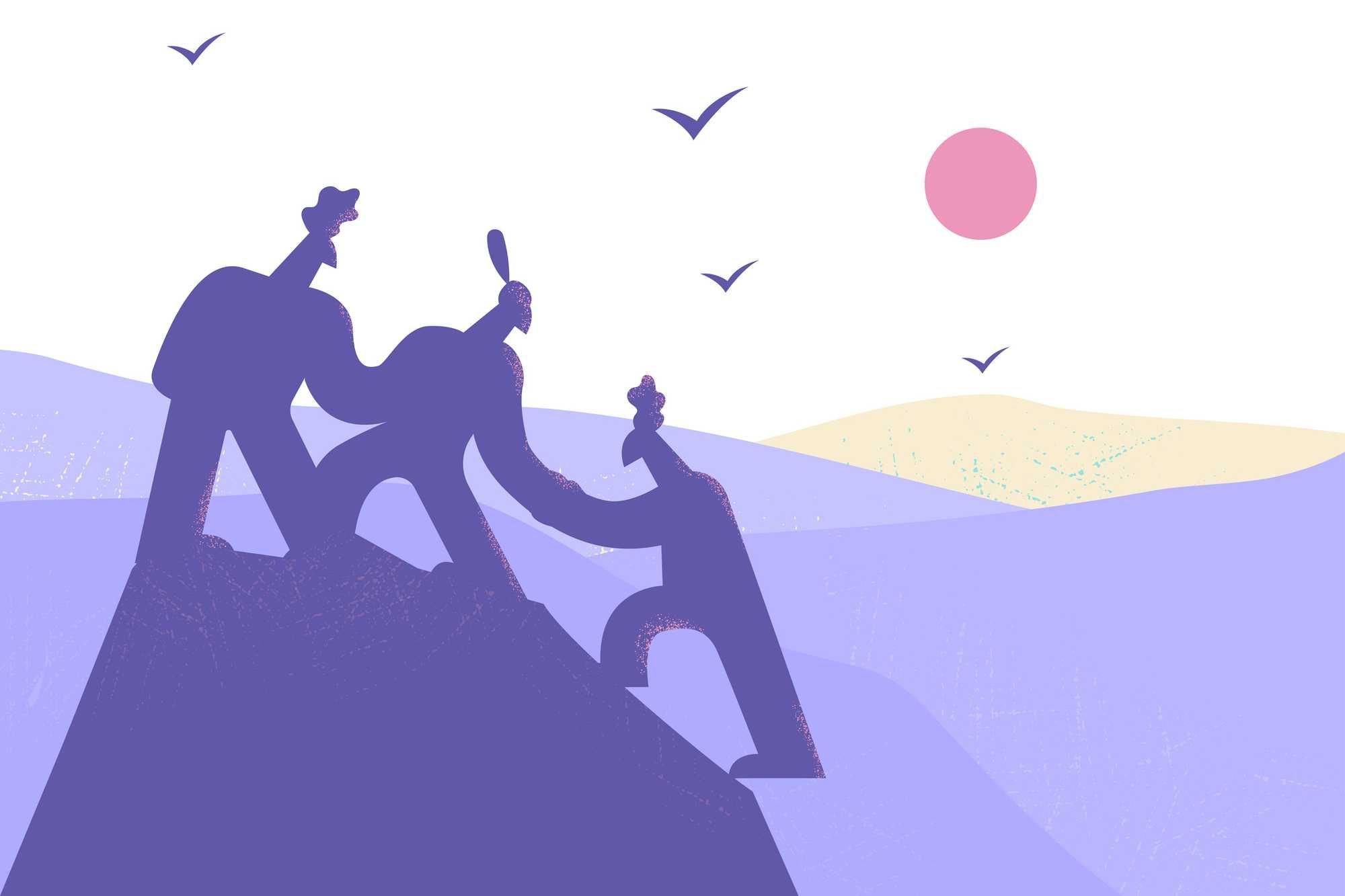
Meaning is still available. It is found in rebuilding the smallest, most human spaces — the places that cannot be digitized, globalized, or automated. The home. The family. The community.

These are the daily virtues that do not trend on social media but that hold a civilization upright. If we want to repair this country, we begin there, exactly where every durable civilization has always begun: one virtue at a time, one tradition at a time, one generation at a time.

Want more from Glenn Beck? Get Glenn’s FREE email newsletter with his latest insights, top stories, show prep, and more delivered to your inbox.

Confessions of a preteen 'Church Lady'


Get in hosers, we’re going back to 1986 — when you could “just do things,” as the kids say.

If you’re middle-aged, you remember when you could just do things without filming them for TikTok. Without rearranging your bedroom to have the right look for “the ‘gram.” You could do things without waiting for an audience of thousands or millions staring at their phones.

Swishy 12-year-old boys in grandma drag talking about 'bulbous bits' were thin on the ground in rustbelt New York State, and I gave the people what they didn’t know they needed.

But more than that, you could just do things in the real world without a phone, a tablet, a smart watch, or any other digital tether.

Weird kid, normal childhood

Generation X was the last cohort to have a normal childhood of riding bikes until it was dusk (suppertime), playing with old cars in the junkyard, and making lean-tos in the woods. No adults expected their kids to be under their gaze all day, and we only had to fish out a quarter for a call home on a pay phone if something happened and we needed a ride.

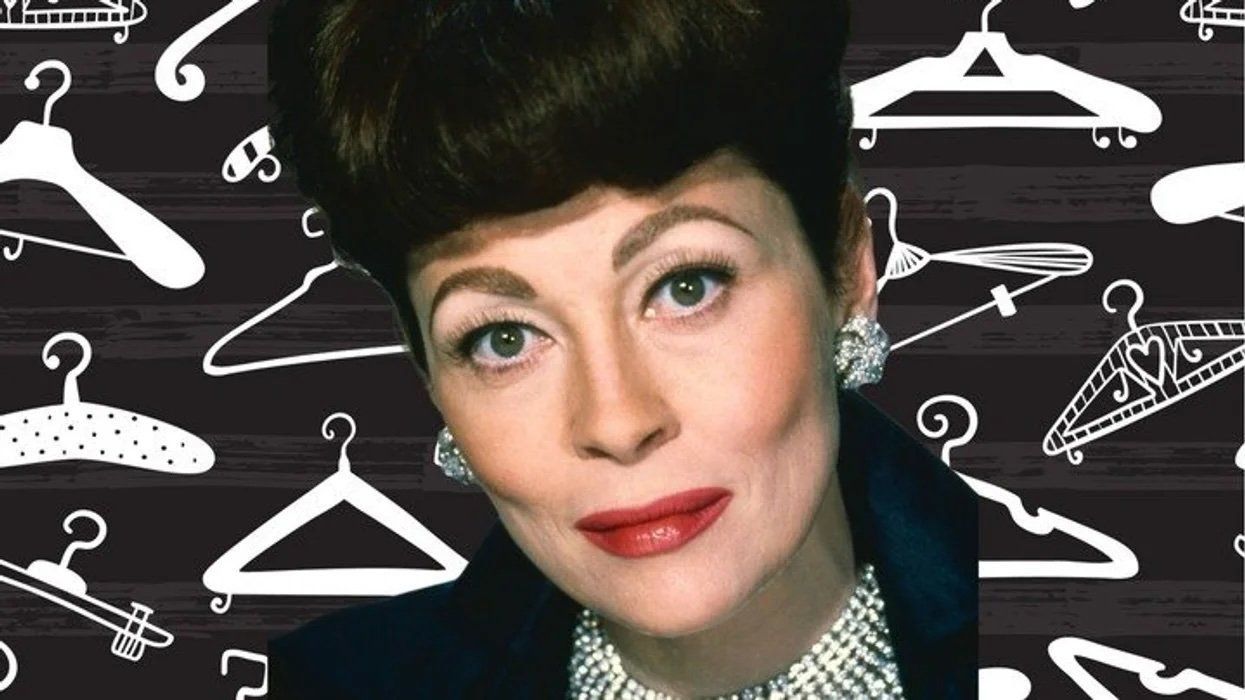
I was a weird kid with weird friends. You develop unusual interests when you grow up with no father and a mother who is a cross between Nurse Ratched, Mommie Dearest, and Piper Laurie's religious fanatic mother in the movie “Carrie.” While normal boys were playing T-ball, I was playing "funeral home" and "cemetery."

As a kid in Southern California, my friend Julie and I used to ride our banana seat bikes down to the school parking lot and outdoor paved cafeteria on weekends. The metal clasp hanging on a rope on the flag pole used to clank against the pole in the wind, making a “bong!” sound like a church bell.

RELATED: Had an abusive mother? Then you understand the left's anti-Trump insanity

AllNikArt/Silver Screen Collection/Getty Images

Julie and I knew this was because Topaz Elementary School had been built on an “ancient graveyard.” The bells were ringing to let the dead know that it was OK to come out of their graves under the pavement because those pesky living kids were all gone for two days.

Mummy dearest

Fast forward five years, and back in upstate New York, I found a kid named Tom who was just as odd.

Tom had a kind of modern-day, white-trash Pippi Longstocking lifestyle. Unlike Pippi’s dad, Tom’s father wasn’t a captain at sea, but he might as well have been. Mr. E spent spent every day completely schnockered. He mowed the lawn in a frayed jockstrap and nothing else. We had the run of the three-story house because Mr. E ignored everything but Schlitz and that brown corduroy recliner.

Tom built a stone kiln in his backyard to fire clay pots. This is where we made miniature sarcophagi for the dead birds and shrews that we mummified. Yes, we did place them in salt (we called it “natron”), then wrapped them in cotton bandages before respectfully encasing them in pottery coffins. I still have one (the sarcophagus, not the mummy).

Audience by ambush

Like many of today’s kids, I was a performer who wanted an audience. But in the pre-internet, pre-smartphone days, your audience was limited to the people you could persuade to stand in front of you in the actual three-dimensional world.

Or you could get an audience by stealth ambush, my preferred method.

Vinyl LPs were still the dominant way people heard music in my youth, and my mother had a collection of comedy show records; they were in vogue in the 1970s.

Pranks for the memories

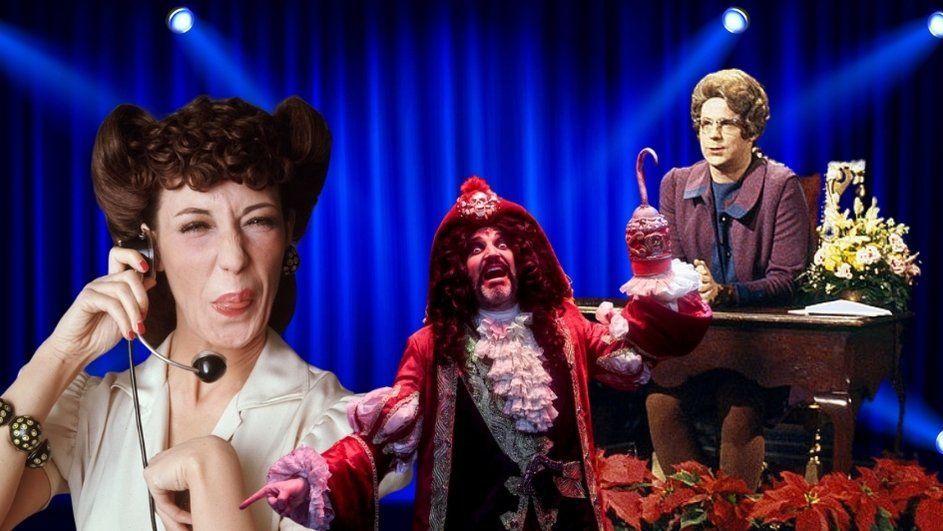
I wore out Lily Tomlin’s “This Is a Recording,” her stand-up show featuring Ernestine, the telephone operator. I practiced saying things like, “One ringy-dingy. Two ringy-dingies,” for hours in front of the mirror until I got the voice just right.

Then, I opened up the phone book and picked “old people” names at random and dialed (remember, this was before caller ID).

Me: One ringy-dingy. Two ring-ooh! Snort! Good afternoon; have I reached the party to whom I am speaking?

Her: Yes, this is Mrs. Fletcher.

Me: Mrs. Fletcher, I have an annoying problem that only you, as a New York Telephone customer, can solve. According to our files, you owe a balance of 15 dollars and 78 cents for the use of your instrument, which, I remind you, is wired into your wall courtesy of our burly repairmen [fiddle with décolletage] at the telephone company. When may we expect payment?

I shudder to think how many unnecessary checks the elderly ladies of Cortland made out to New York Telephone.

Junior shock jock

But that was just one person. What about an audience of thousands?

I started calling into WOKO 100.1, OK-100!, “Central New York’s Home for Top 40 Hits.” It was always having contests where caller number seven got a free pizza from Pudgies or a copy of Madonna’s new album. I figured out a timing system, accounting for the travel time the phone’s dial took to complete each number, and managed to be “caller seven” suspiciously often.

When the DJ answered the phone, I was in go-mode as the “Church Lady,” the prudish fundamentalist grandma character played by Dana Carvey on "Saturday Night Live."

OK100: Caller seven, you’ve got it! Tell us who you are.

Me: Most people just call me the Church Lady, which you should well know, as Satan has obviously been whispering sweet-and-sour nothings into your ear or you wouldn’t be playing music from harlots like that bleached-blonde tart named after our holy mother.

You cannot imagine the joy of being 12 years old and making a fully grown man, an on-air DJ, crack up laughing so hard he could barely put the next record on. They started asking me to call in on purpose to do impressions.

But it wasn’t enough.

Hooked

The year before, I played Captain Hook in the Cortland Junior High production of "Peter Pan."

As I was speaking one of my lines, the painted wooden cutout of a pirate ship collapsed on the stage. So I ad-libbed: “Don’t just stand there, pick it up, you lazy swabbies — we’ve got a play to finish!”

It brought down the house.

I wanted another taste of entertaining a live crowd, so I decided to perform on the roof of the wraparound porch on the old, beat-up Victorian we rented from Mr. and Mrs. Maniacci two doors down.

Isn't that special?

My gorgon mother had gone to California for a week’s vacation and hired Lori the babysitter to stay with us kids. Oh, boy!

Stuffing my paper route money into my satchel, I walked to the Salvation Army store and came home with a curly grandma wig, a seafoam-green polyester shift, opaque “nude” pantyhose, and sensible orthopedic shoes.

My sister helped me crawl out the window of her bedroom onto the roof of the porch and handed me a broom so I had something with which to menace passersby. It wasn’t long before a young couple came walking up the street.

“It’s always nice to see a young couple," I called out.

Having secured their attention, I continued, "... except the kind that doesn’t wear a wedding ring and thinks co-habitation is just fine and dandy. How long have you been living in sin, pressing your engorged naughty parts against the devil’s finger? Does it tingle?”

The first reaction was shocked silence. The second was uproarious laughter. Swishy 12-year-old boys in grandma drag talking about “bulbous bits” were thin on the ground in rustbelt New York State, and I gave the people what they didn’t know they needed.

For the rest of the afternoon I preached fire and brimstone, insulting everyone who walked by as a rake and a floozy. A few people came back with friends so they, too, could experience the cleansing power of righteous testimony.

Canceled!

At the end of the week, my mother returned. While I was taking a bath, I heard a rap on the front door. “Bonnie! Bonnie! I need to talk to you.” Oh, shoot — it was Mrs. Maniacci, the landlady!

Scurrying out of the tub to press my ear to the door, I mostly heard my mother’s side of the conversation. “Uh-huh. Really? He did what? I see. Thank you Mrs. Maniacci, I’ll take care of it.”

“JOSHUA LAWRENCE SLOCUM GET OUT HERE RIGHT NOW!”

The punishment was worth it. I’d do it again and again and then again.

Do your kids know how to just do fun things?

If The U.S. Government Doesn’t Ban TikTok, Parents Should

Threats to national security aside, apps like TikTok are bad for people and should therefore be banned or highly regulated.

How To Rescue ‘The Anxious Generation’ From The Smartphones Ruining Their Lives

Jonathan Haidt’s new book, The Anxious Generation, offers context and depth to the oft-discussed issue of how smartphones and social media caused the teen mental health crisis.

No, Your 4-Year-Old Soccer Star Isn’t Getting A Full Ride Or Olympic Medal

It's OK to chill out, parents. Just sit back, relax, and enjoy the games.

Disney Disappears Its Own Audience After A Decade Of Disappearing Princesses

Welcome to the dystopian, child-unfriendly world Disney helped create. It made this childless bed, and now we all have to lie in it.

Study reveals a common skill today’s kids are missing, and it’s NOT what you’d expect


When it comes to deficits in today’s youth, you might think of waning social skills, shortened attention spans, perhaps an inability to think critically – all as a result of overuse and addiction to technology.

And you’d be right. All of the aforementioned skills are certainly decreasing in an alarming portion of younger generations largely because of their overdependence on technology. However, there’s another skill that’s apparently on the decline, and it’s quite odd.

“Modern kids are lacking some fundamental skills needed to safely play tag,” Glenn Beck reads from the Athletics Fitness website.

What about the age-old game of “you’re it!” is so problematic for today’s kids?

According to the website, “children are starting to hit with such force that they often end up whacking their opponent across the back with a monstrous slap,” showing that they “lack the innate ability to judge how much pressure to apply during games that require human contact.”

Turns out the problem is related to muscle memory – the idea that repetition develops one’s ability to reproduce specific movements without conscious thought. Unfortunately, most of today’s kids don’t play enough to develop muscle memory, so on the off chance they find themselves in a game of tag, they don’t understand what’s an appropriate amount of force to use.

A variety of factors are playing into this lack of playtime, including “video games, aversion to manual labor, [and] unavailability of a parent for wrestling.”

“Our kids are becoming absolute ‘WALL-E’ creatures,” says Glenn, referencing the 2008 Pixar film that depicted a world where humans are virtually immobilized due to overdependence on technology.

However, it’s not just technology and absent parents that are limiting child development; it’s also the fact that the little playtime kids do engage in is too structured. Organized sports, activities, and games where the rules are already predetermined don’t allow for much creativity, innovation, or independent thinking, all of which are critical for child brain development.

“My parents would always say, ‘Go outside and play, go find some friends and play,”’ Glenn recollects.

But that was during a time when play could happen on a whim, games were made up on the fly, and neighborhood streets and parks were a land of possibilities.

While our world has certainly shifted, children’s need for unstructured play has not, which is why it’s so critical to reinstate playtime as a cornerstone of childhood.


Want more from Glenn Beck?

To enjoy more of Glenn’s masterful storytelling, thought-provoking analysis and uncanny ability to make sense of the chaos, subscribe to BlazeTV — the largest multi-platform network of voices who love America, defend the Constitution, and live the American dream.