Gay Dad’s Disturbing Diary Illuminates Dysfunctions Of Buying Babies
 The diary's author has told us exactly what the modern family prioritizes: adult appetite over child need. We should believe him.
When did facts or verifiable evidence get replaced by consensus within a specific community that continually repeats collectively held ideas or feelings? And is this trend why, everywhere we look, demonstrable truth is becoming subservient to imagination? Do we now live in a world where truth-seeking is taking a back seat to groupthink?
As far back as the 1980s, when regular folks were confronted with mics and asked for their man-on-the-street opinions on everything from when life begins to tactical strategy for war, I remember thinking, “This practice is going to be a problem.”
What happens to the fabric of society if what one personally believes attains precedence over what is proven to be true?
Why?
Because for the past 40 years or so, subjective constructs have been elevated to the status of fact and given far more credibility than verifiable truth. As if fallible human feelings determine what is true — they do not.
Granted, opinions are relative; we all have them, and in America, we can still freely express our point of view. This is also true of individual preferences and judgments, which remain relative. But more and more, people treat fictional beliefs and unsubstantiated claims as factual simply because large, loud, and strongly opinionated groups adopt and agree upon them.
Thus culture has become a delusional world where definitions can be altered to protect belief and political identity determines what is considered true or false.
This penchant for self-determined reality makes healthy debate almost impossible because what’s considered correct becomes tainted by distinctions shaped by a consensus around feelings rather than by credible substantiation.
The perversion of truth is increasingly evident in definitions of male and female, as well as in criteria defining human life.
Contemporary progressives seem most culpable for elevating subjectivism, self-perceived identity, and personal opinion above facts. Partisans on the left are so committed to redefining everything that moral or political debate has devolved into a one-way assault of accusations, denial, and the exaltation of fantastical beliefs.
One skill set missing from the relativists’ playbook is logic.
Viewed logically, calling something “my truth” concedes that whatever you believe or promote is personal rather than universally established as a certainty. The fallacy of “my truth” becomes most heated around topics like the dignity of life in the womb, biological sex, and who should ultimately bear personal responsibility when an “oppressed” woman commits a criminal act.
RELATED: Did Lindsay Clancy lose her mind — or her free will?

That is where we have witnessed the tendency to promote personal opinion over what is morally, biologically, historically, legally, and philosophically accepted.
This is especially true when pro-life and pro-choice opinions clash. One side aligns with 95% of 5,502 biologists who agreed that human life begins at fertilization. Despite biological assurance, however, one side insists that a woman’s choice supersedes truth.
The looming danger is that if moral relativism continues to gain credibility, right and wrong vanish and opinion rules. The bad news is that opinions change, which means that on a collective whim, every life at whatever stage could become justifiably disposable.
What happens to the fabric of society if what one personally believes attains precedence over what is proven to be true?
What we have seen lately is that morally relativistic people are so steeped in the certainty that their opinions are correct that they applaud themselves for exposing those they view as evil, which seems not only an estimable goal but also a justification for violence.
Societal relativism has reached a boiling point and has put innocent individuals in the literal crosshairs of vigilantes responding to sentiments widely accepted as true.
According to this moral barometer, a conservative influencer can be assassinated publicly, and some who feel morally convicted by his views on biblical matters, politics, and traditional male and female roles think it’s fitting to cheer his death.
And these are the people who fancy themselves kindness warriors?
RELATED: Campus free speech is alive — barely

Among progressives, this pattern has evolved to the point that a devoted husband and father like Charlie Kirk is derided, while a woman who admitted to strangling her three children is defended and supported by female activists who have convinced themselves that children are disposable and women are an oppressed class.
Because of political differences, these same women feel justified in demonizing Kirk’s grieving widow merely because she holds the same conservative convictions as her dead husband.
These people have convinced themselves that, based on personal opinion alone, Patrick Clancy should be strung up, drawn, and quartered and that one black, male juror, who they have collectively concluded is also guilty by reason of maleness, deserves condemnation.
As if feelings and thoughts were evidence, some online defenders have made extraordinary accusations against Patrick Clancy, not on demonstrable proof but solely on a fairy tale they have concocted in their own toxic minds.
So the kind of psychosis that accompanies the delusional reality our culture is currently steeped in — especially in political debate — has now been deemed the authority to determine who is considered insane by the insane?
If carried to its logical conclusion, a relativistic mind meld can lead to mob rule, which is now depicted as “democracy,” a political system in which the potential exists to have an innocent individual dragged to the guillotine merely because the crowd believed he or she deserved it.
We see this now when evidentiary truth is automatically dismissed as coming from the wrong source. Yet the truth remains true even if no one believes it; reality cannot be reinvented to suit our fallible human proclivities.
As Flannery O’Connor once wrote, “The truth does not change according to our ability to stomach it emotionally,” a more than 70-year-old observation that supports the contemporary idea that the clash between human self-deception and moral reality is nothing new.
Some parents pour years into raising their children in faith and still are forced to watch them walk away. And as a homeschool mother of seven is watching her youngest become a prodigal, she reaches out to BlazeTV host Steve Deace to ask whether she had failed.
And his answer was unequivocal: The story isn’t over.
“None of the stories of your children are finished yet,” he responds. “And for those of you that have prodigal kids, you’re maybe in the most trying time of that story. But the story isn’t written yet.”
Deace uses St. Augustine and his mother, Monica, as an example, explaining that she prayed for her son for “17 years.”
“And he would go on to eventually become arguably the most formidable mind the church has produced in the post-canon era, even to this very day, nearly 2,000 years later,” he explains.
“So that’s I think the most important thing that I could say,” he continues. “Do not quit. Do not give up. Their stories aren’t written yet. They’re not finished yet. So keep that perspective for as long as you can. The story is not over yet.”
“Many of the social pathologies and contagions that are acute in this era have their mustard seeds in the era that you and I grew up in. But even despite that, you and I both agreed emphatically it was still ... simpler,” he adds.
Deace explains that it was “simpler” because there “was not an expectation when you sent your kids off to school on the first day of school that you were going to have to deprogram them every single night when they got home.”
“Going to college was considered a rarity and a reward as opposed to smart kids that now are like, ‘I’m never going there because I don’t want to become a gay race communist,’” he says.
“So it’s never easy to raise kids. But it was certainly simpler in the era that you and I grew up in compared to the era we’ve been raising our own kids in,” he continues.
“Their stories aren’t finished yet, either ... so if you’re in that prodigal era, do not give up on the Lord. Do not give up on prayer, even till your dying day,” he adds.
To enjoy more of Steve's take on national politics, Christian worldview, and principled conservatism with a snarky twist, subscribe to BlazeTV — the largest multi-platform network of voices who love America, defend the Constitution, and live the American dream.
Everything that lives will eventually die. The problem is that in the spring of our youth, the end of our lives feels far away. Because of that, we become cocky and self-assured, casting aside belief in the consequences of the kind of regret that puts things in perspective and, at the end of our lives, reminds us of what was really important.
Two women are in the news right now. Gloria Steinem, a writer and journalist who just died at 92, and Lindsay Clancy, on trial in Massachusetts for the murder of her three children.
It will be interesting to see whether what began in a courtroom that at times resembled a women’s rally will elevate a mother with postpartum depression into a feminist icon.
Steinem was a feminist in the 1960s and ’70s, when it wasn’t popular to be one. She went on to spend her life redefining peace, justice, and racial fairness and fighting for women’s liberation, which came to primarily mean a woman’s right to choose to dispose of her offspring.
In the eyes of many, Steinem was adored as an activist, even though her idea of equality was rooted in her belief that men, marriage, and children were oppressive because their presence in a woman’s life could deter her from achieving loftier goals.
At an abortion awareness rally in 1969, Steinem listened to other women’s abortion stories. At the time, unless a woman’s mental or physical health was in danger, abortion was illegal in the U.K. This is somewhat how, at the moment, the seriousness of child murder is in danger of being downplayed if mental illness is identified as a motive.
Steinem venerated the doctor who, like Henry VIII, approved of Anne Boleyn climbing the scaffold to be beheaded by the man assigned to wield the sword. The doctor referred Steinem for the execution of her unborn child in the womb by a practitioner willing to perform the procedure.
In language that is now regarded as heroic and liberating, before doing the deed or referring her to a female doctor who did the deed — either way — the willing accomplice made Steinem promise two things: “First, you will not tell anyone my name. Second, you will do what you want to do with your life.”
Nearly 60 years after her child had been killed, Steinem dedicated her memoir, “My Life on the Road,” to her hero, Dr. John Sharpe.
Around that time, Steinem was widely viewed as a crusader for abortion rights, calling it “reproductive freedom,” a watered-down slogan she thought would make the subject more palatable in political discussion and a phrase that continues to be used in abortion debates to this day.
But now, Steinem is dead, and her legacy will be credited with having spent the lion’s share of her earthly existence downplaying the value of life while exalting a woman’s right to dispose of her children.
RELATED: Did Lindsay Clancy lose her mind — or her free will?

Gloria Steinem, in life and now in death, will be idolized as an icon for women who embraced the idea that liberation is the right for a woman to snuff out life in the womb.
Her glowing death announcement states that she “passed away peacefully at her home in New York City, surrounded by some of the many who loved her.” It is stunning that someone gets to pass away peacefully after spending a lifetime advocating the slaughter of the unborn.
The sad truth is that the “many who loved her” circling her bed did not include the son or daughter who would have been entering the seventh decade at the time of their mother’s death. What that touching announcement didn’t mention was whether she finally felt the regret she admitted she couldn’t muster for 69 years over the decision to sacrifice her child on the altar of ambition.
Despite all the books, speaking engagements, and accolades laid at Steinem’s feet, as the totality of her life flashed before her eyes, the son or daughter over whom success took precedence, whether she was capable or willing to admit it, may have been the last thing to cross her mind before passing into eternity.
Surely her progressive contribution to advancing a woman’s right to decide whether life inside her womb survives is Gloria’s legacy.
Now, nearly seven decades after Steinem’s backroom abortion, another woman with the potential to be a progressive pioneer in the fight for a mother’s rights over the lives of her children has been sitting in a wheelchair in a courtroom in Plymouth, Massachusetts. At the time Steinem terminated her child’s life, it was illegal unless a woman was physically or mentally ill. Today, mental illness is exploited as a defense in a trial where three children were executed by their mother.
Although it might not look like it, the female support surrounding Lindsay Clancy is similar to the support Steinem received in 1969, when women rallied because they felt no one understood their plight. At this juncture in the Clancy trial, although Clancy’s children, unlike Gloria’s, were outside the womb, the willingness to call her innocent hinges solely on her mental state: guilty if she had her wherewithal, exonerated if mental illness drove her to murder her babies.
In Clancy’s case, the thoughts and feelings of her children concern not whether they had regrets, but rather what kind of terror a confused preschooler, toddler, and infant experienced as their mother, for whatever reason, decided they no longer had the right to life.
How different is what Lindsay Clancy did — for whatever the reason — from Gloria’s youthful decision to benefit herself?
RELATED: ‘That far’ always becomes here

As these thoughts come full-circle, it’s important to consider the impact Gloria Steinem had on the deaths of more than 65 million unborn children and how she’s being celebrated and mourned, in light of the potential Lindsay Clancy’s defense might have as an excuse to deny the right to life to those of us outside the womb.
Steinem’s actions helped reshape the nation’s views on abortion. In the same way, Clancy could change the nation’s views on maternal filicide. And after postpartum psychosis is accepted as an excuse to kill three children, what’s the next step in the progression for those who move through life like a horse with blinders?
If the progressive impulse to excuse the killing of children in the womb extends to children outside it, Lindsay Clancy’s case could have consequences far beyond her trial — potentially eroding the right to life even more profoundly than Gloria Steinem’s abortion activism did.
Gloria Steinem is gone. Lindsay Clancy is still here. It will be interesting to see whether what began in a courtroom that at times resembled a women’s rally will elevate a mother with postpartum depression into a feminist icon who moves the needle from excusing child murder to finding any other excuse to dispose of human life because societal mores demand it.
Steinem’s opportunity to influence the culture is over. Cases like Lindsay Clancy’s may only be beginning.
 A federal court sided with Indiana on Friday in upholding a state law prohibiting “horrific” “trans” surgeries from being conducted on children. “We have won this critical fight against radicals who would otherwise impose this horrific practice on our kids for ideological and financial reasons,” Indiana Attorney General Todd Rokita said in a statement. “My […]
 What the course measures as learning is indistinguishable from agreement.
 Conservatives have to make the American dream possible again, and letting moms and dads raise their own kids is a good place to start.
 Charlie understood that the ideas a culture rewards eventually decide how people date, whom they marry, and how they raise their children.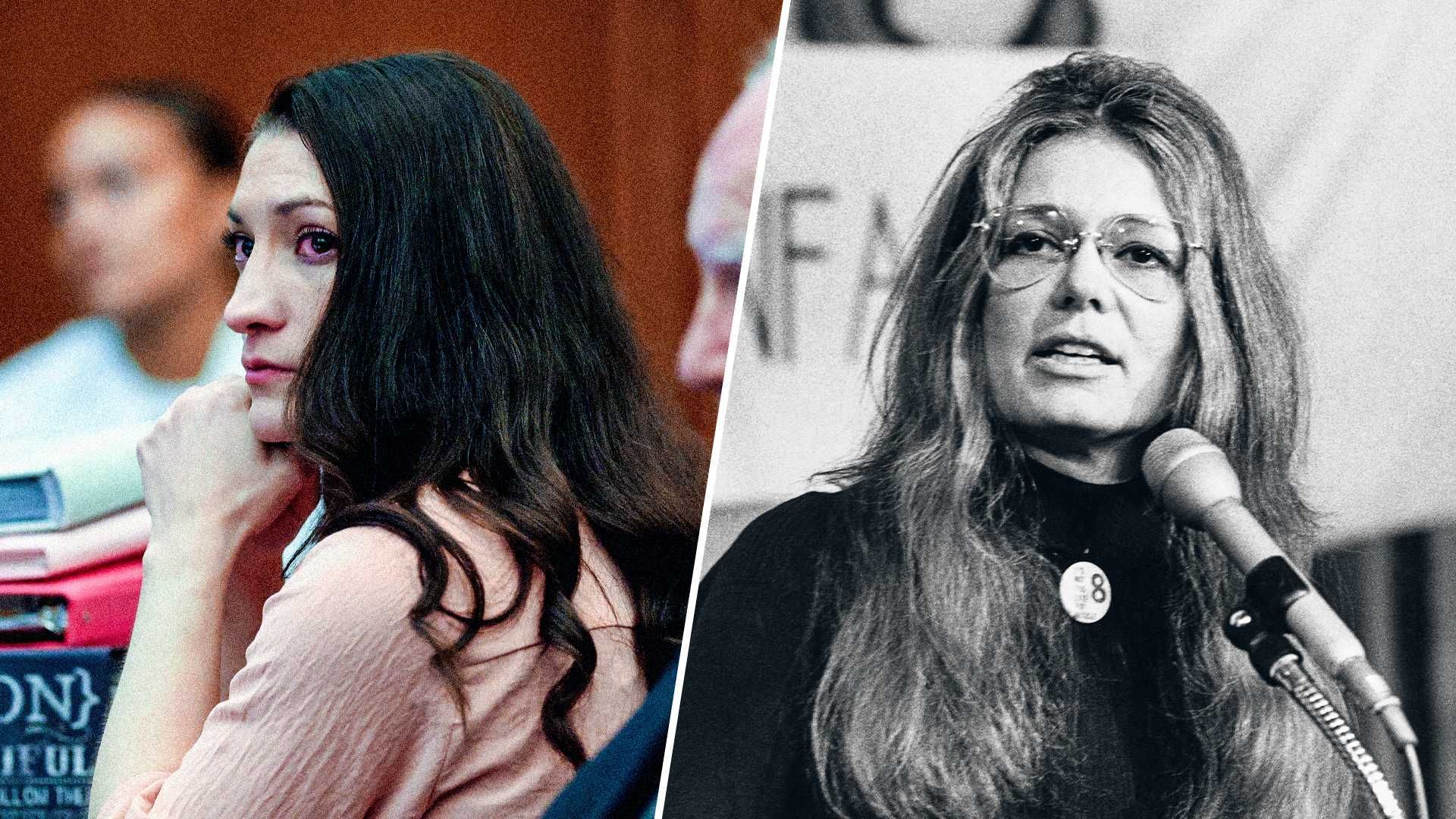
 Now that the Lindsay Clancy case just ended in a mistrial and justice is, for the moment, suspended, it’s time to pay special attention to a certain kind of woman, a perfect example of which showed herself while Plymouth County, Massachusetts, District Attorney Timothy Cruz was talking to news media immediately after the trial judge […]
 www.theblaze.com
 www.theblaze.com
Still Surprised by His Answer?