They broke young men — then sold them toxic escapes
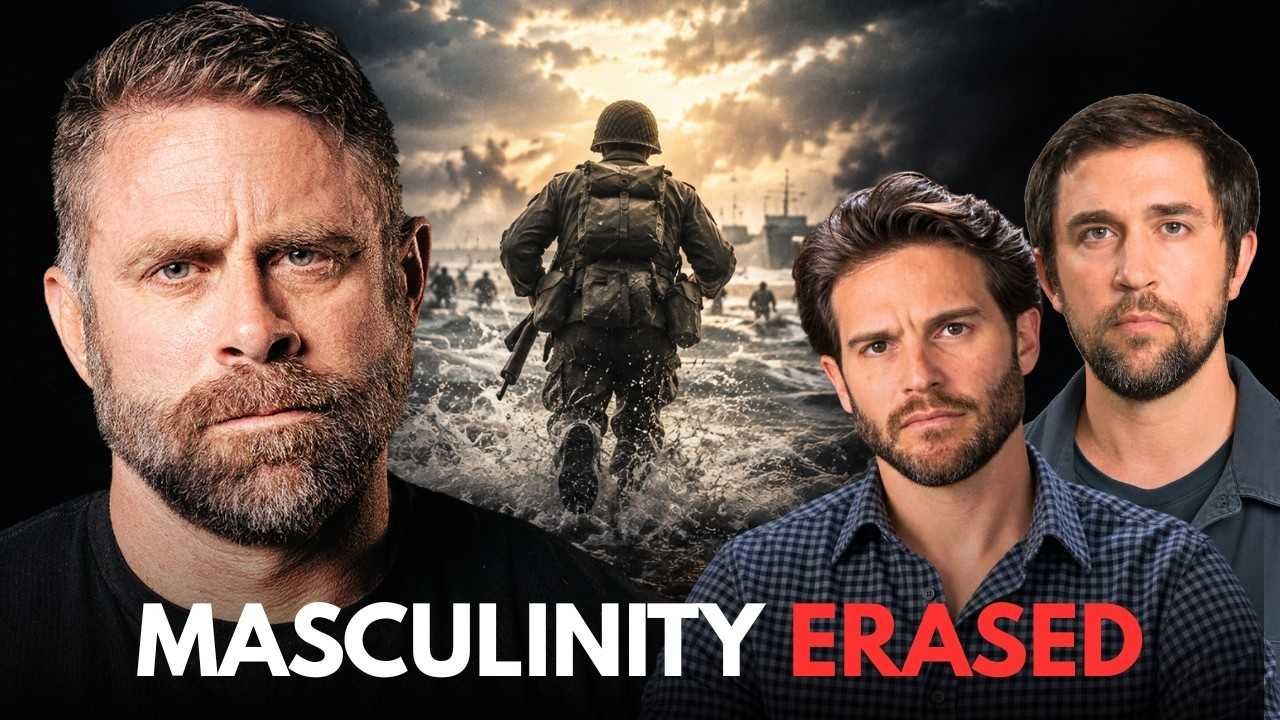
When Nick Freitas engages with young men, they often have the same complaint: The culture made them the scapegoat for its ills — and now they feel lost and don’t know what to do about it.
While he doesn’t deny young men’s predicament or blame them for it, Freitas does put the responsibility to do something about it on their shoulders.
The truth, he says, is that the institutions that shape the culture deliberately broke young men’s spirits by convincing society that masculinity was “bad, evil, toxic, horrible, and [needs] to be repressed” and then turned around and sold the young men they villainized toxic escapes, like social media, gaming, and pornography.
The path to a fulfilling life is still there, though — but it’s theirs to find and take.
On this episode of “Rufo & Lomez,” Freitas and fellow BlazeTV hosts Chris Rufo and Jonathan Keeperman talk through why so many young men have checked out — and why reclaiming faith, family, and responsibility is the way back.
It’s both “confusing and horrific” for young men, he adds, to try to make it in a world where they’re “emasculated” in order to be more acceptable to a culture that will reject them regardless.
The message so many young men receive today, says Freitas, is: “By the way, even after you've been emasculated, nobody's going to want to sleep with you … corporations don't want to hire you either.”
“So once you understand that they have legitimate grievances that are truly unique to their experience, well, now we can start to talk about, OK, how do we deal with this?” he continues.
Dealing with it, however, begins with rejecting the “escapes” offered by the same institutions that villainized men in the first place. Doomscrolling social media, pornography, and video gaming, for example, may offer temporary relief, but they ultimately prevent men from finding the fulfilling path they desire.
“One of the big things that I tell men is that look, I get my identity first and foremost through my Christianity. Why? Because it's eternal. … I always have identity, meaning, and purpose. I never lose it, and it cannot be taken away from me,” says Freitas.
When the culture inevitably condemns a Christ-centered identity, it’s men’s job to say “screw the culture” and continue to “pursue” what is godly, he continues.
“Ultimately, if young men choose to do that en masse, the culture will follow,” Freitas says. “The reason why there's been such a push not just to diminish men but to elevate women is because it’s the only way you can’t get self-correction.”
Choosing the righteous path, however, is no easy thing.
“There's pain involved in doing that,” Freitas acknowledges.
“You will be punished in society for doing that, but the more people who do it and the more critical mass you reach, the more things shift.”
Already, the tides have begun to turn.
Freitas cites an NBC News Decision Desk Poll of 18- to 29-year-olds that compared Trump and Harris voters on what they consider a successful life.
“The number-one thing for young men that voted for Trump was having a family; it was number six for women,” says Freitas.
Male Harris voters, however, placed family in 10th place, while female Harris voters put it in second-to-last place.
“That really gives me encouragement,” says Freitas.
To hear more, watch the episode above.
Want more from Rufo & Lomez?
To enjoy more of the news through the anthropological lens of Christopher Rufo and Lomez, subscribe to BlazeTV — the largest multi-platform network of voices who love America, defend the Constitution, and live the American dream.
‘We’re at September 10, 2001’: Retired colonel who was at the Pentagon on 9/11 warns the same threat is inside the country
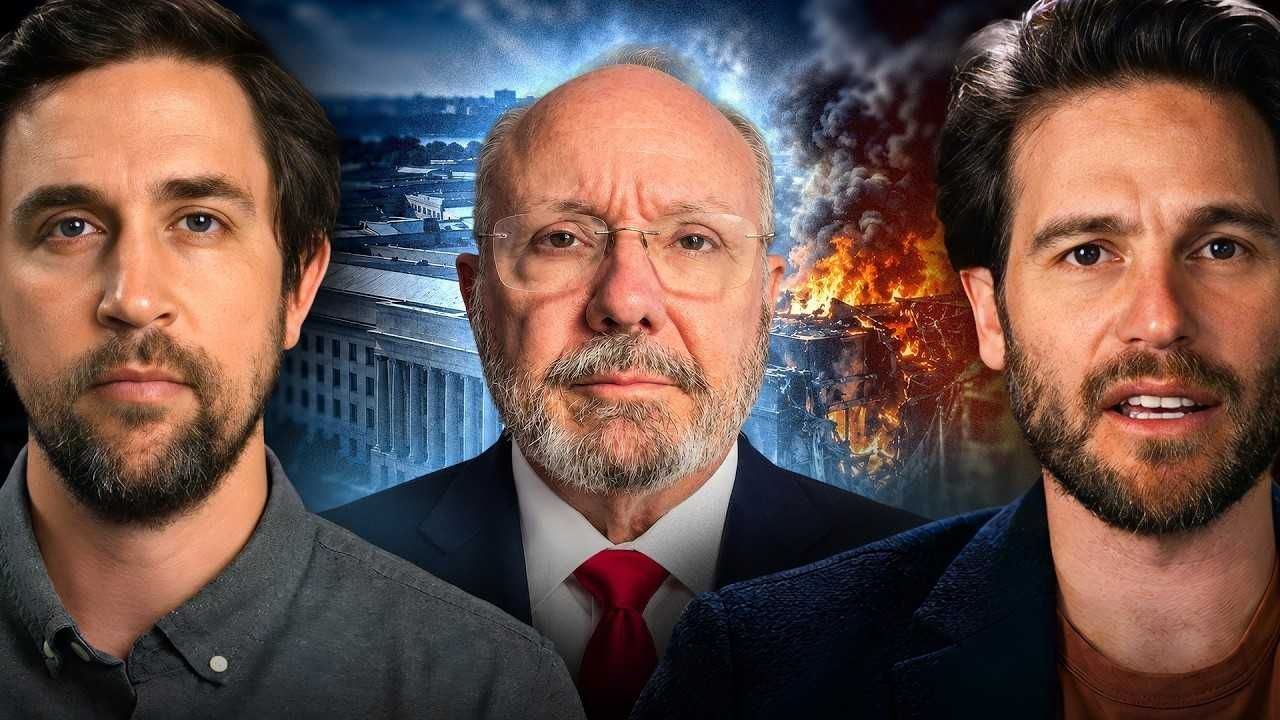
Today marks the 25th anniversary of the 9/11 terrorist attacks on the United States that robbed 2,977 innocent people of their lives.
Col. Rob Maness was inside the Pentagon that horrific day. On this episode of “Rufo & Lomez,” BlazeTV hosts Christopher Rufo and Jonathan Keeperman sit down with the retired Air Force colonel to hear insider details of a day America will never forget.
“Colonel, it’s been 25 years since that day. What is your general reflection looking back after all these years?” Rufo asks.
America today, warns Maness, is in the same vulnerable position it was on September 10, 2001.
Between “importing hundreds of thousands, if not millions, of [Islamists] over the last 25 years with a very poor vetting process” and corrupt “intelligence agencies,” Maness says he’s “very concerned” for the country, because "in many ways, we're at September 10, 2001."
“A lot of us were sort of younger when this happened. It's a kind of fuzzy memory. … Just kind of walk us through what it was like to be there on the ground directly, where this event happened, how people were thinking about it at the time, people's response to it, what those first 24, 48 hours were like,” says Keeperman.
In those days, Maness was a major — “the coffee guy,” he laughs.
“I walked by the day-care center every day up into corridor 8, into my office area, which was inside the National Military Command Center. And, you know, at the time I was getting there, the kids were being dropped off … and I always enjoyed watching them and the parents and all that stuff because I had little kids of my own,” he recounts.
“I just walked in and said, ‘Man, this is going to be a fantastic day,”’ he adds.
It wasn’t long before he discovered how wrong that prediction was.
That day, he explains, marked the start of America’s “global nuclear war game.” Maness’ real job, he explains, was in the Joint Staff’s nuclear operations division, which trained the aides with access to the “nuclear football book” and oversaw the doomsday plane.
“A lot of my leadership and teammates were out at different nodes around the world for command and control of nuclear forces because we were kicking that exercise off that day,” he tells Rufo and Keeperman, “and that was literally happening at the moment the airplanes hit the towers.”
After the first strikes, Maness’ on-site team “stayed on duty” to “help with the command and control decision-making.” They were “ordered out” of the Pentagon just after the third plane hit.
Once evacuated, Maness immediately turned his attention to helping the wounded.
“I just started helping do what I could for the first aid and those kind of things until we got asked to go back inside the courtyard because the fire trucks couldn't get inside and the building's roof was burning,” he recounts.
“I estimate probably between 100 and 200 people … split up into two teams and went to those inside corners, and we started helping continue to fight the fire [and] see if we could find anybody alive.”
To hear more of Maness’ story, watch the video above.
Want more from Rufo & Lomez?
To enjoy more of the news through the anthropological lens of Christopher Rufo and Lomez, subscribe to BlazeTV — the largest multi-platform network of voices who love America, defend the Constitution, and live the American dream.
Inside the Charlie Kirk Israel controversy: Andrew Kolvet sets the record straight
The atrocious assassination of Charlie Kirk last September has ignited numerous conspiracy theories, some of which involve the nation of Israel. Even though Charlie was publicly very pro-Israel for years, especially in light of the October 7, 2023, Hamas attacks, rumors that the TPUSA founder was beginning to waver on his support for the Jewish nation have led some to speculate that Israel might have been involved in his murder.
So where did Charlie Kirk and Turning Point USA really fall on the issue of Israel?
On a recent episode of “Rufo and Lomez,” co-host Jonathan Keeperman sat down with executive producer of “The Charlie Kirk Show” and TPUSA spokesman Andrew Kolvet, who addressed this question.
“This issue [of Israel] was probably the most difficult for Charlie to navigate in life,” says Kolvet.
He explains that for Charlie, there was one “bright line” when it came to Israel: “Jew-hate has no place in the conservative movement,” and “the scapegoating of an entire people group” is an “ancient evil” that cannot be tolerated.
However, that doesn’t mean that he was ever part of the hard-line, activist “pro-Israel” crowd who demand unconditional, unquestioning support for every Israeli policy. That’s why Charlie was sometimes “accused of being an anti-Semite,” Kolvet explains.
He notes that the “driving force” of the Trump-era conservative movement — which Charlie heavily shaped — has always been “non-interventionalism.”
“Charlie was certainly a driver of that and certainly a proponent of that. He wanted the government to focus more on domestic issues, but he also wasn't willing to go to that point and blame, you know, a small nation in the Middle East for all the world's ills,” Kolvet tells Keeperman.
This balanced stance became harder to maintain after Hamas’ October 7 attacks. Many on the right who already held non-interventionist views saw the war in Gaza as validation of their skepticism toward Israel.
“This is an instance of where our preconceived bias, confirmation bias was played into by geopolitical events,” Kolvet says.
The intense fighting reinforced the idea that U.S. ties to Israel drag America into foreign conflicts, creating a “perceived reality” that has grown since October 7 and put pressure on Charlie’s middle position. “It’s a tricky issue,” Kolvet acknowledges, “but we have to be able to say a couple things very, very clearly, I think, on our side if we’re going to keep the coalition together.”
“One, we are America first. Our interests are more important than Israel's interests. If you are an American, that has got to be a bright line in the sand,” he adds, acknowledging that there are legitimate questions about Israel spying on the U.S., the recurring “$4 billion” in annual U.S. aid to Israel, and the sharing of intelligence and technology with the Israeli military.
“I think those are all valid questions, because we have to be about our own business first and foremost. We have to be about our own priorities first and foremost,” he adds.
However, if American interests “align with Israel,” Kolvet sees that as a positive.
“I certainly don't think we should be asking that same question when it comes to Hamas, for example, right? ... There's no moral equivalency between the two,” he says. “But we also have to just be really up front that we have domestic issues that we need to get done and we need to accomplish or we're going to lose this country and the West will fall if America does not get this right.”
He laments the reality that the conservative base’s division over Israel has “poured into the story of Charlie.”
Ultimately, TPUSA stands for two basic principles, says Kolvet: “Reject Jew-hate,” but “be about our own business first” and then address “geopolitics and foreign policy.”
To hear more, watch the video above.
Want more from Rufo & Lomez?
To enjoy more of the news through the anthropological lens of Christopher Rufo and Lomez, subscribe to BlazeTV — the largest multi-platform network of voices who love America, defend the Constitution, and live the American dream.
Inside Spencer Pratt’s insurgent LA run: Creative director exposes the unfiltered truth in explosive interview
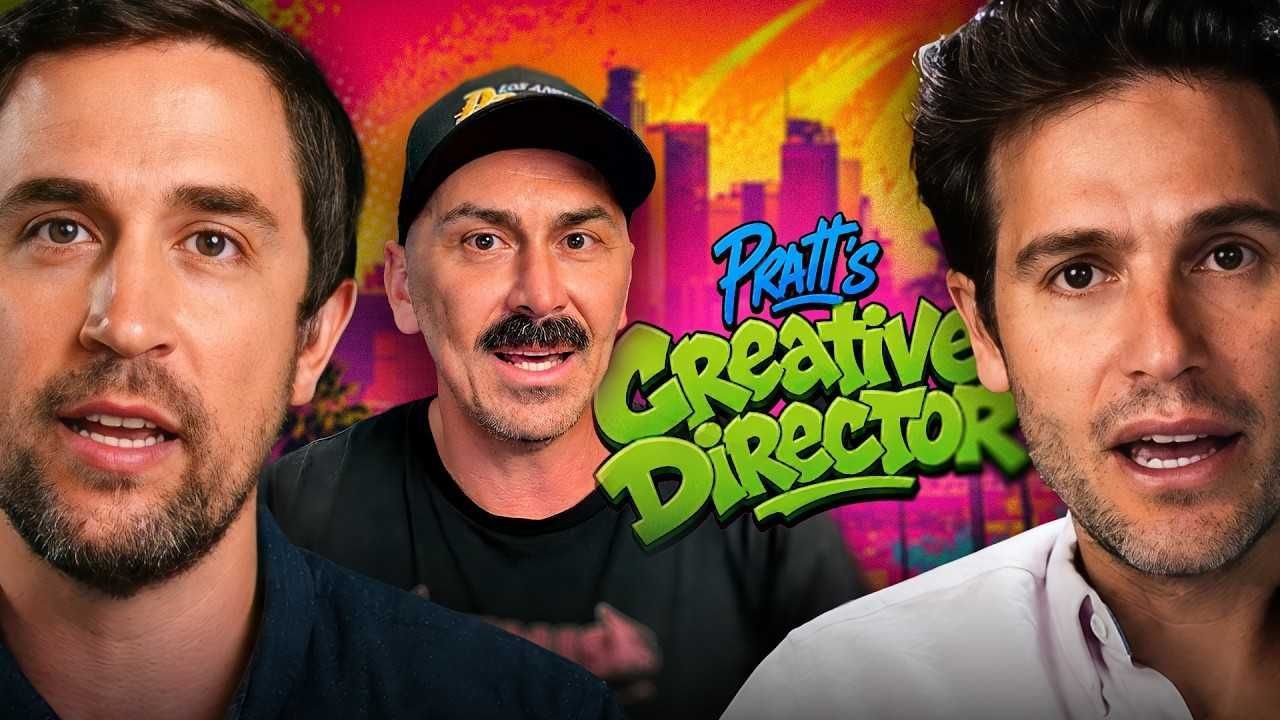
Many conservatives across the country were tuned into Republican candidate Spencer Pratt’s audacious, underdog run against incumbent L.A. Mayor Karen Bass (D) — but few know about the “creative genius” behind Pratt’s wildly popular social media campaign.
On a recent episode of “Rufo & Lomez,” Pratt’s creative director Gabriel Mann joined the program to pull back the curtain on the raw, grassroots operation that terrified the L.A. political establishment: zero consultants, lightning-fast video production, paid ballot harvesting in South L.A., explosive fraud allegations, and the Hollywood machine that blacklists conservatives while protecting its own.
Mann tells the hosts that unlike the scripted, consultant-heavy world of modern politics, Pratt’s operation ran with zero political advisers.
“I know a lot of people try to portray their campaign as grassroots, but I mean this was legitimately grassroots. ... It was an experiment in completely upending the traditional politico paradigm, so we didn't have any political advisers. It was just me and Spencer,” he tells hosts Christopher Rufo and Jonathan Keeperman.
This bare-bones team streamlined the video production process, expediting response ads.
“[Pratt’s opponents] were trying to attack him for not physically living in the Airstream even though that's a sniper's wet dream, so like his security would not let him be on the lot, but people were attacking him saying, ‘Oh, he's bougie. He's living in Santa Barbara,”’ Mann recalls.
“We decided to just immediately attack right back, and so we made this 'Fresh Prince of Bel Air' video ... to turn the energy around because we didn't have any political advisers telling us, ‘Oh, we should focus group this,’ ‘Oh, you shouldn't say that.’ ... ‘Your tone should be like this,”’ he adds. “All we had was Spencer with his instincts and a filmmaker, not a political guy.”
One of the most eye-opening revelations, however, was Mann’s description of how the campaign built its own “ground game” in “hostile territory,” paying approximately $100,000 to Bloods and Crips members to perform ballot harvesting in South L.A. neighborhoods.
He explains that because there is “literally no Republican infrastructure in Los Angeles,” they had to get creative in how they reached voters.
“I'm not joking, like totally above board, totally legal, we paid the Bloods and the Crips to go do ballot harvesting for us in their neighborhoods, and that was the one thing that Spencer did that I think shocked a lot of people,” he tells Rufo and Keeperman.
Mann also pulled back the curtain on Hollywood’s ruthless political machine. While the industry famously protects its own, it blacklists conservatives without mercy. He recounted a crew member being fired on the spot simply for giving Spencer a tour of a "Baywatch" set.
“We’re with Bass. The union is supporting Bass,” was the explanation. Yet behind the scenes, some of the biggest names in entertainment were quietly rooting for Pratt. Mann revealed, “You have no idea how many ... but [they] wouldn’t allow us to trot them out in public.”
Yet perhaps most explosive were the questions surrounding the final vote count itself. On election night, Pratt was neck-and-neck with incumbent Karen Bass and leading democrat socialist Nithya Raman as expected. But in the days that followed, as late mail-in ballots poured in, Raman overcame a roughly 40,000-vote deficit — a stunning net swing of more than 43,000 votes that flipped the race.
“They try to explain it away like, ‘Oh well, Democrats vote late. They vote by mail.’ OK, but just for the one third place candidate? There were two Democrats in the race, so why is it only for the third place candidate, the one person who actually needed the votes?” says Mann, “And the thing is the media will always say that, ‘Oh, there's no evidence of fraud.’ That is evidence.”
“Now evidence is not the same as proof, but a statistical anomaly like that, you ask any forensic auditor they'll tell you yeah that is evidence of fraud, and it needs to be investigated, and so Spencer has been doing this by the books. He's been collecting evidence,” he continues, noting that they’ve built a case with this evidence and have shared it with law enforcement.
For the full, unfiltered conversation and all the behind-the-scenes details, watch the complete episode above.
Want more from Rufo & Lomez?
To enjoy more of the news through the anthropological lens of Christopher Rufo and Lomez, subscribe to BlazeTV — the largest multi-platform network of voices who love America, defend the Constitution, and live the American dream.
Christopher Rufo cornered NYT’s Ezra Klein — and got him to admit the quiet part on immigration
For years, the New York Times has taken an openly and aggressively progressive stance on immigration — favoring expanded legal immigration, citizenship for illegal immigrants, and asylum protections, while opposing strict enforcement measures like expanded border walls, mass deportations, or reduced refugee admissions.
Anyone who thought otherwise was labeled racist, xenophobic, or a white nationalist.
But it seems one of the Times’ biggest names has begun to backtrack ever so slightly.
Last week, BlazeTV host Christopher Rufo sat down with opinion columnist and podcaster Ezra Klein for an honest conversation about a number of divisive issues, including immigration.
Klein’s surprising comments may be symptomatic of cracks forming in the progressive consensus that treated any hesitation about mass immigration as inherently bigoted.
Reflecting on the interview, Rufo tells co-host Jonathan Keeperman, “I made the argument that it’s totally legitimate to be concerned about rapid, large-scale immigration change.”
To his surprise, Klein didn’t totally disagree.
“In some versions [of white nationalism], ... if you have too much of a country not sharing a common heritage, you lose solidarity. In some cases, we’re talking about something much darker than that, right?” Klein contrasted. “There are people who just don’t like the way their community is changing, and there’s the KKK.”
“But would you say someone who is, like, for example, hesitant about rapid, large-scale demographic change is just a kind of 1% white nationalist? Because that would be, like, the majority of the country,” Rufo pressed.
“Yes, I don’t think it is a problem or unfair or even wrong to worry about large-scale, rapid demographic change,” Klein conceded.
Rufo believes this response is indicative of a broader shift.
“A couple years ago, you would not hear a prominent New York Times voice saying that it is totally legitimate, reasonable, and understandable to be concerned about large-scale, rapid demographic change,” he says, noting how the left routinely scorned such fears as byproducts of “the Great Replacement theory” and “KKK-style white supremacy.”
“Is this a concession? Is this going to be the ... moderate left’s or the establishment left's new position moving forward?” he asks.
Keeperman doesn’t believe Klein’s rhetorical concession amounts to much.
“It does not surprise me at all to hear him concede rhetorically that these things matter, that it’s OK to be concerned about ... rapid demographic change, to have some concern about national identity,” he tells Rufo. “That is meaningless, however, unless it’s backed up by actual policy preferences that he’s willing to get behind.”
Until the New York Times “[makes] some kind of policy concession that would suggest they are serious about taking this concern to heart,” Keeperman refuses to believe the left is sincerely softening its stance on immigration.
Want more from Rufo & Lomez?
To enjoy more of the news through the anthropological lens of Christopher Rufo and Lomez, subscribe to BlazeTV — the largest multi-platform network of voices who love America, defend the Constitution, and live the American dream.
Spencer Pratt’s near-perfect campaign in LA mayoral race is still doomed to fail … unless this one thing saves him
According to many critics, former reality TV star and registered Republican Spencer Pratt spanked incumbent Mayor Karen Bass and democratic socialist City Councilmember Nithya Raman in the Los Angeles mayoral debate on Wednesday night, with Fox News rating Pratt’s performance a “10/10 no notes.”
But even though Pratt delivered crisp answers, brought charismatic energy, exceeded expectations as a first-time debate performer, and has even outraised both Bass and Raman, Christopher Rufo and Jonathan Keeperman, BlazeTV hosts of “Rufo and Lomez,” aren’t sure it’s enough to bring him to victory.
But there is one faint hope that could push him over the edge.
“A reality television career, a media savvy campaign, an outsider political movement — can you actually bridge that gap and become ... the mayor of Los Angeles?” Rufo asks skeptically.
He admits that the alternatives are bleak: “You have Karen Bass, the sitting mayor of L.A., who was a member of the Venceremos Brigade communist Cuban front group. ... And then the third character is Nithya Raman ... a hard-left democratic socialist in the vein of a Mamdani or a Saikat Chakrabarti, who ran the AOC campaign early on.”
Bass and Raman, Rufo explains, “are fighting over the actual power system in L.A. — who gets the union money, who gets the activist money, who gets the nonprofit money, who gets the public money, meaning who can dominate those institutions and ride them to power.”
Pratt’s “media-centric” campaign, albeit “savvy” and compelling, may not be enough to “overcome those institutions,” he says.
Co-host Jonathan Keeperman agrees: “It’s not even whether or not he runs a good campaign or whether this media strategy is effective or not. ... It’s just a numbers game.”
He explains that the reality is that most of the people who will show up to vote in L.A.’s mayoral election are people who are “dependent on the state and city governance in some capacity for their livelihood.”
“They are working for the state probably and/or working for some kind of NGO that is itself working for the state, and so most of the voters here — and it's largely going to be driven by union turnout — are dependent on precisely the institutions that someone like Karen Bass is promising to sort of keep intact and keep funding,” Keeperman predicts.
Pratt’s “only hope,” he says, is that enough “sideline” voters recognize that the horrific wildfires that destroyed thousands of acres and killed 31 people in January 2025 were due to “the failure of democratic governance.”
“I don’t mean to be a doomer here or sound too pessimistic, but no matter what Pratt does in terms of raising his profile at the national level and getting on social media ... you’re just talking about a very narrow set of voters in the city of L.A., and they’re dependent on the city of L.A. government structure for their livelihood,” he says.
To hear more, watch the video above.
Want more from Rufo & Lomez?
To enjoy more of the news through the anthropological lens of Christopher Rufo and Lomez, subscribe to BlazeTV — the largest multi-platform network of voices who love America, defend the Constitution, and live the American dream.
In the wake of SPLC indictment, Christopher Rufo recalls the first time it came after him
Last week, the Southern Poverty Law Center was indicted by a federal grand jury on 11 counts of wire fraud, false statements to a bank, and conspiracy to commit money laundering for allegedly using over $3 million in donor funds to secretly pay informants inside extremist groups like the KKK.
On this episode of “Rufo and Lomez,” Christopher Rufo and Jonathan Keeperman, both of whom have been targets of the SPLC, trade stories and discuss the significance of these indictments.
The SPLC, says Rufo, “is this amazing story of the organized left creating this phantasm of the radical right and then fighting that phantasm that they themselves have created.”
The powerful role the SPLC has inhabited on the left, says Keeperman, hinges on telling liberals “who the bad guys are” and thus who they are “allowed to hate.”
But it goes further than just slapping damning labels on conservative individuals and organizations.
If the SPLC targets you, it proceeds to attempt to “ruin your reputation, ruin your ability to earn a living, and then send out [its] goons by proxy and by arms' distance to physically hurt you if you show up anywhere in public,” alleges Rufo, citing the SPLC’s targeting of American political scientist and scholar Charles Murray, who suffered both professionally and personally after the advocacy group labeled him an extremist.
Rufo keenly recalls the first time the SPLC targeted him.
In the early 2020s when he was on his anti-critical race theory campaign, he found himself in the organization’s crosshairs, and it genuinely frightened him.
“I felt the fear,” he admits.
“You have this sense like, OK, I better fight hard because these people are trying to knock me off the board altogether — ruin my reputation, ruin my ability to support my family.”
Rufo’s fight proved successful. “I was able to kind of rebuff those initial challenges and actually kind of boomerang them and turn them into a badge of honor, a fundraising appeal to my supporters. ... I was able to get them to retract certain claims that they were making against me to show in essence that I was able to make them back down,” he recounts.
That was just the first attack though.
Over the last few years, there have been over “a dozen” attacks on Rufo, but they no longer elicit the same fear as the first time.
“You actually develop a kind of immunity through exposure,” he says, calling the recent charges against the SPLC “both shocking and not shocking.”
“It's both a blow to their effectiveness, but it's also just really another nail in the coffin.”
To hear more, watch the full episode above.
Want more from Rufo & Lomez?
To enjoy more of the news through the anthropological lens of Christopher Rufo and Lomez, subscribe to BlazeTV — the largest multi-platform network of voices who love America, defend the Constitution, and live the American dream.
The third way: Navigating AI’s knife edge
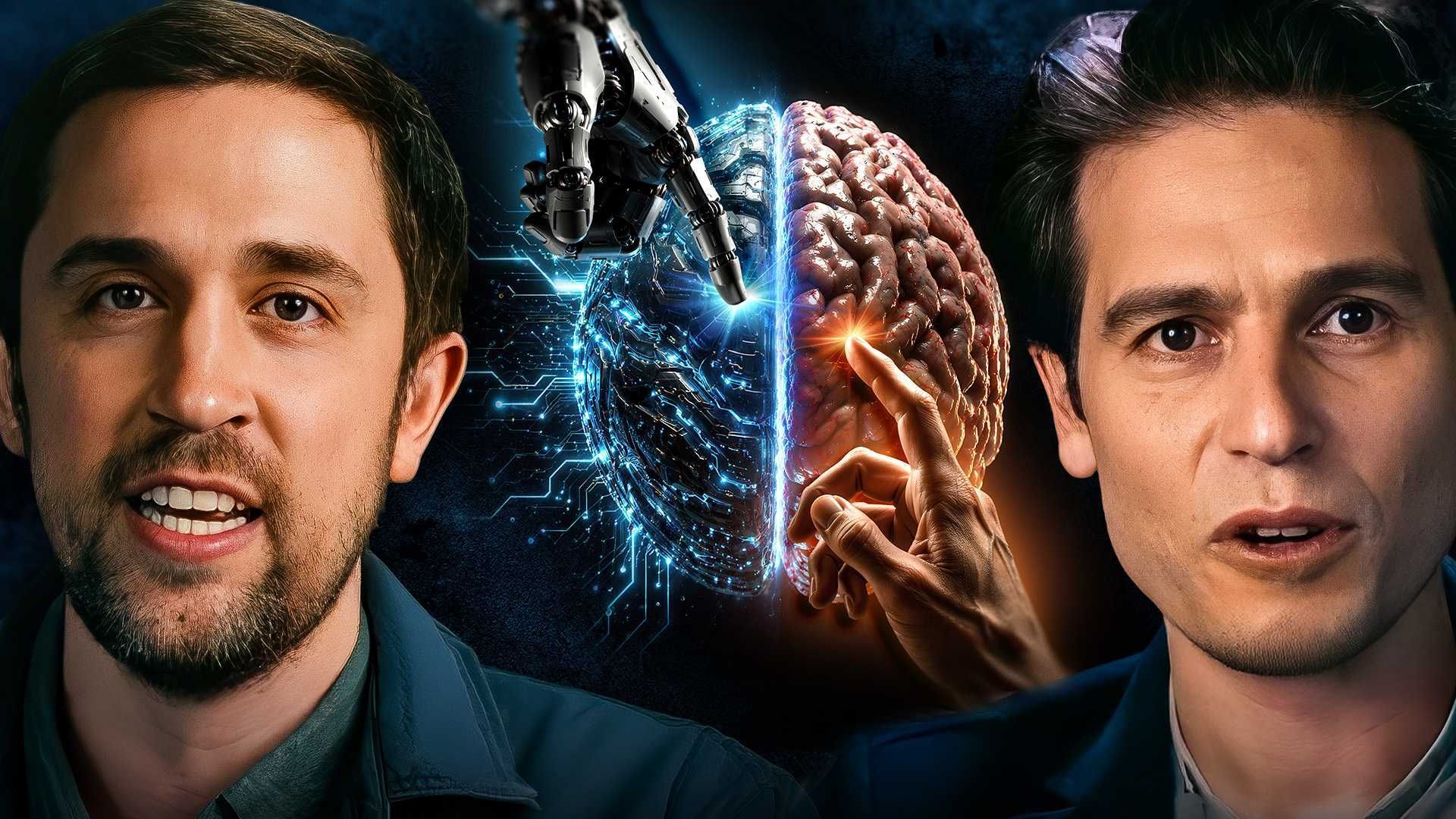
When it comes to the impending AI takeover, two main camps of belief get the most attention: those who welcome technological singularity, believing it will deliver humanity into a utopia of universal basic income, freedom, and prosperity, and those who deeply oppose it, fearing it will render humanity useless and usher in the apocalypse.
But is there a middle ground — a reasonable center that embraces the good AI offers but opposes the dystopia it threatens?
BlazeTV hosts Christopher Rufo and Jonathan Keeperman believe there is.
On a recent episode of “Rufo & Lomez,” the duo spoke with Samuel Hammond, an artificial intelligence researcher at the Foundation for American Innovation, about the “sweet middle ground” of artificial intelligence.
Hammond acknowledges the dual nature of artificial intelligence. “It's the thing that's going to build us all-new efficient defended software, but also in the meantime enable hackers to hack that software; it's a thing that will discover new drugs but also create new viruses. And to be able to hold both those realities in your mind is incredibly taxing.”
In the same way that the Industrial Revolution created both wealth and the administrative and welfare states, so the AI takeover will have both benefits and drawbacks, he says.
Keeperman inquires about the regulatory measures being taken by AI developers to mitigate the potential damage.
Hammond admits that regulation is difficult because of the sheer scope of AI. Like electricity, “it’s this massive umbrella term,” he says.
“The areas where people have legitimate concerns are easier to gerrymander, right? It's things like designing novel bioweapons or very powerful, autonomous malware that could hack into your program and go rogue. These things are difficult to keep in a box,” he explains.
On the upside, however, “getting to advanced AI first will have major national security implications.”
“The fact that we have a friendly U.S.-based company that built a system like Mythos first that could, in principle, hack into all these different critical pieces of infrastructure is an incredible fortune for us, right?” says Hammond, noting that this allows the U.S. to “patch up and harden [its] systems” before other countries reach the same capabilities.
On the other hand, the U.S. government currently has little control over the companies that are leading AI development.
As of now, these companies “are being benevolent with their use of this and certainly have the intentions to try to be sort of trustworthy and good stewards of this technology, but as a matter of state governance, do we actually have any greater control over this technology than, let's say, China?” Keeperman asks.
Hammond admits that we’re on precarious terrain.
“I think of us as sort of on this knife edge between a Chinese-style panopticon or some kind of anarchy where things kind of fall apart,” he says, advocating for a “third way.”
“We need a strong state to enforce property and contract and our rights, but that state can't be completely divorced from rule of law,” he says. At the same time, however, “democracies have committed genocide,” whereas “private corporations just want to maximize shareholder value.”
In the end, Hammond urges us to reject both utopian dreams and apocalyptic fears in favor of a pragmatic middle course: building institutions strong enough to govern AI’s immense power, yet constrained enough to prevent it from becoming a tool of tyranny or disorder.
Want more from Rufo & Lomez?
To enjoy more of the news through the anthropological lens of Christopher Rufo and Lomez, subscribe to BlazeTV — the largest multi-platform network of voices who love America, defend the Constitution, and live the American dream.
Rufo report confirms: Yes, illegal aliens are receiving FREE sex-change procedures in Newsom’s California
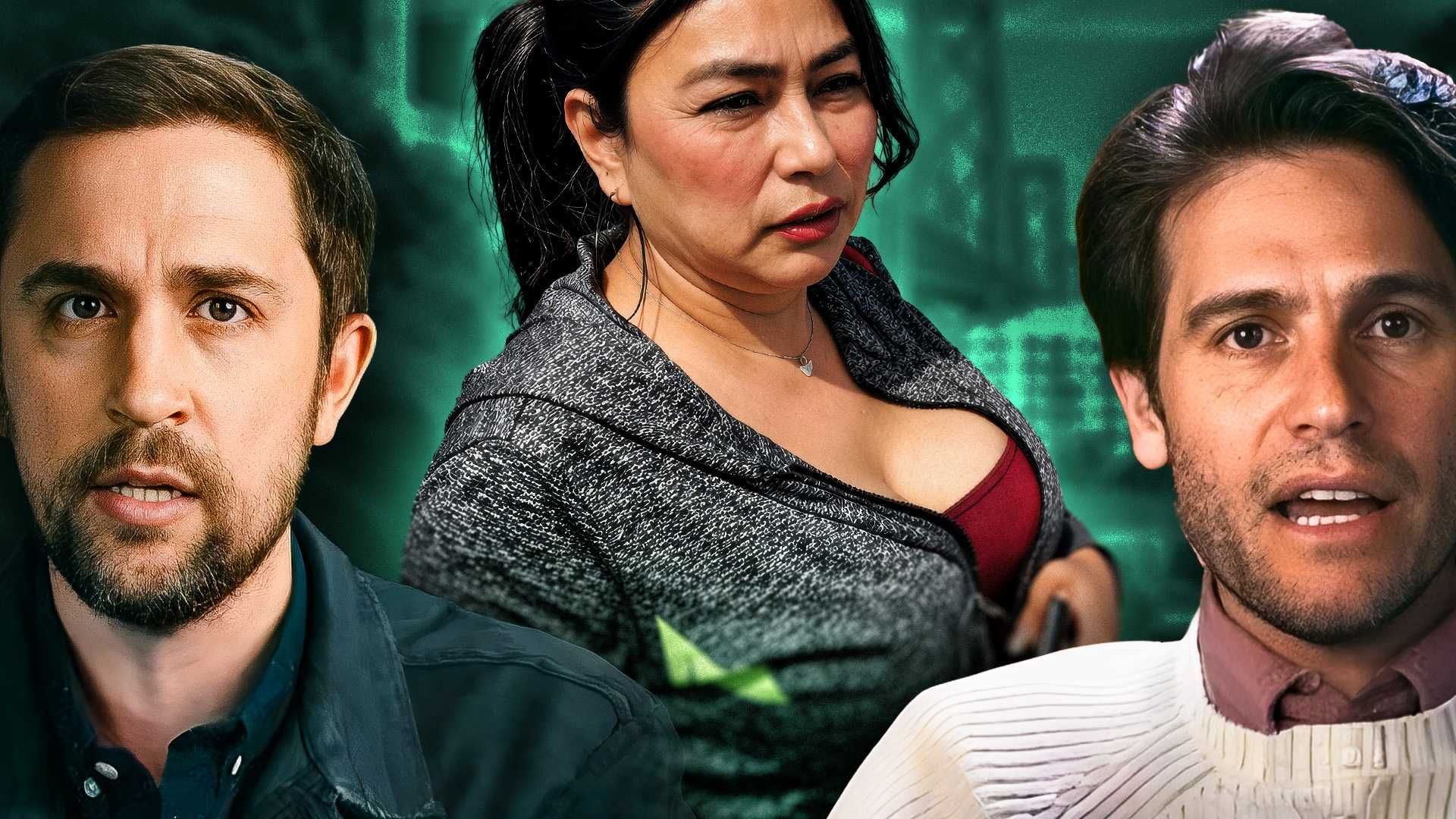
On April 16, BlazeTV host and independent journalist Christopher Rufo published a shocking report titled “California Provides Sex-Change Procedures to Homeless Illegal Aliens.”
“It feels like one of those stories that is like right-wing Mad Libs, where you take all of the most intense right-wing trigger words, you smash them into a sentence. But in this case, it's not imaginary. It's all real,” he says.
On this episode of “Rufo & Lomez,” Rufo and co-host Jonathan Keeperman break down the shocking details of the report, react to the on-the-ground footage, and discuss how California voters have become so morally submissive that they now tolerate — and fund — even the most absurd and humiliating policies.
Rufo begins by playing a video clip of his co-author and City Journal colleague Jonathan Choe interviewing a homeless illegal immigrant from Mexico who identifies as a transgender woman and calls himself Jacqueline.
The man confirms that he received both hormones and breast implants for free in California via Medi-Cal.
“Even though you're undocumented, you can get it,” he said, adding that he’s “waiting” for bottom surgery.
According to Rufo’s reporting, Jacqueline is one of many homeless illegal aliens living in San Francisco’s publicly funded shelters who have received such procedures at the expense of the California taxpayer. On-the-ground interviews and video also confirmed that word is spreading south of the border, encouraging trans-identifying migrants to come for these free procedures.
“[Choe] actually went to a number of homeless shelters in San Francisco, and at each homeless shelter, he found transgender illegal migrants who told him very directly, ‘We're here to get hormones, breast implants,’ and, as Jacqueline says, ‘bottom surgery,”’ says Rufo.
He then plays a second video featuring another transgender-identifying illegal alien named Lyca — a biological male from Honduras who says he came to the United States explicitly to take advantage of the taxpayer-funded benefits that will pay for his transition. He candidly admitted that Medi-Cal is currently paying for his hormone therapy.
Both Rufo and Keeperman agree that California voters have become so afraid of moral backlash that they’re now greenlighting policies that are abjectly insane.
“The California taxpayer is in a findom relationship with the state,” says Keeperman.
A financial domination relationship is a BDSM kink in which a submissive person gives money or gifts to a dominant person without expecting sexual favors in return. Like other related kinks, the submissive party seeks gratification through humiliation.
Keeperman argues that this same twisted dynamic is at play between the California government and its constituents.
“If you live in California and you're, like, a good secular cosmopolitan lib … the moral decision-making is incredibly difficult. … Every decision, every behavior, every utterance is freighted with meaning and the potential for sort of catastrophic loss, or you'll be accused of being immoral,” he explains.
“They’ve reached total fatigue, and the state just makes these demands of them — like you have to support on tax day the surgeries for transgender illegals — and they're comforted by this because it's like this relief,” Keeperman adds.
Rufo agrees. “The California voter is in a completely submissive moral position. It will accept any moral demand, any moral imposition, any moral cost.”
“California voters have essentially given a blanket yes, and then the layer of activists, administrators, and fanatics within the California state government processes the paperwork, so that in the end, trans illegals are getting free castration surgeries in San Francisco,” he continues.
Keeperman counters, “But the thing is, it's not just that it's yes to anything; it's yes to things that are the most humiliating and the most extractive and the least practically or pragmatically productive.”
“So it's not like they're pining for, you know, efficient infrastructure and public transportation. I mean, I'm sure they say they want that, but that's not what gets done,” he continues. “What gets done instead is this kind of stuff, which is just facially absurd.”
Rufo says the reason genuinely beneficial initiatives, like improved public transportation, never actually happen is because “building train tracks is hard,” while “cutting the penises off of illegal migrants” isn’t.
“As I discovered in a previous story in Oregon — I imagine the same is happening now in San Francisco — they've actually developed surgical castration robots, and they can castrate,” he says, "and in a single operating room, they can do two of these castrations per day now using these castration robots.”
To learn more, watch the episode above.
Want more from Rufo & Lomez?
To enjoy more of the news through the anthropological lens of Christopher Rufo and Lomez, subscribe to BlazeTV — the largest multi-platform network of voices who love America, defend the Constitution, and live the American dream.
 www.theblaze.com
 thefederalist.com
 www.theblaze.com
 www.theblaze.com